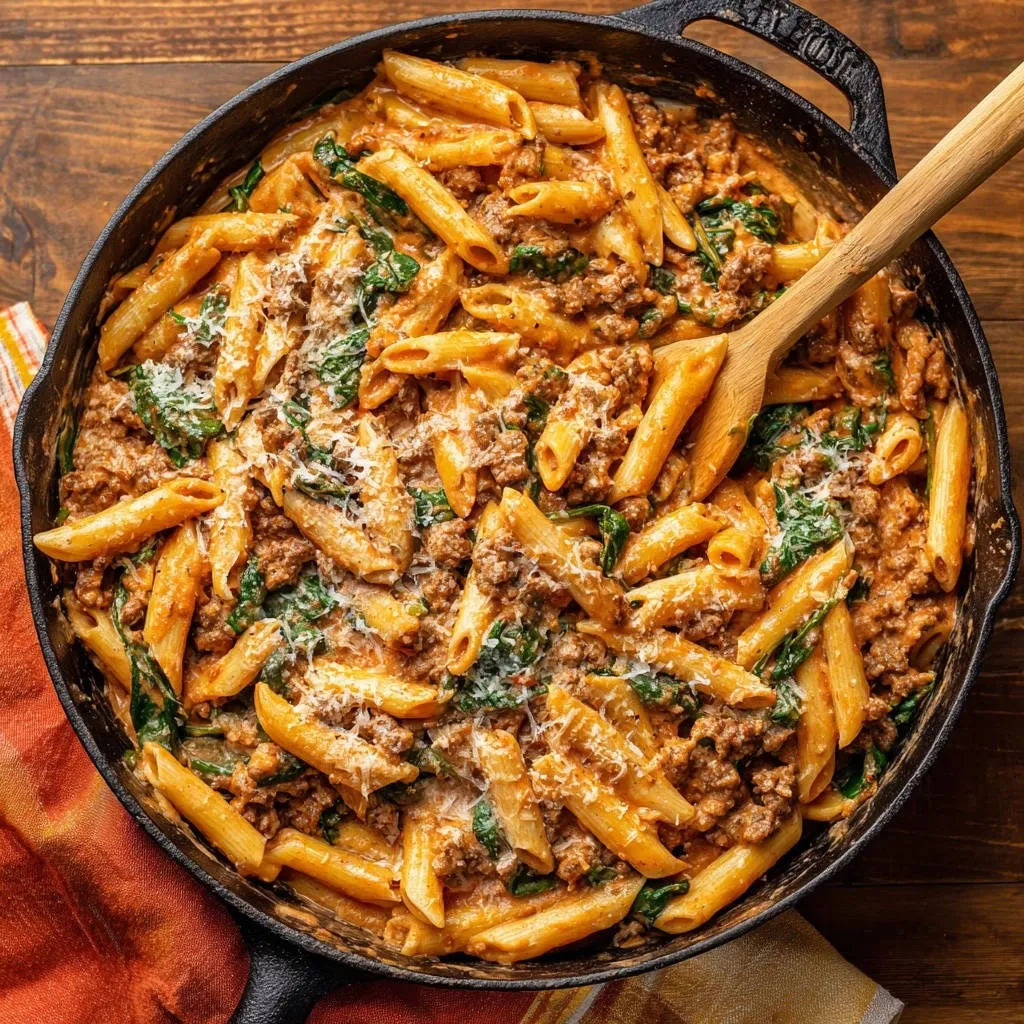
I used to be frustrated by homemade creamy pasta sauces that would inevitably separate into an oily, watery mess when they sat for even a moment. Finding the simple secret-a technique professional chefs rely on-was a total game-changer, transforming my weekly dinners.
This foolproof recipe for Skillet Beef and Spinach Penne harnesses the power of starch water emulsification to create a reliable, velvety sauce that is guaranteed to cling perfectly to every single noodle.
This is the ultimate one-pan solution for rich flavor and luxurious texture without any stress.
Ditch the Watery Sauce: Why This Recipe is Your New Weeknight Hero
The Speed and Simplicity of True Skillet Cooking
This recipe significantly reduces cleanup time by leveraging the large skillet for almost every step. After boiling the pasta separately, all the flavor building happens in one central pan.
This concentration of cooking minimizes dirty dishes and streamlines the entire process, making it perfect for busy weeknights.
Flavor That Runs Deep: Why Ground Beef Works Best Here
Ground beef provides a comforting, fundamental savory richness that serves as the backbone of this meal. The moderate fat content (85/15 is ideal) is essential for cooking the aromatics.
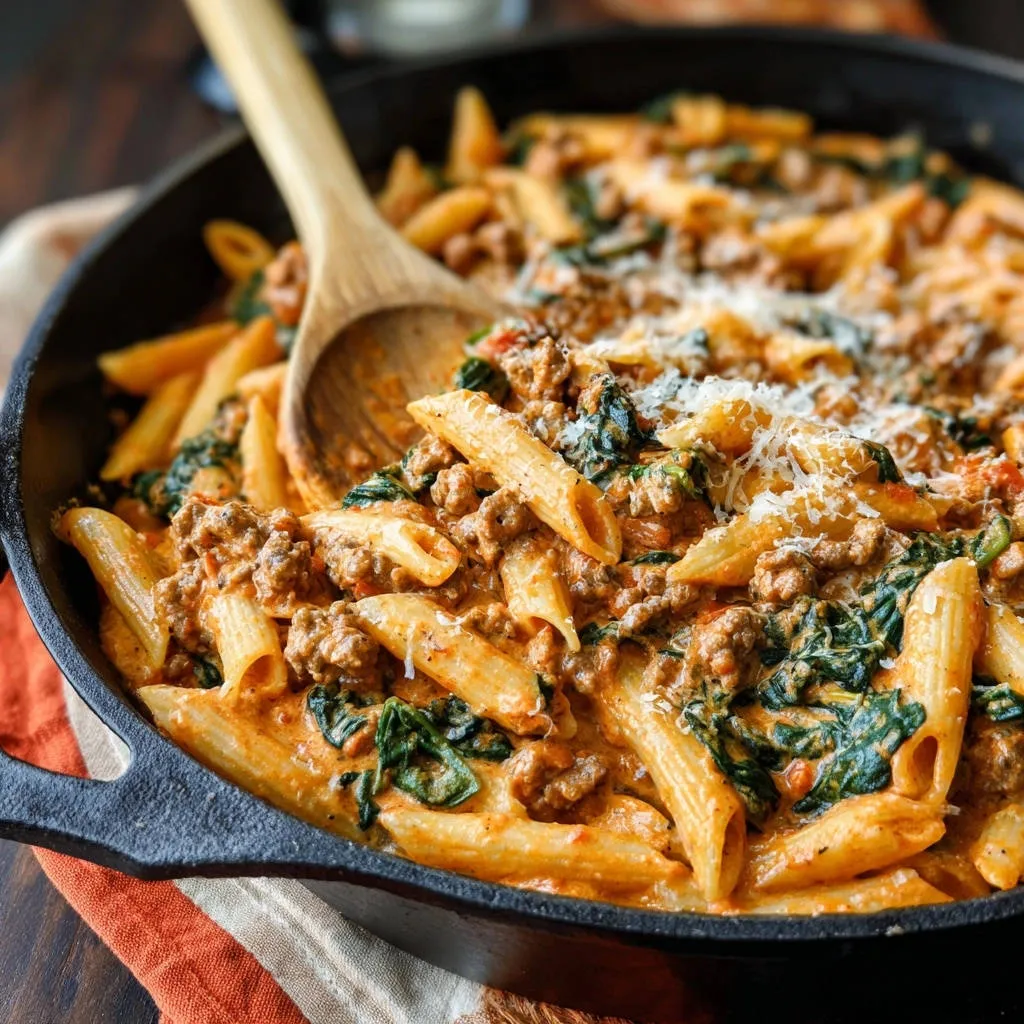
As the beef browns, it develops deep caramelized flavor (known as “fond”) on the bottom of the skillet, which is later incorporated into the sauce base.
Guaranteed Cling: Ending the Watery Sauce Nightmare Forever
The hallmark of this dish is its texture, achieved through the critical step of starch water emulsification. The reserved penne water binds to the heavy cream’s fat and the crushed tomatoes’ liquid.
This chemical marriage creates a stable, thick sauce that adheres to the pasta, eliminating the disaster of a watery base that pools at the bottom of your bowl.
The Building Blocks: Essential Ingredients for Maximum Flavor Depth
The Robust Base: Beef, Aromatics, and Seasoning
Choose 85/15 ground beef for a perfect balance-enough fat to render and carry flavor, but not so much that it prevents effective emulsification later. We drain off the excess fat after browning.
The combination of diced yellow onion and minced garlic, briefly softened in the beef drippings, creates a crucial aromatic base called a soffritto.
Dried Italian seasoning offers quick, concentrated flavor; ensure your seasoning blend is fresh and fragrant before toasting it briefly in the skillet.
Creating the Creamy Tomato Sauce
The use of 28 ounces of crushed tomatoes is key to achieving a robust body quickly. Crushed tomatoes contain less excess water than diced, allowing the sauce to thicken faster during simmering.
Beef broth serves two roles: providing liquid for simmering and, more importantly, deglazing the pan. Scraping up the browned bits left behind by the beef enhances the overall savory depth of the tomato base.
The Binding Agents: Heavy Cream and Starchy Penne Water
Heavy cream introduces the necessary fat element that the starch molecules will bind to, yielding that signature velvety texture. Do not substitute this with milk, as the lower fat content will hinder a proper emulsion.
The starchy water, often mistakenly discarded, is the absolute secret ingredient. It provides the necessary complex carbohydrates to act as the liaison between the water-based tomato mixture and the fat-based cream.
Essential Gear: What You Need for Skillet Success
-
The Cast Iron Skillet or Heavy Pot
A cast iron skillet is ideal because it retains heat beautifully, ensuring even browning of the meat and excellent simmering, which contributes to the depth of flavor of the sauce.
-
The Pasta Pot and Colander
You need a large enough pot to allow the penne to boil freely, which is essential for releasing enough starch into the water for reservation.
-
The Ladle (For Reserved Water)
A standard measuring cup or ladle is necessary for precise measurement of the crucial starchy pasta water during the emulsification step.
From Skillet to Serving: Step-by-Step Instructions for Perfect Penne
-
Prepare the Pasta (The Al Dente Rule)
Bring a large pot of heavily salted water to a rolling boil and add the penne. The pasta must be cooked one minute shy of al dente, meaning it should still be quite firm.
This prevents the pasta from turning mushy later, as it will finish cooking and absorbing flavor directly in the simmering sauce.
-
The Critical Starch Reserve
Before draining the pasta, use a ladle to reserve at least 2 cups of the cloudy, starchy pasta water. This water contains the critical binding agents and cannot be substituted with plain tap water.
Drain the pasta immediately after reserving the water and set it aside while you build the sauce.
-
Browning the Meat and Building the Soffritto
Heat the olive oil in your large skillet over medium-high heat and thoroughly brown the ground beef, breaking it up with a spoon. Drain off any excess liquid or fat from the skillet immediately after browning.
Reduce the heat to medium, then add the diced onion and cook until softened (about 4-5 minutes). Add the minced garlic, Italian seasoning, and red pepper flakes, cooking for just 60 seconds until fragrant-do not let the garlic burn.
-
Deepening the Tomato Base
Pour in the crushed tomatoes and the beef broth, stirring well to scrape up all the browned bits (fond) from the bottom of the skillet. This adds tremendous savory depth.
Bring the sauce to a low simmer and cook for 10 minutes, stirring occasionally. This crucial reduction time allows the flavors to concentrate and the tomatoes to mellow and sweeten.
-
The Cream and Starch Activation (The Emulsification Moment)
Stir the heavy cream into the simmering tomato mixture. Now, add the slightly undercooked drained pasta to the skillet, along with 1 cup of the reserved pasta water.
Stir continuously and vigorously over medium heat for 2 to 3 minutes. You will visibly see the sauce transition, thickening as the starch binds to the fat and creates a beautiful, stable emulsion that coats the penne.
-
Finishing Touches: Spinach and Parmesan
Remove the skillet from the heat immediately after the sauce has reached your desired thickness. Stir in the 3 cups of fresh spinach and the 1/2 cup of grated Parmesan cheese.
Residual heat is enough to fully wilt the spinach and melt the cheese smoothly into the sauce without overcooking the pasta or causing the dairy to curdle.
The Secret Weapon: Mastering the Pasta Water Emulsion Technique
The Science Behind the Starch: Why It Makes Your Sauce “Hug” the Penne
When the penne boils in salted water, the starch molecules, primarily amylose, leach out, creating a naturally cloudy, thick liquid. This starch is the key.
Starch molecules are effective emulsifiers because they possess both hydrophilic (water-loving) and lipophilic (fat-loving) properties.
When you vigorously stir this starchy water into the heavy cream and tomato sauce, the starch acts as a bridge, binding the water-based broth and the fat-based cream into a single, cohesive, glossy sauce.
Temperature Control: The Key to Preventing Curdled Cream
While the sauce needs to be warm for the starch to activate, extreme heat will cause dairy proteins to separate or curdle. Ensure the sauce is at a low simmer, never a hard boil, when you incorporate the heavy cream.
Furthermore, removing the skillet from direct heat before adding the grated Parmesan and spinach is vital. The residual heat is sufficient for melting the cheese and preventing a grainy, broken finish.
Adjusting Consistency: When and How to Add Extra Water
After the initial emulsification step, evaluate the thickness of your Skillet Beef and Spinach Penne sauce. If it seems too tight, add the remaining reserved pasta water one splash (about 2 tablespoons) at a time.
Stir well after each addition until you achieve the perfect flowing, yet clinging, consistency. If you have run out of starchy water, use hot beef broth sparingly to loosen the sauce without losing flavor.
Making It Your Own: Adaptations and Protein Swaps
Swapping Out the Beef: Italian Sausage or Turkey Options
For a different flavor profile, substitute the ground beef with ground mild or spicy Italian sausage. The sausage is often fattier and already heavily seasoned, so you can omit the Italian seasoning from the recipe.
For a similar hearty pasta experience, consider trying stuffed shells with meat sauce.
If opting for lean ground turkey, add an extra tablespoon of olive oil when browning the meat. This ensures you have adequate fat in the skillet to facilitate a successful, creamy emulsion later on.
Vegetarian Adaptations: Trading Meat for Mushrooms or Lentils
To create a robust vegetarian version, use one pound of finely diced cremini or button mushrooms in place of the ground meat. Sauté them over medium heat until all their liquid evaporates and they achieve a deep golden-brown color.
Alternatively, incorporate one cup of pre-cooked green or brown lentils into the tomato sauce base. Lentils provide protein and a pleasing, hearty texture that mimics the ground meat.
Boosting the Flavor Profile: Adding Grape juice or Extra Vegetables
Add complexity by pouring 1/2 cup of red grape juice, such as sparkling grape juice, into the skillet immediately after draining the beef fat. Allow the grape juice to simmer and reduce almost completely before adding the tomatoes and broth.
For extra color and nutrients, dice and sauté bell peppers or zucchini alongside the onions. This adds bulk and a fresh bite to the finished creamy beef and spinach penne.
Skillet Beef and Spinach Penne Troubleshooting: Fixing Common Issues
Problem: The Sauce is Too Thin or Separated
A thin or separated sauce indicates that the emulsification was not successful, often due to too much fat or not enough starch activation. Return the skillet to medium heat and stir vigorously for another minute or two to encourage binding.
If the sauce remains thin, create a quick slurry of one teaspoon of cornstarch mixed with a tablespoon of cold water. Stir this mixture gradually into the simmering sauce until it tightens up.
Problem: The Penne is Overcooked and Mushy
If your pasta tastes soft and disintegrates easily, it means it was not pulled sufficiently shy of al dente initially. Unfortunately, overcooked pasta cannot be saved.
Always time the initial cook for 7-8 minutes, aiming for a texture that is noticeably firm, even slightly resistant, when tasted.
Problem: The Spinach Didn’t Wilt Quickly Enough
The spinach relies solely on the residual heat of the hot sauce and skillet to wilt. If the sauce cooled down too much before adding the spinach, it will remain stubborn.
Ensure the spinach leaves are torn or roughly chopped before adding them. If necessary, you can place the skillet back on the lowest heat setting for just 30 seconds, stirring constantly until the spinach is fully integrated.
Serving, Storing, and Meal Prep
The Perfect Side Dish Pairings
Since the Skillet Beef and Spinach Penne is rich and hearty, pair it with light, contrasting sides. Crusty Italian bread is traditional, perhaps with a touch of garlic butter.
A simple side salad featuring bitter greens like arugula, dressed in a bright lemon vinaigrette, provides the acidic counterpoint needed to balance the heavy cream and tomato flavors.
Reheating Tips: Avoiding a Dry Pasta Disaster
Pasta absorbs residual moisture overnight, making leftovers prone to dryness. To restore the creamy texture, reheat servings slowly on the stovetop over low heat.
Add a tablespoon or two of milk, cream, or reserved broth when reheating. Stir gently until the liquid is absorbed and the sauce loosens into its original consistency.
Can I Make This Ahead of Time?
You can certainly prepare the entire meat and tomato sauce base (up through Step 4) up to two days in advance and store it in the refrigerator.
For superior results, reserve combining the pasta, cream, and starchy water until just before you plan to serve. This ensures the penne is perfectly al dente and the sauce remains luxuriously fresh and emulsified.
Your Burning Questions Answered: Penne Pasta FAQs
Why is reserving the pasta water so essential for this dish?
The cloudy pasta water contains high concentrations of starch that act as a powerful natural emulsifier. This starch binds the fat in the heavy cream to the liquid in the tomato sauce, ensuring the final dish is stable, thick, and perfectly creamy.
What is the best way to grate Parmesan cheese for this recipe?
Always use a microplane or fine grater to create powdery, finely grated Parmesan. Pre-shredded varieties contain cellulose or anti-caking agents that make them melt poorly and can create a slightly grainy sauce.
Can I use frozen spinach instead of fresh?
Yes, frozen spinach works well, but it is critical that it is thoroughly thawed and squeezed bone-dry before adding it to the skillet. If moisture remains, it will rapidly dilute the creamy beef and spinach penne sauce and ruin the emulsification.
Ready to Impress? Share Your Skillet Beef and Spinach Penne Masterpiece!
This guaranteed creamy cling method proves that achieving restaurant-quality texture in a weeknight dinner is simpler than you think. Master the technique of starch emulsification, and you will never suffer through a watery pasta sauce again.
Enjoy the satisfaction of this hearty, flavorful meal, and remember to save that crucial pasta water every time! Let me know in the comments how this foolproof Skillet Beef and Spinach Penne recipe transformed your dinner routine.
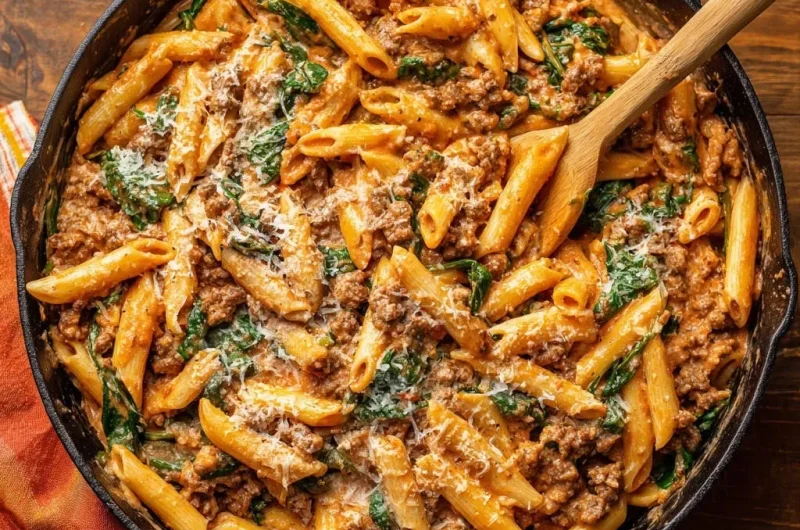
Beef Penne
Course: Main CourseCuisine: Italian-AmericanDifficulty: easy4
servings10
minutes30
minutes650
kcal40
minutesTired of watery pasta sauce? This recipe guarantees a professional, creamy emulsion that truly hugs the noodles, thanks to a simple trick involving reserved pasta water. Made quickly in one skillet with ground beef, spinach, and a rich tomato base, it’s the perfect comforting weeknight main course.
Ingredients
1 pound penne pasta
1 tablespoon olive oil
1 pound ground beef
1 medium yellow onion, diced
4 cloves garlic, minced
1/2 teaspoon dried Italian seasoning
1/4 teaspoon red pepper flakes (optional)
1 (28 ounce) can crushed tomatoes
1 cup beef or vegetable broth
1/2 cup heavy cream
3 cups fresh spinach
1/2 cup finely grated Parmesan cheese, plus more for garnish
Salt and black pepper to taste
Directions
- Prepare the Pasta: Bring a large pot of salted water to a rolling boil. Add the penne and cook until it is about 1 minute shy of al dente. This is crucial for the perfect final texture. Before draining, reserve 2 cups of the starchy pasta cooking water. Drain the pasta and set aside.
- Brown the Meat: Heat the olive oil in a large cast iron skillet or heavy pot over medium-high heat. Add the ground beef and cook, breaking it up with a spoon, until fully browned. Drain off any excess fat from the skillet. Cook until no pink remains and it reaches 160°F (71°C).
- Build the Base: Reduce the heat to medium. Add the diced onion and cook for 4 to 5 minutes until softened. Add the minced garlic, Italian seasoning, and red pepper flakes (if using). Cook for 1 minute until fragrant.
- Simmer the Sauce: Pour in the crushed tomatoes and the broth. Stir well, scraping up any browned bits from the bottom of the skillet. Bring the sauce to a low simmer and cook for 10 minutes, allowing the flavors to deepen. Season generously with salt and pepper.
- THE CLING SECRET (Emulsification): This is the key step to ensure the sauce clings perfectly. Add the heavy cream to the simmering tomato mixture and stir. Now, add the slightly undercooked drained pasta to the skillet. Ladle in 1 cup of the reserved pasta cooking water.
- Stir continuously and vigorously over medium heat for 2 to 3 minutes. The starch from the pasta water, combined with the fats in the cream, will activate and create a beautiful, thick emulsion that binds the sauce to the pasta. If the sauce looks too thick, add more pasta water, a splash at a time, until you reach your desired creamy consistency.
- Finish and Serve: Stir in the fresh spinach and the 1/2 cup of Parmesan cheese until the spinach has wilted completely and the cheese has melted smoothly into the sauce.
- Remove from heat immediately, garnish with extra Parmesan cheese, and serve hot directly from the skillet.
Notes
- Crucially, cook the penne 1 minute shy of al dente and reserve 2 cups of the starchy pasta water. This water is the secret ingredient for creating the perfect clinging sauce emulsion.