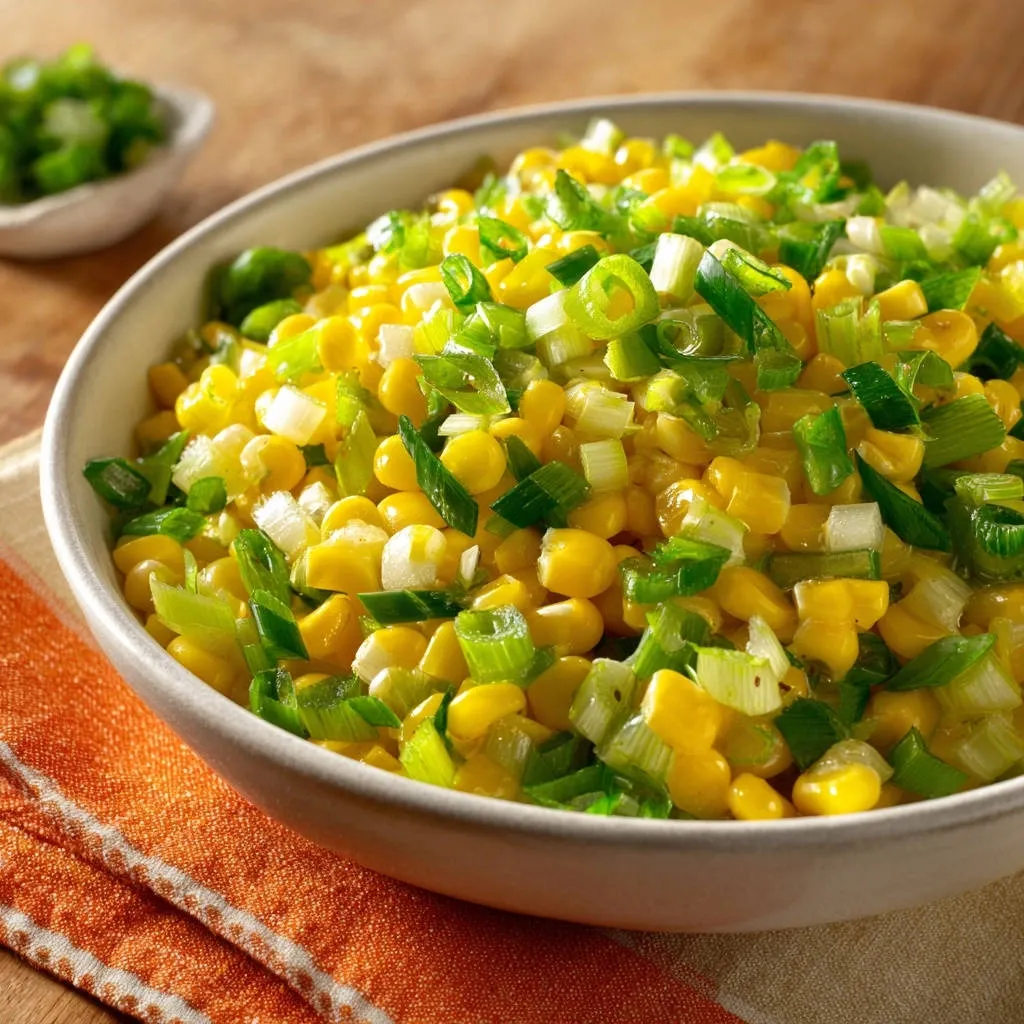
I understand the frustration of watery, bland side dishes, but achieving intense flavor and perfect texture with corn is simple when you know the trick. This recipe for Skillet Corn with Fresh Scallions solves the mushiness problem by using a critical high-heat dry sauté that achieves maximum sweetness and caramelization.
Once you implement this reliable “Real Flavor Hack,” this versatile and quickly prepared dish will become your go-to side, delivering restaurant-quality depth every time.
For a rich texture without the watery corn, try this creamy sweet corn skillet.
Beyond Bland: Why This Skillet Corn is Your New Favorite Side Dish
There is a science behind why this simple side dish outperforms all others. This section breaks down the core benefits of applying high-heat treatment to corn kernels.
For an even richer experience, consider this creamy skillet corn.
The Secret to “Never Mushy” Corn
The primary culprit in bland, watery corn is excess moisture, particularly in frozen or canned varieties. The initial step of dry sautéing is critical because it forces this residual water to evaporate quickly.
Removing the water content prevents the corn from steaming itself, ensuring the kernels remain tender-crisp and perfectly textured.
Intense, Concentrated Flavor (The Caramelization Factor)
When the moisture is gone, the high heat allows the natural sugars in the corn to interact with proteins, initiating the Maillard reaction.
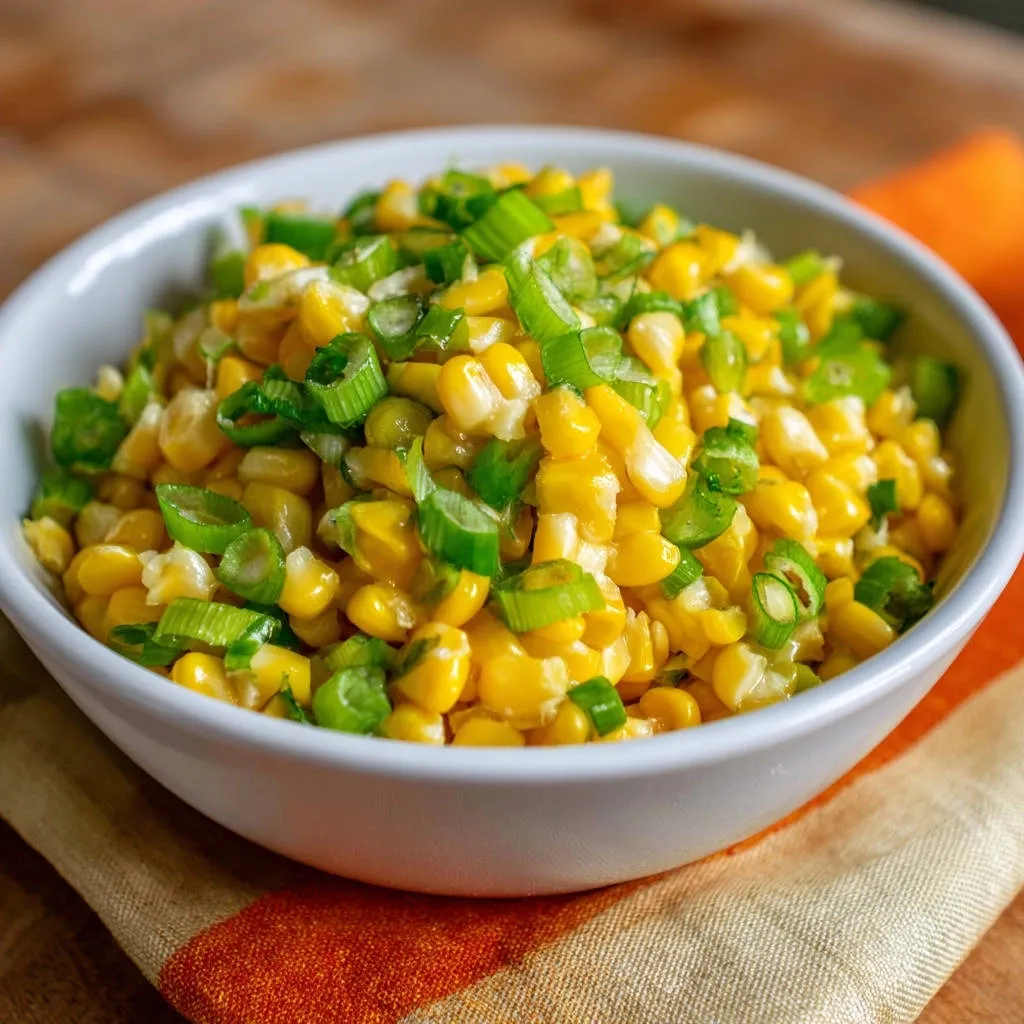
By letting the kernels develop light golden-brown spots, you concentrate their innate sweetness and achieve that deep, roasted taste-the foundational “Real Flavor Hack” that elevates the dish.
Ready in Minutes: A Weeknight Essential
Despite the complex flavor profile, this side dish requires only five active steps and less than 15 minutes of total cook time.
The efficiency makes Skillet Corn with Fresh Scallions an ideal choice for busy weeknights when you need a high-impact accompaniment fast.
Essential Ingredients for Your Skillet Corn Adventure
This section details the function and optimal preparation of the main components.
Choosing the Best Corn Base (Frozen vs. Canned)
Frozen corn is generally preferred as it retains a better texture and fresher flavor than canned options. However, both work well if handled correctly.
Crucially, you must thaw frozen corn completely and drain both options thoroughly to ensure maximum evaporation during the dry sauté stage.
The Aromatic Duo: Butter and Olive Oil
We use a blend of fats to maximize both flavor and performance. Olive oil provides a slightly higher smoke point, helping to prevent the butter from burning during the sauté.
Unsalted butter is essential for adding a rich, creamy depth and a nutty aroma that perfectly coats the finished kernels.
The Scallion Strategy: Separating Whites and Greens
Scallions (green onions) are used in two distinct stages to layer their flavor. The white, more pungent base is sautéed first to build the aromatic foundation of the dish.
The delicate green tops are reserved and folded in right at the end to provide a burst of fresh, herbaceous flavor and bright color, crucial for the final presentation.
The Right Equipment: Mastering the Skillet Corn Sauté
The success of this high-heat technique relies heavily on your cooking surface. Selecting the right skillet is essential for optimal results.
Why Cast Iron is the Superior Choice for This Skillet Corn Recipe
Cast iron is highly recommended because it holds heat exceptionally well and distributes it evenly across the cooking surface.
This consistent, retained heat is necessary to achieve rapid moisture evaporation and promote the desired browning and caramelization of the corn kernels, which is difficult to replicate in lighter skillets.
Mastering the Method: Step-by-Step Skillet Corn with Fresh Scallions
Follow these detailed steps precisely to unlock the incredible flavor potential of the Skillet Corn with Fresh Scallions method.
- Preparation is Key: Drain and Separate.
Ensure your frozen corn is fully thawed and both frozen/canned kernels are exceptionally well-drained. Pat them dry with a paper towel if necessary to remove surface moisture.
Chop your scallions, keeping the sturdy white parts separate from the lighter green tops, as they are added at different times.
- The Critical Flavor Lock-In (Dry Sauté).
Heat your large, preferably cast-iron, skillet over medium-high heat until hot. Add the corn without any fat-this is paramount for the moisture removal process and is the foundation of the best Skillet Corn with Fresh Scallions.
- The Secret to Browning (Don’t Stir Constantly!).
Cook the corn for 4 to 6 minutes. You should hear sputtering initially as the water evaporates. Resist the urge to stir constantly; instead, move the corn only every 60 to 90 seconds.
This contact allows kernels to make firm contact with the hot metal, developing those essential light golden-brown spots. Remove the browned corn immediately and set it aside to halt the cooking process.
- Build the Aromatic Base.
Return the skillet to medium heat and add the olive oil and butter. Once the butter is melted and foamy, introduce the white parts of the chopped scallions.
Sauté for precisely 1 minute until fragrant and lightly softened. Be mindful of the heat; we are building flavor, not browning the aromatics.
- Combine and Reheat.
Return the sautéed, caramelized corn kernels to the skillet. Stir thoroughly for 2 to 3 minutes to coat every kernel in the buttery scallion mixture.
Cook only until the corn is heated through and appears brightly yellow; do not overcook at this stage.
- Final Seasoning and Garnish.
Remove the skillet from the heat immediately. Stir in the salt and pepper to season the dish completely.
Gently fold in the bright green scallion tops. Serving immediately ensures the fresh scallions retain their structure and sharp bite.
Troubleshooting and Pro Tips for Perfect Skillet Corn Every Time
Maximizing the Sauté: Why High Heat Is Non-Negotiable
You must start the dry sauté with the skillet on medium-high heat and wait until the pan is fully preheated. Low or medium heat will cause the corn to release moisture slowly, turning the process into steaming rather than searing.
The initial burst of heat is necessary to aggressively evaporate surface moisture, guaranteeing crispy-tender results.
The Art of the Finish: Keeping Your Scallions Bright Green
The green scallions are added off the heat precisely because they are a fresh garnish, not a cooked aromatic.
Adding them once the skillet is removed from the burner prevents them from wilting, turning gray, and losing their desirable fresh, pungent bite.
Help! My Corn Is Still Mushy!
If your corn is mushy, the most common causes are insufficient pre-draining or overcrowding the pan. The pan must be hot enough to handle the volume.
If cooking a large batch, you may need to caramelize the corn in two smaller, separate batches to maintain the high skillet temperature and prevent steaming.
Storage, Serving, and Make-Ahead Strategies
Can I Prep the Corn Ahead of Time?
Yes, prepping ahead saves significant time right before dinner. You can fully thaw and drain the corn and chop both the white and green parts of the scallions a day in advance.
Store the prepared corn and separated scallions in airtight containers in the refrigerator, ready for the quick sauté.
Proper Storage and Reheating Instructions
Leftover skillet corn should be stored in an airtight container in the refrigerator for up to 3 days. The texture will soften slightly upon cooling.
To reheat, return the corn to a hot skillet (preferably cast iron) over medium heat for 3 to 4 minutes until heated through. Avoid using the microwave, as it often introduces steam and compromises the desirable texture.
What to Serve Alongside Your Skillet Corn with Fresh Scallions
This side dish is versatile due to its savory, slightly sweet profile and fresh finish. It complements a wide variety of meals.
Complementary Dishes
Explore these recipes to build a complete meal around your corn.
- For a refreshing and zesty addition, consider the creamy zesty chicken and corn salad, which features similar bright flavors.
- If you’re seeking a plant-based option, the tropical tofu salad bowl with crispy fried tofu offers a vibrant contrast and satisfying texture.
Flavor Pairing Suggestions
The rich, buttery flavor combined with the freshness of the scallions pairs wonderfully with smoky and charred meats.
Grilled Steaks and Lamb chops
Smoked Ribs and Barbecue Chicken
Blackened Fish or Shrimp Tacos
Make It a Meal: Simple Variations
While delicious as is, you can easily adapt this dish to match your main course. Add a pinch of chili powder or smoked paprika during the butter sauté stage for depth.
Alternatively, fold in half a cup of shredded Parmesan cheese at the very end to create a creamy, sharp twist on the classic Skillet Corn with Fresh Scallions.
Frequently Asked Questions About Skillet Corn
Can I Use Fresh Corn on the Cob?
Absolutely. Use a sharp knife to cut the kernels off the cob. Since fresh corn usually contains less residual water than thawed frozen corn, the initial dry sauté time may be slightly shorter.
Monitor the fresh corn closely during the caramelization step, ensuring you achieve good color without drying the kernels out.
What Substitutions Work for Scallions?
If scallions are unavailable, chives offer the closest flavor profile, though they should only be added at the end due to their delicacy. Spring onions are also a suitable substitute.
For a sharper flavor, a tiny amount of very finely minced red onion can be used in the aromatic base, but use sparingly to avoid overpowering the corn’s sweetness.
Is Skillet Corn Gluten-Free?
Yes, this recipe for Skillet Corn with Fresh Scallions is naturally gluten-free as written, relying only on corn, butter, oil, and fresh aromatics.
Always double-check labels on ingredients like canned corn or pre-seasoned salt blends if you are strictly avoiding gluten.
Ready to Try the Skillet Corn Flavor Revolution?
Say goodbye to bland, mushy sides and hello to intensely flavored, perfectly textured corn. This simple dry-sauté technique is a game-changer, ensuring the natural sweetness of the corn is always maximized.
Try the Skillet Corn with Fresh Scallions tonight and taste the difference that careful technique makes. Share your results and let me know your favorite additions in the comments!
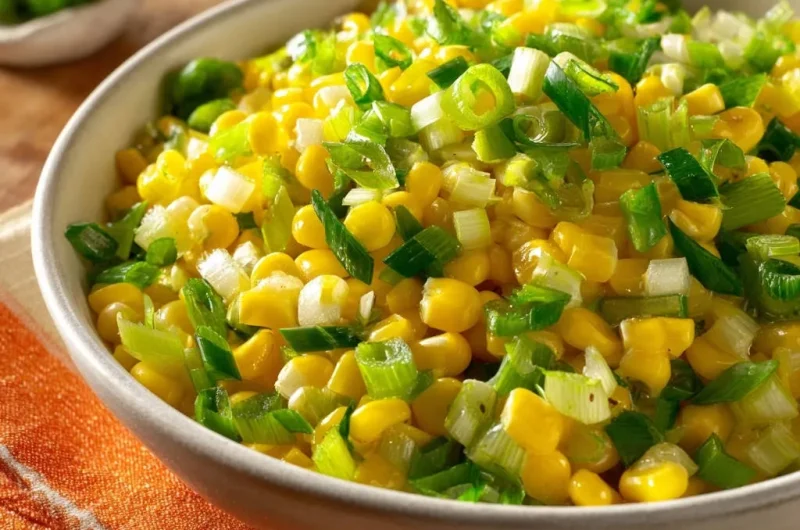
Skillet Corn
Course: Side DishCuisine: AmericanDifficulty: easy4
servings5
minutes10
minutes240
kcal15
minutesAchieve incredible flavor depth and perfect texture in corn by using the ‘Real Flavor Hack.’ High heat evaporates excess moisture, caramelizing the kernels before finishing them perfectly in butter and fresh scallions.
Ingredients
4 cups frozen or canned corn kernels, thawed and well drained (if canned)
1 tablespoon olive oil
1 tablespoon unsalted butter
1/2 teaspoon salt
1/4 teaspoon black pepper
1 cup chopped green onions (scallions), white and green parts separated
Directions
- Prepare the Corn for Flavor Lock-In. This is the critical step for preventing mushiness and building deep flavor. Heat a large skillet (cast iron works best) over medium-high heat. Add the corn kernels without any oil or butter.
- Dry Sauté and Concentrate. Cook the corn, stirring occasionally, for 4 to 6 minutes. You should hear sputtering as the excess moisture evaporates. Do not move the corn constantly; allow some kernels to stick slightly and develop light golden-brown spots. This caramelization is the secret to the “Real Flavor Hack.” Remove the corn from the pan and set aside.
- Build the Base. Return the skillet to medium heat and add the olive oil and butter. Once the butter is melted and foamy, add the white parts of the chopped green onions. Saute for 1 minute until fragrant.
- Finish the Corn. Return the corn to the skillet. Stir well to coat the kernels in the butter and onion mixture. Cook for 2 to 3 minutes, stirring occasionally, until the corn is heated through and brightly yellow.
- Season and Serve. Remove the skillet from the heat. Stir in the salt and pepper. Immediately fold in the remaining green parts of the chopped green onions. Serve immediately while warm.
Notes
- Use a cast iron skillet if possible for optimal caramelization during the dry sauté phase.