Chicken breasts come out dry every time you sear them thick? This skillet lemon caper chicken fixes that fast. You pound them super thin first, then hit a high-heat sear for a golden crust that traps every drop of juice. Dinner’s ready in 20 minutes with a glossy sauce that tastes straight from a restaurant.
Therefore, most folks skip the pounding step and end up with tough, bland results. But this method changes everything. In addition, the quick baste in lemon caper butter rehydrates the meat perfectly.
Here’s the pro tip that seals it: pat the chicken bone-dry after pounding. That moisture pulls away so the flour dredge sticks tight and crisps up without steaming. You’ll taste the difference in every juicy bite.
For an equally satisfying meal, consider lemon caper chicken thighs with potatoes.
Why Skillet Lemon Caper Chicken Succeeds
Thick chicken breasts overcook on the outside while the center stays raw. However, pounding to even 1/4-inch thickness cooks it all at once. Plus, the high-heat sear triggers the Maillard reaction for deep flavor and sealed juices.
In addition, the lemon caper sauce bastes gently at the end. So, you get skillet lemon caper chicken that’s tender inside with a buttery shine. No more dry disappointments.
Pounding Thin: Dryness Solution
Lay plastic wrap over each chicken breast on a sturdy board. Grab a meat mallet’s flat side or a rolling pin. Pound firmly from center out to 1/4-inch thick, like a burger patty.
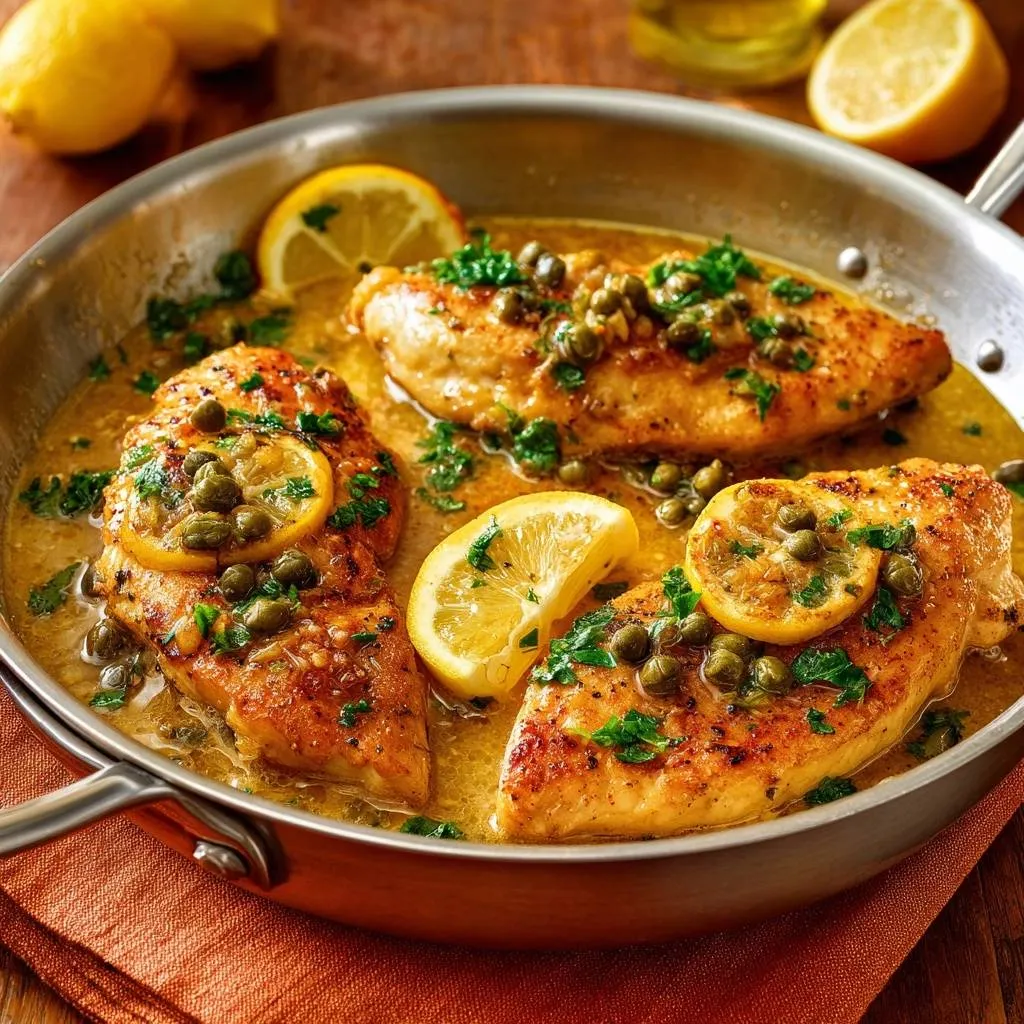
Why exactly 1/4-inch? It sears in 2-3 minutes flat without drying. Check by feel: it should feel pliable, not springy.
High-Heat Sear Science
Heat oil until it shimmers and a water drop dances across. Sear 2-3 minutes per side untouched for crust. Proteins denature fast, locking juices in.
Therefore, skip the thermometer during sear, but check 165F at the end. Batches prevent steaming, so the crust stays crisp.
Key Ingredients for Lemon Caper Chicken
Fresh lemon juice brings bright acid that cuts richness without bottled bitterness. Capers add briny pop from their pickle, amping umami. Unsalted butter emulsifies smooth since you control the salt.
In addition, chicken broth reduces fond for depth, and a light flour dredge crisps without heaviness. This lean protein packs vitamin C from lemons too. Perfect for skillet lemon caper chicken every time.
Sub tip: no fresh lemons? Mix bottled with zest for punch.
Chicken Breasts Prep Essentials
Start with 1.5 pounds boneless skinless breasts. Pat super dry after pounding. Wet surfaces repel starch, so flour won’t cling.
Pound first, then dredge. That order keeps coating even and light.
Lemon Caper Sauce Components
Broth deglazes browned bits for savory base. Simmer reduces it slightly glossy. Off-heat, whisk in butter pieces for stable emulsion that clings.
Chopped parsley adds fresh green brightness at the end.
Equipment for Perfect Skillet Chicken
Grab a 12-inch skillet to fit batches without crowding. Cast iron holds heat steady for sear, but nonstick works if you preheat well. Flat-side meat mallet pounds even; rolling pin flexes too.
Therefore, an instant thermometer confirms 165F safely. Pro move: tongs flip without piercing juices.
Skillet Heat Dynamics
Test shimmer by flicking water; it should skitter. Medium-high blasts crust fast. Drop to medium for sauce to simmer without scorching.
Step-by-Step Skillet Lemon Caper Chicken
Follow these phases for foolproof results. Total time flies at 20 minutes. You’ll nail skillet lemon caper chicken with juicy, saucy perfection.
For a similar approach that highlights tender poultry, see pan-seared herb chicken.
Phase 1: Pound and Dredge
Pound breasts to 1/4-inch under plastic. Mix 1/2 cup flour, 1 tsp salt, 1/2 tsp pepper in a dish. Dredge lightly, shake hard for thin coat.
Phase 2: Sear Golden Crust
Heat 2 tbsp olive oil shimmering hot. Sear batches 2-3 minutes per side till golden. Rest on plate; don’t overcrowd or it steams.
Phase 3: Build Lemon Caper Sauce
Add 1 tbsp oil, 1/4 cup capers, 1 cup broth, 1/2 cup lemon juice. Scrape bits, simmer 3 minutes till bubbly and reduced. Capers pop with tang.
Phase 4: Emulsify and Baste
Off heat, whisk in 4 tbsp butter pieces one by one till glossy. Return chicken, spoon sauce over, simmer 1-2 minutes to 165F. Oh man, it soaks right in juicy.
The Science of Buttery Lemon Emulsion
Lemon acid meets butter fat and broth’s lecithin for stable sauce. Off-heat keeps it from splitting; heat breaks emulsions. Basting rehydrates seared chicken perfectly.
Compare to failed versions: direct high heat turns oily and separated. This skillet lemon caper chicken method clings glossy every time.
Why Off-Heat Whisking Works
Temp drops stabilize fat globules. Add butter piece-by-piece while whisking briskly. Result? Silky shine that coats without grease.
Avoiding Dry Skillet Lemon Caper Chicken Mistakes
Top pitfalls kill skillet lemon caper chicken: overcrowding steams no crust, early flips prevent browning, over-simmering toughens meat. Fix with batches and timers.
However, follow heat drops and off-heat butter. You’ll dodge dryness for tender bites.
Overcrowding and Flipping Fixes
Cook in batches; pan stays hot. Flip only when edges golden, not sooner. Crust builds firm then.
Sauce Separation Prevention
Off-heat butter, whisk constant. Medium simmer max for sauce stage.
Flavor Variations for Lemon Caper Chicken
Swap parsley for dill to brighten herbal. Try orange juice half-and-half with lemon for sweet citrus twist. Chicken thighs work pounded thin too, juicier fat.
For vegan, press firm tofu slices same way. Keeps the skillet lemon caper chicken vibe intact.
Herb and Citrus Twists
Dill pairs with capers’ brine perfectly. Orange adds subtle sweet without overpowering acid test well.
Pairing Sides with Skillet Lemon Caper Chicken
Crisp greens like arugula salad cuts sauce richness. Roasted veggies soak up buttery drips. Grains like couscous or quinoa absorb every drop.
Therefore, skillet lemon caper chicken shines with simple sides that balance bright tang.
Complementary Dishes
To round out your Skillet Lemon Caper Chicken meal, consider these dishes that offer a refreshing contrast or a similar comforting feel.
- For a bright and fresh addition, try the creamy kale Caesar salad, its tangy dressing a nice counterpoint to the chicken.
- If you’re in the mood for something hearty and familiar, the creamy herb and pea potato salad brings classic comfort to the table.
Quick Vegetable Complements
Sauté asparagus in same pan after. Blanch green beans 2 minutes, toss in sauce remnants.
Make-Ahead Lemon Caper Chicken Guide
Pound and dredge chicken up to 4 hours ahead; chill. Cook sauce separate, freeze up to 3 months. Reheat low to revive gloss.
Pro tip: portion sauce with chicken for quick skillet lemon caper chicken midweek.
Freezing and Reheating Steps
Freeze chicken and sauce apart in bags. Thaw, simmer gently 5 minutes basting to blend emulsion fresh.
Troubleshooting Skillet Lemon Caper Chicken
How do I store leftovers and can it freeze?
Store in airtight container up to 3 days in fridge. Reheat gently in skillet with splash broth to revive sauce. Freezes well up to 3 months; sauce may separate slightly but whisk revives it glossy. Don’t microwave or it toughens.
Why is my chicken still dry?
Usually from skipping pound or overcrowding pan. Thin even 1/4-inch cooks fast without overdone edges. Sear batches high-heat first, baste fully at end. Check 165F internal, not more.
Can I substitute ingredients in skillet lemon caper chicken?
No fresh lemons? Use bottled juice plus zest. Skip capers? Green olives chopped mimic brine. Chicken thighs fine pounded thin for extra juice. Gluten-free flour swaps 1:1 for dredge.
Why didn’t my sauce emulsify?
Heat too high splits fat. Always off-heat whisk butter pieces slow. If broken, chill then whisk with cold broth splash. Broth’s lecithin stabilizes best.
Chicken pale, no crust?
Oil not hot enough or flipped early. Wait for shimmer, 2-3 minutes untouched per side. Pat dry pre-dredge so flour crisps fast via Maillard.
Too sour? How to balance?
Extra butter pat or pinch sugar cuts acid. Reduce lemon juice to 1/3 cup first test. Fresh always brighter than bottled, so taste simmer stage.
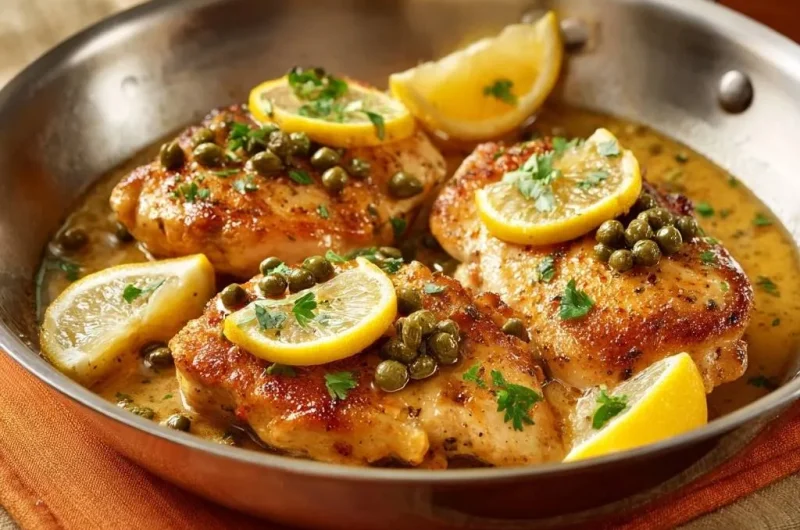
Skillet Chicken
Course: Main CourseCuisine: AmericanDifficulty: easy4
servings15
minutes15
minutes450
kcal30
MinutesTired of bland, dry chicken breasts? This foolproof technique pounds them thin for lightning-fast searing, locks in juices with a quick high-heat crust, and finishes them gently in a buttery lemon caper sauce that bastes every bite. Juicy perfection, guaranteed.
Ingredients
4 boneless skinless chicken breasts (about 1.5 lbs)
1/2 cup all-purpose flour
1 tsp salt
1/2 tsp black pepper
3 tbsp olive oil
1/4 cup capers, drained
1 cup chicken broth
1/2 cup fresh lemon juice (from 3 lemons)
4 tbsp unsalted butter, cut into pieces
1/4 cup fresh parsley, chopped
Lemon slices for garnish
Directions
- Pound chicken breasts to 1/4-inch thickness between plastic wrap using a meat mallet or rolling pin. This even thickness is the key to solving dryness: it cooks through in minutes without overcooking the outside. Pat dry thoroughly with paper towels.
- Mix flour, salt, and pepper in a shallow dish. Dredge chicken lightly, shaking off excess.
- Heat 2 tbsp olive oil in a large skillet over medium-high heat until shimmering (not smoking). Add chicken in batches; sear 2-3 minutes per side until golden crust forms. Do not overcrowd or flip too soon, this high-heat sear seals juices inside. Transfer to a plate.
- Reduce heat to medium. Add remaining 1 tbsp oil, capers, broth, and lemon juice to skillet. Scrape up browned bits. Simmer 3 minutes until slightly reduced.
- Whisk in butter one piece at a time off heat, creating a glossy emulsion that clings without separating. Return chicken to skillet, spoon sauce over top, and simmer 1-2 minutes just until cooked through (165F internal). The sauce bastes and rehydrates, ensuring no dryness.
- Garnish with parsley and lemon slices. Serve hot.
Notes
- Pound chicken to even 1/4-inch thickness for perfect juiciness. Use fresh lemons for best flavor. Internal temperature should reach 165°F.