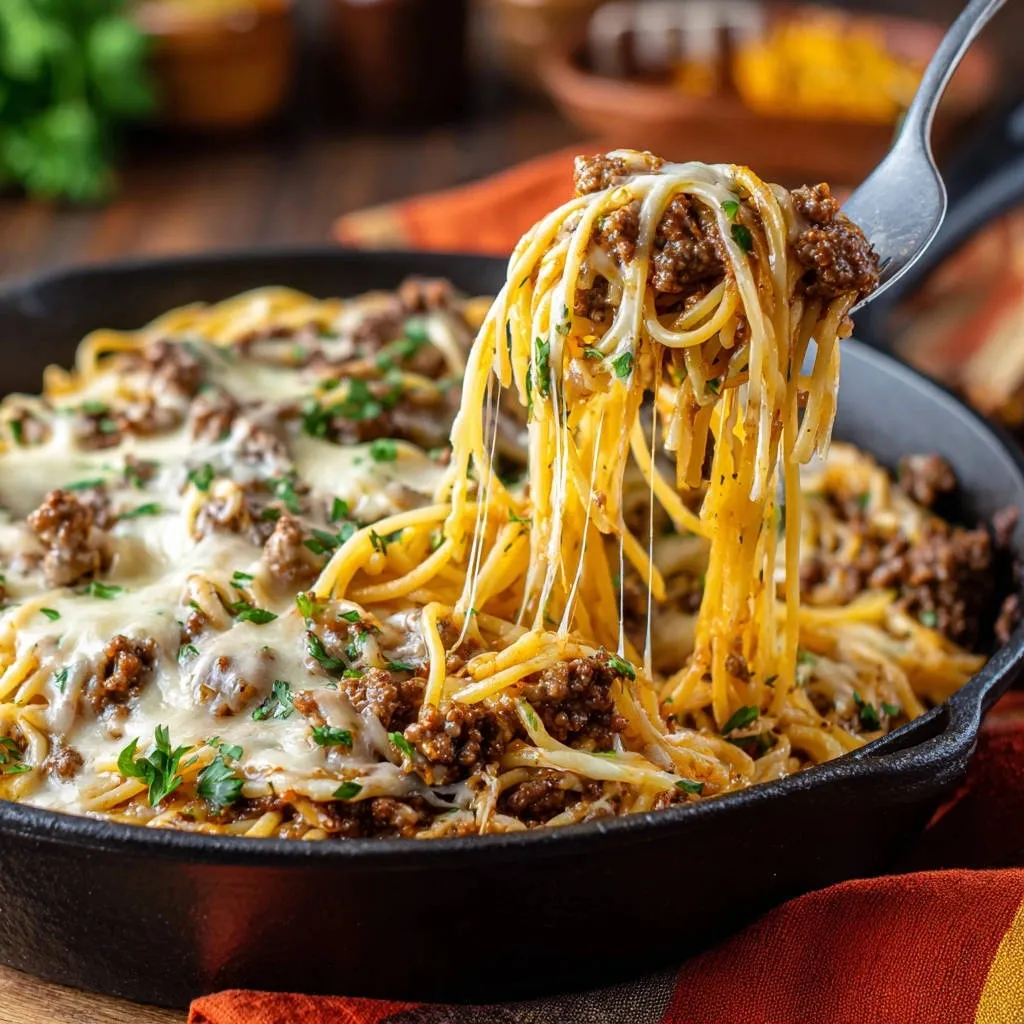
The biggest challenge when making spaghetti at home is achieving that restaurant-quality sauce that clings beautifully without leaving your noodles sticky or gummy.
After years of struggling with watery results, I finally perfected a simple finishing technique that guarantees success every time.
This method transforms standard ingredients into an unforgettable Skillet Meat Sauce Spaghetti that is rich, velvety, and perfectly cooked, using just one pan for the grand finale.
Why This Skillet Meat Sauce Spaghetti Works Every Time
The End of Gummy Noodles: The Texture Fix
The pain of sticky, clumping noodles often stems from overcooking them in plain water and rinsing away the essential surface starches.
Our method prevents this by intentionally undercooking the pasta for one minute short of the package’s al dente time.
This reserves the critical final cooking time for the richly flavored sauce, ensuring the pasta absorbs flavor instead of plain water.
Achieving Restaurant-Quality Sauce Cling
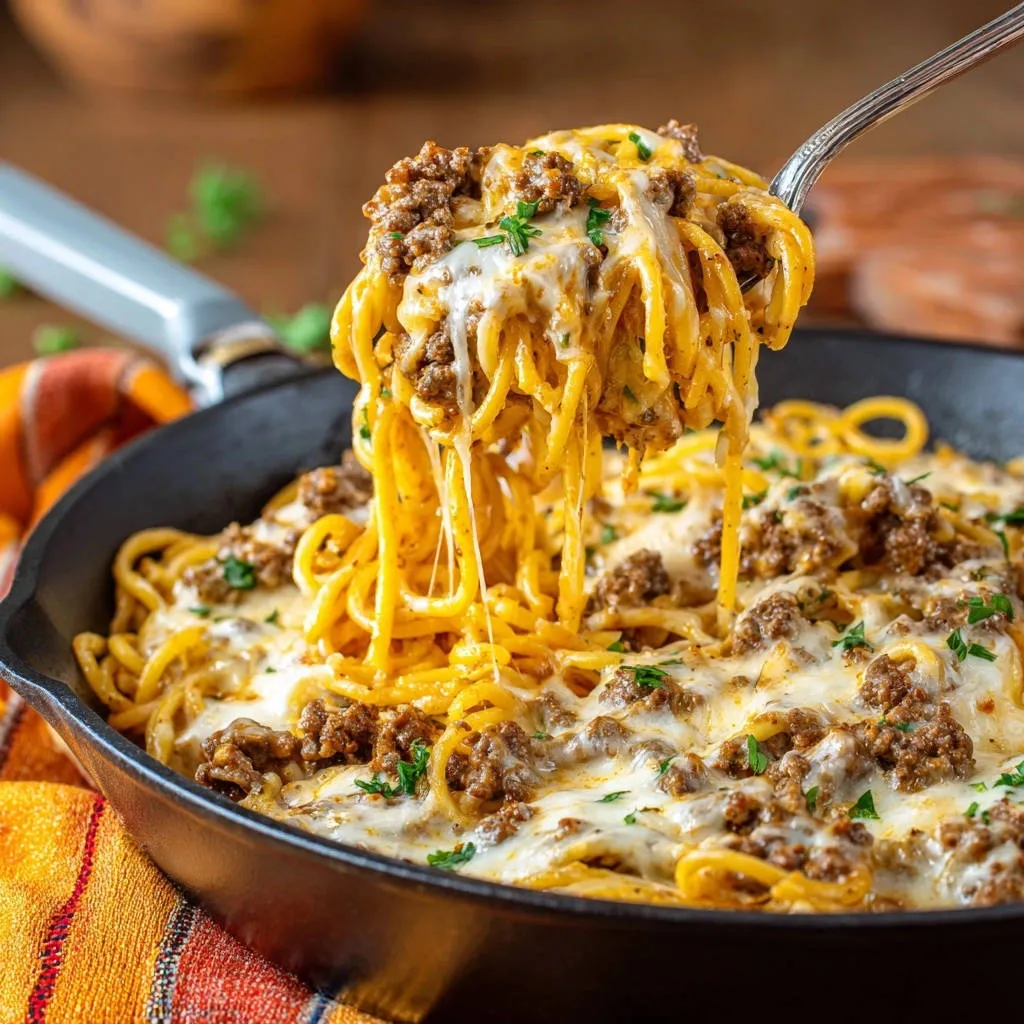
The true magic lies in the reserved, starchy pasta water, which acts as a powerful bonding agent for the sauce.
When this starchy liquid is introduced to the hot meat sauce, it quickly emulsifies the fats and liquids.
The result is a sauce that transforms from thin and watery into a lush, velvety coating that clings perfectly to every strand of spaghetti.
Quick Cleanup and High Reward
While the sauce and pasta start separately, finishing the dish in one large skillet minimizes cleanup dramatically.
This one-pan final step also allows the noodles to absorb maximum flavor and become truly integrated with the sauce.
It is a hearty, crowd-pleasing dish that delivers high reward for minimal fuss, perfect for busy weeknights.
Essential Tools for Skillet Spaghetti Success
Choosing the Right Skillet
A 5-quart or 6-quart deep skillet or Dutch oven is absolutely necessary for preparing this dish.
The generous depth is crucial because you need ample space to aggressively toss and coat the spaghetti without spilling during the emulsification phase.
Beyond the Basics: Colanders and Ladles
Use a sturdy, heat-resistant ladle to scoop the hot, starchy cooking water before draining the pasta.
This ensures you capture the liquid when it is at its starchiest concentration, which is key to the texture fix.
Remember, we explicitly avoid rinsing the pasta after draining, as this washes away the very starch needed for the final velvety sauce.
Building the Ultimate Skillet Meat Sauce Flavor Base
The Meat and Aromatics Foundation
We recommend lean ground beef (85/15 or 90/10) to minimize excess grease that could otherwise dilute the sauce flavor.
For substitutions, ground turkey or a savory ground sausage blend work well, adding their own unique depth.
The combination of finely diced yellow onion and minced garlic forms the essential savory aromatic foundation for the sauce.
Selecting Your Sauce and Broth
A high-quality jarred marinara or traditional meat sauce offers a convenient yet flavorful start to the dish.
Choose a brand you trust, as its flavor dictates much of the final result in your Skillet Meat Sauce Spaghetti.
Beef broth is preferred over plain water as the liquid addition because it provides a richer, more complex depth to the sauce base during simmering.
The Critical Role of Cheese and Seasoning
Shredded mozzarella is the preferred melting cheese because it creates a beautiful stretch and a smooth, bubbly topping without becoming excessively oily.
Italian seasoning is the backbone spice, providing a classic blend of oregano, basil, and thyme.
Always add additional salt and pepper to the meat and sauce base throughout the cooking process, not just relying on the marinara.
Step-by-Step: Cooking Skillet Meat Sauce Spaghetti Perfection
- Prepare the Ground Beef and Aromatics:
Heat the olive oil in your large, deep skillet over medium-high heat. Add the ground beef and diced onion.
Break up the meat and cook until thoroughly browned, about 6 to 8 minutes, ensuring the onions are translucent.
It is vital to drain ALL excess grease completely before moving to the next step, as residual grease prevents a clean sauce texture.
- Sauté the Seasoning Blend:
Reduce the heat to medium before adding the minced garlic and the Italian seasoning to the beef mixture.
Cook this mixture only for 1 minute until fragrant; this activates the spices and releases the garlic’s aroma.
Be careful not to burn the garlic, which will turn bitter and ruin the overall flavor.
- Simmer the Sauce Base:
Pour in the marinara sauce and the beef broth.
Bring the mixture to a gentle simmer, stirring occasionally, then reduce the heat to low.
Allow the sauce to simmer gently while you prepare the pasta, allowing all the rich flavors to meld.
- The Critical Pasta Prep: The Texture Fix Step:
Cook the spaghetti noodles according to package directions, but set your timer to remove them exactly 1 minute before they reach the recommended al dente stage.
The noodles should still be very firm and tough in the center when you pull them from the heat.
Crucially, before draining, use a ladle to reserve 1 1/2 cups of the starchy pasta cooking water; this water is the secret to preventing gummy noodles.
- Drain and Transfer:
Drain the very firm pasta immediately, but under no circumstances should you rinse the noodles.
Quickly transfer the undercooked spaghetti directly into the simmering skillet sauce.
Stir the noodles and sauce together to ensure the pasta is completely coated.
- The Emulsification Finish:
Add an initial 1/2 cup of the reserved starchy pasta water to the skillet.
Toss the pasta constantly for 1 to 2 minutes over medium-low heat; the starch in the water will emulsify with the sauce and finish cooking the pasta to perfect al dente texture.
If the sauce becomes too tight or dry during this final minute, add the remaining pasta water, 1/4 cup at a time, until a thick, velvety coating is achieved.
- The Cheesy Finale:
Once the spaghetti is perfectly coated and cooked through, remove the skillet from the heat.
Sprinkle the shredded mozzarella or preferred melting cheese evenly over the top of the skillet mixture.
- Melt and Serve:
To melt the cheese, either cover the skillet tightly until the cheese is gooey, or transfer the skillet to a preheated 375 degree F oven.
Bake for 3 to 5 minutes until the cheese is fully melted and bubbly.
For a similar bake, consider this saucy baked spaghetti casserole that uses a touch of broth.
Garnish immediately with fresh chopped parsley and serve the Skillet Meat Sauce Spaghetti directly from the pan.
The Skillet Spaghetti Secret: Why Starchy Water Creates Velvety Sauce
Understanding Pasta Emulsification
Emulsification is the process of binding two ingredients that normally separate, such as the residual fat rendered from the meat and the water-based tomato sauce.
The starch released from the boiling spaghetti acts as a natural emulsifier, linking the fat and liquid components together.
This reaction creates a stable, thick texture that makes the sauce feel creamy and luxurious without requiring any actual cream.
The Precision of Al Dente Timing
The one-minute-short cook time is non-negotiable for this method to work correctly and prevent gummy noodles.
Cooking the pasta entirely in the pot would leave it fully hydrated and unable to absorb the complex flavors of the meat sauce later on.
By finishing the spaghetti directly in the skillet, the noodles absorb the seasoning and richness of the sauce, resulting in maximum flavor saturation.
Chef’s Notes: Elevating Your Skillet Meat Sauce Game
Maximizing Meat Flavor: Before adding the marinara, deglaze the skillet with a splash of red grape juice or a tablespoon of balsamic vinegar after draining the grease.
Scrape up the browned bits (fond) from the bottom of the pan, cooking until the liquid evaporates, which adds significant complexity and depth to the meat sauce.
Spice and Heat Variations: Stir in a pinch of red pepper flakes along with the garlic for a noticeable, but not overpowering, kick.
Alternatively, add one bay leaf to the sauce while it simmers, removing it completely before the pasta is transferred to the skillet.
Fresh Herbs for Finish: Don’t limit yourself to just parsley; fresh herbs elevate the entire dish’s aroma.
Add finely chopped fresh basil or oregano chiffonade right before serving for a vibrant burst of fresh flavor.
A Cheese Crust Alternative: For a crisper, more browned cheese topping, use a broil setting for the final 30 seconds of melting.
Watch the skillet very closely under the broiler to prevent the cheese from scorching or burning.
Solving Common Skillet Spaghetti Problems
Problem: My Sauce Is Too Thin or Watery
This usually happens if the pasta water wasn’t starchy enough, or if too much liquid was added at the very end.
To fix this, remove the pasta and simmer the sauce alone for 5 to 10 minutes until it reduces slightly.
Alternatively, stir in a teaspoon of cornstarch slurry (cornstarch mixed with cold water) and simmer until the sauce thickens noticeably.
Problem: The Pasta Sticks Together or Clumps
If the pasta was allowed to sit for too long after draining, the surface starches likely dried and clumped together.
The solution is immediate transfer to the simmering sauce-speed is essential here.
If sticking occurs in the skillet, ensure you are constantly tossing it during the 1-2 minute finishing phase and adding enough starchy water to maintain slickness.
Problem: The Ground Beef Tastes Bland
Ensure you season the ground beef thoroughly with salt and pepper while it is browning, not just relying on the marinara sauce for flavor.
Also, do not skip draining the grease; excessive rendered grease dampens seasoning and can negatively impact the flavor profile.
Making It a Meal: Serving, Pairing, and Storage
Ideal Side Dishes and drink pairing
Simple, classic sides pair best with the richness of Skillet Meat Sauce Spaghetti.
Serve alongside a crisp Caesar salad, buttery garlic bread, or quickly steamed green beans dressed with lemon.
Pair this hearty meal with a medium-bodied, fruit-forward red grape juice like sparkling grape juice for balance.
Storing and Reheating Leftovers
Store any leftovers in an airtight container in the refrigerator for up to 3 days.
When reheating, pasta tends to absorb moisture, so add a small splash of broth or water before warming.
Heat leftovers gently on the stovetop over low heat or in the microwave until just heated through to prevent the pasta from drying out.
Skillet Meat Sauce Spaghetti Quick Answers (FAQ)
Can I make this recipe gluten-free?
Yes, simply substitute the traditional spaghetti noodles with your favorite brand of gluten-free spaghetti.
Be mindful that gluten-free pasta often releases slightly less starch, so you may need to use the full 1 1/2 cups of reserved water to achieve the desired sauce consistency.
Can I substitute a different type of cheese for mozzarella?
Absolutely. Sliced provolone or a high-quality Monterey Jack cheese will also melt beautifully and provide a good gooey texture.
If you prefer a sharper flavor, a mix of Parmesan and Provolone can work, but avoid using hard grating cheeses alone as they do not provide the same smooth, bubbly texture.
What is the best way to reserve the starchy water?
A simple heat-safe mug or a metal measuring cup works perfectly for reserving the water.
Just before draining the pot, dip the cup into the boiling pasta water and scoop out the required amount.
Do not wait until the pot is fully drained, as the water at the bottom tends to be the starchiest.
Ready to Impress? Share Your Skillet Meat Sauce Spaghetti Masterpiece!
This recipe transforms a basic weeknight meal into a showstopper using one simple, professional technique.
We hope this Skillet Meat Sauce Spaghetti becomes a reliable favorite in your regular dinner rotation, guaranteeing non-gummy, perfectly coated pasta every time.
We’d love to see your results! Tag us on social media when you share your perfectly coated, non-gummy masterpiece.
Skillet Meat Sauce Spaghetti
Course: Main CourseCuisine: Italian-AmericanDifficulty: easy4
servings15
minutes35
minutes650
kcal50
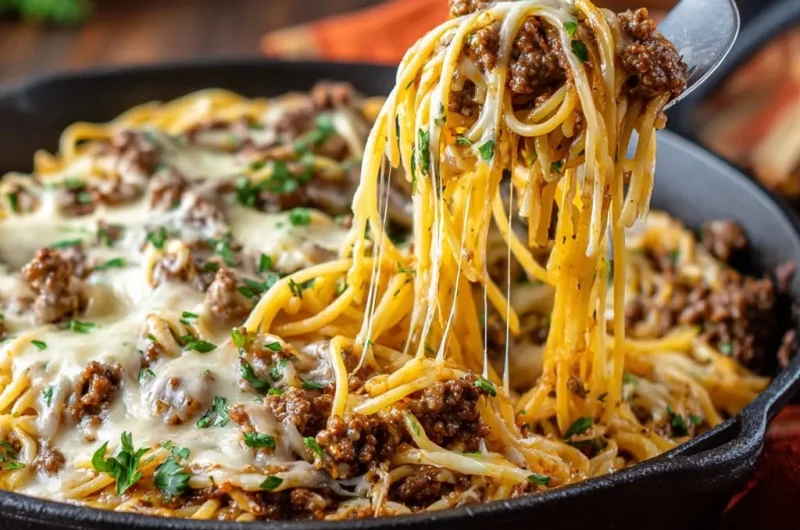
minutesNever have sticky spaghetti again! This recipe uses a simple technique of finishing slightly undercooked pasta directly in the skillet sauce, using starchy water to create a velvety, restaurant-quality coating. It’s perfectly al dente and ready to serve straight from the skillet.
Ingredients
1 pound spaghetti noodles
1 tablespoon olive oil
1 pound lean ground beef
1 small yellow onion finely diced
2 cloves garlic minced
1 24-ounce jar marinara or meat sauce
1 cup beef broth or water
1 teaspoon Italian seasoning
Salt and pepper to taste
1 1/2 cups shredded mozzarella cheese or preferred melting cheese
2 tablespoons fresh parsley chopped
Directions
- Prepare the ground beef sauce. Heat the olive oil in a large, deep skillet or Dutch oven over medium-high heat. Add the ground beef and onion. Break up the meat and cook until browned, approximately 6 to 8 minutes. Drain excess grease completely.
- Reduce the heat to medium. Add the minced garlic and Italian seasoning to the beef mixture. Cook for 1 minute until fragrant.
- Pour in the marinara sauce and beef broth. Bring the mixture to a simmer, stirring occasionally. Reduce heat to low and allow the sauce to simmer gently while the pasta cooks.
- The Texture Fix Step: Cook the spaghetti noodles according to package directions, but remove them from the heat 1 minute before they reach the al dente stage. They should still be very firm in the center. Before draining, reserve 1 1/2 cups of the starchy pasta cooking water. This water is the secret weapon for preventing gumminess and creating a creamy sauce.
- Drain the very firm pasta, but do not rinse.
- Transfer the drained, slightly undercooked pasta directly into the simmering skillet sauce. Stir to coat the noodles completely.
- Add 1/2 cup of the reserved pasta water to the skillet. Toss the pasta constantly for 1 to 2 minutes. The starch in the water will emulsify with the sauce and finish cooking the pasta to perfect al dente texture while ensuring a velvety, non-gummy coating. Add more pasta water 1/4 cup at a time if the sauce becomes too tight or dry.
- Once the pasta is perfectly coated and cooked through, sprinkle the shredded cheese evenly over the top of the skillet mixture.
- Cover the skillet or transfer the skillet to a 375 degree F oven for 3 to 5 minutes until the cheese is melted and bubbly.
- Garnish with fresh chopped parsley and serve immediately directly from the skillet.
Notes
- The key to a perfect, non-gummy sauce is reserving 1 1/2 cups of the starchy pasta water and using it to emulsify the sauce in the final cooking minutes.