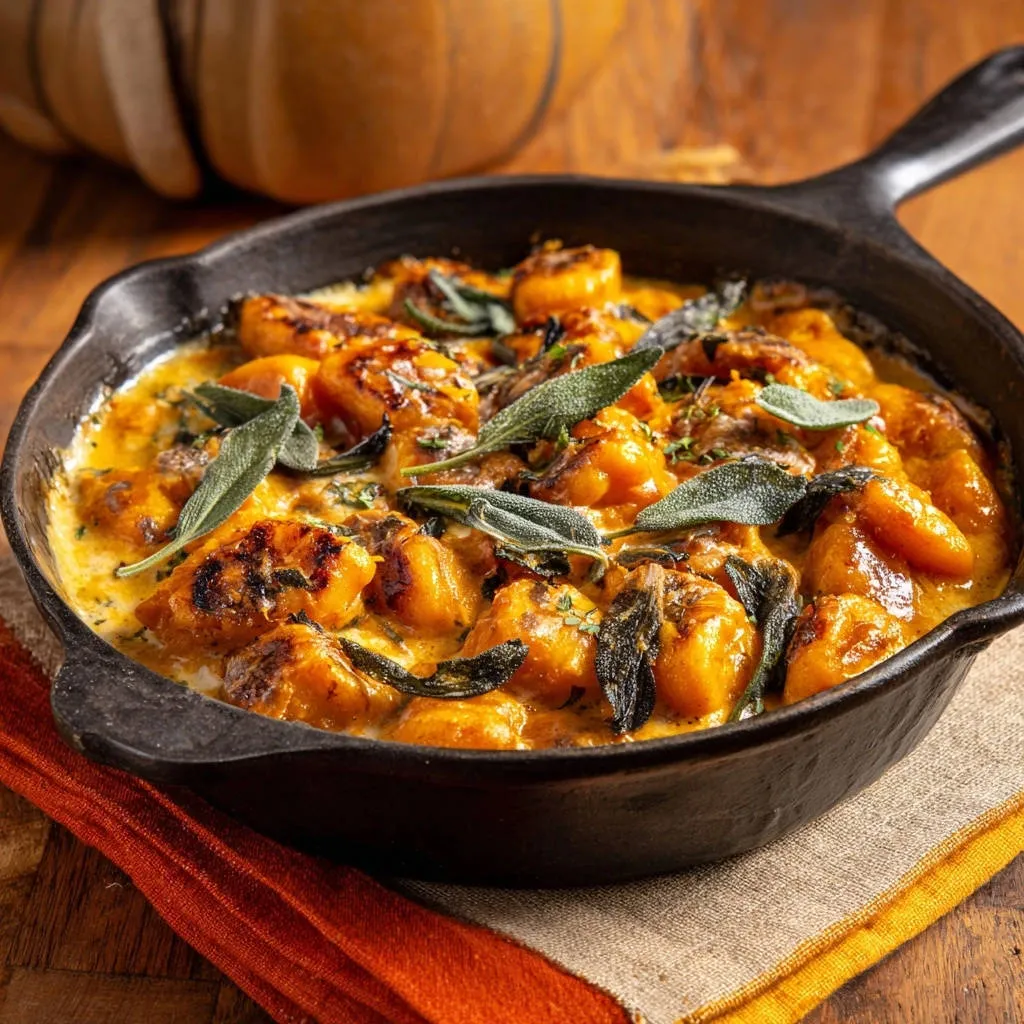
There is nothing more frustrating than trying to make gnocchi, only to end up with dense, rubbery pasta instead of soft, pillowy dumplings. I spent years perfecting the technique, and the single most important secret lies not in the mixing, but in moisture control. This exceptional recipe for Skillet Pumpkin Gnocchi with Sage Cream guarantees melt-in-your-mouth tenderness every time, achieved through a simple, critical drying step.
Once you understand how to properly prepare the pumpkin base, this ultimate autumn pasta dish transforms from intimidating to incredibly rewarding.
The “Never Dense” Promise: Why This Recipe Succeeds Where Others Fail
Most novice cooks inadvertently doom their gnocchi by using a wet pumpkin puree straight from the can or roaster. This forces them to add cups of extra flour just to form a workable dough, resulting in a heavy, tough texture.
Our method eliminates this issue by actively drying the pumpkin base before any flour is introduced. This allows us to use minimal flour, keeping the dough light, soft, and tasting distinctly of sweet squash.
| Prep Time | Cook Time | Servings |
|---|---|---|
| 30 minutes (plus drying/cooling time) | 20 minutes | 4-6 |
The Crucial Role of Moisture Control in Gnocchi Texture
Flour develops gluten when mixed with liquid. The wetter the squash or pumpkin base, the more flour you need, and the more gluten develops, leading to a dense final product.
By actively removing excess water through the double-baking or draining process, we prevent the need for over-flouring. This preservation of a low-hydration base is the non-negotiable step for achieving truly pillowy pumpkin dumplings.
Balancing the Sweetness: How Sage and Thyme Elevate Pumpkin
Pumpkin and butternut squash naturally possess a delicate sweetness that needs grounding in a savory foundation. Fresh sage offers a pungent, earthy counterpoint that is classic for seasonal dishes.
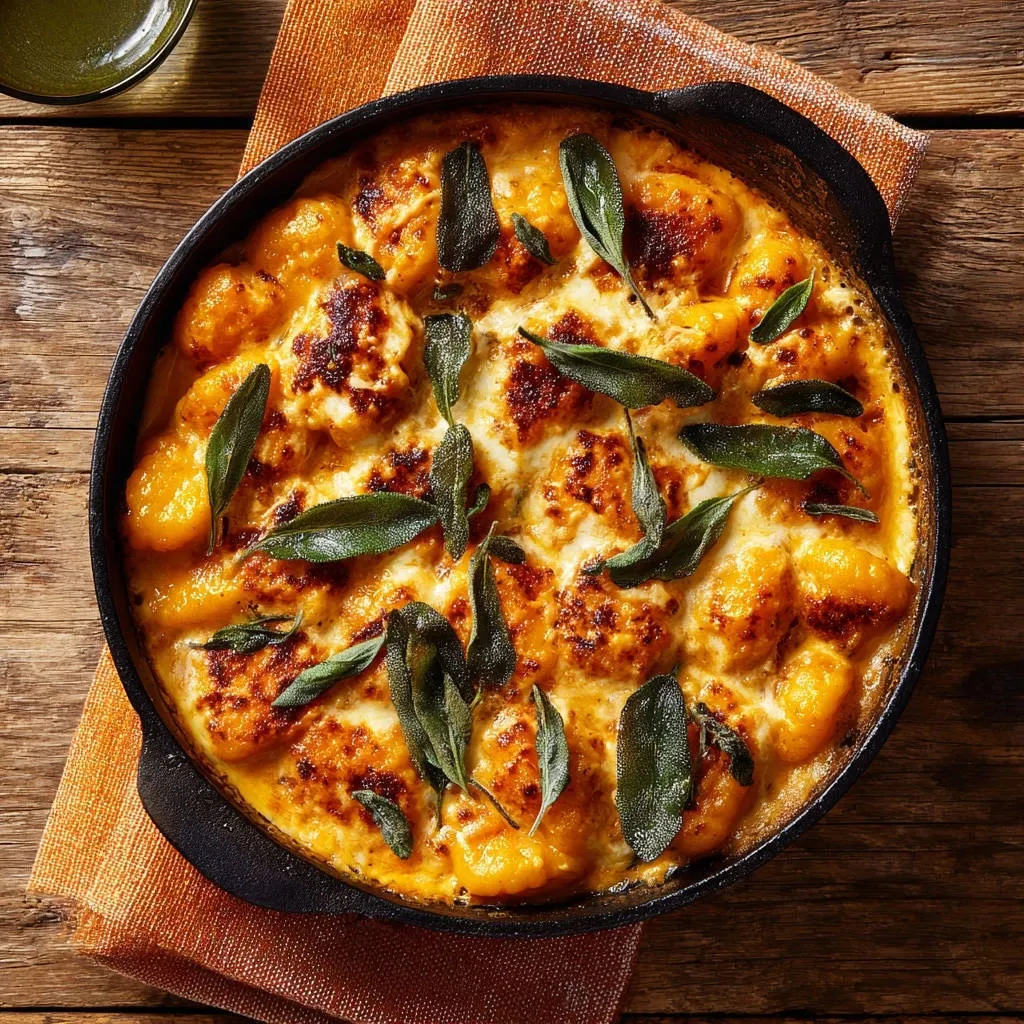
We infuse butter with whole sage and thyme leaves, creating an aromatic fat that coats the gnocchi and permeates the final sauce. This layering of fresh herbs adds depth, ensuring the dish feels rich but perfectly balanced.
The Skillet Advantage: Adding Depth with a High-Heat Sear
Boiling gnocchi renders them tender, but they lack complex flavor. Searing the cooked pumpkin gnocchi in a hot, butter-coated skillet is non-negotiable for achieving restaurant-quality results.
This high-heat sear develops a beautiful golden-brown crust, adding a toasted, nutty flavor and a satisfying textural contrast before the Sage Cream is added.
Gathering Your Seasonal Essentials: A Breakdown of Ingredients
The Pumpkin Base: Fresh vs. Canned Preparation
For fresh squash, piercing the skin allows steam to escape during the initial roasting, guaranteeing a tender interior that scoops out easily.
The critical second bake requires spreading the mash thinly on parchment paper and drying it for 15 minutes at 300°F to ensure maximum moisture evaporation.
If using canned puree, it must be drained overnight in a cheesecloth or fine mesh sieve, pressing out as much liquid as possible until the puree is thick and almost clay-like.
Flour and Binder: The Art of the Gentle Mix
Using just enough all-purpose flour is the most critical step for fluffiness; stop mixing immediately when the dough just holds its shape and is slightly sticky.
For a similar texture, explore the secrets behind a creamy mushroom ravioli.
The single egg yolk acts as a necessary binder, adding richness and helping the pumpkin dough maintain its form during the boiling stage without making it tough.
Building the Rich Sage Cream Sauce
Slowly heating unsalted butter with whole sage leaves allows the fat to absorb the herb’s essential oils, creating a deeply aromatic base for the sauce.
The sauce relies on heavy cream or half-and-half for stability and luxurious mouthfeel; lower fat dairy is prone to breaking.
The importance of freshly grated Parmesan cannot be overstated, as pre-grated varieties contain starches that inhibit a smooth, velvety melt.
Essential Kitchen Tools for Perfect Skillet Pumpkin Gnocchi
Cast Iron Skillet (or heavy-bottomed pan): Essential for achieving a deep, even sear and developing a concentrated fond (browned bits) without creating hot spots.
Slotted Spoon or Spider: Necessary for transferring the delicate, cooked gnocchi from boiling water directly to a cooling rack or clean kitchen towel to begin drying.
Parchment Paper-Lined Baking Sheet: Crucial for the pumpkin drying process, maximizing the surface area for evaporation and preventing sticking.
Fine Mesh Sieve or Cheesecloth: Key for effectively draining canned pumpkin puree, ensuring it reaches the low-moisture consistency required for light gnocchi.
From Dough to Delight: A Step-by-Step Guide to the Skillet Method
Phase 1: Achieving the Crucial Dry Pumpkin Base (Preparation)
- Roast and Mash the Squash:
If using fresh butternut squash, pierce the skin several times and roast it at 400°F until completely tender (about 45 minutes).
Scoop the flesh out and mash it until smooth. It must be lump-free before moving to the drying stage.
- The Drying Bake:
Spread 1 cup of the cooled mash thinly-no thicker than half an inch-on a parchment-lined baking sheet.
Bake again for 15 minutes at 300°F to actively draw out moisture. It must feel cool and noticeably drier before you proceed to mix the dough.
Phase 2: Mixing the Dough (The Gentle Touch)
- Combine Wet Ingredients:
In a large bowl, gently combine the cooled, dried pumpkin mash with the egg yolk, salt, and nutmeg.
Mix only until the ingredients are just incorporated, forming a uniform, wet base.
- Incorporate Flour Gradually:
Start by adding 3/4 cup of all-purpose flour, mixing carefully with a wooden spoon or spatula until it just disappears into the pumpkin mixture.
STOP IMMEDIATELY when the dough comes together. It should remain soft and slightly sticky, not firm or elastic; resist the urge to add more flour if it’s manageable.
Phase 3: Shaping, Cutting, and the Float Test
- Roll and Cut:
Dust your clean work surface lightly with flour, and quickly divide the dough into four equal portions.
Roll each portion into a long rope, about 3/4 inch thick, and use a sharp knife to cut them into 1-inch pillows. Do not handle the cut pieces excessively.
- Boil and Test:
Bring a large pot of salted water to a gentle, steady simmer, not a vigorous boil, to prevent the gnocchi from breaking.
Boil in small batches until they float to the surface (2-3 minutes). Immediately use a slotted spoon to transfer them to a cooling rack to dry slightly before searing.
Phase 4: Searing for Texture and Building the Sage Cream
- Infuse the Butter and Sear:
Heat the butter in the cast iron skillet over medium-high heat. Add the whole fresh sage and thyme leaves; cook until the sage is darkening and crisp (about 30 seconds), then remove and reserve the herbs.
Add the cooked gnocchi to the hot skillet in a single layer and sear for 2-3 minutes without stirring, allowing a rich golden crust to form on the bottom.
- Finish the Sauce:
Reduce the heat to low. Pour in the heavy cream and stir gently to coat the gnocchi, scraping up any browned bits (fond) from the pan bottom.
Stir in the grated Parmesan cheese until melted and the sauce thickens slightly. Taste and adjust seasoning with salt and pepper.
- Garnish and Serve:
Transfer the Skillet Pumpkin Gnocchi immediately to plates.
Top generously with the reserved, crispy sage leaves for a textural finish and concentrated herbal flavor.
Common Gnocchi Mistakes and How to Fix Them
My Gnocchi Dough is Too Sticky (or I Added Too Much Flour)
If the dough is slightly sticky but manageable on a lightly floured board, proceed! That is the correct consistency and will ensure the lightest possible texture.
If you accidentally added too much flour and the dough feels firm, the key is to handle it as little as possible during the shaping process; avoid kneading it further.
My Gnocchi Fell Apart While Boiling
This is usually a moisture issue, meaning the pumpkin base was still too wet, or you did not use enough binder (egg yolk).
If a test piece falls apart, immediately remove the rest of the raw dough, gently knead in another tablespoon of flour, and re-test a small piece before shaping the entire batch.
The Sauce Broke or Looks Greasy
Sauce breakage often happens when dairy is heated too aggressively. The butter or cream separates from the other liquids.
When adding the heavy cream and Parmesan, the heat must be very low or completely off. Dairy needs gentle warmth to melt, not a rapid boil, which causes separation.
Chef’s Corner: Pro Tips, Swaps, and Make-Ahead Guidance
Achieving the Perfect Golden Crust
Don’t Crowd the Skillet: The gnocchi must be in a single layer to sear properly. Overcrowding the pan lowers the temperature and steams the gnocchi instead of browning them.
Use High-Quality Butter: Better butter yields better browned bits (fond) and a richer, nuttier flavor when infused with the herbs, enhancing the overall depth of the Sage Cream.
Make-Ahead and Storage Guidance
Dough Preparation: You can prepare the dough up to the shaping stage and keep it wrapped tightly in plastic wrap in the refrigerator for up to 24 hours.
Freezing Cooked Gnocchi: Gnocchi freezes beautifully! Flash freeze the cut, uncooked pieces on a sheet tray until solid before transferring them to a freezer bag. Cook these pumpkin dumplings straight from frozen, though they will take slightly longer to float.
Flavor Variations and Seasonal Swaps
Try swapping the Parmesan for smoked Gouda for a deeper, earthier, and smokier flavor profile in your autumn pasta.
Add a sprinkle of toasted pecans or walnuts at the end for an added crunch that beautifully complements the creamy sauce and crispy sage.
For a lighter, brighter Sage Cream sauce, finish the skillet with a squeeze of fresh lemon juice before serving; the acidity cuts through the richness.
Quick Answers: Your Skillet Pumpkin Gnocchi FAQs
Can I Make This Skillet Pumpkin Gnocchi Gluten-Free?
Yes, you can substitute the all-purpose flour with a high-quality 1:1 gluten-free baking blend that contains xanthan gum. Ensure you follow the “gentle touch” mixing rule even more strictly, as GF doughs can become crumbly easily when overworked.
What is the Best Substitute for Fresh Sage?
While fresh sage is highly recommended for both flavor and the crispy garnish, you can substitute 1/4 teaspoon of dried rubbed sage, added directly to the butter during the searing process. However, you will miss the vital textural element provided by the crispy leaves.
Can I use milk instead of heavy cream in the sauce?
Milk contains significantly less fat and is much more prone to breaking or curdling when heated with cheese. For the rich, velvety Sage Cream Sauce, heavy cream or half-and-half is necessary to ensure stability, proper emulsification, and a luxurious texture.
Ready to Impress? Share Your Skillet Pumpkin Gnocchi Masterpiece!
This Skillet Pumpkin Gnocchi with Sage Cream is proof that refined Italian comfort food doesn’t have to be complicated or intimidating.
By focusing on moisture control in the dough and strategic flavor layering in the skillet, you are guaranteed pillowy, restaurant-quality butternut squash gnocchi results every time.
We encourage you to try this ultimate autumn dish and share your creations. Happy cooking!
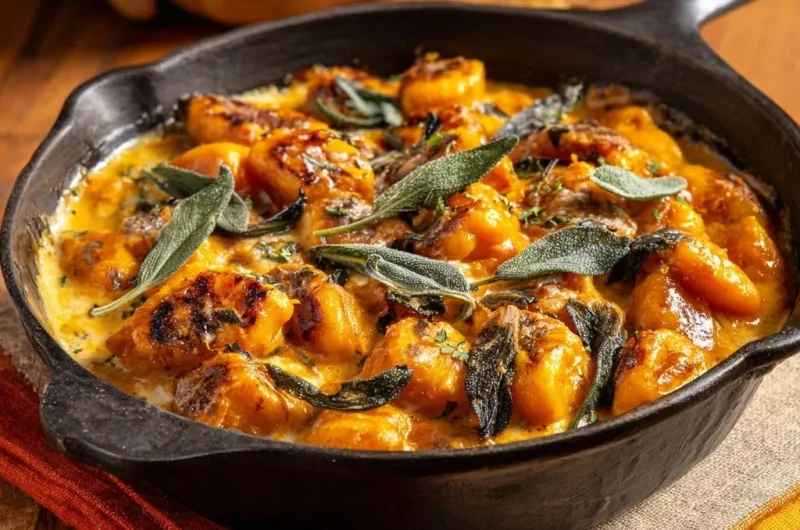
Skillet Pumpkin Gnocchi
Course: Main CourseCuisine: ItalianDifficulty: medium4
servings1
hour15
minutes15
minutes450
kcal90
minutesForget rubbery dumplings; this recipe guarantees melt-in-your-mouth gnocchi by using a simple trick to actively dry out the squash base. These pillow-soft pumpkin dumplings are pan-seared until golden brown and finished in a luscious sage and brown butter cream sauce.
Ingredients
1 large butternut squash (or 2 cups canned pumpkin puree, highly drained)
1 large egg yolk
1/2 teaspoon salt
1/4 teaspoon nutmeg
1 cup all-purpose flour (plus more for dusting)
4 tablespoons unsalted butter
4 fresh sage leaves
1/2 teaspoon fresh thyme leaves
1/2 cup heavy cream or half-and-half
1/4 cup grated Parmesan cheese
Salt and black pepper to taste
Directions
- Prepare the Pumpkin Base (The Fluffiness Secret): The secret to preventing dense gnocchi is removing excess moisture. If using fresh squash, pierce the skin several times, roast it at 400 degrees F until tender, about 45 minutes. Scoop out the flesh and mash it. Crucially, spread the mash thinly on a baking sheet lined with parchment paper and bake again for 15 minutes at 300 degrees F to actively dry out the mixture. Let cool completely. (If using canned pumpkin, drain it in a cheesecloth or fine mesh sieve overnight, pressing out as much liquid as possible.)
- Form the Gnocchi Dough: In a large bowl, combine 1 cup of the cooled, dried pumpkin mash, egg yolk, 1/2 teaspoon salt, and nutmeg. Gradually incorporate the flour, starting with 3/4 cup, mixing with a wooden spoon or spatula until the dough just comes together. Stop mixing immediately once the flour disappears. The dough should be soft and slightly sticky, but not wet. Adding too much flour is the fastest way to ruin the texture.
- Cut and Cook the Gnocchi: On a lightly floured surface, divide the dough into four portions. Roll each portion into a long rope about 3/4 inch thick. Use a sharp knife to cut the ropes into 1 inch pieces. Bring a large pot of salted water to a gentle boil. Drop the gnocchi in batches. They are done when they float to the surface (about 2 to 3 minutes). Use a slotted spoon to transfer them immediately to a cooling rack or clean kitchen towel.
- Sear the Gnocchi: Heat the cast iron skillet over medium-high heat. Add the butter. Once the butter is melted and foaming, toss in the whole fresh sage leaves and fresh thyme. Cook the herbs until the sage leaves darken and crisp slightly (about 30 seconds). Remove the herbs and set aside, reserving the flavored butter in the pan. Add the cooked gnocchi to the hot skillet, ensuring they are in a single layer. Sear without moving them for 2 to 3 minutes until a beautiful golden-brown crust forms on the bottom.
- Finish the Sauce: Reduce the heat to low. Pour in the heavy cream and stir gently to coat the gnocchi, scraping up any browned bits from the pan bottom. Stir in the grated Parmesan cheese until melted and the sauce thickens slightly. Season with extra salt and pepper as needed. Garnish the skillet with the reserved crispy sage leaves before serving immediately.
Notes
- Do not skip the step of drying out the squash/pumpkin mash; this is the most critical factor for achieving light, tender gnocchi.