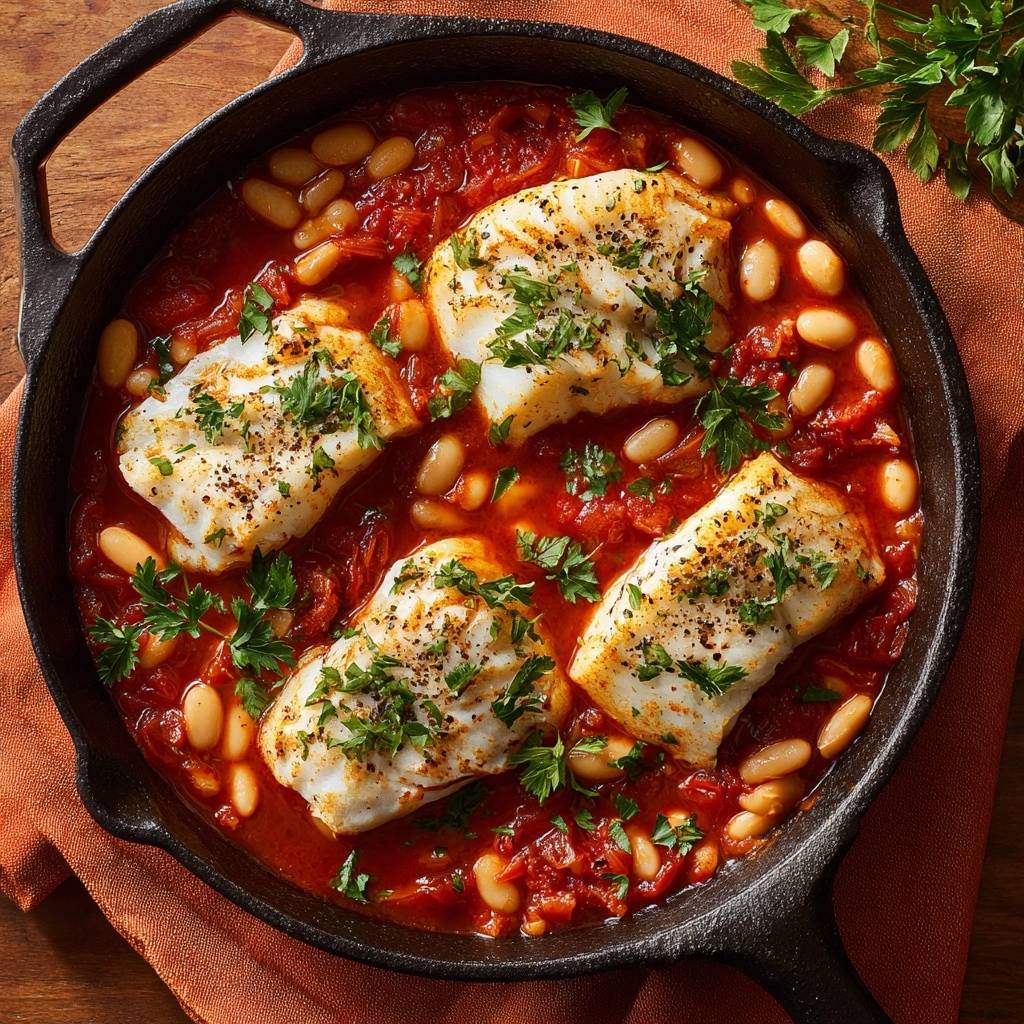
Stop settling for fish that turns out tough or flavorless. The biggest mistake home cooks make with white fish is overcooking it in a dry pan or boiling it in sauce until it becomes rubbery. This Skillet Roasted Cod with White Beans and Tomato fixes that problem forever.
The secret lies in a specific two-stage searing and poaching method that locks in moisture while creating a savory, rich base. You’ll get a gorgeous, golden-brown crust on the outside that contrasts beautifully with the creamy cannellini beans and the smoky acidity of fire-roasted tomatoes. It’s a restaurant-quality meal that feels fancy but comes together in one pan.
I’ve found that the real trick to success is the “nestling” technique. By searing the fish first to develop flavor and then finishing it gently on top of the simmering beans, you ensure a buttery, flake-apart texture every single time. You aren’t just cooking fish; you’re building layers of flavor that make every bite feel like a treat.
The Secret to Succulent Skillet Roasted Cod
Cod is a lean white fish, which means it has very little fat to protect it from high heat. If you leave it in a hot pan for too long, the proteins tighten up and squeeze out all the moisture, leaving you with a dry, stringy mess. This recipe uses science to fight that tendency.
By searing the fillets over high heat for just a few minutes, we trigger the Maillard reaction for flavor without cooking the center. Then, we move to a gentle poach. Nestling the fish on top of the bean mixture allows the steam from the tomatoes to finish the interior of the cod. This indirect heat is much more forgiving and keeps the fish succulent and pearly white inside.
For another take on achieving a golden crust and flaky finish with white fish, explore pan-seared white fish.
Essential Components for the Tomato Bean Base
Quality ingredients make a massive difference when the preparation is this simple. First, always look for thick-cut cod fillets. Thin tail pieces will overcook in seconds, but a 6-ounce thick-cut loin can withstand the sear and still stay juicy during the poaching phase.
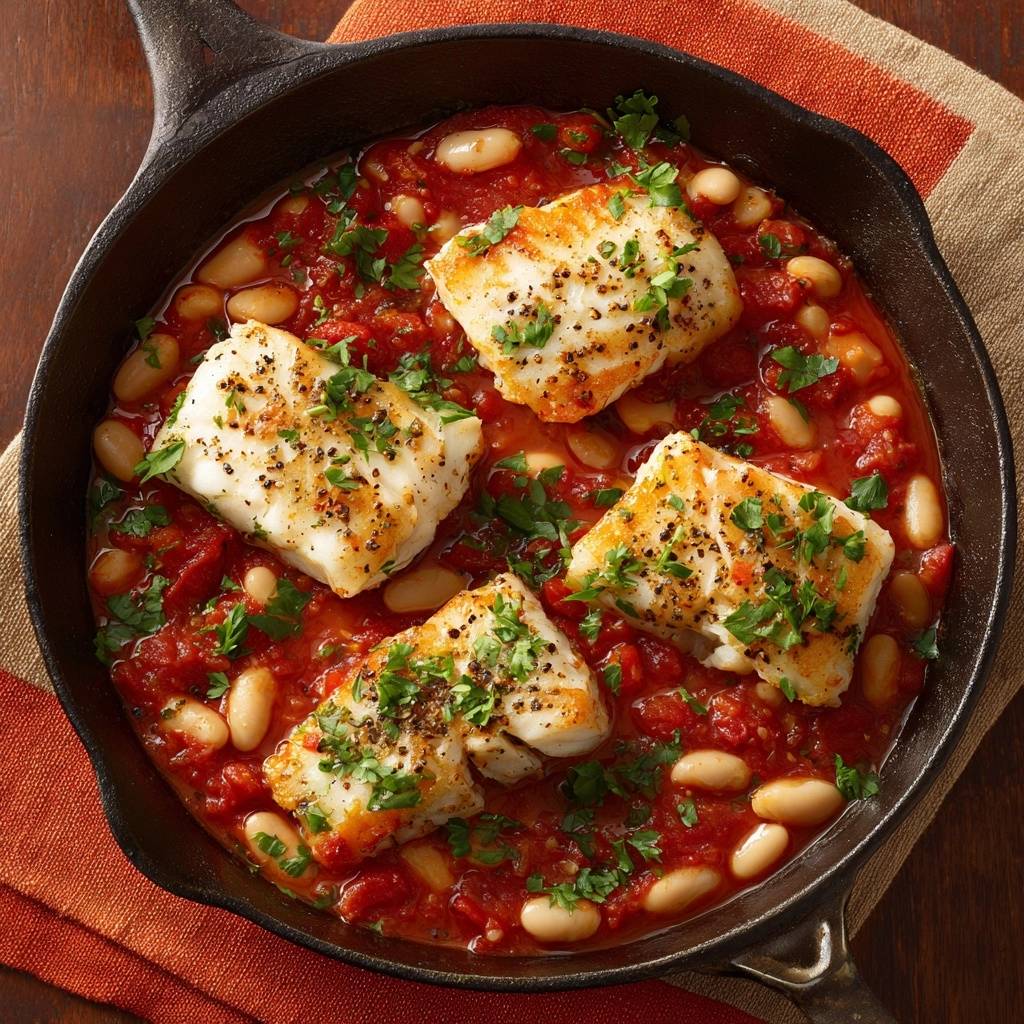
For the base, I choose cannellini beans over Great Northern beans because they have a much silkier, creamier interior. They act as a natural thickener for the sauce, creating a hearty texture that feels indulgent without being heavy. When you pair them with fire-roasted diced tomatoes, you get an instant boost of charred, smoky depth that regular canned tomatoes just can’t provide.
Don’t skip the tomato paste, either. It might seem like a small addition, but frying the paste in the oil for a minute creates a concentrated umami foundation. It bridges the gap between the fresh garlic and the acidic tomatoes, making the sauce taste like it’s been simmering for hours instead of just ten minutes.
Selecting High-Quality Fresh or Frozen Cod
If you’re buying fresh, look for fillets that are firm to the touch and have a translucent, almost glowing appearance. It should smell like the ocean, not “fishy.” If you’re using frozen cod, which is often a great high-quality option, make sure to thaw it completely in the refrigerator overnight. Pat it dry multiple times before cooking to remove the excess moisture that frozen fish often releases.
Preparation: Achieving the Perfect Golden Sear
The “Dry Surface” rule is the most important law of fish cookery. If your cod is damp when it hits the oil, it will steam instead of sear, and you’ll end up with a grey, mushy exterior. I use at least two paper towels per fillet to press out every drop of surface moisture.
Once the fish is dry, the physics of the Maillard reaction can take over. This is where the natural sugars and amino acids in the fish transform into that savory, golden crust. You need a hot pan and enough oil to coat the bottom completely. When that seasoned fish hits the shimmering oil, leave it alone! Moving it too early will tear the delicate flesh and ruin that perfect crust you’re after.
Step-by-Step: Searing and Poaching the Cod
Start with the high-heat sear. You want your oil shimmering and just on the verge of smoking. Place the cod seasoned-side down and resist the urge to peek. After about 3 or 4 minutes, you’ll see the edges turning opaque and golden. Flip it carefully for just one minute to seal the other side, then pull it out. The middle will still be raw, and that’s exactly what we want.
Now, build your aromatics. Lower the heat so you don’t burn the garlic. Stir in the tomato paste and watch it darken from bright red to a deep brick color. This “blooming” process removes the raw metallic taste of the paste and unlocks its sweetness.
Next comes the deglazing. Pour in the diced tomatoes with all their juices. Use your wooden spoon to scrape up the browned bits (the fond) from the bottom of the skillet. Those bits are pure flavor gold. Let the beans and tomatoes simmer until the liquid reduces slightly and looks glossy.
If you’re enjoying the bright tomato notes here, you’ll want to try these creamy sun-dried tomato chicken thighs for another flavor boost.
Finally, the gentle finish. Nestled the cod back into the pan, but don’t submerge it. You want the seared crust to stay above the liquid so it remains crisp. Cover the pan and let the steam do the work for about 4 minutes. When the fish flakes easily with a fork, it’s done.
Avoiding Common Mistakes with White Fish
If your fish sticks to the skillet, don’t panic and don’t force it. Usually, fish sticks because the proteins haven’t finished searing or the pan wasn’t hot enough. Give it another 30 seconds; often, the fish will “release” itself from the pan once the crust is fully formed.
To check for doneness without a thermometer, use the flake test. Gently press a fork into the thickest part of the fillet. If the layers of fish separate easily and look opaque rather than translucent, it’s ready. Always finish with a fresh squeeze of lemon. The acid cuts through the richness of the olive oil and beans, balancing the whole dish.
Flavor Variations and Ingredient Swaps
This recipe is a fantastic canvas for Mediterranean flavors. You can easily toss in a tablespoon of capers or a handful of halved Kalamata olives during the simmering stage for a salty, briny kick. If you can’t find cod, halibut or sea bass are excellent substitutes that hold up well to this searing method.
Round Out Your Meal
Consider these chicken dishes to complement your fish.
- For a bright and herbaceous option, try the Garlic Herb Grilled Chicken Salad, featuring fresh herbs that pair well with the Mediterranean flavors of your cod.
- If you’re in the mood for something with more greens, the Grilled Chicken Kale and Cabbage Power Salad offers a satisfying crunch and vibrant ingredients.
In the summer, I love swapping the canned tomatoes for two cups of fresh cherry tomatoes. Let them cook in the skillet until they burst and create their own light sauce. You can also stir in a handful of fresh baby spinach at the very end for a pop of color and extra nutrients.
Optimal Side Dishes for Skillet Roasted Cod
You definitely want something to soak up that incredible tomato broth. A thick slice of toasted sourdough or crusty ciabatta is my go-to choice. Rub the bread with a raw garlic clove after toasting for even more flavor.
If you want more greens, sautéed kale or rapini provides a nice bitter contrast to the creamy beans. A simple arugula salad with a sharp lemon vinaigrette also works beautifully. The peppery bite of the arugula cleanses the palate between mouthfuls of the rich, savory cod.
Managing Texture: The Role of the Skillet
A heavy-bottomed skillet, like cast iron or carbon steel, is vital for this recipe. These pans hold heat much better than thin aluminum ones. This consistent heat prevents “hot spots” that cause one side of your fish to burn while the other stays raw. The cast iron also helps develop a superior crust during that initial sear, which is the hallmark of this dish.
Expert Tips for Seafood Success
Can I use dried beans instead of canned?
Yes, you can, but you’ll need to plan ahead. Soak your dried cannellini beans overnight and simmer them in water or broth until tender before starting this recipe. Use about 1.5 cups of cooked beans to replace one 15-ounce can. The texture of home-cooked beans is often even creamier than canned.
How do I store and reheat leftovers without overcooking the fish?
Store leftovers in an airtight container in the fridge for up to two days. To reheat, avoid the microwave, as it will turn the cod rubbery. Instead, place the beans and fish back in a skillet over low heat. Add a splash of water or broth, cover with a lid, and steam gently until just warmed through.
Is it possible to make this in a stainless steel pan instead of cast iron?
You certainly can, but you must be more careful with the heat. Stainless steel doesn’t have the same non-stick properties as seasoned cast iron. Make sure your oil is truly shimmering before adding the fish, and do not try to flip the fillets until they naturally release from the pan surface.
Can I add other vegetables like spinach or zucchini?
Absolutely. If you’re adding zucchini, sauté it with the garlic so it has time to soften. For delicate greens like spinach or Swiss chard, stir them into the tomato and bean mixture right before you nestle the fish back in. The residual heat will wilt the greens perfectly in just a minute or two.
Why did my fish fall apart in the pan?
This usually happens if the fish was handled too much or if it was overcooked during the searing phase. Cod is very delicate. Use a wide fish spatula to flip the fillets carefully. Also, ensure you are using thick-cut pieces; thin fillets are much more prone to breaking apart as they cook.
Skillet Roasted Cod
Course: Main CourseCuisine: AmericanDifficulty: easy4
servings10
minutes20
minutes310
kcal30
MinutesA foolproof white fish recipe that combines a golden-seared crust with a gentle poaching finish. Thick-cut cod fillets are served over a savory base of fire-roasted tomatoes and cannellini beans for a healthy, one-pan meal.
Ingredients
4 thick-cut cod fillets (6 ounces each)
3 tablespoons extra virgin olive oil, divided
1 can (15 ounces) cannellini beans, drained and rinsed
1 can (14.5 ounces) fire-roasted diced tomatoes (for texture and color)
1 tablespoon tomato paste
3 cloves garlic, minced
1/2 teaspoon dried oregano
1/2 teaspoon red pepper flakes (optional)
1/2 teaspoon sea salt
1 teaspoon freshly cracked black pepper
1/2 cup fresh Italian parsley, roughly chopped
Lemon wedges for serving
Directions
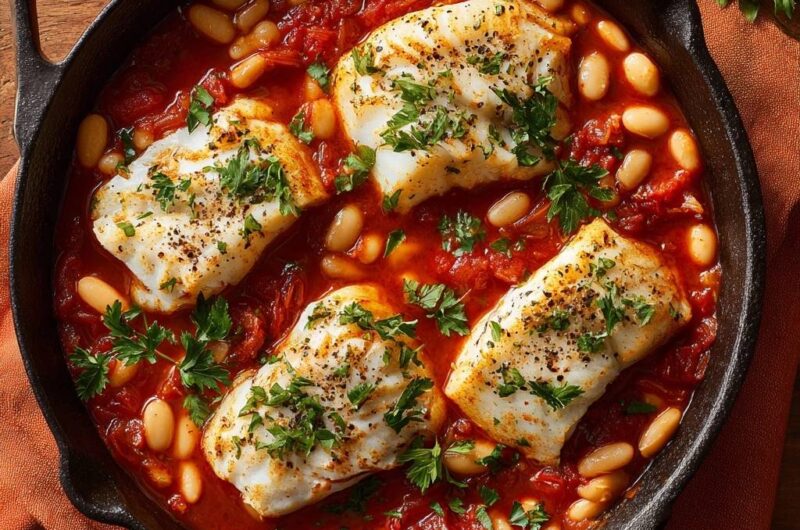
- Pat the cod fillets completely dry with paper towels. This is the essential step for the golden sear shown in the image. Season the tops generously with sea salt and a heavy coating of cracked black pepper.
- Heat 2 tablespoons of olive oil in a large cast iron skillet over medium-high heat. Once the oil is shimmering and just starting to smoke, add the cod fillets, seasoned side down.
- Sear for 3 to 4 minutes without moving them until a deep golden-brown crust forms. Carefully flip the fillets and sear for only 1 minute on the other side.
- Remove the fish from the pan and set aside on a plate. The center will still be translucent.
- Reduce heat to medium. Add the remaining 1 tablespoon of oil and the minced garlic. Cook for 30 seconds, then stir in the tomato paste, cooking for 1 minute until it darkens.
- Add the diced tomatoes (with juices), white beans, oregano, and red pepper flakes. Stir to combine, scraping up any browned bits from the bottom of the pan. Simmer for 5-7 minutes until the sauce thickens and the flavors concentrate.
- Nestled the cod fillets back into the skillet on top of the beans, seared-side up. Do not submerge the crust; let it sit above the liquid to maintain its texture.
- Reduce heat to low. Cover the pan with a lid for 3 to 4 minutes. This gentle poaching finishes the interior of the fish using the steam from the sauce, ensuring it stays succulent and never dry.
- Remove from heat. Garnish with a heavy handful of fresh parsley and a squeeze of lemon. Serve directly from the skillet.
Notes
- Patting the fish completely dry is essential for a golden sear. Do not submerge the seared crust in the sauce during the final poaching step to maintain texture.