Forget those sad, rubbery cafeteria patties that gave Salisbury steak a bad name. We’ve all been there—biting into a piece of meat that feels more like a hockey puck than a gourmet meal. The culprit is usually a combination of lean meat and aggressive over-handling, which turns a potentially delicious dinner into a dry, crumbly mess.
The secret to a truly elevated version lies in the “Steam-Lock” method. By searing the beef to develop a crust and then finishing it under a tight lid within a bubbling gravy, you create a pressurized environment. This process forces moisture back into the meat fibers rather than letting it evaporate into the air. It’s the difference between a tough burger and a melt-in-your-mouth steakette.
I’ve found that the real magic happens when you pull the patties off the heat while they’re still slightly pink in the middle. Most home cooks wait until they’re fully browned, but that leads to overcooking during the simmering stage. Trust the process and let the gravy do the heavy lifting for that final, tender finish.
Essential Components for Skillet Salisbury Steak with Mushroom Gravy
Success starts with your fat ratio, so don’t reach for the extra-lean ground beef. An 80/20 blend is the gold standard here because the rendered fat keeps the interior moist while the exterior sears. If you use 90/10 or 95/5, you’ll likely end up with a dense, grainy texture that no amount of gravy can save.
Panko breadcrumbs are another game-changer compared to the traditional fine, sandy crumbs. Panko flakes are larger and airier, creating tiny pockets within the meat that trap juices. When you combine these with a large egg, you create a stable emulsion that holds the patty together without making it feel like a heavy meatloaf.
Worcestershire sauce provides that deep, savory umami base that defines this dish. It acts as a chemical tenderizer while adding a complex tang. If you want that restaurant-quality, dark mahogany look, a few drops of browning sauce in the gravy will give you a rich visual depth that looks as good as it tastes.
Selecting Mushrooms and Onions for Maximum Umami
While white button mushrooms are fine in a pinch, Cremini (often labeled as Baby Bellas) are far superior for this skillet. They have a lower water content and a much meatier texture that stands up to the heavy gravy. They won’t shrivel into nothingness when they hit the hot butter.
For the onions, stick with the large yellow variety. Yellow onions have a higher sugar content than white or red ones, which is essential for caramelization. As they sauté, those sugars break down and turn golden, providing a natural sweetness that balances the salty beef broth.
The Role of Dijon Mustard in Gravy Emulsification
Dijon mustard isn’t just there for a flavor kick; it’s a functional ingredient. Mustard contains mucilage, a natural thickener that acts as an emulsifier. This helps the butter, beef broth, and flour bind together into a glossy, cohesive sauce.
Without that little bit of mustard, you might notice your gravy looks slightly greasy or separates as it sits. The Dijon ensures the sauce stays velvety and clings to the back of your spoon. It adds a sophisticated brightness that cuts through the richness of the beef fat.
The Physics of Tenderness: Mixing and Shaping
When you mix ground beef, you’re managing protein bonding. The more you squeeze and mash the meat, the more the proteins cross-link, creating a “bouncy” or tough texture. It’s better to use your fingers like a rake to gently toss the ingredients together until they’re just combined.
Think of it as fluffing the meat rather than kneading it like bread dough. You want to keep the mixture as light as possible. If you can still see small flecks of the egg and breadcrumbs before the final toss, you’re doing it right.
Why the Center Dimple Prevents Domed Patties
Have you ever noticed how burgers sometimes puff up into round balls in the pan? That’s because meat fibers contract and tighten when they hit high heat. To combat this, use your thumb to make a shallow indentation or “dimple” in the center of each oval patty.
This dimple compensates for the natural shrinkage that happens during the sear. As the fibers tighten, the center rises to meet the level of the edges. This results in a perfectly flat, evenly cooked patty that provides more surface area for the gravy to coat.
Mastering the Hard Sear and Maillard Reaction
The Maillard reaction is the chemical process that creates that beautiful brown crust and deep savory flavor. To achieve this, you need a screaming hot pan—ideally cast iron. Cast iron retains heat better than stainless steel, ensuring the temperature doesn’t drop when the cold meat hits the surface.
Once you place the patties in the oil, leave them alone! Don’t poke, prod, or move them for at least three minutes. You need that uninterrupted contact with the heat to build a dark, flavorful crust that won’t stick to the pan when you finally flip it.
Timing the Flip to Preserve Internal Moisture
The goal of the sear is color, not doneness. You should remove the patties from the skillet while the centers are still quite rare. This is a professional move called “undercooking for carry-over.”
Because the meat will spend another five to eight minutes simmering in the gravy later, it will finish cooking gently. If you cook them all the way through during the searing phase, they will inevitably become dry and tough by the time the sauce is ready.
Building a Velvety Mahogany Mushroom Sauce
After removing the meat, you’ll see dark bits stuck to the bottom of the pan—that’s “fond,” and it’s pure flavor gold. When you melt the butter and add the vegetables, the moisture from the onions will help deglaze the pan. Use a wooden spoon to scrape those bits up so they dissolve into the sauce.
Don’t rush the mushrooms and onions. You want the onions to be soft and translucent and the mushrooms to have a deep, roasted brown color. This stage is where the majority of your gravy’s flavor is built, so give it the full ten minutes if needed.
Cooking the Roux to Eliminate Raw Flour Taste
Once your vegetables are browned, sprinkle the flour over them and stir constantly. You need to cook this “roux” for at least two minutes. This toasts the flour, removing that “pasty” raw taste and turning it a light tan color.
If you skip this step, your gravy will taste like uncooked dough. Cooking the flour in the fat also ensures that the starch granules are coated, which is the first step toward a lump-free sauce. It should smell slightly nutty before you add any liquid.
Whisking Techniques for a Lump-Free Consistency
The trick to a smooth sauce is adding the beef broth slowly. Start with just half a cup and whisk vigorously until it forms a thick paste with the flour and vegetables. This “tempering” prevents the flour from clumping together.
Once that paste is smooth, gradually pour in the rest of the broth while continuing to whisk. If you dump all the liquid in at once, the flour will float in little balls that are nearly impossible to break down. If lumps do form, don’t panic—just keep whisking over the heat, and they will usually dissolve.
The Steam-Lock Finish: Locking in Juices
Now comes the most important part: the transition from dry heat to moist heat. Place the seared patties back into the skillet and spoon that rich gravy right over the top. This ensures the meat is completely surrounded by flavor and moisture.
Cover the pan with a tight-fitting lid and turn the heat down. This creates a “steam-lock” where the moisture can’t escape. The gentle heat braises the beef, making it incredibly tender while the flavors of the mushroom and onion penetrate deep into the meat.
Reducing the Gravy for a Glossy Glaze
For the final two minutes of cooking, take the lid off. This allows a small amount of water to evaporate, concentrating the flavors and thickening the gravy into a glossy glaze. You’re looking for “nappe” consistency.
Nappe is a French culinary term meaning the sauce is thick enough to coat the back of a spoon without immediately running off. When you run your finger through the sauce on the spoon, the line should stay clean. That’s when you know it’s perfect.
Troubleshooting Common Salisbury Steak Issues
If your patties fall apart in the pan, it’s usually because you flipped them too early or didn’t use enough binder. Make sure the egg is fully incorporated and let that first side sear completely before trying to move it. The crust actually helps hold the meat together.
If the gravy tastes too salty, it’s often due to the beef broth. Some store-bought brands are salt bombs. You can fix this by adding a splash of water or a tablespoon of unsalted butter at the end to mellow out the flavors. If the meat is tough, you likely over-mixed the beef or overcooked it during the initial sear.
Optimal Pairings for Rich Mushroom Gravy
This dish screams for a high-starch side to soak up all that extra gravy. Creamy Yukon Gold mashed potatoes are the traditional favorite because their buttery texture mimics the richness of the sauce. Wide egg noodles are another fantastic option if you prefer a bit of chew.
To balance the heavy, savory notes, I always serve this with something bright or bitter. Roasted broccolini with a squeeze of lemon or a simple vinegar-based slaw works wonders. The acidity cuts through the beef fat and refreshes your palate between bites.
Make-Ahead Strategies and Storage Logistics
You can easily prep this meal ahead of time by shaping the patties up to 24 hours in advance. Store them on a plate covered tightly with plastic wrap in the fridge. This actually helps the flavors meld and makes the patties firmer and easier to sear the next day.
Leftovers should be stored in an airtight container for up to three days. The gravy will thicken significantly in the fridge, so when you reheat it, add a tablespoon of water or broth to loosen it back up. I recommend reheating on the stovetop over low heat to keep the meat from getting rubbery in the microwave.
How do I keep the patties from getting tough?
The most common mistake is over-mixing the ground beef. Use a light touch and stop as soon as the ingredients are combined. Additionally, make sure you don’t overcook them during the searing phase; they should finish cooking gently inside the gravy under a lid.
Can I use a different type of mushroom?
Yes, you can use white button mushrooms, but they have more water and less flavor than Cremini. For a more gourmet twist, try a mix of Shiitake and Oyster mushrooms. Just avoid canned mushrooms, as they lack the texture needed to stand up to the thick gravy.
What can I use if I don’t have Panko breadcrumbs?
You can substitute regular breadcrumbs, but use about 25% less since they are much finer and denser. Alternatively, crushed saltine crackers or even a piece of fresh bread soaked in a little milk (a panade) will work to keep the meat moist.
Can I freeze Salisbury steak?
Yes, this dish freezes quite well. Place the cooked patties and gravy in a freezer-safe container or heavy-duty freezer bag. It will stay fresh for up to two months. Thaw it overnight in the refrigerator before reheating on the stovetop for the best texture.
Why is my gravy lumpy?
Lumps usually happen if the beef broth is added too quickly to the flour and butter mixture. To fix it, you can pour the gravy through a fine-mesh strainer into a bowl, then return the smooth liquid to the pan. Next time, whisk in the liquid one splash at a time until a smooth paste forms.
Is there a substitute for browning sauce?
Browning sauce is mostly for color, so you can omit it without changing the flavor much. However, a teaspoon of dark soy sauce or a little extra Worcestershire sauce can provide a similar deep hue, though be careful with the salt levels if you go that route.
Skillet Salisbury Steak with Mushroom Gravy
Course: Main CourseCuisine: AmericanDifficulty: easy4
servings15
minutes25
minutes40
Minutes410
kcalAmerican
Ingredients
1.5 lbs ground beef (80/20 blend for moisture)
1/2 cup panko breadcrumbs
1 large egg
2 tablespoons Worcestershire sauce (divided)
1 teaspoon onion powder
1 teaspoon garlic powder
1/2 teaspoon salt
1/2 teaspoon black pepper
2 cups sliced cremini mushrooms
1 large yellow onion, thinly sliced
2 cups high-quality beef broth
2 tablespoons all-purpose flour
2 tablespoons butter
1 tablespoon olive oil
1 teaspoon Dijon mustard (for depth and emulsification)
1 teaspoon browning sauce (optional, for that deep visual color)
Directions
- Mix for Tenderness: In a large bowl, combine the ground beef, breadcrumbs, egg, 1 tablespoon Worcestershire sauce, onion powder, garlic powder, salt, and pepper. To solve the dry meat problem, mix gently with your hands just until combined. Over-mixing develops too much protein bonding, which makes the meat tough.
- Shape and Dimple: Shape the mixture into 4 to 6 oval patties. Use your thumb to make a slight indentation in the center of each patty. This prevents the meat from puffing up into a ball and ensures even cooking so the edges don’t dry out before the center is done.
- The Hard Sear: Heat olive oil in a large cast-iron or heavy skillet over medium-high heat. Sear the patties for 3-4 minutes per side until a deep, dark brown crust forms. Remove patties from the pan while they are still slightly undercooked in the middle. This is the key to preventing dryness.
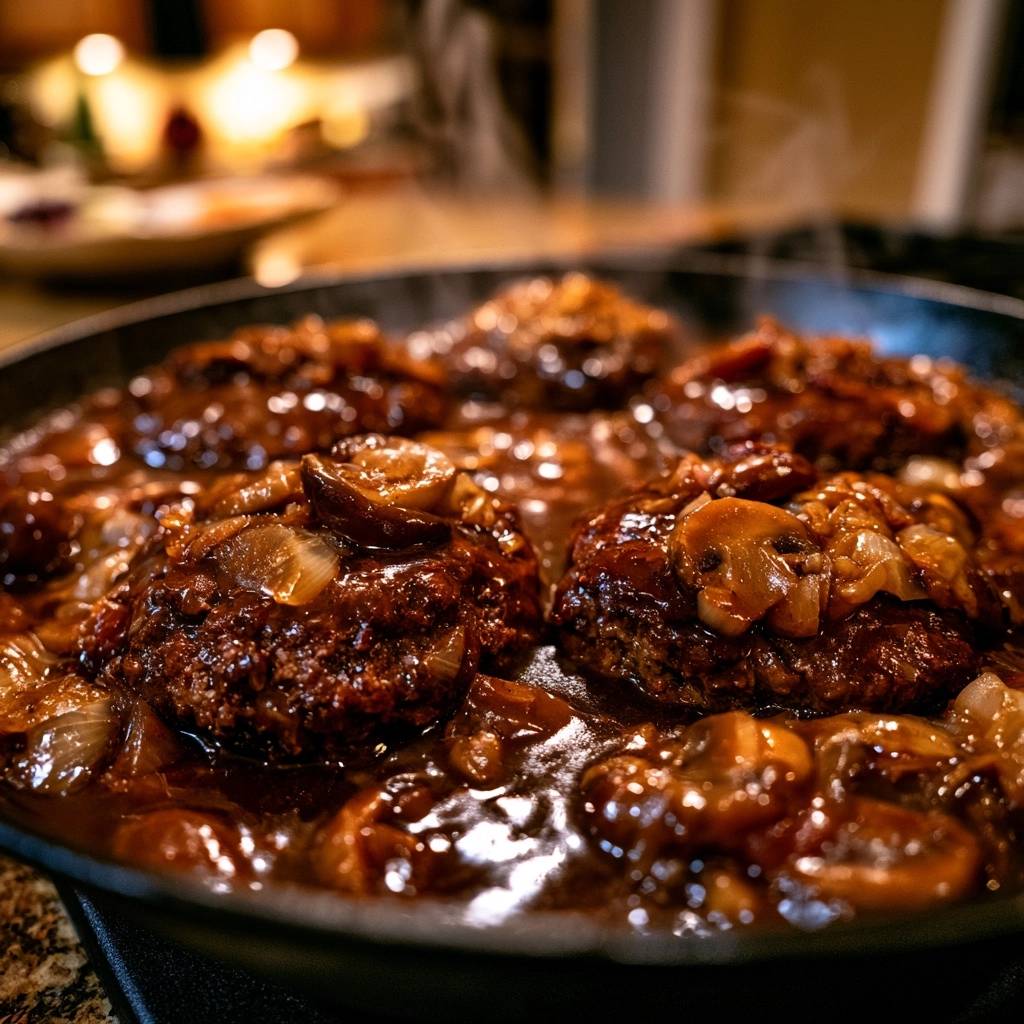
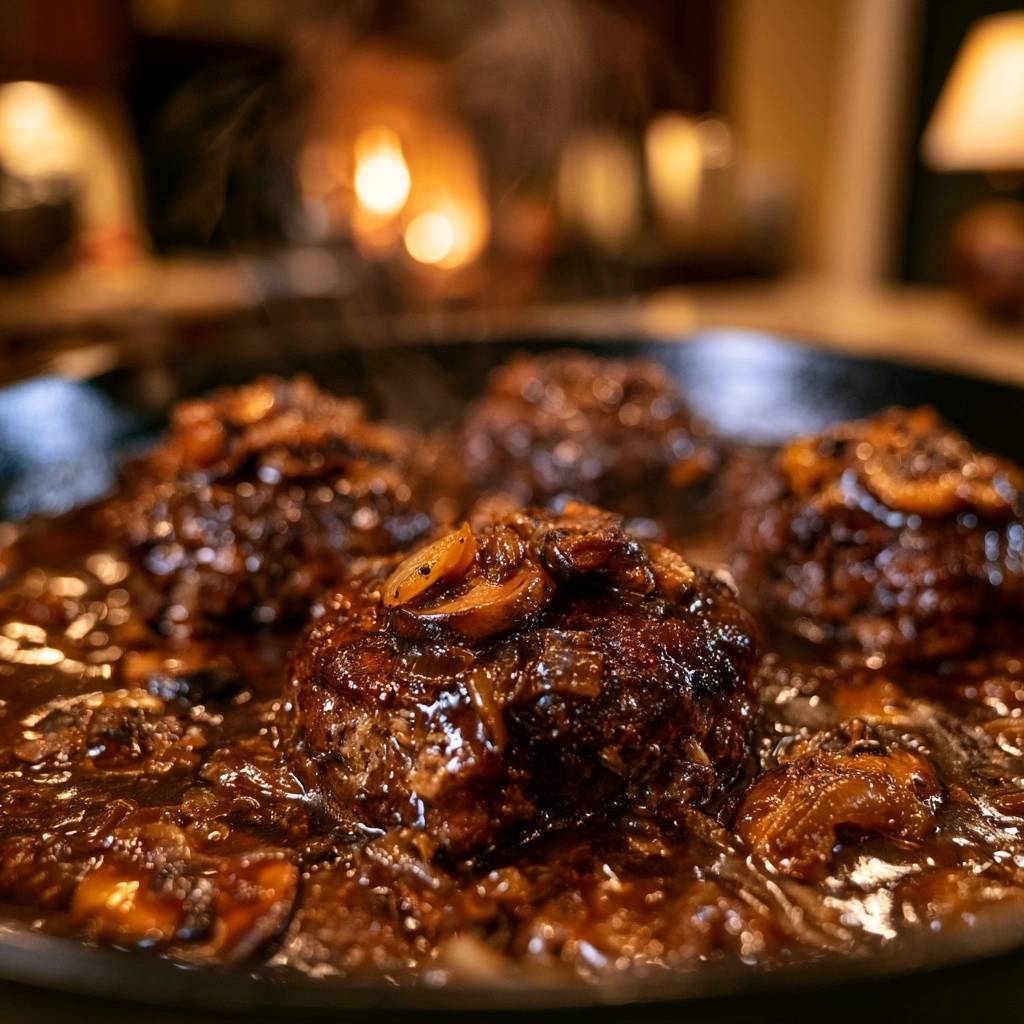
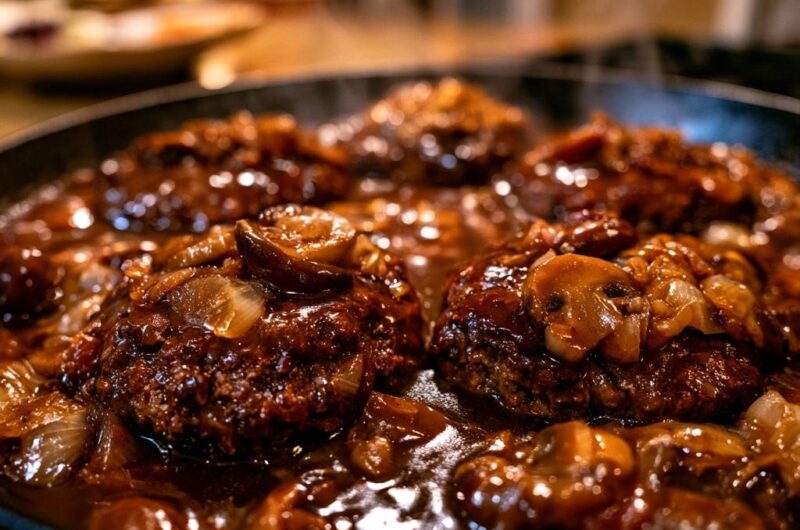
- Deglaze and Aromatics: In the same skillet, melt the butter. Add the sliced mushrooms and onions. Saute for 7 to 10 minutes. Do not rush this; the onions should be caramelized and the mushrooms deeply browned to match the rich color in the image.
- Build the Gravy: Sprinkle the flour over the vegetables and stir for 2 minutes to cook out the raw flour taste and brown the roux. Slowly whisk in the beef broth, the remaining tablespoon of Worcestershire sauce, and the Dijon mustard. If you want the deep mahogany color shown in the image, add a few drops of browning sauce now. Whisk constantly to ensure a smooth, velvety consistency.
- The Steam-Lock Finish: Place the patties back into the gravy, spooning the sauce and mushrooms over the top of the meat. Lower the heat to medium-low and cover the skillet with a tight-fitting lid. This creates a steam-lock environment that finishes the cooking process gently, ensuring the meat stays incredibly juicy.
- Final Reduction: Simmer for 5 to 8 minutes. Remove the lid for the last 2 minutes if you want the gravy to thicken into a glossy glaze that clings to the meat. Serve immediately over creamy mashed potatoes or buttered egg noodles. Cook until no pink remains and it reaches 160°F (71°C).
Notes
- To avoid tough meat, do not overwork the beef mixture. Use the steam-lock finish by covering the pan to ensure the patties stay moist and juicy.