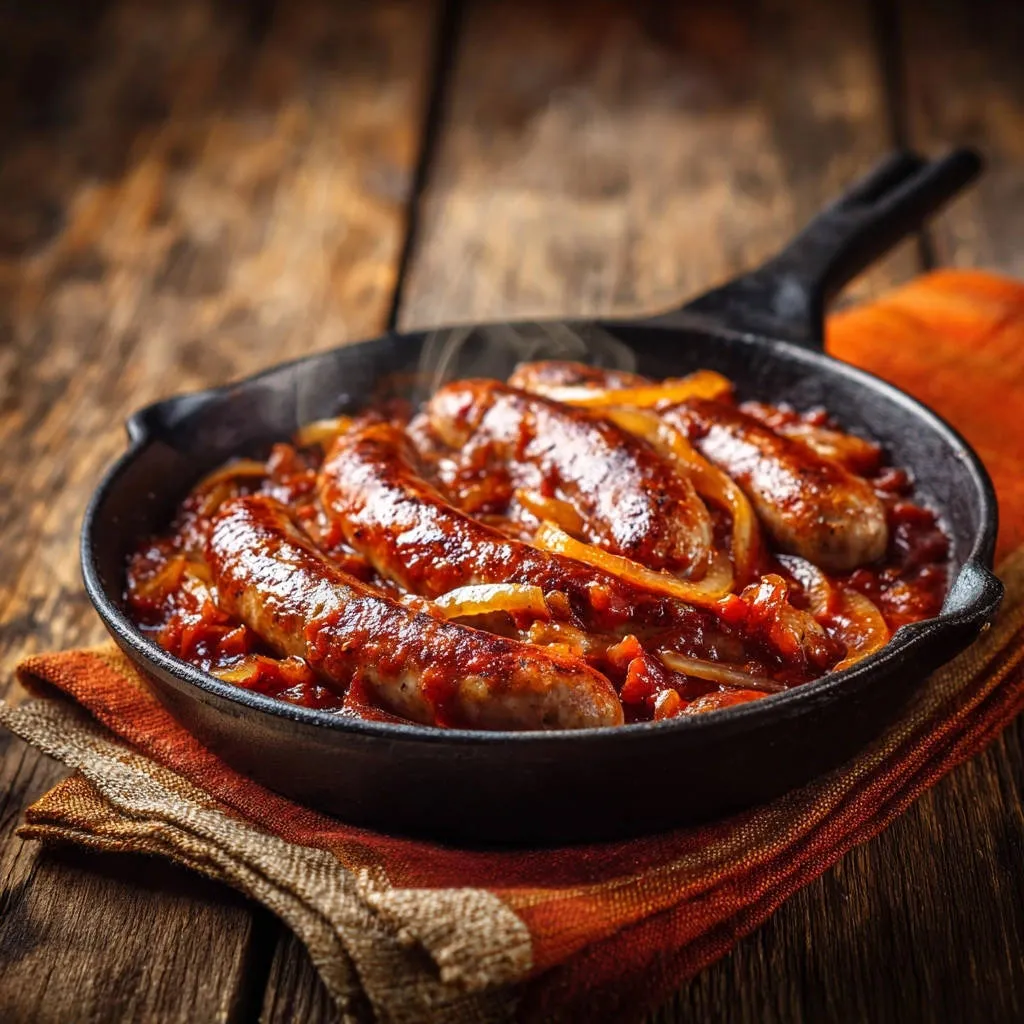
Why This Skillet Sausage Recipe Guarantees Tender, Juicy Results
Traditional methods often involve searing cold sausages directly in oil, causing the casings to seize and the internal moisture to boil rapidly, leading to dry, burst links.
Our method shifts the cooking burden away from immediate high heat and instead focuses on gentle, controlled moisture absorption and internal cooking before any aggressive browning takes place.
For more skillet goodness, explore skillet meatballs in rich tomato sauce.
The Secret Weapon: Mastering the Steam-and-Sear Technique
Adding water and covering the skillet allows the sausages to cook evenly via steam, preventing immediate high-heat shock to the casing.
For another fast and tender chicken option, try these creamy chicken cutlets.
This gradual cooking process ensures vital moisture retention deep within the meat, stabilizing the links and preventing them from tearing open as they cook.
When the water evaporates, the temperature spikes, and the pre-cooked sausages utilize their own rendered fat to achieve a beautiful, deep brown sear, effectively locking those internal juices inside.
A Flavor Base Built for Maximum Depth (The Onion Advantage)
We use the rendered sausage fat-the savory drippings left after searing-to sauté the onions, imbuing them with the complex, garlicky flavor of the Italian seasoning.
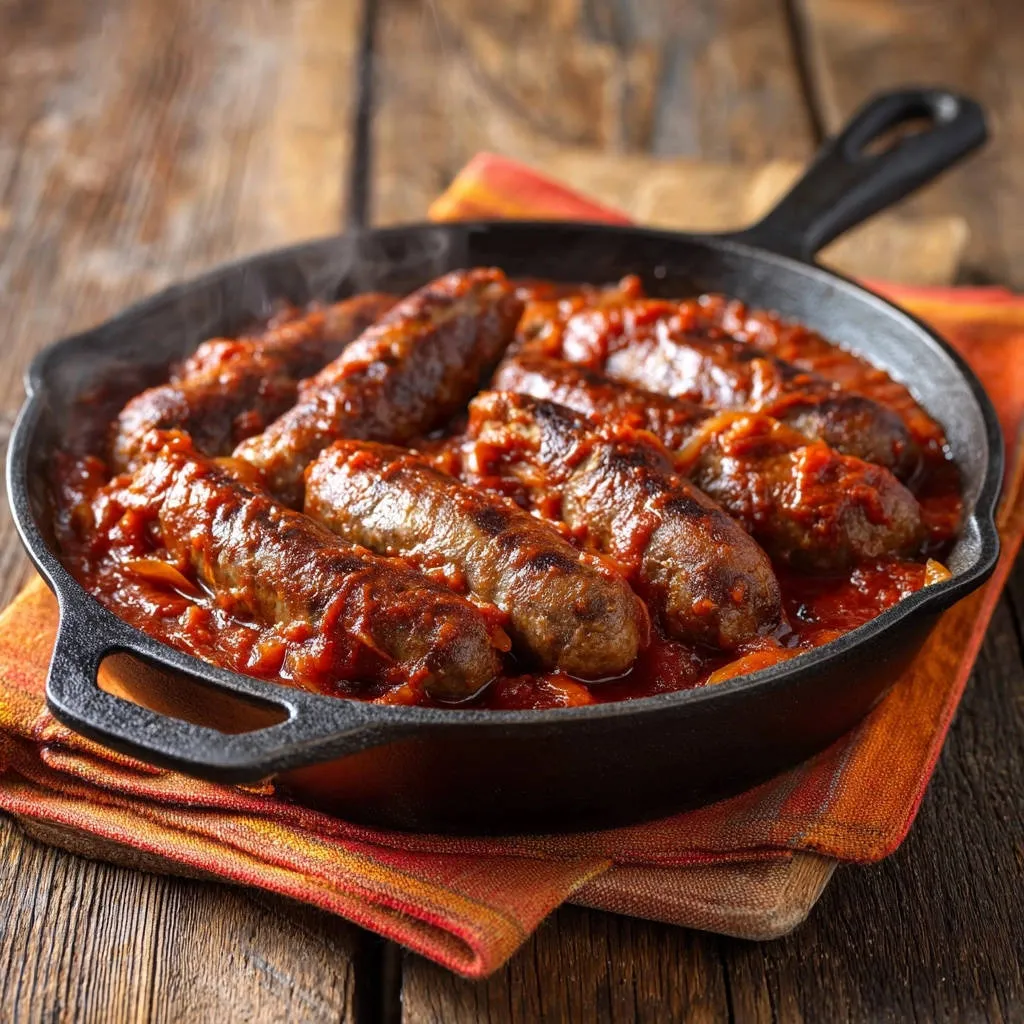
This technique elevates the final sauce, creating a rich foundation far superior to one built on plain olive oil, and provides a sweet counterpoint to the crushed tomatoes.
Essential Gear and Flavor Foundations for Your Skillet Adventure
Tools of the Trade: Why a Heavy Cast Iron Skillet is Crucial
A heavy cast iron skillet is the ideal vessel because it retains and distributes heat incredibly evenly, which is essential for both the controlled steaming phase and the high-heat searing.
This superior heat retention ensures a gorgeous, uniform crust on your sausage links without creating overly hot spots that could scorch the flavorful tomato sauce later during the long simmer.
Selecting the Right Sausage Links: Italian vs. Beef
For authenticity in this dish, select quality Italian sausage, available in either sweet (mild) or hot varieties, ensuring they are fresh, well-linked, and feel firm.
Beef sausages offer a leaner option but require slightly closer monitoring during the initial steam, as they may render less fat and potentially need a splash of olive oil for the sear.
Building the Sauce: The Role of Wine Substitute, Oregano, and Sugar
The non-alcoholic red wine substitute or beef broth is essential for deglazing; this liquid lifts the concentrated browned bits (fond) from the skillet floor, dissolving them into the base sauce for necessary richness.
A small amount of sugar is critical to balance the natural acidity of canned crushed tomatoes, preventing the finished sauce from tasting sharp or sour.
Step-by-Step Cooking Guide: Your Path to Skillet Perfection
-
Phase 1: Preparing and Steaming the Sausages
Place the sausage links and ½ cup of water in your cold skillet and cover it tightly with a lid or foil. Starting cold helps the temperature rise gradually, maximizing the effectiveness of the steam.
This critical steaming step should take 8-10 minutes over medium heat. The visual cue is when the water has completely evaporated and the sausages look notably plump and firm.
-
Phase 2: Achieving the Deep, Flavor-Locking Sear
Once the water is evaporated, remove the lid and increase the heat to medium-high. The rendered fat is now ready to develop a deep brown crust on the sausages.
Turn the links frequently until they are richly browned on all sides, then remove them and set them aside. It is crucial to leave the valuable rendered fat (drippings) in the pan for the sauce base.
-
Phase 3: Sautéing Aromatics in Sausage Fat
Reduce the heat to medium. Add the thinly sliced onion to the skillet and cook in the drippings until softened and translucent, about 5 to 7 minutes.
Add the minced garlic and oregano only in the final minute, stirring constantly. This brief cooking time activates the essential oils in the oregano and prevents the garlic from burning, which would turn the dish bitter.
-
Phase 4: Deglazing and Building the Rich Sauce
Pour in the non-alcoholic wine substitute or broth. Immediately scrape up all the browned bits (fond) from the bottom of the pan-this is pure concentrated flavor.
Stir in the crushed tomatoes and sugar, seasoning lightly at this stage. Remember, the flavor will concentrate as the sauce reduces, so hold back on heavy seasoning until the end.
-
Phase 5: The Gentle Simmer and Finish
Return the browned sausages to the sauce. Reduce the heat to low and partially cover the skillet, ensuring you leave a small gap for steam to escape.
Simmer gently for 20 to 30 minutes. This allows the sauce to thicken beautifully; the finished dish should have a robust tomato sauce that clings perfectly to the effortlessly tender sausage links.
Chef’s Secrets: Elevating Your Skillet Sausage and Peppers
Why You Must Season in Layers
Tip: Wait until the simmering phase is nearly complete before adding the final measure of salt and pepper.
Tomatoes reduce and concentrate flavor rapidly, so seasoning too early can lead to an oversalted sauce once the liquid cooks down.
Troubleshooting Thin Sauce Consistency
Tip: If your sauce is too thin after 30 minutes, remove the lid entirely for the last 5-10 minutes of cooking to encourage rapid evaporation.
Alternatively, remove the sausages and reduce the sauce rapidly over medium-high heat until it reaches your preferred thickness, then return the links.
Maximizing Oregano Flavor
Tip: For the most aromatic result, rub the dried oregano between your palms just before adding it to the skillet with the garlic.
This gentle friction releases the herb’s essential oils, instantly intensifying its fragrant, earthy notes into the simmering base.
Handling Leftover Fat
Tip: Italian sausages can render a significant amount of fat during the steaming and searing process.
If you notice an excessive pool of fat, spoon out all but 1 or 2 tablespoons before adding the onions. This keeps the final sauce rich, but prevents it from being overly greasy.
Making It a Complete Meal: Serving, Pairing, and Variations
Adapting the Recipe: How to Include Bell Peppers
To make the more traditional Skillet Sausage and Peppers dish, slice one large red or yellow bell pepper and add it to the skillet simultaneously with the onions.
Alternatively, for slightly firmer peppers that retain more crunch, add them just after the deglazing step, ensuring they soften and cook down during the 30-minute simmer.
Using sweet, brightly colored peppers (red, orange, or yellow) balances the dish beautifully without overpowering the delicate sausage and tomato flavors.
The Best Side Dishes for Sopping Up the Sauce
Crusty Italian Bread: Essential for maximizing enjoyment, as a dense, crusty loaf is perfect for soaking up every drop of the flavorful sauce.
Round Out Your Meal
Here are a few ideas to complement your skillet sausage and peppers.
- For a carb that soaks up all the juices, consider this cheesy garlic bread.
- If you prefer a more dippable option, these cheesy garlic breadsticks offer a satisfying crunch.
Creamy Polenta: Provides a perfect, neutral base that absorbs the sauce and offers a textural contrast to the savory sausage and robust tomato sauce.
Garlic Parmesan Pasta: A simple pasta like spaghetti or penne is classic when tossed lightly with garlic, a touch of butter, and Parmesan before adding the skillet contents.
FAQs: Common Questions About Skillet Sausage and Peppers
Can I make this Skillet Sausage and Peppers dish ahead of time?
Yes, this recipe is excellent for meal prepping because the flavors deepen beautifully overnight.
Prepare the dish completely, cool it, and store it in an airtight container in the refrigerator for up to 3 days.
How long do leftovers last, and what is the best way to reheat them?
Leftovers should be stored in the refrigerator for 3 to 4 days.
The best way to reheat is gently on the stovetop over low heat, adding a small splash of water or broth to loosen the sauce and prevent the sausages from drying out.
Is there a good substitute for the crushed tomatoes?
If you prefer a chunkier texture, you can substitute the crushed tomatoes with one (28 ounce) can of whole peeled tomatoes that have been roughly crushed by hand.
Alternatively, use fire-roasted crushed tomatoes for a smoky depth and richer color in your finished sauce.
What if I don’t have a lid that fits my cast iron skillet?
You can effectively steam the sausages by covering the skillet tightly with heavy-duty aluminum foil during the initial steaming phase.
Ensure the foil is crimped firmly around the edges to lock the steam in completely and guarantee even cooking.
Ready to Impress? Share Your Skillet Sausage Masterpiece!
The secret to moist, perfectly cooked Skillet Sausage and Peppers is no longer a mystery; it’s simply a matter of mastering the initial steam-and-sear technique.
This recipe provides the reliable, restaurant-quality results you’ve been looking for, turning a common weeknight staple into a memorable feast.
Try this method tonight, and let us know in the comments how the guaranteed juicy texture transforms your next skillet dinner!
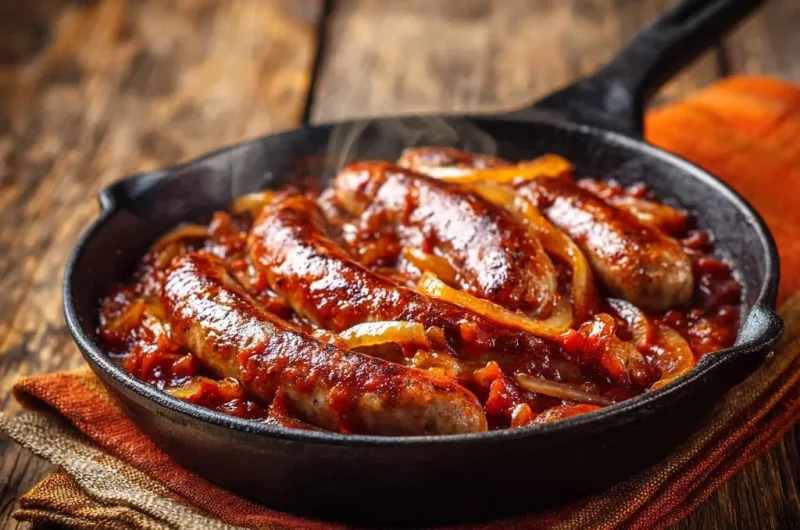
Skillet Sausage
Course: Main CourseCuisine: Italian-AmericanDifficulty: medium4
servings10
minutes50
minutes450
kcal60
minutesThis recipe guarantees perfectly cooked, tender sausage links every time, avoiding the dry, rubbery texture that plagues traditional methods. The secret is a quick initial steaming step before searing and simmering the sausage in a rich, simple tomato and onion sauce. Ready in about an hour, this hearty dish is ideal for a weeknight main course.
Ingredients
1 tablespoon olive oil
1 large yellow onion, thinly sliced
1 clove garlic, minced
1/2 teaspoon dried oregano
1/4 cup non-alcoholic cooking red wine substitute or beef broth
1 (28 ounce) can crushed tomatoes
1 teaspoon sugar
1 pound Italian or beef sausages (about 4 to 5 links)
1/2 cup water (for initial cooking)
Salt and black pepper to taste
Directions
- Prepare the Sausages for Juiciness: Place the sausages in a heavy cast iron skillet (the one pictured is perfect). Add 1/2 cup of water to the skillet. Cover the skillet tightly with a lid or foil and cook over medium heat. This is the crucial step that prevents dryness and ensures even cooking.
- Steam and Sear: Steam the sausages until the water has completely evaporated, usually about 8 to 10 minutes. The sausages should look slightly plump. Remove the lid. Now, increase the heat to medium-high and allow the sausages to sear in the rendered fat until they are browned deeply on all sides. This locks in the flavor and creates a beautiful color. Remove the sausages and set aside, leaving the fat in the skillet.
- Build the Sauce Base: Reduce the heat to medium. Add the thinly sliced onion to the skillet and cook in the remaining sausage fat until softened and translucent, about 5 to 7 minutes. Add the minced garlic and oregano and cook for 1 minute until fragrant.
- Deglaze and Simmer: Pour in the non-alcoholic wine substitute or broth, scraping up any browned bits from the bottom of the pan. Stir in the crushed tomatoes and sugar. Season lightly with salt and pepper.
- Finish the Dish: Return the browned sausages to the sauce. Reduce the heat to low, cover the skillet partially (leaving a small gap for steam), and simmer gently for 20 to 30 minutes, or until the sauce has thickened and the sausages are cooked through and tender.
- Serve immediately directly from the skillet.
Notes
- To ensure your sausages are extra juicy, don’t pierce them before cooking; the steaming step will help them retain their moisture. For a richer sauce flavor, let the onions caramelize a bit longer before adding the liquid.