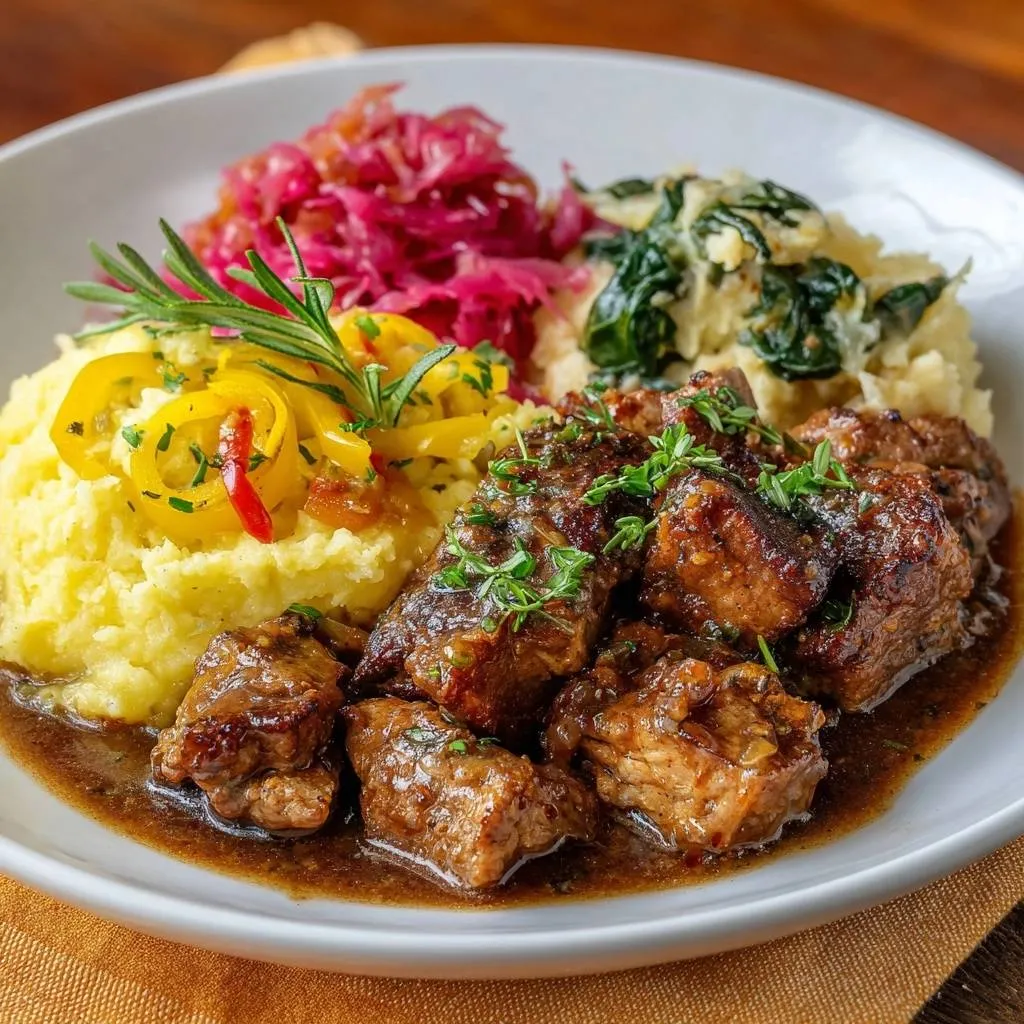
There is nothing more disappointing than biting into a piece of beef that looks tender but feels like chewing on a rubber band. Most home cooks struggle with beef tips because they rush the process or use the wrong heat, resulting in dry, stringy meat. This recipe solves that frustration by using a specific searing technique and a low-temperature liquid bath to transform tough fibers into buttery, melt-in-your-mouth morsels.
Imagine the sensory contrast of a rich, savory beef gravy against the velvety, cloud-like texture of buttery polenta. To keep the palate excited, we pair this heavy comfort food with the sharp, bright crunch of pickled red cabbage. This balance of deep umami, creamy fats, and vibrant acidity creates a restaurant-quality experience right in your own kitchen.
The secret to success here is patience and a heavy-bottomed pot. By simmering the beef for nearly three hours, you allow the connective tissues to fully dissolve. I’ve found that keeping the heat at the absolute lowest setting is the only way to ensure the meat stays succulent rather than tightening up. If you see large bubbles, turn it down!
Selecting the Best Cut for Braised Beef Tips
When you walk down the meat aisle, you might be tempted to grab those pre-cut “stew meat” packs. However, those packages often contain a mix of different lean cuts that cook at different rates. For the best results, you should always buy a whole beef chuck roast and cube it yourself. Chuck roast is the king of braising because it is loaded with intramuscular fat and collagen.
During the three-hour simmer, that tough collagen undergoes a beautiful transformation into gelatin. This process doesn’t just make the meat tender; it actually thickens the braising liquid and gives it a silky mouthfeel. If you use a lean cut like sirloin, the meat will become dry and chalky long before it ever gets tender. Stick with the chuck roast for that signature “fork-tender” finish that falls apart with zero effort.
Essential Pantry Staples and Fresh Aromatics
Building a deep flavor profile starts with a few heavy hitters in your pantry. Tomato paste is a non-negotiable ingredient here because it provides a concentrated umami boost that makes the gravy taste like it has been simmering for days. When you sauté the paste for a minute before adding liquid, you caramelize the natural sugars, removing the raw tinny taste and adding a dark, brick-red color to your sauce.
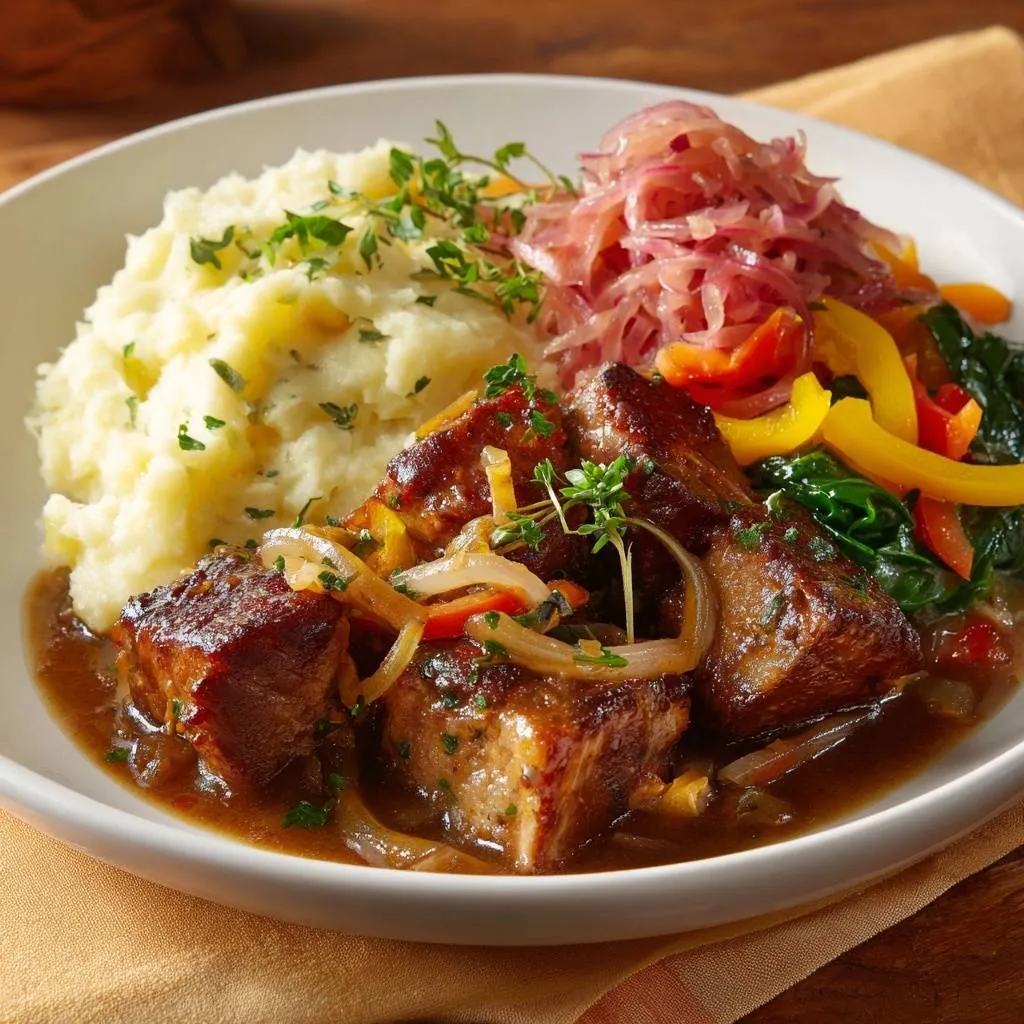
Worcestershire sauce adds a necessary fermented depth that salt alone cannot provide. It acts as a bridge between the savory beef broth and the earthy dried thyme. For the best foundation, use a high-quality beef broth. Since the liquid reduces during the cooking process, the flavors will concentrate, so starting with a good-tasting broth ensures your final gravy is rich and complex rather than just salty.
The Role of Cornmeal vs. Instant Polenta
While instant polenta is convenient, it often lacks the structural integrity needed to support a heavy beef gravy. This recipe calls for traditional yellow cornmeal or coarse-ground polenta. The longer cook time allows the corn starches to fully hydrate and swell, creating a thick, porridge-like consistency that won’t turn into a watery mess on your plate. You want that sturdy, creamy base to hold the weight of the beef tips.
The Science of the Maillard Reaction
The most common mistake people make is throwing wet meat into a lukewarm pan. Moisture is the absolute enemy of a good sear. If your beef is damp, the heat of the pan will spend all its energy evaporating that water instead of browning the meat. This leads to “steaming,” which results in grey, flavorless beef. Always pat your beef cubes bone-dry with paper towels before they touch the oil.
When the dry meat hits the hot oil, the Maillard reaction occurs. This is a chemical reaction between amino acids and reducing sugars that creates hundreds of different flavor compounds. You also need to avoid “crowding the pan.” If you put too much meat in at once, the temperature of the pot drops instantly. Work in small batches so each cube has enough space to develop a dark, caramelized crust that locks in the juices.
Step-by-Step: Searing and Deglazing the Pot
Start by heating your vegetable oil until it is shimmering and just starting to show a tiny wisps of smoke. This high heat is essential for that initial crust. Once you have seared all your beef batches, you will notice a layer of dark brown bits stuck to the bottom of the pot. Chefs call this the “fond,” and it is pure flavor gold. Do not wash it away!
After sautéing your onions and garlic, pour in the beef broth. Use a wooden spoon to vigorously scrape the bottom of the pot. As the liquid bubbles, those caramelized bits will dissolve into the broth, instantly turning it into a dark, flavorful base. This deglazing step is what separates a bland stew from a professional-grade braise. You are essentially capturing all the hard work from the searing phase and putting it back into the sauce.
The Braising Phase: Managing Heat and Time
Once you return the beef to the pot, check the liquid level. It should only cover the meat about halfway. This is the key difference between braising and boiling. Braising uses a combination of simmering and steaming to break down the meat gently. If you submerge the meat completely, you lose that concentrated flavor profile. Cover the pot with a tight-fitting lid to trap the moisture and heat inside.
Keep your stove on the lowest possible setting. You are looking for a very gentle simmer, not a rolling boil. If you rush this process by turning up the heat, the muscle fibers will contract and become tough and rubbery. You cannot force tenderness; it only happens when the internal temperature of the meat stays consistent for a long period. After about two and a half hours, test a piece with a fork. It should slide right through with no resistance.
Achieving the Perfect Polenta Consistency
To avoid the dreaded “lumpy polenta,” you must use the slow-pour method. While the water is at a rolling boil, whisk constantly with one hand while slowly drizzling the cornmeal in with the other. This ensures every grain is separated and hydrated individually. Once the cornmeal is in, turn the heat down immediately. It will bubble like lava, so be careful and keep stirring frequently to prevent it from sticking to the bottom.
The transformation happens at the very end. Once the grains are soft and no longer gritty, whisk in the heavy cream, butter, and Parmesan cheese. This adds a luxurious fat content that rounds out the earthy corn flavor. If the polenta sets too quickly or becomes too thick to pour, simply whisk in a tablespoon of warm water or milk until it regains its velvety sheen. It should be thick enough to hold its shape but soft enough to melt in your mouth.
Finishing the Glossy Beef Gravy
After the beef is tender, you might find the sauce is a bit thin. This is where the cornstarch slurry comes in. Always mix your cornstarch with cold water before adding it to the hot pot; if you drop dry starch into hot liquid, it will clump instantly. Whisk the slurry into the simmering gravy and let it cook for at least two full minutes. This is crucial for two reasons.
For an even richer beef experience, consider trying spicy braised beef next.
First, the heat needs time to activate the thickening power of the starch. Second, you need to cook out the raw, floury taste of the cornstarch. As it simmers, you will see the sauce transform from a dull brown to a reflective, glossy sheen. This thick, dark gravy will cling to the beef and the polenta, ensuring every single bite is packed with concentrated flavor. It should look like liquid velvet by the time you are done.
Troubleshooting Common Braising Obstacles
If your meat is still tough after three hours, don’t panic. It simply means the collagen hasn’t finished breaking down yet. Every cow is different, and some cuts just need an extra thirty minutes. Just keep the lid on and keep simmering. On the other hand, if your sauce tastes too salty, do not add more salt! You can balance it by adding a splash of water or a tiny squeeze of lemon juice to cut through the sodium.
If your polenta feels grainy or “sandy” on the tongue, it is undercooked. Add a splash of liquid and keep it on the heat for another five to ten minutes. For those who struggled with the sear, it usually means the pan wasn’t hot enough or you moved the meat too soon. Next time, let the beef sit undisturbed for at least two minutes before trying to flip it. If it sticks, it isn’t ready to turn yet!
Vegetable Pairings: Balancing Richness with Acidity
Because the beef and polenta are so rich and fatty, you need sides that provide contrast. The pickled red cabbage is functional, not just a garnish. Its sharp acidity cuts right through the heavy cream and beef fat, refreshing your palate between bites. You can use store-bought pickled cabbage or quickly make your own with vinegar and sugar. It provides a necessary “pop” that keeps the meal from feeling too heavy.
For the greens, a quick sauté of garlic spinach adds an earthy, bitter note that complements the sweetness of the corn. Sauté the garlic in oil for thirty seconds, toss in the spinach until it just wilts, and take it off the heat immediately. The yellow bell peppers add a mild sweetness and a beautiful color contrast. Sauté them just until they are tender-crisp so they still have a bit of “snap” to them.
Make-Ahead Strategies and Storage Instructions
Braised dishes are famous for tasting even better the next day. As the beef sits in the gravy overnight, the proteins “relax” and soak up even more flavor. If you are making this ahead of time, let the beef cool completely at room temperature for about thirty minutes before moving it to an airtight container in the fridge. This prevents steam from building up and making the meat soggy.
You can store the beef and gravy for up to four days in the refrigerator. Polenta, however, will firm up into a solid block as it cools. To reheat it, place it in a saucepan with a splash of milk or water over medium-low heat. Use a whisk to break it up and stir vigorously until it returns to its original creamy state. I do not recommend freezing the polenta, as the texture can become grainy, but the beef tips freeze beautifully for up to three months.
Expert Tips for Professional Presentation
When it comes to plating, use the “well” technique. Spoon a large mound of polenta onto the center of the plate, then use the back of your spoon to create a slight indentation or “well” in the middle. This acts as a bowl to hold the beef and that precious gravy, preventing it from running all over the plate. It keeps the presentation neat and ensures every forkful of polenta is soaked in sauce.
Finally, don’t underestimate the power of fresh herbs. While we used dried thyme for the long cook, finishing the dish with fresh rosemary and thyme sprigs adds a bright, aromatic element. The heat from the beef will release the oils in the fresh herbs, hitting your nose before you even take the first bite. It adds a layer of freshness that balances the deep, earthy scents of the slow-cooked meat.
How do I store leftovers?
Store the beef and gravy in an airtight container in the refrigerator for up to 4 days. The polenta should be stored separately. When reheating the polenta, add a splash of milk or water and whisk it over low heat to restore its creamy texture. The beef tips can also be frozen for up to 3 months, but the polenta does not freeze well as it becomes grainy.
Why is my beef still tough after cooking?
If the beef is still tough, it almost always needs more time. Braising is a slow process of breaking down connective tissue. If the meat is chewy, the collagen hasn’t turned into gelatin yet. Put the lid back on and simmer for another 30 minutes. Also, ensure you are using a low heat; boiling the meat too hard can actually cause the muscle fibers to toughen up.
Can I use a different cut of meat?
While chuck roast is the best choice, you can use bottom round or brisket. However, avoid lean cuts like sirloin or filet mignon for this recipe. Those cuts do not have enough fat or connective tissue to withstand a 3-hour cook time and will become very dry. If you must use a leaner cut, you would need to significantly reduce the cooking time, but you won’t get the same “fall-apart” result.
What if I don’t have heavy cream for the polenta?
You can substitute the heavy cream with whole milk or even half-and-half. If you want to keep it extra rich without cream, you can add an extra tablespoon of butter and a bit more Parmesan cheese. The goal is to add fat and protein to the cornmeal to create that velvety mouthfeel, so any high-fat dairy will work in a pinch.
Why did my gravy turn out lumpy?
Lumpy gravy usually happens if the cornstarch slurry wasn’t mixed thoroughly or if it was added too quickly without whisking. Always mix the cornstarch with cold water first until it is a smooth liquid. Pour it into the simmering pot in a slow stream while whisking the gravy constantly. If you already have lumps, you can strain the gravy through a fine-mesh sieve before serving.
Can I make this in a slow cooker?
Yes, you can. Follow the searing and deglazing steps in a pan first, as this is where the flavor is built. Transfer the meat, aromatics, and liquid to a slow cooker and cook on “Low” for 6 to 8 hours. You will still need to thicken the gravy with the cornstarch slurry at the very end by turning the slow cooker to “High” or moving the liquid back to a stovetop pot.
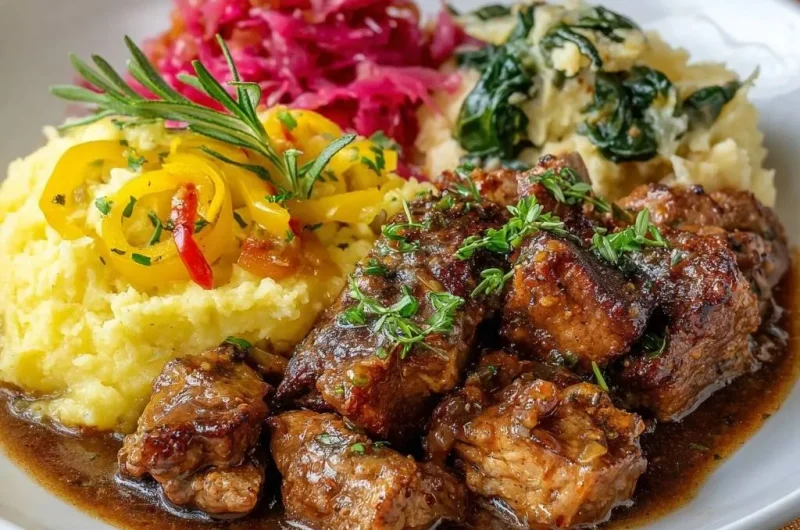
Braised Beef Tips
Course: Main CourseCuisine: AmericanDifficulty: medium4
servings20
minutes3
hours950
kcal180
MinutesA comforting dish featuring beef chuck roast seared to perfection and slow-simmered for three hours until fork-tender, served alongside creamy polenta and sautéed vegetables.
Ingredients
2 pounds beef chuck roast, cut into 1.5 inch cubes
2 tablespoons vegetable oil
1 large onion, finely diced
3 cloves garlic, minced
2 cups beef broth
1 tablespoon Worcestershire sauce
1 tablespoon tomato paste
1 teaspoon dried thyme
1 tablespoon cornstarch mixed with 1 tablespoon cold water (slurry)
Fresh rosemary and thyme for garnish
For the Polenta:
1 cup yellow cornmeal or polenta
3 cups water
1 cup heavy cream
4 tablespoons butter
1/2 cup grated Parmesan cheese
Salt and black pepper to taste
Sides (as pictured):
1 cup pickled red cabbage
2 cups fresh spinach, sautéed with garlic
1 yellow bell pepper, sliced and sautéed
Directions
- Pat the beef cubes completely dry with paper towels. This is the most important step to ensure a proper sear rather than steaming. Season generously with salt and pepper.
- Heat oil in a heavy pot or Dutch oven over medium-high heat. Sear the beef in small batches. Do not crowd the pan. Brown each side deeply until a dark, caramelized crust forms. Remove beef and set aside.
- In the same pot, sauté the onion until translucent. Add the garlic and tomato paste, cooking for 1 minute until fragrant. Pour in the beef broth and Worcestershire sauce, using a wooden spoon to scrape up all the brown bits (fond) from the bottom of the pot.
- Return the beef and any accumulated juices to the pot. The liquid should cover the meat about halfway. Add the dried thyme. Cover with a tight-fitting lid and reduce heat to the lowest setting. Simmer for 2.5 to 3 hours until the beef is fork-tender.
- Once the meat is tender, whisk the cornstarch slurry into the simmering liquid for 2 minutes to create the thick, glossy gravy shown in the image.
- While the beef finishes, bring 3 cups of water to a boil in a separate pot. Slowly whisk in the cornmeal and a pinch of salt. Reduce heat to low and cook, stirring frequently, for 20-25 minutes.
- Stir in the heavy cream, butter, and Parmesan cheese. Whisk vigorously until the polenta is thick, creamy, and holds its shape on the plate.
- Prepare the sides: Sauté the spinach in a pan with a touch of oil until wilted; quickly sauté the yellow peppers until tender-crisp.
- To serve, plate a generous mound of creamy polenta. Arrange the beef tips alongside, spooning the thick pan gravy over the meat. Garnish with fresh rosemary and thyme. Serve with the pickled cabbage, sautéed spinach, and yellow peppers as shown.
Notes
- The most important step is patting the beef completely dry before searing to ensure a proper crust rather than steaming.