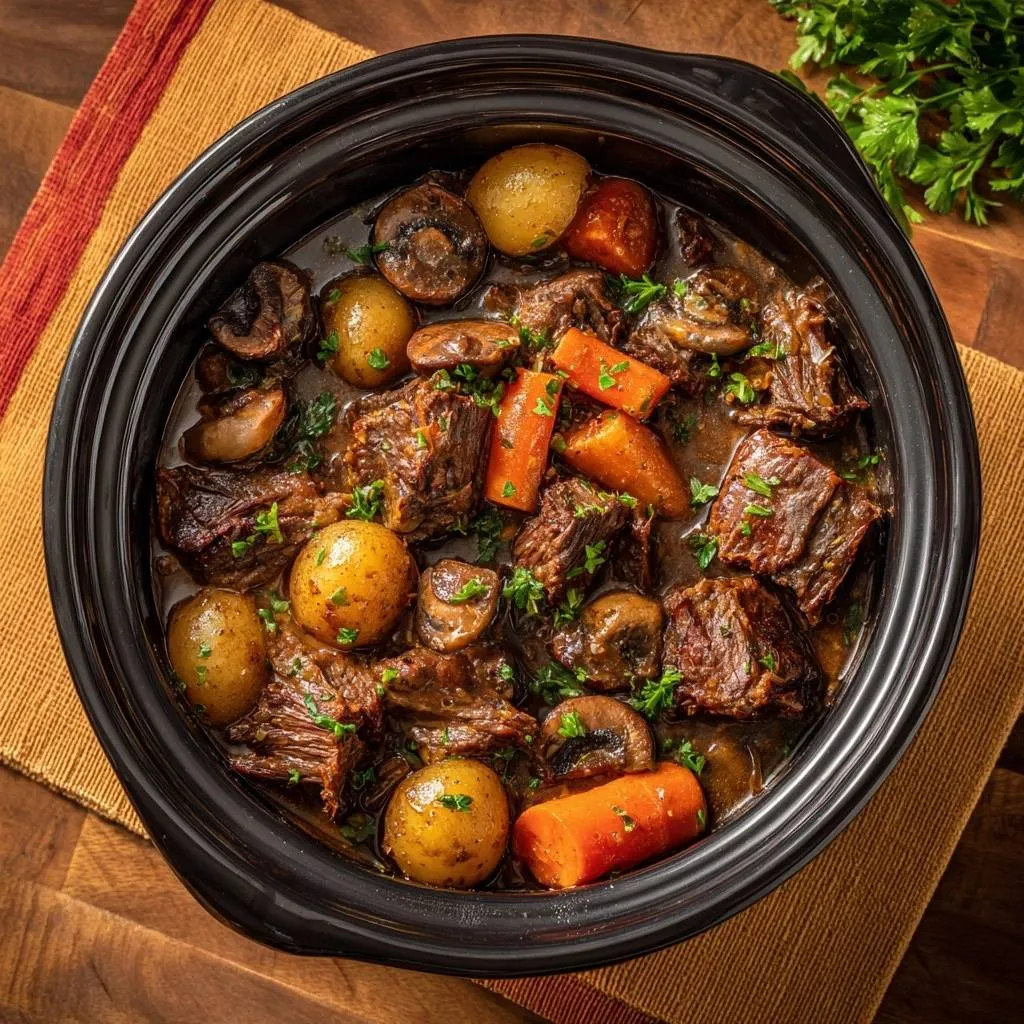
Ever bitten into a slow cooker beef stew only to fight chewy chunks that ruin the whole pot? You don’t have to anymore. This slow cooker beef stew nails fall-apart tenderness with one key move: searing the beef first. Dinner’s ready after minimal hands-on time, and it beats takeout every time.
Here’s why it works so well. That initial sear triggers the Maillard reaction, creating a flavorful crust while breaking down tough fibers. In addition, the slow cooker finishes the job gently over 8 hours. You’ll get rich gravy and veggies that hold their shape.
The real secret lies in patting the beef dry before searing. Moisture steams the meat instead of browning it, so skip that mistake. Dry beef means deep color and sealed juices, setting up perfect slow cooker beef stew every time.
Why Sear Shapes Slow Cooker Beef Stew
Searing transforms raw beef chunks through the Maillard reaction. Proteins and sugars react under high heat, building savory depth that slow cooking alone can’t match. Without it, your slow cooker beef stew stays bland and tough.
Chuck roast’s collagen needs this jumpstart. The sear breaks it down faster, turning chewy meat into tender bites by dinner. Studies show seared stews rate higher for flavor and texture, and you’ll taste why right away.
However, skip the sear and collagen lingers, leaving stringy results. Therefore, that 4-5 minutes per batch pays off big. Your slow cooker beef stew will impress with restaurant-level tenderness.
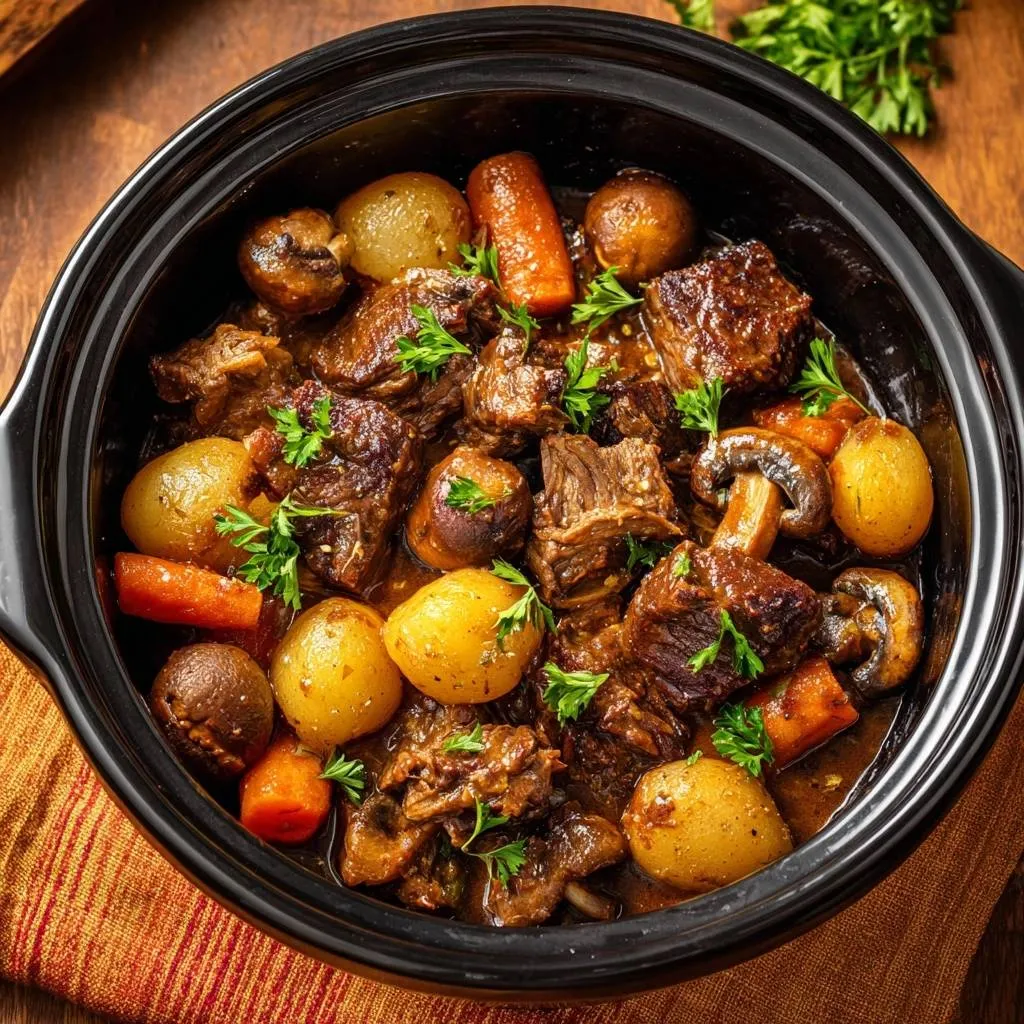
Pat Dry for Maximum Browning
Pat beef dry with paper towels to remove surface moisture. Wet meat steams in the skillet, preventing the crisp crust you want. Dry it first, and you get that deep mahogany color fast.
This simple step boosts flavor exponentially. In addition, it seals juices inside. Your slow cooker beef stew starts strong from there.
Batch Searing Prevents Crowding
Sear in batches to avoid overcrowding the skillet. Too much meat drops the temperature, causing steaming instead of browning. Keep heat high for a proper crust.
Each batch takes 4-5 minutes, turning all sides deeply. Therefore, the beef holds flavor through slow cooking. Perfect for slow cooker beef stew.
Core Ingredients for Slow Cooker Beef Stew
Beef chuck roast leads with its marbling and collagen, perfect for slow cooker beef stew. It melts into gravy during cooking. Baby potatoes stay firm, carrots add sweetness, and mushrooms bring umami punch.
For deeply tender beef, consider trying slow-braised beef short ribs.
Tomato paste thickens the broth richly, while diced tomatoes provide acidity for balance. In addition, thyme and parsley layer herbal notes without overpowering. Beef broth ties it all together.
No chuck? Shoulder works too, but avoid lean cuts like sirloin; they dry out. Fresh thyme swaps for dried if you have it. These picks ensure your slow cooker beef stew shines.
Beef Chuck: Collagen-Rich Choice
Chuck roast packs collagen from the shoulder area, ideal for stewing. Fat marbling bastes the meat as it breaks down. You’ll love the silky gravy it creates.
Vegetables Holding Firm Texture
Whole baby potatoes and 2-inch carrot chunks resist breaking down over 8 hours. Smaller cuts turn mushy, so size matters. Mushrooms add earthiness without sogginess.
Equipment Essentials for Slow Cooker Beef Stew
A 6-quart slow cooker handles this recipe easily. It allows even heat for tender results. Use a large skillet for searing; cast iron holds heat best.
Nonstick works too, but preheat until oil shimmers. In addition, a meat thermometer checks doneness at 195-205°F for pull-apart beef. These tools make slow cooker beef stew foolproof.
Skillet Heat for Initial Sear
Heat oil to shimmering, around 375°F, for quick browning. Cast iron conducts evenly, better than thin pans. Sear confidently for that flavor base.
Step-by-Step: Searing to Slow Simmer
Start with searing for the best slow cooker beef stew. Pat beef dry, then brown in hot oil batches until deeply colored. This seals juices and tenderizes right away.
Layer potatoes, carrots, mushrooms, tomatoes, broth, paste, seasonings, and parsley next. Stir gently; beef goes in first for even cooking. Cover and set to low for 8 hours.
Finish by stirring in fresh parsley. The aroma hits savory peaks, and beef shreds with a fork. Serve hot for ultimate comfort.
Phase 1: Skillet Browning Beef Chunks
Brown 4-5 minutes per batch, aiming for deep mahogany crust. Juices stay locked in, preventing dry meat later. Transfer to slow cooker warm.
Phase 2: Layering Veggies and Broth
Place beef at bottom, then veggies and liquids. Dissolve tomato paste by stirring well. This order ensures even flavor distribution.
Phase 3: 8-Hour Low Heat Magic
Low heat converts collagen to gelatin slowly. High speeds it but toughens edges. Wait for that fork-tender payoff.
Science of Tender Slow Cooker Beef Stew
Low cooking at 220°F preserves veggie texture by minimizing moisture loss. Broth reduces into thick gravy through evaporation. Tomatoes’ acidity tenderizes further.
Thyme balances pH for better flavor release. Therefore, every element works together. Your slow cooker beef stew tastes pro-level.
Collagen Breakdown Timeline
Collagen fully breaks by 8 hours, peaking tenderness. Shorter times leave it chewy. Patience delivers melt-in-mouth beef.
For that same deep tenderness in beef, consider slow braised beef short ribs.
Avoiding Pitfalls in Slow Cooker Beef Stew
Common issues hit new cooks hard. Cut veggies too small, and they mush; skip searing, and beef stays tough. Season early to avoid blandness.
At high altitudes, add extra broth for evaporation. In addition, taste before serving and adjust. These fixes save your slow cooker beef stew.
Fixing Mushy Potatoes and Carrots
Stick to whole babies and 2-inch chunks; starch gelatinizes slower in bigger pieces. Smaller ones overcook fast. Firm texture guaranteed.
Rescuing Bland or Thin Gravy
Boost umami with extra tomato paste or mushrooms. For thickness, whisk in cornstarch slurry post-cook. No salty overload needed.
Flavor Twists on Slow Cooker Beef Stew
Swap thyme for rosemary for woodsy notes. Add parsnips for sweetness or pearl onions for pop. These keep your slow cooker beef stew fresh.
For heat, stir in chipotle powder. Deglaze the skillet with red grape juice for depth. Experiment confidently.
Root Vegetable Upgrades
Parsnips sweeten the pot naturally. Celery adds savory base. Both hold up well over 8 hours.
Make-Ahead and Freezer Strategies
Sear beef a day ahead and fridge it. Assemble everything cold, then slow cook. Leftovers keep 4 days chilled or freeze 3 months.
Thaw overnight in fridge for best texture. Reheat gently on stove with splash of broth. Perfect for weeknight ease.
Batch Cooking for Weeknights
Double the recipe for two meals; it scales perfectly. Portion into single-serve containers. Quick thaw and reheat wins.
Pairing Sides with Slow Cooker Beef Stew
Serve with crusty bread to sop gravy. A crisp green salad cuts richness. Rice or polenta soaks up every drop.
What to Serve Alongside Your Beef Stew
Round out your meal with these complementary dishes.
- For a hearty bread option that complements the savory notes of your stew, consider this golden cornbread and herb stuffing.
- If you’re looking for a lighter, fresh counterpoint to the richness of the beef stew, try this kale and cabbage power salad.
Ginger beer pairs bright and fizzy. These sides elevate slow cooker beef stew simply.
Bread Types for Gravy Mopping
Sourdough’s tang and crust beat baguette for stew. It holds up without sogginess. Tear and dunk happily.
Slow Cooker Beef Stew FAQ
High vs. Low Cook Time?
Stick to low for 8 hours; high risks tough beef by rushing collagen breakdown. Low yields tender, even results every time.
Substitute Chicken for Beef?
Yes, use thighs for fat content; cook 4-6 hours on low to avoid dryness. Add extra broth since chicken releases more liquid.
High Altitude Modifications?
Increase broth by 1/2 cup and add 1-2 hours cook time. Liquids evaporate faster up high, so monitor for perfect gravy.
Quick Gravy Thickening Hack?
Mix 1 tablespoon cornstarch with 2 tablespoons cold water for slurry; stir in last 30 minutes. It thickens without lumps beautifully.
Can I Skip the Searing Step?
Don’t; searing builds flavor via Maillard and tenderizes by breaking fibers early. Without it, beef stays chewy despite slow cooking.
How Do I Store Leftovers?
Cool completely, then fridge in airtight container up to 4 days. Freezes well for 3 months; thaw in fridge and reheat on stove with broth to restore texture.
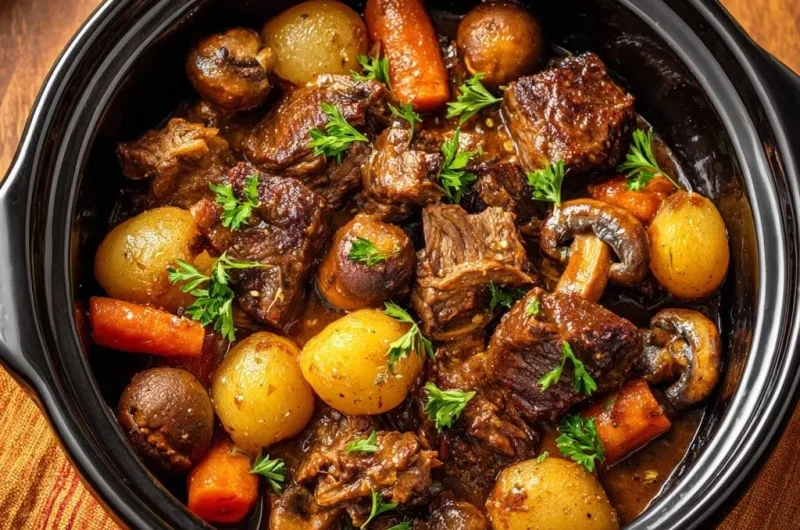
Beef Stew
Course: Main CourseCuisine: AmericanDifficulty: medium6
servings20
minutes8
hours450
kcal480
MinutesTired of chewy beef in your stew? Sear chunks first in a hot skillet, then slow cook with potatoes, carrots, mushrooms, and tomatoes for perfect tenderness and rich flavor.
Ingredients
2 pounds beef chuck roast, cut into 2-inch chunks
1 pound baby potatoes, whole
4 large carrots, cut into 2-inch chunks
8 ounces whole mushrooms
1 can (14 ounces) diced tomatoes with juice
2 cups beef broth
3 tablespoons tomato paste
2 tablespoons vegetable oil
4 sprigs fresh parsley, chopped (plus extra for garnish)
2 teaspoons salt
1 teaspoon black pepper
2 teaspoons dried thyme
Directions
- Pat beef chunks dry with paper towels. Heat 2 tablespoons oil in a large skillet over medium-high heat until shimmering. Sear beef in batches, 4-5 minutes per batch, turning to brown all sides deeply. This crucial step tenderizes the meat by breaking down tough fibers and sealing in juices, preventing chewiness. Transfer seared beef to slow cooker.
- Add baby potatoes, carrots, mushrooms, diced tomatoes, beef broth, tomato paste, salt, pepper, thyme, and half the chopped parsley to the slow cooker. Stir gently to coat everything in the liquid.
- Cover and cook on low for 8 hours. The long, low heat finishes tenderizing the beef while keeping veggies firm.
- Stir in remaining parsley. Taste and adjust salt if needed. Serve hot, garnished with extra parsley. Each bite delivers perfectly tender beef in rich, savory gravy.
- Store leftovers in fridge up to 4 days. Reheats beautifully!
Notes
- Store leftovers in fridge up to 4 days. Reheats beautifully! The sear-first step is crucial for tenderizing the beef.