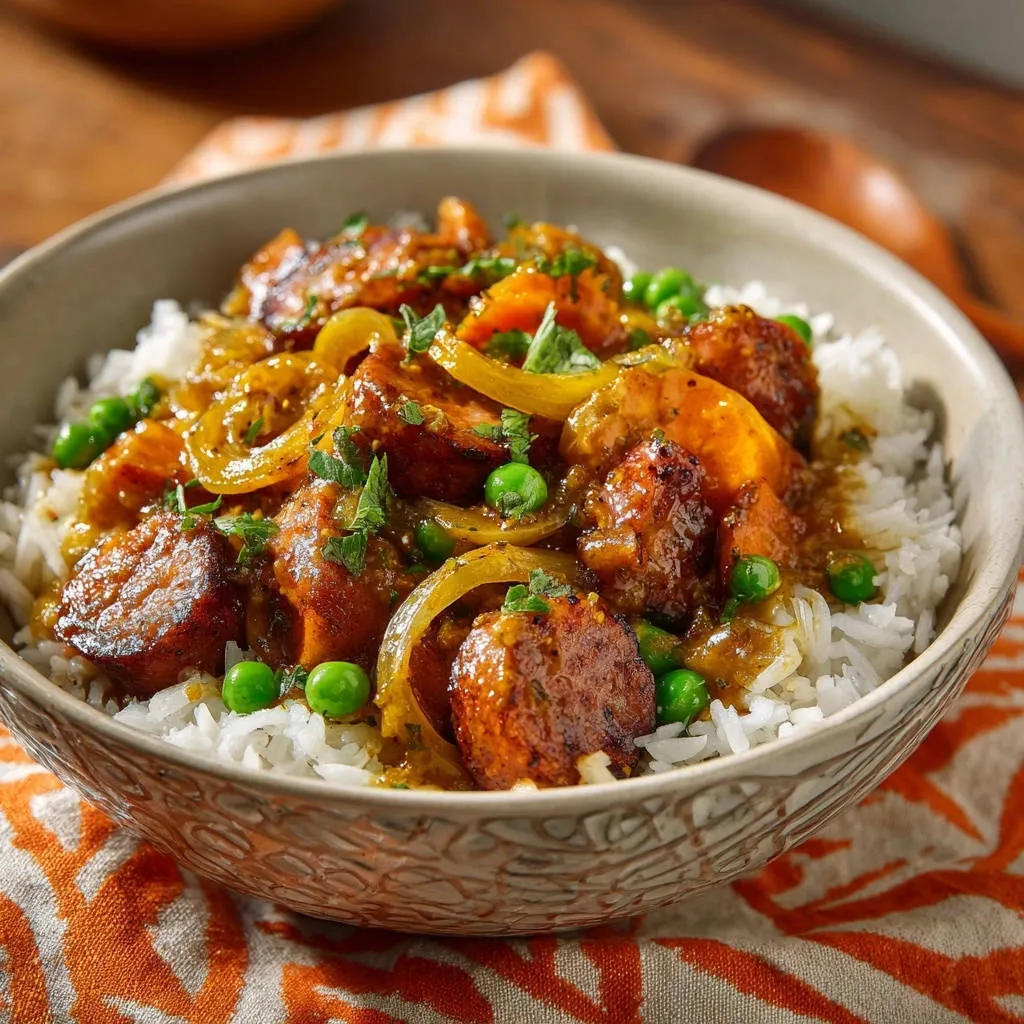
There is nothing more frustrating than preparing a comforting meal only to end up with a watery, sad curry sauce that slides right off your ingredients.
I perfected this Smoked Sausage and Sweet Potato Curry Skillet specifically to avoid that problem, developing a simple “Cling Technique” that guarantees a thick, velvety gravy every time.
This savory, sweet, and spicy dish delivers maximum flavor and trusted weeknight comfort with minimal effort.The Weeknight Warrior Meal: Why This Skillet Wins
This recipe is engineered for efficiency without sacrificing the deep, complex flavors you expect from a great curry.
For a similar richness, explore the golden coconut curry noodle soup.
It utilizes pre-cooked protein and fast-cooking vegetables to deliver a complete, nourishing meal in under 30 minutes, making it a true warrior in the weeknight dinner battle.
The Power of One Pan (Minimal Cleanup)
The beauty of a skillet meal lies in its streamlined process; everything from browning the protein to building the sauce happens in the same vessel.
This keeps cleanup simple and ensures that all the flavor elements-from the rendered sausage fat to the caramelized onion bits-stay right where they belong, enriching the final sauce.
Perfectly Balanced Spice and Sweetness
The robust, smoky profile of the sausage provides a fantastic savory backbone that stands up beautifully to the earthiness of the curry powder and ginger.
This is balanced by the natural, inherent sweetness released by the sweet potatoes as they simmer, creating a complex and incredibly satisfying flavor profile.
The Secret to a Seriously Clingy Curry Sauce
The key frustration with quick curries is often a thin, separating sauce.
Our proprietary “Cling Technique” involves briefly cooking all-purpose flour directly into the spice and vegetable base, creating a foundational roux that thickens the broth and coconut milk perfectly.
The result is a luscious sauce that adheres tightly to every piece of smoked sausage and sweet potato.
Building Blocks of Bold Flavor: Ingredient Deep Dive
Selecting and preparing your ingredients correctly sets the stage for a highly successful Smoked Sausage and Sweet Potato Curry Skillet.
Focusing on quality and the specific role of each component elevates this simple dish significantly.
Smoked Sausage Selection (Turkey vs. Chicken)
Pre-cooked chicken or turkey smoked sausage is ideal here because they sear beautifully and introduce rich, savory flavor without needing extensive cooking time.
Slice the sausage consistently into 1/2-inch thick coins; this thickness maximizes surface area for searing, developing those desirable caramelized edges.
Sweet Potato Prep and Sizing
Chopping the sweet potato into consistent 1/2-inch cubes is crucial for ensuring every piece cooks through at the same rate as the rest of the meal.
If sweet potatoes are unavailable, you can substitute them with butternut squash, but be aware that squash may require a slightly longer simmering time to achieve tenderness.
The Flavor Foundation: Garlic, Curry, and Ginger
Fresh minced garlic and the dry spices-curry powder and ground ginger-must be “bloomed” in the hot fat before adding any liquid.
Blooming is a quick process (about 60 seconds) where the heat wakes up the volatile oils in the spices, exponentially deepening their aromatic and flavor contributions to the dish.
Achieving Creaminess: Broth and Coconut Milk
Using chicken broth adds a layer of savory richness that vegetable broth sometimes lacks, complementing the smoked sausage perfectly.
For the luxurious, thick texture required for this skillet curry, always choose full-fat canned coconut milk; the higher fat content provides superior richness and creaminess.
Essential Tools for Your Skillet Success
While this is an easy meal, the right tools ensure efficient cooking and optimal browning.
The Right Skillet: Cast Iron vs. Non-Stick
A large, heavy-bottomed skillet or an enameled Dutch oven is highly recommended for this recipe.
The dense material holds heat exceptionally well, which is necessary for achieving a deep, flavorful caramelization (the Maillard reaction) on the sausage and onions.
Sharp Knife and Cutting Board
A sharp knife is not just for efficiency; it is a safety tool that allows you to cleanly and quickly chop the dense sweet potatoes and uniformly slice the sausage.
Heat-Resistant Rubber Spatula or Wooden Spoon
You need a sturdy tool for aggressively scraping the browned bits (fond) from the bottom of the pan when adding the liquid.
This type of spatula is also gentle enough not to damage non-stick surfaces while ensuring the flour base is fully incorporated.
Mastering the Method: Your Path to Smoked Sausage and Sweet Potato Curry Skillet Perfection
Follow these steps precisely, paying close attention to the cooking times for the spices and the flour base-this is where the true flavor of the dish develops.
Searing the Sausage for Maximum Flavor
Heat 1 tablespoon of oil over medium-high heat and sear the sliced sausage for 3 to 4 minutes per side until deeply golden brown and caramelized.
This browning adds immense complexity to the entire dish; ensure you remove the sausage and set it aside, but leave the flavorful rendered fat in the pan for the vegetables.
Softening the Vegetables
Add the remaining oil to the skillet along with the sliced onion and sweet potato cubes.
Reduce the heat to medium and cook for 5 to 7 minutes until the onions are translucent and starting to soften and the sweet potato edges begin to look slightly cooked.
The Cling Technique: Adding the Flour and Spices
Introduce the minced garlic, curry powder, ground ginger, salt, and pepper to the vegetables and stir constantly for 1 minute until the spices become intensely fragrant.
Now, sprinkle the 1 tablespoon of all-purpose flour directly over the mixture and stir continuously for a full 60 seconds.
This critical step cooks out the raw flour taste and creates a smooth, thin roux that will thicken the sauce without any risk of lumpiness later.
Building the Silky Sauce
Pour in the chicken broth, immediately scraping up every piece of browned fond stuck to the bottom of the pan-this process, called deglazing, dramatically deepens the flavor profile.
Bring the mixture to a simmer, then add the coconut milk and stir until the sauce is uniform, smooth, and evenly colored.
Simmering to Perfection
Return the browned sausage to the pan, ensuring it is nestled into the sauce.
Reduce the heat to medium-low, cover the skillet, and allow the Smoked Sausage and Sweet Potato Curry Skillet to simmer gently for 8 to 10 minutes.
The dish is ready when the sweet potatoes are fork-tender and the sauce has significantly reduced and coats the back of a spoon.
The Final Stir and Seasoning Check
Stir in the frozen peas during the final 2 minutes of cooking time; they only need enough heat to thaw and warm through, maintaining their bright green color and texture.
Taste the finished curry and adjust the salt or pepper if necessary, then serve immediately over hot rice, garnished generously with fresh cilantro or parsley.
Chef’s Secrets: Elevating Your Smoked Sausage and Sweet Potato Curry Skillet Game
These simple tips move your cooking from competent to truly expert, ensuring maximum flavor payoff.
Spice Freshness Check
Curry powder and ground ginger lose potency over time, resulting in a dull final flavor.
Before using, always give your spices a quick sniff; they should be highly aromatic, or it is time to replace them.
The Coconut Milk Temperature Trick
Adding cold coconut milk directly to a hot, simmering sauce can sometimes cause the fat to separate, resulting in a greasy texture.
Bring your canned coconut milk to room temperature before adding it, or whisk it vigorously in a bowl before pouring it in for a perfectly smooth emulsion.
Deep Flavor Base: Doubling Down on Browning
Do not rush the initial searing steps of the smoked sausage and onions.
The darker the caramelization (without burning), the richer and more complex your final sauce will be; this is non-negotiable for flavor depth.
Salt Adjustment After Simmering
Wait until the very end, after the sauce has thickened (Step 6), to make your final salt adjustments.
As the liquid reduces during simmering, the existing salt concentrates, and salting too early can lead to an overly salty finished dish.
Flavor Remixes: Customizing Your Skillet
Vegetable Swaps and Additions
This curry skillet is incredibly versatile and welcomes various additions for color and nutrition.
Try adding diced bell peppers or thinly sliced carrots alongside the onions, or wilt in a few handfuls of fresh kale or spinach during the final simmering stage.
If using harder vegetables like carrots, chop them smaller (1/4 inch) to ensure they become tender within the designated cooking window.
Protein Variations for the Smoked Sausage
While the smoked sausage is highly recommended for its flavor, you can swap it for other proteins.
Cubed chicken breast or thighs work well, but they must be browned and fully cooked before returning to the sauce during the final simmer.
For a different take on tender chicken, explore crispy pan-seared chicken curry.
For a vegetarian version, substitute the sausage with chickpeas or brown lentils, adding them directly with the broth during the sauce-building step.
Heat Control: Making it Mild or Fiery
For a noticeable kick, add a pinch of cayenne pepper or 1/2 teaspoon of red chili flakes along with the curry powder in Step 3.
If you prefer intense heat, finely mince half a fresh jalapeño or serrano pepper and sauté it with the garlic before adding the dry spices.
What If My Curry Is Too Thin? (And Other Common Fixes)
Problem: The Sauce Refuses to Thicken
The simplest and quickest solution is to create a cornstarch slurry: mix 1 teaspoon of cornstarch with 1 tablespoon of cold water until smooth.
Stir the slurry into the simmering sauce and cook for 1 minute; the starch will activate instantly.
Alternatively, remove the lid entirely and let the mixture simmer uncovered for an extra 5 to 10 minutes to encourage evaporation and natural reduction.
Problem: Sweet Potatoes Are Still Crunchy
If the sweet potatoes are still firm but the sauce has already reached the desired thickness, you need to reintroduce moisture for them to finish cooking.
Add 1/4 cup of extra liquid (broth or water) back into the skillet, cover it tightly, and let it steam/simmer on low heat for another 5 minutes.
Problem: The Curry Tastes Flat
A dull curry usually needs a hit of brightness or savory depth.
Add a final squeeze of fresh lime juice to introduce necessary acidity, or stir in a teaspoon of fish sauce for a huge boost of concentrated umami flavor.
Make-Ahead, Storage, and Serving Suggestions
Ideal Accompaniments for Serving
Serving the Smoked Sausage and Sweet Potato Curry Skillet over hot, fluffy white rice (such as basmati or jasmine) is the traditional and most satisfying pairing.
What to Serve Alongside
Round out your meal with these complementary dishes that share ingredients or flavors with your smoked sausage and sweet potato curry skillet.
- For a comforting follow-up, explore the creamy sweet potato pudding, a smooth dessert that echoes the sweet potato notes.
- Consider serving your curry skillet with a bowl of yellow salmon curry over rice for a different take on flavorful curry.
For low-carb alternatives, consider serving it with cauliflower rice or alongside warm naan bread for dipping into the rich sauce.
The fresh cilantro or parsley garnish is essential, providing a vibrant color contrast and a cooling herbal counterpoint to the deep, spicy curry flavors.
Storing and Reheating Smoked Sausage and Sweet Potato Curry Skillet
Leftovers store exceptionally well in an airtight container in the refrigerator for up to 4 days.
Note that the sauce will thicken considerably upon cooling due to the flour base.
When reheating on the stovetop, always add a splash (1/4 cup) of broth or water to help thin the curry back to its original consistency without drying out the sausage or vegetables.
Frequently Asked Questions About Skillet Curries
Can I use dried herbs instead of fresh cilantro for garnish?
While you can use dried cilantro or parsley, it is highly discouraged for the garnish step.
Fresh herbs provide essential aroma, brightness, and texture that dry herbs simply cannot replicate; if substituting, use the dried herbs sparingly within the cooking process instead of as a final topping.
Is this dish freezer-friendly?
The finished skillet mixture freezes adequately for up to 3 months.
However, be aware that sweet potatoes, like most starches, may change texture slightly and become somewhat mealy upon thawing and reheating.
Can I make this recipe gluten-free?
Yes, making this dish gluten-free is very easy.
Simply replace the all-purpose flour in the “Cling Technique” step with an equal measure of gluten-free flour blend or use 1 teaspoon of cornstarch instead.
Ready to Impress? Share Your Skillet Masterpiece!
The Smoked Sausage and Sweet Potato Curry Skillet is more than just a quick meal; it is a guaranteed success thanks to the foolproof “Cling Technique” that delivers an authentically thick, flavorful sauce every time.
Trust the technique, enjoy the bold flavor, and make this seamless, one-pan wonder your newest weeknight staple.
When you master this savory dish, share your culinary creation with us-we can’t wait to see your perfect skillet curry!
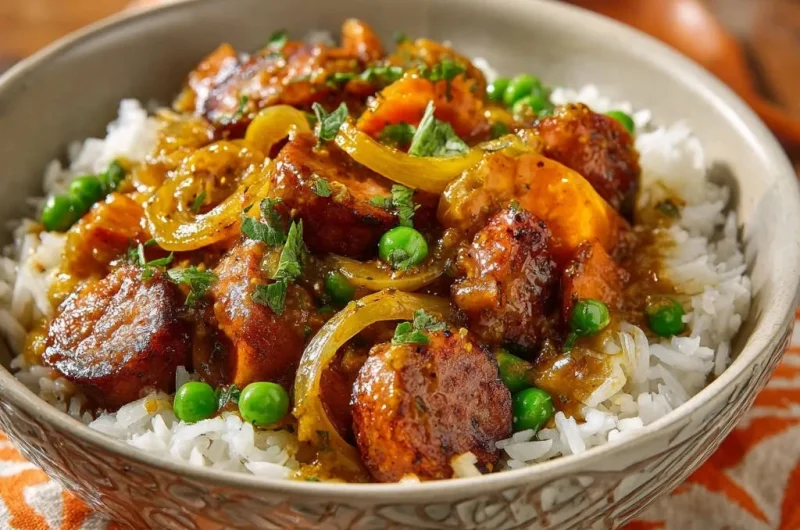
Smoked Sausage and Sweet Potato Curry
Course: Main CourseCuisine: InternationalDifficulty: easy4
servings15
minutes25
minutes550
kcal40
minutesTired of watery sauces? This easy comfort meal uses a quick flour technique to guarantee a smooth, thick, savory curry that perfectly coats every piece of smoked sausage and tender sweet potato. It’s an essential weeknight skillet dinner ready in under an hour.
Ingredients
1 pound pre-cooked chicken or turkey smoked sausage, sliced 1/2 inch thick
2 tablespoons vegetable oil
1 large yellow onion, thinly sliced
1 cup peeled and chopped sweet potato (1/2 inch cubes)
2 cloves garlic, minced
2 tablespoons curry powder
1 tablespoon all purpose flour
1 teaspoon ground ginger
1/2 teaspoon kosher salt
1/4 teaspoon black pepper
1 cup chicken broth
1/2 cup full fat coconut milk
1/2 cup frozen peas
Fresh cilantro or parsley, chopped, for garnish
4 cups cooked white rice, for serving
Directions
- Brown the Sausage: Heat 1 tablespoon of oil in a large skillet or Dutch oven over medium-high heat. Add the sliced sausage and sear for 3 to 4 minutes per side until deeply golden brown and slightly caramelized. Remove the sausage and set aside, leaving any rendered fat in the pan.
- Cook Vegetables: Add the remaining 1 tablespoon of oil to the skillet along with the sliced onion and sweet potato. Reduce heat to medium and cook for 5 to 7 minutes until the onions are soft and beginning to caramelize and the sweet potato edges are starting to soften.
- The Cling Technique: Add the minced garlic, curry powder, ground ginger, salt, and pepper to the vegetables. Cook for 1 minute until fragrant. Sprinkle the 1 tablespoon of flour directly over the mixture and stir constantly for 60 seconds, allowing the flour to cook out and fully coat the vegetables and spices. This step is essential for creating a smooth, thick sauce base.
- Build the Sauce: Pour in the chicken broth, scraping up any browned bits from the bottom of the pan. Bring the mixture to a simmer. Add the coconut milk and stir until the sauce is smooth and well combined.
- Simmer and Finish: Return the browned sausage to the pan. Reduce the heat to medium-low and cover the skillet, allowing the mixture to simmer gently for 8 to 10 minutes, or until the sweet potatoes are tender and the sauce has thickened significantly, coating the back of a spoon.
- Stir in the frozen peas during the last 2 minutes of cooking. Taste and adjust seasoning if needed.
- Serve the sausage and curry mixture immediately over hot white rice, garnished heavily with fresh cilantro or parsley.
Notes
- The 60-second flour step (‘The Cling Technique’) is crucial for building the creamy, thick sauce base.