Why Soy Glazed Salmon with Chimichurri Transforms Weeknights
Dry salmon has wrecked too many dinners for me. You know that tough, flavorless bite that leaves everyone disappointed? This soy glazed salmon with chimichurri fixes it fast. In addition, crisping the skin first on medium heat renders fat and builds a moisture barrier, so the flesh stays flaky and juicy every time.
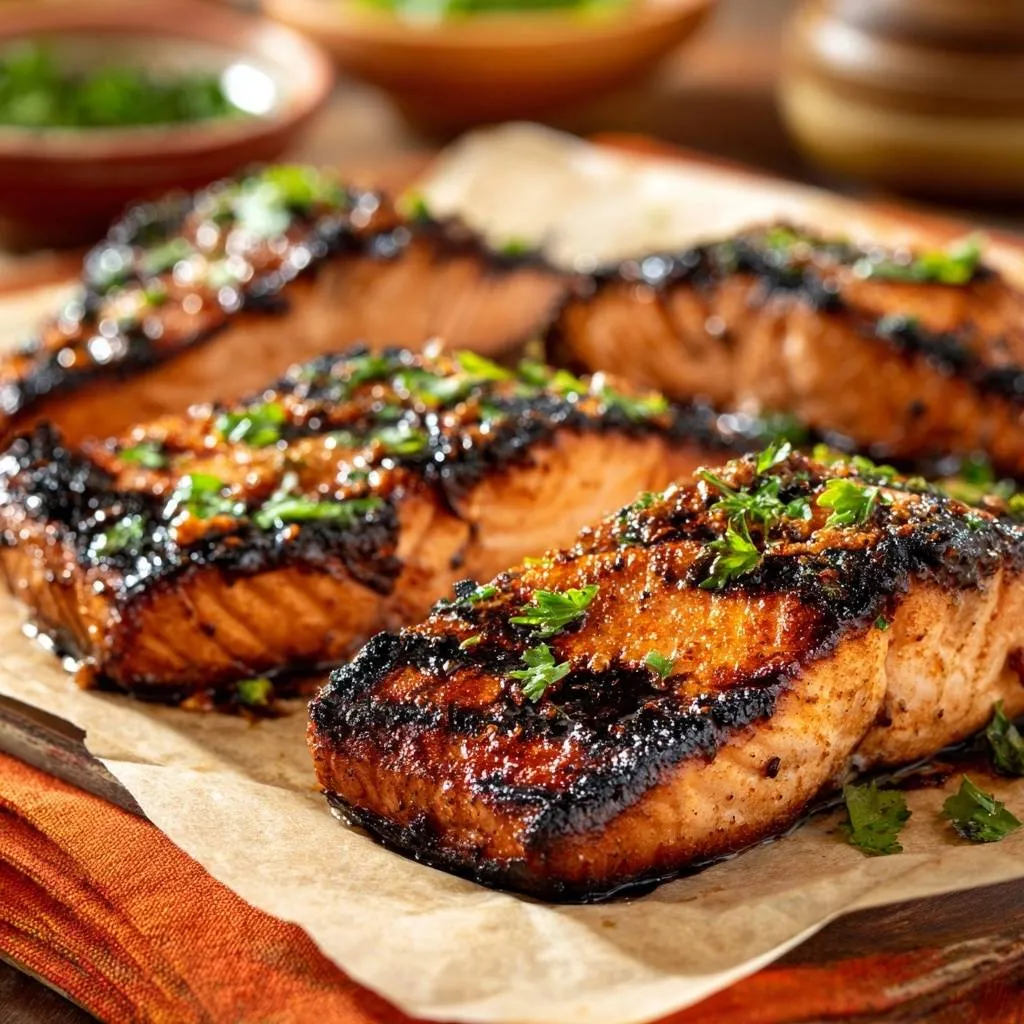
That’s why this recipe shines for busy nights. The sticky soy glaze chars beautifully, packing umami punch, while fresh chimichurri cuts through with herbaceous zing. Oh man, that contrast hits just right, sweet glaze meeting bright, spicy green sauce.
Here’s the expertise kicker: pat the salmon dry and let it sit at room temp for 10 minutes before searing. Therefore, it cooks evenly, and the skin turns golden without steaming. You’ll get restaurant-quality soy glazed salmon with chimichurri right at home.
Key Ingredients for Soy Glazed Salmon with Chimichurri
Skin-on salmon fillets form the base of this soy glaze salmon dish. They render fat during cooking, creating that essential crisp barrier. In addition, choose 6-ounce pieces for perfect portioning and even thickness.
Low-sodium soy sauce delivers balanced umami without excess saltiness overpowering the honey and vinegar. Meanwhile, honey provides sticky sweetness that clings to the fish, and brown sugar adds caramel depth as it thickens. Rice vinegar brightens everything with a subtle tang.
Fresh parsley packs vibrant color and freshness into the chimichurri, far better than dried herbs that turn dull. However, minced garlic infuses both glaze and sauce, while red pepper flakes control the heat. Finally, quality olive oil emulsifies the chimichurri smoothly.
Selecting Perfect Skin-On Salmon Fillets
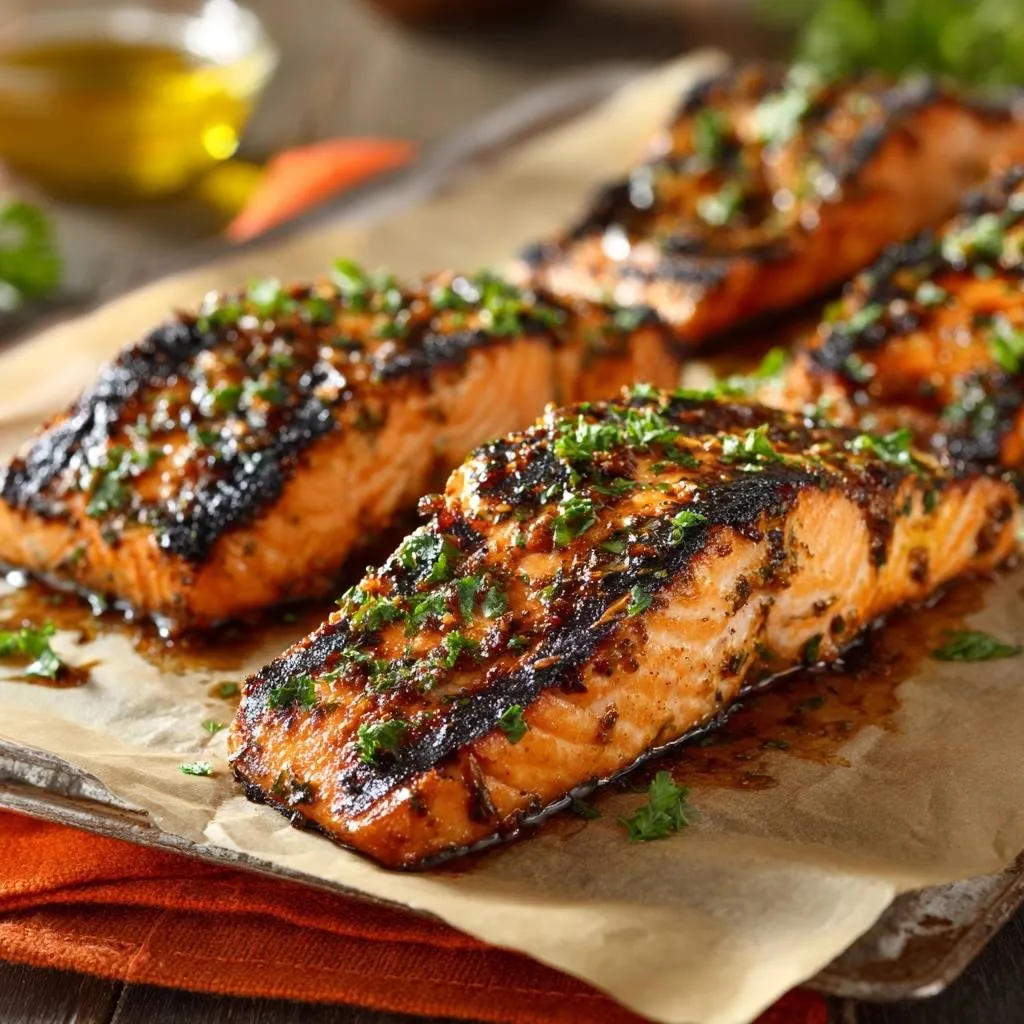
Pick wild or farmed skin-on salmon fillets around 6 ounces each. Look for even thickness and firm, shiny flesh that springs back when pressed. The skin is crucial here; it renders fat to lock in moisture for flaky soy glazed salmon with chimichurri.
Avoid thin tails or overly fatty bellies that cook unevenly. Therefore, fresh fillets from a trusted fishmonger ensure the best results.
Glaze Components: Soy, Honey, and Vinegar Balance
Soy sauce brings salty umami, honey offers floral stickiness for glaze adhesion, and rice vinegar cuts the richness with acidity. Brown sugar melts in, deepening the flavor as it simmers. Stir constantly over medium heat to prevent burning.
This balance creates a glossy soy glaze salmon coating that chars without bitterness. In addition, use low-sodium soy to keep control over seasoning.
Chimichurri Essentials: Parsley and Pepper Flakes
Finely chop fresh parsley leaves for tender texture that releases oils into the sauce. Add olive oil last to emulsify, creating a vibrant green drizzle. Lemon juice matches the glaze’s acidity, while red pepper flakes deliver controlled heat.
Taste and adjust; a pinch of salt ties it together. Therefore, this chimichurri elevates soy glazed salmon with chimichurri perfectly.
The Science of Crisping Salmon Skin First
Crisping salmon skin first triggers the Maillard reaction on medium heat, browning proteins for golden crunch without overcooking the flesh. Fat renders out slowly, forming a barrier that seals juices inside. That’s how you avoid dry soy glazed salmon with chimichurri.
High heat scorches the outside while leaving the inside raw. However, medium heat denatures proteins gently, yielding flaky texture. In addition, undisturbed cooking lets collagen break down for tenderness.
This technique transforms simple fillets into juicy stars. Therefore, your soy glazed salmon with chimichurri stays moist under that charred glaze.
Medium Heat vs. High Heat Rendering
Medium heat melts salmon fat over 5-6 minutes undisturbed, creating a crisp base. High heat tightens proteins, trapping moisture outside and drying the flesh. Listen for gentle sizzling; that’s your cue it’s working.
Therefore, patience prevents juice loss in soy glaze salmon.
Moisture Barrier Formation in Soy Glazed Salmon
Rendered skin fat solidifies slightly, sealing the flesh like natural parchment. Glaze then chars on top without steaming the interior. Flip only when skin lifts easily.
This barrier keeps soy glazed salmon with chimichurri succulent.
Step-by-Step: Preparing Soy Glaze for Salmon
Combine low-sodium soy sauce, honey, brown sugar, rice vinegar, and half the minced garlic in a saucepan. Simmer over medium heat for 3-4 minutes, stirring constantly until it thickens to coat a spoon. The aroma turns sweet and garlicky fast.
Pull it off heat to cool slightly for brushing; too hot and it burns on the fish. This glaze pairs perfectly with chimichurri salmon elements later. Pro tip: make ahead and store in the fridge for up to 3 days.
If you enjoy the fresh zest from the lemon here, you’ll appreciate the sweet glaze in oven teriyaki salmon.
Step-by-Step: Crafting Fresh Chimichurri Sauce
Finely chop parsley leaves until vibrant and uniform. Mix in minced garlic, red pepper flakes, lemon juice, and a pinch of salt first. Drizzle olive oil last and stir to emulsify into a loose, oily sauce.
Taste for balance; add more lemon if needed. Let it rest 10 minutes for flavors to meld. Fresh beats jarred every time for that bright kick on soy glazed salmon.
Step-by-Step: Searing Soy Glazed Salmon Skin-Side Down
Pat fillets dry with paper towels and season both sides with salt and pepper. Let them sit at room temp for 10 minutes; this ensures even cooking. Heat a nonstick skillet with 1 tsp olive oil over medium.
Place skin-side down and cook 5-6 minutes undisturbed. Skin turns golden and crisp, fat renders with a soft sizzle. Gently lift an edge to check; if it releases, you’re golden.
Step-by-Step: Glazing, Flipping, and Char Finish
Flip fillets gently. Brush generously with soy glaze and cook 2-3 minutes more until flesh flakes and glaze bubbles. For extra char, broil 1 minute under high heat, watching closely to avoid burning.
Rest on parchment 2 minutes; this preserves crisp skin. Top with chimichurri for soy glazed salmon with chimichurri perfection. Internal temp hits 135F for medium doneness.
Avoiding Dry Soy Glazed Salmon Mistakes
High heat dries salmon fast by seizing proteins. Stick to medium for rendering. Skipping the dry pat leaves excess moisture, steaming instead of searing.
Over-flipping tears skin; do it once. Glaze too early burns before flesh cooks. Use a thermometer: aim for 135F internal in soy glazed salmon.
Pro tip: if glaze won’t bubble, your heat’s too low. Bubbling signals perfect char without dryness.
Overcooking Flesh During Glaze Char
Check flakiness with a fork; it separates easily at 135F. Carryover cooking raises temp 5 degrees more. Limit broil to 1 minute max.
Sticky Skin Failures and Fixes
Use nonstick pan with minimal oil. Cook undisturbed until skin lifts clean. Scrape gently if stuck, but patience usually wins.
Perfect Pairings for Soy Glazed Salmon with Chimichurri
Sesame rice soaks up the soy glaze juices perfectly. Quinoa salad adds nutty chew against the flaky fish. Grilled asparagus brings char that echoes the glaze.
Bok choy stir-fry cuts richness with crisp greens. Sparkling cranberry juice refreshes the palate alongside. For meal prep, portion with grains for 3 days.
These sides balance sweet soy glazed salmon with chimichurri’s acid and heat.
Grain Sides Enhancing Chimichurri
Jasmine rice absorbs glaze and chimichurri oils beautifully. Farro’s nuttiness contrasts the tender salmon. Cook fluffy to avoid mush.
Vegetable Complements to Soy Glaze
Broccolini chars nicely, matching glaze bubbles. Bok choy wilts just enough for sauce cling. Steam lightly for crunch.
Soy Glazed Salmon with Chimichurri FAQ
Can Skinless Fillets Work Here?
No, skinless misses the fat-rendering barrier that keeps flesh moist. Try air fryer at 400F for 8-10 minutes if needed, but skin-on crisps best for soy glazed salmon.
How Long Does Chimichurri Last?
Store in an airtight jar in the fridge up to 5 days; stir before using. Freeze in ice cube trays for 3 months, thaw overnight for fresh flavor.
Best Internal Temp for Flaky Salmon?
Aim for 135F medium; it flakes easily and stays juicy. Carryover adds 5F during rest. Use an instant-read thermometer for precision.
Gluten-Free Soy Glaze Options?
Swap soy sauce for tamari; it’s naturally gluten-free with similar umami. Ratios stay the same for perfect thickening.
Scaling for More Servings?
Double ingredients for 8 fillets, but use two skillets to avoid crowding. Glaze scales evenly; simmer same time. Broil in batches if needed.
Soy Glazed Salmon
Course: Main CourseCuisine: FusionDifficulty: easy4
servings15
minutes15
minutes450
kcal30
MinutesDry salmon ruining dinner? This recipe fixes it with crisping the skin first on medium heat to render fat and create a moisture barrier, locking in flaky juices while the soy-honey glaze chars perfectly.
Ingredients
4 skin-on salmon fillets (6 oz each)
1/4 cup low-sodium soy sauce
1/4 cup honey
2 tbsp brown sugar
1 tbsp rice vinegar
2 garlic cloves, minced
1 cup fresh parsley leaves, finely chopped
1/4 cup olive oil
1 tbsp fresh lemon juice
1/2 tsp red pepper flakes
Salt and black pepper to taste
Directions
- Pat salmon fillets dry with paper towels and season both sides with salt and pepper. Let sit at room temperature for 10 minutes. This preps for even cooking.
- Make the glaze: In a small saucepan over medium heat, combine soy sauce, honey, brown sugar, rice vinegar, and half the minced garlic. Simmer 3-4 minutes until thickened, stirring constantly. Set aside.
- Make chimichurri: In a bowl, mix parsley, olive oil, lemon juice, remaining minced garlic, red pepper flakes, and a pinch of salt. Set aside.
- Heat a large nonstick skillet over medium heat (not high) with 1 tsp olive oil. Place salmon skin-side down. Cook 5-6 minutes undisturbed until skin is golden and crisp. This renders fat to form a natural barrier that seals in moisture, preventing dryness.
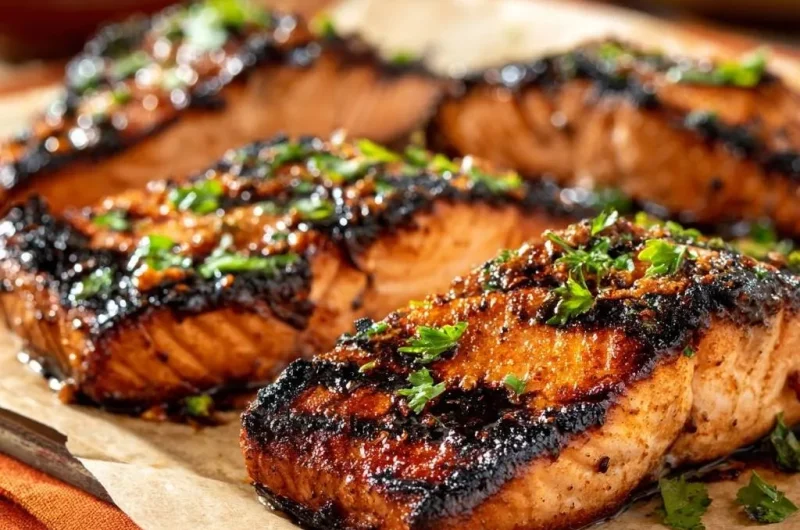
- Gently flip fillets. Brush generously with glaze. Cook 2-3 minutes more until flesh flakes easily and glaze bubbles and chars slightly. For extra char like the photo, broil 1 minute under high heat watching closely.
- Rest 2 minutes on parchment paper, top with chimichurri, and serve. Juicy, flaky salmon guaranteed!
Notes
- Use medium heat for skin crisping to render fat and prevent dryness. Broil 1 minute for extra char. Resting seals in juices.