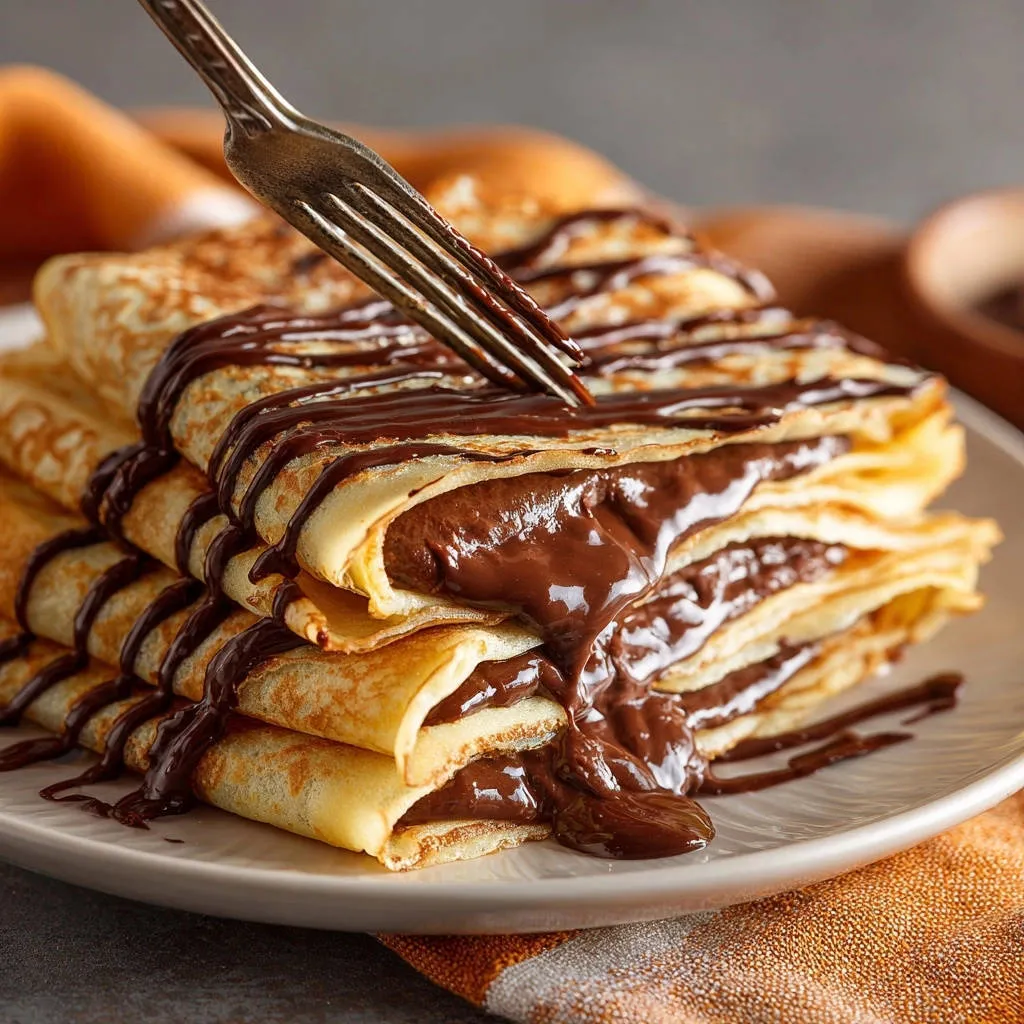
I remember the intense frustration of watching delicate crepes tear in the pan, sacrificing the first few batches every time I tried to flip them.
That anxiety vanished when I discovered the non-negotiable secret of resting the batter, which transforms the structure into resilient, tear-proof sheets.
This is the ultimate guide to creating incredible Stacked Chocolate Dessert Crepes that are ultra-silky, easy to flip, and utterly decadent thanks to a rich chocolate hazelnut filling.
Why This Stacked Chocolate Dessert Crepes Recipe Is a Game Changer
Solving the Crepe-Flipping Frustration
The main barrier to successful crepe making is the structural integrity of the batter during the flip, which often leads to ragged tears.
Our key technique forces the gluten to fully relax, eliminating that inherent tightness and resulting in flexible, sturdy crepes that even beginners can handle easily.
The Decadent Simplicity of Chocolate Hazelnut
While crepes are light and delicate, the pairing with high-quality chocolate hazelnut spread elevates them instantly into a true dessert.
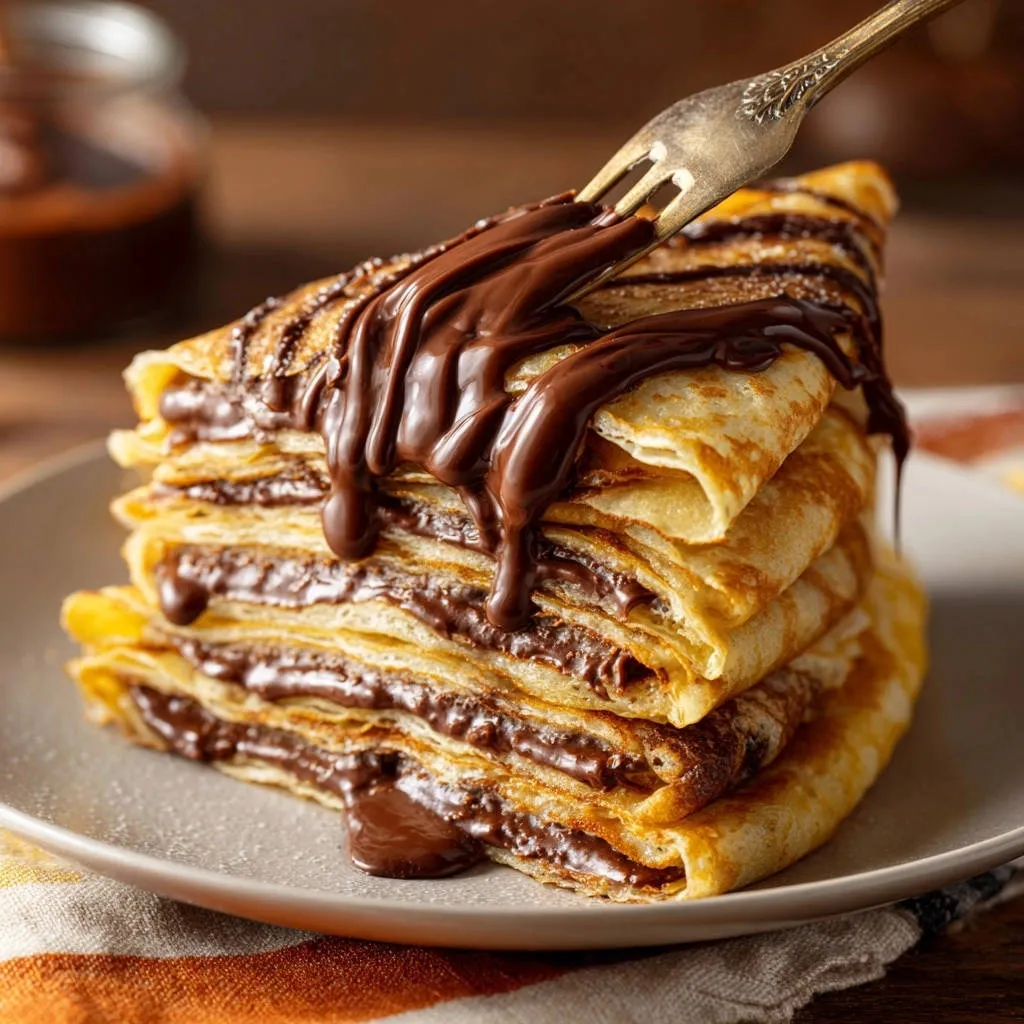
The rich, creamy nuttiness perfectly balances the slightly sweet, delicate shell, offering maximum indulgence with minimal effort.
Perfect for Guests or a Sunday Brunch Treat
These thin, flexible crepes are ideal for entertaining because they can be cooked entirely ahead of time.
Simply prepare the whole stack, store them, and warm them gently before assembly for a beautiful, stress-free brunch or elegant evening treat.
The Simple Ratios That Build Perfect Crepe Flavor
Flour and Sugar Foundations
All-Purpose flour provides the necessary structure, but the long resting period ensures it doesn’t result in a chewy texture.
A minimal amount of granulated sugar is included solely to aid in the beautiful, light golden-brown caramelization achieved during cooking.
The Essential Dairy and Hydration Mix
Using whole milk provides richness and helps tenderize the texture of the finished crepe.
The strategic addition of water ensures the batter achieves that crucial, ultra-thin consistency, allowing the batter to spread perfectly across the pan.
The Fat Factor: Melted Butter
Melted unsalted butter contributes vital flavor and ensures the final crepe remains pliable and soft.
The butter is added at the very end of the mixing process to prevent overworking the gluten, further aiding in achieving a tender result.
Essential Equipment for Cooking Stacked Chocolate Dessert Crepes Like a Pro
Choosing the Right Pan
A dedicated 10-inch nonstick crepe pan provides ideal heat distribution and shallow walls for easy flipping.
If unavailable, use a high-quality nonstick skillet, ensuring the surface is perfectly seasoned and maintained.
The Thin Spatula Advantage
You must use a very thin, flexible offset metal or silicone spatula to prevent tearing.
This tool is crucial because it can slide completely underneath the entire crepe without snagging or damaging the delicate structure.
Mixing Tools
A wire whisk is necessary for thoroughly combining the ingredients into a lump-free initial mix.
A rubber spatula should be on hand for scraping down the sides of the bowl to ensure full ingredient incorporation.
The Non-Negotiable Secret to Tear-Proof Crepes: Hydration and Rest
Why Resting Stabilizes the Batter
When flour is mixed with liquid, the gluten proteins activate, causing the batter to become momentarily elastic and tight.
This elasticity creates tension, which is exactly why fresh batter often tears when subjected to the stress of swirling or flipping.
The essential rest period allows those gluten strands to fully relax and the flour particles to fully absorb the liquid, stabilizing the structure.
How Long is the Ideal Chill Time?
The minimum required time for this structural transformation is 30 minutes in the refrigerator, but resting for up to two hours offers the best, most reliable results.
Refrigeration also chills the melted butter, thickening the batter slightly and further enhancing its stability before it hits the hot pan.
Crafting the Perfect Stacked Chocolate Dessert Crepes: Step-by-Step Method
- Initial Mix of Dry and Wet
In a large bowl, whisk the flour, sugar, and salt together to ensure even distribution and aeration.
In a separate bowl, thoroughly whisk the eggs, milk, and water until they are smooth and fully combined.
- Forming the Batter and Incorporating Fat
Slowly pour the liquid mixture into the dry ingredients while continuously whisking to prevent heavy lumps from forming.
Add the melted butter last and whisk just until fully incorporated; the final batter should be notably very thin, similar to heavy cream.
- The Critical Batter Rest (The Non-Tear Secret)
Immediately cover the bowl tightly with plastic wrap to prevent a skin from forming on the surface.
Refrigerate the batter for a minimum of 30 minutes; this patience is the single most important factor for tear-proof success.
- Pan Preparation and Heat Management
Heat your 10-inch pan over consistent medium heat-never high, which causes scorching.
Use a pastry brush to apply a very light coat of melted butter before the first crepe, repeating only if the pan surface looks dry.
- The Swirl Technique for Thin Layers
Lift the pan entirely off the heat source before pouring in exactly 1/4 cup of the rested batter.
Immediately tilt and swirl the pan quickly in a circular motion until the batter thinly and evenly coats the entire bottom surface, then place it back on the heat.
- Checking for the Perfect Flip Time
Cook for 60 to 90 seconds, waiting until the edges look dry, lift easily, and the underside is lightly golden brown.
Use your thin spatula to loosen the crepe completely, slide it fully underneath, and execute one gentle, confident flip; cook the second side for only 30 seconds.
- Stacking and Maintaining Warmth
Slide the finished crepe directly onto a clean plate and continue stacking them immediately after cooking until all batter is used.
Stacking traps residual heat and moisture, which keeps the Stacked Chocolate Dessert Crepes soft, pliable, and ready for filling.
Assembly and Presentation: Mastering the Art of the Stack
Two Classic Folding Techniques
For a beautiful triangle fold, spread a thin layer of chocolate hazelnut filling across exactly half of the crepe.
Fold the crepe in half to create a semicircle, and then fold it in half again to form an elegant wedge, ready for stacking or arranging.
To create a neat roll-up, spread the filling lightly over the entire surface, leaving a small, clean border.
Roll the crepe tightly from one edge to the other, creating a uniform cylinder that looks clean and is easy to eat.
Garnishing Your Stacked Chocolate Dessert Crepes
Elevate the presentation with simple, quality finishing touches beyond the primary filling:
For more ideas on achieving that perfect thinness, check out these dreamy chocolate crepes.
- A dusting of powdered sugar or fine sieve cocoa powder.
- Fresh raspberries or beautifully fanned sliced strawberries.
- A dollop of lightly sweetened vanilla whipped cream.
- Fine shavings of dark chocolate for added texture and richness.
Expert Tips for Flawless Crepe Texture and Finish
Use Medium Heat, Nothing Higher: High heat causes the small amount of sugar in the batter to scorch immediately, resulting in dark, fragile edges before the center can fully set. Consistent medium heat ensures a uniform, light golden color.
Temperature Check for the Batter: After spending time in the refrigerator, allow the chilled batter to sit out at room temperature for 10 minutes before cooking.
Using extremely cold batter can drastically lower the pan temperature with each pour, leading to an uneven cooking process.
Skim the Foam, If Necessary: If tiny bubbles or foam form on the surface of the batter after whisking or resting, use a spoon to gently skim them off before cooking.
This simple step prevents the finished crepe surface from developing blemishes or pits.
The First Crepe Is the Test: Always treat the very first crepe you cook as a heat and butter test, as it rarely comes out perfectly.
If it sticks, add a touch more butter; if it darkens too fast, reduce the heat immediately, then proceed with the remaining batter.
Troubleshooting Your Batter: Why Are My Crepes Tearing?
Problem: My Crepes Are Too Thick
If your crepes look more like thin pancakes than delicate sheets, the batter needs more liquid.
Add one tablespoon of whole milk or water at a time until the consistency matches heavy cream, whisking gently after each addition.
Problem: They Stick to the Pan
Sticking usually indicates insufficient fat or a pan that is not adequately heated.
Ensure your pan is properly seasoned, lightly buttered, and shimmering hot (but not smoking) before pouring the next round of batter.
Problem: They Are Bumpy or Lumpy
Lumps occur when the flour has not fully hydrated or if the dry ingredients were incorporated too quickly.
Solve this easily by straining the finished, rested batter through a fine-mesh sieve directly into a clean container before you begin cooking.
Stacked Chocolate Dessert Crepes FAQs: Your Baking Questions Answered
Can I Make the Crepe Batter Ahead of Time?
Yes, the crepe batter is optimized for make-ahead convenience, thanks to the required resting period.
You can safely store the covered batter in the refrigerator for up to two days; just give it a gentle, brief whisk before starting to cook.
What Substitutions Can I Use for Whole Milk?
While whole milk provides optimal richness and tenderness, 2% milk is an acceptable substitution, though the result will be slightly less decadent.
For non-dairy options, plain almond or oat milk work well, but you may need to reduce the amount of water slightly to maintain the target thin consistency.
How Do I Store Cooked Crepes?
Cool the finished crepes completely on a wire rack to prevent steam from making them soggy.
Stack them with a small square of parchment paper between each one, wrap the stack tightly, and refrigerate for up to three days or freeze for up to two months.
Can I Use Cocoa Powder to Make Them Chocolate Crepes?
This specific recipe relies on the rich filling for the chocolate intensity.
Complementary Bites
Enjoying these chocolate crepes? Consider adding these dishes to your meal for a complete experience.
- For a savory contrast, try these Cheesy Beef Waffles, offering a satisfying texture alongside your dessert.
- If you’re in the mood for more sweet treats, these S’mores Pancakes bring a fun, campfire-inspired flavor.
If you desire true chocolate crepes, you must substitute 1/4 cup of the all-purpose flour with high-quality unsweetened cocoa powder and increase the liquid slightly to rebalance the batter consistency.
Final Thoughts: Your Next Dessert Masterpiece Awaits
Mastering the art of making perfectly thin, resilient crepes hinges entirely on understanding and executing the simple, critical step of the batter rest.
Once you adopt this technique, your days of tearing and frustration are over, guaranteed.
For more crepe ideas, try out banana chocolate coconut crepe rolls.
These Stacked Chocolate Dessert Crepes deliver an impressive, elegant, and reliable dessert that is secretly effortless to execute, making them perfect for your next special occasion.
Try this recipe this week and discover how wonderfully reliable a homemade crepe can truly be!

Chocolate Crepes
Course: DessertCuisine: FrenchDifficulty: easy10
Crepes5
minutes25
minutes450
kcal60
minutesStop sacrificing your first few crepes! This foolproof recipe includes the simple, non-negotiable step of resting the batter, ensuring flexible, resilient crepes that never tear. Fill them generously with chocolate hazelnut spread for an elegant dessert.
Ingredients
For the Crepes:
1 cup All-Purpose Flour
2 large Eggs
1 1/2 cups Whole Milk
1/4 cup Water
3 tablespoons Unsalted Butter, melted, plus extra for the pan
1 teaspoon Granulated Sugar
1/4 teaspoon Salt
For the Filling and Topping:
1 1/2 cups Chocolate Hazelnut Spread (such as Nutella)
Directions
- Prepare the Batter: In a large bowl, whisk the flour, sugar, and salt together. In a separate bowl, whisk the eggs, milk, and water until well combined.
- Combine and Finish: Slowly pour the wet mixture into the dry ingredients, whisking constantly until smooth. Add the 3 tablespoons of melted butter and whisk once more until fully incorporated. The batter should be very thin, like heavy cream.
- The Non-Tear Secret (Resting): This step is absolutely essential for stability. Cover the bowl tightly with plastic wrap and refrigerate the batter for a minimum of 30 minutes, or up to 2 hours. This rest allows the gluten structure to relax and the liquid to fully hydrate the flour, resulting in a flexible, tear-resistant crepe that handles easily.
- Prepare the Pan: Heat a 10-inch nonstick crepe pan or skillet over medium heat. Lightly brush the surface with a small amount of melted butter.
- Cook the Crepes: Lift the pan off the heat. Pour 1/4 cup of the rested batter into the center of the pan. Immediately tilt and swirl the pan quickly in a circular motion until the batter coats the entire bottom surface thinly and evenly. Place the pan back on the burner.
- The Perfect Flip: Cook for 60 to 90 seconds, or until the edges begin to lift easily and the bottom is lightly golden brown. Because the batter is rested, it will be resilient. Use a thin spatula to carefully loosen the edges, then slide the spatula fully under the crepe and gently flip. Cook the second side for only about 30 seconds.
- Repeat and Stack: Slide the finished crepe onto a plate. Lightly butter the pan again if needed before pouring the next batch. Continue cooking until all batter is used, stacking the finished crepes on top of each other.
- Assemble: When ready to serve, take one crepe and spread a thin layer of Chocolate Hazelnut Spread across half of the surface. Fold the crepe in half, and then fold it in half again to form a triangle or roll them up neatly. Stack several crepes on a plate and drizzle generously with additional spread before serving.
Notes
- The 30-minute minimum resting period is essential for preventing tears and ensuring crepe flexibility.