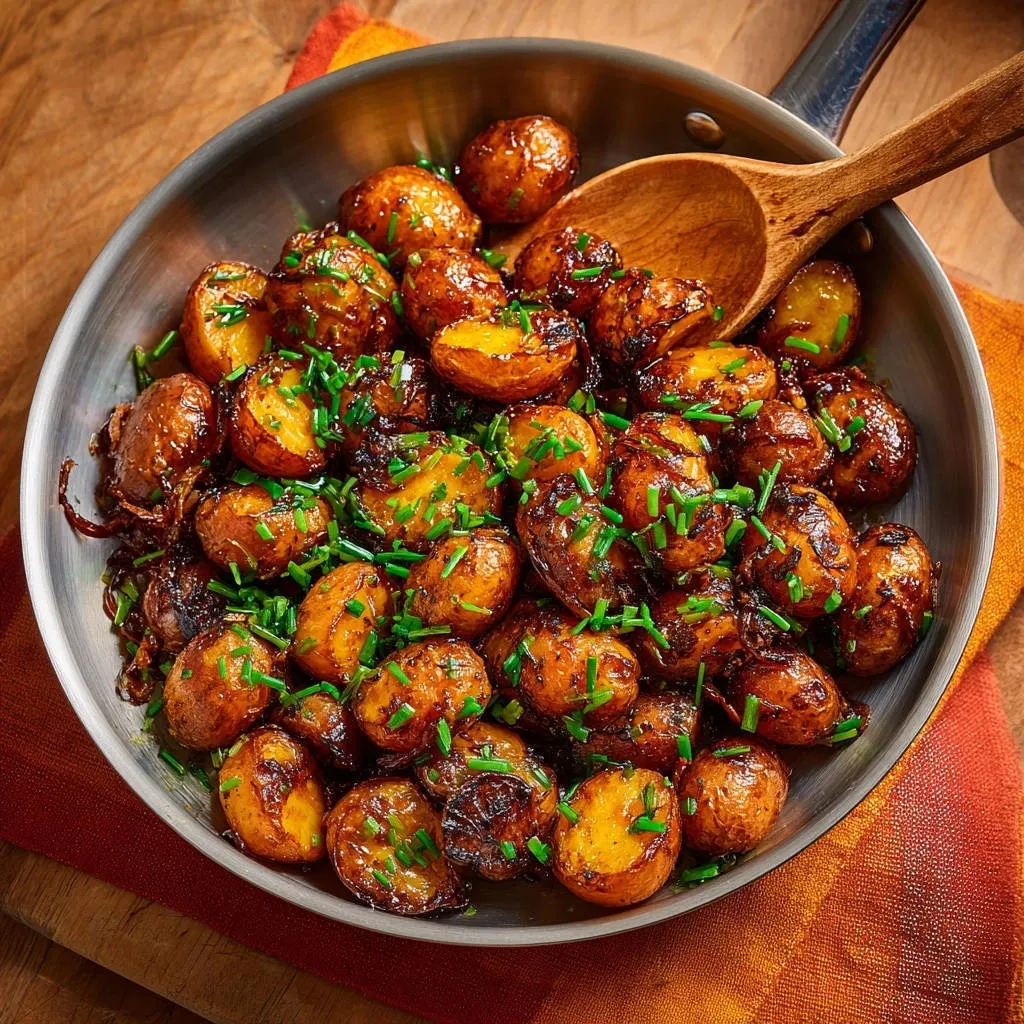
Trying to achieve a deep, caramelized crust on roasted potatoes often leads to burnt sugar on the outside and undercooked centers. My technique for perfectly cooked, restaurant-quality Sticky Garlic Glazed Baby Potatoes guarantees creamy insides and that irresistible, thick, sticky crust every time.
This recipe hinges on one simple, crucial preparatory step that eliminates all guesswork, ensuring your success and delivering a side dish everyone will request.
Why This Recipe Works: The Secret to Perfectly Creamy Centers
Solving the Raw Center vs. Burnt Glaze Dilemma
The standard method of cooking potatoes involves starting them raw, which requires high heat and a long cook time to soften the starch inside. Maintaining high heat for too long causes the sugars in any glaze to scorch, leaving you with bitter, black patches.
You face a cruel trade-off: either your potatoes are fully soft but the glaze is ruined, or your glaze is perfect but the interior is still firm and unsatisfying.
The Magic of the Double-Cook Method
The solution lies in the double-cook method: par-boiling the potatoes completely before they ever hit the searing pan. This step guarantees the potato interiors are soft and fluffy from the start.
Once the potatoes are cooked through, the searing phase only needs to focus on caramelizing the surface. The entire high-heat glazing process is reduced to just two minutes, preventing the sugar from burning while still achieving maximum stickiness.
The Critical Role of Moisture Removal
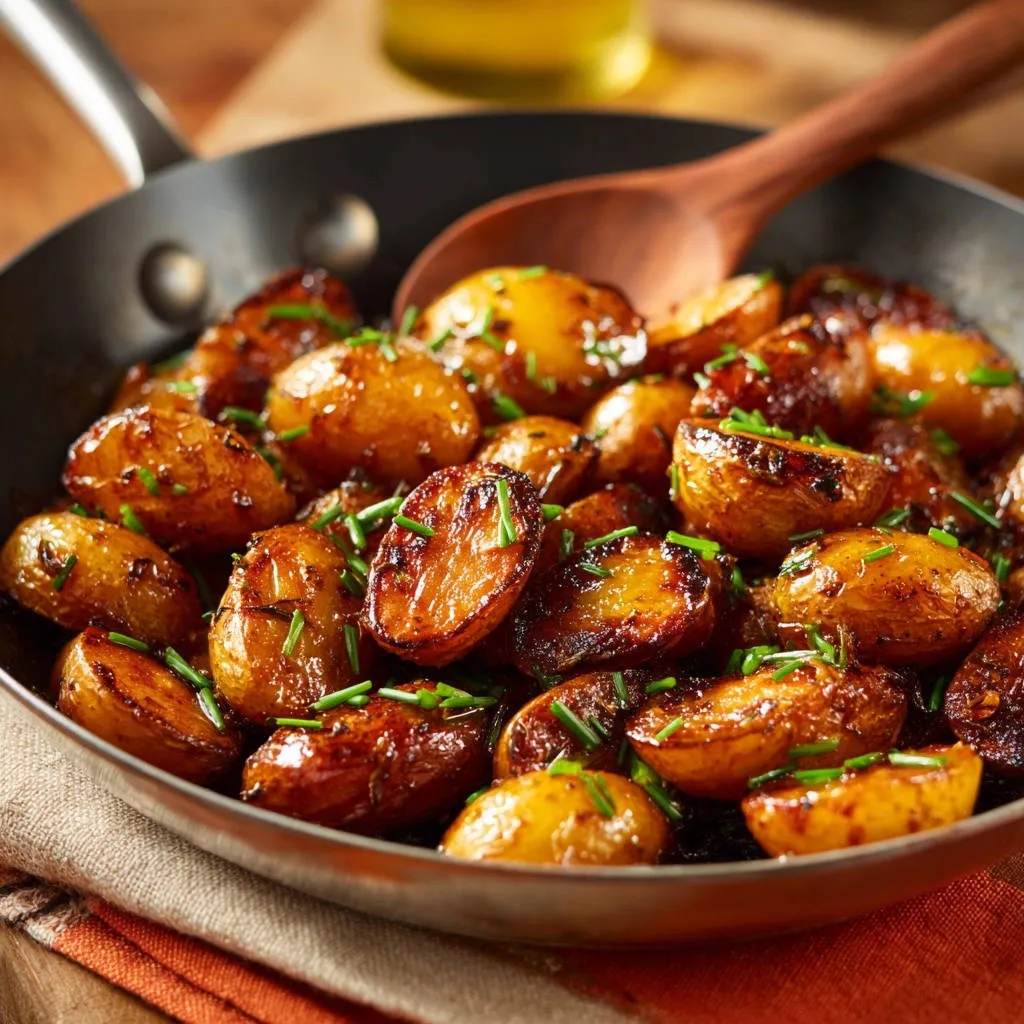
If the potatoes retain any surface moisture, that water instantly turns to steam when it hits the hot oil. Steam drastically lowers the pan temperature and prevents the potatoes from developing that desirable deep golden crust.
Patting the halved potatoes bone-dry with a paper towel is absolutely mandatory before the searing step. This ensures direct contact between the dry starch and the hot fat, allowing the Maillard reaction to occur perfectly.
Gather Your Ingredients: Essential Notes on Potatoes and Glaze Components
Selecting the Best Baby Gold Potatoes
Baby gold potatoes are highly recommended for this dish due to their thin, delicate skin and waxy texture. Waxy potatoes hold their shape impeccably, preventing them from dissolving into mash during the necessary par-boiling and vigorous tossing stages.
Their small size ensures a maximum ratio of crispy surface area to fluffy interior, perfect for soaking up the sticky glaze.
Achieving the Sticky Sweetness: Brown Sugar and Soy Sauce Balance
Light brown sugar is superior to white sugar here because the added molasses provides a deeper, richer flavor and better depth of color. The molasses also helps the final glaze remain slightly soft and sticky instead of turning into hard candy.
Low sodium soy sauce is essential, as using the regular variety introduces too much salinity, which can overpower the delicate sweetness of the glaze base.
The saltiness of the soy sauce perfectly cuts the intensity of the sugar, creating that addictive sweet-savory balance inherent in this ‘Sticky Garlic Glazed Baby Potatoes’ recipe.
Garlic and Aromatics: Freshness is Key
Always use fresh minced garlic for this dish; pre-minced jarred garlic often carries a sharp, metallic flavor that is amplified when briefly sautéed in the hot oil.
Fresh chives provide a vital, grassy counterpoint to the dish’s intense richness. Do not skip the fresh garnish, as it brightens the final flavor profile significantly.
Prepping for Perfection: Essential Equipment and Time-Saving Tips
The Importance of the Right Skillet (Cast Iron vs. Stainless Steel)
A heavy-duty skillet, preferably cast iron or high-quality stainless steel, is crucial for achieving a proper sear. These materials retain and distribute heat consistently across the entire cooking surface.
Consistent, high heat is necessary both for developing the initial potato crust and for facilitating the ultra-rapid thickening of the final glaze. Non-stick surfaces simply cannot manage the required searing temperature without damage.
Tools for Success Checklist
Large Stock Pot: Necessary for the initial par-boiling step, ensuring potatoes are fully submerged.
Heavy-Duty Skillet: Provides the necessary searing surface and heat retention for the ultimate caramelized crust.
Whisk and Spatula: The whisk is for pre-mixing the glaze, and the spatula is necessary for constant movement during the critical 90-second glaze finish.
Mis-en-Place Strategy: Reducing Cook Time Stress
Because the final glazing process happens very quickly, preparation is key to avoiding burnt sugar and ensuring success. Have the brown sugar and soy sauce whisked together in a bowl and placed next to the stove, ready to pour.
Ensure your potatoes are fully dried and cut before the searing stage begins, as the initial sear is the longest phase requiring high heat focus.
Mastering the Glaze: A Step-by-Step Guide to Sticky Garlic Glazed Baby Potatoes
-
The Crucial Par-Boil and Drainage:
Cover the baby potatoes with cold, generously salted water and bring to a rolling boil. Cook until they are easily pierced with a fork but still firm (10-12 minutes).
This boiling time is your assurance against hard centers later on; confirm the texture before immediately draining the potatoes.
-
Cool, Halve, and Dry:
Drain the potatoes immediately and let them cool slightly to allow the steam to dissipate. Cut all the potatoes in half lengthwise and use paper towels to remove all surface moisture.
Remember: any residual water will cause the fat to splutter and force the potatoes to steam instead of allowing the beautiful deep searing (Maillard reaction) to occur.
-
Achieving the Deep Golden Crust:
Heat the vegetable oil and butter in your heavy skillet over medium-high heat until shimmering. Place the halved potatoes cut-side down in a single, uncrowded layer.
Sear undisturbed for 3-4 minutes until a deep golden-brown crust forms. Resist the urge to move them! Flip the potatoes and sear the round side briefly for 2 more minutes.
-
Flavor Base Activation:
Reduce the heat to medium-low. Add the minced garlic to the pan and sauté quickly until it is highly fragrant (about 30 seconds).
Watch the heat carefully at this stage; burnt garlic develops a bitter taste that will instantly ruin the entire flavor profile of the forthcoming glaze.
For another great way to enjoy garlic on your potatoes, check out garlic herb roasted potatoes.
-
The Rapid Glaze Finish:
Pour the pre-whisked brown sugar and soy sauce mixture immediately over the potatoes, then increase the heat back to medium.
Toss the potatoes continuously and rapidly. The glaze will thicken quickly and become glossy, a crucial stage that takes only 1 to 2 minutes. Do not stop stirring.
-
Seasoning and Serving:
Remove the pan from the heat immediately once the glaze is thick, dark, and glossy, then stir in the remaining salt and pepper.
Transfer to a serving dish and garnish generously with fresh chives before serving while still piping hot to retain maximum stickiness and shine.
Chef’s Secrets: How to Troubleshoot Your Glaze and Elevate the Dish
Troubleshooting: Addressing Sticky Glaze Issues
Problem: The Glaze Hardened into Candy. This usually means the heat was too high, or you tossed it for too long, over-reducing the sugar content. If the hardening is minor, add 1 tablespoon of hot water or soy sauce and gently reheat/stir to emulsify the glaze back into a syrup. If severe, you must start the glaze over, ensuring constant movement and precise timing.
Problem: The Potatoes are Steaming, Not Searing. This issue is always due to residual surface moisture or overcrowding the pan, which lowers the cooking temperature dramatically. If this happens, remove the potatoes, quickly wipe and dry the pan, reheat the fat, and work in smaller batches to ensure proper searing.
Flavor Variations: Taking the Glaze to the Next Level
Spicy Kick: Introduce 1/2 teaspoon of sriracha or a generous pinch of red pepper flakes directly into the soy sauce and brown sugar mixture before glazing for a hint of balancing heat.
Gingered Glaze: Include 1 teaspoon of freshly grated ginger along with the minced garlic during the sauté step for aromatic warmth that complements the sweet and savory notes.
Herbal Finish: For a slightly different profile, swap the chives for a combination of finely chopped parsley and a small amount of fresh cilantro for a brighter, garden-fresh finish.
Making Ahead and Storing: Ensuring Perfect Leftovers and Easy Entertaining
Ideal Pairings: What to Serve with Sticky Garlic Glazed Baby Potatoes
The intense sweet and savory flavor of these potatoes makes them a magnificent complement to simple, neutral proteins. They pair perfectly with robust dishes like a charcoal-grilled skirt steak or beef tenderloin.
For poultry, serve them alongside a classic roasted chicken to use the excess pan drippings, which meld beautifully with the sticky glaze.
They also provide an excellent textural and flavor contrast when served with pan-seared flaky fish, such as cod or sea bass.
Pairing them with herb-crusted salmon makes for a fantastic meal.
Can I Prep the Potatoes Ahead of Time?
Yes, you can successfully complete the par-boiling, draining, cooling, and drying steps up to 24 hours in advance. Store the dry, halved potatoes in an airtight container in the refrigerator.
More to Explore
If you enjoyed these sticky garlic potatoes, you might also like these chicken and beef dishes with similar savory glazes.
- For a complete meal, try the Sticky Garlic Chicken & Potato Bowl, which shares the same comforting glaze.
- Consider the Sticky Soy Braised Beef Cubes if you appreciate tender, deeply flavored meat with a glossy finish.
The final searing and glazing must always be done right before serving, as the incredible stickiness and glossy texture are best experienced fresh off the heat.
Reheating Without Sacrificing the Glaze
Avoid the microwave entirely, as steam will turn the precious sticky crust soggy and soft. The best method for reheating is using dry heat.
Spread the leftovers on a sheet pan and reheat them in a preheated 350°F (175°C) oven or air fryer for 5-8 minutes. This high, dry heat helps re-crisp the edges and re-melt the glaze without dissolving the texture.
Your Most Pressing Questions Answered About Sticky Potatoes
Can I use a different variety of potatoes, like Russet or Red?
While baby gold potatoes offer the ideal waxy texture, you can substitute baby red potatoes if necessary. We strongly advise against using starchy Russets, as they tend to fall apart during the necessary double-cook process and cannot withstand the intense heat of the searing stage.
Is this recipe naturally gluten-free?
No, because traditional soy sauce contains wheat and is not gluten-free. To easily make this recipe fully gluten-free, simply substitute the low sodium soy sauce with an equal measurement of Tamari or Coconut Aminos.
What can I substitute for brown sugar if I prefer less processed options?
You can substitute the brown sugar with an equal measure of high-quality maple syrup or honey. Be aware that the resulting glaze will be slightly thinner and less opaque than the brown sugar glaze, so watch the thickening process closely and increase heat slightly if needed.
Ready to Impress? Share Your Sticky Garlic Glazed Baby Potatoes Masterpiece!
Armed with the secret of the double-cook method, you now have the expertise to execute truly exceptional Sticky Garlic Glazed Baby Potatoes that will stand out on any table.
This technique guarantees a perfect result every time-creamy centers, shatteringly crisp edges, and a glaze that is deeply caramelized and wonderfully sticky.
Don’t just make a side dish; create a standout culinary moment. I encourage you to try this method this week and experience the difference true expertise makes.
I look forward to seeing your results!
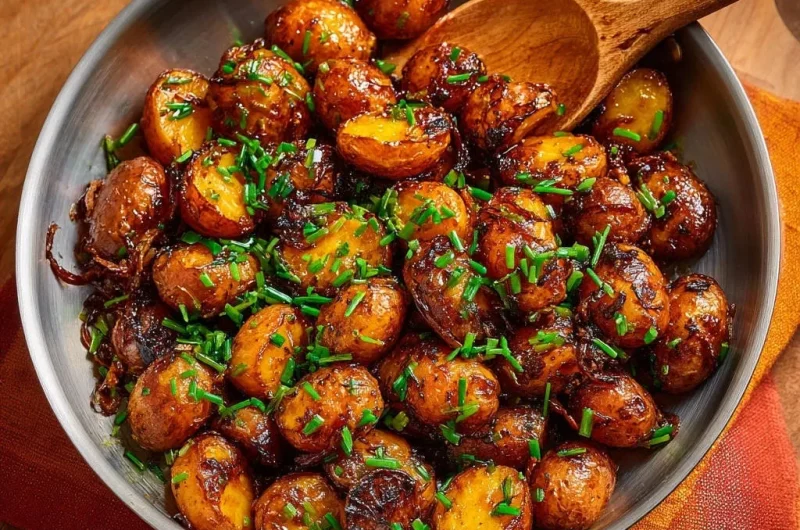
Sticky Garlic Glazed Potatoes
Course: Side DishCuisine: InternationalDifficulty: easy4
servings15
minutes10
minutes350
kcal25
minutesSay goodbye to raw centers and burnt crusts! This simple technique involves pre-boiling the baby potatoes, guaranteeing a creamy interior before they are seared to a perfect, deeply caramelized crust. Finally, they are tossed in a sticky, savory-sweet garlic glaze.
Ingredients
1.5 pounds baby gold potatoes
2 tablespoons vegetable oil
2 tablespoons unsalted butter
1/4 cup light brown sugar, packed
3 tablespoons low sodium soy sauce
3 cloves garlic, minced
1/2 teaspoon salt
1/4 teaspoon black pepper
2 tablespoons fresh chives, chopped, for garnish
Directions
- Prepare the Potatoes: Place the baby potatoes in a large pot and cover with cold, salted water. Bring the water to a boil over high heat. Boil the potatoes for 10 to 12 minutes, or until they are easily pierced with a fork but not yet falling apart. This step is the key to the pain-point solution: cooking them fully now guarantees the inside is soft before the high-heat searing and glazing later.
- Cool and Halve: Drain the potatoes immediately and let them cool slightly. Once cool enough to handle, cut all the potatoes in half lengthwise. Pat them completely dry with a paper towel. Residual moisture prevents searing and encourages steaming, so this drying step is essential.
- Sear the Potatoes: Heat the vegetable oil and butter in a large stainless steel skillet (or cast iron) over medium-high heat. Once the fat is shimmering, add the halved potatoes cut-side down in a single layer. Do not overcrowd the pan; use two batches if necessary. Sear undisturbed for 3 to 4 minutes until a deep golden-brown crust forms. Flip and sear for 2 more minutes.
- Add Flavor: Reduce the heat to medium-low. Add the minced garlic to the pan and saute for 30 seconds until fragrant.
- Create the Glaze: In a small bowl, whisk together the brown sugar and soy sauce until combined. Pour the mixture immediately over the potatoes in the pan.
- Finish the Glaze: Increase the heat to medium. Toss the potatoes continuously for 1 to 2 minutes. Since the potatoes are already cooked through, this process is quick. The glaze will thicken rapidly and coat every potato half beautifully. Do not stop stirring or the sugar will burn. Remove from heat immediately once the glaze is thick and glossy.
- Season and Serve: Stir in the salt and pepper. Transfer to a serving dish and top generously with fresh chopped chives. Serve immediately.
Notes
- Pre-boiling the potatoes ensures a soft center, and thoroughly drying them before searing is essential for a crispy crust.