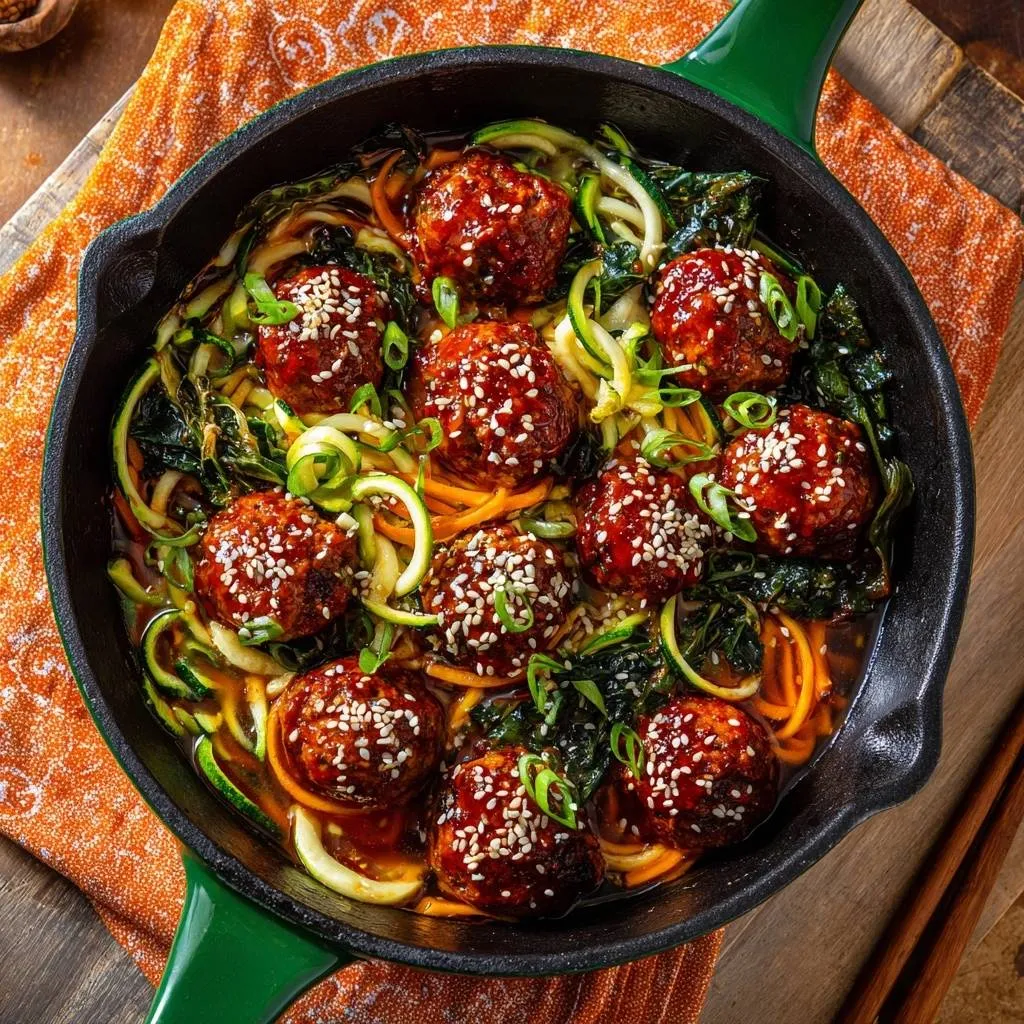
Stop settling for watery, limp vegetable noodles that ruin your sauce. Most people make the mistake of cooking zoodles directly in the pan, which releases excess moisture and turns your dinner into a soup. This recipe fixes that common failure by using a strategic salt-draw and a high-heat flash sear to ensure your noodles stay crisp-tender while the meatballs remain incredibly juicy and glazed to perfection.
The secret to this dish lies in the textural contrast between the deeply caramelized beef and the vibrant, snappy vegetable base. You’re looking for a lacquer-like coating on the meatballs that provides a sweet and sharp ginger punch without drowning the greens. It’s a balance of umami-rich soy and bright aromatics that feels light yet satisfying.
I’ve found that the real trick to professional-grade meatballs is gentle handling. If you overwork the ground beef, the proteins cross-link and create a rubbery, dense texture. Mix the ingredients until they’re just combined, and you’ll end up with a tender, melt-in-your-mouth result every single time.
The Science of Non-Watery Zucchini Noodles
Zucchini is roughly 95% water, and its cellular structure is designed to hold that moisture until heat is applied. When you toss raw zucchini into a hot pan, the cell walls collapse instantly, dumping liquid into your sauce. To prevent this, you must use osmosis to your advantage before the vegetables ever touch the skillet.
By sprinkling the spiralized zucchini with salt and letting it sit in a colander, you draw out the internal moisture through the cell membranes. After ten minutes, you’ll notice the noodles look slightly wilted and the bottom of the bowl is filled with water. Squeezing them firmly with a clean kitchen towel is the final, mandatory step to ensure a dry surface for frying.
The “Flash-Fry” technique is the second half of the equation. You only want to heat the zucchini for about 60 seconds at the very end of the cooking process. Any longer than that, and the residual heat will continue to break down the fibers, ruining the structural integrity of the dish and turning your “pasta” into mush.
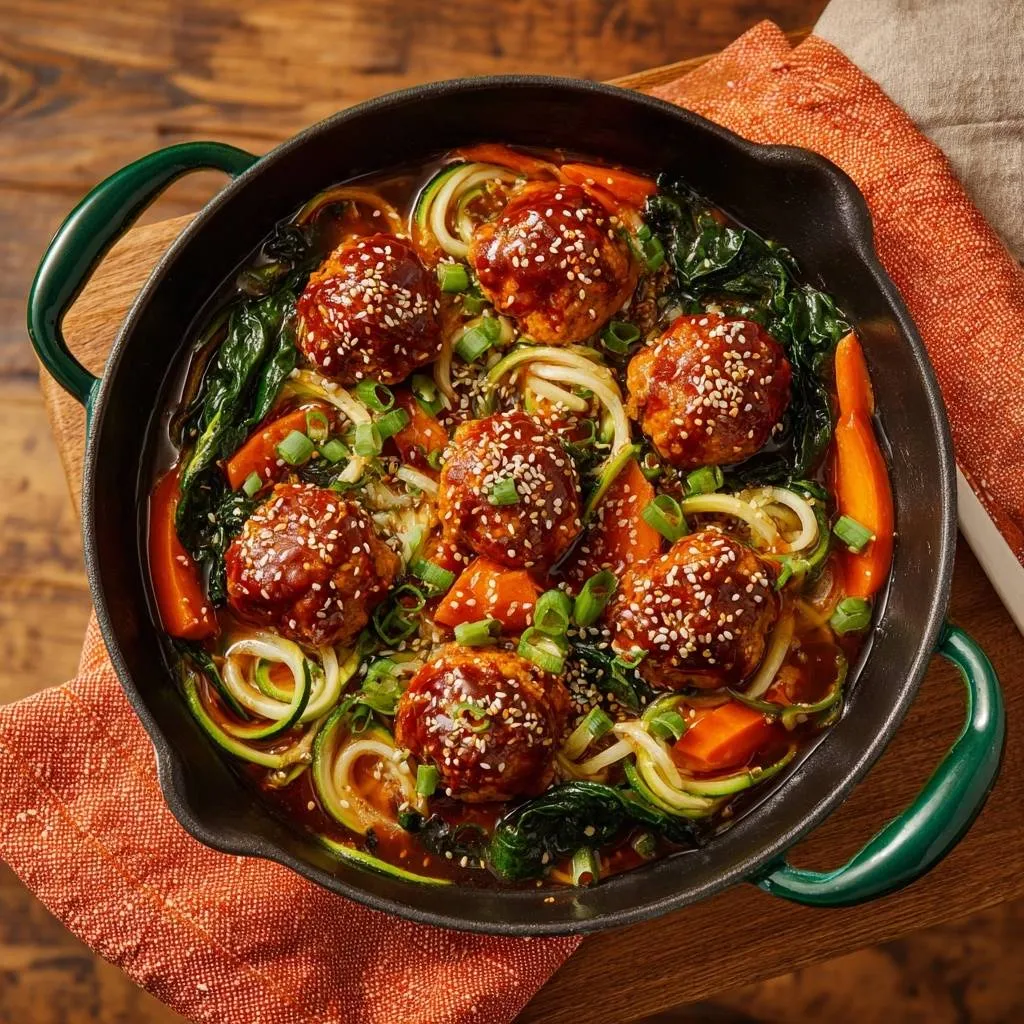
Essential Components for Sticky Sesame Ginger Meatballs
Quality ingredients are the backbone of this meal, starting with the beef. I always recommend an 80/20 ground beef blend because the fat content is essential for the Maillard reaction. This chemical reaction creates that savory, brown crust on the outside of the meatball that leaner blends simply can’t achieve.
Panko breadcrumbs act as tiny sponges within the meat mixture. Unlike traditional fine breadcrumbs, panko has a larger, airy surface area that traps the juices released during cooking, keeping the interior moist. Using fresh ginger is also non-negotiable here; the jarred stuff lacks the sharp, peppery bite that defines the aromatic profile of the glaze.
Choosing the Right Aromatics and Oils
Vegetable oil is your workhorse for the initial sear because it has a high smoke point, meaning it won’t burn while you’re browning the meatballs. However, toasted sesame oil is a finishing oil. It has a very low smoke point and a delicate flavor that turns bitter if exposed to high heat for too long, so we add it to the sauce mixture instead.
When shopping, look for ginger root that feels firm and has smooth, shiny skin. If the skin is wrinkled, the ginger is dehydrated and will be woody and difficult to grate. Similarly, choose garlic cloves that are plump and white; if you see green sprouts, the garlic will have a harsh, bitter aftertaste.
The Glaze: Balancing Honey and Soy Sauce
A perfect glaze requires a precise ratio of sugar, acid, and salt. The honey provides the sticky body and sweetness, while the rice vinegar cuts through the richness with a necessary hit of acidity. Soy sauce brings the salt and deep umami notes that tie the meat and vegetables together.
Cornstarch is the “glue” in this recipe. When the sauce hits the hot pan and begins to bubble, the cornstarch granules swell and gelatinize. This creates a thick, glossy lacquer that clings to the meatballs rather than pooling at the bottom of the bowl like a thin broth.
Step-by-Step: Searing the Perfect Meatball Crust
Start by combining your beef, panko, egg, and half of your aromatics in a large bowl. Use your hands or a fork to toss the ingredients together lightly. Remember, you aren’t kneading dough; you’re just distributing the flavors. Once combined, shape them into 10 to 12 even balls about the size of a golf ball.
Heat your vegetable oil in a cast-iron skillet until it’s shimmering but not smoking. Cast iron is the preferred vessel because it retains heat exceptionally well, preventing the pan temperature from dropping when you add the cold meat. This consistent heat is what builds that deep golden-brown crust you’re after.
Sear the meatballs for about 8 to 10 minutes, turning them every few minutes. You want a crust on all sides, which seals in the moisture. If the meatballs stick to the pan, don’t force them; they will naturally release once the crust has formed. Once they’re cooked through, move them to a plate so you can focus on the vegetables.
Mastering the Wilted Greens and Carrot Base
Vegetables have different densities, so they shouldn’t all go into the pan at once. Carrots are much heartier than zucchini or greens, so they need a head start in the hot skillet. Sauté the carrot noodles and kale first, allowing them to soften and absorb the residual beef fat and fresh aromatics.
You’ll watch the kale transform from a bulky, fibrous pile into a concentrated, dark green ribbon. This “wilting” process is where the flavor happens. As the greens lose their raw volume, they become tender and perfectly primed to soak up the ginger-garlic sauce you’re about to pour in.
Assembling the Sticky Sesame Ginger Meatballs
Once the greens are tender, pour your whisked sauce mixture directly over the vegetables. Stir constantly as the honey and cornstarch begin to react to the heat. Within about a minute, the liquid will transform into a bubbling, translucent glaze that coats every strand of carrot and kale.
For more ground beef ideas, check out this speedy skillet beef and peppers recipe.
Return the meatballs to the skillet and use a “Skillet Toss” or a gentle folding motion with tongs. You want to coat every surface in that sticky sauce without breaking the meatballs apart. Finally, add your prepared zucchini noodles. They only need a quick 60-second toss to reach the perfect temperature.
Serve this dish immediately directly from the skillet. The longer the zucchini sits in the hot sauce, the more it will “sweat,” which can dilute the glaze. Serving it fresh ensures you maintain that beautiful contrast between the hot, sticky meat and the crisp-tender vegetable base.
Troubleshooting Common Texture Issues
If your sauce seems too thin, don’t panic. Simply push the ingredients to the side of the pan and let the liquid simmer on its own for another 30 to 60 seconds to reduce. Conversely, if the sauce becomes too thick or “gloppy,” a tablespoon of water can help loosen it back to a silky consistency.
Heat management is vital once the honey is in the pan. Sugar burns quickly, so if you notice the sauce darkening too fast or smelling slightly acrid, turn the heat down to medium-low immediately. If meatballs are sticking during the sear, a splash of water or broth can help deglaze the pan and release those flavorful browned bits.
Flavor Variations and Protein Swaps
While ground beef offers the best browning, you can easily swap it for ground turkey or chicken. Since poultry is leaner, I recommend adding a teaspoon of olive oil to the meat mixture to prevent it from drying out. The flavor profile remains just as vibrant with these lighter proteins.
If you want more heat, double the sriracha or add a pinch of red pepper flakes to the aromatics. For an extra layer of crunch, you can top the finished dish with crushed peanuts or toasted cashews. These additions complement the ginger and sesame notes while adding a different fatty richness to the meal.
Make-Ahead Strategies and Storage Logistics
This is a fantastic meal prep option, but you have to be smart about the zucchini. I recommend storing the cooked meatballs and the sauce-coated carrot/kale mixture together in an airtight container. Keep your spiralized zucchini raw and separate in a different container lined with a paper towel.
When you’re ready to eat, reheat the meatballs and hearty vegetables in a skillet or microwave until hot. Only then should you add the fresh zucchini noodles, flash-searing them for a minute to keep them from getting mushy. This method preserves the texture much better than reheating everything together.
The meatballs will stay fresh in the refrigerator for up to three days. I don’t recommend freezing the zucchini noodles, as the freezing process destroys their cell walls, making them incredibly watery upon thawing. However, the meatballs themselves freeze beautifully for up to two months.
Expert Tips for Professional Presentation
Visual appeal is all about height and color. When plating, use tongs to twirl the zoodles and carrots into a tall nest in the center of the bowl. Nestling the meatballs on top of this vegetable “throne” prevents them from getting lost and keeps the crust from softening too quickly.
Don’t be shy with the garnishes. A heavy sprinkle of toasted sesame seeds adds a nutty aroma and a tiny crunch, while the bright green of the sliced onions provides a sharp color contrast against the dark, glossy glaze. These final touches make the dish look like it came straight from a high-end bistro kitchen.
Frequently Asked Questions
Can I use frozen zucchini noodles?
Frozen zucchini noodles are generally discouraged for this specific recipe. The freezing process causes the water inside the zucchini to expand and break the cell walls, which results in a very soft, watery texture once thawed. If you must use them, thaw them completely and squeeze out every drop of moisture possible before a very brief 30-second toss in the pan.
What is the best substitute for soy sauce?
Liquid aminos or coconut aminos are excellent substitutes. If you use coconut aminos, keep in mind they are naturally sweeter and less salty than traditional soy sauce. You may want to reduce the honey by half a tablespoon and add an extra pinch of salt to maintain the proper flavor balance of the glaze.
How do I keep the meatballs from falling apart?
The combination of the beaten egg and panko breadcrumbs acts as the primary binder. If you find your meatballs are still fragile, try the “chill trick.” After shaping the balls, place them in the refrigerator for 10 to 15 minutes before searing. This helps the proteins set and the fat firm up, ensuring they hold their shape perfectly in the hot skillet.
Is a spiralizer necessary for this recipe?
While a spiralizer creates those classic long noodles, you can achieve a similar result with other tools. A standard vegetable peeler can create wide, thin “ribbons” that cook very quickly. Alternatively, a mandoline with a julienne blade or even a sharp knife can produce thin strips. Just adjust your flash-fry time slightly based on the thickness of your cuts.
How can I increase the ginger pungency?
If you love a sharp ginger bite, use a microplane to grate a small amount of fresh ginger directly into the skillet at the very end of the cooking process. The volatile oils in ginger that provide that “zing” are heat-sensitive and dissipate during long cooking times. Adding a fresh hit right before serving preserves that intense, spicy aroma.
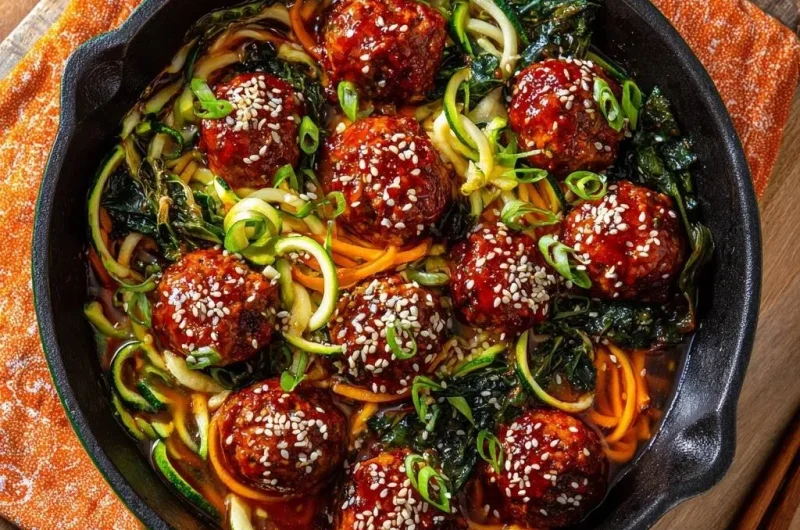
Sticky Sesame Ginger Meatballs
Course: Main CourseCuisine: Asian-American FusionDifficulty: medium4
servings20
minutes20
minutes410
kcal40
MinutesA vibrant and healthy meal featuring beef meatballs glazed in a sticky ginger-soy sauce, served over a bed of crisp-tender zucchini and carrot noodles with wilted greens.
Ingredients
1 pound ground beef (80/20 for best browning)
2 large zucchinis, spiralized
2 large carrots, spiralized
2 cups fresh kale or spinach, roughly chopped
1/2 cup panko breadcrumbs
1 egg, beaten
4 cloves garlic, minced
1 tablespoon fresh ginger, grated
1/3 cup soy sauce
3 tablespoons honey
1 tablespoon rice vinegar
1 teaspoon sesame oil
1 teaspoon sriracha or chili paste (optional)
1 teaspoon cornstarch
2 tablespoons vegetable oil
2 tablespoons toasted sesame seeds
3 green onions, sliced
1/2 teaspoon salt
Directions
- The Anti-Soggy Secret: Place spiralized zucchini in a colander and sprinkle with 1/2 teaspoon salt. Let sit for 10 minutes. Squeeze the noodles firmly with a clean kitchen towel to remove all excess water. This is the only way to prevent a watery sauce.
- In a large bowl, combine the beef, breadcrumbs, egg, half the garlic, and half the ginger. Mix gently until just combined to avoid tough meatballs. Shape into 10 to 12 even balls.
- Heat 1 tablespoon of vegetable oil in a large cast iron skillet over medium-high heat. Sear the meatballs for 8 to 10 minutes, turning occasionally until a deep golden-brown crust forms and they are cooked through. Remove meatballs from the pan and set aside.
- In a small bowl, whisk together the soy sauce, honey, rice vinegar, sesame oil, sriracha, and cornstarch.
- In the same skillet, add the remaining tablespoon of oil. Add the remaining garlic and ginger, sautéing for 30 seconds. Add the chopped kale (or spinach) and carrot noodles. Sauté for 2 minutes until the greens are wilted and dark green.
- Pour the sauce mixture into the skillet with the vegetables. Stir constantly for 1 minute until the sauce bubbles and thickens into a glossy glaze.
- Return the meatballs to the skillet. Toss everything together gently to coat the meatballs and noodles thoroughly in the glaze.
- Add the zucchini noodles last, flash-frying for only 60 seconds to heat through without releasing water.
- Garnish heavily with toasted sesame seeds and sliced green onions. Serve immediately directly from the skillet to maintain the contrast between the sticky glaze and crisp-tender noodles.
Notes
- To prevent watery zoodles, always salt them and squeeze out excess moisture with a towel before cooking. Use 80/20 ground beef for the best browning and flavor.