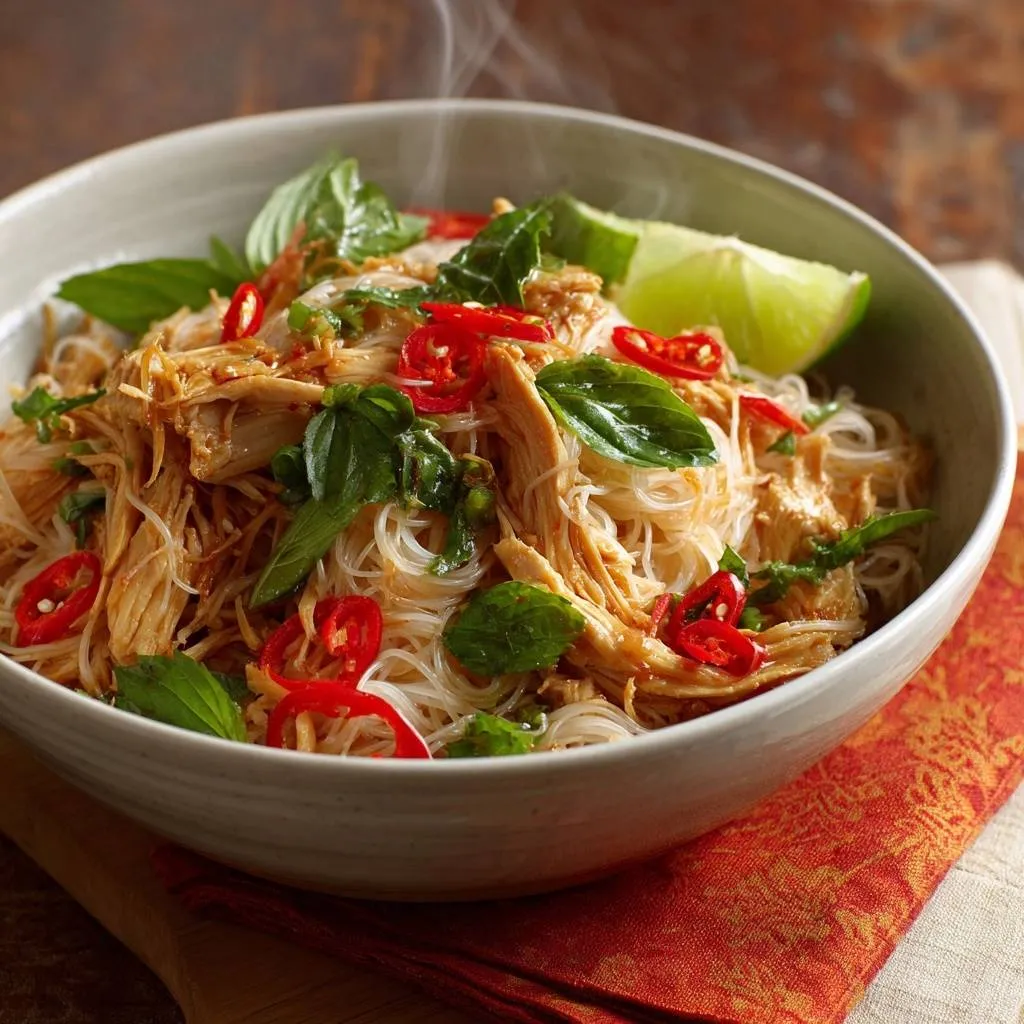
Ever bitten into Thai basil chicken rice noodles only to fight a gummy, clumped mess? You know the drill: strands stick together, starch ruins the slurp, and the whole dish falls flat. But this recipe changes everything with a simple blanch-and-shock trick that delivers perfect, separate rice noodles every time.
Therefore, you’ll get wok-charred chicken shreds bursting with basil fragrance, slicked in glossy umami sauce, and those al dente noodles that actually stay distinct. No more takeout disappointments. In addition, the high-heat stir-fry builds that addictive smoky edge.
Here’s the expertise pro tip: shock the noodles under cold water for 30 to 60 seconds while tossing vigorously. This rinses away excess starch instantly, locks in chew, and prevents clumping even during the wok toss. Trust me, it’s the game-changer for Thai basil chicken rice noodles.
Essential Components for Thai Basil Chicken Rice Noodles
Rice Vermicelli: Why Blanching Prevents Clumping
You’ll need 8 ounces of dried rice vermicelli noodles, the thin kind that mimics fresh strands. Fresh-packaged ones cook faster, but dried hold up better in stir-fries like Thai basil chicken rice noodles. However, the real key is blanching to remove surface starch, which causes clumping.
For a similar satisfying texture, consider our spicy chicken noodle soup which also guarantees perfect noodles.
Science backs it: hot water activates starch, but the cold shock halts enzymes and washes it off. Brands vary, so test one strand after 2 minutes, it should bend with a firm bite. Always toss under cold running water, hands in the colander, until water runs clear and strands feel slick.
Chicken Choices: Breast vs Thigh Shredding
Grab 1 pound boneless chicken breast or thigh for Thai basil chicken rice noodles. Thighs stay juicier thanks to fat, while breasts cook faster but dry out easier. Slice thinly against the grain first, this shortens fibers for tenderness.
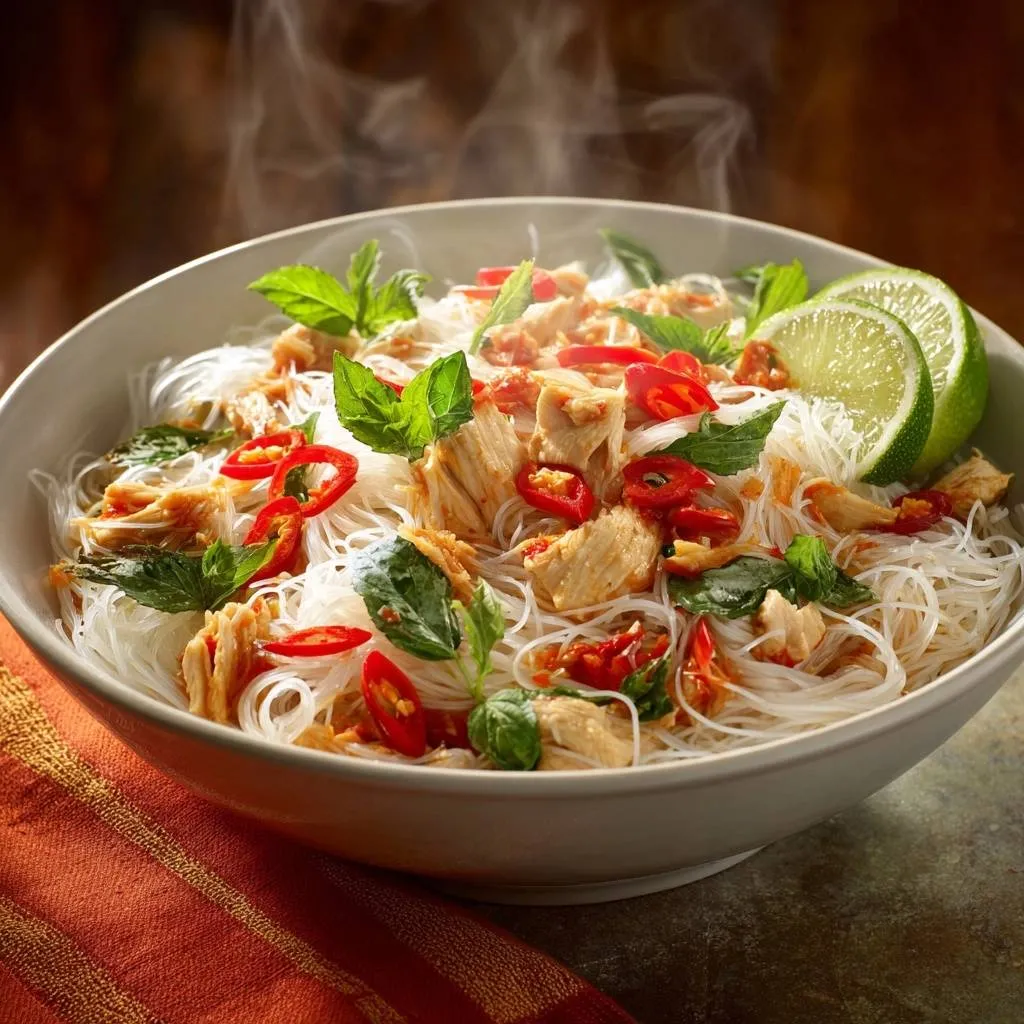
Therefore, shred lightly after partial cooking in the wok. Heat breaks down proteins, making shreds easy without toughness. Ground chicken works too, but lacks that stir-fried texture contrast.
Sauces and Aromatics Breakdown
The sauce magic comes from 3 tablespoons low-sodium soy, 2 tablespoons fish sauce, and 1 tablespoon oyster sauce in Thai basil chicken rice noodles. Soy brings salt, fish adds deep umami, oyster coats glossy. Balance them right, and you get savory depth without overpowering.
In addition, 4 minced garlic cloves and 6 sliced bird’s eye chilies build heat and fragrance fast. One tablespoon palm or brown sugar rounds edges, while 1/2 cup chicken broth thins for noodle coating. Use low-sodium soy to control salt, taste as you go.
Thai Basil and Lime Roles
Fresh Thai basil is non-negotiable, 3 cups divided for Thai basil chicken rice noodles. Dried lacks volatile oils that burst on wilting, giving peppery, anise hits. Source it at Asian markets for brightest flavor.
Lime wedges add zingy acid at the end, cutting richness. Squeeze fresh over each bowl for that street-food pop.
Blanch-and-Shock Technique for Perfect Rice Noodles
Boiling Water Setup and Timing Precision
Start with a large pot of water at a rolling boil for your rice noodle prep in Thai basil chicken rice noodles. Drop in 8 ounces vermicelli, cook exactly 2 minutes. Test a strand, it should flex with chew, not flop soft.
Overcooking releases more starch, dooming texture to gumminess. Therefore, drain immediately. Precision here guarantees slurpy strands later.
Cold Rinse: Removing Starch Effectively
Transfer to a colander, rinse under cold running water 30 to 60 seconds. Toss strands with your hands, agitating vigorously. This stops cooking and flushes amylase enzymes that break down starch into glue.
Look for visual cues: water clears, noodles feel clean and cool. Shake well, no puddles left.
Oil Toss to Keep Strands Separate
Gently toss drained noodles with 1 teaspoon neutral oil in a bowl. This thin coat prevents sticking during wok action in Thai basil chicken rice noodles. Shake off all excess water first, or oil won’t adhere.
Set aside until stir-fry. They’ll stay separate for up to 30 minutes.
High-Heat Wok Mastery for Thai Basil Chicken Rice Noodles
Oil Heating and Garlic-Chili Aroma Build
Heat 2 tablespoons neutral oil in a wok over high until shimmering. Add minced garlic and sliced chilies, stir-fry 30 seconds. Fragrance explodes, Maillard reactions kick off flavor without browning.
Adjust chilies down if heat scares you, start with 3 for mild kick. Therefore, your Thai basil chicken rice noodles gain smoky depth early.
Thin-Sliced Chicken Stir-Fry Shredding
Add thinly sliced chicken to the wok for Thai basil chicken rice noodles, against-grain cuts ensure tenderness. Stir-fry 3 to 4 minutes on high until opaque. Break into fine shreds mid-cook with your spatula, high heat sears edges instead of steaming.
Shredding post-partial cook yields fluffy texture. Crowded wok steams, so use plenty of space.
Sauce Integration and Reduction Phase
Pour in soy, fish, oyster sauces, sugar, and broth. Stir well, simmer 2 minutes. Sauce thickens via evaporation, coating chicken glossy.
Taste for salt, add a pinch if needed. Pro tip: this reduction builds intense flavor fast.
Noodle Toss and Basil Integration Steps
Coating Prepped Noodles Evenly
Drop in prepped noodles and 2 cups Thai basil leaves over medium-high heat. Toss 1 to 2 minutes with wok spatula, lifting from bottom. Shocked noodles absorb sauce evenly without clumping.
Basil wilts just enough, releasing aroma. Keep motion constant for even heat.
Final Fresh Basil and Lime Finish
Off heat, stir in remaining basil for basil chicken noodle stir-fry freshness. Squeeze lime wedges over top right before serving. That bright acid wakes everything up.
Plate immediately, basil stays vibrant. Slurpy perfection awaits.
Origins of Thai Basil Chicken Rice Noodles
Street Food Roots in Thailand
Thai basil chicken rice noodles draw from Pad Kra Pao, the basil-chicken stir-fry king of Bangkok street stalls. Vendors adapted it with rice vermicelli for quick, slurpy bowls. Holy basil swaps in some regions amp spice.
Therefore, it’s evolved into market staple, wok hei from charcoal fires defining the char. Home cooks nailed it sans stall smoke.
Why Rice Noodles Dominate Thai Cuisine
Vermicelli rules over wider pads in dishes like Thai basil chicken rice noodles for gluten-free tradition. Rice flour yields chewy, neutral strands that sauce-cling perfectly. Street blanch methods keep them al dente amid rush.
Slurping’s cultural, noodles encourage noisy enjoyment.
Avoiding Pitfalls in Thai Basil Chicken Rice Noodles
Overcooked Noodles Recovery Attempts
Gummy signs hit post-wok: strands stick, sauce pools. Blanch-shock prevents it outright. If too late, rinse cooked noodles cold again, but texture suffers.
Always prep first, patience pays off.
Chicken Toughness from Wrong Slicing
Slice against grain, see fibers shorten. Thighs forgive more with fat, breasts need precision. Wrong way chews like rubber.
Sauce Imbalance Fixes
Too salty? Dilute with extra broth. Heat off? Add chilies post-taste. Sugar mellows sharpness, stir in more gradually.
Flavor Twists on Thai Basil Chicken Rice Noodles
Vegetarian Protein Swaps
Swap 1 pound chicken for firm tofu or oyster mushrooms in Thai basil chicken rice noodles variations. Cube tofu, press dry, fry crisp. Mushrooms shred easy, mimic meat texture.
Fish sauce stays for umami, or sub mushroom stock.
Heat and Herb Adjustments
Cut chilies to 2 or bell peppers for mild Thai basil chicken rice noodles. Lemon basil works if Thai’s scarce, milder anise vibe. Taste as you build.
Gluten-Free or Low-Sodium Adaptations
Tamari replaces soy, vegan no-fish sauce exists. Coconut sugar for palm. All keep balance intact.
Pairing Sides with Thai Basil Chicken Rice Noodles
Cucumber Salad Crunch Contrast
Slice cukes thin, toss with rice vinegar, salt, chili flakes. Quick chill cuts noodle richness. Crisp bite balances sauce heft.
Fresh Spring Rolls Complement
Roll veggies, herbs in rice paper with peanut dip. Light freshness pairs sauce depth. Synergy in every bite.
Storage Guide for Thai Basil Chicken Rice Noodles
Make-Ahead Noodle Prep
Blanch-shock noodles up to 24 hours ahead, oil-toss, store airtight. Keep sauce and chicken separate. Assemble fresh for best texture.
Freezing and Reheating Without Gum
Portion fully cooked Thai basil chicken rice noodles, freeze flat up to 1 month. Thaw overnight, refresh with cold rinse and wok heat. Microwave steams, avoid for wok hei.
Troubleshooting Thai Basil Chicken Rice Noodles
Noodles Still Sticking?
Add extra oil toss or quick cold rinse. Avoid wok crowding, stir-fry in batches. Heat too low sticks too.
Chicken Not Shredding Easily
Partially cook first, then shred with spatula. Sharpen knife for thin slices upfront.
Sauce Too Thin or Thick?
Thin: simmer longer or cornstarch slurry. Thick: splash water or broth. Time tweaks perfect it.
Basil Overwilted Taste Loss
Add precise timing, use fresher batch off-heat. Store basil cool, dry.
Not Enough Wok Hei Flavor?
Crank heat higher, dry wok pre-oil. Ventilate well, stir less for char spots.
FAQ
How do I store leftovers of Thai Basil Chicken Rice Noodles?
Store in an airtight container in the fridge for up to 3 days. Noodles may firm up, so refresh with a quick cold rinse and wok toss with splash of broth before reheating. Do not freeze assembled dish, noodles get mushy from starch reactivation, but prepped plain noodles freeze okay for 1 month if portioned dry.
Why are my rice noodles still gummy in Thai Basil Chicken Rice Noodles?
Gumminess comes from excess starch not rinsed or overcooking past 2 minutes. Always blanch exactly 2 minutes then shock 30-60 seconds under cold water, tossing hands-on until clear. If wok toss clumps, your initial oil coat was too light, add 1/2 teaspoon more next time for separation.
Can I substitute chicken or make it vegetarian in Thai Basil Chicken Rice Noodles?
Yes, swap 1 pound chicken for firm tofu cubes pressed dry or shredded king oyster mushrooms. Fry tofu crisp first for texture match, mushrooms absorb sauce like shreds. Keep fish sauce or sub vegan version for umami, no other changes needed.
What if I don’t have Thai basil for Thai Basil Chicken Rice Noodles?
Fresh holy basil works closest, more peppery heat. Italian basil is milder, double amount for anise notes. Avoid dried entirely, it lacks oils, so wilt fresh at divided steps for burst freshness.
How do I fix tough chicken in Thai Basil Chicken Rice Noodles?
Toughness hits from slicing with grain or low heat steaming. Always slice thin against grain pre-cook, use high shimmering wok. Thighs resist dryness better than breast, shred mid-fry when proteins relax for tenderness.
Can I make Thai Basil Chicken Rice Noodles gluten-free or low-sodium?
Absolutely, use tamari instead of soy sauce 1:1, and gluten-free oyster sauce alternatives. For low-sodium, halve soy and boost oyster/fish, taste-test broth dilution. Vermicelli’s naturally gluten-free, sugar subs like coconut keep it balanced.
Thai Basil Chicken
Course: Main CourseCuisine: ThaiDifficulty: easy4
servings15
minutes15
minutes450
kcal30
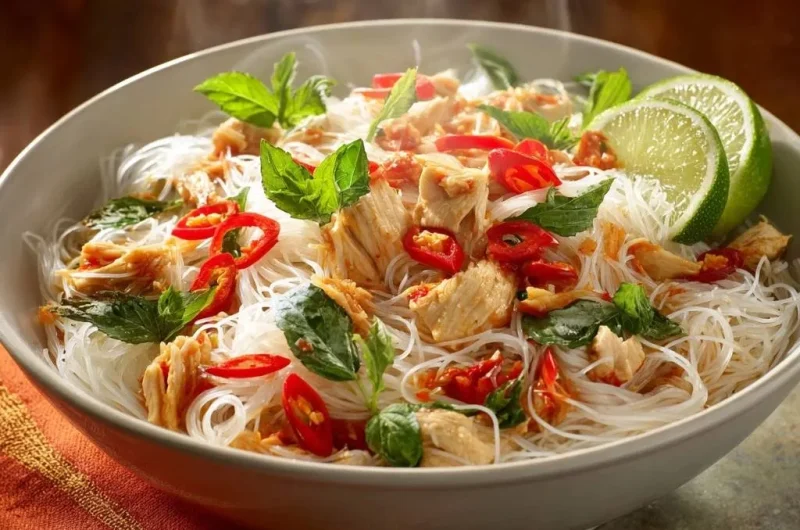
MinutesTired of gummy rice noodles? This Thai basil chicken recipe uses a blanch-and-shock rinse for perfect separate strands every time. Stir-fried with chicken, chilies, garlic, and fresh Thai basil in a savory sauce.
Ingredients
8 ounces dried rice vermicelli noodles
1 pound boneless chicken breast or thigh, thinly sliced then shredded after cooking
3 cups fresh Thai basil leaves, divided
6 red bird’s eye chilies, thinly sliced (adjust for heat)
2 limes, cut into wedges
3 tablespoons neutral oil (like vegetable or canola)
4 cloves garlic, minced
3 tablespoons low-sodium soy sauce
2 tablespoons fish sauce
1 tablespoon oyster sauce
1 tablespoon palm or brown sugar
1/2 cup chicken broth or water
Salt to taste
Directions
- Prepare the noodles first to avoid gumminess: Bring a large pot of water to a rolling boil. Add rice vermicelli and cook for exactly 2 minutes until flexible but firm (test one strand, it should have a slight chew). Immediately drain in a colander. Rinse under cold running water for 30-60 seconds, tossing with your hands to remove all surface starch, this stops cooking and prevents the gummy texture. Shake off excess water, transfer to a bowl, and gently toss with 1 teaspoon oil to coat strands separately. Set aside.
- Heat 2 tablespoons oil in a wok or large skillet over high heat until shimmering. Add minced garlic and sliced chilies, stir-fry 30 seconds until fragrant (do not brown).
- Add shredded chicken (slice raw chicken thinly against the grain first for tenderness, then shred lightly after partial cooking). Stir-fry 3-4 minutes until opaque and cooked through, breaking into fine shreds as it cooks.
- Pour in soy sauce, fish sauce, oyster sauce, sugar, and broth. Stir well and simmer 2 minutes until sauce thickens slightly and coats chicken glossy. Taste and adjust salt.
- Toss in the prepared rice noodles and 2 cups Thai basil leaves. Stir-fry 1-2 minutes over medium-high heat until noodles are evenly coated and heated through, basil just wilts. The pre-shocked noodles stay separate and absorb sauce without clumping.
- Remove from heat, stir in remaining fresh basil. Serve immediately with lime wedges squeezed over top for bright zing. Enjoy slurpy, non-gummy perfection!
Notes
- Use Thai basil for authentic flavor; substitute holy basil if available. Adjust chilies for heat level. Thinly slice chicken against the grain for tenderness. Blanch-and-shock noodles prevent clumping.