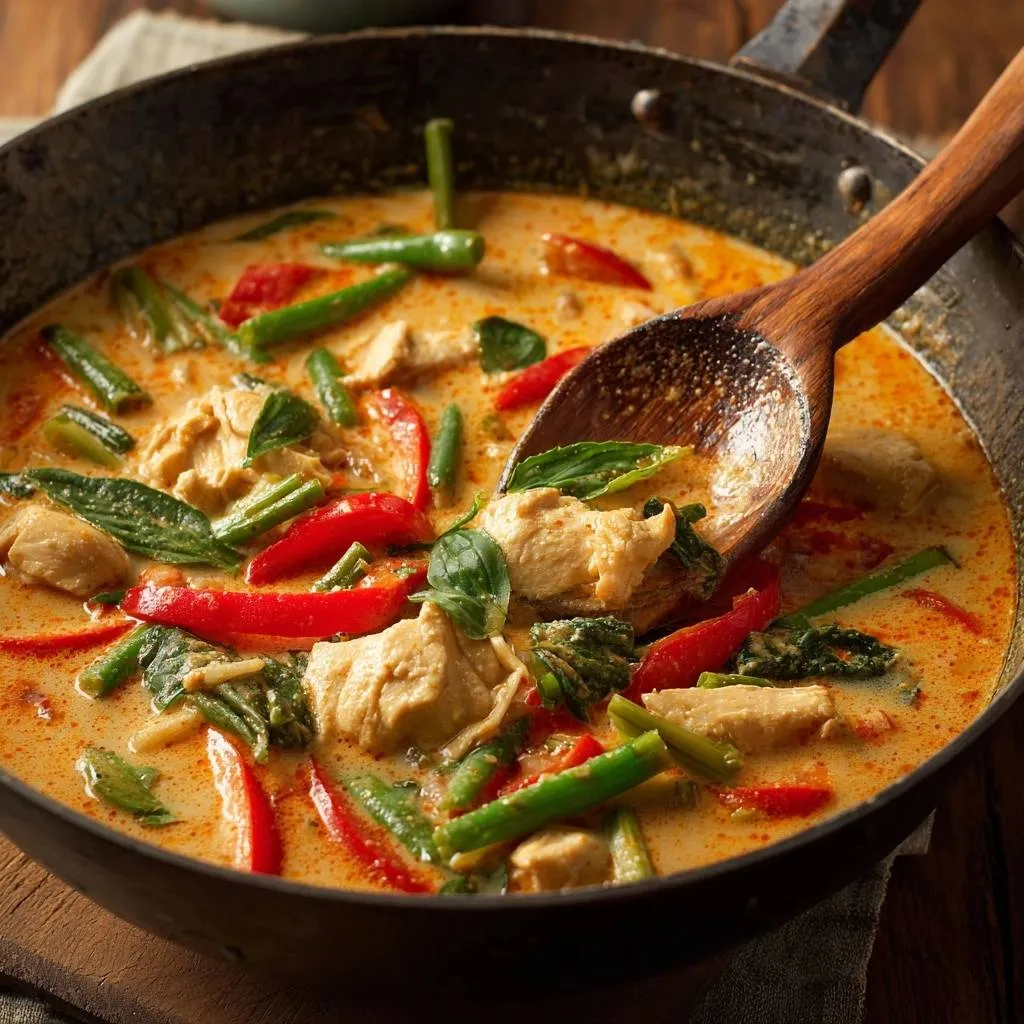
Ever wonder why your homemade Thai Chicken Green Curry tastes flat next to takeout? Most folks skip frying the paste, leaving spices raw and bitter. But this recipe changes everything with one game-changing step: fry until the oil splits into shiny red pools.
That blooming unlocks explosive flavors from lemongrass, chilies, and galangal. You’ll get creamy coconut sauce hugging tender chicken and crisp veggies. It’s ready in 30 minutes, serves 4 at about 450 calories each, and fills your kitchen with that irresistible spicy-sweet aroma.
The first bite? Vibrant heat cuts through rich creaminess, with basil’s fresh pop. Here’s the pro tip: constant stirring during frying prevents burning while releasing those essential oils. No more bland curry disappointments.
Why Thai Chicken Green Curry Demands Paste Frying
Frying the green curry paste transforms Thai Chicken Green Curry from meh to memorable. Raw paste delivers bitterness because the spices haven’t released their oils. However, heat activates lemongrass, galangal, and chilies for bold depth.
Think Maillard reaction here. It browns the paste slightly, building umami layers. In addition, the oil separation signals everything’s ready, preventing that grassy taste. Your curry gains restaurant punch without extra effort.
Sensory wise, the aroma shifts from coconutty to fiery spice. Therefore, don’t rush this step. It sets up the creamy sauce that clings to every bite.
Oil Splitting: Visual Cues for Perfection
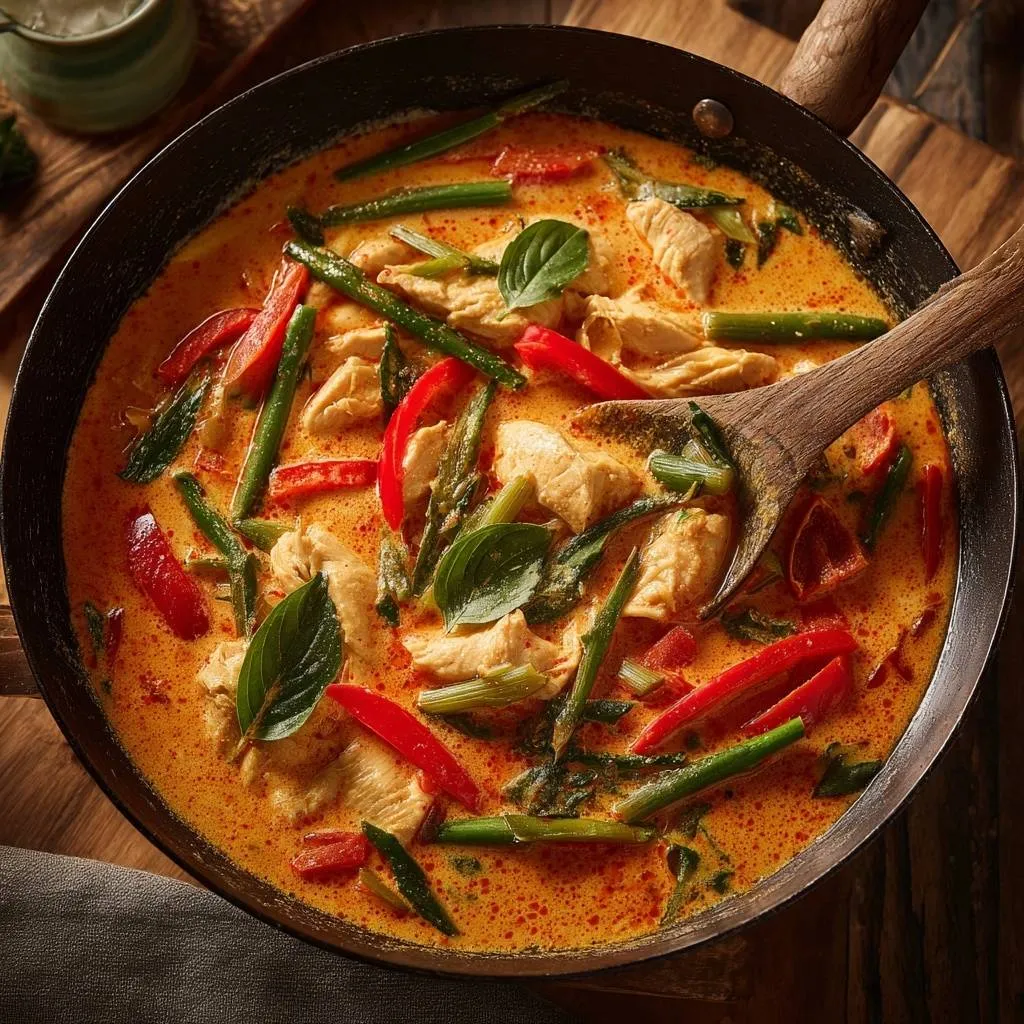
Watch for shiny red pools forming around the paste edges after 2 to 3 minutes. The paste darkens too, turning fragrant and aromatic. That’s your cue the spices have bloomed perfectly for Thai Chicken Green Curry.
Common pitfall? Rushing leads to under-fried paste and weak flavor. Stir constantly over medium heat. If no split, add a teaspoon more oil and keep going.
This visual ensures authenticity every time. You’ll smell the difference immediately.
Core Ingredients for Vibrant Thai Chicken Green Curry
Start with 1 pound boneless chicken breast, cut bite-sized for quick cooking. It absorbs flavors without drying out. Then, 2 cups fresh green beans and 1 large red bell pepper add crunch against the creamy sauce.
Full-fat coconut milk, 14 ounces, is non-negotiable. Light versions separate and fail to emulsify. In addition, 3 tablespoons green curry paste packs heat; store-bought works if you fry it right.
For a similar rich texture, try these creamy curry meatballs.
Fish sauce brings umami, 1 tablespoon does it. Palm or brown sugar, 1 teaspoon, balances sweetness. Finally, 1/4 cup fresh Thai basil delivers aroma; regular basil is a decent sub but milder.
Vegetable Choices: Green Beans and Bell Pepper Balance
Green beans and red bell pepper give Thai Chicken Green Curry crisp-tender contrast. Trim beans and halve for even cooking. They stay snappy, not mushy.
Nutritionally, they boost fiber and vitamins. Alternatives like bamboo shoots work too. However, these keep the dish vibrant and classic.
Equipment Essentials for Thai Chicken Green Curry Success
A wok or deep skillet shines here for even heat distribution. High sides contain splatters from bubbling sauce. Therefore, frying paste evenly builds flavor fast.
Use a wooden spoon for stirring; it scrapes well without scratching. No fancy gear needed. Optionally, check oil shimmer with a thermometer at 350°F.
Clean as you go to avoid spice buildup. Basics make pro results easy.
Mastering Paste Bloom in Thai Chicken Green Curry
Heat 2 tablespoons vegetable oil until shimmering. Add paste and stir constantly for 2 to 3 minutes. Listen for the sizzle intensifying as volatile compounds wake up.
The fragrance evolves from mild to spicy explosion. If oil doesn’t split, lower heat and persist. This step guarantees your Thai Chicken Green Curry pops with depth.
Pro tip: Fry in a hot wok for best results. You’ll see red pools form, signaling perfection.
Coating and Simmering Chicken for Thai Chicken Green Curry
Add chicken to the bloomed paste. Stir to coat evenly; cook 3 to 4 minutes until white outside. It picks up all that spice without overcooking.
Pour in half the coconut milk. Stir to emulsify into a thick base. Simmer 5 minutes; sauce clings beautifully now.
This tenderizes proteins gently. Avoid high heat to keep chicken juicy.
Emulsifying Coconut Milk with Curry Paste
Half-can first thickens the foundation smoothly. Stir vigorously for a glossy emulsion. Fat carries flavors throughout Thai Chicken Green Curry.
Full-fat milk prevents oil separation. You’ll get creamy texture that coats everything perfectly.
Vegetable Integration in Thai Chicken Green Curry
Add green beans, bell pepper, remaining coconut milk, fish sauce, and sugar. Simmer gently 5 to 7 minutes. Veggies hit crisp-tender just as chicken finishes.
Taste midway; adjust balance of sweet-salty-spicy. Don’t overcook or veggies turn soggy. Stir basil off heat for fresh pop.
Salt to taste last. This harmony makes every spoonful craveable.
Origins of Authentic Thai Chicken Green Curry
Gaeng Khiao Wan hails from Central Thailand. Green paste evolved from mortar-pounded herbs like cilantro root and kaffir lime. Street vendors simmered it fast for workers.
Home cooks adapted for simplicity. This recipe honors that tradition with blooming paste. It captures bold, creamy essence easily.
Culturally, it’s a staple balancing all flavors. You’ll taste the heritage.
Flavor Variations for Thai Chicken Green Curry
Swap chicken for tofu or shrimp; they soak up sauce well. Try eggplant or zucchini for veggies. More paste amps heat.
Vegan? Use soy sauce instead of fish sauce. Palm sugar keeps authenticity, but brown works. Regional twists add makrut lime leaves.
These keep Thai Chicken Green Curry’s soul intact. Experiment confidently.
Pairing Sides with Thai Chicken Green Curry
Jasmine rice soaks up the creamy sauce perfectly. Go sticky rice for chewy contrast. Add cucumber salad for cooling crunch.
Mango sticky rice desserts balance spice sweetly. Iced green tea refreshes. Portion 1 cup rice per serving.
These sides elevate the meal effortlessly.
Make-Ahead Strategies for Thai Chicken Green Curry
Bloom paste ahead; store in fridge 3 days. Cook full curry for fridge 4 days or freeze 2 months. Reheat low with a splash of water to revive creaminess.
Batch in meal prep containers. It tastes even better next day as flavors meld. Pro tip: Portion before freezing.
Troubleshooting Thai Chicken Green Curry Pitfalls
Bland? Under-fried paste; bloom longer next time. Too oily? Skim excess or use less coconut milk. Rubbery chicken means over-simmer; time precisely.
Watery sauce from high heat; keep it gentle. Mushy veggies? Add later. Fixes ensure foolproof results.
Always taste and adjust. You’ll nail it.
Common Questions on Thai Chicken Green Curry
How do I store Thai Chicken Green Curry leftovers?
Keep in an airtight container in the fridge for up to 4 days. It freezes well for 2 months; thaw overnight then reheat gently on stovetop with a bit of water to loosen sauce. Avoid microwaving to prevent separation.
Why is my Thai Chicken Green Curry bland?
Most likely, you didn’t fry the paste long enough for oil to split. That step releases spice oils; raw paste stays bitter. Fry 2-3 minutes over medium heat, stirring until shiny pools form and aroma explodes.
Can I substitute chicken thighs in Thai Chicken Green Curry?
Absolutely, thighs are juicier and more forgiving. Use boneless, cut bite-sized; they add richer flavor from fat. Cooking time stays the same, but trim excess skin if needed.
Is store-bought green curry paste okay for this recipe?
Yes, it works great if you bloom it properly. Fry until oil splits for depth; fresh homemade is ideal but store versions save time. Check labels for quality brands with real herbs.
Can I make Thai Chicken Green Curry gluten-free?
It’s naturally gluten-free. Fish sauce and paste usually are, but confirm labels. Serve over rice for a safe, complete meal packed with veggies and protein.
How do I tone down the spice in Thai Chicken Green Curry?
Start with 2 tablespoons paste instead of 3, or add more coconut milk. Stir in yogurt or cream at end for mildness. Taste as you go to balance heat perfectly.
Thai Green Curry
Course: Main CourseCuisine: ThaiDifficulty: easy4
servings15
minutes20
minutes450
kcal35
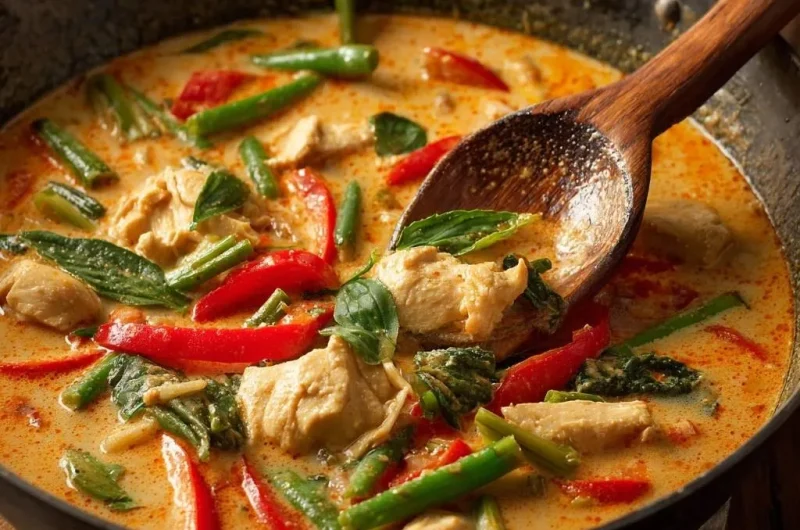
MinutesHomemade Thai curry always falls flat? This foolproof recipe fixes bland flavor forever with one key step: frying the paste until the oil splits for explosive taste. Creamy, vibrant, and better than takeout.
Ingredients
1 pound boneless chicken breast, cut into bite-sized pieces
2 cups fresh green beans, trimmed and halved
1 large red bell pepper, sliced into strips
1 can (14 ounces) full-fat coconut milk
3 tablespoons green curry paste
1/4 cup fresh Thai basil leaves, plus extra for garnish
2 tablespoons vegetable oil
1 tablespoon fish sauce
1 teaspoon palm sugar or brown sugar
Salt to taste
Directions
- Heat vegetable oil in a large wok or deep skillet over medium heat until shimmering. Add green curry paste and fry for 2 to 3 minutes, stirring constantly. The secret to no more bland curry: keep frying until the paste darkens, becomes very fragrant, and the oil separates from the paste in shiny red pools. This blooms the spices for deep, restaurant-level flavor that raw paste never delivers.
- Add chicken pieces to the wok. Stir to coat in the paste and cook for 3 to 4 minutes until chicken turns white on the outside.
- Pour in half the coconut milk. Stir well to emulsify with the paste, then simmer for 5 minutes until slightly thickened.
- Add green beans and red bell pepper. Pour in remaining coconut milk, fish sauce, and sugar. Simmer gently for 5 to 7 minutes until chicken is tender, veggies are crisp-tender, and sauce is creamy. The chicken is done when it reaches 165°F (74°C) in the thickest part.
- Stir in Thai basil leaves off heat. Taste and adjust salt. Serve hot with rice. Garnish with extra basil.
Notes
- The secret to bold flavor: fry the curry paste until the oil separates and it darkens. Use full-fat coconut milk for creaminess. Serve with jasmine rice.