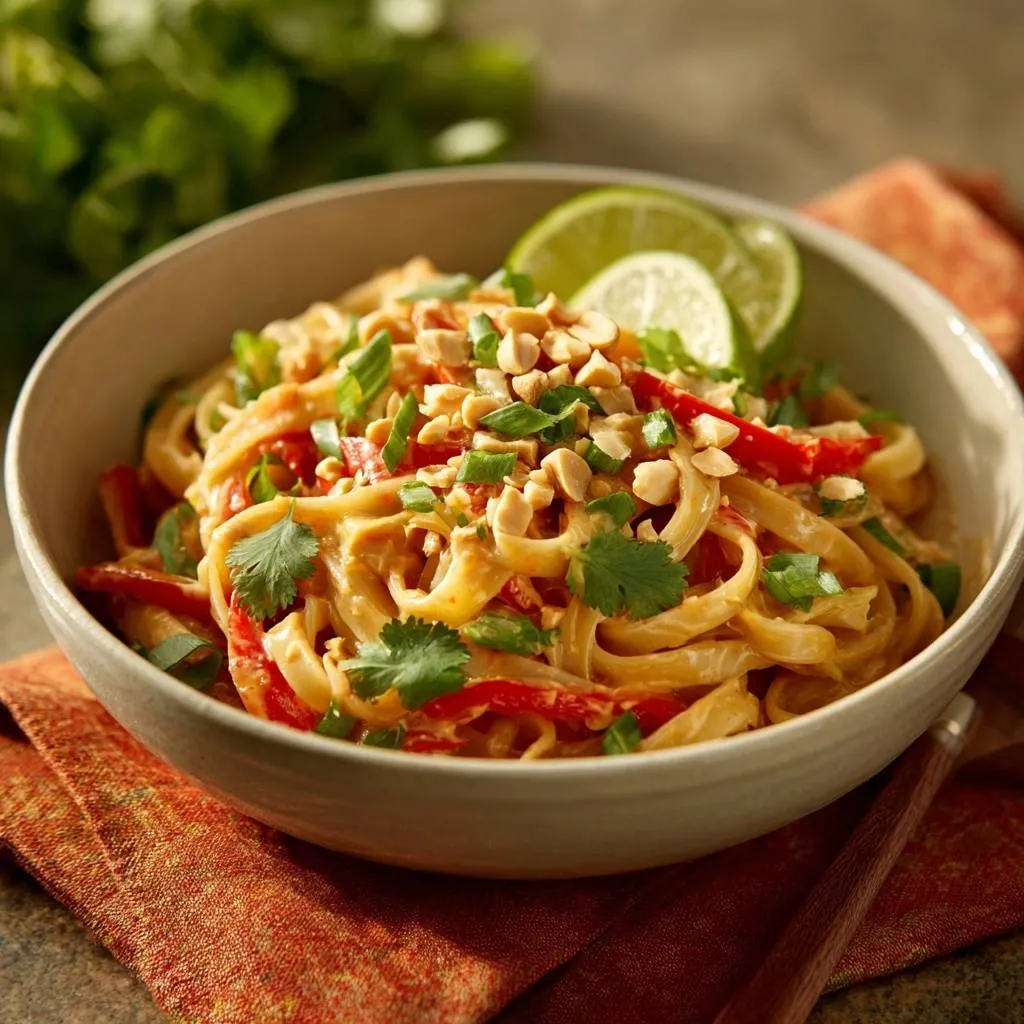
Grainy peanut sauce ruins Thai peanut noodles every time. It clumps up, sticks poorly, and kills that creamy dream. You’ve been there, staring at a lumpy mess after blending cold ingredients.
However, this Thai peanut noodles recipe fixes it all in 20 minutes. You’ll get bold flavors that cling perfectly to every strand, beating takeout freshness and quality hands down. Plus, it uses stuff you likely have on hand.
The secret? Hot pasta water in the blender melts peanut butter instantly for lump-free silkiness. In addition, it emulsifies everything just right. Trust me, this trick changed my Thai peanut noodles game forever.
Core Components for Thai Peanut Noodles
Rice Noodles or Spaghetti Base
Rice noodles give Thai peanut noodles that authentic slippery texture. They cook fast, about 6-8 minutes to al dente, and release just enough starch for sauce magic. Spaghetti works too if you’re in a pinch; its chew holds up well.
Therefore, always cook to al dente. Rinse? No way, that starch helps the sauce cling. Popular brands like Lotus Foods hit perfect every time.
Smooth Peanut Butter Foundation
Smooth peanut butter forms the heart of Thai peanut noodles sauce. Go for natural kinds without added sugar; they blend cleaner. Half a cup delivers rich nuttiness without overpowering.
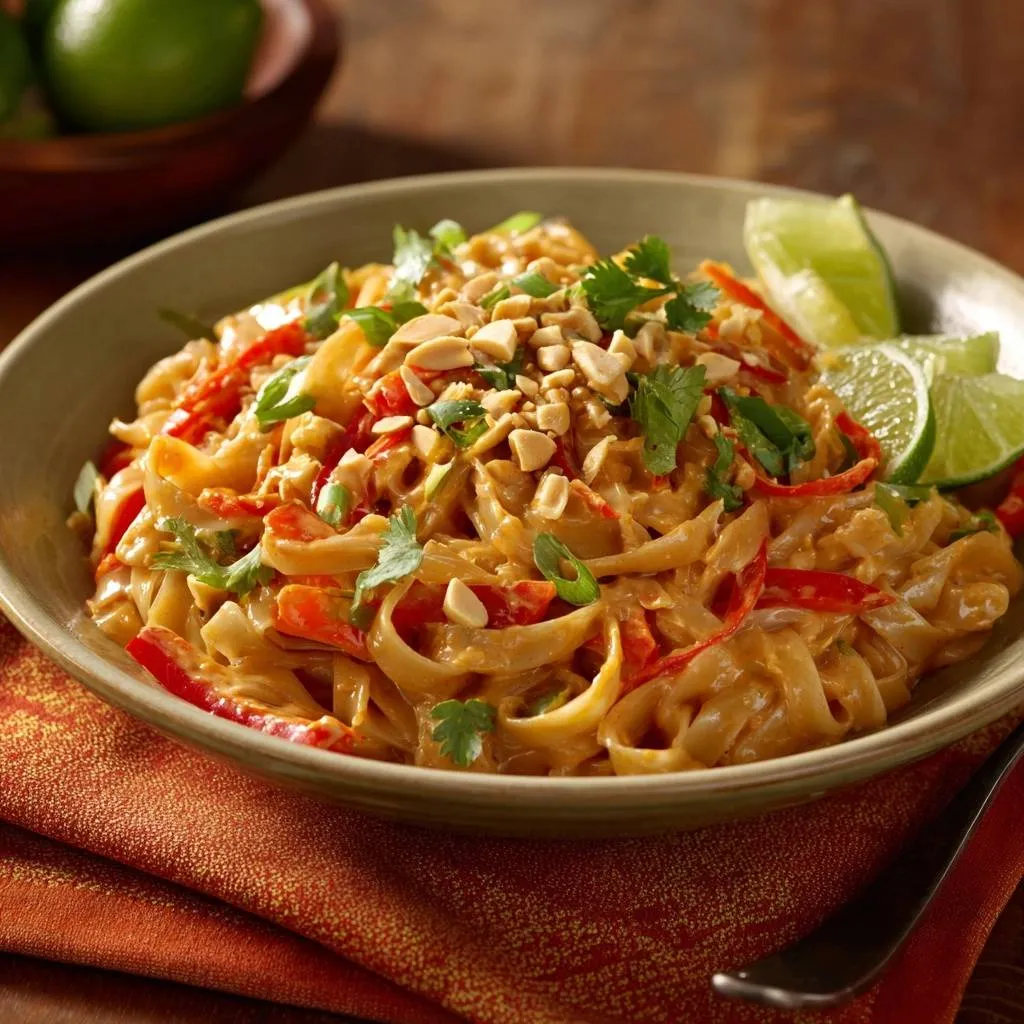
However, stir well if oil separates, or it won’t emulsify. Processed smooth versions work faster since they’re already uniform. This amount coats 8 ounces of noodles perfectly.
Fresh Vegetables and Herbs
Thinly slice red bell pepper for crisp pops in Thai peanut noodles. Chop cilantro fresh to keep its bright punch; dried just wilts away. Green onions add sharp bite when sliced thin.
In addition, freshness matters here. Veggies balance the sauce’s richness with crunch and aroma. Fold them in last to stay vibrant.
Acidic and Savory Balance
Lime juice brightens Thai peanut noodles sauce, cutting through peanut richness. Soy sauce brings deep umami, while honey adds subtle sweet without cloying. Chili paste kicks optional heat.
Taste and tweak salt last. Therefore, start with juice from one lime. This combo creates harmony that clings like a dream.
Blending Technique for Lump-Free Peanut Sauce
Why Hot Pasta Water Transforms Sauce
Hot pasta water dissolves peanut butter oils in Thai peanut noodles, thanks to its starch and heat. Cold water causes clumping; aim for at least 180°F to melt fats instantly. Half a cup emulsifies everything into silk.
Science-wise, starch binds oils for stability. Therefore, no more grainy disasters. This step takes seconds but elevates the whole dish.
Pro tip: If your water cools, microwave it briefly. Keeps that perfect pourable flow.
Blender Setup and Timing Precision
Use a high-speed blender or food processor for Thai peanut noodles sauce. Add peanut butter, lime, soy, honey, chili, and hot water first. Blend on high 30 seconds straight.
Look for a smooth, shiny ribbon when you lift the lid. If thick, add water one tablespoon at a time while running. Therefore, you’ll nail creamy consistency every go.
Assembling Thai Peanut Noodles Step-by-Step
Cooking Noodles to Perfection
Boil 8 ounces rice noodles per package to al dente, about 6 minutes. Reserve exactly one cup pasta water; it’s liquid gold for sauce. Drain but don’t rinse to keep starch intact.
This starch helps Thai peanut noodles sauce coat evenly. Hot noodles absorb flavors best too.
Coating Noodles in Silky Peanut Sauce
Toss hot noodles in a large bowl with all the sauce. Stir vigorously until every strand gleams coated. Fold in bell pepper, cilantro, and green onions gently.
Ratio-wise, this sauce perfectly dresses 8 ounces. Therefore, no pooling or dryness. The heat melts it all together seamlessly.
Finishing Touches for Texture Contrast
Crush roasted peanuts and sprinkle on top for crunch in Thai peanut noodles. Serve with lime wedges; squeeze fresh at the table. Eat immediately to keep elements distinct.
This contrast makes it irresistible. Peanuts stay crisp, limes zingy.
Origins of Thai Peanut Noodles Fusion
Peanut Sauce Roots in Southeast Asia
Peanut sauce traces to Thai street satay, where it’s grilled meat’s best friend. Peanuts arrived via trade routes from South America in the 16th century. Thai versions lean limey and spicy, unlike Indonesian sweeter takes.
Therefore, Thai peanut noodles pull from that vibrant base. Street vendors blend it fresh daily for noodle stalls too.
Evolution into Quick Noodle Dish
Thai peanut noodles exploded as a 20-minute global staple. Rice noodles from China fused with peanut sauce in Thai kitchens. American homes adapted it with pantry tweaks, keeping bold essence.
In addition, it skips authenticity purism for speed. Now it’s everywhere from dorms to dinner tables.
Flavor Variations for Thai Peanut Noodles
Spicy Sriracha Peanut Noodles Twist
Swap chili paste for 1-2 teaspoons sriracha in Thai peanut noodles. Start low, taste, add more for fire. It blends smoother with garlic notes.
This amps heat progressively. Perfect if you crave bold kicks.
Coconut Milk Creamy Upgrade
Blend in 1/4 cup coconut milk for richer Thai peanut noodles sauce. Balance with extra lime juice splash. Stays fully vegan and dreamy.
Therefore, it thickens luxuriously without lumps. Great texture boost.
Protein Boost Options
Add cubed tofu, shrimp, or chicken to Thai peanut noodles. Marinate protein in soy-honey mix first. Stir-fry briefly, then toss in last minute.
For a smoother sauce texture, explore creamy peanut noodles with a silky emulsified sauce.
Avoid overcooking; shrimp turns rubbery fast. Tofu soaks sauce beautifully. Doubles as a meal.
Avoiding Pitfalls in Thai Peanut Noodles
Preventing Grainy Sauce Disasters
Lumps hit Thai peanut noodles from cold water, chunky peanut butter, or weak blenders. Always use hot starch water and smooth PB. Blend high power 30 seconds minimum.
Checklist: Stir PB jar, measure water hot, pulse incrementally. Fixes every time.
Maintaining Vegetable Crispness
Slice peppers thin but not paper-thin for Thai peanut noodles crunch. Chop herbs right before folding. Store prepped veggies? No, they wilt fast.
Timing keeps them snappy against creamy sauce.
Sauce Cling Troubleshooting
If sauce slips off Thai peanut noodles, you over-drained or skipped starch. Remedy: Reheat with a splash of hot water, toss again. Starch revives the grip.
Hot noodles fix most slips too.
Pairing Sides with Thai Peanut Noodles
Cucumber Salad Refresh
Slice cucumbers thin, salt lightly, dress with rice vinegar and pinch sugar for Thai peanut noodles side. It cuts richness with cool crunch. Ratios: 1 tbsp vinegar per cuke.
Chill 10 minutes. Perfect foil.
Spring Rolls Complement
Veggie spring rolls dip beautifully in extra Thai peanut noodles sauce. Use rice paper wrappers, roll tight with cabbage, carrot. Store-bought? Crisp in air fryer.
Synergy amps the meal.
Storage Guide for Thai Peanut Noodles
Make-Ahead Sauce Prep
Blend sauce ahead for Thai peanut noodles; store airtight up to 3 days in fridge. Reheat gently with fresh water splash to loosen. Cook noodles fresh to avoid mush.
Prevents separation. Workflow saver.
Freezer-Friendly Adjustments
Freeze sauce in portions up to 2 months for Thai peanut noodles. Thaw overnight, blend with hot water. Noodles? Cook fresh; frozen get gummy.
Revive by tossing hot. Lasts great.
Thai Peanut Noodles FAQ
Can I Use Almond Butter Instead?
Yes, almond butter works in Thai peanut noodles but shifts flavor to milder nuttiness. Use less water since it’s thinner; start with 1/3 cup. For nut allergies, try sunflower seed butter, same quantity.
It emulsifies similarly with hot water. Taste tweak with extra soy.
Gluten-Free Thai Peanut Noodles Confirmation?
Rice noodles keep Thai peanut noodles naturally gluten-free. Swap soy sauce for tamari to avoid gluten. Check labels on chili paste and peanut butter for hidden sources.
Safe and seamless.
How to Scale for Crowds?
Double ingredients evenly for Thai peanut noodles; 16 ounces noodles feeds 4-6. Blend in batches if blender’s small. Stagger noodle cooking to avoid clumping.
Perfect potluck scale.
Why Sauce Thickens Overnight?
Peanut oils solidify in the fridge for Thai peanut noodles sauce. Thin with 1-2 tablespoons warm water or pasta water while stirring. Reheats to silky fast.
Vegetarian or Vegan Compatible?
Thai peanut noodles recipe is fully vegan as written. Swap honey for maple syrup if you want strict no-animal products. All else plant-based perfection.
How Do I Store Leftovers?
Store Thai peanut noodles leftovers in an airtight container in the fridge up to 3 days. Sauce thickens, so loosen with hot water on reheat. Don’t freeze full dish; noodles turn mushy, but sauce freezes well alone for 2 months.
Microwave gently, toss to revive.
Why Is My Sauce Grainy?
Graininess in Thai peanut noodles comes from cold water, chunky peanut butter, or insufficient blending. Use hot reserved pasta water, smooth PB, and blend 30 seconds high. Add water gradually if needed.
Prevents 99% of lumps.
What Can I Substitute for Peanut Butter?
No peanuts? Sunflower seed butter or tahini subs in Thai peanut noodles. Adjust water down for thinner consistencies. Almond butter’s closest flavor match, less water needed.
Keeps creaminess intact.
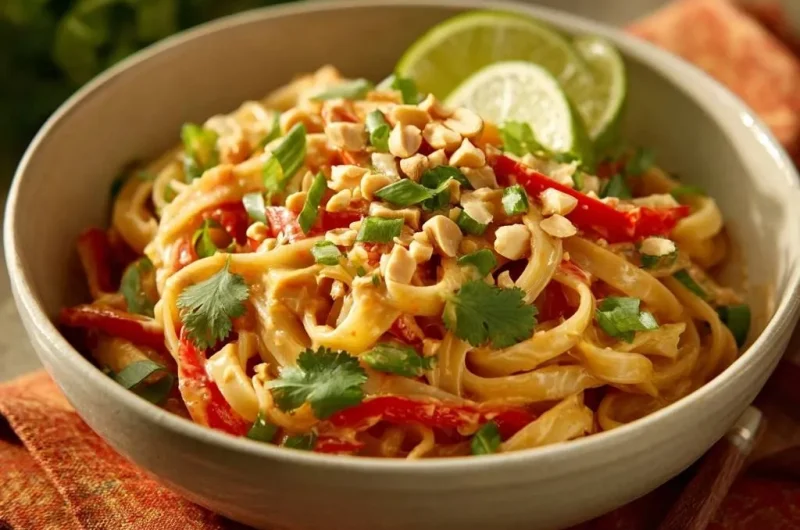
Peanut Noodles
Course: Main CourseCuisine: ThaiDifficulty: easy2
servings10
minutes10
minutes900
kcal20
MinutesGrainy peanut sauce is the worst – it clumps up and kills the creamy vibe. This foolproof blending trick with hot noodle water delivers silky sauce that coats every strand perfectly, no lumps ever.
Ingredients
8 oz rice noodles or spaghetti
1/2 cup smooth peanut butter
1 red bell pepper, thinly sliced
1/4 cup chopped fresh cilantro
3 green onions, sliced
1/4 cup roasted peanuts, crushed
2 limes (juice of 1, plus wedges for serving)
2 tbsp soy sauce
1 tbsp honey
1 tsp chili paste (optional for heat)
Salt to taste
Directions
- Cook noodles according to package until al dente. Reserve 1 cup pasta water, then drain.
- In a blender or food processor, combine peanut butter, lime juice, soy sauce, honey, and chili paste. Add 1/2 cup hot reserved pasta water. Blend on high for 30 seconds until ultra-smooth – this hot water dissolve trick melts the PB instantly, preventing any graininess. If too thick, add more pasta water 1 tbsp at a time while blending.
- Toss hot noodles with the silky peanut sauce in a large bowl until fully coated. Fold in sliced red bell pepper, cilantro, and green onions.
- Top with crushed peanuts and lime wedges. Serve immediately for crunch that lasts. The sauce stays creamy and clings perfectly!
Notes
- Use rice noodles for gluten-free. Adjust chili paste for spice level. The hot pasta water is key to preventing grainy sauce.