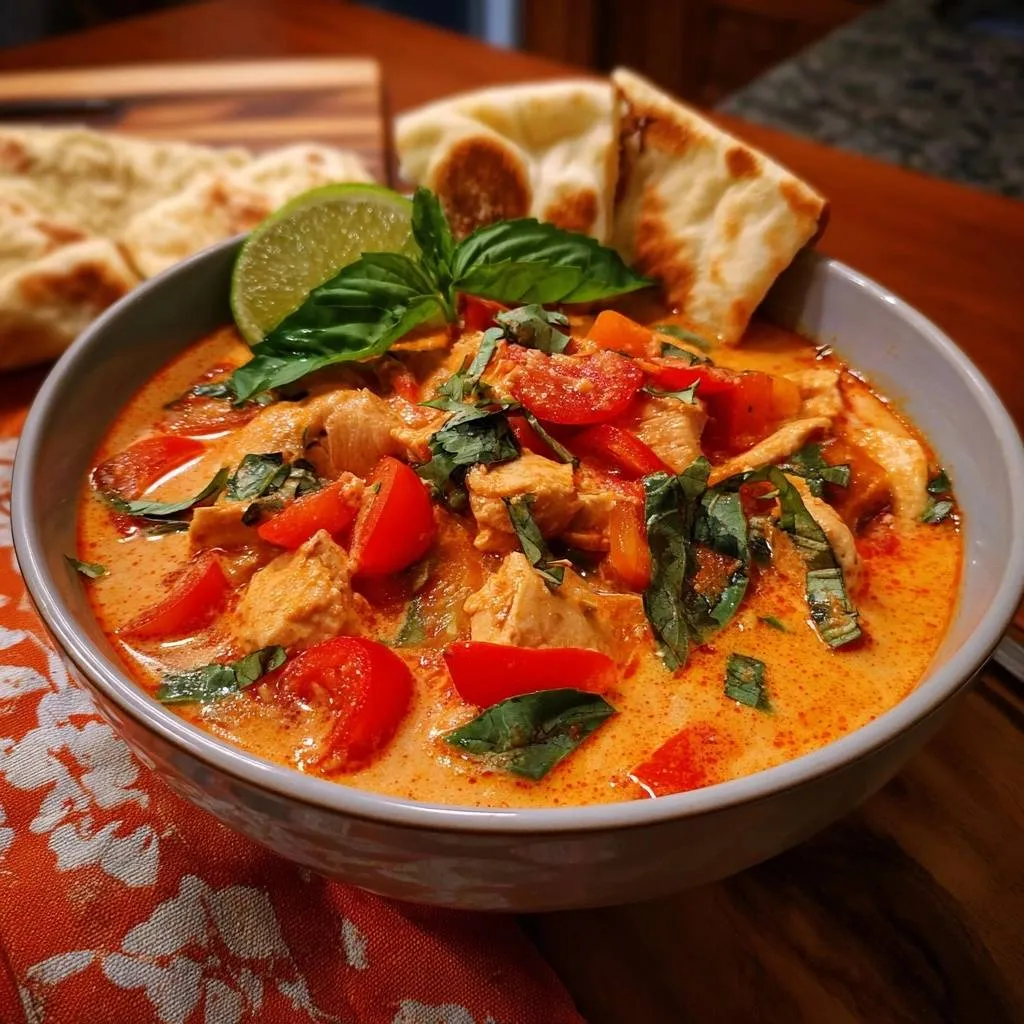
Ever bitten into a Thai red chicken curry only to find the chicken tough and dry? That ends today. This Thai red chicken curry fixes it with a quick sear-first technique that locks in juices for succulent bites. No more ruined dinners.
Here’s why it works so well. Most recipes poach chicken straight in sauce, steaming out flavor and moisture. But you start with high heat for a golden crust. That Maillard magic seals everything inside.
The secret? Sear in batches over medium-high heat for exactly 2-3 minutes per side. You’ll see a deep brown crust form, and the chicken stays juicy even after simmering. It’s better than takeout because you control every fresh bite. Thai street food vibes right in your kitchen.
Why Thai Red Chicken Curry Demands Sear-First Technique
Dry chicken plagues so many Thai red chicken curry attempts. Poaching dumps raw chunks into liquid right away. Therefore, they turn stringy and bland as they overcook in the sauce.
This recipe flips the script. You sear first to trigger the Maillard reaction. Amino acids and sugars brown, creating a crust that traps juices. In addition, it builds deep flavor no simmering alone matches.
Contrast that with poaching methods. They lack crust and let proteins tighten up. However, searing then short-simmering hits 165°F perfectly. Your Thai red chicken curry comes out tender every time.
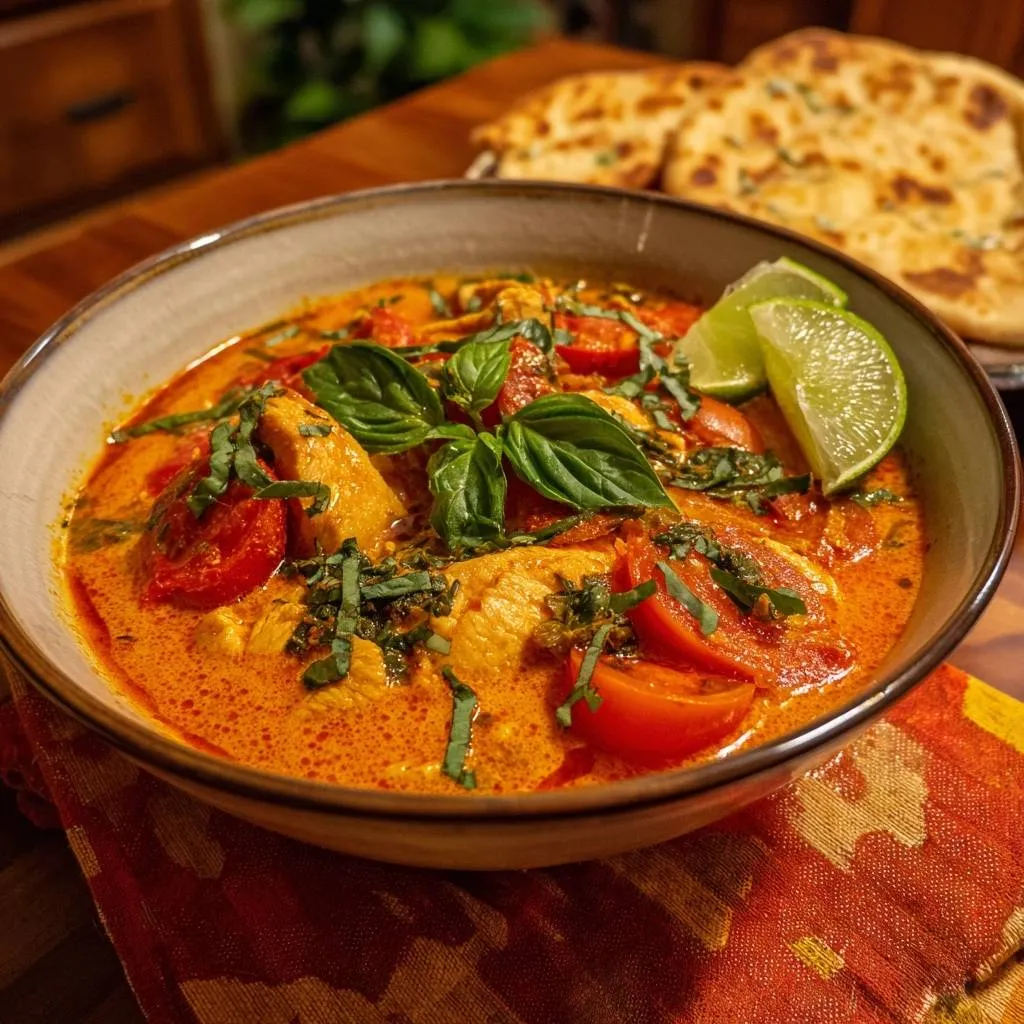
Pro tip: Always check internal temp post-simmer. Pull at 165°F to avoid carryover cooking drying it out. You’ll taste the difference immediately.
Maillard Reaction in Thai Red Chicken Curry
The Maillard reaction happens when proteins hit high heat. Sugars and amino acids react fast at medium-high, forming that golden crust. It locks juices in your Thai red chicken curry.
Sear 2-3 minutes per side. Look for deep brown edges, not black. That crust means flavor and moisture stay put through simmering.
Batch Searing Prevents Steaming Effect
Crowd the pan and you steam instead of sear. Chicken releases water, turning gray and tough. So do batches in a single layer for crisp results.
Two batches ensure even browning. You’ll hear sizzling and smell caramelizing goodness. That’s your cue for perfect Thai red chicken curry texture.
Essential Ingredients for Authentic Thai Red Chicken Curry
Start with 1 pound boneless chicken breast, cut into 1-inch chunks (450g). Two large red bell peppers sliced into strips add crunch and vitamin C punch. One 14-ounce can full-fat coconut milk (400ml) creams it up.
Three tablespoons red curry paste brings heat and spice. A quarter cup fresh Thai basil leaves offer anise notes. Don’t skip the lime wedges or 2 tablespoons vegetable oil. Salt to taste, plus 4 warmed naan breads.
Full-fat coconut milk emulsifies better than light versions. It holds the sauce together without splitting. Red curry paste from brands like Mae Ploy blooms fragrant in oil. Fresh Thai basil beats sweet basil here; it’s punchier.
Pro tip: Pat chicken dry before searing. Wet surfaces steam, not brown. Room-temp meat sears evenly too.
Chicken Selection and Prep for Juicy Results
Boneless breast works best for quick cooking. Cut uniform 1-inch chunks so they finish together. Pat super dry and don’t salt early; it draws out moisture.
Coconut Milk and Red Curry Paste Synergy
Full-fat milk shakes into creamy emulsion. Stir paste in hot oil first to bloom spices. That releases oils for silky Thai red chicken curry sauce.
Step-by-Step: Searing Thai Red Chicken Curry Base
Grab a large skillet or wok. Heat 1 tablespoon neutral vegetable oil over medium-high until shimmering; it dances in the pan. Add chicken in a single layer, first batch only.
Sear 2-3 minutes per side. Flip with tongs for even gold. Remove to a plate; juices stay locked in. Repeat with rest of chicken and second tablespoon oil.
Why wok or skillet? High sides contain splatters, wide base sears fast. Safety note: Dry pan well to avoid oil pops. Now your Thai red chicken curry base shines.
High-Heat Sear for Golden Crust
Time it: 2-3 minutes per side max. Crust forms deep brown; inside stays pink. Rest on plate; no need for pre-simmer temp check here.
Building the Fragrant Thai Red Chicken Curry Sauce
In the same skillet, add remaining oil if needed. Stir in 3 tablespoons red curry paste. Cook 1 minute until it smells nutty and fragrant; that’s the bloom.
Pour in full-fat coconut milk. Whisk to dissolve paste smooth. Bring to simmer, then toss in red bell pepper strips. Cook 5 minutes; peppers soften but stay crisp-tender.
Science bit: Simmer breaks down pepper enzymes gently. Stir often to prevent milk splitting. Your sauce thickens naturally now.
Simmering Peppers with Coconut Emulsion
Five minutes hits perfect crunch. Peppers brighten and release juices. Check for slight give when poked; don’t mush them.
Finishing Thai Red Chicken Curry Simmer
Return seared chicken and juices to the skillet. Simmer gently 4-5 minutes until 165°F inside. Short time post-sear keeps it juicy.
Stir in Thai basil leaves; they wilt fast. Taste and add salt. Preview lime’s bright acid next. Serve hot with naan and wedges.
For a similar rich flavor, explore this creamy chicken curry.
Pro tip: Gentle simmer means tiny bubbles only. High boil toughens chicken quick.
Final Temp Check and Basil Infusion
Use thermometer in thickest chunk: 165°F done. Thai basil adds anise zip unlike milder Italian. Wilt just 30 seconds.
Origins of Thai Red Chicken Curry Tradition
Thai red chicken curry traces to Siam street stalls. Vendors simmered dried chili pastes with coconut for quick meals. It spread through diaspora kitchens worldwide.
Red paste roots in sun-dried red chilies, galangal, and lemongrass. Modern versions adapt with local twists. In Thailand, it pairs rice; here naan scoops add fusion fun.
Your Thai red chicken curry honors that heritage. Sear technique nods to wok hei, that smoky breath of fire. Simple, bold flavors endure.
Red Curry Paste’s Spicy Heritage
Paste packs 8 aromatics: chilies, garlic, shallots, plus shrimp paste. Southern Thailand amps heat. Balance builds layers in every spoonful.
Avoiding Pitfalls in Thai Red Chicken Curry
Top mistake: skipping sear leads to dry chicken. Overcooking post-return dries it too. Watery sauce? Reduce coconut first.
Bland paste happens without blooming. Crowding steams chicken gray. Oil not hot enough? No crust forms. Fix with these steps every time.
Prevention recap: Batch sear, bloom paste, simmer short. Your Thai red chicken curry stays vibrant and thick.
Fixing Dry Chicken and Split Sauce
Dry? Slice thin and rest in sauce 5 minutes. Split sauce? Whisk in cold coconut cream off heat. Prevention beats rescue.
Paste Bloom and Seasoning Balance
Bloom smells raw if under 1 minute; burnt if too long. Test salt with tiny pinch, then lime squeeze. Layers pop.
Flavor Twists on Thai Red Chicken Curry
Swap breast for thighs if richer mouthfeel calls. Green curry paste shifts flavors fresh. Add eggplant or bamboo shoots with peppers.
Control spice by halving paste. Vegan? Sear tofu firm first. Sear technique stays key for Thai red chicken curry magic.
These keep it authentic yet flexible. You’ll crave your Thai red chicken curry tweaks.
Vegetable and Protein Adaptations
Zucchini softens faster than peppers; cut simmer to 3 minutes. Tofu needs extra-dry pat and firm press for sear crisp.
Perfect Pairings for Thai Red Chicken Curry
Warm naan scoops sauce perfect. Jasmine rice soaks it up better than basmati. Cucumber salad cools spice.
Squeeze lime brightens creaminess. Iced tea refreshes alongside. Your Thai red chicken curry elevates any meal.
Warming Naan and Lime Enhancement
Warm naan in 350°F oven 5 minutes or skillet dry. Tear and scoop ritual fun. Lime cuts fat with zing.
Make-Ahead Thai Red Chicken Curry Strategies
Cook fully, cool quick, fridge up to 3 days airtight. Freezes 2 months in portions. Reheat low with splash water.
Batch double; pans handle it fine. Your Thai red chicken curry tastes better day two as flavors meld.
Pro tip: Freeze flat in bags for fast thaw.
Freezing and Reheating Without Texture Loss
Portion single servings, thaw fridge overnight. Reheat covered low, stir midway. Adds stir-fry char if needed.
Troubleshooting Thai Red Chicken Curry Issues
Sauce Too Thin or Too Thick?
Thin? Simmer uncovered 5 more minutes to reduce. Thick? Brands vary; thin with water teaspoon by teaspoon. Cornstarch slurry last resort, 1 teaspoon per cup.
Chicken Still Dry After Sear?
Over-simmered likely. Next time pull at 160°F for carryover. Brine test: 30 minutes salt water alternative if needed.
Curry Paste Not Fragrant Enough?
Old paste or skimped oil. Check date; use 1.5 tablespoons oil next. Fry longer 90 seconds for full bloom.
Best Sub for Thai Basil?
Holy basil closest; sweet works half amount. Dried Thai basil 1 tablespoon, rehydrate hot water first. Anise flavor fades fast.
Scaling for Larger Batches?
Double ingredients, use 12-inch pan or Dutch oven. Sear 3 batches; simmer adds 2 minutes. Stir more for even heat.
How Do I Store Leftovers of Thai Red Chicken Curry?
Cool fully, store airtight fridge 3-4 days. Freezes well up to 2 months; peppers hold texture better than most veggies. Thaw fridge, reheat gentle low.
Why Is My Chicken Dry in Thai Red Chicken Curry?
No sear or long simmer usual culprits. Sear batches high heat first, simmer post-return just 4-5 minutes to 165°F. Rest plate prevents steaming.
Can I Substitute Anything in Thai Red Chicken Curry?
No red curry paste? Mix 2 tablespoons tomato paste, garlic, ginger, chili flakes. Chicken thighs for breast richer but longer cook. Light coconut? Full-fat best emulsion.
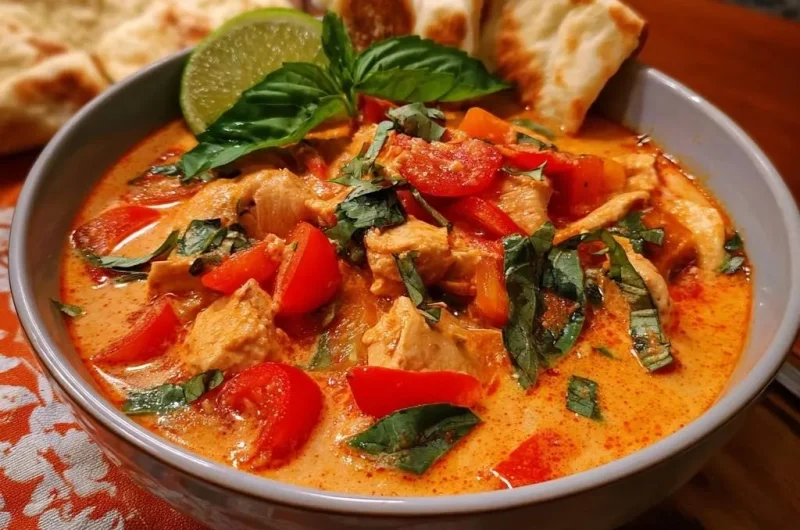
Thai Red Chicken Curry
Course: Main CourseCuisine: ThaiDifficulty: easy4
servings15
minutes20
minutes450
kcal35
MinutesTired of tough, dry chicken ruining your curry? My quick sear-first technique locks in juices for tender, succulent bites every single time, no brining needed.
Ingredients
1 pound boneless chicken breast, cut into bite-sized chunks
2 large red bell peppers, sliced into strips
1 (14-ounce) can full-fat coconut milk
3 tablespoons red curry paste
1/4 cup fresh Thai basil leaves, plus extra for garnish
1 lime, cut into wedges
2 tablespoons vegetable oil
Salt to taste
4 pieces naan bread, warmed
Directions
- Heat 1 tablespoon oil in a large skillet or wok over medium-high heat until shimmering. Add chicken chunks in a single layer (do this in 2 batches to avoid crowding). Sear for 2-3 minutes per side until golden brown all over. This crucial high-heat sear creates a flavorful crust that seals in moisture, preventing dryness. Remove chicken to a plate.
- In the same skillet, add remaining 1 tablespoon oil. Stir in red curry paste and cook for 1 minute until fragrant.
- Pour in coconut milk, stirring to dissolve paste. Bring to a simmer, then add sliced red bell peppers. Cook for 5 minutes until peppers are crisp-tender.
- Return seared chicken to the skillet. Gently simmer for 4-5 minutes, just until chicken is cooked through (internal temp 165F). The short simmer keeps it juicy thanks to the initial sear. Stir in basil leaves and season with salt.
- Serve hot with lime wedges for squeezing and warm naan for scooping. Squeeze lime over top for bright flavor.
Notes
- Sear chicken in batches to avoid crowding for best results. Use full-fat coconut milk for creamy texture.