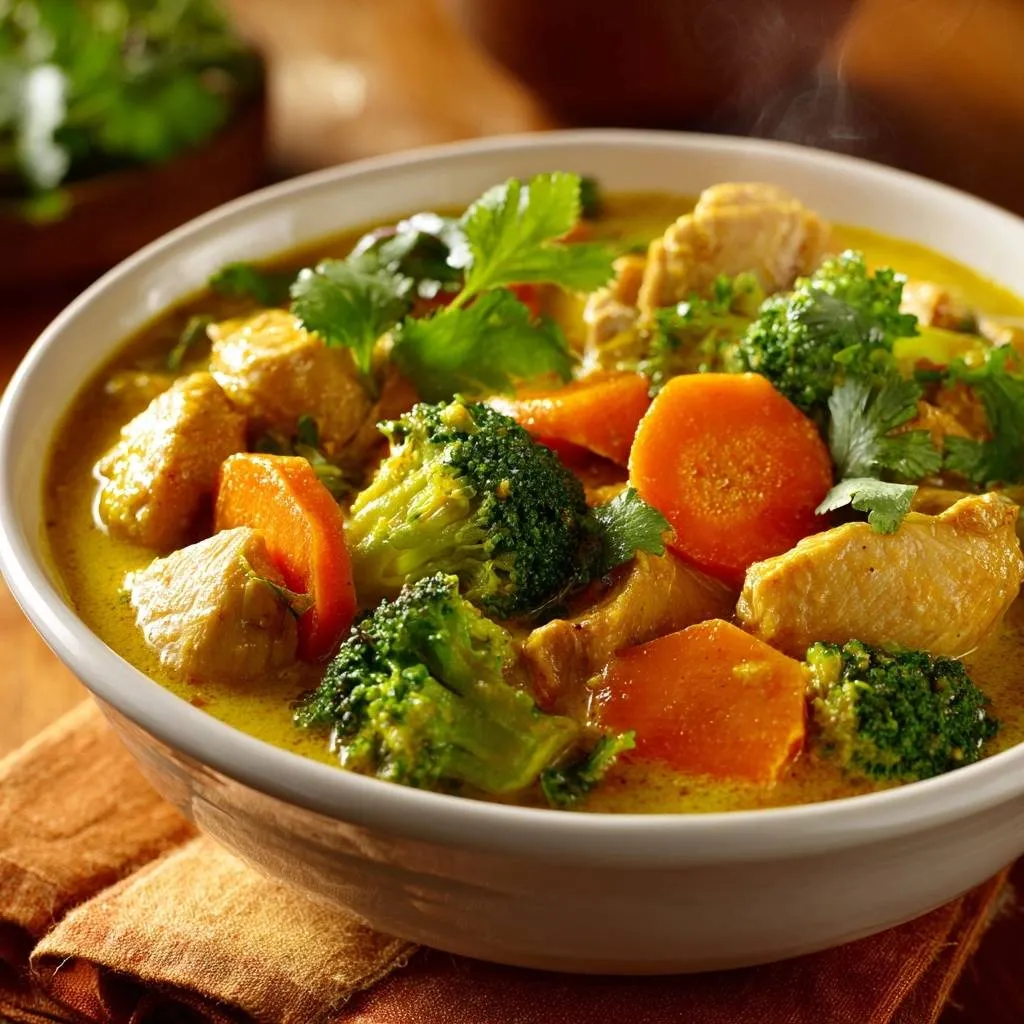
Watery Thai yellow chicken curry? You’ve hit that frustration spot where the sauce thins out right when you want it creamy. This recipe fixes it fast. Dinner’s ready in 30 minutes, no takeout needed.
Here’s why it works so well. You simmer the chicken in the coconut base first. That reduces the liquid for a rich, thick sauce. Then veggies go in last, keeping their crunch without diluting everything.
Thai yellow chicken curry shines from one key move. Bloom the curry paste in oil for two full minutes. You’ll smell those warm spices pop, and it builds the base flavor perfectly. Trust me, skip this and your curry stays flat.
Roots of Authentic Thai Yellow Chicken Curry
Origins in Thai Street Food Culture
Thai yellow chicken curry, or kaeng kari, comes from Central Thailand’s bustling street stalls. Traders brought Indian spices like turmeric and cumin centuries ago. Those blended with local lemongrass for everyday comfort food.
Unlike fiery red or green curries, yellow offers milder warmth. Families scoop it over rice for quick lunches. In Thailand, it’s a staple that feeds markets and homes alike. This version captures that simple joy.
Street vendors simmer it thick to stand up to the heat. You’ll get that same authentic taste here. Thai yellow chicken curry thrives on balance, not heat.
Evolution of the Thick Sauce Technique
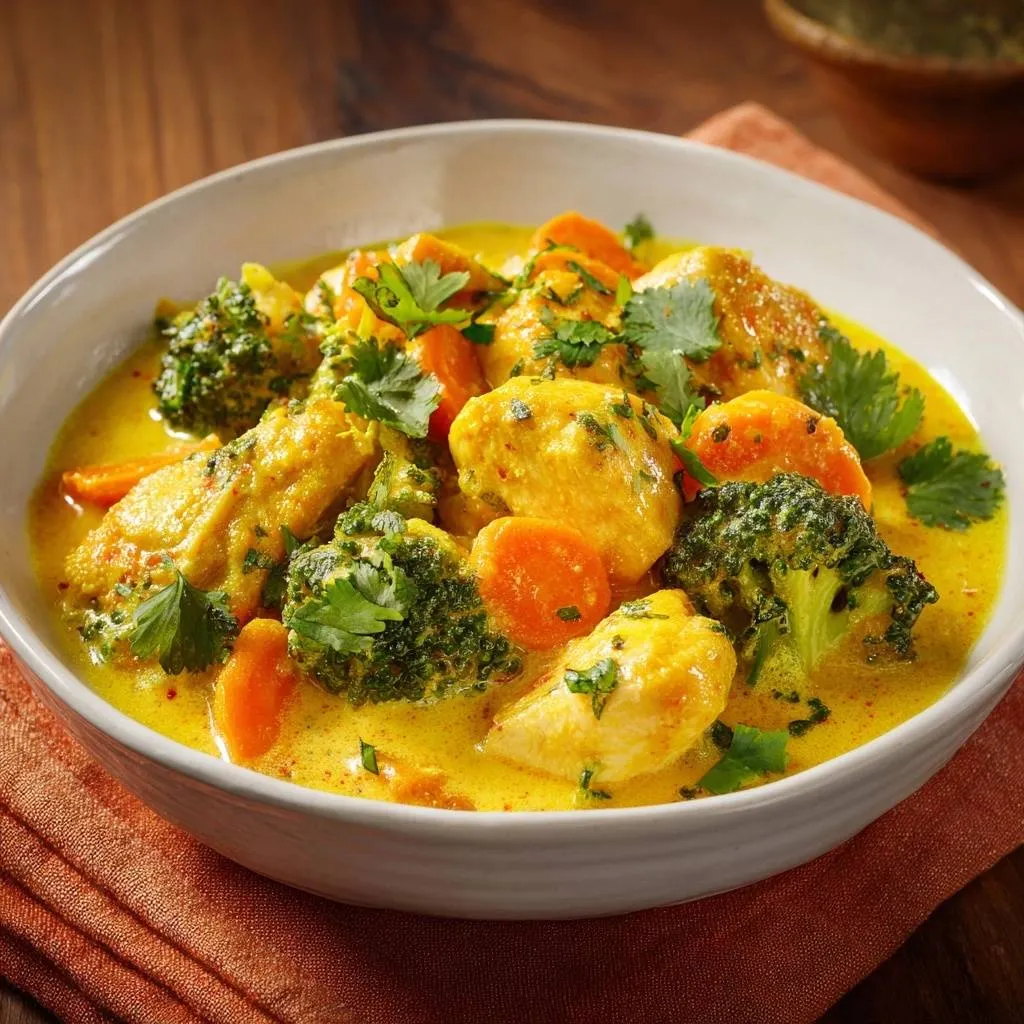
Thai home cooks mastered simmering to cut liquids early. They add chicken before veggies, letting water evaporate. This prevents the common watery mess many face.
Traditional wisdom says reduce first for silkiness. Our recipe follows that exactly. You simmer uncovered 12 to 15 minutes. Sauce clings to the spoon, not pools thin.
Therefore, this foolproof method delivers restaurant results. No guesswork, just creamy Thai yellow chicken curry every time.
For a similar experience with tender chicken and veggies, explore creamy yellow curry with chicken.
Key Ingredients for Thai Yellow Chicken Curry
Yellow Curry Paste: Heart of the Flavor
Yellow curry paste drives Thai yellow chicken curry paste’s magic. It packs turmeric for color, cumin and coriander for earthiness, plus lemongrass zing. Freshly made tastes brightest, but quality store-bought works great.
Pick one with visible chunks of galangal or garlic. Avoid watery versions. Bloom it in hot oil first. That releases oils for deep flavor, no raw bite.
In addition, three tablespoons give perfect punch. Too little, and it’s bland. This paste transforms coconut milk into gold.
Coconut Milk and Chicken Selection Guide
Full-fat coconut milk creates the creamy backbone. Light versions split and thin out. Shake cans well before opening. Pour in slowly to blend smooth.
Choose boneless chicken thighs over breast. They stay juicy during simmering. Cut into bite-sized pieces for even cooking. Salt seasons as it simmers, pulling flavors in.
Half a teaspoon does it. Therefore, your chicken tenderizes perfectly.
Vegetables: Broccoli and Carrots Timing
Broccoli florets and sliced carrots add crunch and color. Four cups broccoli brings vitamins and that fresh snap. Carrots, cut 1/4-inch thick, offer subtle sweetness.
Peel carrots first for smooth texture. Slice evenly so they cook uniform. Fresh cilantro chopped at the end lifts everything with herbal brightness.
These keep the sauce thick. Nutrition meets taste here.
Science of Thick Thai Yellow Chicken Curry Sauce
Blooming Curry Paste Unlocks Aromatics
Heat oil medium, add paste, stir two minutes. Essential oils release, creating fragrance that hits you. Maillard reaction browns edges for nutty depth.
This prevents bitter raw spices. Look for smooth, glossy paste and sweet aroma. Don’t rush, or flavors stay locked.
Therefore, blooming sets up your thick Thai yellow chicken curry sauce right.
Simmer Reduction Evaporates Excess Liquid
After adding coconut milk and one cup water, simmer gently. Chicken releases juices, but uncovered pot evaporates excess. Collagen breaks down for silky mouthfeel.
Twelve to fifteen minutes hits the sweet spot. Sauce thickens to coat the back of a spoon. Add veggies too soon, and they waterlog it.
Most watery curries skip this. However, this step guarantees creaminess in Thai yellow chicken curry.
Essential Tools for Thai Yellow Chicken Curry
Why Wide Pot Beats Deep Saucepan
A wide pot gives more surface area. Liquids reduce faster with even evaporation. Stir without splashing.
Non-stick eases curry paste blooming. Stainless works too, but watch for sticking. Keep lid off always. Simmer exposes more heat.
Grab a 4-quart budget one. It handles this recipe perfectly.
Prep Tools for Efficient Chopping
Sharp knife dices chicken quick and clean. Mandoline slices carrots uniform 1/4-inch rounds. Saves time, cooks even.
Measuring spoons nail paste amount. Liquid measure for coconut milk avoids spills. Prep fast, cook smooth.
Step-by-Step Thai Yellow Chicken Curry Method
Phase 1: Bloom Curry Paste in Oil
Heat two tablespoons vegetable oil medium in wide pot. Add three tablespoons yellow curry paste. Stir constantly two minutes till fragrant and smooth.
Smell that warm spice bloom? Paste turns glossy, no clumps. Medium heat prevents burning. This builds flavor base.
Phase 2: Simmer Chicken in Coconut Base
Pour in two cans full-fat coconut milk and one cup water. Stir smooth, bring to gentle simmer. Add 1.5 pounds bite-sized chicken and 1/2 teaspoon salt.
Simmer uncovered 12 to 15 minutes. Stir occasionally. Chicken cooks through, sauce reduces thick. Thai yellow chicken curry sauce now clings beautifully.
Pro tip: If it bubbles hard, lower heat. Gentle wins for tenderness.
Phase 3: Add Carrots for Subtle Sweetness
Stir in three large sliced carrots. Cook four minutes. They soften slightly but keep bite.
Carrots first since they take longer. Adds natural sweet contrast. Don’t skip this order.
Phase 4: Finish with Crisp Broccoli
Add four cups broccoli florets. Cook three to four minutes till bright green, crisp-tender. Remove from heat right away.
Overcook, and they mush. Garnish with 1/4 cup chopped cilantro. Ladle hot over rice.
Avoiding Watery Thai Yellow Chicken Curry Pitfalls
Overcooking Veggies Dilutes Creaminess
Veggies release water when overdone. Broccoli turns army green, sauce thins. Stick to exact times: carrots four minutes, broccoli three to four.
Test with fork: tender but snaps. Pull off heat fast. Crisp veggies lock in sauce thickness.
Therefore, timing saves your creamy curry.
Too Much Liquid from Start
One cup water max balances coconut milk. More makes soup. Full-fat milk essential for body.
Runny mid-cook? Simmer extra five minutes uncovered. Evaporates without losing flavor. Fixes most issues.
Undercooked Paste Ruins Balance
Paste not bloomed smells raw, tastes harsh. Two minutes stirring fixes it. If missed, cook longer now.
Add salt with chicken. It seasons evenly. Taste before veggies for tweaks.
Flavor Twists on Thai Yellow Chicken Curry
Spice Level Adjustments and Add-Ins
For mild, use two tablespoons paste. Medium hits three, hot adds fresh chili slices. Stir in last minute.
Swap broccoli for green beans, same timing. Bell peppers diced bring color, two minutes max. Keeps chicken central.
These tweaks keep it fresh. Experiment confidently.
Protein Swaps for Variety
Tofu cubes simmer eight minutes. Shrimp needs six, till pink. Both soak up sauce.
Vegan? Skip chicken, double veggies. Simmer base same way. Full flavor minus meat.
Perfect Pairings for Thai Yellow Chicken Curry
Ideal Rice and Noodle Sides
Jasmine rice soaks up thick sauce perfectly. One cup cooked per serving. Fluffy grains balance richness.
Rice noodles stir-fried quick complement too. Portion curry over half rice, half noodles for mix.
Fresh Sides and Garnishes
Cucumber salad cools spice with vinegar tang. Lime wedges squeeze brightens each bite.
Extra basil or mint boosts herbs. Beyond cilantro, they layer freshness.
Make-Ahead Thai Yellow Chicken Curry Strategies
Batch Cooking and Freezer Prep
Double recipe for batches. Cool fully, then freeze in portions up to three months. Thaw overnight in fridge.
Reheat gentle on stove, stir coconut milk if needed. No separation, same thickness returns.
Pro tip: Label bags with date. Easy weeknight win.
Weekly Meal Prep Containers
Portion with rice in airtight containers. Fridge holds four days safely. Reheat covered, low heat restores creaminess.
Microwave works too, stir midway. Keeps flavors locked.
Troubleshooting Thai Yellow Chicken Curry Issues
Sauce Separates: Quick Fixes
Shaken cans or high heat cause split. Whisk vigorously or blend smooth. Cornstarch slurry thickens if needed, one teaspoon in water.
Low simmer prevents future issues.
Chicken Toughness Prevention
Bite-size cuts cook even. Gentle simmer, no boil. Rest off heat tenderizes more.
Bland Flavor Rescues
Taste after chicken simmers. Extra paste or dash soy boosts. Adjust before veggies.
Too Thick or Too Thin Adjustments
Too thick? Stir in coconut milk splash. Too thin, simmer five more minutes. Perfects every time.
Common Questions on Thai Yellow Chicken Curry
Can I Use Frozen Vegetables?
Yes, thaw and drain well first. Excess ice waters down sauce. Cut cook time by one minute per veggie. Keeps thickness intact.
Is Yellow Curry Paste Spicy?
Mild to medium usually. Brands vary, check labels. For kids, start with half amount, taste and add.
How to Store Leftovers Safely?
Fridge in airtight container up to four days. Freezes three months, thaw in fridge. Reheat on stove low, stir to recombine.
Gluten-Free Thai Yellow Chicken Curry?
Naturally gluten-free. Check curry paste label for additives. All else safe.
Substitute for Broccoli?
Snap peas or zucchini slices work. Add last three minutes. Keeps crunch, no dilution.
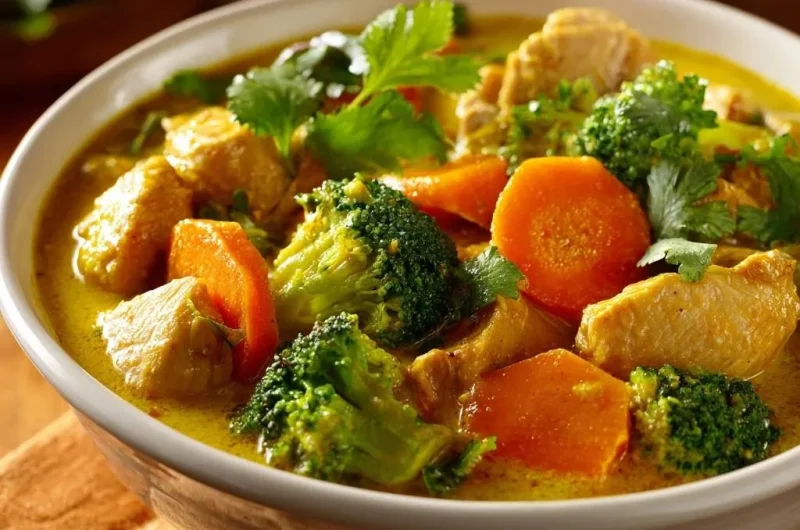
Chicken Curry
Course: Main CourseCuisine: ThaiDifficulty: easy4
servings15
minutes25
minutes450
kcal40
MinutesWatery curry ruining your dinner? This foolproof method simmers the sauce with chicken first to thicken it perfectly, then adds veggies last for vibrant crunch without diluting the creamy goodness.
Ingredients
1.5 pounds boneless chicken, cut into bite-sized pieces
4 cups broccoli florets
3 large carrots, peeled and sliced into 1/4-inch rounds
3 tablespoons yellow curry paste
2 (14-ounce) cans full-fat coconut milk
2 tablespoons vegetable oil
1/2 teaspoon salt
1/4 cup fresh cilantro leaves, chopped for garnish
Directions
- Heat oil in a large pot over medium heat. Add yellow curry paste and stir for 2 minutes until fragrant and smooth. This blooms the flavors without scorching.
- Pour in coconut milk and 1 cup water. Stir well to combine, then bring to a gentle simmer.
- Add chicken pieces and salt. Simmer uncovered for 12 to 15 minutes, stirring occasionally, until chicken is cooked through and sauce reduces and thickens to a creamy consistency. This is the key step: early simmering evaporates excess liquid for rich, non-watery sauce.
- Stir in sliced carrots. Cook for 4 minutes until they start to soften but retain bite.
- Add broccoli florets. Cook for 3 to 4 minutes more, just until bright green and crisp-tender. Do not overcook, or veggies will release water and thin the sauce. Remove from heat immediately.
- Ladle into bowls, garnish with fresh cilantro, and serve hot with rice. Perfectly thick curry every time!
Notes
- Key to thick sauce: Simmer chicken first to reduce liquid, add veggies last to avoid dilution. Serve with rice for a complete meal.