Why This Thai Yellow Chicken Curry Stands Out
Chicken drying out in curry drives me nuts. You’ve seared it wrong or simmered too hard, and suddenly it’s tough chews instead of silky bites. This Thai yellow chicken curry fixes that fast with a high-heat sear first.
Therefore, you get juicy, flavorful chicken every time. The technique seals in moisture before the gentle simmer. Plus, it amps up that authentic Thai taste with creamy coconut and bright lime.
Here’s the pro tip: use shimmering oil at around 375°F for the sear. That Maillard reaction builds a crust that locks juices in. Oh man, the first bite melts in your mouth, tender and packed with spice.
Key Ingredients for Authentic Thai Yellow Chicken Curry
Start with 2 tablespoons vegetable oil for neutral heat. Then, 1.5 pounds boneless chicken thighs cut into bite-sized chunks stay juicy thanks to their fat content. Full-fat coconut milk, one 14-ounce can, creates that creamy base, unlike light versions that split and thin out.
In addition, 3 tablespoons yellow curry paste packs turmeric, lemongrass, and galangal for true Thai punch. One cup chicken broth dilutes it just right. Fish sauce brings umami depth, while brown sugar balances the heat.
Finally, sliced red bell peppers add crunch, and fresh cilantro with lime wedges cut the richness. Skip dried herbs here; fresh ones brighten every spoonful.
Proteins: Choosing Chicken Thighs for Thai Yellow Chicken Curry
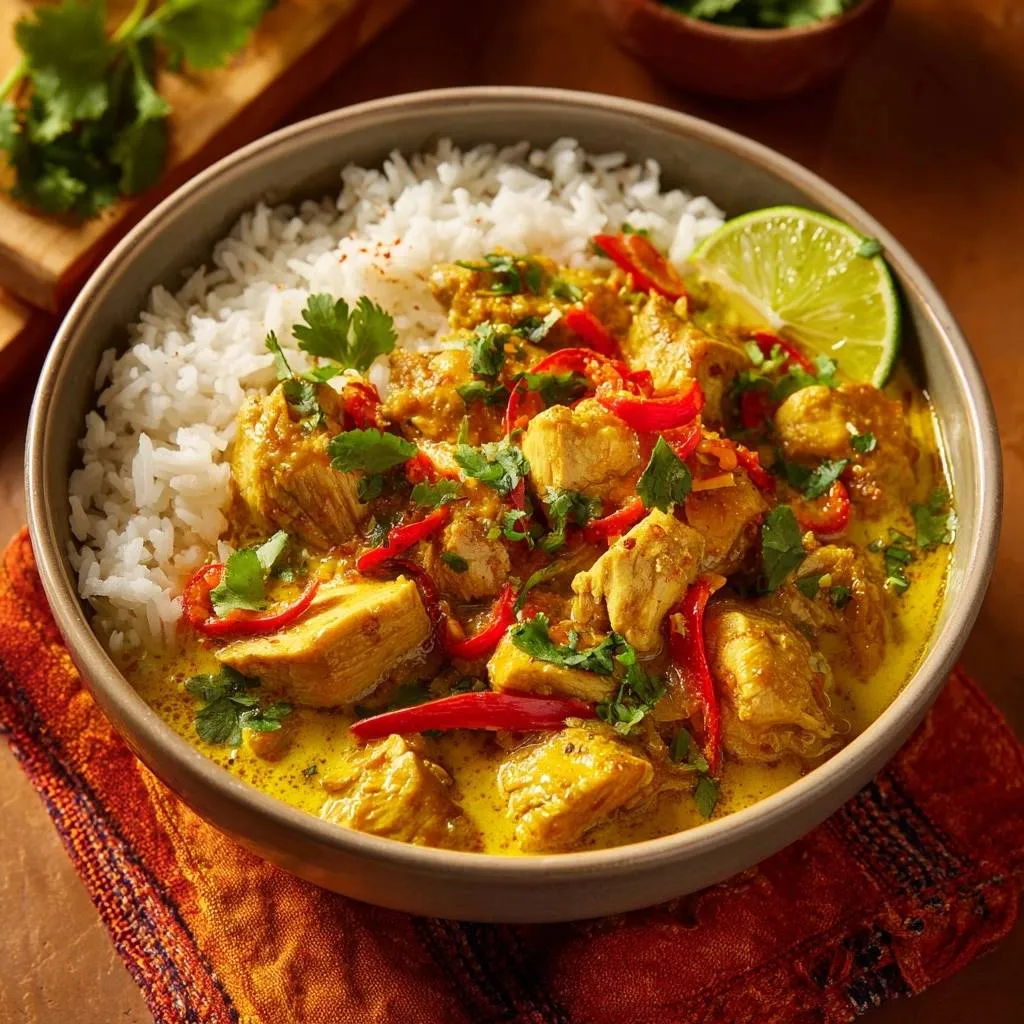
Chicken thighs beat breasts in Thai yellow chicken curry because their higher fat and collagen break down into tenderness during simmering. Breasts dry out fast from low moisture. Cut into even bite-sized pieces for uniform cooking.
Therefore, source skin-on thighs if possible, then trim excess. They absorb curry flavors deeply without turning stringy.
Base Liquids: Coconut Milk and Broth Ratios
Full-fat coconut milk emulsifies into a silky sauce when whisked properly. Light milk lacks the fat needed for richness in Thai yellow chicken curry. One cup broth prevents the paste from overpowering everything.
However, shake the can well first. This keeps the emulsion stable and coats the chicken perfectly.
Mastering the Sear in Thai Yellow Chicken Curry
Heat 1 tablespoon oil in a large skillet over medium-high until it shimmers. Add chicken in a single layer, working in batches. Sear undisturbed 2-3 minutes per side for a golden crust.
This builds a moisture barrier via the Maillard reaction, adding nutty depth. Crowding steams instead, so rest the pan between batches. You’ll smell that irresistible char forming.
Remove and set aside. That crust prevents dryness later.
Building the Fragrant Thai Yellow Curry Sauce
Add the remaining oil to the skillet. Stir in yellow curry paste and cook 1 minute until fragrant oils bloom. Don’t skip this; undercooked paste tastes bitter.
Pour in coconut milk, broth, fish sauce, and brown sugar. Whisk vigorously to combine, then bring to a simmer. Taste here and adjust sugar if needed for authentic sweet-heat balance.
The sauce thickens slightly without boiling off aromas. Pro tip: constant whisking stops separation.
Simmering Thai Yellow Chicken Curry to Perfection
Add seared chicken and peppers. Reduce to low heat, cover, and simmer 15 minutes, stirring occasionally. Peppers stay crisp-tender when added late.
Low simmer breaks down thigh collagen gently. Watch for sauce to reduce to a nappe consistency that coats the back of a spoon. If it sticks, add a splash of broth.
Therefore, chicken emerges fall-apart tender every time.
Plating Thai Yellow Chicken Curry with Thai Accents
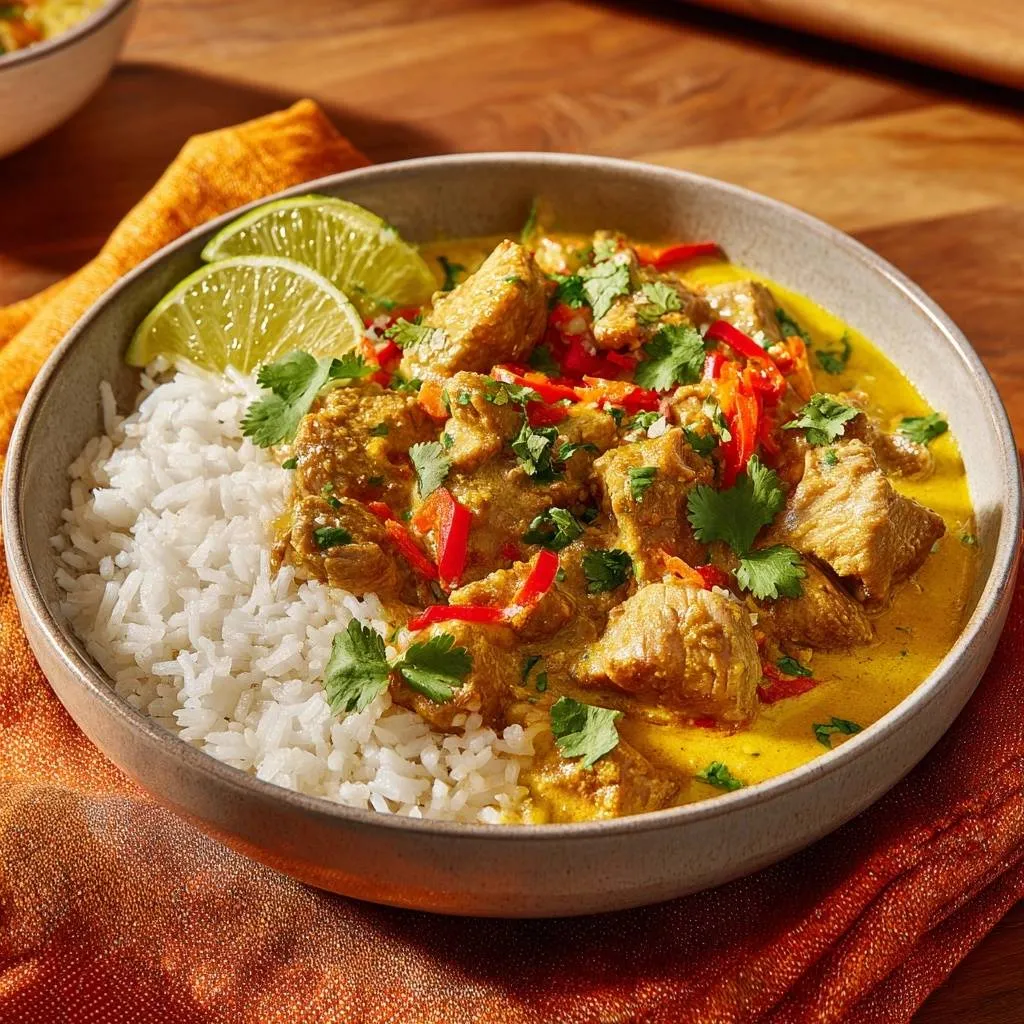
Serve over hot white rice that soaks up the creamy sauce. Garnish with chopped cilantro and lime wedges. Squeeze lime right before eating for zesty brightness.
For more fluffy grains and crispy chicken, consider this Thai chicken fried rice.
Portion family-style in a big bowl. The fresh herbs contrast the rich curry perfectly.
Science of Juicy Chicken in Thai Yellow Chicken Curry
The high-heat sear at 375°F denatures surface proteins fast, forming a barrier that traps juices. Forget the myth it “seals” like a bag; it’s really about contraction before expansion in the simmer.
Thighs’ collagen melts at 180°F low simmer, turning chewy to silky. Coconut fat insulates further, preventing overcooking. Compare to braising: same principle, but curry’s acidity speeds tenderizing.
In addition, peppers release pectin late, thickening sauce naturally. Test with a thermometer if unsure; pull at 165°F internal chicken temp.
Origins of Thai Yellow Chicken Curry Tradition
Yellow curry hails from central Thailand, blending Indian turmeric imports with local lemongrass and galangal. Coconut milk joined in the 19th century for creamy street food stalls.
Therefore, it’s milder than red or green, perfect for home cooks. Modern versions keep authenticity with quality paste. Think bustling Bangkok markets, now in your kitchen.
Variations like yellow curry chicken Thai style evolved for everyday meals.
Flavor Variations for Thai Yellow Chicken Curry
Swap peppers for bamboo shoots or zucchini for earthier notes. Add sweet potato chunks for heartiness; they soak up sauce beautifully.
For vegan, use firm tofu seared the same way. Adjust spice with mild paste or fresh chilies. However, keep yellow curry paste central for that signature hue and taste.
Pro tip: taste as you go to nail balance.
Essential Pairings for Thai Yellow Chicken Curry
Jasmine rice edges out sticky for better sauce sopping. Pair with cucumber salad for cool crunch that refreshes the palate.
Pickled veggies add tang. Herbal iced tea cuts richness without overwhelming. Skip heavy sides to let curry shine.
Avoiding Pitfalls in Thai Yellow Chicken Curry
Overcrowd the pan, and chicken steams gray instead of browning. Use batches and wipe excess moisture first. Boiling sauce toughens meat and splits coconut milk.
Bitter paste? Bloom it longer next time. For recovery, simmer low and add cream if separated. Rest oil hot between sears.
Therefore, follow cues like aroma and color for foolproof results.
Make-Ahead Strategies for Thai Yellow Chicken Curry
Sear chicken a day ahead and refrigerate. Full curry keeps 3 days in the fridge; flavors deepen beautifully. Freeze sauce alone up to 2 months, chicken separate to avoid mush.
Reheat gently on stovetop with a splash of broth. Batch cook for easy weeknight wins.
Common Questions About Thai Yellow Chicken Curry
Can Chicken Breast Replace Thighs?
Yes, but brine breasts 30 minutes in saltwater first to boost moisture. They’ll cook faster, so add 5 minutes later. Pros: leaner; cons: easier to dry out without sear.
Best Yellow Curry Paste Brands?
Mae Ploy or Maesri top my list for balanced spice and fresh aromatics. Avoid watery supermarket brands; they lack punch. Taste-test a spoonful straight for authenticity.
How to Adjust Heat Level?
Start with half the paste for mild, or stir in sliced Thai chilies at simmer for fire. Remove seeds to tame. Taste broth step and scale fish sauce accordingly.
Freezer Storage Duration?
Freeze in portions up to 2 months; sauce thaws smooth, but peppers soften. Thaw overnight in fridge, reheat low to avoid separation. Don’t refreeze.
Slow Cooker Adaptation?
Sear chicken first, then low 4-6 hours. Add peppers last hour for bite. Skip cover; lid traps steam. Stir midway for even flavor.
Chicken Curry
Course: Main CourseCuisine: ThaiDifficulty: easy4
servings15
minutes25
minutes550
kcal40
MinutesTired of chicken turning tough and dry in curry? This recipe fixes it with a quick high-heat sear that seals in juices before simmering, delivering tender, flavorful bites every time. Served over rice with peppers, lime, and cilantro for that perfect Thai vibe.
Ingredients
2 tablespoons vegetable oil
1.5 pounds boneless chicken thighs, cut into bite-sized chunks
3 tablespoons yellow curry paste
1 can (14 ounces) full-fat coconut milk
2 red bell peppers, sliced into strips
1 cup chicken broth
1 tablespoon fish sauce
1 tablespoon brown sugar
Cooked white rice, for serving
Fresh cilantro leaves, chopped
Lime wedges
Directions
- Heat 1 tablespoon oil in a large skillet over medium-high heat until shimmering hot. Add chicken chunks in a single layer (work in batches if needed). Sear undisturbed for 2-3 minutes per side until golden-brown crust forms. This crucial step creates a moisture barrier, preventing dryness during simmering. Remove chicken and set aside.
- In the same skillet, add remaining 1 tablespoon oil. Stir in yellow curry paste and cook 1 minute until fragrant.
- Pour in coconut milk, chicken broth, fish sauce, and brown sugar. Whisk to combine and bring to a simmer.
- Add seared chicken and red bell peppers. Reduce heat to low, cover, and simmer gently 15 minutes, stirring occasionally. The low simmer keeps chicken juicy while sauce thickens. The chicken is done when it reaches 165°F (74°C) in the thickest part.
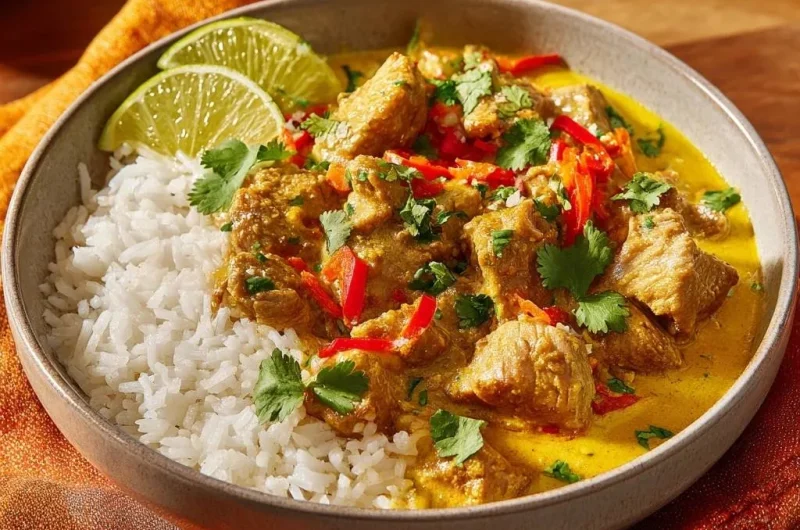
- Serve over cooked white rice. Garnish with chopped cilantro and lime wedges. Squeeze lime for bright flavor. Enjoy tender chicken in creamy curry!
Notes
- Use full-fat coconut milk for the creamiest sauce. Sear chicken in batches to avoid overcrowding the pan. Fish sauce adds authentic umami; substitute soy sauce if needed.