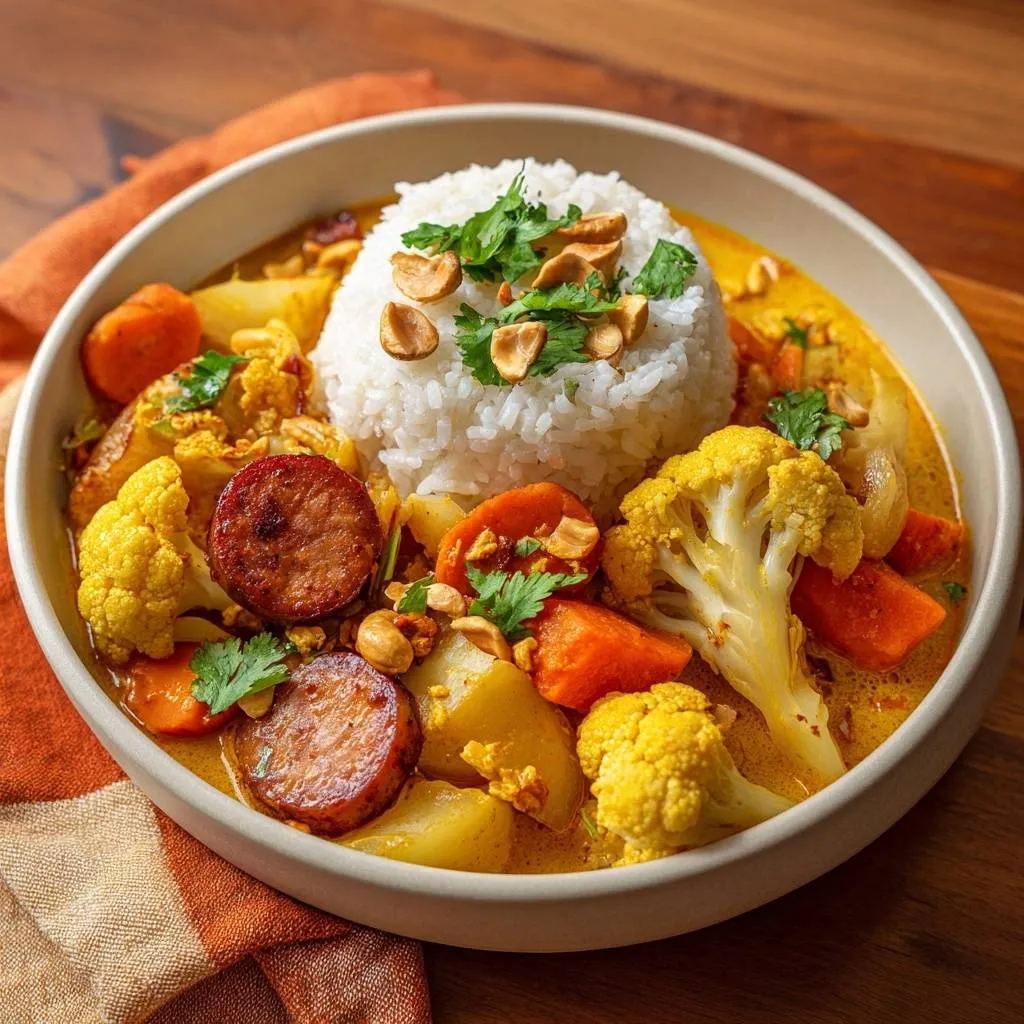
Nothing ruins a curry faster than mushy, watery cauliflower. You’ve stirred in those florets too early, haven’t you? They turn to soggy blobs, leaching moisture into the sauce. But this Thai Yellow Veggie Sausage Curry fixes that with one simple move: add the cauliflower in the final 8 minutes. It steams to tender-crisp perfection every time.
Therefore, you get bold Thai flavors from yellow curry paste, creamy coconut milk, and smoky chicken sausage all wrapped around hearty veggies. In addition, it’s packed with fiber-rich potatoes, carrots, and cauliflower plus protein from the sausage. This makes it a weeknight winner that beats takeout freshness and quality.
For a different twist on curry chicken, explore crispy pan-seared chicken curry.
Here’s the expertise pro tip: bloom the curry paste in hot oil first. That releases its turmeric, lemongrass, and galangal aromas fully. Skip it, and your curry tastes flat. Now, let’s dive into making this texture hero shine.
Core Ingredients for Thai Yellow Veggie Sausage Curry
Start with one medium head of cauliflower, cut into bite-sized florets. These smaller pieces cook evenly without steaming forever. However, skip huge chunks, or they’ll stay raw in the middle while others mush.
Grab 3 medium carrots sliced into 1/2-inch rounds and 3 medium potatoes peeled and cut into 1-inch chunks. Carrots add natural sweetness that balances the curry’s heat. Potatoes give that hearty, starchy base, but peel them to avoid tough skins.
Don’t overlook the 12 oz smoked chicken sausage sliced into 1/2-inch rounds. It brings smoky protein and richness. Then, 2 tablespoons yellow curry paste packs authentic Thai punch, while one 14 oz can full-fat coconut milk ensures creaminess. Light versions separate and turn oily, so stick to full-fat.
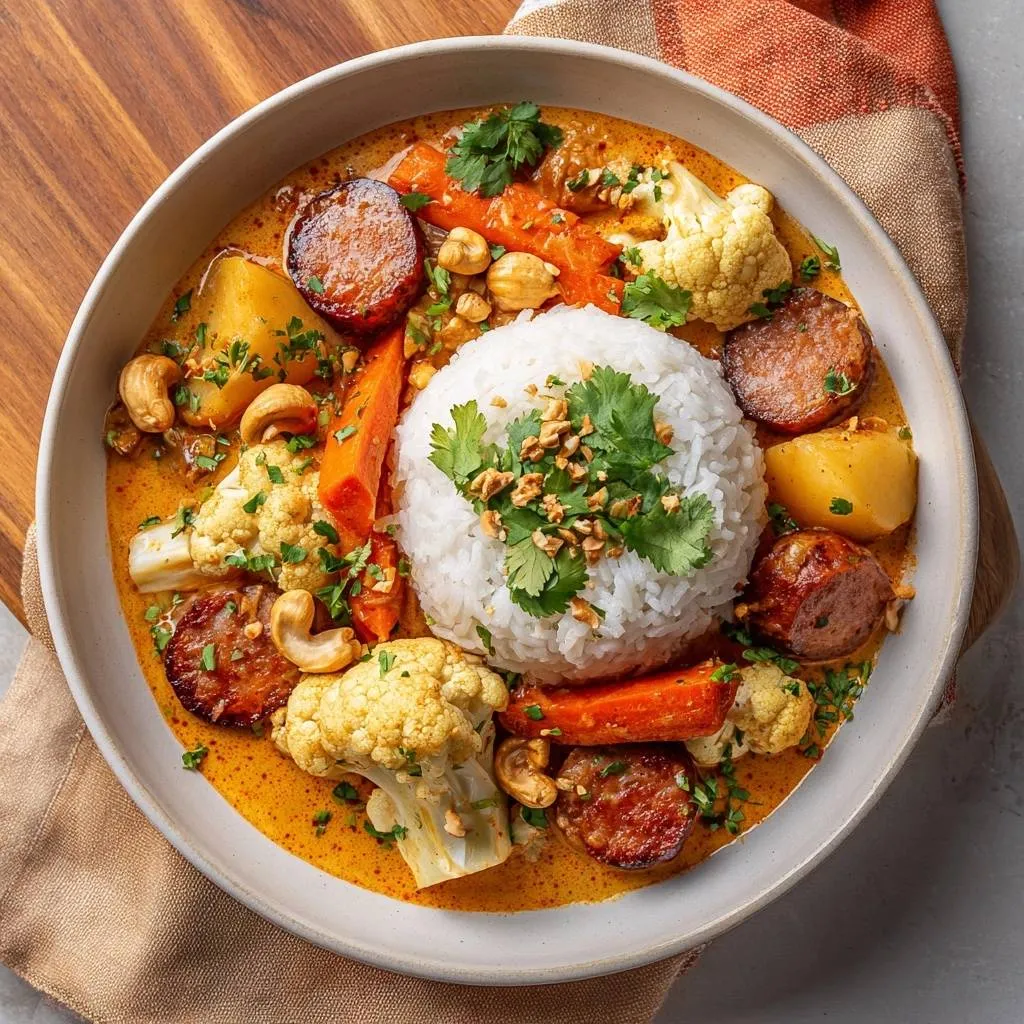
Finally, 1 cup vegetable broth balances everything, plus toppings like 1/2 cup cooked jasmine rice per serving, 1/4 cup crushed peanuts, and 1/4 cup fresh cilantro. Salt to taste at the end. For vegan swaps, try tofu, but adjust browning time.
Yellow Curry Paste: Building Authentic Thai Base
Yellow curry paste, or nam prik gaeng kari, blends turmeric, cumin, coriander, lemongrass, galangal, and chilies. Store-bought works great; keep it in the fridge for months. However, homemade lets you control heat.
Always bloom it in oil over medium heat for 1 minute. This fries the spices, releasing oils for deeper flavor. Without it, flavors stay raw and muted.
Cauliflower and Veggies: Texture Heroes
Cut cauliflower into uniform bite-sized florets for even cooking. Potatoes need peeling so starch releases smoothly into the sauce. Slice carrots into 1/2-inch rounds to soften without turning mushy.
These sizes match cooking times perfectly. Therefore, everything finishes tender together. Pro tip: rinse potatoes after cutting to remove excess starch and prevent gumminess.
Roots of Thai Yellow Veggie Sausage Curry
Thai yellow curry traces back to kaeng kari, a fusion of Indian spices brought by traders in the 19th century. Turmeric gives it that vibrant hue, mixed with local Thai herbs like lemongrass and galangal. Street stalls in Bangkok still simmer it daily.
Modern twists add Western veggies and sausages for heartiness. In addition, this veggie-sausage version adapts it globally while keeping bold flavors. Regional Thai spots vary it with more coconut or chicken, but yellow suits potatoes and carrots best.
Fun fact: curry paste includes dried red chilies for mild heat. That’s why it’s approachable for weeknights. Now, this home style brings street food vibes to your table.
Evolution from Street Stalls to Home Kitchens
Curry hit Thai streets via Indian immigrants in the 1800s. It evolved with local ingredients. Yellow curry’s mild profile pairs perfectly with veggies, making it a home cook favorite today.
Post-WWII, canned coconut boosted popularity. Sausages add a smoky Western nod, perfect for busy kitchens.
Step-by-Step: Building Thai Yellow Veggie Sausage Curry
Heat 2 tablespoons neutral oil like avocado or canola in a large pot over medium. Add 2 tablespoons yellow curry paste and stir for 1 minute until fragrant. You’ll smell that spicy, earthy bloom right away.
Blooming Curry Paste and Searing Sausage
The Maillard reaction browns the 12 oz sliced smoked chicken sausage in 3 minutes. Medium heat prevents burning the paste. Sausage edges crisp up, locking in smoky flavor.
Stir constantly at first. If paste sticks, add a splash of broth early.
Simmering Potatoes and Carrots to Tenderness
Add potatoes, carrots, and 1 cup vegetable broth. Bring to a simmer, cover, and cook 12 minutes. Fork-test for just-tender; they should pierce easily but hold shape.
This builds the sauce base without watering it down.
Infusing Coconut Milk for Creamy Thai Yellow Veggie Sausage Curry
Pour in the full-fat coconut milk and stir gently. Simmer uncovered 5 minutes to thicken. Keep heat low to avoid curdling; the sauce turns silky and coats the back of a spoon.
For more coconut milk goodness, explore this easy one-pot creamy chicken curry.
Gentle stirs emulsify fat perfectly.
Final Cauliflower Addition: No-Sog Trick
Add cauliflower florets on top without stirring. Cover and simmer exactly 8 minutes for tender-crisp bite. Gently fold in to coat with sauce, then salt to taste.
This preserves cell structure, preventing water release. Your cauliflower stays firm amid creamy gravy.
Science of Crisp Cauliflower in Thai Yellow Veggie Sausage Curry
Cauliflower’s cell walls break down with heat, releasing pectin and water. Overcook it, and it gets mushy. But the 8-minute steam preserves firmness.
Curry paste’s acidity firms veggie tissues slightly. Therefore, late addition means steaming, not boiling, for al dente results. Potatoes release starch to thicken sauce meanwhile.
Pro tip: crowded pots steam unevenly, so use a wide one. This controls heat transfer for perfect texture.
Timing and Heat: Texture Preservation Explained
The 8-minute window steams cauliflower gently at simmering temps around 190°F. Simmer boils harder, breaking cells faster. Potato starch binds sauce without diluting.
Steam traps moisture inside florets. That’s your crisp secret.
Avoiding Pitfalls in Thai Yellow Veggie Sausage Curry
Overcook cauliflower, and it’s mush; set a timer for 8 minutes. High heat curdles coconut milk, so simmer low. Bland sauce? Bloom more paste or add a teaspoon sugar.
Watery veggies come from uneven cuts; match sizes. Prevent sausage splitting by not overcrowding. Salt late to avoid toughening veggies.
Pro tip: taste after coconut; adjust paste before cauliflower for balanced heat.
Fixing Mushy Cauliflower and Thin Sauce
If cauliflower’s mushy, roast florets separately first at 425°F for 15 minutes, then add. For thin sauce, simmer longer uncovered or blend 1/4 with immersion blender.
Rescue works fast. Add peanuts for crunch boost.
Flavor Twists for Thai Yellow Veggie Sausage Curry
Swap smoked chicken sausage for plant-based links; brown same way. Sweet potatoes replace carrots for extra sweetness. Try green curry paste for fiercer heat.
Add chopped lemongrass with paste for citrus pop. Dial spice by starting with 1 tablespoon paste. Nut-free? Use toasted coconut flakes.
These keep the Thai Yellow Veggie Sausage Curry core while personalizing.
Protein Swaps and Veggie Upgrades
Firm tofu cubes brown like sausage; press water out first. Chickpeas add earthiness, simmer full time with potatoes. Broccoli needs 6 minutes max to stay crisp.
Adjust timings to match textures.
Pairing Sides with Thai Yellow Veggie Sausage Curry
Mound jasmine rice in bowls first, then ladle curry around it. This soaks up creamy sauce perfectly. Scoop with naan for carb contrast.
Fresh cucumber salad adds cool crunch. Squeeze lime wedges for zing. Iced green tea cuts richness nicely.
Complementary Dishes to Try
Round out your meal with these flavorful additions.
- For a bright and zesty contrast to your curry, try this Moroccan Spiced Carrot and Chickpea Salad, featuring similar vibrant spices.
- Add a refreshing crunch with this Thai Mango Cabbage Slaw, echoing the fresh, sweet notes in your curry.
These contrasts make flavors pop brighter.
Batch Cooking Thai Yellow Veggie Sausage Curry
Double ingredients for 8 servings; use a bigger pot. Make-ahead stores in fridge 4 days. Freeze portions in bags up to 2 months; leave 1-inch headspace.
Thaw overnight, reheat on stovetop low with broth splash. Avoid microwave to keep cauliflower crisp. Meal prep in single containers for easy grabs.
Thai Yellow Veggie Sausage Curry FAQ
Can I Use Frozen Cauliflower?
Yes, thaw and pat dry first to remove ice water. Add for 5 minutes instead of 8. Texture softens a bit more, but still beats early cooking.
Substitute for Chicken Sausage?
Try plant-based sausage, turkey, or chickpeas for vegan. Brown plant-based less to avoid crumbling. Boost smoke with liquid smoke drop if skipping sausage.
How Spicy Is This Thai Yellow Veggie Sausage Curry?
Mild to medium from standard paste. Reduce to 1 tablespoon for kids, or add chili flakes. Balance with sugar teaspoon if too hot.
Best Pot for Cooking?
Wide Dutch oven or deep skillet, 4-quart minimum. Heavy bottom evens heat; skip nonstick as paste sticks less to stainless.
Storage and Reheating Tips?
Fridge in airtight container up to 4 days; freezes 2 months without cauliflower getting grainy. Reheat stovetop low simmer with broth splash for creaminess.
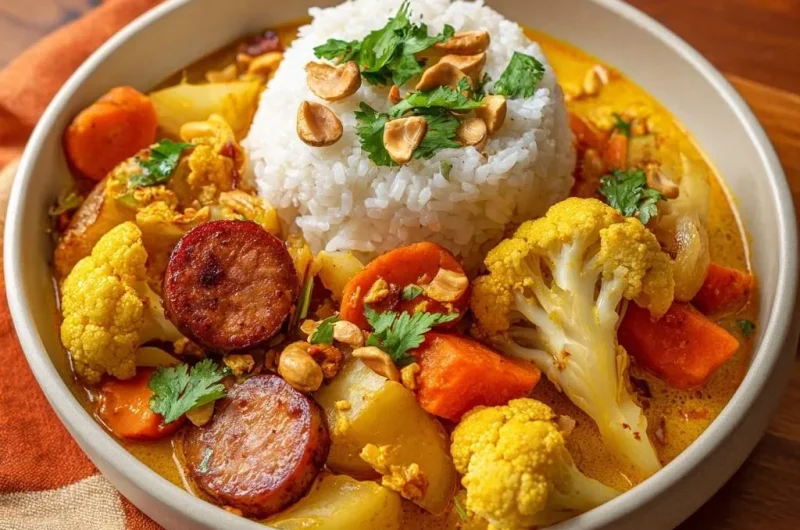
Thai Yellow Sausage Curry
Course: Main CourseCuisine: ThaiDifficulty: easy4
servings15
minutes30
minutes650
kcal45
MinutesTired of cauliflower turning mushy in curry? Add it in the final 8 minutes for tender-crisp perfection. This Thai yellow curry features smoked chicken sausage, potatoes, carrots, and creamy coconut sauce.
Ingredients
1 medium head cauliflower, cut into bite-sized florets
3 medium carrots, sliced into 1/2-inch rounds
3 medium potatoes, peeled and cut into 1-inch chunks
12 oz smoked chicken sausage, sliced into 1/2-inch rounds
2 tablespoons yellow curry paste
1 (14 oz) can full-fat coconut milk
1 cup vegetable broth
2 tablespoons neutral oil (like avocado or canola)
1/2 cup cooked jasmine rice per serving (for topping)
1/4 cup crushed peanuts
1/4 cup fresh cilantro leaves
Salt to taste
Directions
- Heat oil in a large pot over medium heat. Add yellow curry paste and stir for 1 minute until fragrant.
- Add sliced sausage and cook 3 minutes until lightly browned.
- Stir in potatoes, carrots, and vegetable broth. Bring to a simmer, cover, and cook 12 minutes until potatoes and carrots are just tender.
- Pour in coconut milk and stir gently to combine. Simmer uncovered 5 minutes to thicken slightly.
- Add cauliflower florets on top (do not stir yet). Cover and simmer exactly 8 minutes, until cauliflower is tender-crisp with a slight bite. Gently fold in to coat with sauce. Season with salt.
- To serve, mound cooked rice in bowls, ladle curry around it, and top with crushed peanuts and cilantro.
- This timing trick locks in perfect cauliflower texture every time while keeping the sauce creamy and thick.
Notes
- The key is adding cauliflower in the final 8 minutes to steam to tender-crisp perfection without sogginess. Use full-fat coconut milk for the creamiest sauce.