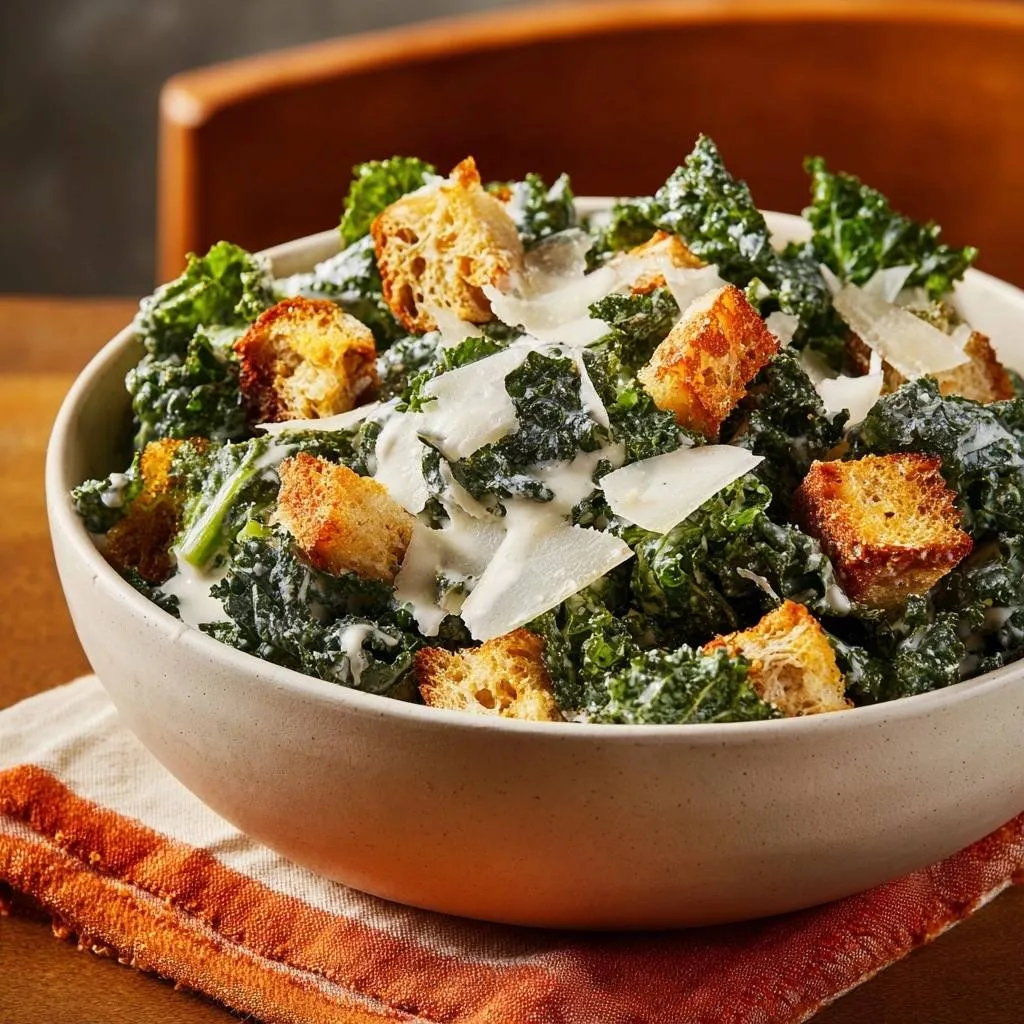
Most people avoid kale salads because the leaves feel like eating a handful of bitter, waxy paper. You’ve likely had that one salad where the greens were so tough your jaw actually got tired from chewing. It’s a common kitchen frustration that usually leads people back to boring iceberg lettuce, but it doesn’t have to be that way.
The secret to a restaurant-quality kale salad isn’t just a fancy dressing; it’s the mechanical breakdown of the greens themselves. By using a specific massage technique with salt and acid, you can actually change the cellular structure of the kale. This process transforms the leaves into a tender, vibrant, and mild base that perfectly holds onto every drop of creamy Caesar dressing.
I’ve found that the real trick is patience during the prep phase. If you skip the manual massage, the dressing will just slide off the waxy surface of the kale. However, once you spend those few minutes kneading the leaves, they become porous and supple. This allows the flavors to penetrate deep into the greens rather than just sitting on top.
Why This Creamy Kale Caesar Salad Works
This salad succeeds because it balances intense flavors with contrasting textures. You get a massive hit of umami from the Parmesan cheese, which is balanced by the bright, sharp acidity of fresh lemon juice. The creamy dressing provides a rich mouthfeel that coats the curly edges of the kale, ensuring no bite is ever dry or bland.
For a bright, peppery contrast, try this lemony arugula salad.
Furthermore, this dish has what I call “skyscraper appeal.” It’s hearty enough to stand alone as a main course but sophisticated enough to serve as a side at a dinner party. Because kale is so much sturdier than Romaine, this salad doesn’t wilt the moment it hits the table. It stays crunchy and fresh for hours, making it a reliable choice for gatherings.
The sourdough croutons add a rustic, earthy element that ties everything together. Unlike store-bought croutons that can be rock-hard, these homemade versions have a shattered-glass crunch on the outside and a slightly chewy center. This interplay between the tenderized greens and the crispy bread creates a satisfying eating experience that keeps you coming back for more.
Essential Components for the Perfect Caesar Base
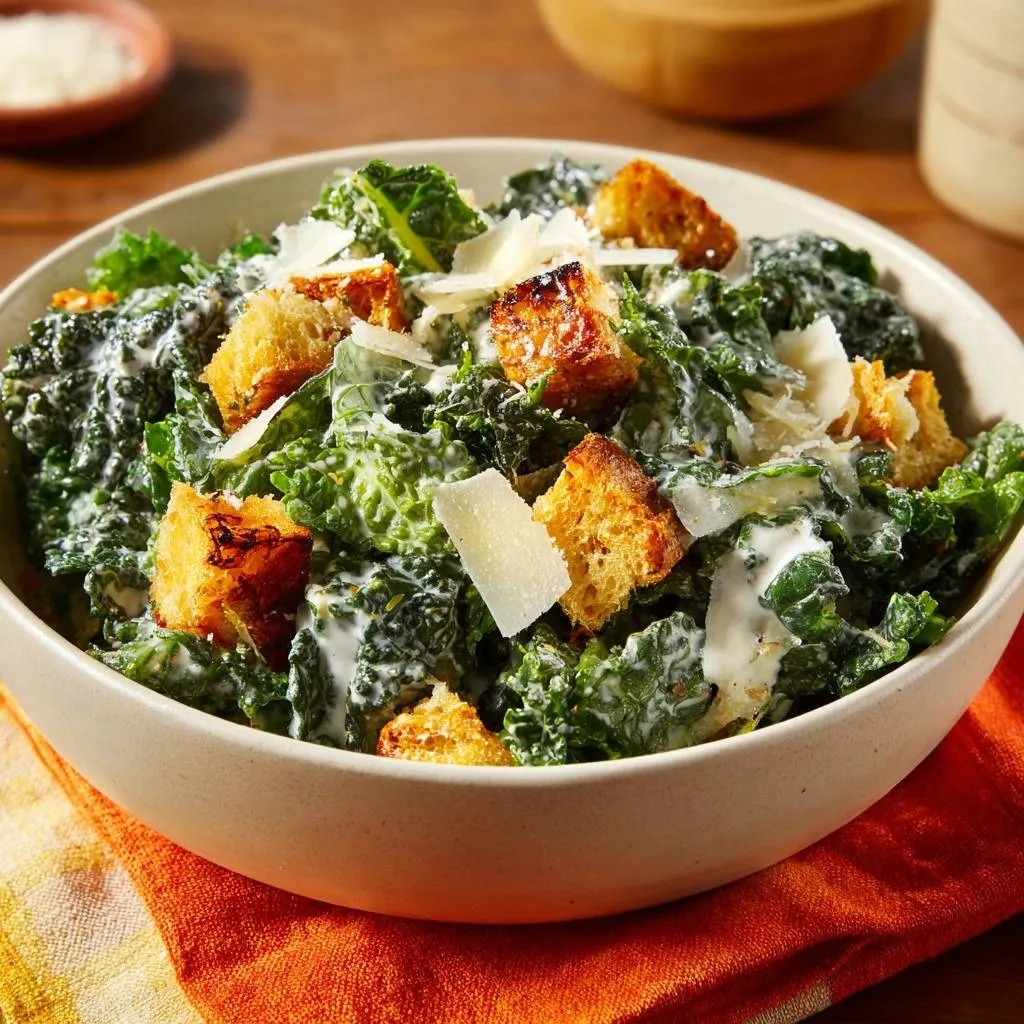
When you’re shopping, look for a large bunch of curly kale. While Lacinato (or Dinosaur) kale is popular, the curly variety is actually superior for a Caesar. Those tight ruffles and crevices act like little scoops, catching the thick dressing and the small bits of black pepper. It creates a much more interesting texture once it has been properly softened.
Your choice of fat matters immensely here. Use a high-quality extra virgin olive oil that smells fruity and fresh. Since we aren’t cooking the oil in the dressing or the massage phase, you will taste every nuance of it. It provides the necessary lubrication to break down the kale fibers without making the salad feel greasy.
Fresh lemon juice is absolutely non-negotiable. Bottled juice often has a metallic aftertaste and lacks the volatile oils found in fresh citrus skin. The citric acid in a fresh lemon is what chemically “cooks” the kale during the massage, so don’t reach for the plastic squeeze bottle if you want the best results.
Selecting and Prepping Your Kale Greens
Start by thoroughly washing your kale in cold water to remove any grit hidden in the curls. The most important part of prep is removing the woody stems. These ribs are incredibly fibrous and won’t soften no matter how much you massage them. Grip the base of the stem and slide your hand upward to strip the leaves away in one clean motion.
Once the stems are gone, tear the leaves into bite-sized pieces by hand. I prefer tearing over chopping with a knife because the irregular edges help the dressing cling better. Aim for pieces that are about one to two inches wide. This ensures the salad is easy to eat without needing a knife at the dinner table.
The Role of Sourdough in Texture Contrast
Sourdough is the undisputed king of the crouton world. Because sourdough is fermented, it develops large, irregular air pockets throughout the loaf. When you toss these chunks in olive oil and bake them, those pockets become crispy traps for the Caesar dressing. It creates a “crunch-then-chew” sensation that regular white bread simply can’t replicate.
The slight tang of the sourdough also complements the fermented notes of the Parmesan cheese. When you tear the bread into rustic chunks instead of cutting perfect cubes, you create more surface area. More surface area means more golden-brown crust and more places for the salt and pepper to stick.
The Science of Massaging Kale Leaves
It might feel strange to “knead” your salad, but there is real science happening in that bowl. Kale is packed with cellulose and lignin, which are the tough structural components that keep the plant standing upright in the field. These are also the components that make raw kale feel like you’re chewing on a hedge.
When you add salt and lemon juice, you’re initiating a process called osmosis. The salt draws moisture out of the cell walls, while the acid begins to denature the tough proteins. By adding manual pressure—literally squeezing the leaves in your fists—you are physically breaking those cellulose bonds. This is why the kale shrinks in volume as you work it.
As the cell walls break down, the bitter compounds are released and mellowed out by the olive oil. You’ll notice the color shifts from a dusty, pale green to a deep, translucent emerald. This transformation makes the kale significantly easier for your body to digest. It also removes that “fuzzy” feeling that raw kale often leaves on the tongue.
Step-by-Step: Crafting the Golden Sourdough Croutons
Preheat your oven to 375°F, which is the sweet spot for roasting bread. At this temperature, the olive oil sizzles and browns the sourdough quickly enough that the inside doesn’t turn into a total rock. Toss your torn chunks with plenty of oil and a generous pinch of salt until every nook and cranny is coated.
Spread them out on a baking sheet, making sure they aren’t crowded. If they are too close together, they will steam instead of crisping up. Bake for about 8 to 10 minutes, but stay close to the oven. Sourdough can go from perfectly golden to burnt in a matter of seconds. Give the pan a good shake halfway through to ensure even browning.
The most critical part of this step is the cooling process. Let the croutons cool completely on the pan before adding them to the salad. If you add hot croutons to the dressed kale, the residual steam will make the bread soggy and the dressing thin. A cool crouton stays crunchy even after sitting in the dressing for twenty minutes.
Step-by-Step: Softening the Greens and Assembly
Place your torn kale in the largest bowl you own. You need plenty of room to get both hands in there. Drizzle over the remaining olive oil, lemon juice, and sea salt. Now, get in there and start squeezing. You want to be firm, almost like you’re kneading bread dough. Do this for a full 2 to 3 minutes.
Watch for the visual cues. The kale should look wet, dark, and much smaller than when you started. Once the leaves feel supple and soft, it’s time for the dressing. Pour the creamy Caesar over the greens and use tongs to toss. Because the kale is now “open” from the massage, it will soak up the dressing beautifully.
Finally, fold in your cooled sourdough croutons and those wide Parmesan shavings. Use a vegetable peeler to get those big, dramatic flakes of cheese. They provide a much better flavor impact than grated cheese, which can sometimes get lost in the thick dressing. Give it one last gentle toss and you’re ready to serve.
Flavor Variations and Ingredient Swaps
If you want to add more protein, roasted chickpeas are a fantastic addition. They provide a nutty crunch that mimics the croutons but adds a boost of fiber. For those who want a dairy-free umami boost, you can sprinkle in some nutritional yeast during the massage phase. It adds a “cheesy” depth that works surprisingly well with the lemon.
If you enjoy the sturdy base of kale in this salad, you might also like a crispy chicken kale cabbage option.
You can also swap the Parmesan for Pecorino Romano if you prefer a saltier, sharper bite. If you find the kale is still a bit too bold for your palate, try a 50/50 mix of massaged kale and shredded Brussels sprouts. The sprouts have a similar heartiness but a slightly sweeter profile that balances the kale’s earthiness.
For a bit of heat, a pinch of red pepper flakes added during the massage phase goes a long way. The oil carries the heat throughout the entire salad, providing a subtle warmth that cuts through the richness of the creamy dressing. It’s a small change that makes the dish feel much more modern.
Troubleshooting Common Kale Salad Issues
If your kale still feels tough after the massage, you likely just need more time or a bit more acid. Add another teaspoon of lemon juice and keep kneading for another minute. Remember, you can’t really “over-massage” kale, so don’t be afraid to be aggressive with it until it reaches that tender consistency.
If the salad tastes too salty, it’s usually because the dressing and the Parmesan are both high in sodium. You can fix this by adding a bit more lemon juice or tossing in a handful of un-massaged greens to dilute the seasoning. To prevent soggy croutons, always serve the salad immediately after adding them, or keep them in a separate container until the very last second.
Managing Dressing Consistency
Sometimes a creamy dressing can be a bit too thick to coat the curly kale evenly. If your dressing looks more like a paste, whisk in a teaspoon of warm water or extra lemon juice to thin it out. You want it to be the consistency of heavy cream so it can flow into all the little ruffles of the leaves.
On the flip side, if the dressing is too thin and pooling at the bottom of the bowl, use your Parmesan flakes to your advantage. The wide shavings act as a binder, helping the dressing “stick” to the leaves. Tossing the salad with your hands rather than tongs can also help you emulsify the dressing directly onto the greens.
Make Ahead and Storage Strategies
Unlike a traditional Caesar made with Romaine, this kale version is a meal-prep dream. You can massage the kale and toss it with the dressing up to 24 hours in advance. In fact, many people find it tastes even better the next day because the flavors have more time to meld. The kale will stay tender and won’t turn into a soggy mess.
However, you must store the croutons separately in an airtight container at room temperature. If they go into the fridge with the salad, they will lose their crunch instantly. When you’re ready to eat, just grab a handful of croutons, toss them in, and your salad will taste like it was just made.
Expert Tips for Restaurant-Style Presentation
To get that high-end restaurant look, don’t just dump the salad into a bowl. Use the “nesting” technique. Place the dressed kale in the bowl first, then manually nestle the croutons and large Parmesan flakes into the top layer. This ensures the heavy ingredients don’t all sink to the bottom where nobody can see them.
Use a vegetable peeler on a cold block of Parmesan to get those wide, translucent ribbons. They look much more elegant than shredded cheese and provide a better texture. A final crack of fresh black pepper over the top right before serving adds a professional touch and a hit of floral spice that wakes up the palate.
What to Serve with Creamy Kale Caesar
This salad is incredibly versatile when it comes to pairings. For a light lunch, it pairs beautifully with a bowl of roasted tomato soup. The acidity of the tomatoes cuts through the creamy dressing perfectly. If you’re looking for a heartier dinner, try serving it alongside some grilled lemon-herb chicken or a pan-seared salmon fillet.
Round Out Your Meal
To complement your creamy kale Caesar salad, consider these dishes that share common flavors or techniques.
- If you enjoy the richness of creamy tomatoes, you might like this creamy roasted tomato soup.
- For another satisfying meal with similar creamy textures, try the creamy sun-dried tomato chicken shells.
The robust nature of the kale also makes it a great companion for heavier dishes. It acts as a refreshing palate cleanser next to a plate of roasted root vegetables or a creamy pasta dish. Because it doesn’t wilt, it’s also the perfect salad to bring to a potluck or a picnic where it might sit out for a while.
How long does this salad stay fresh in the fridge?
One of the best things about massaged kale is its longevity. While a lettuce salad dies in an hour, this kale Caesar will stay delicious for up to 3 days in an airtight container. Just remember to keep the croutons in a separate bag at room temperature so they stay crispy. If the salad seems a bit dry on day two, a quick squeeze of fresh lemon will brighten it right back up.
Why is my kale salad still bitter?
Bitterness usually stems from two things: under-massaging or using the stems. Ensure you have completely removed the thick center ribs, as they hold the most bitter compounds. If the leaves are still bitter, you likely didn’t massage them long enough to break down the glucosinolates. Try adding a tiny pinch more salt and massaging for another 60 seconds until the leaves are very dark and soft.
Can I use a different type of bread for the croutons?
While sourdough is the gold standard for its texture and tang, you can use a crusty French baguette or even ciabatta. Avoid soft sandwich bread, as it lacks the structural integrity to stand up to the thick dressing and will likely turn into mush. The key is using a bread with a sturdy crust and an open crumb structure.
Is there a way to make this salad without a creamy dressing?
If you prefer a lighter version, you can make a vinaigrette-style Caesar using olive oil, lemon juice, plenty of minced garlic, and a teaspoon of Dijon mustard. You will still need to massage the kale with oil and salt first, but the lighter dressing will result in a more zesty, less rich salad. However, the creamy version is traditional for a reason—it perfectly coats the kale’s rough texture.
Can I freeze massaged kale?
No, you should not freeze this salad. Freezing will destroy the cellular structure of the kale in a way that makes it slimy and unappealing once thawed. Since the salad stays fresh in the fridge for several days, it is much better to simply prep what you need for the week and keep it chilled. If you have too much kale, it’s better to freeze the raw leaves for smoothies rather than freezing the finished salad.
Kale Caesar Salad
Course: SaladCuisine: AmericanDifficulty: easy4
servings15
minutes10
minutes320
kcal25
MinutesA vibrant and hearty kale salad featuring homemade sourdough croutons, shaved Parmesan, and a rich Caesar dressing. The key technique involves massaging the kale to break down its tough fibers.
Ingredients
1 large bunch curly kale, stems removed and torn into bite-sized pieces
2 cups sourdough bread, torn into rustic 1-inch chunks
3 tablespoons extra virgin olive oil, divided
1/2 cup wide-shaved Parmesan cheese (use a vegetable peeler for large flakes)
1/2 cup thick, creamy Caesar dressing
1 tablespoon fresh lemon juice
1/2 teaspoon sea salt
1/4 teaspoon freshly cracked black pepper
Directions
- Preheat your oven to 375°F (190°C). In a bowl, toss the sourdough chunks with 2 tablespoons of olive oil and a pinch of salt. Spread them on a baking sheet in a single layer. Bake for 8 to 10 minutes, tossing halfway through, until the edges are deeply golden and crisp. Set aside to cool completely.
- Place the torn kale in a very large mixing bowl. Drizzle with the remaining 1 tablespoon of olive oil, the lemon juice, and the sea salt.
- The Critical Step: Using clean hands, firmly massage the kale for 2 to 3 minutes. Squeeze and knead the leaves repeatedly. You will feel the texture change from stiff and waxy to soft and supple. Stop when the leaves turn a dark, vibrant green and have reduced in volume by about a third.
- Add the creamy Caesar dressing and cracked black pepper to the bowl. Toss thoroughly with tongs or hands to ensure the dressing gets into every curl of the kale.
- Add the cooled sourdough croutons and the large Parmesan shavings.
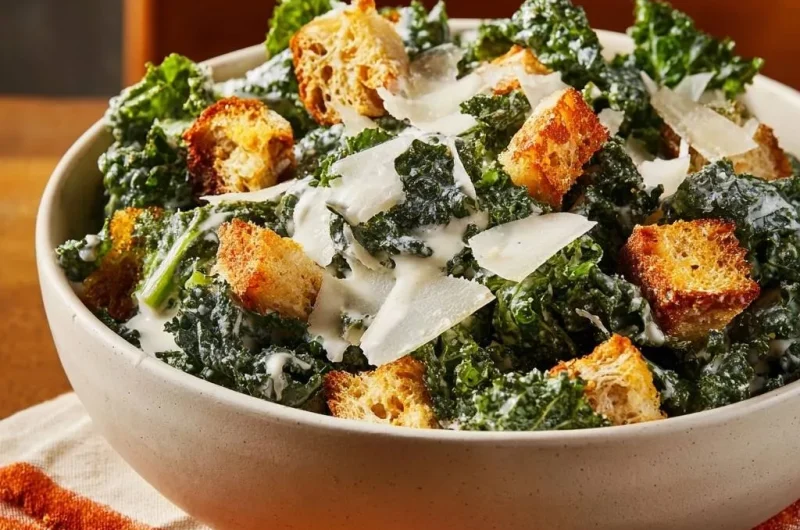
- Give the salad one final gentle toss. To match the visual presentation, ensure several large flakes of Parmesan and golden croutons are nestled on top. Serve immediately. Unlike lettuce, this massaged kale will remain tender and won’t wilt for several hours.
Notes
- Massaging the kale is the critical step to ensure the leaves are soft and supple rather than tough and bitter. Unlike traditional lettuce salads, this kale salad holds up well for several hours without wilting.