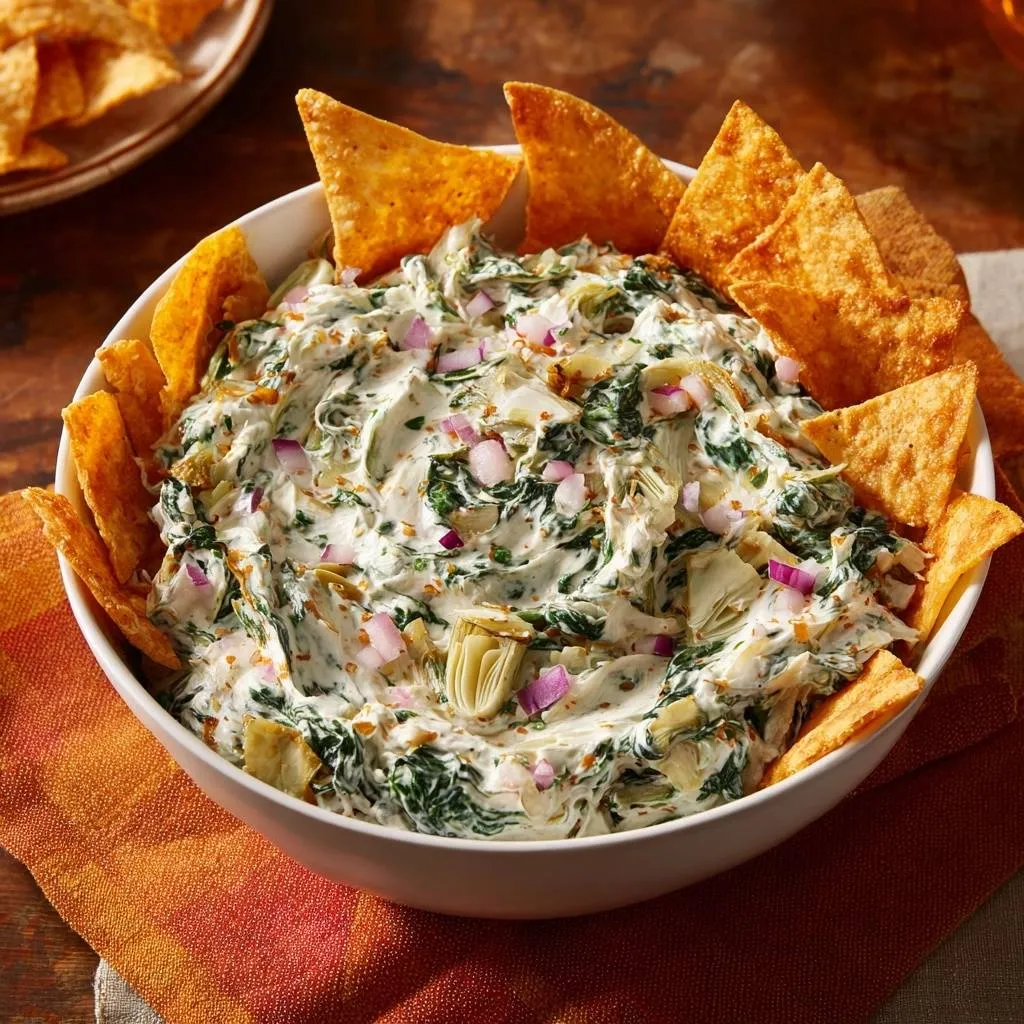
We’ve all been there: you pull a beautiful spinach artichoke dip out of the oven only to find a pool of green water sitting at the bottom of the bowl. It’s a total mood killer when your chips turn into soggy sponges instead of carrying a thick, rich scoop of cheesy goodness. This common failure happens because frozen spinach and canned artichokes hold massive amounts of hidden moisture that release the second they hit the heat.
The secret to a restaurant-quality dip isn’t a fancy ingredient; it’s a specific moisture-locking technique that ensures a thick, velvety texture every single time. By moving away from the unpredictable oven and using a controlled stovetop method, you can preserve the bright colors and achieve a perfect emulsion. This recipe focuses on density and stability, giving you that iconic “cheese pull” without the greasy runoff.
For another creamy and non-watery delight, check out this cheesy spinach artichoke lasagna.
I’ve found that the real trick lies in the “Double-Squeeze” method, which I’ll walk you through below. If you’ve ever wondered why your home version feels thin compared to your favorite gastropub, it’s likely because of the water weight hiding in your greens. Once you master the art of the bone-dry vegetable base, you’ll never go back to the watery versions of the past.
Why Most Spinach Artichoke Dips Fail
Most recipes fail because they underestimate the physics of moisture in preserved vegetables. When spinach is frozen, the water inside its cells expands and ruptures the cell walls. Once thawed, that water is no longer trapped inside the plant; it’s just waiting to leak out into your cream cheese base.
Canned artichokes present a similar problem because they are porous and soak up brine like a sponge. If you simply drain them in a colander, the interior remains saturated. When you bake the dip in the oven for twenty minutes, that heat acts as a press, forcing all that hidden liquid out into the bottom of your dish.
Furthermore, the long, dry heat of an oven often causes the fats in the cheese to break. Instead of a cohesive sauce, you end up with a separated mess where oil sits on top and water sits on the bottom. The stovetop method allows you to monitor the emulsion in real-time, ensuring the proteins and fats stay bonded for a silky finish.
Essential Components for a Thick Creamy Base
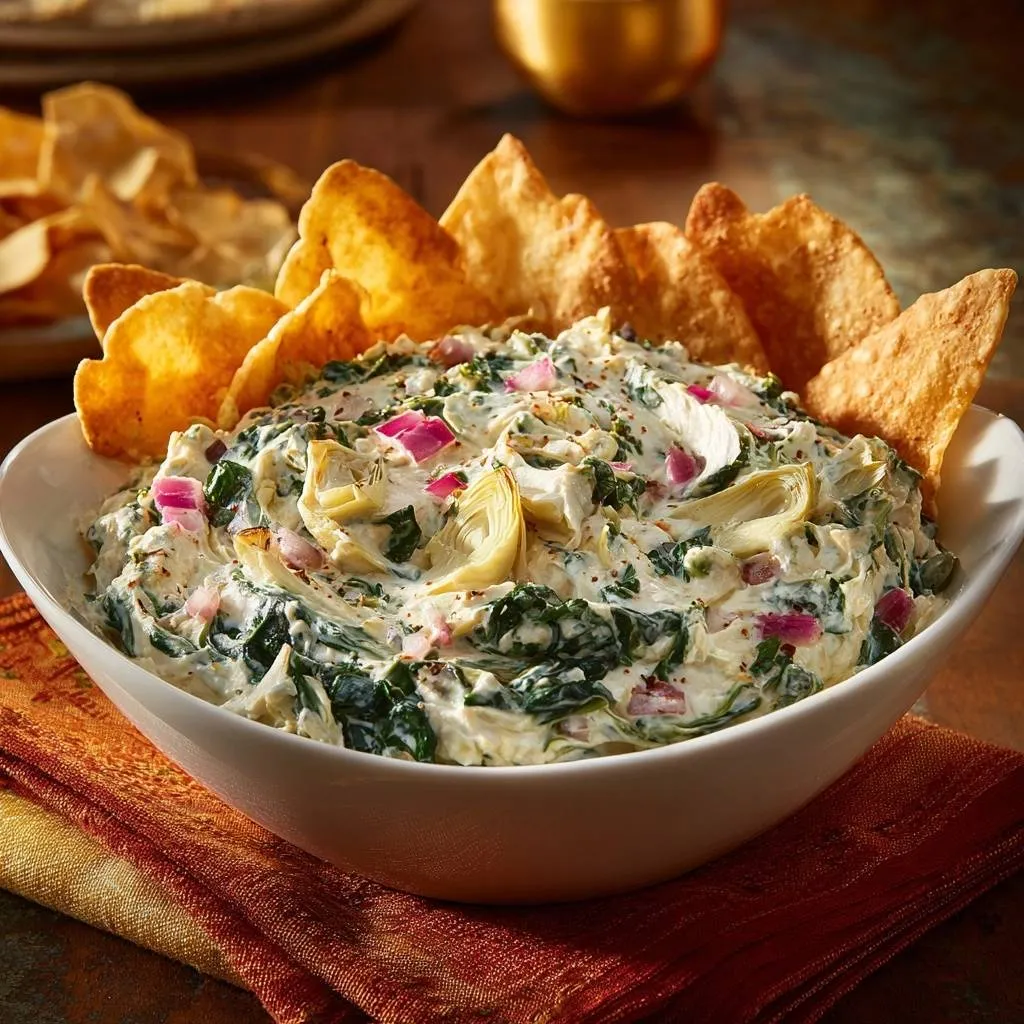
A sturdy dip requires a three-part dairy foundation that balances structure, tang, and silkiness. Cream cheese is the heavy lifter here, providing the thick body that allows the dip to stand up on a chip. Always use the full-fat brick variety, as the stabilizers in low-fat versions often fail under heat, leading to a grainy texture.
Sour cream adds a necessary lactic acidity that cuts through the richness of the cheese. It provides a bright “zing” that keeps the dish from feeling too heavy on the palate. Meanwhile, a small amount of mayonnaise acts as a powerful emulsifier. Because mayo is an egg-based emulsion, it helps bridge the gap between the fats and the moisture, keeping the sauce smooth and glossy.
Using room temperature cream cheese is a non-negotiable step for success. If you try to melt a cold block of cheese into the other ingredients, it will break into tiny, stubborn clumps. Let it sit on the counter for at least an hour so it whisks into the sour cream like velvet.
Selecting the Right Spinach and Artichokes
While fresh spinach is great for salads, frozen chopped spinach is actually superior for this dip. Frozen spinach is blanched before freezing, which means it’s already shrunk down to its most dense form. You would have to sauté and shrink several pounds of fresh leaves to get the same concentration of greens found in one small frozen box.
For the artichokes, look for hearts packed in water or brine rather than the marinated jars. Marinated artichokes are delicious, but the oil they are packed in can interfere with the cheese emulsion and make the dip feel greasy. Brine-packed hearts offer a clean, tangy flavor that complements the garlic and parmesan perfectly.
The Role of High-Melting Point Cheeses
Mozzarella is the king of the “cheese pull,” providing that stretchy, elastic quality everyone loves. However, mozzarella is relatively mild in flavor, which is why we pair it with freshly grated Parmesan. The Parmesan acts as a natural flavor enhancer, providing a salty, umami backbone that seasons the entire dish.
I strongly recommend grating your own cheese from a block. Pre-shredded cheeses are coated in potato starch or cellulose to prevent clumping in the bag. That coating prevents the cheese from melting into a cohesive sauce and can leave your dip feeling gritty or powdery. A quick pass over a box grater makes a world of difference in the final mouthfeel.
The Double-Squeeze Technique for Maximum Density
This is the most important part of the entire process. Once your spinach is thawed, don’t just press it with a spoon. Place the spinach in the center of a clean, lint-free kitchen towel or a few layers of heavy-duty cheesecloth. Gather the corners to create a bundle and twist it with all your might over the sink.
You will be shocked at how much green liquid comes out—sometimes up to half a cup! Keep twisting until you can’t squeeze out another drop. The spinach should look like a tight, dry ball of moss. Repeat this exact same process with your chopped artichokes. They are sturdier than spinach, but they still hold a surprising amount of brine in their leaves.
When you finish, the vegetables should feel almost “bone-dry” to the touch. This ensures that when they hit the warm cream base, they absorb the flavors of the garlic and cheese rather than diluting the sauce. This density is what allows the dip to stay thick even as it cools on the table.
Step-by-Step: Executing the Perfect Stovetop Melt
Start by placing your saucepan over medium-low heat. Add the softened cream cheese, sour cream, and mayonnaise all at once. Use a silicone spatula to stir and smear the mixture against the sides of the pan. You want to see the three ingredients transform into a single, uniform liquid that looks like heavy cream.
Keep the heat low during this stage. If the pan gets too hot, the proteins in the cream cheese can tighten up and become grainy. You are looking for a gentle melt, not a simmer. Once the base is completely smooth and glossy, you are ready to build the flavor profile.
Integrating the Aromatics and Greens
Stir in your minced garlic and black pepper. You only need about 60 seconds here. You’ll know it’s ready when the kitchen starts to smell like a classic Italian bistro. Be careful not to let the garlic brown, as toasted garlic can turn bitter and overpower the delicate artichokes.
Now, fold in your “bone-dry” spinach and artichokes. Use a folding motion rather than aggressive stirring to keep the artichoke chunks intact. Stir for about 2-3 minutes. You want the vegetables to be fully coated and heated through so they don’t drop the temperature of the cheese when it’s added in the next step.
Achieving the Final Emulsified Stretch
Turn the heat down to the lowest setting and sprinkle in the shredded mozzarella and parmesan. Stir gently in a circular motion. As the cheese melts, the dip will transform from a loose sauce into a thick, stretchy mass that clings to the spatula. This should only take about a minute.
As soon as the cheese is melted and the dip looks cohesive, remove it from the heat immediately. Overcooking at this stage is the leading cause of “breaking,” where the oil separates from the solids. The dip should look thick, creamy, and incredibly stretchy as you transfer it to your serving bowl.
Troubleshooting Common Creamy Dip Issues
If you notice oil pooling on the surface of your dip, the emulsion has likely broken due to high heat. Don’t panic! You can often fix this by adding a tablespoon of warm milk or heavy cream and whisking vigorously off the heat. The extra liquid helps the fats re-incorporate into the sauce.
If the dip feels too thick to scoop without breaking a chip, stir in a splash of milk one teaspoon at a time until it reaches your desired consistency. Remember that the dip will naturally thicken as it sits on the table, so starting with a slightly softer texture is usually a good idea for parties.
For a dip that tastes a bit flat, the culprit is usually a lack of acidity or salt. Even though we use Parmesan, a tiny squeeze of fresh lemon juice or an extra pinch of black pepper can wake up the flavors. Always taste a small bit on a chip before serving, as the saltiness of your chips will affect how much seasoning the dip needs.
Flavor Variations and Ingredient Swaps
If you want to add a little kick, stir in a half-teaspoon of red pepper flakes or some finely diced pickled jalapeños. The vinegar from the jalapeños works beautifully with the rich cream cheese. Just make sure to pat the peppers dry first to maintain our low-moisture rule.
For a more sophisticated flavor profile, try swapping the mozzarella for Gruyère or Fontina. Gruyère adds a nutty, earthy note that pairs exceptionally well with artichokes. You can also add sun-dried tomatoes for a pop of color and sweetness, provided they are oil-packed and well-drained.
Optimal Pairings: Beyond the Standard Chip
Because this dip is so dense and thick, you need a dipping vessel with some structural integrity. Thin, “restaurant-style” tortilla chips will snap the moment they hit the dip. Look for “thick-cut” or “kettle-cooked” corn chips that can handle the weight of a heavy scoop.
Toasted sourdough crostini are another fantastic option. The slight sourness of the bread complements the dip, and the crunch provides a great textural contrast. If you want a lighter option, use sturdy vegetables like jicama sticks, thick bell pepper spears, or blanched broccoli florets. Avoid watery veggies like cucumber, which can dilute the dip as you eat.
Make-Ahead Strategy and Storage Logistics
You can easily prep the components of this dip 24 hours in advance. Squeeze the spinach and artichokes until dry and store them in an airtight container in the fridge. You can also shred your cheeses and mince the garlic ahead of time. When you’re ready to serve, the actual cooking process only takes about ten minutes.
I don’t recommend freezing this dip. Dairy-heavy sauces tend to undergo “syneresis” when frozen and thawed, meaning the water and fats will separate completely, leaving you with a grainy, oily mess. It is much better to make it fresh or store leftovers in the fridge for up to three days.
To reheat leftovers, use the stovetop or a very low setting on the microwave. If using the microwave, heat in 30-second bursts and stir well in between. If the dip looks a little stiff after being in the fridge, add a teaspoon of milk before reheating to restore that creamy, dip-able texture.
Expert Tips for Professional Presentation
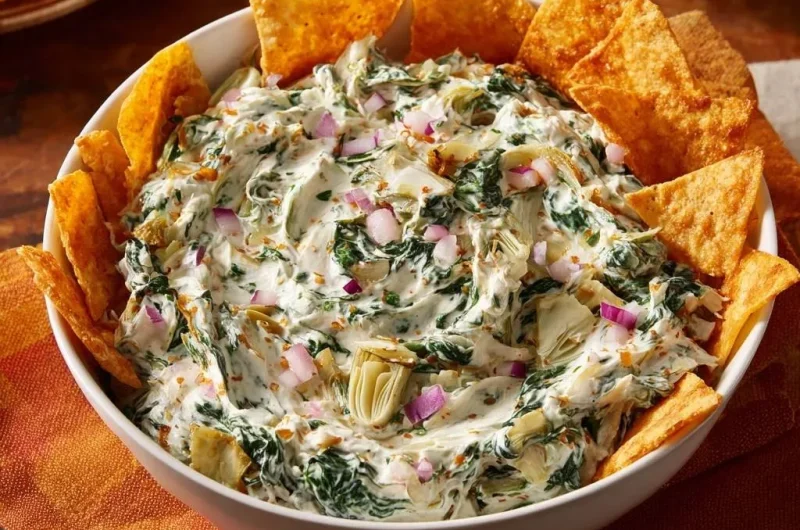
Presentation is all about contrast. The dip itself is quite pale, so garnishing with finely diced red onion provides a beautiful pop of purple and a sharp, fresh crunch. I also like to save a few larger pieces of artichoke heart to place right on top so guests can see the star ingredient.
For a gastropub look, tuck your chips vertically around the edges of the bowl. This not only looks great but also makes it easier for guests to grab a chip without getting their fingers messy. Serve it in a warm ceramic bowl to help retain the heat for as long as possible during the party.
Frequently Asked Questions
Can I use fresh spinach instead of frozen?
You can, but it requires much more work. You would need to sauté about 1.5 pounds of fresh spinach, let it cool completely, and then perform the “Double-Squeeze” method. Frozen spinach is preferred here because it is already blanched and much more physically dense, which leads to a thicker dip.
Why is my dip grainy or sandy?
Graininess usually happens for two reasons: using pre-shredded cheese or overheating the dairy. Pre-shredded cheese is coated in cellulose (wood pulp) to prevent clumping, which doesn’t melt smoothly. Additionally, if the cream cheese gets too hot too fast, the proteins can clump together. Always use block cheese and keep the heat on medium-low.
How do I keep the dip warm for a party?
The best way to keep this dip warm without a slow cooker is to serve it in a heavy stoneware or cast-iron dish that has been pre-warmed in the oven. These materials hold heat much longer than glass or plastic. If you must use a slow cooker, keep it on the “warm” setting and stir every 20 minutes to prevent the edges from scorching.
Can I bake this recipe in the oven instead?
While this recipe is optimized for the stovetop to prevent wateriness, you can bake it. Follow the steps to combine everything in the pan first, then transfer to a baking dish. Top with extra cheese and broil for 2-3 minutes until bubbly. However, the stovetop method is safer for maintaining a perfect, un-separated emulsion.
What is the best way to reheat leftovers?
Avoid high heat when reheating. Place the leftovers in a small saucepan over low heat and add a splash of milk or cream. Stir constantly as it warms up. This helps “re-emulsify” the fats and proteins, ensuring the dip becomes creamy again rather than turning into a pool of oil.
Spinach Artichoke Dip
Course: AppetizerCuisine: AmericanDifficulty: easy8
servings15
minutes5
minutes245
kcal20
MinutesA foolproof, creamy stovetop dip featuring a specific moisture-locking technique to ensure a thick, scoopable texture using frozen spinach and canned artichokes.
Ingredients
10 ounces frozen chopped spinach, thawed
14 ounces canned artichoke hearts, drained and roughly chopped
8 ounces cream cheese, softened
1/2 cup sour cream
1/4 cup mayonnaise
1 cup shredded mozzarella cheese
1/2 cup grated parmesan cheese
2 cloves garlic, minced
1/2 teaspoon black pepper
1/4 cup finely diced red onion (for garnish)
1 bag thick-cut corn tortilla chips
Directions
- The most critical step to prevent a watery dip is the “Double-Squeeze” method. Place your thawed spinach in a clean kitchen towel. Wring it out with all your strength until no more liquid drips out. Repeat this exact process with the chopped artichoke hearts. If you skip this, your dip will be soggy.
- In a large saucepan or skillet over medium-low heat, combine the softened cream cheese, sour cream, and mayonnaise. Stir constantly until the mixture is melted and completely smooth.
- Add the minced garlic and black pepper. Cook for 1 minute until fragrant.
- Fold in the bone-dry spinach and squeezed artichokes. Stir for 2-3 minutes until the vegetables are heated through and well-incorporated into the cream base.
- Turn the heat to low and add the mozzarella and parmesan cheese. Stir gently just until the cheese is melted and the dip is thick and stretchy. Do not overcook, or the oils will separate.
- Transfer the hot dip immediately to a serving bowl.
- Garnish the top with the finely diced red onion and a few extra pieces of artichoke for visual texture.
- Tuck sturdy corn tortilla chips around the edges of the bowl as shown in the image. Serve immediately while warm and creamy. Because you removed the excess moisture, the dip will remain thick and scoopable without any pooling liquid.
Notes
- The ‘Double-Squeeze’ method is critical: wring out both the thawed spinach and the chopped artichokes in a kitchen towel to prevent a watery consistency. Do not overcook once the cheese is added to prevent oil separation.