Imagine plunging your fork into a mountain of crisp greens, salty blue cheese, and buttery avocado, only to find a pool of gray water at the bottom of the bowl. It’s the ultimate kitchen heartbreak. A true Cobb salad should be a vibrant, high-contrast masterpiece where every ingredient maintains its distinct personality and crunch.
The secret to this restaurant-quality experience isn’t just about the ingredients; it’s about moisture management. By mastering a few simple layering techniques and a clever avocado-prep hack, you can transform this American classic from a limp side dish into a high-protein main event that stays fresh until the very last bite.
Expertise in salad construction starts with the lettuce. Most home cooks make the mistake of dressing wet leaves, which causes the oil to slide right off. The secret is a double-drying method that ensures your vinaigrette actually clings to the Romaine, creating a protective barrier that keeps the greens from wilting under the weight of the heavy toppings.
The Science of Crispness: Why Salads Wilt
Romaine lettuce has a unique cellular structure with a high water content and a sturdy central rib. However, as soon as you introduce salt or acid from a dressing, a process called osmosis begins. The salt draws moisture out of the lettuce cells, causing them to collapse and turn translucent and soggy.
Moisture management is the defining difference between a mediocre home salad and a premium restaurant version. If your lettuce is even slightly damp from washing, the dressing cannot emulsify with the surface of the leaf. Instead, the water and oil repel each other, leading to a watery mess at the base of your platter. Controlling this surface moisture is the only way to maintain structural integrity.
Essential Components for the Ultimate Loaded Cobb Salad
A great Cobb salad relies on a specific balance of textures and flavors. You need the crunch of the Romaine, the creaminess of the avocado and blue cheese, and the chew of the proteins. Using freshly grated or crumbled components rather than pre-packaged versions significantly improves the mouthfeel and flavor profile.
Romaine is the non-negotiable base here because its ribs provide the necessary “scaffolding” to support heavy toppings like hard-boiled eggs and bacon. While other greens might taste great, they lack the vertical strength required for a loaded presentation. High-fat components like blue cheese and avocado aren’t just for flavor; they help coat the palate and balance the sharp acidity of the red grape juice vinaigrette.
Selecting and Preparing the Protein Base
For the chicken, skip the large, chunky cubes. Finely shredded chicken breast is superior because it offers more surface area for the dressing to cling to. It also sits flatter on the lettuce bed, which prevents the greens from being crushed by heavy, uneven weights.
Always ensure your chicken is completely chilled before adding it to the platter. Adding warm chicken to a cold salad creates steam, which is the fastest way to wilt your Romaine. If you’re using leftovers, shred them while cold to keep the fibers intact and prevent the meat from becoming mushy.
The Role of Pungent and Creamy Textures
The choice of blue cheese can change the entire character of the dish. A sharp Roquefort provides a salty punch, while a Gorgonzola Dolce offers a milder, creamier finish. Whichever you choose, keep the crumbles generous to match the visual density of the other rows.
Red onions provide a necessary bite, but they can easily become overpowering. The key is to dice them as finely as possible. This ensures you get a hint of sharp onion flavor in every forkful without a single piece dominating the other delicate ingredients like the egg or avocado.
Step-by-Step: Engineering the Perfect Salad Assembly
Building a Cobb salad is an exercise in culinary engineering. You aren’t just tossing things in a bowl; you’re strategically placing them to ensure the best possible texture and visual appeal. Follow these phases to ensure your salad looks as good as it tastes.
Phase 1: The Critical Drying Process
Water is the absolute enemy of a good emulsion. After washing your Romaine, run it through a salad spinner at high speed. Don’t stop there, though. Spread the leaves out on a clean kitchen towel or paper towels and pat them dry until there isn’t a single visible droplet.
If the leaves are bone-dry, the oil-based dressing will coat them evenly. If they are wet, the dressing will simply slide off and pool at the bottom. This extra two minutes of drying is the single most important step in preventing a soggy salad.
Phase 2: Emulsifying the red grape juice Vinaigrette
A stable vinaigrette requires a binder to keep the oil and vinegar from separating. In this recipe, the Dijon mustard acts as that bridge. Whisk the vinegar, mustard, and honey together first until they are completely combined and smooth.
Slowly stream in the olive oil while whisking vigorously. You’ll see the mixture transform from two separate liquids into a thick, creamy, and opaque sauce. This stable emulsion ensures that every bite of the salad has a consistent flavor and that the fats don’t break and make the greens greasy.
Phase 3: The Acid-Barrier Avocado Hack
Nothing ruins the look of a Cobb salad faster than gray, oxidized avocado. To prevent enzymatic browning, slice your avocado last. Before placing the wedges on the salad, lightly spritz them with a tiny bit of the red wine vinegar from your dressing ingredients.
The acid in the vinegar creates a pH barrier that slows down the oxidation process. This keeps the avocado looking bright, vibrant green for hours. It’s a much more effective method than just leaving the pit in the bowl, which is a common kitchen myth that doesn’t actually work.
Phase 4: The Strategic Platter Layout
Ditch the deep mixing bowl and reach for a wide, shallow platter. A deep bowl causes the ingredients at the bottom to get crushed and suffocated, leading to rapid wilting. A wide platter distributes the weight of the toppings evenly across the lettuce base.
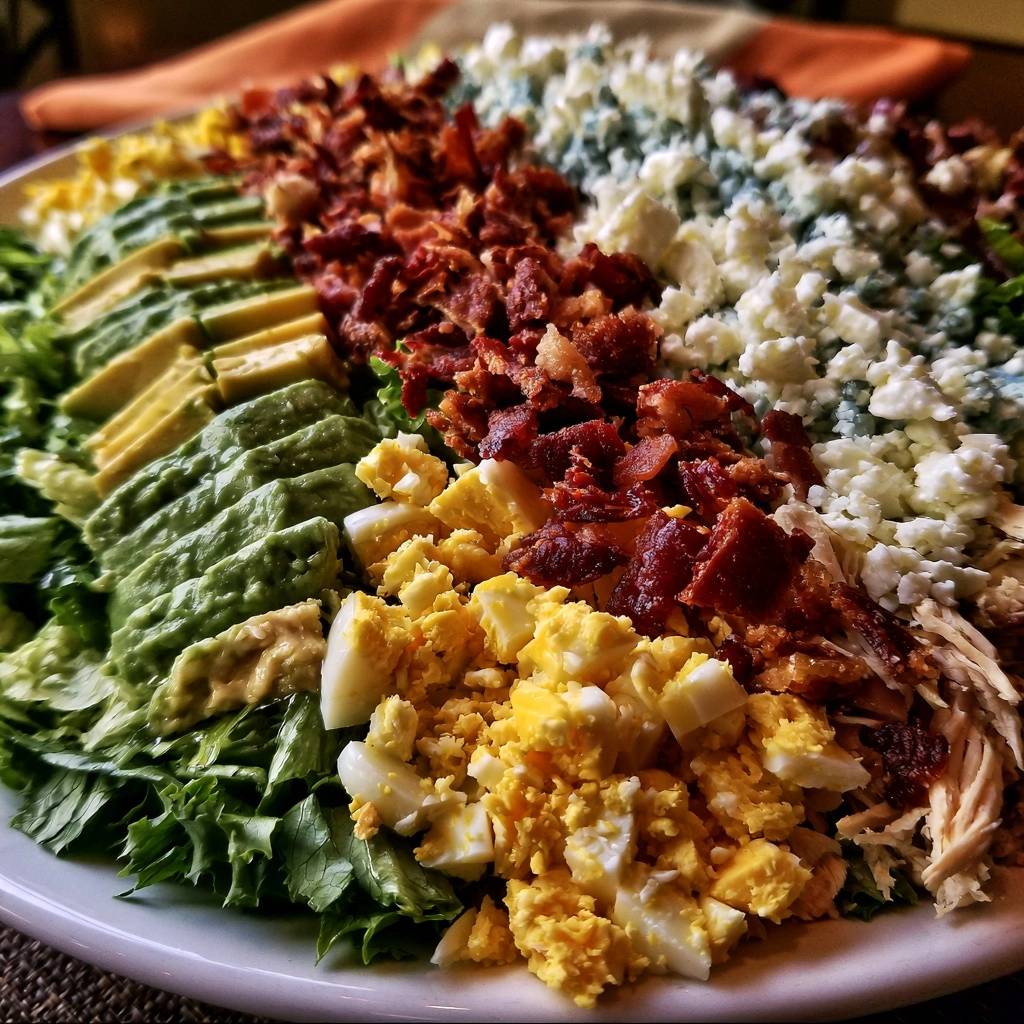
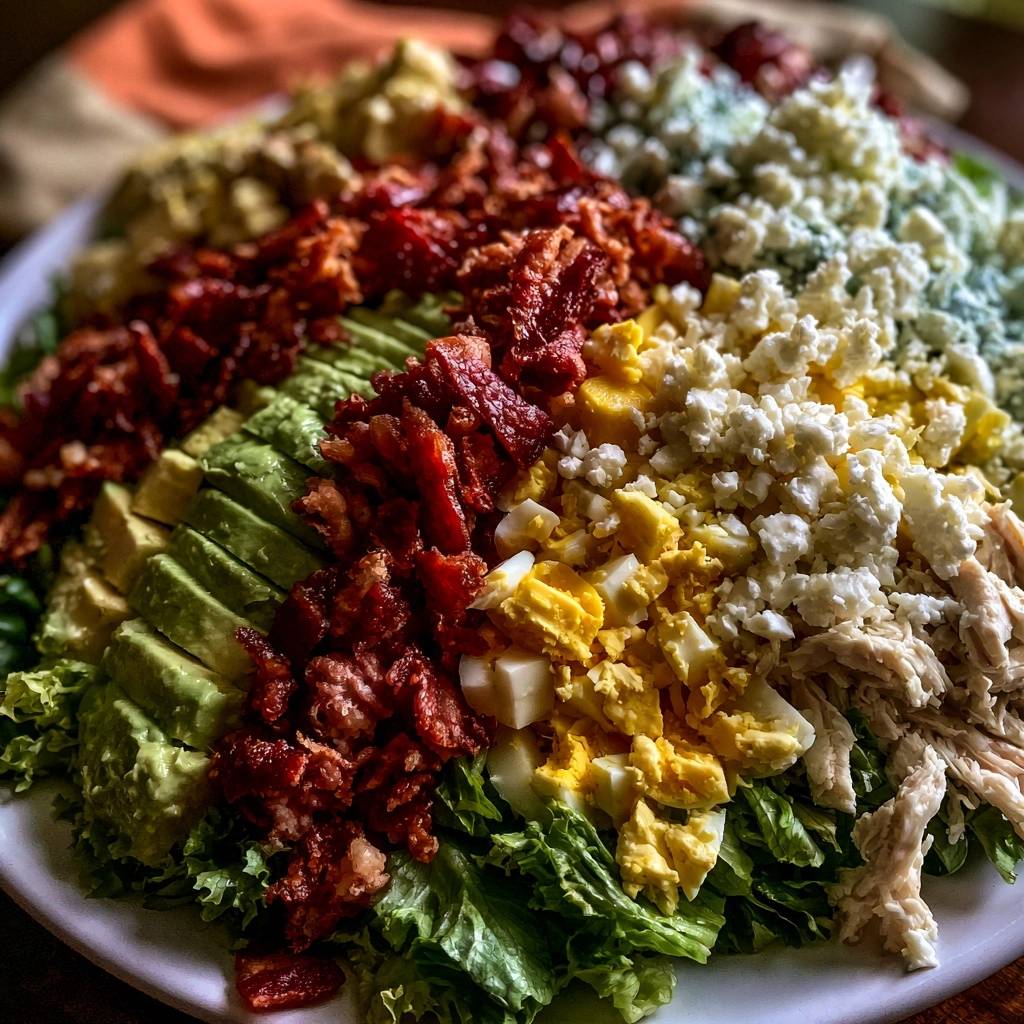
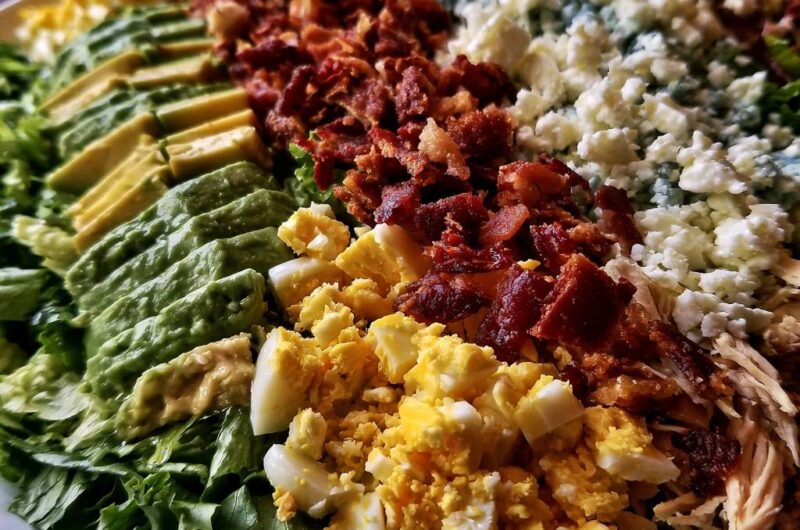
Lay your ingredients in tight, distinct diagonal rows. Start with the shredded chicken, then the blue cheese, bacon, eggs, and finally the avocado. This “Row Method” isn’t just for looks; it allows guests to see exactly what they’re getting and prevents the lettuce underneath from collapsing under a concentrated pile of heavy toppings.
Flavor Variations and Ingredient Swaps
While the classic Cobb is iconic, you can easily adapt it to your pantry. If blue cheese is too aggressive for your taste, a salty feta or a mild goat cheese makes an excellent substitute. Both offer that creamy contrast without the pungent “funk” of a traditional blue.
For a different protein profile, try using smoked turkey breast instead of chicken. It adds a deep, savory note that pairs beautifully with the crispy bacon. You can also add a handful of sliced radishes or microgreens if you want to introduce a peppery, garden-fresh element to the mix.
Avoiding Common Cobb Salad Mistakes
If your dressing tastes too sour, don’t panic. Simply whisk in an extra half-teaspoon of honey to balance the acidity of the red wine vinegar. The goal is a bright tang, not a sharp sting that makes you wince.
Chewy bacon is another common pitfall. To get that perfect crumble, cook your bacon over medium-low heat to slowly render out the fat. This results in a crisp, brittle texture that shatters when you bite into it, rather than a rubbery piece that pulls out of the salad.
Finally, watch your eggs. An overcooked egg with a gray-green ring around the yolk is unappealing. Use the 9-minute boil rule: place eggs in boiling water for exactly nine minutes, then immediately plunge them into an ice bath to stop the cooking and keep the yolks bright yellow.
Optimal Serving and Pairing Suggestions
This salad is a nutritional powerhouse, so it doesn’t need much to accompany it. A thick slice of toasted sourdough bread is perfect for mopping up any leftover vinaigrette. If you’re serving this for a summer lunch, a chilled bowl of gazpacho provides a refreshing contrast.
Temperature control is vital for the best experience. If possible, chill your serving platter in the refrigerator for 15 minutes before assembling the salad. Serving on a cold plate helps maintain the crispness of the Romaine and keeps the avocado and cheese at their ideal textures.
Expert Troubleshooting: Frequently Asked Questions
Can I use pre-bagged lettuce for this recipe?
You can, but it isn’t ideal. Pre-bagged lettuce is often gas-flushed to stay green, which can lead to a faster breakdown once the bag is opened. If you do use it, make sure to still perform the drying step, as bagged greens often have residual moisture from the packaging process that will make your salad soggy.
How do I make this ahead for a dinner party without it getting soggy?
The best way to prep ahead is to use deconstructed storage. Prep all your toppings (chop the eggs, crumble the bacon, shred the chicken) and store them in separate airtight containers. Wash and dry the lettuce and wrap it in a dry paper towel inside a sealed bag. Assemble the rows and add the dressing only minutes before your guests arrive.
What is the best way to crumble bacon for maximum crunch?
For the best texture, let the bacon cool completely on a wire rack or paper towels until it is room temperature. Once it is cold, it becomes much more brittle. Use a sharp knife to mince it into fine bits rather than breaking it by hand. This creates uniform pieces that distribute better throughout the salad rows.
Why did my dressing separate in the fridge?
Extra virgin olive oil contains natural waxes that crystallize and solidify when they get cold. If you make the dressing ahead of time and refrigerate it, it will likely thicken or separate. Simply take it out of the fridge 20 minutes before serving and give it a vigorous whisk to bring the emulsion back together.
Can I substitute the red wine vinegar?
Yes, apple cider vinegar or fresh lemon juice are the best alternatives. They both provide the necessary acidity to cut through the fatty bacon and cheese. Avoid using balsamic vinegar for a traditional Cobb, as the dark color and sweetness can muddy the clean, bright flavors of the other ingredients.
Ultimate Loaded Cobb Salad
Course: Main CourseCuisine: AmericanDifficulty: easy4
servings20
minutes15
minutes35
Minutes510
kcalAmerican
Ingredients
6 cups chopped Romaine lettuce, washed and thoroughly dried
2 cups cooked chicken breast, finely shredded
4 hard-boiled eggs, finely chopped
8 slices crispy bacon, finely crumbled
1 large avocado, sliced into uniform wedges
3/4 cup blue cheese crumbles (generous portion to match visual density)
1/4 cup red onion, finely diced
For the dressing:
1/3 cup red wine vinegar
1 tablespoon Dijon mustard
1 teaspoon honey (to balance acidity)
2/3 cup extra virgin olive oil
Salt and black pepper to taste
Directions
- The most critical step to prevent sogginess is the drying process. After washing your Romaine, use a salad spinner and then pat the leaves with paper towels. Even a small amount of water will prevent the dressing from sticking and cause the leaves to wilt instantly.
- To solve the brown avocado problem, slice the avocado last and lightly spritz the slices with a tiny bit of the red wine vinegar from your dressing ingredients. This acidic barrier keeps them bright green while you assemble the platter.
- Prepare the dressing by whisking the vinegar, mustard, honey, salt, and pepper in a small bowl. Slowly stream in the olive oil while whisking constantly to create a stable emulsion that won’t break and make the salad greasy.
- Arrange the dried lettuce in a wide, shallow bowl or on a large platter. This distribution prevents the bottom layer from being crushed and becoming watery.
- Following the visual reference, lay the ingredients in tight, distinct diagonal rows across the top of the lettuce. Start with the shredded chicken on one edge, followed by a thick row of blue cheese, then the crumbled bacon, the chopped eggs, and finally the sliced avocado.
- Note: To match the visual presentation, ensure the bacon and eggs are finely minced rather than roughly chopped, and the chicken is shredded to allow it to sit flat under the other toppings.
- Serve the dressing on the side or drizzle it over the salad immediately before eating. By keeping the dressing separate until the moment of service, you guarantee the lettuce maintains its structural integrity and crunch.
Notes
- The secret to preventing sogginess is ensuring the lettuce is completely dry and keeping the dressing separate until the moment of service.