Unlock the Secret: Why These Cookies Stay Chewy for Days
The Melted Butter Technique: Moisture and Density
Unlike softened or cold butter, using melted butter changes the dough structure dramatically. The already melted fat fully coats the flour particles, which slows the hydration process.
This inhibition prevents aggressive gluten development, which is the main culprit behind cakey or stiff cookies. The result is a denser, more uniform dough that retains moisture beautifully throughout the baking process, resisting the urge to dry out.
The Visual Cue: How to Guarantee a Soft, Gooey Center
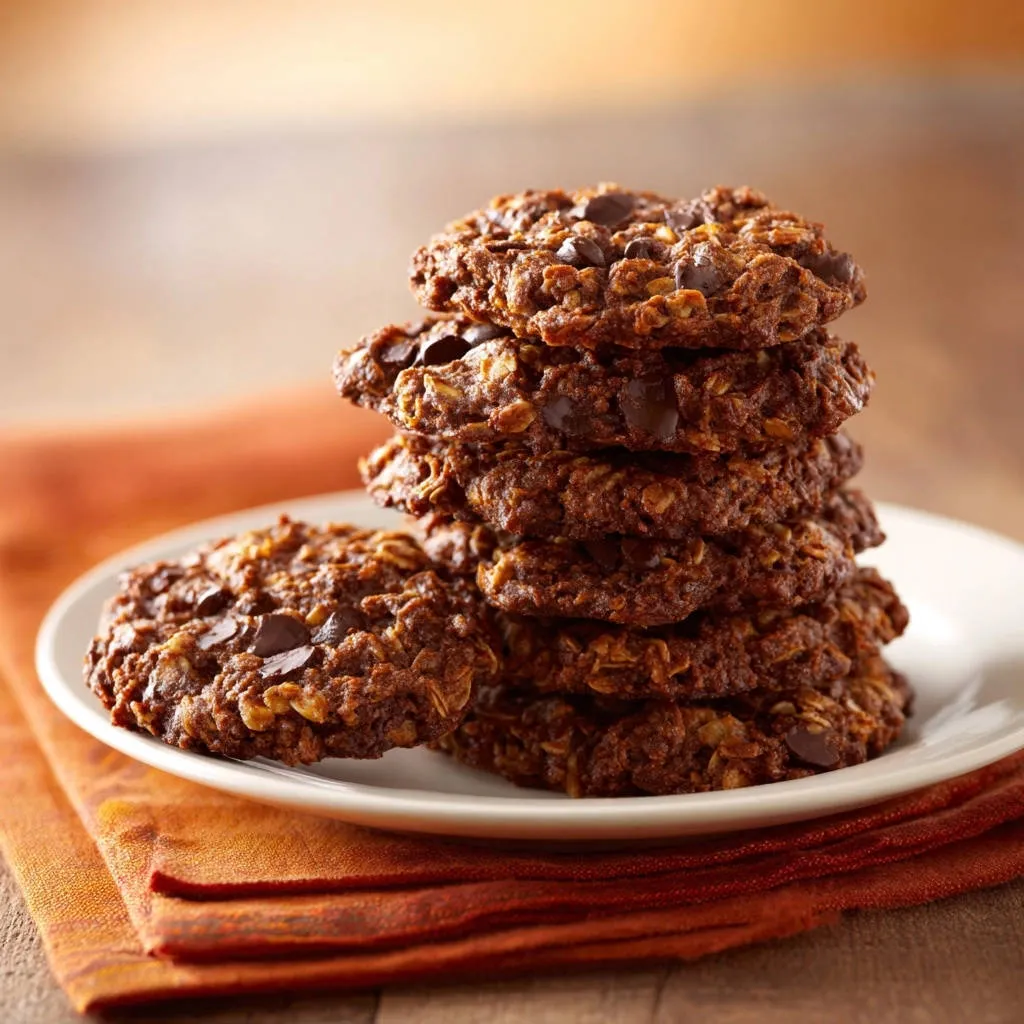
The second key to achieving an irresistible soft center is recognizing the exact moment to pull the cookies from the oven. We are looking for the edges to be visibly set and light brown, but the entire center must still look slightly glossy and underdone.
For more ideas on creative cookie fillings, consider our Red Velvet Cheesecake Stuffed Cookies.
This specific visual cue ensures the cookies are removed while still moist. Residual heat from the baking sheet continues to cook the center while the cookie rests, locking in that signature chew without drying out the interior.
The Flavor Foundation: Essential Ingredients for Triple Chocolate Perfection
The Holy Trinity of Chocolate: Cocoa and Chips
True Triple Chocolate Oatmeal Cookies require three distinct chocolate elements for layered complexity and deep flavor. First, we use unsweetened cocoa powder, which provides the deep, foundational chocolate color and flavor.
More Chocolate Goodness
If you’re craving more chocolate treats, these recipes offer similar rich flavors.
- For a satisfying breakfast or snack that complements the chocolate in your cookies, try these Homemade Chocolate Chip Granola Bars.
- Enjoy another chocolate creation with these Chocolate Peppermint Baked Oats, offering a different texture but the same deep chocolate notes.
The second layer comes from the standard 1 1/2 cups of chocolate chips mixed into the dough, which melt into irresistible pockets of sweetness.
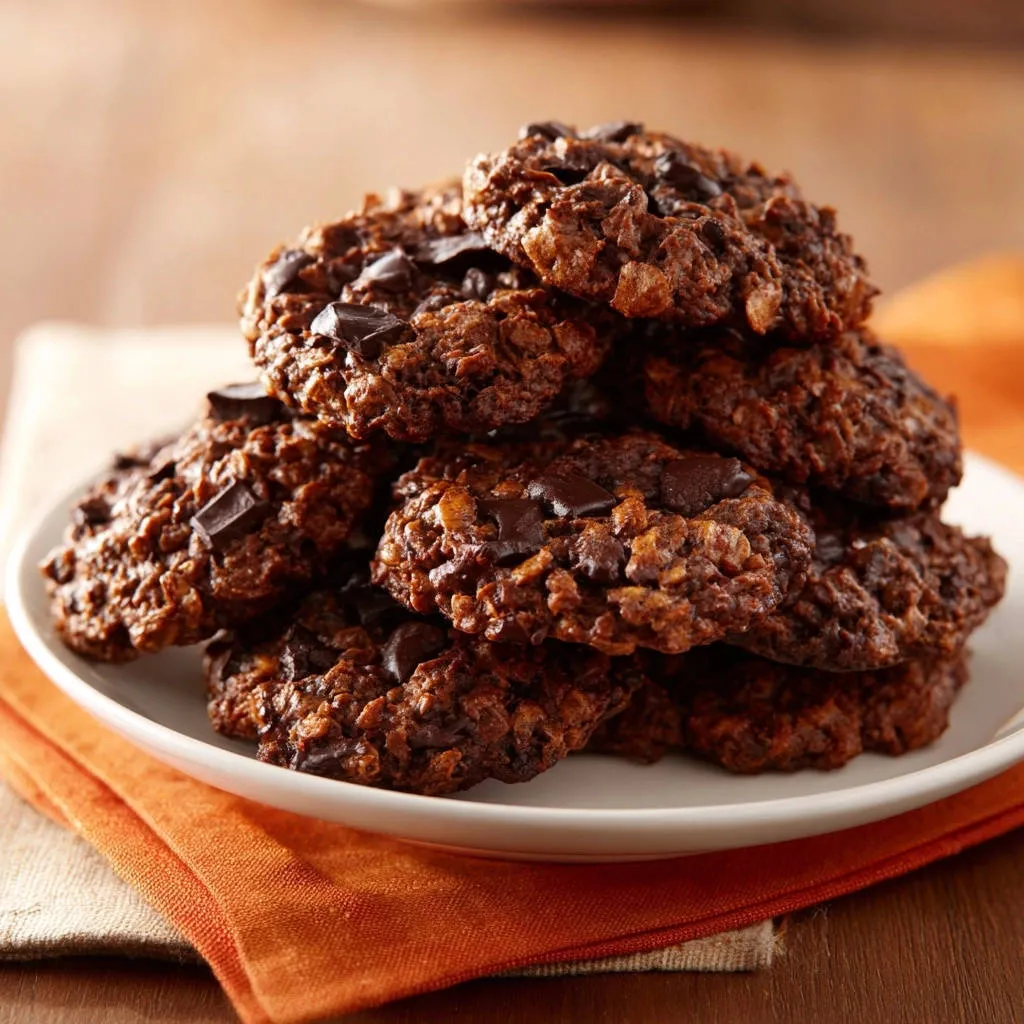
To truly complete the triple effect, I highly recommend folding in half a cup of roughly chopped dark chocolate chunks or adding a simple white chocolate drizzle post-bake for contrasting sweetness.
Choosing the Right Oats: Rolled vs. Quick-Cooking
Structure is crucial in an oatmeal cookie, and old-fashioned rolled oats are non-negotiable for this recipe. Their thicker, larger flake size provides necessary texture and bulk that defines a good chewy cookie.
Quick oats absorb moisture too fast and often turn into a soft mush, leading to a flatter, less structured, and potentially crumbly cookie texture.
For a quicker, no-bake option with oats, try these oatmeal chocolate chip energy bites.
Baking Chemistry: Sugar, Fat, and Leavening Agents
Light brown sugar is vital because its high molasses content introduces moisture and acid into the dough. This component contributes heavily to the guaranteed chewiness and richer color of the final cookie.
Granulated sugar balances this by encouraging necessary spread and ensuring the edges get that satisfying, slightly crisp snap, providing textural contrast.
Baking soda, activated by the acids present in the brown sugar and cocoa powder, provides the essential lift required to prevent the cookies from becoming too dense.
Gear Up: Tools for Seamless Cookie Baking
Why a Standard Ice Cream Scoop is Non-Negotiable
Consistency is key for uniform baking results, preventing some cookies from burning while others remain raw. A standard 3-tablespoon ice cream scoop ensures every portion of cookie dough is the exact same size.
The Parchment Paper vs. Silicone Mat Debate
While silicone mats are wonderful, I prefer parchment paper for these Triple Chocolate Oatmeal Cookies. It promotes easy removal, prevents sticking, and creates a slightly crispier bottom layer without over-browning.
Using a Whisk for Vigor (Instead of an Electric Mixer)
The vigorous whisking step of the melted butter and sugars is intentional and necessary for the chewy texture trick. This manual effort helps emulsify the fat and sugar mixture quickly, which is harder to control with a stand mixer.
From Bowl to Tray: Crafting the Perfect Triple Chocolate Dough
-
Step 1: The Initial Preparation
Preheat your oven immediately to 350 degrees F and line two baking sheets with parchment paper. This preparation ensures you can move quickly once the dough is ready.
In a medium bowl, ensure the flour, cocoa powder, baking soda, and salt are meticulously whisked together. This guarantees that the leavening and flavor are evenly dispersed throughout the dough.
For a similar rich flavor, check out these frosted dark chocolate toffee cookies.
-
Step 2: Implementing the Chewy Texture Trick (Melted Butter)
In a large separate bowl, combine the melted butter, brown sugar, and granulated sugar. You must whisk them vigorously for a full minute, transforming the mixture into a cohesive, moist base.
Reiterate this core technique: the melted butter adds necessary density and moisture, preventing the cookies from drying out and ensuring that critical chewy bite.
-
Step 3: Integrating the Eggs and Vanilla
Whisk the eggs into the sugar mixture one at a time, followed by the vanilla extract. Only mix until they are just incorporated.
Overmixing at this stage can start to develop the gluten prematurely, compromising the final soft and chewy texture.
-
Step 4: The Final Dough: Folding in the Dry Mix
Gradually introduce the dry ingredients to the wet mixture, mixing strictly on the lowest speed or by hand. Stop mixing immediately once the last streaks of flour disappear.
Warning: Overworking the dough once the flour is added is the biggest threat to chewiness. Gently fold in the rolled oats and the chocolate chips last.
-
Step 5: Perfect Portioning and Baking Time
Use the standard 3-tablespoon scoop to portion the dough onto the sheets, maintaining 2 inches of space between each mound for proper airflow and spread. Bake the cookies for 9 to 11 minutes total.
The precise baking time will depend on your oven, so rely heavily on visual cues rather than the clock.
-
Step 6: Achieving Perfect Consistency and Cooling
REITERATE THE SECOND USP: Remove the tray when the edges look set but the center still appears soft and glossy. This guarantees a gooey result.
Let the cookies rest on the hot baking sheet for 5 minutes; this crucial rest period allows the residual heat to perfectly finish the cooking without evaporating interior moisture. Transfer them to a wire rack to cool completely afterward.
Pro-Tips and Troubleshooting for Guaranteed Success
Why I Recommend Chilling the Dough (A Game Changer)
If time allows, chilling the dough for 30 minutes minimum is a major game changer for texture. Chilling solidifies the melted butter, preventing excessive spread in the oven.
This pause results in a thicker, taller cookie with a concentrated, incredibly chewy center.
My Cookies Spread Too Much: Quick Fixes
Excessive spread is often due to slightly too much fat, or an inaccurate oven temperature. Always verify your oven temperature with a thermometer.
Try adding one extra teaspoon of all-purpose flour to the dough to quickly adjust the fat-to-flour ratio without compromising flavor.
Ensuring Rich Chocolate Flavor Without Bitterness
Always use high-quality, unsweetened natural or Dutch-process cocoa powder for the best flavor foundation. Avoid generic brands that can sometimes yield a metallic taste.
Balancing this natural bitterness with the ample amounts of brown and granulated sugar is key to deep, satisfying chocolate notes.
The Role of Salt: Flavor Amplifier, Not Just Seasoning
Salt is essential in this recipe; it doesn’t just season the dough, it actively enhances the deep, earthy profile of the cocoa powder and balances the high sweetness.
Do not omit the half teaspoon of salt, as it provides a necessary foundation for flavor depth.
Creative Twists: Elevating Your Oatmeal Cookie Recipe
Making it Truly ‘Triple Chocolate’: Adding a Ganache or Dip
To ensure the “Triple” claim is met, try dipping the cooled cookies halfway into melted dark or white chocolate. This provides a beautiful aesthetic finish and a crucial third flavor element.
Alternatively, prepare a quick milk chocolate ganache and drizzle it over the cooled treats before serving for an extra layer of richness.
Flavor Enhancements: Espresso Powder and Sea Salt Flakes
Adding one teaspoon of instant espresso powder to the dry ingredients dramatically deepens the chocolate flavor without adding a noticeable coffee taste. Espresso is a powerful natural enhancer for all cocoa-based treats.
For a gourmet finish, sprinkle large, flaky sea salt crystals (like Maldon) onto the cookie dough mounds just before they go into the oven. This creates a delightful salty-sweet finish.
Gluten-Free Flour and Dairy-Free Substitutions That Work
For seamless gluten-free baking, replace the all-purpose flour cup-for-cup with a quality 1-to-1 gluten-free baking blend that includes xanthan gum for structure.
If making them dairy-free, ensure you use high-fat, plant-based butter sticks specifically designed for baking. Softer tub butters contain too much water and will cause excessive spreading.
Storage, Freezing, and Serving Suggestions
Best Practices for Short-Term Storage
Store cooled cookies in an airtight container at room temperature to maintain maximum chewiness.
Expert tip: Throw in a half-slice of plain bread or a small tortilla into the container. The cookies will absorb the bread’s moisture and stay incredibly soft for up to five days.
Freezing Dough vs. Baked Cookies (Make-Ahead Strategy)
I recommend freezing the cookie dough, not the baked cookies, for the best make-ahead result. Scoop the dough balls onto a tray, flash freeze them for an hour until solid, and then transfer the rock-solid scoops to a freezer bag.
When ready to bake, place the frozen dough directly onto the prepared sheets. You will need to add only two to three minutes to the specified baking time.
Common Questions About Triple Chocolate Oatmeal Cookies (FAQ)
Can I use Quick Oats instead of Rolled Oats?
While technically possible, quick oats will drastically change the texture of these chewy oatmeal cookies. They break down too quickly, resulting in a less defined and often mushy crumb.
For true structure and satisfying chew, stick strictly to old-fashioned rolled oats.
How long will the cookie dough last in the fridge?
This cookie dough is very robust due to the melted butter base and can be refrigerated for 3 to 5 days. Just ensure the dough is tightly wrapped to prevent surface drying out before baking.
Why is my cocoa powder making the cookies taste dry or cakey?
This usually happens when dry ingredients are scooped and packed into the measuring cup, meaning you added too much volume. Always spoon dry ingredients lightly into the measuring cup and level them off precisely to avoid excess flour.
What is the ideal pairing for Triple Chocolate Oatmeal Cookies?
The intense, deep chocolate flavor pairs beautifully with cold milk or a robust, hot mug of strong black coffee. For an indulgent dessert, they are incredible served slightly warm alongside a scoop of vanilla bean ice cream or caramel sauce.
Ready to Impress? Share Your Chewy Masterpiece!
You now hold the professional secrets to making the best chewy oatmeal cookies, guaranteed by the simple power of the melted butter technique and precise visual cues.
This expert recipe ensures every bite of your next batch of Triple Chocolate Oatmeal Cookies is perfectly soft, gooey, and richly flavored. Say goodbye to crumbly, disappointing cookies forever. Get baking, and don’t forget to share your beautifully chewy results!
Triple Chocolate Oatmeal Cookies
Course: DessertCuisine: AmericanDifficulty: easy22
cookies20
minutes10
minutes80
kcal35
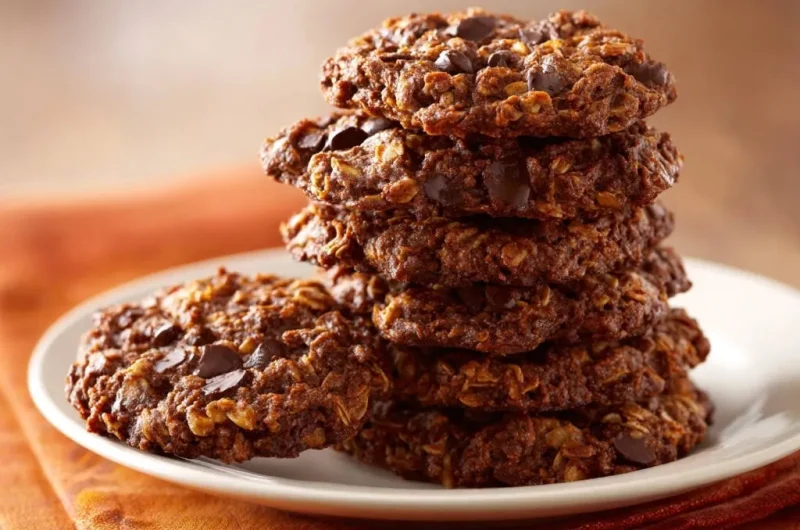
minutesThis recipe solves the age-old problem of dry, crumbly oatmeal cookies. By utilizing melted butter and a special baking technique, these cookies achieve an irresistible soft, gooey center and signature dense chewiness. They are guaranteed to stay moist for days.
Ingredients
1 cup unsalted butter, melted
1 cup light brown sugar, packed
1/2 cup granulated sugar
2 large eggs
1 tablespoon vanilla extract
1 1/2 cups all purpose flour
1/2 cup unsweetened cocoa powder
1 teaspoon baking soda
1/2 teaspoon salt
3 cups rolled oats (old fashioned)
1 1/2 cups chocolate chips
Directions
- Prepare the Batter Base: Preheat your oven to 350 degrees F. Line two baking sheets with parchment paper. In a medium bowl, whisk together the flour, cocoa powder, baking soda, and salt. Set aside.
- Implement the Chewy Texture Trick: In a large separate bowl, combine the melted butter, brown sugar, and granulated sugar. Whisk vigorously for 1 minute until well combined. The use of melted butter, rather than softened, is critical here as it adds density and moisture, preventing the cookies from drying out and ensuring that signature chewy bite.
- Combine Wet Ingredients: Whisk the eggs into the sugar mixture one at a time, followed by the vanilla extract. Mix until just incorporated.
- Finish the Dough: Gradually add the dry ingredient mixture to the wet mixture, mixing on low speed or by hand until just combined. Do not overmix once the flour is added. Gently fold in the rolled oats and chocolate chips.
- Bake: Scoop the dough using a standard ice cream scoop (about 3 tablespoons per cookie) onto the prepared baking sheets, leaving 2 inches between each mound.
- Achieve Perfect Consistency: Bake for 9 to 11 minutes. The edge of the cookies should look set, but the center should still look slightly soft and glossy when you pull them out of the oven. This is the second key step to the chewy center. Allowing the residual heat to finish the cooking process outside the oven locks in the moisture.
- Cool: Let the cookies cool on the baking sheet for 5 minutes before transferring them to a wire rack to cool completely.
Notes
- Melting the butter is essential for achieving the dense, moist texture. Do not overmix the flour or overbake.