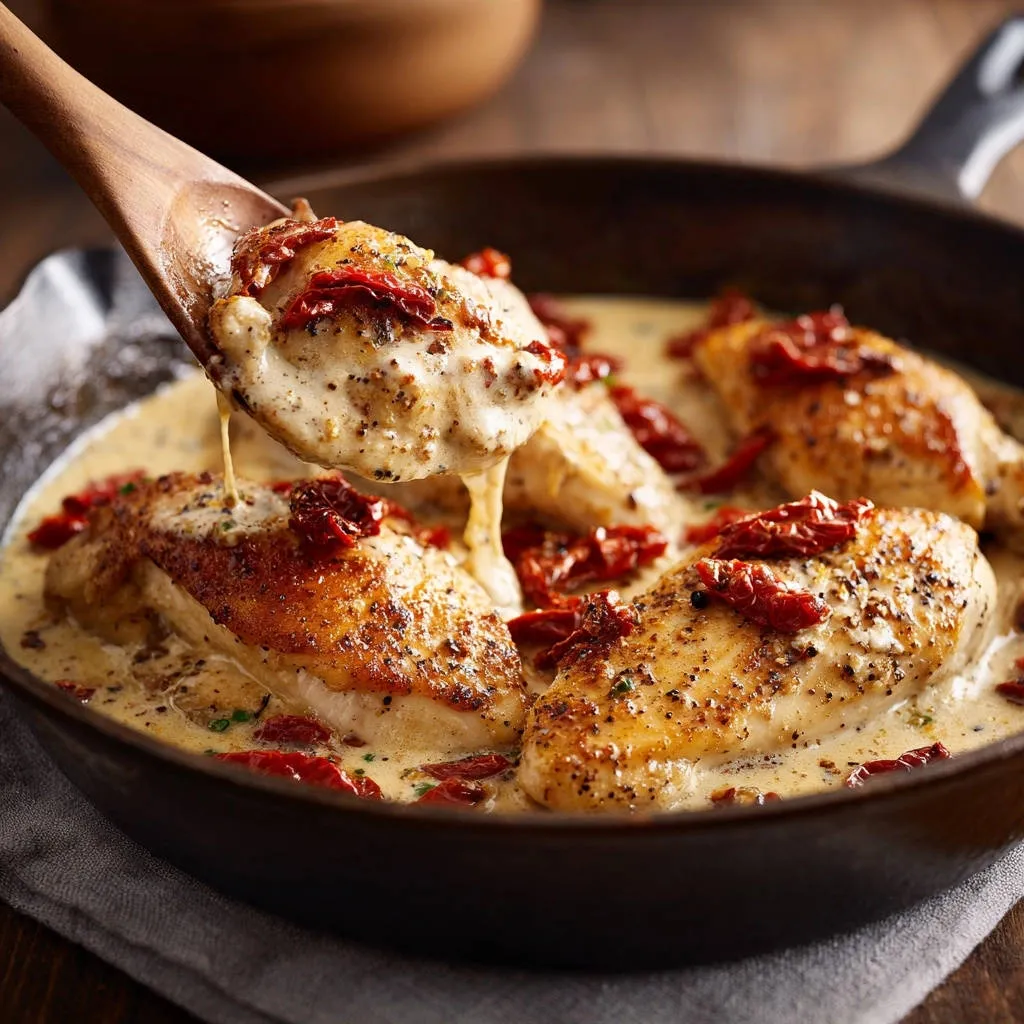
Few things derail a beautiful skillet dinner faster than a rich sauce that suddenly turns thin and watery when the chicken is added back in. I spent years perfecting the technique for truly reliable, restaurant-quality Tuscan Creamy Chicken.
This is the definitive recipe you need, featuring one critical reduction step that guarantees a luscious, clingy sauce that coats every piece of savory chicken perfectly. Say goodbye to runny sauces and hello to your new favorite creamy chicken dish.
For a similar savory experience, consider these creamy Tuscan bacon chicken cutlets.
Why This Tuscan Creamy Chicken Will Be Your Keeper Recipe
The Critical Reduction Trick: Guaranteeing a Clingy Sauce
The secret to preventing a broken or thin sauce lies in reducing the chicken broth by approximately half before the heavy cream is incorporated.
This intensive simmering concentrates the savory flavors and, more importantly, ensures there is minimal water content remaining to destabilize the high-fat dairy emulsion later.
Quick Prep, Gourmet Results: Perfect for Weeknight Dinners
Despite the depth and complexity of flavor, this indulgent meal comes together swiftly, making it ideal for busy weeknights.
The use of boneless chicken breasts, combined with efficient layering of flavors, ensures a satisfying gourmet experience in under 30 minutes.
Mastering the Flavor Base: The Importance of the Fond
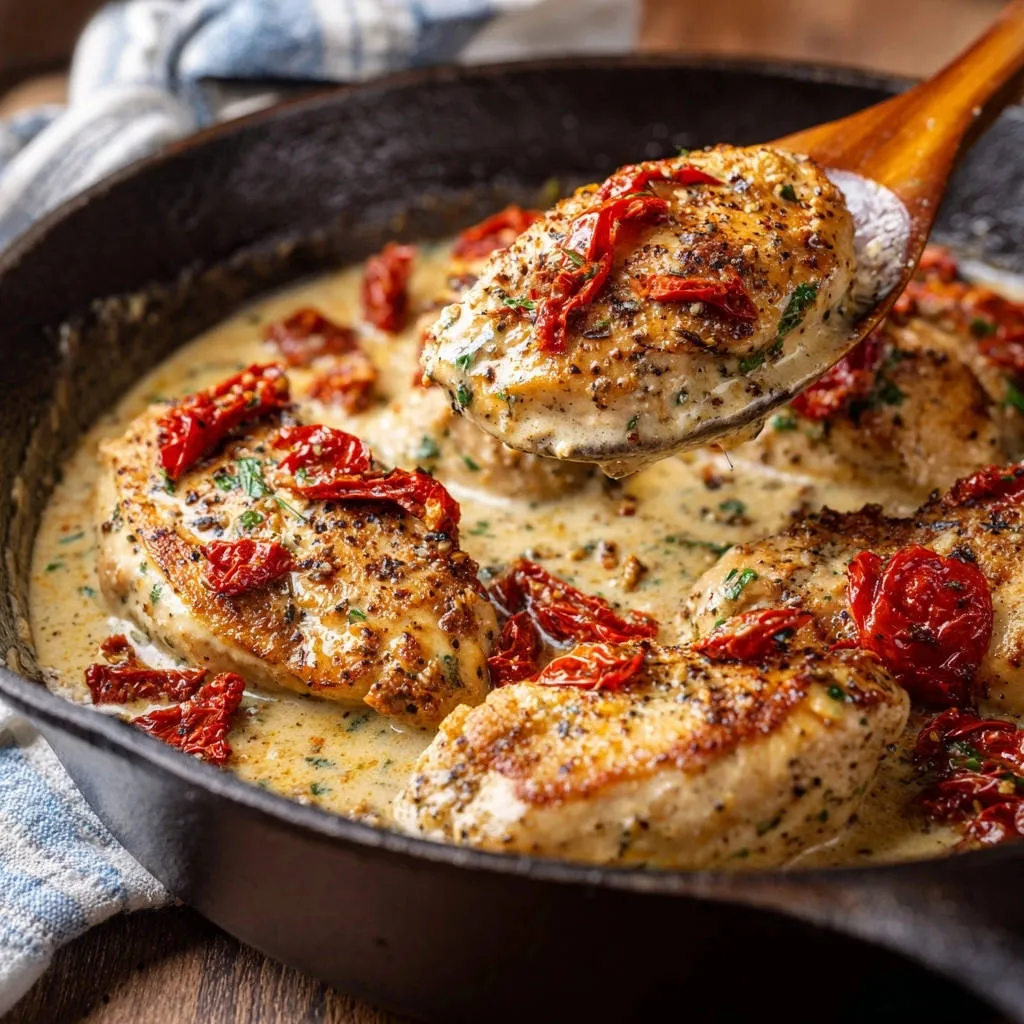
The browned bits stuck to the bottom of the pan-known as the fond-are pure, concentrated flavor and are non-negotiable for an authentic taste.
Scraping these up during the deglazing step with the broth is essential; it forms the intensely savory foundation for the entire velvety sauce.
Essential Ingredients for Authentic Tuscan Flavor
The Perfect Protein: Selecting and Preparing Chicken Breasts
Boneless, skinless chicken breasts are used here for their fast cooking time and tender texture.
It is crucial to pat them completely dry with paper towels before seasoning, as moisture is the enemy of a proper, deep golden-brown sear.
The Creamy Foundation: Heavy Cream and Parmesan
Heavy cream, which has a high fat content (36% or more), is vital because its stability resists splitting or curdling under gentle heat.
Freshly grated Parmesan cheese adds necessary salt, umami depth, and helps naturally thicken the mixture into the perfect consistency.
Aromatic Anchors: Garlic, Sun-Dried Tomatoes, and Herbs
Freshly minced garlic should be cooked briefly-about 60 seconds-to release its pungent aroma without turning bitter.
If using oil-packed sun-dried tomatoes, ensure they are thoroughly drained to prevent excess oil from pooling in the finished sauce.
The Salty Contrast: Chicken Broth
Chicken broth serves as the ideal liquid for deglazing, effectively releasing the fond while harmonizing with the Italian seasoning.
The specified volume is calibrated to allow for the crucial high-heat reduction step that concentrates the flavor base.
Essential Tools for Your Skillet Adventure
Why Cast Iron Reigns Supreme for Tuscan Creamy Chicken
A heavy cast iron skillet is highly recommended for this meal due to its exceptional heat retention.
This reliable, steady heat allows you to achieve the deep, consistent sear necessary for maximal browning and fond development.
The Deglazing Duo: Wooden Spoons and Heat-Proof Spatulas
A sturdy wooden spoon or a silicone spatula is the ideal tool for aggressively scraping the bottom of the pan during deglazing.
These materials effectively lift the browned bits without scratching the surface of a cast iron or quality stainless steel pan.
Step-by-Step Mastery: Cooking Your Tuscan Creamy Chicken
- Season and Dry the Chicken:
Ensure the chicken is completely dry before seasoning with salt and pepper. This is the single most important action for achieving a deep, golden crust that seals in juices.
- Heat and Sear:
Wait until the combination of olive oil and butter is melted and foaming before adding the chicken. Sear undisturbed for the full recommended time (5-7 minutes) to maximize browning and build the necessary fond for the sauce base.
- Aromatics and Base:
Reduce the heat and cook the garlic and sun-dried tomatoes just until fragrant (about 60-90 seconds).
Be vigilant here to prevent burning the garlic, which occurs quickly and will instantly turn the entire sauce bitter.
- The Anti-Watery Reduction:
Pour in the broth and immediately scrape the pan aggressively using your wooden spoon to release all the flavor bits (fond).
Bring to a strong simmer and reduce the liquid by half; this high heat concentration step removes excess moisture and ensures the sauce will cling perfectly when the cream is introduced.
- Finishing the Cream Sauce:
Reduce the heat to low before stirring in the heavy cream and the rest of the salt and pepper. Add the grated Parmesan slowly.
High heat can cause the cream to split or the cheese proteins to seize instantly, resulting in a grainy texture.
- Nestle and Simmer:
Return the seared chicken breasts to the skillet and nestle them into the sauce.
Simmer gently for 5-8 minutes, turning the chicken once, until the internal temperature reaches 165°F (74°C) and the sauce clings tightly to the chicken.
- Garnish and Serve:
Fresh parsley is crucial for adding a burst of color and a bright, herbaceous freshness that cuts through the richness of the cream.
Phase 1: Achieving the Perfect Sear
Phase 2: Building the Flavor Bomb and The Reduction (The Secret Step)
Phase 3: Velvety Sauce and Final Combine
Chef’s Secrets: Elevating Your Tuscan Creamy Chicken Game
The Optimal Temperature for Adding Parmesan
Ensure the sauce is simmering very gently, or even taken off the direct heat momentarily, before stirring in the Parmesan.
Adding cheese to a rapidly boiling sauce causes the milk proteins to tighten instantly, leading to a gritty texture instead of a smooth, velvety finish.
Sourcing High-Quality Sun-Dried Tomatoes
If using jarred, oil-packed tomatoes, drain them thoroughly but save a spoonful of the oil.
Substituting this flavored oil for the olive oil in the initial sear provides an immediate, deep layer of aromatic tomato flavor.
Controlling the Salt Level
Wait to adjust the final salt seasoning until after the sauce has fully reduced and the Parmesan has been added.
Reduction naturally concentrates salt, and Parmesan contributes a significant amount of sodium, preventing accidental over-salting.
Resting the Chicken Before Serving
Even though the chicken simmers briefly in the sauce, allowing the cooked chicken breasts to rest for 5 minutes before slicing will ensure they remain incredibly juicy.
The residual heat continues the cooking process while allowing the internal moisture to redistribute.
What to Serve with Tuscan Creamy Chicken
Classic Starch Pairings for Sopping Up the Sauce
The rich, savory sauce is the highlight of this dish, demanding a vehicle to soak up every drop.
Round Out Your Meal
To complement your Tuscan Creamy Chicken, consider these simple additions for a complete dining experience.
- For a similar comforting flavor, pair your chicken with a slice of this Cheesy Garlic Bread, made to be perfectly golden.
- If you prefer a stickier version, these Cheesy Garlic Breadsticks offer a delightful chew and crisp edge.
Creamy, soft Parmesan polenta, simple buttered fettuccine, or crusty Italian bread are excellent choices to maximize the sauce enjoyment.
Lighter Vegetable Sides to Balance the Richness
To counteract the richness of the heavy cream, serve a vibrant, slightly acidic or bitter vegetable side.
Try quick roasted asparagus tossed simply with lemon zest, or steamed broccoli florets dressed lightly with vinegar and pepper.
Troubleshooting Common Tuscan Creamy Chicken Issues
Problem: My Sauce is Too Thin (Despite the Reduction!)
If the sauce seems slightly looser than desired, create a cornstarch slurry by mixing 1 teaspoon of cornstarch with 2 tablespoons of cold water.
Whisk the slurry into the gently simmering sauce and cook for 1 minute until it thickens; alternatively, grate in 1/4 cup of extra Parmesan cheese for immediate body.
Problem: The Sauce Tastes Too Oily or Heavy
Sometimes, excess fat from the butter or chicken drippings can pool on the surface, making the dish feel too rich.
Simply tilt the skillet and use a spoon to skim the excess oil from the top. A tiny squeeze of fresh lemon juice at the end can also cut through the heaviness.
Problem: Chicken is Rubber-Like or Dry
Dry, rubbery chicken is usually the result of overcooking.
If your chicken breasts are very thick, pound them lightly to ensure even cooking, and use a meat thermometer to pull the chicken immediately when it reaches 165°F (74°C).
Storage and Meal Prep FAQs
How do I store and reheat leftover Tuscan Creamy Chicken?
Store leftovers in an airtight container in the refrigerator for up to 3 days. Freezing is not recommended as the cream sauce will likely separate upon thawing.
Reheat gently on the stovetop over low heat, stirring frequently. If the sauce looks grainy, whisk in a tablespoon of fresh heavy cream or broth to re-emulsify it.
Can I make this recipe ahead of time?
You can certainly complete Phase 1 and sear the chicken ahead of time, storing it separately from the sauce ingredients.
However, the creamy sauce is best made fresh just before serving to ensure the ideal smooth and velvety texture.
Is this recipe easily adapted for gluten-free diets?
Yes, this Tuscan Creamy Chicken recipe is naturally gluten-free as it relies on the reduction of the broth and Parmesan cheese for thickening, not flour binders.
Always double-check the labels on your chicken broth and Italian seasoning to confirm they are certified gluten-free, if necessary.
Ready to Impress? Share Your Tuscan Creamy Chicken Masterpiece!
You now hold the secret to the perfect, thick, and luscious cream sauce, ensuring your next Tuscan Creamy Chicken dinner is a resounding success.
For a delightful variation on this theme, consider trying creamy Tuscan chicken meatballs.
Embrace the powerful technique of broth reduction-it’s the difference between a good skillet meal and an absolutely unforgettable one. Get searing!
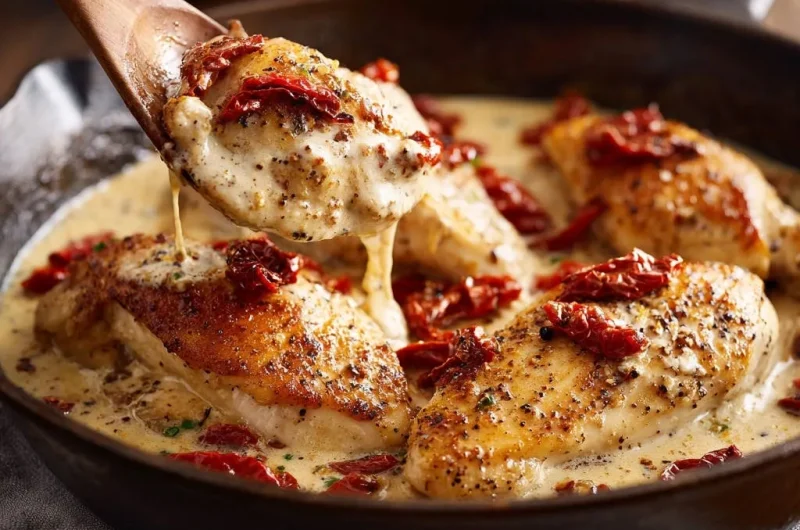
Tuscan Creamy Chicken
Course: Main CourseCuisine: Italian-AmericanDifficulty: easy4
servings15
minutes25
minutes550
kcal40
minutesThis Tuscan Creamy Chicken recipe guarantees a thick, rich sauce that clings perfectly to the chicken. Featuring sun-dried tomatoes, garlic, and Parmesan, this savory skillet meal is satisfying and easy to execute.
Ingredients
4 Boneless skinless chicken breasts
1 teaspoon Salt, divided
1/2 teaspoon Black pepper, divided
1 tablespoon Olive oil
1 tablespoon Unsalted butter
4 cloves Garlic, minced
1/2 cup Sun-dried tomatoes, chopped (drained if oil-packed)
1 cup Chicken broth
1 cup Heavy cream
1/4 teaspoon Dried Italian seasoning
1/4 cup Grated Parmesan cheese
2 tablespoons Fresh parsley, chopped
Directions
- Prepare the chicken. Season chicken breasts generously on both sides with 1/2 teaspoon salt and 1/4 teaspoon pepper. Pat the chicken dry completely with paper towels.
- Sear the chicken. Heat olive oil and butter in a large, oven-safe skillet (cast iron works best) over medium-high heat. Once the butter is melted and foaming, add the chicken breasts and sear without moving for 5 to 7 minutes until deeply golden brown. Flip and cook for 2 to 3 minutes, then remove the chicken and set aside on a plate. Do not wipe out the pan.
- Build the base. Reduce the heat to medium. Add the minced garlic to the skillet drippings and cook for about 60 seconds until fragrant. Add the sun-dried tomatoes and Italian seasoning and cook for another minute.
- The Anti-Watery Secret: Pour in the chicken broth and scrape up all the browned bits (the fond) from the bottom of the pan using a wooden spoon. Bring the broth to a strong simmer and reduce the heat slightly. Allow the broth to cook down rapidly until it has reduced by approximately half, taking about 3 to 5 minutes. This step is critical because it concentrates the flavor and ensures there is not too much liquid remaining when the cream is added.
- Finish the sauce. Reduce the heat to low. Stir in the heavy cream, the remaining 1/2 teaspoon salt, and 1/4 teaspoon pepper. Bring the sauce to a very gentle simmer (do not boil). Stir in the grated Parmesan cheese until the sauce thickens and becomes smooth and velvety.
- Combine and serve. Return the seared chicken breasts to the skillet and nestle them into the sauce. Simmer gently for 5 to 8 minutes, turning the chicken once, until the chicken reaches an internal temperature of 165 degrees F and the sauce clings tightly to the chicken.
- Garnish with fresh chopped parsley and serve immediately.
Notes
- Use a large, oven-safe skillet (cast iron works best) for searing and finishing the dish.