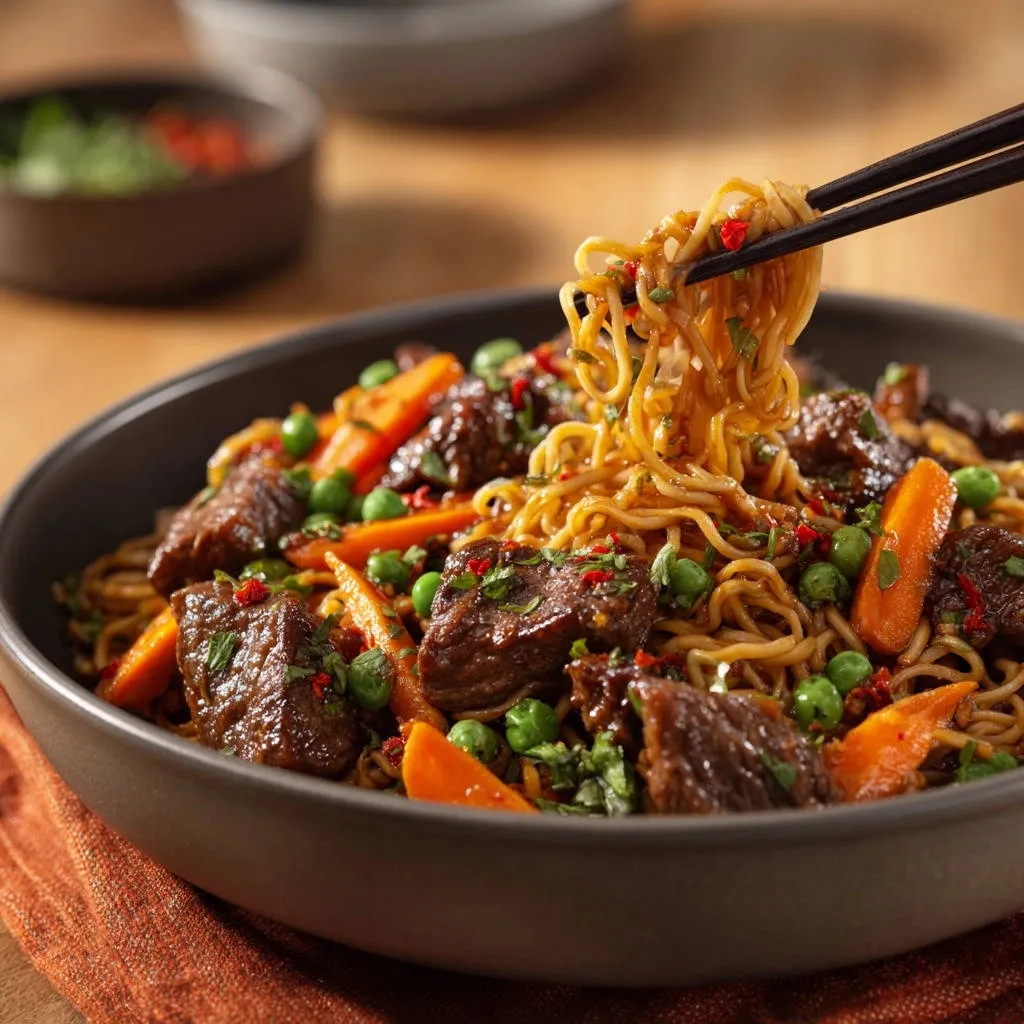
I spent years battling dry, chewy beef in my stir fries, a common frustration until I mastered the restaurant secret: the velveting technique. This specific recipe for the Ultimate Beef & Noodle Stir Fry guarantees meltingly tender meat every single time, eliminating that dry texture frustration forever.
By using simple pantry ingredients, we protect the meat fibers, ensuring a juicy interior and a beautiful, caramelized crust, delivering a quick weeknight dish that tastes truly exceptional.
The Secret Weapon: Why Velveting Guarantees Tender Beef Every Time
Velveting is the single most important step in achieving that signature silky-smooth texture found in professional Asian cooking. It involves coating the meat in a mixture, often including baking soda and cornstarch, before the searing process.
This method significantly improves both the texture and the moisture retention of the beef, ensuring your finished Ultimate Beef & Noodle Stir Fry is always a success.
Understanding Beef Velveting: The Science of Tenderness
Baking soda (sodium bicarbonate) acts as a mild alkali, which raises the surface pH of the beef. This small chemical change causes the muscle proteins to relax and break down slightly.
Relaxing the muscle fibers prevents them from contracting and seizing up when exposed to high heat, which is the primary cause of tough meat.
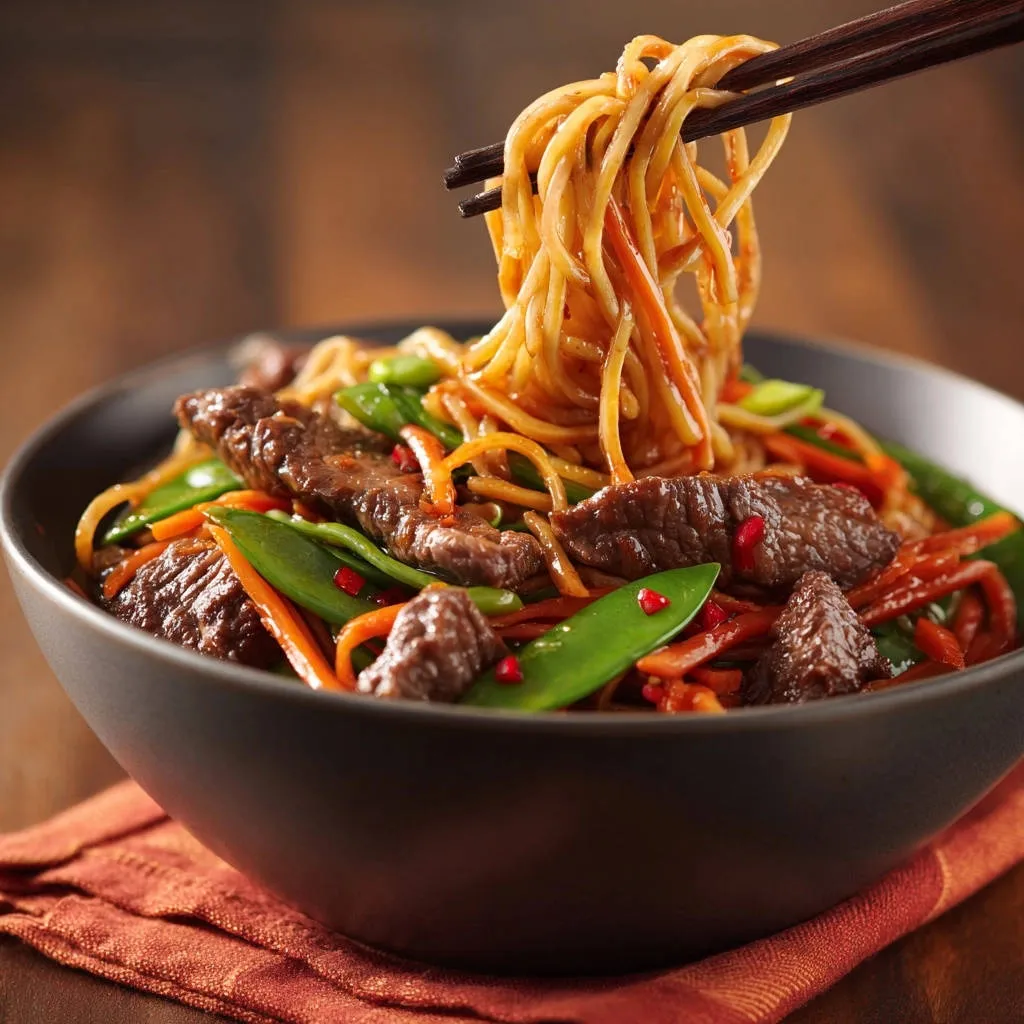
This quick, simple marination process makes even less expensive cuts of beef melt-in-your-mouth tender.
Cornstarch: The Dual-Purpose Coating for Protection and Crust
Cornstarch plays a crucial, dual role in the velveting process. First, it forms a protective barrier around the delicate meat surface.
This barrier locks in the internal moisture during high-heat cooking, preventing the beef from drying out. Secondly, the cornstarch quickly gelatinizes when hitting the hot oil, contributing to a desirable, light crust that provides textural contrast to the silky interior.
How to Properly Marinate: The Critical 15-Minute Rule
When combining the cubed beef with soy sauce, cornstarch, and baking soda, you must toss vigorously until the meat looks “tacky” and fully coated. Tacky means the mixture is adhering firmly to the meat.
The beef must rest at room temperature for at least 15 minutes, allowing the baking soda to properly tenderize the muscle fibers. Skipping this short rest period will negate the scientific benefit of the velveting technique entirely.
Ingredients Breakdown: Choosing Quality Components for Maximum Flavor
While the technique is key, selecting high-quality components ensures the flavor profile is vibrant and balanced, crucial for an authentic Ultimate Beef & Noodle Stir Fry experience.
Selecting the Best Cut of Beef for Stir Fry Success
We recommend using sirloin or a leaner stewing beef cut for stir-frying. Sirloin offers great flavor and tenderness, particularly when prepared using the velveting method.
Regardless of the cut, always slice the meat against the grain into uniform 1-inch pieces. Cutting against the grain shortens the meat fibers, which enhances the perception of tenderness.
Aromatic Essentials: The Impact of Fresh Ginger and Garlic
For stir-fry, the use of fresh ginger and garlic is non-negotiable, as they provide an unparalleled pungent aroma and bright, clear flavor.
Pre-minced or jarred versions contain preservatives and lack the essential oils that bloom beautifully when sautéed in hot oil. Grate the fresh ginger using a microplane for the quickest, most fragrant result, and mince the garlic finely.
The Perfect Slurry: Noodle Type, Sauce Bases, and Seasonings
For this recipe, look for sturdy stir-fry noodles, such as ramen or chow mein style. These hold up well to the sauce and the high heat without breaking down quickly.
Oyster sauce provides deep umami flavor and color; if vegetarian, ensure you choose a high-quality mushroom-based stir-fry sauce alternative.
The beef broth acts as the sauce carrier, while the brown sugar is essential for balancing the savory and salty notes of the soy and oyster sauce, creating a complex, well-rounded flavor profile.
Preparation and Essential Tools: Setting Up for a High-Heat Cook
Mise En Place: The Non-Negotiable Step for Stir-Frying
The term mise en place means having everything prepared, measured, and ready to go before you turn on the heat. Stir-frying is a high-speed cooking method where things happen in seconds.
If you pause to chop an ingredient, the ingredients already in the pan will likely burn, severely degrading the flavor and texture of your finished dish.
The Right Equipment: Wok, Skillet, and Heat Management
While a traditional wok is ideal for stir-frying due to its curved shape and ability to retain high heat, a large, heavy-bottomed flat skillet works excellently for this recipe.
The key is high, consistent heat; you need the oil shimmering (almost smoking) before adding the meat. Using insufficient heat causes ingredients to release moisture, resulting in a soggy, boiled texture rather than a desirable sear.
Mastering the Method: A Step-by-Step Guide to Ultimate Beef & Noodle Stir Fry Perfection
-
Preparation Phase: Velveting the Beef and Cooking Noodles
Ensure the beef is completely coated in the velveting mixture before resting it. While it rests, focus on cooking the noodles exactly al dente to prevent them from becoming mushy when they meet the sauce.
For another way to enjoy tender beef, check out this quick homemade beef noodle soup.
Crucially, tossing the cooked noodles immediately with sesame oil is key to preventing them from sticking together or absorbing excess sauce later.
-
The Sear: Achieving the Perfect Crust Without Overcrowding
The success of the velveted beef depends entirely on high, shimmering heat. Cook in small, single-layer batches if necessary. Overcrowding the pan lowers the temperature, steaming the meat instead of searing it.
Sear quickly until deep brown and set the beef aside. It will finish cooking in the final minute, preventing dryness.
-
Building Depth of Flavor: Sautéing Vegetables and Aromatics
Sauté the harder vegetables (like carrots) first to give them a head start before adding the softer peas. Maintain medium-high heat.
Garlic and ginger cook very quickly; add them only for the last 30 seconds before the sauce base, ensuring they become fragrant but do not burn.
-
The Final Simmer: Thickening the Ultimate Stir-Fry Sauce
Once the sauce ingredients (broth, oyster sauce, sugar, remaining soy) are added, bring it to a quick boil. Stirring constantly for one minute is usually enough to activate the thickening agents from the residual cornstarch left in the pan.
-
The Grand Finale: Combining, Tossing, and Serving
Return the beef and noodles to the pan and toss vigorously but gently for just 1-2 minutes. The goal is only to coat and reheat-not to overcook the tender beef or turn the noodles into mush.
Garnish immediately and serve hot for the best texture and flavor experience.
Chef’s Secrets and Troubleshooting: Elevate Your Stir Fry Game
Troubleshooting: Why Is My Ultimate Beef & Noodle Stir Fry Chewy?
Problem: The Beef is Still Tough. This almost always means the velveting process was skipped, or you used too low of a heat setting, causing the beef to stew in its own juices instead of searing quickly.
Problem: The Sauce is Too Thin. If the sauce isn’t thickening, try mixing 1 teaspoon of cornstarch with 1 teaspoon of cold water (a slurry) and adding it while the sauce is boiling. This corrects viscosity instantly.
Three Expert Tips for Next-Level Flavor
Tip 1: Use Neutral High-Heat Oil. Stick to vegetable, canola, or peanut oil for searing. Avoid using expensive olive oil, which has a low smoke point and can burn, leading to a bitter flavor.
Tip 2: Balance the Sweet, Sour, and Umami. Taste the sauce before combining everything. If it feels too sweet, add a squeeze of lime or rice vinegar; if it’s bland, add a touch more soy or oyster sauce.
Tip 3: The Broth Secret. If you don’t have beef broth, use water, but dissolve half a bouillon cube in it first. This adds a crucial layer of non-alcoholic beef flavor without overpowering the dish.
Making It Your Own: Customization and Storage
Easy Vegetable Swaps and Add-Ins
Seasonal substitutions are excellent: try adding pre-blanched broccoli florets or sliced bell peppers. Ensure you add them based on hardness-harder vegetables go in earlier with the carrots.
Broccoli or snap peas need about 2 minutes of sauté time, whereas delicate items like bean sprouts should only be added in the final minute of cooking to maintain their crispness.
Storage and Reheating the Ultimate Beef & Noodle Stir Fry
Store leftovers in an airtight container for up to 3 days. While stir-fry is always best fresh, proper storage helps preserve the texture.
For reheating, avoid the microwave if possible. Toss the mixture quickly in a hot, lightly oiled skillet or wok for 2-3 minutes to revive the crispy edges and prevent the noodles from becoming waterlogged.
Frequently Asked Questions About Tender Beef Stir Fry
Can I make this Ultimate Beef & Noodle Stir Fry recipe gluten-free?
Absolutely. The main ingredient requiring substitution is the soy sauce (use tamari or certified gluten-free coconut aminos) and ensuring your oyster sauce is also certified GF, or using a specialized GF vegetarian stir-fry sauce.
For the cornstarch, it is naturally gluten-free, but check the labeling to prevent cross-contamination.
What type of oil is best for high-heat stir-frying?
Peanut oil is traditionally preferred due to its very high smoke point and neutral flavor. However, standard vegetable or canola oil works perfectly well. Avoid using butter or extra virgin olive oil, which can smoke heavily and burn at the required high temperatures.
Can I use flank steak instead of sirloin or stewing beef?
Yes, flank steak is an excellent, slightly leaner choice for stir fry. If using flank steak, ensure you slice it very thinly and always cut against the grain for maximum tenderness, even with the velveting technique.
Ready to Impress? Share Your Ultimate Beef & Noodle Stir Fry Masterpiece!
With the secret of velveting mastered, you are now equipped to create tender, restaurant-quality stir fry in your own kitchen. This simple preparation step is the game-changer that transforms a good weeknight meal into a truly great one.
We encourage you to try this Ultimate Beef & Noodle Stir Fry tonight and experience the meltingly tender difference. Don’t forget to share your success stories and pictures with us!
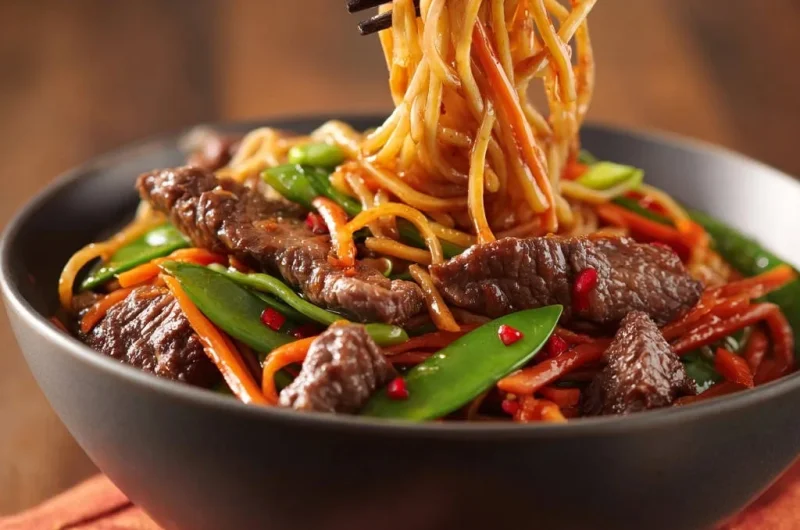
Beef Noodle Stir Fry
Course: Main CourseCuisine: AsianDifficulty: medium4
servings30
minutes20
minutes550
kcal50
minutesSay goodbye to tough stir fry beef! This recipe utilizes the classic velveting method (using baking soda) to ensure every bite of beef is meltingly tender. Paired with savory noodles and crisp vegetables, this simple trick delivers restaurant-quality results at home.
Ingredients
1 pound stewing beef or sirloin, cut into 1-inch cubes
2 tablespoons soy sauce (divided)
1 tablespoon cornstarch
1 teaspoon baking soda (KEY TENDERIZER)
1 pound stir-fry noodles (ramen or chow mein style)
1 tablespoon sesame oil
2 tablespoons vegetable oil (divided)
1 cup carrots, sliced into matchsticks
1 cup frozen peas
2 cloves garlic, minced
1 tablespoon fresh ginger, grated
1/4 cup non-alcoholic beef broth or water
2 tablespoons oyster sauce or vegetarian stir-fry sauce
1 tablespoon brown sugar
1 teaspoon chili flakes (optional)
Fresh parsley or cilantro for garnish
Directions
- Prepare the Beef for Tenderness (The Velveting Method): In a medium bowl, combine the cubed beef, 1 tablespoon of soy sauce, cornstarch, and the baking soda. Toss vigorously until the meat is fully coated and slightly tacky. Let this mixture rest for at least 15 minutes at room temperature. This step is critical to breaking down the beef fibers, ensuring a perfect result.
- Cook the Noodles: While the beef marinades, cook the noodles according to package directions, typically about 3 to 4 minutes. Drain thoroughly and immediately toss with the sesame oil to prevent sticking and gumminess. Set aside.
- Sear the Beef: Heat 1 tablespoon of vegetable oil in a large skillet or wok over high heat until shimmering. Add the marinated beef, ensuring not to overcrowd the pan (cook in batches if necessary). Sear the beef quickly for 2 to 3 minutes per side until deeply browned and the cornstarch coating has created a slight crust. Remove the beef from the pan and set it aside.
- Sauté the Vegetables: Reduce the heat to medium-high. Add the remaining 1 tablespoon of vegetable oil. Add the carrots and sauté for 3 minutes until slightly softened but still crisp. Add the minced garlic and grated ginger and cook for 30 seconds until fragrant. Add the frozen peas and cook for 1 minute.
- Build the Sauce: Pour in the non-alcoholic beef broth, remaining 1 tablespoon of soy sauce, oyster sauce, and brown sugar. Bring the sauce to a quick simmer, stirring constantly for about 1 minute until it slightly thickens. Add the chili flakes if using.
- Combine and Serve: Return the seared, tender beef and the prepared noodles to the pan. Toss everything quickly to coat the noodles and beef evenly with the sauce. Cook just long enough for the beef to be heated through, about 1 to 2 minutes.
- Finish: Serve immediately garnished with fresh parsley or cilantro.
Notes
- The baking soda and cornstarch mixture (velveting) is the critical step for achieving ultra-tender beef.