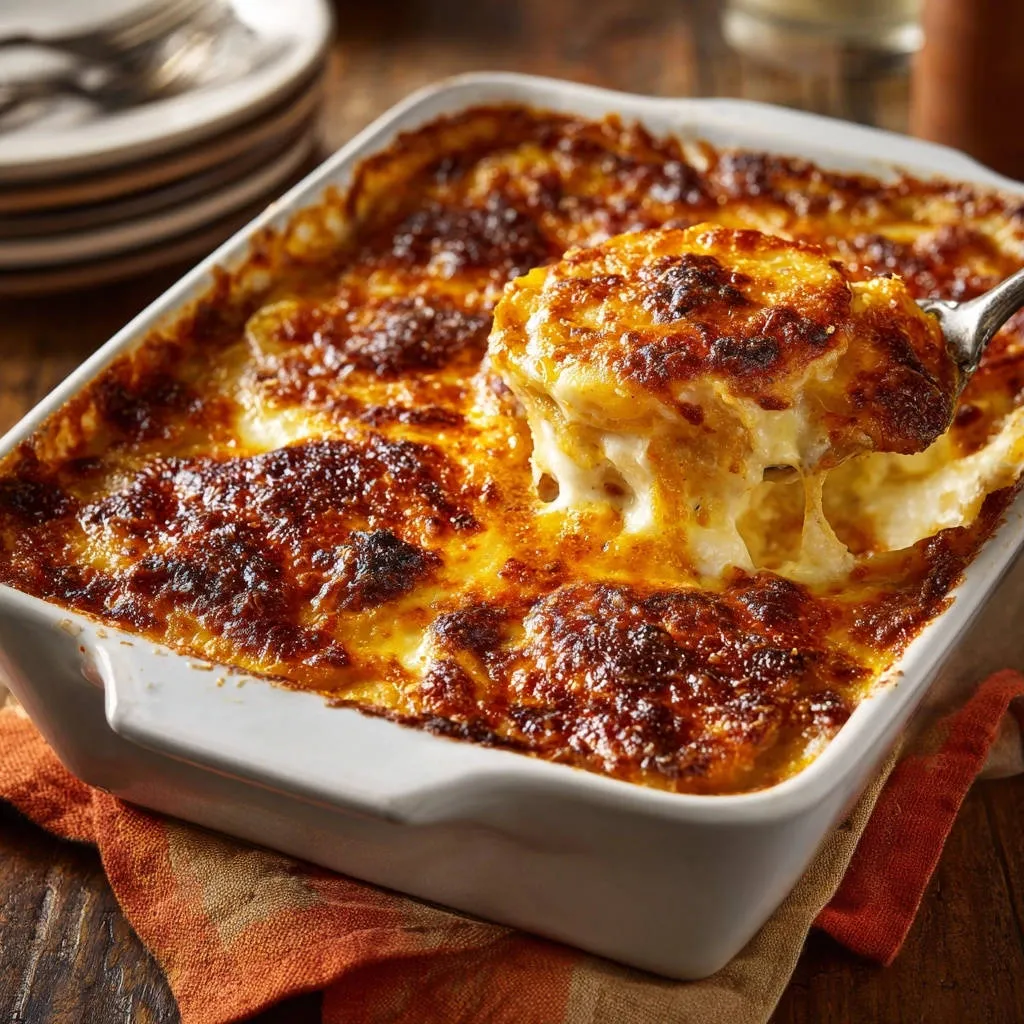
I understand the frustration of pulling a gorgeous casserole dish from the oven only to find that your potato gratin has pooled into a sad, watery mess at the bottom.
As a content strategist and expert cook, I cracked the code years ago, developing a reliable technique that guarantees the Ultimate Cheesy Potato Gratin with perfectly tender layers suspended in an impossibly rich, thick cream sauce every single time.
The Secret Weapon: Eliminating the Watery Gratin Dilemma
We’ve all experienced the disappointment of a gratin that looks beautiful on top but hides a separated, soupy liquid when scooped.
For a gratin that holds its structure beautifully, learn the secret to truly creamy potato gratin.
This common failure point occurs when the potato starch has not fully cooked and the heavy cream separates during the long baking time, releasing moisture that thins out the dish.
Understanding the Starch Activation Technique
The core solution lies in an essential step: simmering the thinly sliced potatoes directly in the seasoned heavy cream base for 8 to 10 minutes before the dish ever enters the oven.
This controlled simmer partially cooks the potatoes and, most importantly, allows the released potato starch to immediately bind and thicken the heavy cream.
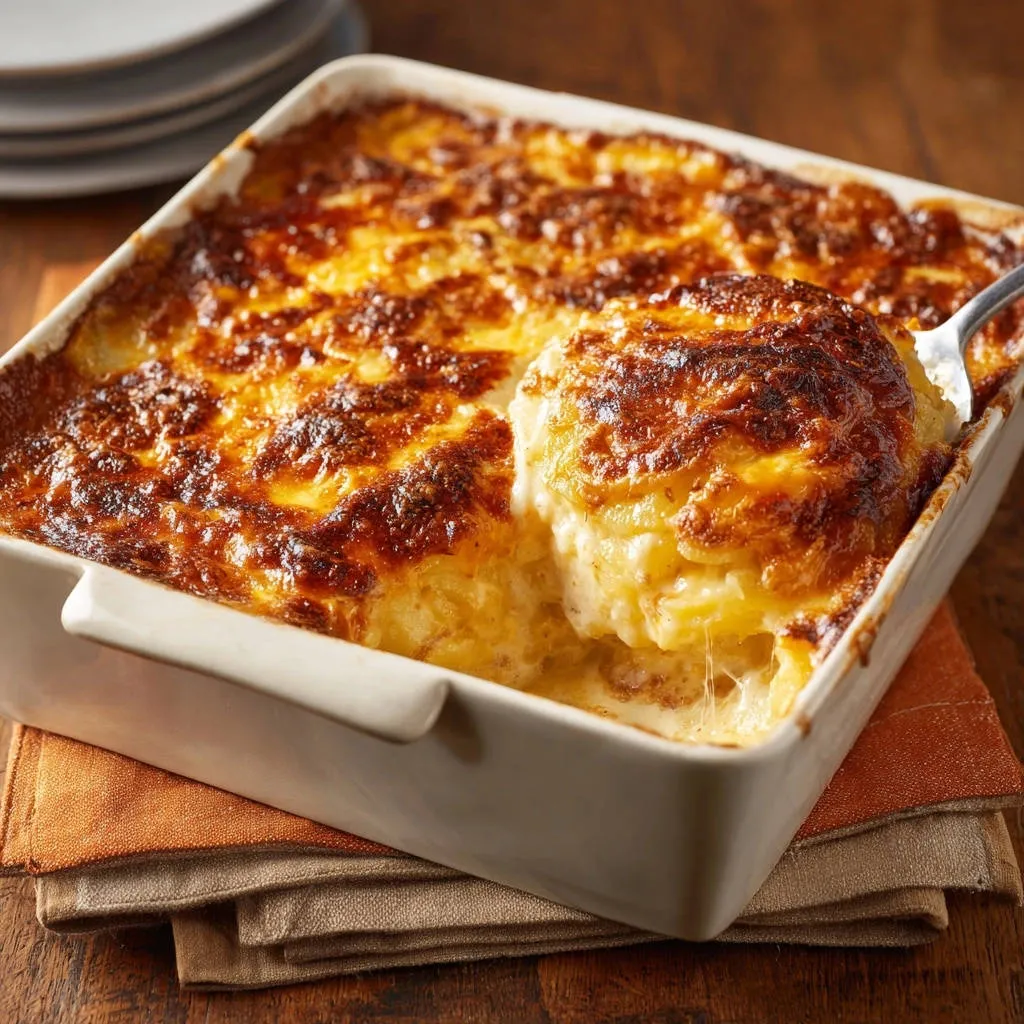
The result is a highly stable, luxurious sauce base that absolutely will not turn watery in the oven, ensuring your gratin holds its structure and creaminess.
Selecting Your Flavor Foundation: Ingredients That Matter
The Great Potato Debate: Russet vs. Yukon Gold
This gratin recipe is forgiving and allows for either Russet or Yukon Gold potatoes, but your selection will influence the final texture.
Russets are high in starch and tend to break down more during the pre-cook, contributing slightly more thickening power and resulting in a fluffier, almost melt-in-your-mouth interior.
Yukon Golds offer a medium starch content; they hold their shape slightly better while baking, leading to a structure that is both creamy and visibly layered.
Choosing the Best Cheese Blend for Melting and Flavor
A successful gratin requires cheese that melts cleanly without becoming oily, which is why we rely on Gruyère combined with sharp Cheddar.
Gruyère provides the essential nutty, savory complexity and is renowned for its superior melting properties, keeping the sauce smooth.
Sharp Cheddar adds a welcomed tanginess to cut through the heavy cream’s richness and ensures a beautiful, deeply golden crust on top of the gratin.
Infusing the Cream Base: Garlic and Nutmeg Essentials
Minced garlic is crucial; infusing it directly into the simmering heavy cream builds a deep, aromatic, and savory foundation that permeates every potato slice.
While optional, a tiny pinch of freshly grated nutmeg is transformative in creamy potato dishes, balancing the dairy fats and adding an essential warm depth.
Essential Equipment for a Seamless Gratin Preparation
Having the right tools is key to making the preparation process efficient and ensuring consistent sizing for the best cooking results.
A standard 9×13 inch baking dish is necessary to provide enough surface area for the multiple potato and cheese layers, keeping the sauce-to-potato ratio balanced.
Mandoline Slicer: Critical for achieving the necessary 1/8-inch uniform slices quickly and safely.
Large, Wide Saucepan: Needed to accommodate all 4 cups of heavy cream and the full batch of potato slices for even simmering and starch activation.
Standard Kitchen Whisk: Useful for stirring the cream base before the potatoes are added, ensuring salt and spices are fully dissolved.
Mastering the Ultimate Cheesy Potato Gratin: Step-by-Step Perfection
-
Preparation and Setting the Stage:
Preheat your oven fully to 400 degrees F. This temperature promotes both internal cooking and external browning.
Take care to generously grease your 9×13 inch baking dish with softened butter; this prevents the starch-rich cream sauce from fusing to the glass during the long bake.
-
The Cream Base Infusion:
Combine the heavy cream, minced garlic, salt, pepper, and nutmeg in your large, wide saucepan.
Bring this mixture to a gentle simmer over medium heat, stirring just until you see small bubbles around the edges.
-
The Crucial 8-10 Minute Pre-Cook Simmer:
Once simmering, add all the thinly sliced potatoes immediately to the cream, then instantly reduce the heat to the lowest setting.
Let the potatoes simmer for 8 to 10 minutes, stirring occasionally and gently to prevent any sticking or scorching on the pan bottom.
CRITICAL EXPLANATION: The cream should visibly thicken slightly during this process; this confirmation means the released potato starches have fully activated and successfully thickened the heavy cream, resolving the potential for a watery gratin.
-
Layering Strategy and Assembly:
Remove the pan from the heat and carefully spoon about one-third of the cream and potato mixture into the prepared baking dish.
Sprinkle this layer evenly with half of your reserved shredded cheese blend, aiming for edge-to-edge coverage.
Repeat the layering process once more with the remaining potato/cream mixture, ensuring the top layer of potatoes is completely submerged in the cream before adding the final bit of cheese.
-
The Initial Bake and Checking for Coverage:
Place the dish in the preheated 400°F oven and bake for an initial 30 minutes.
If, at the 30-minute mark, the surface is perfectly golden brown but the potatoes are still firm when tested, loosely cover the dish with foil to protect the top from burning while the interior finishes cooking.
-
Testing for Tender Perfection:
Continue baking for another 15 to 25 minutes, or until the sauce is visibly bubbling thickly and a fork slides through the thickest potato slices with zero resistance.
-
The Importance of the Post-Bake Rest:
Remove the gratin from the oven and allow it to rest, uncovered, for 10 to 15 minutes before attempting to serve.
This resting period is non-negotiable; it allows the starch-thickened sauce to fully set up and lock the potato layers together, preventing collapse and ensuring clean scoops.
Chef’s Notebook: Tips for Gratin Excellence and Make-Ahead Planning
Achieving Uniform Potato Slices (Consistency is Key)
The entire success of the pre-cook technique hinges on achieving uniformly consistent 1/8 inch potato slices.
If slices are too thick, they won’t fully cook during the stovetop simmer; if they are uneven, some pieces will be mushy while others remain raw.
Invest in a mandoline for this job, but always exercise extreme caution and wear a safety glove to protect your fingers.
For a slightly different take on tender potatoes, consider trying the Golden Garlic Potato Gratin next.
For a similar approach to achieving tender potatoes, check out this creamy potato gratin.
Troubleshooting: What if the Sauce Still Looks Thin?
If, after the full 10-minute simmer, the cream has not thickened to a slight reduction, it usually means the heat was too low or the potatoes were not sliced thinly enough.
Increase the heat slightly and simmer for 2 to 3 minutes longer, stirring constantly until you see a clear, visible thickening of the liquid.
Alternatively, if this happens during baking, rely on the resting step; often the structure is there but requires cooling to solidify.
Make-Ahead and Freezing Ultimate Cheesy Potato Gratin
You can assemble the entire Ultimate Cheesy Potato Gratin up to Step 4, cover it tightly, and refrigerate it unbaked for up to 24 hours.
When ready to bake, let the dish sit at room temperature for 30 minutes before placing it in the oven to prevent the thermal shock of a cold dish going into a hot oven.
Avoid freezing this dish in its raw state, as the dairy and potato texture will degrade significantly upon thawing; freezing baked leftovers is acceptable for short periods.
Serving Suggestions: What to Pair with Rich Potato Gratin
A dish as rich and satisfying as this cheesy potato gratin requires pairings that offer balance in flavor and texture.
Classic Main Dishes That Complement the Creaminess
A simple roasted chicken or a pan-seared beef sirloin, providing a mild, lean protein that doesn’t compete with the robust flavors of the gratin.
Seared beef tenderloin or a beautifully slow-roasted prime rib, elevating the gratin to a sophisticated holiday or celebratory side dish.
Lighter, acidic green vegetables are essential, such as blanched green beans tossed with brown butter and almonds, or roasted asparagus spears.
Common Ultimate Cheesy Potato Gratin Questions Answered
Can I Use Lower-Fat Milk Instead of Heavy Cream?
No, heavy cream is absolutely essential for this recipe’s success because the high fat content is necessary to bind the released potato starch during the pre-cook.
Using lower-fat alternatives like whole milk or half-and-half will inevitably result in a watery, separated outcome regardless of the starch activation efforts.
How Thinly Should the Potatoes Be Sliced?
The ideal slice thickness is 1/8 inch-about the width of two stacked pennies.
This specific thickness ensures that the potatoes achieve partial cooking on the stovetop and can become fully tender within the final oven baking time.
What is the Ideal Internal Temperature for Potato Gratin?
While testing for fork tenderness is usually sufficient, fully cooked starches typically reach an internal temperature between 200°F and 210°F.
This temperature range confirms that the starch is fully gelatinized and the potatoes are soft throughout, yielding a perfectly creamy texture.
Ready to Impress? Serve the Ultimate Comfort Side Dish
You now possess the insider knowledge and the reliable technique necessary to create a flawless, structured, and deeply cheesy potato side dish that will earn you immediate praise.
Embrace the simple starch activation step, and your Ultimate Cheesy Potato Gratin will stand tall and creamy, never suffering from the watery gratin dilemma again.
Try this recipe this week and taste the difference that expert technique makes-it’s truly a game-changer for holiday spreads and weeknight dinners alike.
What to Try Next
If you enjoyed this potato gratin, here are a couple more potato dishes to explore.
- For a spicy twist on your potato dish, consider the Cheesy Beef Chorizo Skillet Potatoes, offering a satisfyingly crisp texture.
- If you’re leaning towards a hearty, beef-infused potato meal, the Ultimate Creamy Potato Skillet with Pulled Beef provides a tender and rich experience.
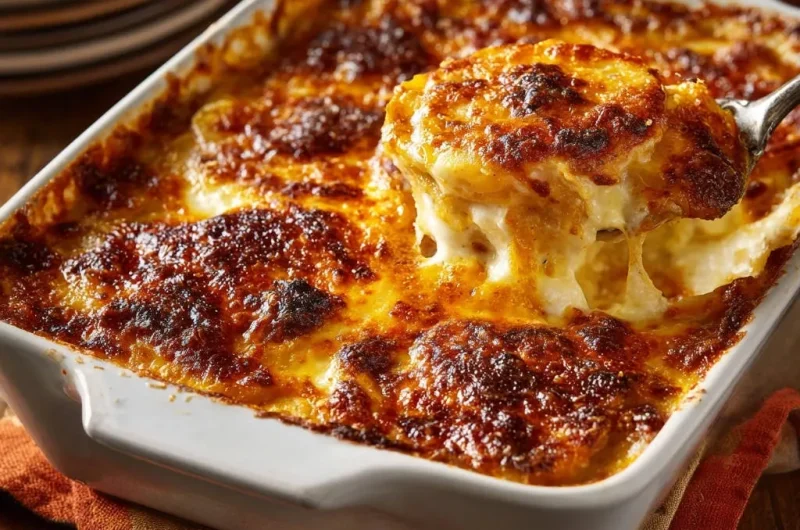
Cheesy Potato Gratin
Course: Side DishCuisine: FrenchDifficulty: medium8
servings20
minutes50
minutes550
kcal70
minutesThis recipe solves the universal problem of watery potato gratin by using an essential pre-cook technique that activates the potato starch. The result is layers of tender potatoes perfectly suspended in a rich, thick, deeply cheesy cream sauce that will not fail.
Ingredients
4 large Russet or Yukon Gold potatoes, peeled and thinly sliced (about 1/8 inch thick)
4 cups heavy cream
2 cloves garlic, minced
1 teaspoon salt
1/2 teaspoon black pepper
1/4 teaspoon nutmeg (optional, but highly recommended)
2 cups shredded Gruyere or sharp Cheddar cheese, divided
2 tablespoons butter (for greasing pan)
Directions
- Preparation is Key: Preheat your oven to 400 degrees F. Lightly grease a 9×13 inch baking dish generously with the butter.
- Activate the Starch (The Pain Point Fix): In a large, wide saucepan, combine the heavy cream, minced garlic, salt, pepper, and nutmeg. Bring this mixture to a gentle simmer over medium heat. Once simmering, add all the thinly sliced potatoes to the cream. Reduce the heat immediately to low and stir gently.
- The Pre-Cook Technique: Let the potatoes simmer in the cream for 8 to 10 minutes, stirring occasionally to ensure they do not stick to the bottom. This essential step partially cooks the potatoes and, most importantly, allows the released starch to thicken the heavy cream, creating a stable, luxurious sauce base that absolutely will not turn watery in the oven. The sauce should visibly thicken slightly.
- Layer and Bake: Remove the pan from the heat. Carefully layer about one-third of the cream and potato mixture into the prepared baking dish. Sprinkle evenly with half of the reserved shredded cheese. Repeat the layering process once more (potatoes and cream, then the remaining cheese). Ensure the potatoes are submerged in the cream mixture.
- Finishing the Top: Place the dish in the preheated oven. Bake for 30 minutes. At this point, check the browning. If the top is golden brown but the potatoes are not yet fully tender, loosely cover the dish with foil.
- Cook Until Tender: Continue baking for another 15 to 25 minutes, or until the potatoes are fork-tender and the sauce is bubbling thickly and deeply golden brown.
- Rest and Serve: Remove the gratin from the oven and let it rest for 10 to 15 minutes before serving. This resting period allows the sauce to fully set up and lock into the potato layers, ensuring perfect texture when scooped.
Notes
- Allowing the gratin to rest for 10-15 minutes after baking is crucial for the sauce to fully set up and ensure perfect texture when scooped.