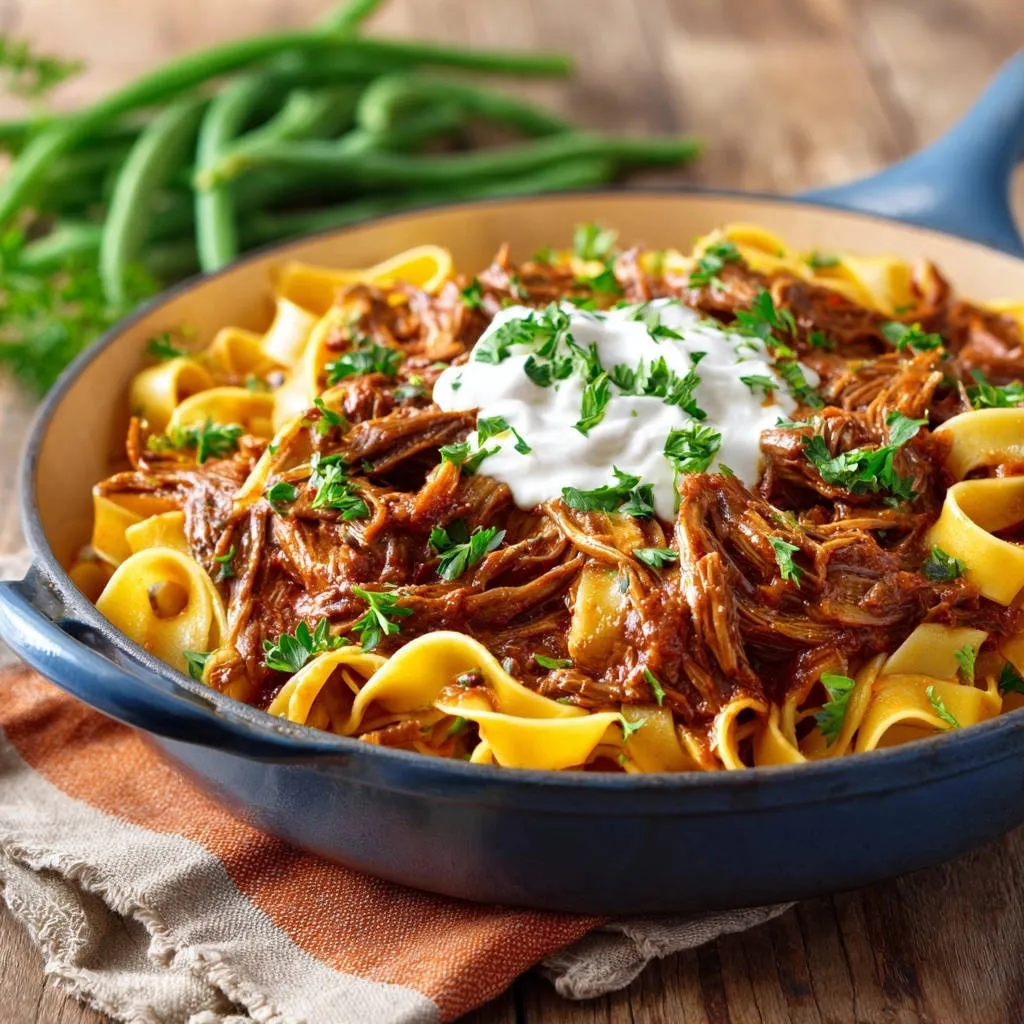
I’ve ruined enough pot roasts to know the heartbreak of fibrous, dry meat, especially when aiming for the perfect bowl of Ultimate Comfort Shredded Beef Noodles.
This recipe is the result of years of testing, finally perfecting a technique that guarantees juicy, melt-in-your-mouth shreds every single time.
We utilize the crucial “Moisture Lock” method, which transforms tough chuck roast into unrivaled comfort food, making this the most reliable recipe you will ever use.
The Fork-Tender Guarantee: Why This Is the Last Shredded Beef Recipe You Need
The most common failure in slow-cooked beef is neglecting the meat after shredding, allowing the hot fibers to instantly dry out upon contact with the cooler air.
Our method solves this fundamental problem by immediately submerging the shredded meat back into the highly concentrated cooking liquid.
The beef acts like a sponge, aggressively reabsorbing the rich flavor and moisture it released during the slow cooking process.
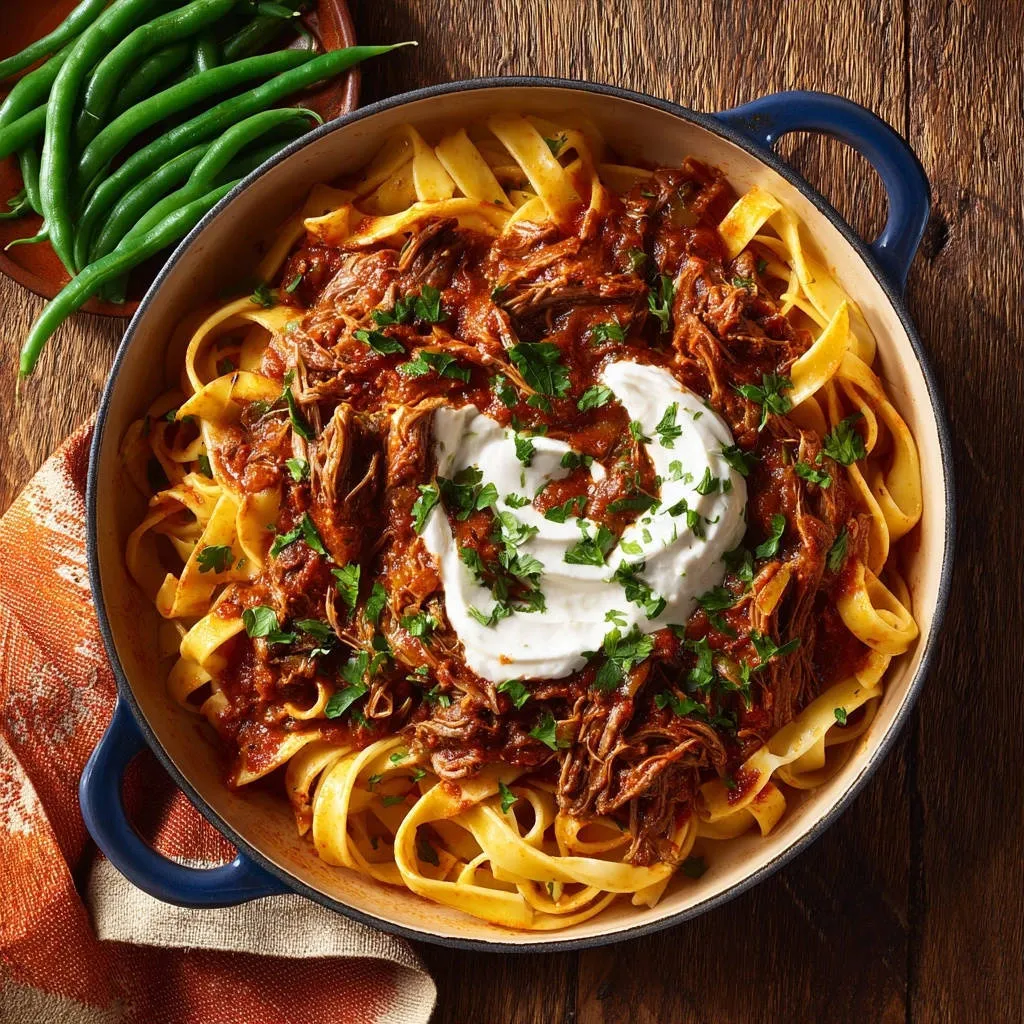
This single step ensures that the final result for your Ultimate Comfort Shredded Beef Noodles is never dry, but perfectly saturated and incredibly tender.
The Unrivaled Texture: Melt-in-Your-Mouth Results Every Time
Achieving melt-in-your-mouth beef is a result of properly dissolving the tough collagen found in cuts like chuck roast.
When this collagen breaks down into gelatin, it coats the meat fibers, creating a luxurious, velvety mouthfeel.
The combination of low and slow heat with the critical Moisture Lock technique guarantees this texture and a deep saturation of savory flavor.
Building the Deepest Flavor Base: A Look at Key Ingredients
Choosing the Perfect Chuck Roast for Maximum Tenderness
Chuck roast is ideal for slow cooking because of its high degree of marbling and substantial connective tissue.
Look for a roast with visible streaks of white fat running through it, which converts directly to flavor and moisture during the long cooking time.
While you should trim any excess, hard exterior fat, ensure you keep the internal marbling intact for the best, most tender results.
The Aromatic Trifecta: Garlic, Onion, and Tomato Paste
Diced yellow onions and minced garlic form the foundational aromatic base, adding savory sweetness to the broth.
Tomato paste is crucial; it adds umami depth and a subtle acidity that expertly balances the richness of the beef.
Stirring the tomato paste for 60 seconds after the onions cook allows it to caramelize slightly, deepening its complex flavor profile before the liquid is added.
Why Wide Egg Noodles Are the Only Choice Here
Unlike standard wheat pasta, egg noodles have a distinctively softer texture and a slightly porous surface.
For that same smooth texture, try this creamy cheesecake.
These qualities allow them to soak up the heavy, rich beef sauce much more effectively, acting as the perfect flavor vehicle.
The wide, flat shape ensures the noodles stand up well against the substantial shreds of beef without becoming lost in the final dish.
Essential Equipment for Slow-Cooked Perfection (Dutch Oven vs. Alternatives)
The Advantage of Cast Iron: Heat Retention and Browning
A heavy, enameled cast iron Dutch oven provides superior heat retention, which is essential for consistent, even slow cooking.
Crucially, its high heat capacity allows you to achieve an aggressive, deep, and even sear on the chuck roast.
This deep browning, or fond, is the key to achieving a profound, irreplaceable savory flavor in the final sauce when you deglaze the pot with the broth.
Alternative Cooking Methods: Instant Pot and Slow Cooker Conversions
This recipe adapts well to other equipment, provided you still complete the crucial stovetop searing and sauce-building steps first.
For a traditional slow cooker, transfer the seared ingredients and liquid, and cook on low for 8 to 10 hours or on high for 4 to 5 hours.
If using an Instant Pot, cook the beef on High Pressure for 75 minutes, followed by a full natural pressure release.
In all conversions, remember that the “Moisture Lock” technique-returning the shredded meat to the hot liquid-remains absolutely essential to prevent dryness.
From Sear to Shred: Mastering the Ultimate Comfort Shredded Beef Noodles Process
Following these steps precisely guarantees a flawless, flavor-packed result every time you make these shredded beef noodles.
-
Prep the Beef for Maximum Crust:
Patting the chuck roast completely dry is not optional; it is essential for achieving the deep, flavorful Maillard reaction necessary for the crust.
A dry surface allows the exterior temperature to spike high enough to brown rather than steam.
-
Sear the Beef:
Heat the olive oil until shimmering hot, then sear the beef on all sides until a dark brown crust forms, aiming for mahogany rather than just light brown.
Do not crowd the pot, and avoid turning the beef until it releases easily from the base of the Dutch oven.
-
Build the Sauce Base and Deglaze:
Reduce the heat after searing and gently cook the onions, garlic, and tomato paste.
Adding the broth will deglaze the pot, lifting the seared brown bits (the fond) from the bottom, incorporating all that foundational flavor into the sauce.
-
The Low and Slow Cook:
Baking at 300°F ensures the tough connective tissue in the chuck roast has time to dissolve completely into gelatin, guaranteeing fork-tender results.
A low oven temperature prevents the exterior muscle fibers from cooking too quickly and prematurely drying out while the interior is still tough.
-
The Moisture Lock Method:
Carefully remove the tender beef and shred it immediately using two forks.
Return the shredded beef instantly to the remaining cooking liquid, stirring well and keeping it submerged while the noodles cook.
This is the ultimate secret to preventing dry, fibrous strands-the meat aggressively reabsorbs the concentrated, flavored juices for unmatched moisture.
-
Noodle Timing and Pasta Water:
Cook the wide egg noodles only until they are perfectly al dente, usually one minute less than the package directs.
Always reserve at least 1/2 cup of the starchy pasta water; it is the perfect binding agent to adjust the consistency of the final sauce.
-
Combining and Finishing:
Add the drained noodles directly to the pot with the shredded beef and sauce, tossing thoroughly to coat.
Add the sour cream or Greek yogurt just before serving or directly into individual bowls for the best flavor and texture contrast.
Overcooking the sour cream in the main sauce can cause it to separate or become gritty, so stir it in last or serve on the side.
Beyond the Recipe Card: Pro Tips, Swaps, and Troubleshooting
Fixing the Dryness: What to Do If Your Shredded Beef Feels Fibrous
Do not despair if your beef isn’t perfectly tender right away; it’s usually fixable.
Is it just tough? If your beef resists shredding and feels tough, it simply needs more time in the oven. Low and slow cooking requires patience, and tough meat means the connective tissue has not fully dissolved yet. Cover it tightly and return it to the oven for another 30 to 60 minutes.
Rehydrating Dry Shreds: If the meat was shredded but not immediately returned to the liquid, warm up about a cup of extra beef broth.
Toss the dry shreds in the warm broth and allow them to rest covered for 10 minutes before combining them with the main sauce.
Flavor Enhancement Swaps for the Sauce Base
For a richer, deeper color, you can substitute 1/2 cup of the beef broth with a dry, hearty red grape juice like sparkling grape juice.
Add a tablespoon of high-quality balsamic vinegar or Worcestershire sauce to the broth before cooking for added savory depth and complexity, acting as natural MSG.
Incorporate dried porcini mushroom powder into the dry seasoning blend for intense, earthy umami notes that pair beautifully with the shredded beef.
Scaling and Storing: Make-Ahead & Freezer Strategies
This Ultimate Comfort Shredded Beef Noodles recipe is excellent for meal prep and feeding a crowd.
The Best Way to Freeze: Always freeze the shredded beef submerged in a generous amount of the sauce, separating it completely from the noodles.
This maximizes moisture retention and prevents the beef from suffering freezer burn or losing its rich, comforting texture.
Reheating Without Drying: Reheat the beef and sauce gently on the stovetop or in the oven, always covered.
If the sauce looks too tight, add a tablespoon of beef broth to loosen it before adding the freshly cooked noodles.
Quick Answers: Your Ultimate Comfort Shredded Beef Noodles FAQs
What is the ideal internal temperature for fork-tender beef?
For beef meant for shredding, the final internal temperature must reach far beyond traditional doneness, ideally settling between 195°F and 205°F.
This high range is necessary to ensure the tough collagen fibers completely break down into tender, slippery gelatin.
If your meat is below 190°F, it will almost certainly be tough and resistant to shredding.
Can I substitute a different cut of meat for chuck roast?
You may substitute other beef cuts often labeled as bottom round, beef shoulder, or English pot roast.
However, these cuts typically have less internal marbling than chuck roast, making the final result potentially drier.
Using leaner cuts dramatically increases the importance of immediately executing the Moisture Lock method after shredding.
Can I add vegetables to the Ultimate Comfort Shredded Beef Noodles?
Yes, hearty root vegetables like thickly sliced carrots, celery, or parsnips make excellent additions to this dish.
Introduce them to the Dutch oven at the beginning of the slow cooking process, added immediately after the broth.
This early addition ensures they have enough time to soften completely and absorb the deep beef flavor without turning to mush.
Ready to Dive In? Share Your Ultimate Comfort Masterpiece
Master the searing, honor the low and slow cook, and most importantly, never skip the Moisture Lock.
Once you follow this precise method, you will never struggle with dry shredded beef again.
Go ahead and create your own bowl of the Ultimate Comfort Shredded Beef Noodles, and taste the profound difference that this expert technique delivers.
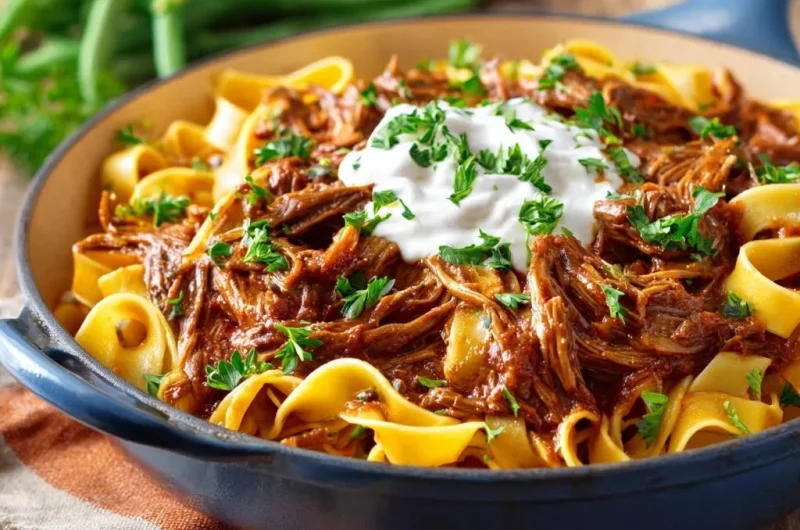
Shredded Beef Noodles
Course: Main CourseCuisine: AmericanDifficulty: medium6
servings20
minutes3
hours30
minutes650
kcal230
minutesForget dry pot roast! This recipe uses a critical ‘moisture lock’ technique, returning perfectly shredded beef to the concentrated cooking liquid for maximum flavor and tenderness. Served over buttered wide egg noodles and finished with sour cream, this is the ultimate comforting Main Course.
Ingredients
3 pounds Beef Chuck Roast, trimmed
1 tablespoon Olive Oil
1 large Yellow Onion, diced
4 cloves Garlic, minced
1 tablespoon Tomato Paste
4 cups Beef Broth (low sodium)
1 tablespoon dried Paprika
1 teaspoon dried Thyme
Salt and freshly ground Black Pepper, to taste
16 ounces Wide Egg Noodles
1/2 cup Sour Cream (or Greek yogurt)
Fresh Parsley, chopped (for garnish)
Directions
- Prep the Beef: Pat the chuck roast completely dry using paper towels. Season generously on all sides with salt and pepper.
- Sear the Beef: Heat the olive oil in a heavy, oven-safe Dutch oven over medium-high heat. Sear the beef until a deep brown crust forms on all sides (about 3 to 4 minutes per side). Remove the beef and set aside.
- Build the Sauce Base: Reduce the heat to medium. Add the diced onion to the pot and cook until soft and translucent, about 6 minutes. Add the minced garlic and tomato paste, stirring constantly for 1 minute until fragrant.
- Slow Cook: Return the seared beef to the Dutch oven. Sprinkle the paprika and thyme over the meat. Pour in the beef broth. Bring the liquid to a simmer, then cover the pot tightly and transfer it to an oven preheated to 300 degrees F. Cook for 3 to 4 hours, or until the meat is fork-tender.
- The Moisture Lock Method: Carefully remove the tender beef from the pot and place it on a clean cutting board. Keep the cooking liquid in the pot. Using two forks, shred the beef completely. Return the shredded beef immediately to the remaining cooking liquid (which is now highly flavored). Stir to ensure every piece of shredded meat is coated and submerged, allowing the meat to reabsorb the concentrated juices while you finish the dish.
- Cook Noodles: While the beef rests in the liquid, cook the egg noodles according to package directions until al dente. Drain the noodles, reserving about 1/2 cup of the pasta water.
- Combine and Serve: Add the drained noodles directly to the pot with the shredded beef and sauce. Toss thoroughly to coat, adding a splash of the reserved pasta water if the sauce seems too thick.
- Garnish: Serve immediately in the Dutch oven or a large serving dish, topped with a generous dollop of sour cream and fresh chopped parsley. This ensures every bite of beef remains deeply flavored and wonderfully moist.
Notes
- The key to success is returning the shredded beef to the simmering sauce base immediately to reabsorb all the flavorful juices.