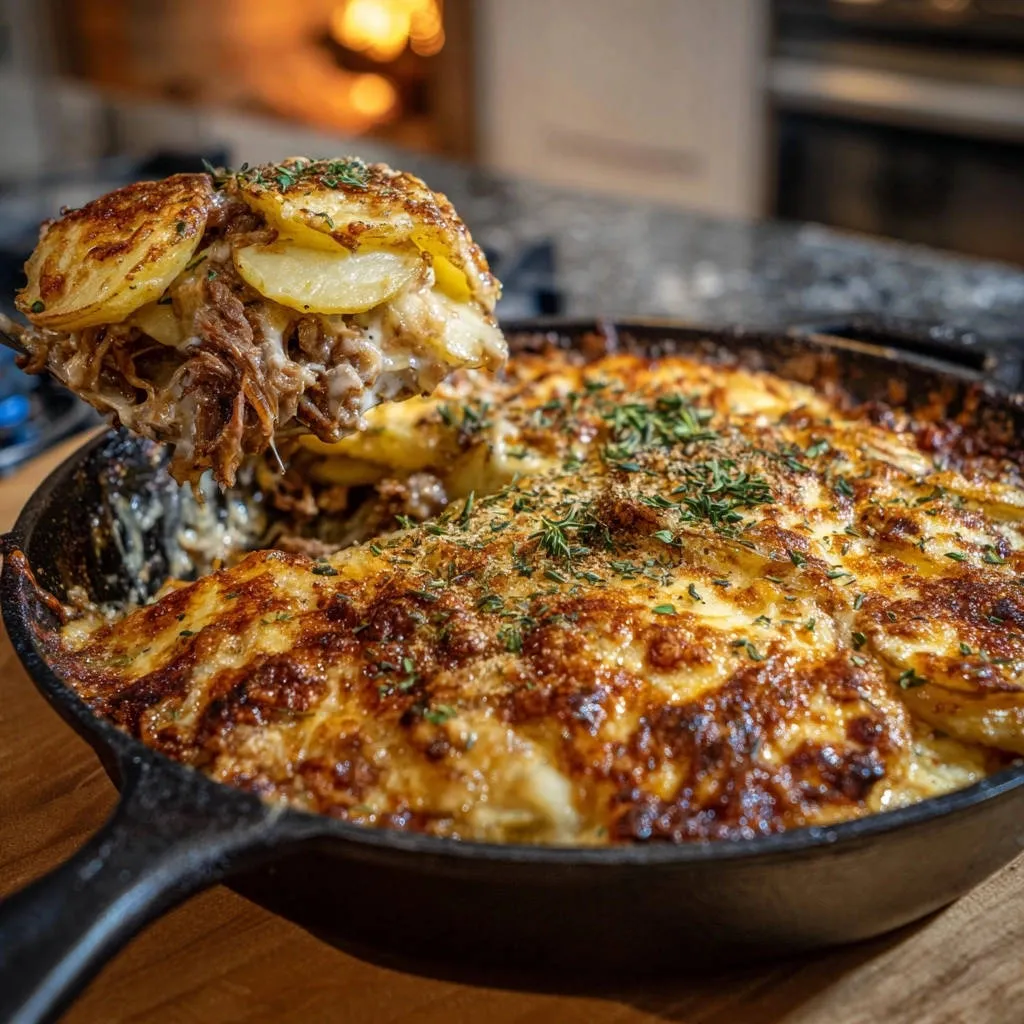
I spent years battling the frustration of slicing into a beautiful gratin only to find the potatoes were still crunchy and raw in the center. That common failure is precisely what this recipe for the Ultimate Creamy Potato Skillet with Pulled Beef eliminates entirely.
By incorporating one simple, expert technique-the tender potato lock-in-we guarantee every slice is perfectly cooked, deeply savory, and unbelievably creamy, transforming this complex dish into a reliable comfort food masterpiece.
Why This Ultimate Creamy Potato Skillet with Pulled Beef Belongs in Your Recipe Box
This dish transcends standard scalloped potatoes by integrating rich, savory pulled beef directly into the layers, creating a substantial, deeply satisfying main course rather than a simple side.
The core advantage is the specialized pre-cook method. This technique guarantees 100% potato tenderness from center to edge, eliminating the single greatest risk associated with baking thick potato gratins.
Furthermore, utilizing a cast-iron skillet ensures superior, even heat distribution and allows for the development of an incredibly crisp, golden crust that sets this skillet gratin apart.
Solving the Scalloped Potato Nightmare: Never Again Get a Hard Center
The traditional baking method often fails because the cheese crust sets and burns before the dense potato slices have sufficient time to cook fully in the oven’s dry heat.
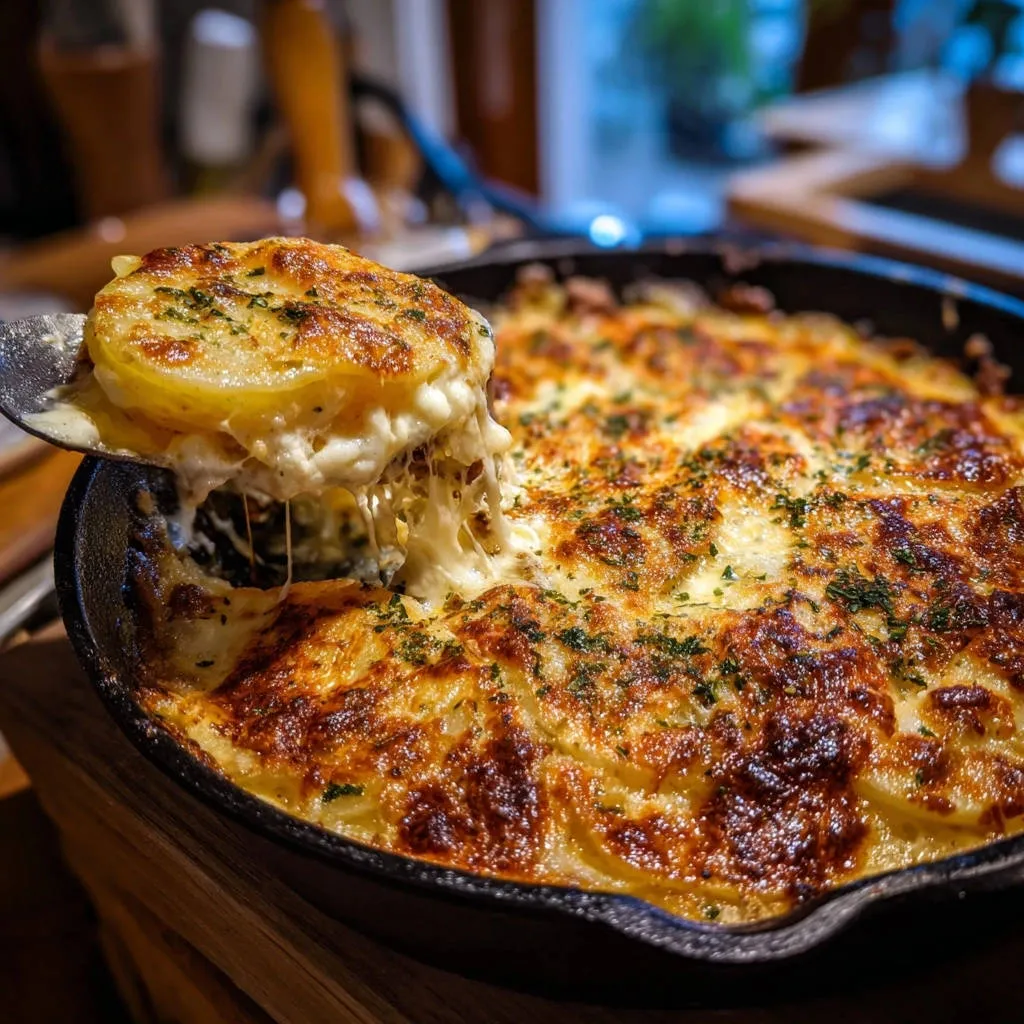
Our “Tender Potato Lock-In” step completely eliminates this risk. We start the cooking process on the stovetop by simmering the potatoes in the cream base for a brief 6 to 8 minutes.
This critical step partially cooks the potatoes and begins starch gelatinization, ensuring they are receptive to absorbing the liquid and are already tender by the time the oven browns the cheese topping.
The Efficiency Factor: Why a Skillet is Better Than a Casserole Dish
Using a heavy cast-iron skillet provides two major benefits: intense, even heat retention and unmatched convenience for oven-to-table serving.
Cast iron conducts heat far better than standard ceramic. This superior heat transfer ensures the sides and bottom of the gratin develop a rich, caramelized, and ultra-crisp crust.
The Essential Building Blocks of Flavor: Ingredients and Substitutions
Choosing the Right Potato for Ultimate Creaminess
For maximum success and creamy texture, select either Russet or Yukon Gold potatoes. Russets offer high starch content, which helps thicken the sauce and results in a fluffy, absorbent interior.
Yukon Golds hold their shape slightly better while offering a naturally buttery flavor, making them an excellent choice if you prefer a slightly firmer structure in your skillet gratin.
Regardless of variety, slicing the potatoes uniformly thin-ideally 1/8 inch-is non-negotiable for success in the critical pre-simmering stage.
The Dairy Duo: Cream, Milk, and the Power of Thyme Infusion
Heavy cream delivers the necessary richness and viscosity that defines a luxurious potato gratin. Whole milk is strategically added to thin the mixture just enough so it flows easily through the layered structure.
The flavor foundation comes from simmering the minced garlic and dried thyme directly in the dairy base. This gentle heat process extracts and deepens the herbal and savory notes before the potatoes are even added.
Pre-Cooked Pulled Beef: Ensuring Maximum Savory Depth
The pre-cooked pulled beef must be seasoned, moist, and tender. Its fine, shredded texture integrates perfectly into the creamy potato skillet, distributing intense savory flavor throughout every layer.
Using quality pre-cooked pulled beef makes this an incredibly efficient recipe. If using leftover roast beef, ensure it is generously seasoned and shredded to prevent dry pockets in the finished dish.
For a different take on a hearty beef and sweet potato combination, try this cheesy beef sweet potato casserole recipe.
Essential Tools for Your Ultimate Skillet Gratin Adventure
The Mandatory Cast-Iron Skillet
A 10 or 12-inch oven-safe skillet is crucial. Cast iron distributes heat evenly, preventing hot spots and maximizing the development of a professional, deep-golden crust.
The Mandoline Slicer: Precision is Paramount
Uniformity is key to a perfectly cooked gratin. A mandoline guarantees every slice is exactly 1/8 inch thick, ensuring the potatoes cook evenly during the delicate pre-cook step.
Slotted Spoon and Saucepan
A medium saucepan is required for infusing the cream and par-cooking the potatoes. The slotted spoon is essential for draining the partially cooked potatoes, preventing the transfer of too much liquid during assembly.
The Tender Potato Lock-In: Mastering the Critical Pre-Cook Step
Why Simmering Potatoes Guarantees Perfection Every Time
Simmering the thinly sliced potatoes begins the essential process of starch gelatinization. This process ensures the potato cells are softened and ready to absorb the rich, flavored cream mixture evenly.
If you skip this step, the potatoes compete with the cheese crust for oven time, leading to the dreaded raw center. The brief simmer ensures even moisture and heat penetration from the start.
Achieving the Perfect “Al Dente” Softness
The ideal duration for this step is 6 to 8 minutes. You are aiming for an ‘al dente’ texture, meaning the potatoes are slightly yielding but still firm enough to handle and layer.
Test by gently lifting a slice with the spoon; it should bend easily without breaking. They must not be fully tender yet, as they will continue to soften in the oven.
Step-by-Step: Mastering the Ultimate Creamy Potato Skillet with Pulled Beef
- Preparation and Thin Slicing:
Preheat the oven to 375°F and grease your skillet well. Use a mandoline or a very sharp knife to slice the potatoes exactly 1/8 inch thick; uniformity in slicing is the absolute key to success in this recipe.
- Infusing the Cream Base:
In a medium saucepan, combine the cream, milk, minced garlic, thyme, salt, and pepper. Bring this mixture only to a gentle simmer over medium heat-not a rolling boil-to prevent scorching the dairy.
- The Tender Potato Lock-In (The Fix!):
Add the sliced potatoes to the simmering cream and gently stir for 6 to 8 minutes until they are slightly flexible (al dente). This guarantees the potatoes will be fully cooked by the time the cheese is golden.
- The Strategic Layering Sequence:
Remove the potatoes with a slotted spoon, reserving the liquid. Arrange one-third of the potatoes in tight, overlapping layers in the skillet, followed by half of the pulled beef and one-third of the Gruyere/Cheddar.
Repeat the layering once more: potatoes, remaining beef, and cheese. Strategic layering ensures an even distribution of flavor in every bite of the savory comfort food.
- Adding the Reserved Cream and Pressing Down:
Arrange the remaining potato slices neatly on top. Pour the reserved cream mixture (the liquid used for simmering) evenly over the entire dish.
Gently press down on the entire structure to ensure the liquid penetrates all the layers. This prevents dry pockets and guarantees the richness of the cream base throughout the skillet.
- The Two-Stage Bake: Covered for Steam, Uncovered for Crust
Cover the skillet tightly with foil and bake for 30 minutes at 375°F. Baking covered builds internal steam, allowing the potatoes to finish cooking thoroughly without the top drying out.
- Achieving the Golden Parmesan Finish:
Remove the foil and sprinkle the top with the grated Parmesan cheese. Return the skillet to the oven and bake uncovered for another 15 to 20 minutes.
Look for visual cues: the top should be deeply golden brown, bubbly, and the filling should be thick and cooked through before removing it from the oven.
- The Essential Resting Period:
Allow the skillet gratin to rest for a mandatory 10 minutes before garnishing and serving. This resting period helps the cream base set, making clean, beautiful slices possible.
Chef’s Secrets: Elevating Texture and Flavor (Tips and Ingredient Hacks)
Infuse Flavor, Don’t Just Mix It In
Instead of just seasoning the layers, letting the garlic and thyme simmer in the cream base first extracts maximum essential oil flavor. This deepens the overall savory profile of the dish far beyond simple seasoning.
Handling the Liquid Line
After pouring the reserved cream, the liquid should nearly reach the surface of the top potato layer. If it looks low, add a splash more whole milk or cream before baking; adequate liquid is vital for guaranteed cooking.
The Cheese Grating Difference
Always grate your own cheese, especially the Gruyère and Parmesan. Pre-shredded cheese contains cellulose and anti-caking agents that inhibit perfect melting and often result in a slightly grainy sauce.
Adjusting Salt Levels for Pulled Beef
Since the pulled beef is usually pre-seasoned, carefully taste your cream base before simmering the potatoes. You may need less salt than specified if your beef is highly seasoned, preventing an overly salty final product.
Troubleshooting Common Skillet Gratin Issues
Problem: My Potatoes Are Still Hard After the Full Bake Time
This failure occurs if the initial 6-8 minute simmer was skipped or insufficient, or if the potatoes were sliced thicker than 1/8 inch. If this happens, cover the skillet tightly with foil immediately.
Reduce the oven temperature to 325°F and continue baking for 15-20 minutes. Lower, slower heat helps the interior cook without further burning the cheese crust.
Problem: The Cream Curdled or Separated
Dairy separation often occurs if the cream is brought to a rapid boil during the infusion step, or if low-fat milk is substituted. Ensure you only bring the dairy mixture to a gentle simmer.
Always use heavy cream and whole milk as specified, as their fat content stabilizes the sauce and prevents the cream from breaking down under heat.
Problem: The Filling is Too Watery or Soggy
If the filling is too loose, you likely didn’t bake it long enough uncovered for the moisture to evaporate, or you didn’t allow adequate resting time. The 10-minute rest is non-negotiable for the sauce to fully set.
If the top is already browned but the filling is loose, cover it again and bake for another 10 minutes. The potatoes will continue to absorb the liquid without the top scorching.
Serving and Storing Your Pulled Beef Potato Masterpiece
Ideal Side Dishes for This Rich Skillet
This tender potato gratin is incredibly rich and savory. It requires a light, bright counterpart to balance the heavy cream and beef.
Pair it with something acidic, like a simple mixed green salad dressed with a sharp Dijon vinaigrette, or blanched green beans tossed lightly with lemon zest and pepper.
Make-Ahead and Freezing Tips
You can successfully prepare this skillet up to the point of baking (Step 6), cover it tightly, and refrigerate it for up to 24 hours. If baking straight from the refrigerator, add about 10-15 minutes to the initial covered baking time.
Freezing is not recommended for this particular type of potato gratin, as the high moisture content of the potatoes and the delicate cream base will inevitably result in a grainy, watery texture upon thawing and reheating.
Best Practices for Reheating Leftovers
For best texture, reheat individual portions in the microwave gently, or place the entire covered skillet in a 300°F oven until warmed through.
Avoid reheating at high heat settings, as this quickly breaks the dairy emulsion, causing the cream sauce to separate and turn oily.
Frequently Asked Questions About the Ultimate Creamy Potato Skillet
Can I Use Different Cheeses Instead of Gruyère and Cheddar?
Yes, absolutely. Any good melting cheese with a strong flavor profile will work well for this cast-iron cooking method. Excellent alternatives include smoked Gouda, Fontina, or sharp Swiss.
Avoid fresh mozzarella or low-fat cheeses, as they often release too much moisture or fail to melt properly, compromising the creamy texture.
Is it Possible to Make This Recipe Vegetarian?
To make a vegetarian version, simply omit the pulled beef entirely. Alternatively, substitute the beef with an equal amount of deeply seasoned, sautéed wild mushrooms (such as portobello or cremini) to maintain the savory earthiness.
What if I Don’t Have a Cast Iron Skillet?
A heavy, oven-safe casserole dish of similar capacity (2 to 2.5 quarts) can be used instead. Ensure it is oven-safe for 400°F.
Be aware that the baking time might increase slightly, and the bottom crust may not be as uniformly crisp as the crust achieved using cast iron.
Ready to Impress? Share Your Ultimate Creamy Potato Skillet with Pulled Beef Masterpiece!
Now that you hold the secret to perfectly tender potatoes-the essential pre-cook step-you are ready to create a truly unforgettable comfort meal. This Ultimate Creamy Potato Skillet with Pulled Beef is guaranteed to be a dense, creamy, and satisfying hit at any table.
We’d love to see your results! Snap a photo and let us know how this guaranteed method changed your gratin game and your approach to making delicious scalloped potatoes in the comments below.
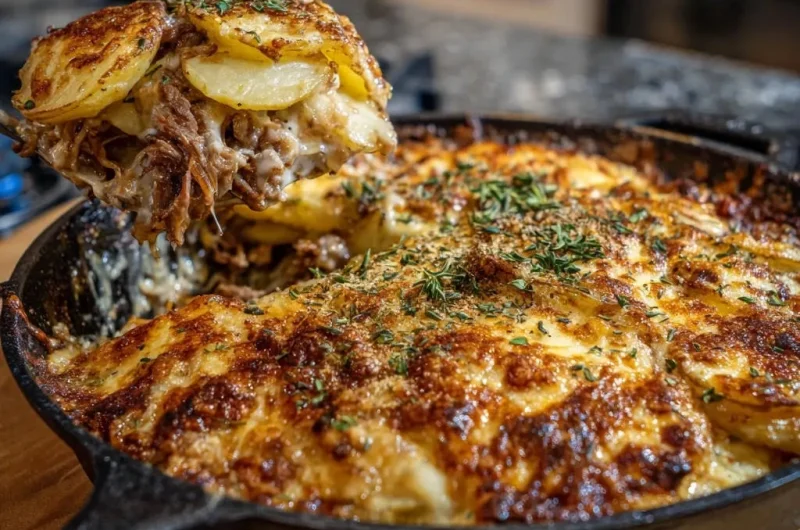
Creamy Potato Skillet Pulled Beef
Course: Main CourseCuisine: AmericanDifficulty: medium4
servings20
minutes1
hour750
kcal90
minutesNever suffer through hard potato centers again! This recipe guarantees perfectly tender, creamy potatoes in every bite by pre-simmering them in the rich cream base. Layered with seasoned pulled beef and golden Gruyere cheese, it’s a hearty skillet masterpiece.
Ingredients
4 medium Russet potatoes or Yukon Gold potatoes (about 2.5 lbs)
1 cup heavy cream
1/2 cup whole milk
2 cloves garlic, minced
1 teaspoon dried thyme
1/2 teaspoon salt
1/4 teaspoon black pepper
2 cups pre-cooked pulled beef (seasoned and shredded)
1 tablespoon olive oil or butter
2 cups shredded Gruyere or sharp cheddar cheese
1/4 cup grated Parmesan cheese
Fresh thyme or parsley, for garnish
Directions
- Preparation is Key: Preheat oven to 375 degrees F. Grease a large, oven-safe cast-iron skillet (10 or 12 inch). Peel the potatoes and slice them uniformly thin, ideally 1/8 inch thick (a mandoline works best for consistency).
- Create the Cream Base: In a medium saucepan, combine the heavy cream, milk, minced garlic, dried thyme, salt, and pepper. Bring the mixture to a gentle simmer over medium heat.
- The Tender Potato Lock-In (The Fix!): Add the thinly sliced potatoes directly into the simmering cream mixture. Gently stir and simmer for 6 to 8 minutes, just until the potatoes are slightly softened but still hold their shape (al dente). This critical pre-cook step ensures they finish cooking perfectly in the oven without the top burning or the centers remaining raw.
- Layer the Skillet: Remove the potato slices from the cream using a slotted spoon, reserving the cream mixture. Arrange one third of the potato slices in a single, overlapping layer on the bottom of the prepared skillet.
- Add the Meat and Cheese: Layer half of the pulled beef evenly over the potatoes, followed by one third of the shredded Gruyere/Cheddar cheese. Repeat the layering process once more (potatoes, remaining pulled beef, Gruyere/Cheddar cheese).
- Finish the Layers: Arrange the remaining potato slices neatly on top. Pour the reserved cream mixture (the liquid you simmered the potatoes in) evenly over the entire dish. Gently press down on the layers to ensure the liquid is distributed.
- Bake Covered: Cover the skillet tightly with foil. Bake for 30 minutes. Baking covered ensures the potatoes continue to steam and fully absorb the liquid.
- Crispy Top Finish: Remove the foil. Sprinkle the top with the grated Parmesan cheese. Return the skillet to the oven and bake uncovered for another 15 to 20 minutes, or until the top is deeply golden brown and bubbly and the filling is thick and cooked through.
- Rest and Serve: Let the skillet rest for 10 minutes before garnishing with fresh herbs. This resting period helps the gratin set, making it much easier to serve cleanly.
Notes
- Simmering the potato slices for 6-8 minutes ensures they achieve a perfect al dente texture before baking.