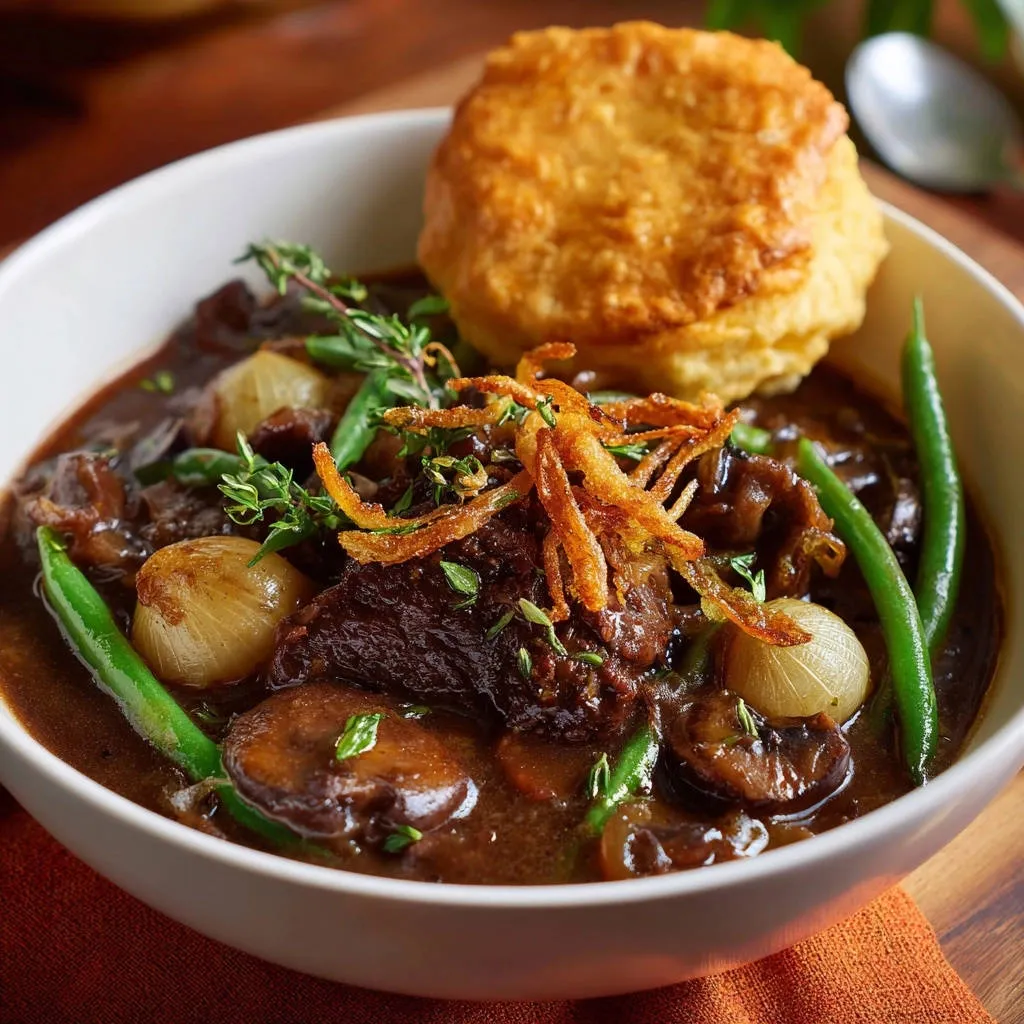
For years, I struggled to achieve that perfect, rich, spoon-coating gravy in my homemade beef stew; it always ended up thin and watery, feeling more like soup. This recipe for the Ultimate Hearty Beef Stew with Biscuit Topping solved that problem instantly by using one simple, crucial technique: a pre-sear flour dredge.
By transforming the initial flour coating into a slow-dissolving thickening agent, we guarantee a deep, velvety gravy and perfectly tender, savory meat every time. This is truly the stew that defines winter comfort.
Ditch the Slurry: Why This Recipe Guarantees Rich, Velvety Gravy
The Secret to Spoon-Coating Thickness
The secret lies in coating the raw beef cubes completely with flour before they ever touch the hot oil. This dredge creates a protective crust that traps moisture during the sear and locks in savory juices.
For more tender beef textures, explore these hearty beef mushroom dumplings.
As the stew braises for hours, that flour slowly dissolves into the liquid, naturally thickening the broth into a rich, deep gravy without the need for a last-minute cornstarch slurry.
Building Layers of Deep, Savory Flavor
The initial sear is not just about browning; it’s about creating the foundational layer of flavor known as the fond. This dark brown residue scraped from the bottom of the pot adds unparalleled depth.
Combining the intense fond with aromatic vegetables, concentrated tomato paste, and fresh thyme builds a sophisticated flavor profile that takes this dish far beyond standard stew.
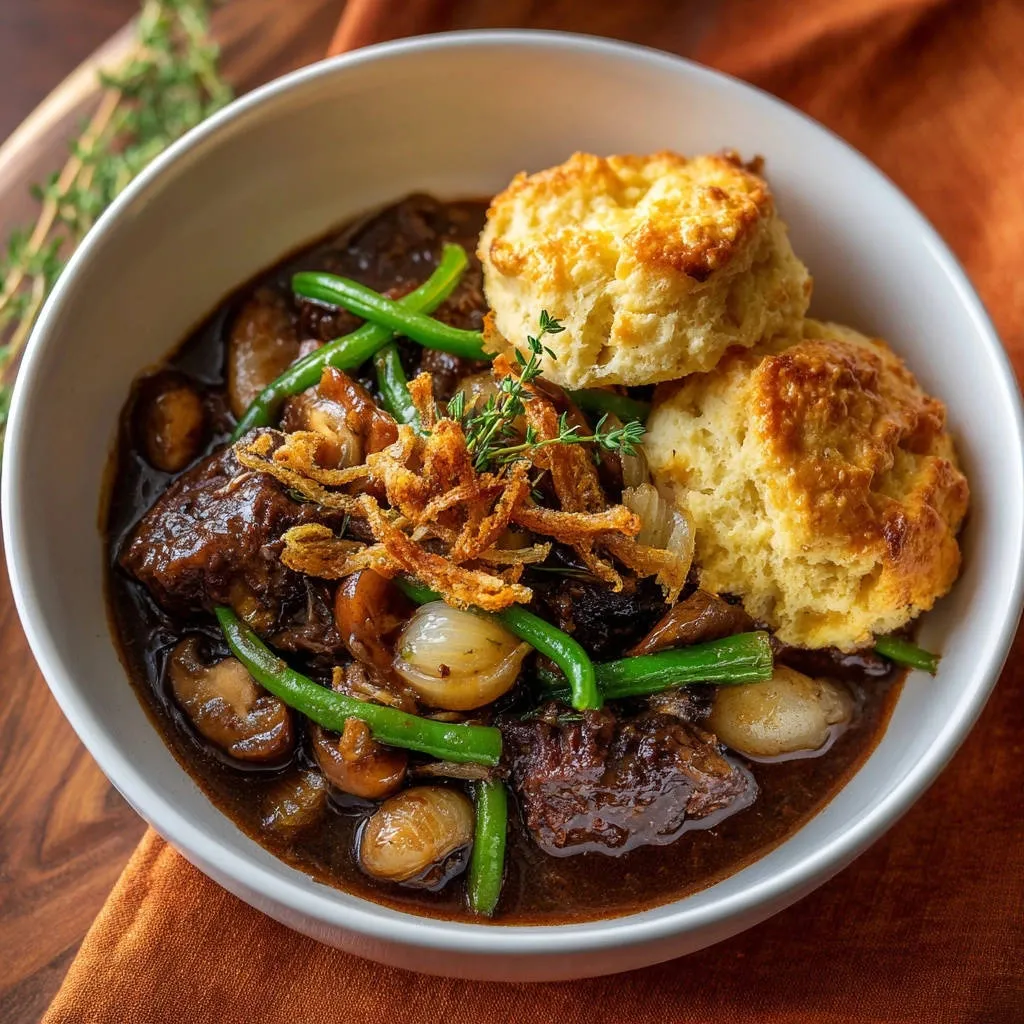
The Perfect Topping Contrast: Fluffy Biscuit Meets Hearty Stew
We serve this specific recipe with a single, warm, fluffy biscuit placed directly on top of the stew, allowing it to soak up the luxurious gravy. This method prevents the biscuit from becoming soggy during the cooking process and provides the ideal soft texture contrast to the fork-tender beef.
The Essential Gear for Stew Success
The Unsung Hero: A Heavy-Bottomed Dutch Oven
A heavy cast iron or ceramic Dutch oven is crucial for successful braising. Its thick walls and base distribute heat evenly, preventing scorching.
This even distribution allows the stew to maintain a low, steady simmer for the necessary three hours, ensuring the connective tissue in the beef breaks down completely.
Sharp Knife and Cutting Board
Precision matters greatly when preparing stew meat. Cutting the beef into consistent 1.5-inch cubes ensures that all pieces cook at the same rate and reach the perfect fork-tender state simultaneously.
The Flavor Foundation: Ingredients for Deep Comfort
Selecting the Star: Beef Chuck (The Best Cut for Ultimate Hearty Beef Stew)
Beef chuck is the preferred cut because it contains significant marbling and connective tissue, namely collagen. While tough initially, collagen breaks down into gelatin during the long braise.
This gelatin is what lubricates the meat fibers, resulting in that desirable meltingly tender texture that defines a great stew.
For even more tender results, explore the secrets behind rich braised beef stew.
Aromatic Depth: Onions, Mushrooms, and Garlic
Cremini mushrooms and pearl onions serve two purposes: they provide sweet, savory umami and release moisture during sautéing. This moisture helps lift the flavorful fond stuck to the bottom of the pot.
Fresh vs. Dried Herbs: The Power of Thyme
Using an entire bunch of fresh thyme adds a brighter, cleaner aromatic quality that dried herbs simply cannot match. The whole stems infuse the liquid deeply, yet they are easily removed later, preventing lingering bitter notes.
The Unexpected Crunch: Crispy Fried Onions
The addition of crispy fried onions as a garnish provides an essential textural element. Their salty, crisp bite contrasts beautifully with the soft meat and rich, velvety gravy.
From Sear to Simmer: The Step-by-Step Ultimate Hearty Beef Stew Process
Step 1: Preparing the Secret Thickening Foundation
Toss the beef cubes thoroughly with the specified amounts of flour, salt, and pepper until they are completely coated. This seemingly simple action is the backbone of your final, rich gravy.
Step 2: Maximizing Flavor Through the Perfect Sear (The Fond)
Ensure the oil is hot but not smoking, and work quickly in small batches. Crowding the pot will steam the beef instead of searing it, preventing the formation of the crucial brown bits (fond) needed for flavor depth.
Sear the meat deeply on all sides until a dark brown crust forms, then remove it completely and set it aside, leaving the remaining oil and fond in the pot.
Step 3: Building the Base and Deglazing
Once the beef is removed, reduce the heat and add the mushrooms and pearl onions. Use their moisture to naturally scrape up the fond from the bottom of the pot, integrating those rich, savory bits into your sauce base.
Add the garlic and tomato paste last and cook briefly, about one minute, until fragrant. This crucial “blooming” step activates the flavor of the tomato paste, deepening its color and sweetness before adding liquid.
Step 4: The Long, Slow Braise for Meltingly Tender Results
Return the seared beef and the bunch of fresh thyme to the pot and pour in the beef broth. Bring the mixture up to a strong simmer, then immediately cover tightly and reduce the heat to the absolute lowest setting.
This low, slow process (2.5 to 3 hours) breaks down the tough collagen in the chuck, resulting in truly fork-tender meat and a visibly rich, thick gravy.
Step 5: The Finishing Touches and Final Seasoning
Remove the lid and discard the thyme stems, which have now imparted all their flavor. Taste the stew and stir in the remaining salt, adjusting the seasoning as necessary to enhance the broth.
Add the green beans during the last 10 minutes of simmering. This ensures they retain a vibrant green color and a pleasant, tender-crisp texture rather than turning mushy from prolonged cooking.
Troubleshooting and Chef’s Secrets for Perfect Braising
My Stew Meat is Still Tough!
If the meat resists a fork, it simply means it needs more time. Connective tissues break down between 180°F and 205°F, and this can take longer if your oven or stovetop temperature fluctuates.
Put the lid back on and check again in 30-minute intervals; never try to rush the breakdown of connective tissue.
The Gravy is Too Dark or Has a Burnt Taste
A bitter taste often comes from burning the fond (the brown bits) in the pot before deglazing. The fond should be rich brown, not black.
If the pot bottom scorches during the sear, you must scrape out the burned bits and wipe the pot clean before proceeding to Step 3, otherwise, the bitterness will ruin the whole batch.
Quick Flavor Elevation: Depth Without the Time
To give the stew an extra layer of savory depth without adding hours to the cooking time, stir in a teaspoon of Worcestershire sauce or a splash of low-sodium soy sauce just before the final simmer.
These additions introduce glutamates that boost the existing umami elements beautifully, making the broth taste richer and more complex.
Beyond the Bowl: Garnish, Pairings, and Serving the Biscuit Topping
The Art of Garnish: Integrating Crispy Fried Onions
The fried onions are not merely decorative; they are essential for textural balance. The crispy element provides a necessary counterpoint to the soft, slow-cooked components of the stew.
Why a Single Biscuit is Better than a Crust
Serving the biscuit on top of the finished stew, rather than baking a crust over the top, provides maximum control and freshness. The biscuit remains flaky on the exterior while its base soaks up the hot, savory gravy.
This method ensures the biscuit is tender and warm, delivering comfort in every bite without turning the overall texture of the stew starchy or dense.
Round Out Your Meal
To complete your hearty beef stew experience, consider these complementary dishes.
- For a cool, refreshing contrast to the rich stew, try the creamy herb and pea potato salad, featuring fresh herbs that cut through the savory notes.
- Serve alongside a warm, crusty loaf of cheddar chive bread, perfect for soaking up every bit of that velvety gravy.
Perfect Side Dish Pairings
Garlicky Mashed Potatoes: Ideal for soaking up any excess gravy remaining in the bowl, ensuring no drop of the velvety sauce is wasted.
A Bright Side Salad: The acidity and crispness of a simple vinaigrette-dressed salad cuts through the richness of the Ultimate Hearty Beef Stew with Biscuit Topping, providing palate relief.
Make-Ahead Planning and Storage Solutions
Can I Make the Stew Base Ahead?
This Ultimate Hearty Beef Stew with Biscuit Topping actually improves overnight! Complete the recipe through Step 4, allowing the flavors to meld beautifully as the stew cools and chills.
Reheat slowly on the stovetop the next day, and then complete Step 5 (adding the green beans and final seasoning) just before serving.
Optimal Storage and Freezing
Leftovers will keep for 3 to 4 days in an airtight container in the refrigerator. The gravy often thickens further upon chilling, intensifying the flavor.
For longer storage, freeze the stew (without the biscuits or fried onions) for up to 3 months. Thaw overnight in the fridge before reheating for best results.
Reheating Without Drying Out
To reheat, use a low temperature on the stovetop or in the oven, covering the pot to prevent moisture loss. Add a splash of extra beef broth or water if the gravy has become extremely thick after chilling.
Common Questions About Ultimate Hearty Beef Stew with Biscuit Topping
Do I Have to Use Fresh Thyme?
While fresh thyme provides the best, most aromatic flavor and is highly recommended, you can substitute 1 teaspoon of dried thyme in a pinch. Remember that dried herbs are significantly more potent than fresh.
If using dried herbs, add them in Step 3 along with the garlic and tomato paste to allow the flavors to bloom properly in the hot oil before the broth is added.
What is a Good Substitute for Pearl Onions?
If pearl onions are unavailable or you prefer not to peel them, you can dice one medium yellow onion and use that instead. Simply sauté the diced yellow onion slightly longer to ensure full sweetness is developed.
However, the mild sweetness and whole, tender texture of the pearl onions do add a unique element that contributes significantly to the dish’s heartiness.
Can I Use a Gluten-Free Flour Substitute?
Yes, for the initial dredge (The Secret Thickening Foundation), you can successfully use a Cup-for-Cup gluten-free flour blend. This specialized blend is designed to replicate the thickening properties of regular all-purpose flour.
Ensure the beef cubes are still fully coated before searing, and proceed with the recipe as written.
There is profound satisfaction in mastering the classics, and achieving that perfect, rich, velvety gravy takes this comforting dish to the next level. This braising technique ensures your stew is not just warm, but deeply satisfying, guaranteeing perfectly fork-tender beef every time.
Skip the sadness of thin stew forever and experience true cold-weather comfort. Make this Ultimate Hearty Beef Stew with Biscuit Topping tonight, and claim your secret to flawless flavor.
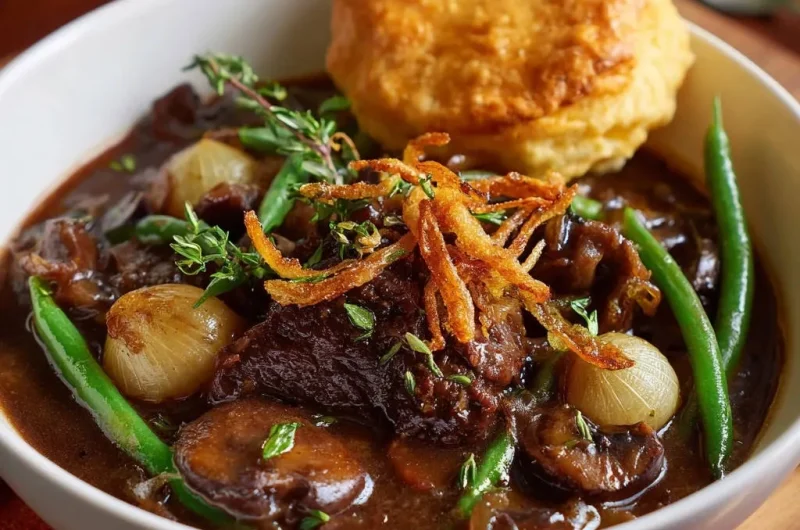
Beef Stew
Course: Soups-StewsCuisine: AmericanDifficulty: medium6
servings20
minutes3
hours650
kcal200
minutesStop serving runny sauce and start serving a deep, rich gravy. This ultimate beef stew recipe guarantees a thick, velvety braising liquid by utilizing a simple flour dredge on the meat before searing. Simmered until the beef is meltingly tender, it’s perfect served over a fluffy biscuit.
Ingredients
2.5 pounds beef chuck, trimmed and cut into 1.5 inch cubes
1/4 cup all-purpose flour
2 teaspoons salt, divided
1 teaspoon black pepper
2 tablespoons olive oil
1 pound cremini mushrooms, halved
1 cup pearl onions, peeled
4 cups beef broth (low sodium)
1 tablespoon tomato paste
2 cloves garlic, minced
1 bunch fresh thyme
1 cup fresh green beans, trimmed
Crispy fried onions, for garnish
One large biscuit, for serving
Directions
- Prepare the Meat and the Secret Thickening Foundation. In a large bowl, toss the beef cubes with the flour, 1 teaspoon of the salt, and the pepper until every piece is completely coated. This flour coating is the key ingredient that dissolves slowly into the braising liquid, guaranteeing a thick, deep gravy without needing a last-minute cornstarch slurry.
- Sear the Beef. Heat the olive oil in a large Dutch oven over medium-high heat. Working in batches so as not to overcrowd the pot, sear the flour-coated beef pieces until a deep, dark brown crust forms on all sides. Remove the beef and set aside, leaving the fond (browned bits) and residual oil in the pot.
- Build the Base Flavor. Reduce the heat to medium. Add the pearl onions and mushrooms to the pot and sauté for 5 to 7 minutes until they soften slightly and begin to brown, scraping up the fond from the bottom of the pot as they cook. Add the minced garlic and tomato paste and cook for 1 minute until fragrant.
- Deglaze and Simmer. Return the seared beef to the pot. Pour in the beef broth and add the entire bunch of fresh thyme. Bring the mixture to a strong simmer, then reduce the heat to low, cover the pot tightly, and simmer for 2.5 to 3 hours, or until the beef is meltingly tender. The gravy should be visibly rich and thick at this point due to the initial flour dredge.
- Finish the Stew. Remove the lid and discard the thyme stems. Stir in the remaining 1 teaspoon of salt and taste, adjusting seasoning as needed. Add the trimmed green beans and continue to simmer uncovered for 10 minutes, or until the beans are tender crisp.
- Serve Hot. Ladle the hearty stew into bowls. Top each serving generously with fresh thyme sprigs, a sprinkle of crispy fried onions, and one warm, fluffy biscuit set right on top of the rich gravy.
Notes
- The initial flour toss is crucial; it ensures the gravy thickens perfectly without needing a final cornstarch slurry.