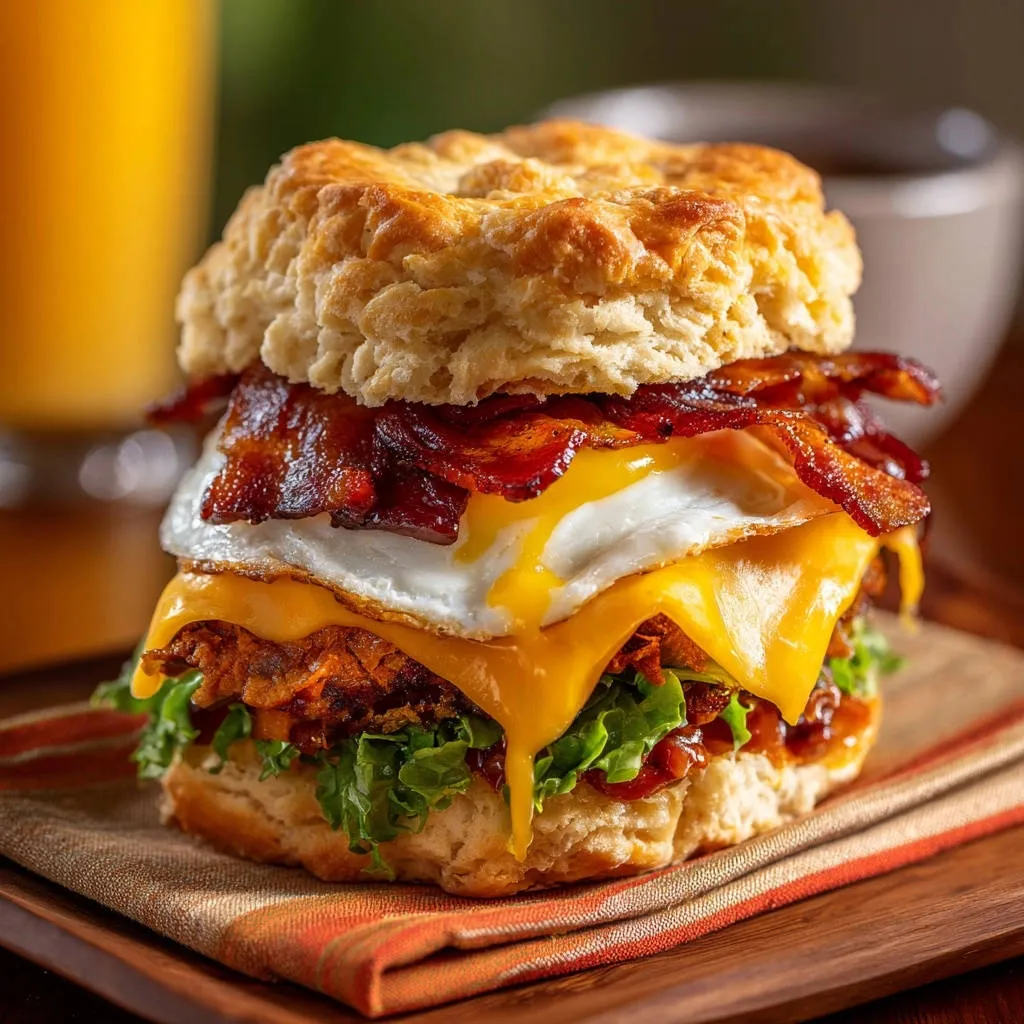
I used to be so frustrated trying to make tall, tender biscuits at home; they always came out squat and tough, completely ruining the experience of a stacked morning meal. Learning the technique of folding and using frozen grated butter completely changed that, guaranteeing dramatic rise and buttery layers every time. This revolutionary approach is the secret to perfecting the Ultimate Layered Breakfast Biscuit Sandwich-a reliable, show-stopping breakfast guaranteed to impress.
Beyond Basic: Why This Biscuit Sandwich Recipe Gets Rave Reviews
The Biscuit Game Changer: Fluffiness Guaranteed
The secret to these sky-high biscuits lies in the way the fat is incorporated, creating thousands of tiny, separate butter pockets within the dough. When these pockets melt in the high heat of the oven, they release powerful steam that physically pushes the layers apart.
This method ensures uniform lift and results in unparalleled tenderness and delicate flakiness that cannot be achieved through traditional kneading methods. Every biscuit is guaranteed to rise dramatically and showcase beautiful, peeling layers.
Customizable Layers: Building Your Perfect Morning Bite
While the biscuit is undeniably the star, the layering is specifically designed for structural integrity and maximum flavor contrast. We strategically use elements like shredded chicken or sweet potato hash to stabilize the sandwich base.
This textural buffer prevents the rich, runny yolk and melted cheese from soaking the bottom biscuit, ensuring every bite remains structurally sound and perfectly balanced.
Essential Tools for Your Biscuit Baking Adventure
The Box Grater: Essential for incorporating frozen butter flakes, maximizing the surface area of the fat for better layering.
Sharp Biscuit Cutter (No Twist!): Key to maintaining open layers, as twisting seals the dough edges and prevents upward rise.
Parchment Paper: Used to line the baking sheet for easy release and quick cleanup, especially helpful at 425°F.
Gathering Your Building Blocks: Ingredients for the Ultimate Stack
The Foundation: Key Ingredients for Layered Biscuits
All-Purpose Flour: Provides the necessary structure for the biscuit. Using a consistent, high-quality brand ensures reliable dough texture.
Frozen Unsalted Butter: The secret weapon. Keeping the fat extremely cold prevents premature melting and ensures steam separation for dramatic layers in the oven.
Cold Buttermilk: Reacts with the baking soda and powder for maximum lift, while imparting the classic, slightly tangy flavor and characteristic tenderness of Southern-style biscuits.
Building the Perfect Sandwich Stack (Per Sandwich)
The Runny Yolk: A perfectly pan-fried egg with a flowing center provides crucial moisture and unmatched richness, acting as a binder for the layers.
Strategic Shredded Layers: The shredded chicken or hash adds a necessary savory, textural contrast and acts as a barrier, stabilizing the ingredients above it.
Melting Cheddar: Choose a sharp, aged cheddar. The strong flavor cuts through the richness of the bacon and egg, and its moderate melting point ensures gooey texture.
Achieving Sky-High Layers: Mastering the Grated Butter Technique
Why Grating Frozen Butter Guarantees Flakiness
Traditional methods of cutting butter into flour can result in uneven chunks, which leads to sporadic rise and variable texture. Grating frozen butter directly into the mixture ensures uniform, paper-thin flakes of fat.
This maximized surface area allows the cold fat to be perfectly distributed, guaranteeing consistent steam release throughout the dough. The result is consistently light, flaky, and high-rising biscuits.
The Crucial “Letter Fold” Method for Dramatic Rise
After combining the shaggy dough, the repeated folding-known as a turn or ‘letter fold’-develops the crucial layered structure without the toughness that comes from over-kneading.
You pat the dough into a rectangle, fold it into thirds like a business letter, turn it 90 degrees, and repeat. Performing this sequence three times triples the existing layers with each turn.
This low-effort method guarantees 27 distinct, delicate layers in the final biscuit, resulting in the desired high-rise structure.
The Cold Factor: Controlling Dough Temperature
Maintaining a cold dough temperature is absolutely essential; if the butter softens or melts before baking, the layers collapse and the biscuit becomes dense. Use ingredients straight from the refrigerator.
Work quickly, especially during the folding process, and if your kitchen is warm, chill the dough for 10 minutes between the letter folds to ensure the butter remains solid.
Step-by-Step Directions: Crafting the Ultimate Layered Breakfast Biscuit Sandwich
-
Preparation and Butter Integration:
Preheat your oven to 425°F and prepare the dry ingredients (flour, baking powder, salt, baking soda) in a large bowl. Grate the 8 tablespoons of frozen butter directly into the flour mixture, tossing quickly to coat the butter flakes.
Ensure the butter flakes remain distinct and separated by flour; this step is non-negotiable for achieving the desired steam layering and height.
-
Mixing the Dough (Stop Early!):
Pour the 3/4 cup of cold buttermilk in all at once. Use a wooden spoon or spatula to mix the dough just until it comes together in shaggy, moist clumps.
Do NOT overmix, as this rapidly develops gluten, which results in tough, squat biscuits. The mixture should still look messy and dry in spots.
-
The Sky-High Layering Technique:
Turn the shaggy dough onto a lightly floured surface. Gently pat it into a rectangle, approximately 1 inch thick. Fold the rectangle in thirds, like a letter, bringing the left side over the middle, then the right side over the middle.
Turn the dough 90 degrees and repeat the folding process two more times. This crucial folding process creates the delicate, internal layers for guaranteed dramatic rise.
-
Cutting and Placement:
Pat the layered dough into a final rectangle, roughly 3/4 inch thick. Use a sharp cutter to stamp out biscuits and place them close together on a parchment-lined sheet.
Critically, press straight down with the cutter-do not twist! Twisting seals the edges of the layers, which prevents them from rising vertically in the oven.
-
Baking for the Perfect Rise:
Bake for 15 to 18 minutes at 425°F, watching for a deep golden brown color and a dramatic vertical rise. Placing them close together encourages maximum height.
-
Sandwich Component Preparation:
While the biscuits cool slightly, cook your bacon until maximum crispness. In a separate pan, melt a small pat of butter and fry the egg until the white is set-a runny yolk provides the luxurious texture needed for this stack.
-
The Ultimate Layering Sequence:
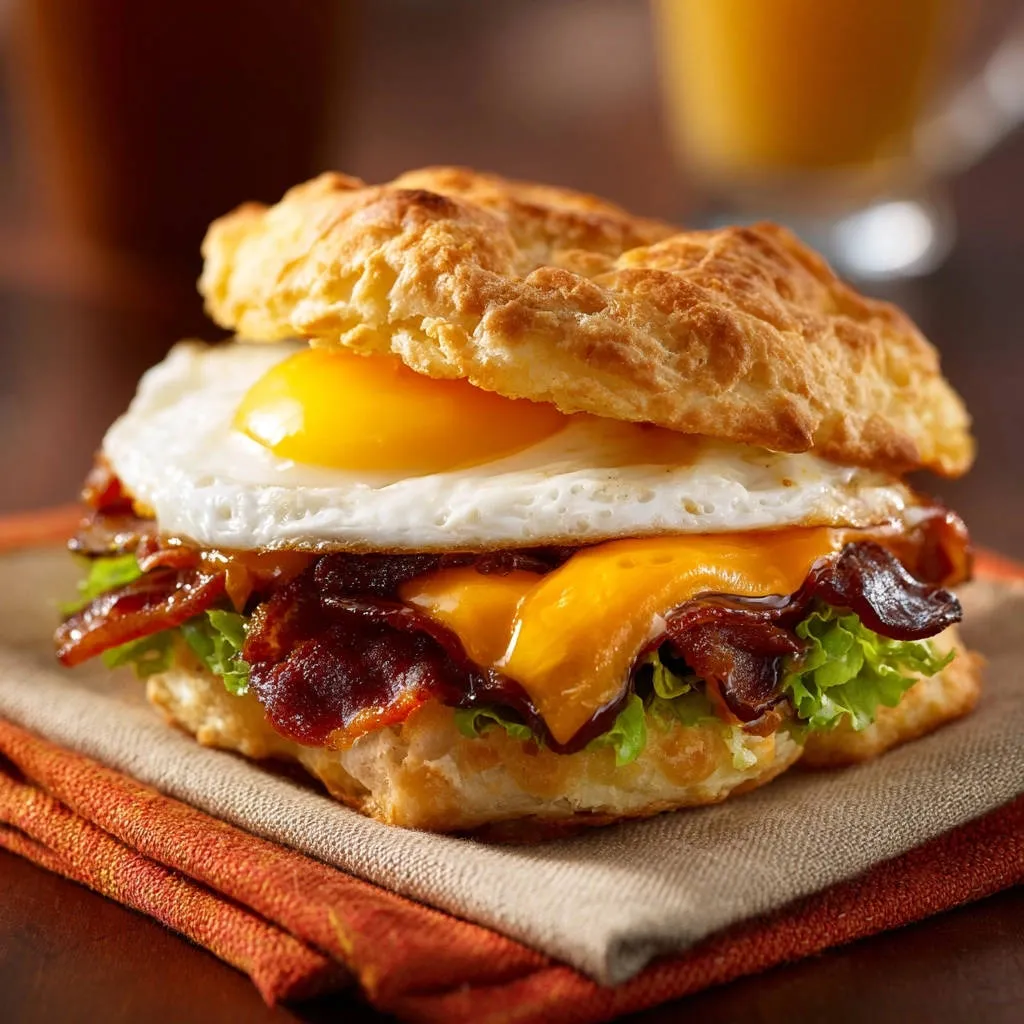
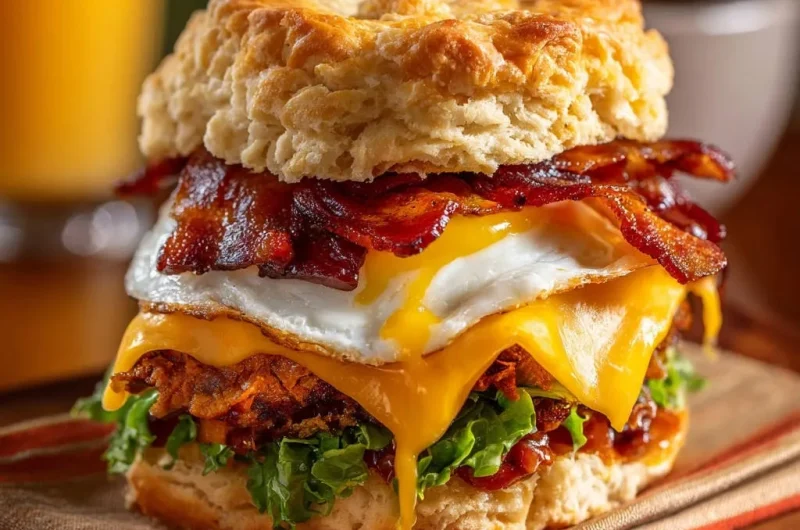
Slice the warm biscuit horizontally. Layer the bottom half with a small leaf of lettuce, followed by the strategic shredded meat or hash, then the slice of cheddar cheese. Place the hot, pan-fried egg directly on the cheese.
For another satisfying breakfast tower, consider this bacon egg and cheese stack.
The residual heat from the egg and meat will start to melt the cheese perfectly. Top with the crispy bacon and the biscuit lid, serving immediately to enjoy the melting texture.
For another satisfying breakfast idea, explore this cheesy egg grilled sandwich.
Chef’s Secrets: Elevating Your Biscuit Sandwich Game
The Brush Trick: For a soft, slightly paler top, brush the unbaked biscuits with a little leftover buttermilk before baking. For a crispier, deeper brown crust, use melted unsalted butter instead.
Don’t Waste the Scraps: If you have leftover dough scraps after cutting, gently stack them rather than re-kneading them. The resulting biscuit won’t be as high or layered as the main batch, but it prevents unnecessary waste.
Salted Butter Swap: If you must use salted butter, reduce the recipe’s added salt by half a teaspoon. This ensures the flavor balance remains optimal without becoming overwhelmingly savory.
Troubleshooting Common Biscuit Challenges
Why Are My Biscuits Dense and Squat?
The primary culprit for density is overmixing the dough, which activates too much gluten before baking. You must mix only until the flour is barely incorporated and the dough still looks shaggy and uneven.
Another reason for squatness is twisting the cutter when shaping the dough. Twisting seals the delicate layers you just created, preventing the steam from pushing the biscuit up; always press straight down and lift straight up.
My Dough is Too Crumbly to Fold: What Went Wrong?
This usually means your cold buttermilk measurement was slightly off, or your flour was inadvertently packed too tightly when measuring. The dough needs just enough moisture to hold itself together.
If the dough seems too dry and won’t form a rectangle, add buttermilk one teaspoon at a time until the mixture just barely holds together when pressed.
Serving Suggestions and Preparation Strategy
Make-Ahead Tips for Quick Weekday Mornings
You can cut the biscuits and freeze them raw on a baking sheet. Once solid, transfer them to a freezer bag, ensuring they are tightly sealed to prevent freezer burn. Bake directly from frozen, adding 5-8 minutes to the standard baking time.
Baked biscuits store well at room temperature for up to two days if kept in an airtight container. For the best texture, reheat them quickly in a toaster oven or oven for a few minutes before assembling the sandwich.
Perfect Pairings: What to Serve Alongside
Serve the Ultimate Layered Breakfast Biscuit Sandwich with a side of fresh, tart berries or a bright citrus fruit salad. The acidity helps to cut through the richness of the bacon and egg components.
A simple dusting of powdered sugar over the biscuit top or a light drizzle of spicy honey butter can also elevate the savory profile of the sandwich components beautifully.
Sweet Endings
To round out your breakfast biscuit sandwich, consider these chocolate creations.
- For a moist and satisfying dessert, try this Moist Chocolate Bundt Cake which offers a rich chocolate experience.
- If you’re craving more layered chocolate goodness, this Double Chocolate Layer Cake provides a delightful contrast.
Frequently Asked Questions (FAQs) About Biscuit Assembly
Can I Use Different Fats Instead of Butter?
While vegetable shortening will provide impressive height, it lacks the signature buttery flavor that makes this recipe exceptional. Shortening also works well but must be kept frozen and grated just like the butter.
For the true decadence and flavor profile of the Ultimate Layered Breakfast Biscuit Sandwich experience, frozen, high-quality unsalted butter is irreplaceable.
Is Shredded Chicken Necessary for the Sandwich Layer?
No, the shredded meat or hash is optional but highly recommended for structure. It prevents the cheese and egg from sliding and provides a crucial textural layer that defines the “ultimate” stack.
If you prefer a vegetarian option, savory roasted mushrooms, sliced heirloom tomatoes, or thick sliced avocado also work beautifully to achieve the same textural stability.
Why Do I Need to Place the Biscuits Close Together When Baking?
Placing biscuits close together on the baking sheet forces them to rise vertically rather than spreading outwards as they bake. This method results in maximum height and ensures the sides stay soft, which is absolutely ideal for a tall, stacked sandwich.
Ready to Impress? Share Your Ultimate Layered Breakfast Biscuit Sandwich Masterpiece!
Having mastered the secrets of frozen grated butter and the tri-fold technique, you are now equipped to bake the fluffiest, most tender biscuits imaginable. This recipe for the Ultimate Layered Breakfast Biscuit Sandwich is a crowd-pleaser that guarantees consistent success and deep satisfaction.
Don’t be surprised if this technique quickly becomes your new weekend breakfast ritual. Snap a photo of your sky-high creation and share your baking triumph with us!
Breakfast Biscuit Sandwich
Course: BreakfastCuisine: AmericanDifficulty: medium6
sandwiches20
minutes20
minutes650
kcal40
minutesStop making squat, tough biscuits. This revolutionary recipe uses frozen grated butter and a simple three-fold stacking technique to create dramatically risen, buttery layers that are perfect for holding a hearty breakfast sandwich.
Ingredients
For the Biscuits:
2 cups all-purpose flour
2 teaspoons baking powder
1 teaspoon salt
1/2 teaspoon baking soda
1 stick (8 tablespoons) unsalted butter, cubed and kept frozen
3/4 cup cold buttermilk
For the Sandwich Assembly (Per Sandwich):
1 slice cheddar cheese
2 slices crispy cooked bacon
1 large egg
1/4 cup prepared shredded chicken or sweet potato hash (for the layer visible under the cheese)
1 small leaf of green lettuce
Butter, for pan frying
Directions
- Prepare the Dry Ingredients and Butter: Preheat the oven to 425 degrees F. In a large mixing bowl, whisk together the flour, baking powder, salt, and baking soda. Add the frozen butter cubes. Using a box grater, grate the frozen butter directly into the flour mixture. Quickly toss the mixture together to coat the butter flakes, ensuring the butter remains in small, separate pieces. This step is the key to layering.
- Mix the Dough: Pour in the cold buttermilk all at once. Use a wooden spoon or spatula to mix the dough just until it comes together in shaggy clumps. Do not overmix. The dough should look messy and dry in spots.
- The Sky-High Biscuit Technique: Turn the dough out onto a lightly floured surface. Pat the dough gently into a rectangle, about 1 inch thick. Fold the dough in thirds, like a letter (bring the left side over the middle, then the right side over the middle). Turn the dough 90 degrees, and repeat the folding process two more times. This folding and turning creates the layers that guarantee a high rise without kneading the dough.
- Cut the Biscuits: Pat the dough into a final rectangle about 3/4 inch thick. Use a sharp biscuit cutter (do not twist it, as twisting seals the edges and prevents rising) to stamp out the biscuits. Place them close together on a parchment-lined baking sheet.
- Bake: Bake for 15 to 18 minutes, or until the tops are golden brown and dramatically risen. Set aside.
- Assemble the Sandwich: While the biscuits cool slightly, cook the bacon until crispy. In a separate pan, melt a small pat of butter over medium heat. Fry the egg until the white is set but the yolk is still wonderfully runny. The chicken is done when it reaches 165°F (74°C) in the thickest part.
- Layering: Slice a warm biscuit in half. On the bottom half, place the lettuce, then the shredded meat/hash, followed by the slice of cheddar cheese. Place the pan-fried egg directly on the cheese. The residual heat from the egg and meat will start to melt the cheese perfectly. Top with the crispy bacon and the biscuit lid. Serve immediately.
Notes
- Ensure butter is fully frozen and grated for maximum rise. Do not twist the biscuit cutter when stamping out the shapes.