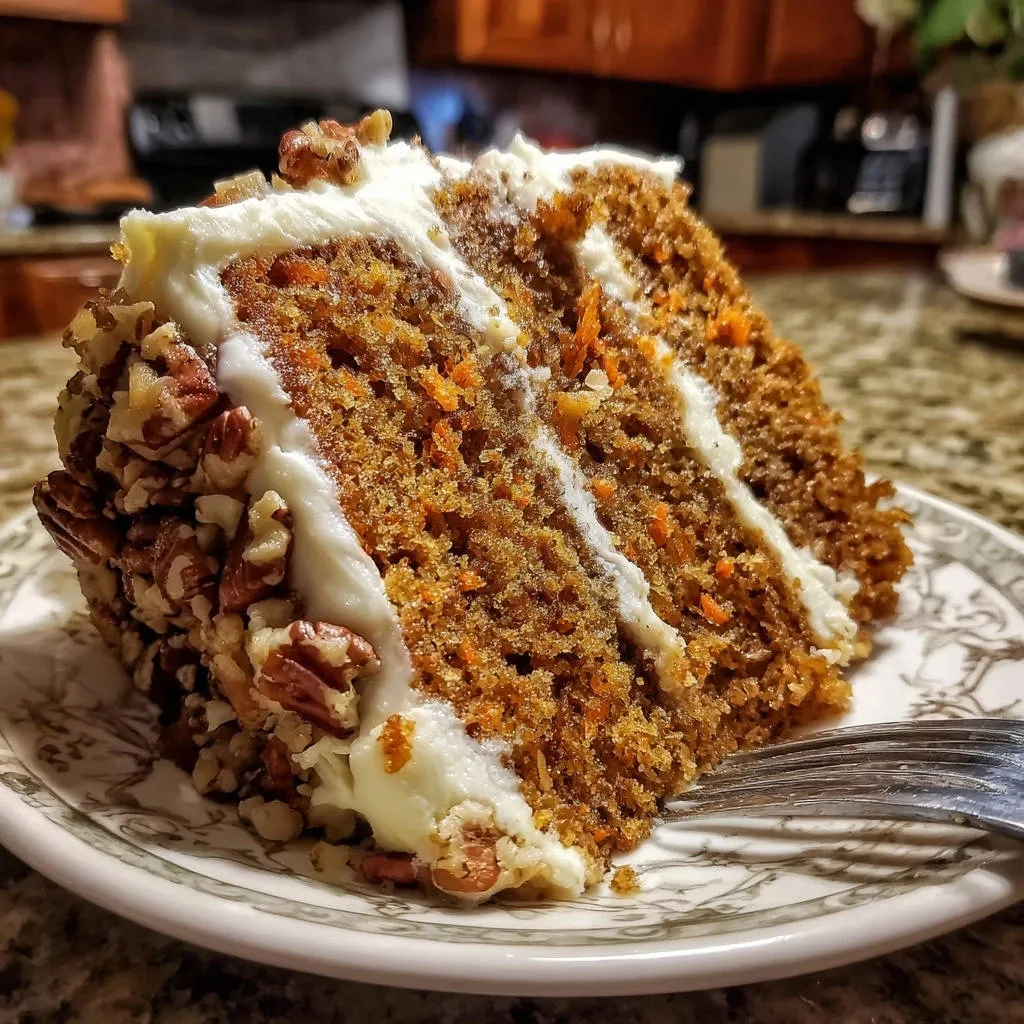
For years, I battled the frustration of baking a stunning layer cake only to find the interior dry, crumbly, or heavy as a brick. Achieving that perfect, light yet lush crumb in an Ultimate Moist Carrot Cake requires more than just mixing-it requires a method.
This foolproof recipe leverages a specific technique involving oil and buttermilk that locks in moisture and tenderness, guaranteeing the rich, tender texture you’ve always wanted.
If you enjoy moist baked goods, you’ll also appreciate these pumpkin pecan cheesecake bars.
The “Never Dense” Secret: Mastering the Ultimate Moist Carrot Cake Crumb
The secret to avoiding the common dry cake catastrophe lies entirely in how we introduce fats and liquids into the batter.
Unlike many older recipes that rely on creaming butter, this formulation uses oil as its primary fat source, which prevents the development of toughness.
By incorporating room temperature buttermilk, we ensure smooth emulsification, creating a homogenous batter that bakes up perfectly tender every single time.
This methodical approach, focusing on ingredient temperature and gentle mixing, consistently delivers an exceptionally rich and tender layer cake.
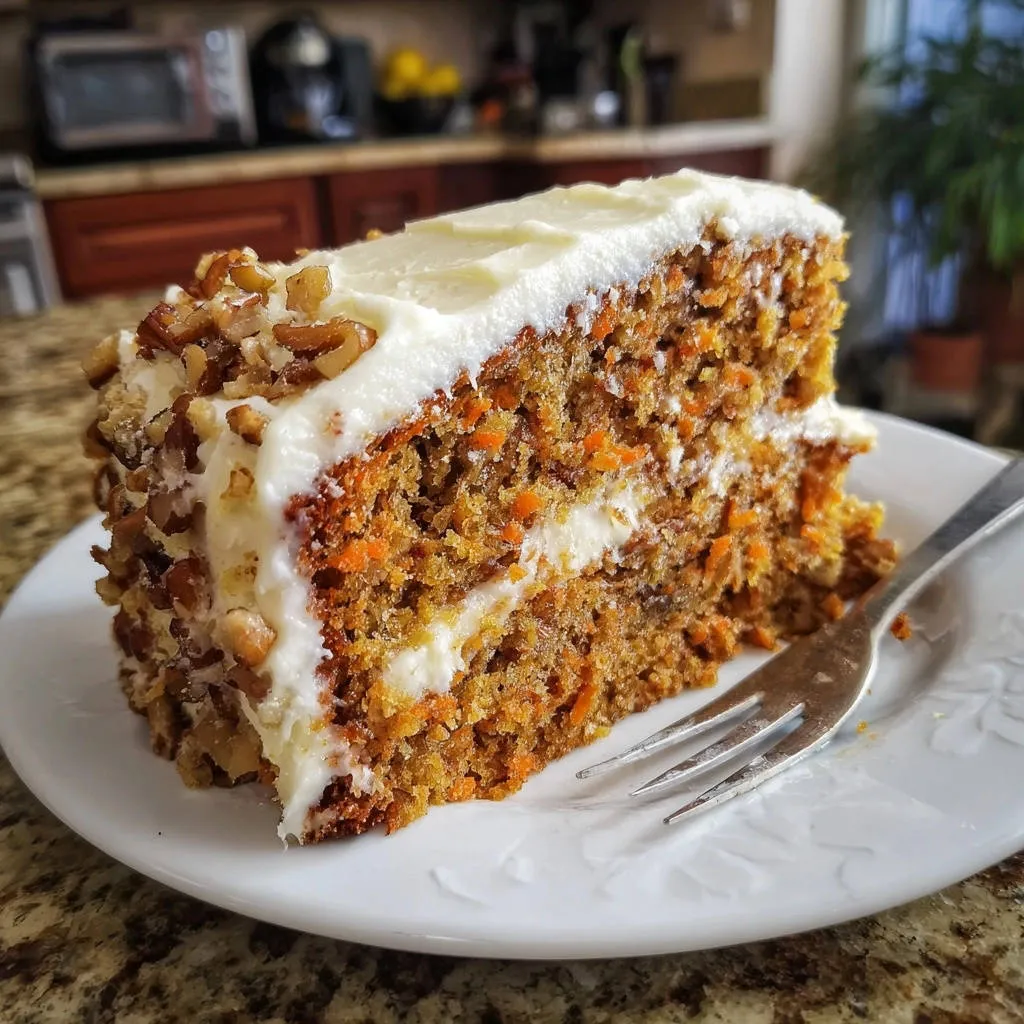
Why Oil Beats Butter for Maximum Moisture
Oil is 100% fat, whereas butter contains about 20% water and milk solids. This means oil introduces pure moisture and coats the flour proteins more effectively than butter.
When you use oil, the finished crumb remains soft and moist longer because oil stays liquid at room temperature, while butter solids tend to dry out the cake over time.
The presence of oil also hinders excessive gluten formation during mixing, resulting in a significantly more tender and less tough texture.
The Crucial Role of Room Temperature Liquids
Both the eggs and the buttermilk specified in this recipe must be at room temperature for optimal results.
When cold liquids hit the oil and sugar mixture, they can cause the fat to seize or separate, leading to a broken or curdled emulsion.
Room temperature buttermilk incorporates smoothly, creating a uniform, stable batter that traps air efficiently, ensuring a light lift during baking.
Essential Elements: Ingredients That Guarantee Moisture and Texture
Grated Carrots: Quantity and Fineness Matters
We require a full three cups of finely grated carrots to achieve the right moisture and vegetable-to-cake ratio.
Use the fine holes of a box grater or a food processor attachment to create thin shreds, which integrate seamlessly into the batter without creating large pockets of moisture.
Coarsely chopped or thick carrot shreds often bake unevenly, leading to dry spots in the surrounding cake structure.
The Perfect Spice Blend: Balancing Warmth
The classic carrot cake flavor comes from the earthy warmth of cinnamon paired with the pungent, sweet notes of nutmeg.
Always check the freshness of your ground spices; if they don’t smell potent and aromatic, replace them, as stale spices will result in a flat-tasting cake.
We keep the blend simple here to let the rich brown sugar and carrot flavors truly shine through.
Selecting Your Fat and Sweeteners
The combination of granulated white sugar and packed light brown sugar is essential for both flavor depth and moisture retention.
Brown sugar contains molasses, which is naturally hygroscopic (it retains moisture), keeping the cake softer over time.
Use a neutral-flavored fat like vegetable oil or canola oil; avoid strong-flavored oils like olive oil, which can overpower the delicate spices.
Preparation Power: Essential Tools for Perfect Baking
Using the right tools ensures precision, consistency, and a professional-grade result for your baking endeavors.
Stand Mixer or Hand Mixer: Necessary for thoroughly blending the oil and sugars and for efficiently whipping the cream cheese frosting until it is light and fluffy.
Rubber Spatula: Crucial for the final folding steps, allowing you to gently incorporate the flour, carrots, and pecans without overworking the gluten.
Fine Box Grater: Ensures the carrots are shredded thinly enough to soften completely during baking and seamlessly integrate into the cake crumb.
Appropriate Cake Pans: Using two 9-inch or three 8-inch pans ensures the layers bake evenly and quickly without drying out the edges.
From Prep to Pan: Baking Your Ultimate Moist Carrot Cake Layers
Phase 1: Precision Prepping and Dry Mixing
-
Preheat and Pan Prep:
Preheat your oven to 350°F (175°C) immediately. Thoroughly grease and lightly flour the base and sides of your chosen pans to ensure the layers release cleanly after baking.
-
Sifting the Dry Elements:
In a medium bowl, whisk together the flour, baking soda, cinnamon, nutmeg, and salt.
This vigorous whisking action replaces traditional sifting, breaking up any clumps and uniformly distributing the leavening agent (baking soda) throughout the flour.
Phase 2: The Emulsification and Tenderizing Step (The Buttermilk Secret)
-
Whisking Fats and Sugars:
In a separate large bowl, whisk the vegetable oil, granulated sugar, and brown sugar until they are completely homogeneous, thick, and well-combined.
This crucial step creates the moist foundation, as the sugars dissolve slightly into the oil, locking in moisture before the flour is introduced.
-
Incorporating Eggs and Buttermilk:
Beat in the eggs one at a time, ensuring each one is fully incorporated before adding the next for maximum structural integrity.
Next, whisk in the room temperature buttermilk; it will easily emulsify with the oil-sugar mixture, creating a smooth batter that prevents density.
Phase 3: Gentle Folding and Baking Guidelines
-
The “Just Combined” Rule:
Gradually add the dry ingredients to the wet mixture, mixing only on low speed or by hand.
Stop mixing the exact moment you see no more visible streaks of dry flour; overmixing develops gluten rapidly, which is the primary cause of a tough, dense cake.
-
Folding in the Extras:
Switch to a rubber spatula and gently fold in the three cups of grated carrots and 3/4 cup of the chopped pecans.
Use an under-and-over folding motion to ensure the heavy additions are evenly distributed throughout the batter without stirring excessively.
-
Dividing and Baking to Perfection:
Divide the batter equally among the prepared pans-using a kitchen scale ensures even layers that bake simultaneously.
Bake for 28 to 35 minutes; test for doneness by inserting a toothpick into the center, which should come out clean or with a few moist crumbs attached.
The Crown Jewel: Whipping Up Fluffy Cream Cheese Frosting
The frosting should be light, tangy, and stable enough to hold its shape. Its quality is just as vital as the cake layers themselves.
Achieving the Perfect Cream Cheese-to-Butter Ratio
The recipe calls for 8 ounces of cream cheese to 1/2 cup (one stick) of unsalted butter, providing the ideal balance of tang and richness.
Both the cream cheese and butter must be truly softened to room temperature-this prevents lumps and ensures the frosting whips up silky smooth.
Sifting Sugar for a Silky Smooth Finish
Sifting the powdered sugar removes any small lumps and ensures that the frosting incorporates air more easily, resulting in a light, melt-in-your-mouth texture.
- Creaming the Fats: Beat the softened cream cheese and butter together thoroughly until the mixture is completely homogenous and fluffy, taking about three minutes.
- Gradual Addition of Sifted Sugar: Slowly add the sifted powdered sugar one cup at a time, mixing on low speed until fully incorporated, scraping down the bowl as needed.
- Achieving Fluffiness with Liquid: Beat in the vanilla extract, followed by the tablespoon of milk or heavy cream, mixing on medium-high speed until the frosting is voluminous and lightened in color.
Chef’s Secrets: Troubleshooting and Elevating Your Carrot Cake Game
Even seasoned bakers benefit from targeted advice on maintaining texture and achieving a flawless presentation.
Common Mistakes That Lead to Dry Cake (And How to Avoid Them)
Mistake 1: Measuring Incorrectly: Do not scoop flour directly from the bag; instead, lightly spoon the flour into your measuring cup and level it off. Scooping packs the flour, adding up to 25% too much dry ingredient, resulting in a very dry cake.
Mistake 2: Overmixing the Batter: Stop the mixer the second the last streak of flour disappears. The visual cue is a shaggy, slightly uneven batter-this means the gluten hasn’t been overworked.
Mistake 3: Frosting Too Soon: If the cake layers feel even slightly warm, the fat in the cream cheese frosting will melt instantly, causing the layers to slide and the icing to become liquid. Ensure the layers are completely cool to the touch.
The Cooling and Assembly Cheat Sheet
The 10-Minute Pan Rest: Allowing the cakes to rest in the hot pans for ten minutes stabilizes the layers and prevents them from tearing or sticking when you invert them onto the wire rack.
Crumb Coating vs. Final Frosting: Apply a very thin layer of frosting (the crumb coat) to seal in any loose crumbs, then chill the cake for 30 minutes before applying the final thick, smooth layer of frosting.
Decorating the Sides: For a professional finish, hold the remaining 1/4 cup of chopped pecans in one hand and gently cup them against the sides of the frosted cake, pressing lightly so they adhere to the soft frosting.
Serving Suggestions and Storage Guidance
How Long Does Ultimate Moist Carrot Cake Last?
Because this cake uses a cream cheese frosting, it must be stored covered in the refrigerator to maintain freshness and safety.
Properly stored, the Ultimate Moist Carrot Cake will retain its incredible moisture for 3 to 5 days, tasting best when brought to cool room temperature before serving.
Tips for Freezing Cake Layers (Make-Ahead Strategy)
Unfrosted cake layers freeze beautifully, making this an excellent make-ahead dessert.
Wrap each fully cooled layer tightly in plastic wrap, then wrap again in aluminum foil, and store in the freezer for up to three months.
Thaw the layers overnight in the refrigerator before unwrapping and frosting.
Frequently Asked Questions About Baking Carrot Cake
Can I Substitute the Oil for Butter?
While you can, substituting butter for oil will fundamentally change the texture of this specific recipe, making it less moisture-dense.
If you use melted butter, your final cake will have a more traditional, slightly firmer texture and may dry out sooner than the oil-based version.
Ingredient Substitutions for Dietary Needs
For a gluten-free option, use a high-quality 1:1 gluten-free flour blend that includes xanthan gum to mimic the structure of wheat flour.
To create dairy-free buttermilk, combine a generous tablespoon of white vinegar or lemon juice with a neutral plant-based milk (like soy or oat milk) and let it sit for five minutes until curdled.
Why Did My Cake Sink in the Middle?
A sinking center is usually caused by insufficient baking time or an oven temperature that is too low, preventing the structure from setting before cooling.
Ensure your oven thermometer is accurate and avoid opening the oven door before the 25-minute mark, as a rush of cool air can instantly collapse the rising batter.
Ready to Impress? Share Your Ultimate Moist Carrot Cake Masterpiece!
This method delivers a rich, tender, and perfectly spiced cake that truly earns its title as the Ultimate Moist Carrot Cake.
You now have the secrets to a never-dense crumb, a flawless cream cheese frosting, and all the tips needed to elevate your results.
We encourage you to try this trusted recipe and share photos of your magnificent layer cake!
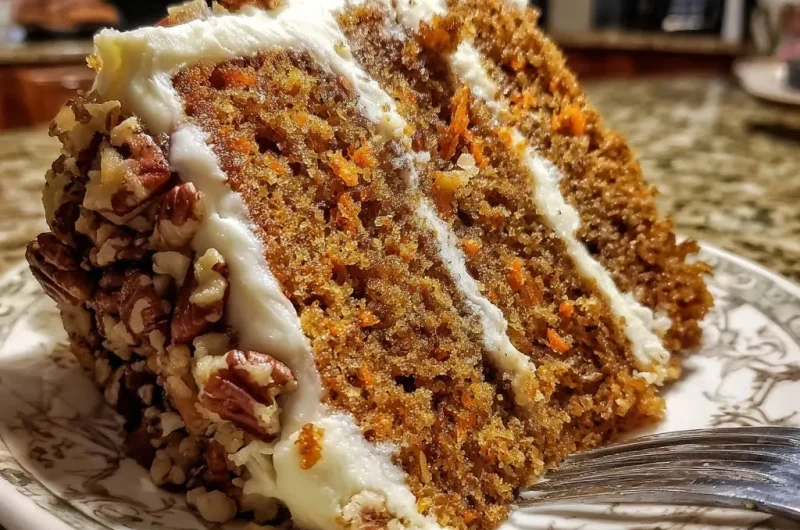
Carrot Cake
Course: DessertCuisine: AmericanDifficulty: medium12
servings30
minutes35
minutes550
kcal60
minutesThis recipe guarantees the perfect, light yet lush crumb that carrot cake dreams are made of. By relying on oil and room-temperature buttermilk, you can prevent the cake from ever becoming dense or dry. Finished with classic tangy cream cheese frosting.
Ingredients
For the Cake:
2 cups all-purpose flour
2 teaspoons baking soda
1 teaspoon cinnamon
1/2 teaspoon nutmeg
1/2 teaspoon salt
1 cup vegetable oil (or canola oil)
1 cup granulated sugar
1 cup packed light brown sugar
4 large eggs
1/2 cup buttermilk (room temperature)
3 cups finely grated carrots (about 4 large carrots)
1 cup chopped pecans, divided
For the Cream Cheese Frosting:
8 ounces cream cheese, softened
1/2 cup unsalted butter, softened
4 cups powdered sugar, sifted
1 teaspoon vanilla extract
1 tablespoon milk (or heavy cream)
Directions
- Prepare the Batter for Success: Preheat your oven to 350 degrees F. Grease and flour two 9-inch round cake pans or three 8-inch pans.
- Combine Dry Ingredients: In a medium bowl, whisk together the flour, baking soda, cinnamon, nutmeg, and salt. Set aside.
- Lock in Moisture (The Non-Dense Method Highlight): In a large bowl, whisk together the vegetable oil, granulated sugar, and brown sugar until thoroughly combined. This reliance on oil, rather than butter, is key to the texture. Beat in the eggs one at a time until they are fully incorporated.
- The Tenderizing Step: Whisk the room temperature buttermilk into the oil and sugar mixture. Room temperature liquids emulsify better and prevent the cake from becoming dense by ensuring smooth incorporation.
- Gentle Mixing is Essential: Gradually add the dry ingredients to the wet mixture, beating only until just combined. Stop mixing the moment you no longer see streaks of flour. Overmixing will develop gluten and lead to a tough, dense cake.
- Fold in the Extras: Gently fold in the grated carrots and 3/4 cup of the chopped pecans using a rubber spatula. Ensure the carrots are evenly distributed but do not stir excessively.
- Bake the Layers: Divide the batter evenly among the prepared pans. Bake for 28 to 35 minutes, or until a toothpick inserted into the center comes out clean.
- Cool Completely: Let the cakes cool in the pans for 10 minutes before turning them out onto a wire rack to cool completely. Never frost a warm cake.
- Prepare the Cream Cheese Frosting: In a large bowl, beat the softened cream cheese and butter until smooth and creamy. Gradually beat in the sifted powdered sugar until smooth. Add vanilla and milk, beating until the frosting is light and fluffy.
- Assemble and Decorate: Frost the cooled cake layers. Use the remaining 1/4 cup of chopped pecans to press onto the sides of the finished cake. Store covered in the refrigerator.
Notes
- Use room temperature buttermilk and oil for maximum tenderness. Do not overmix the batter.