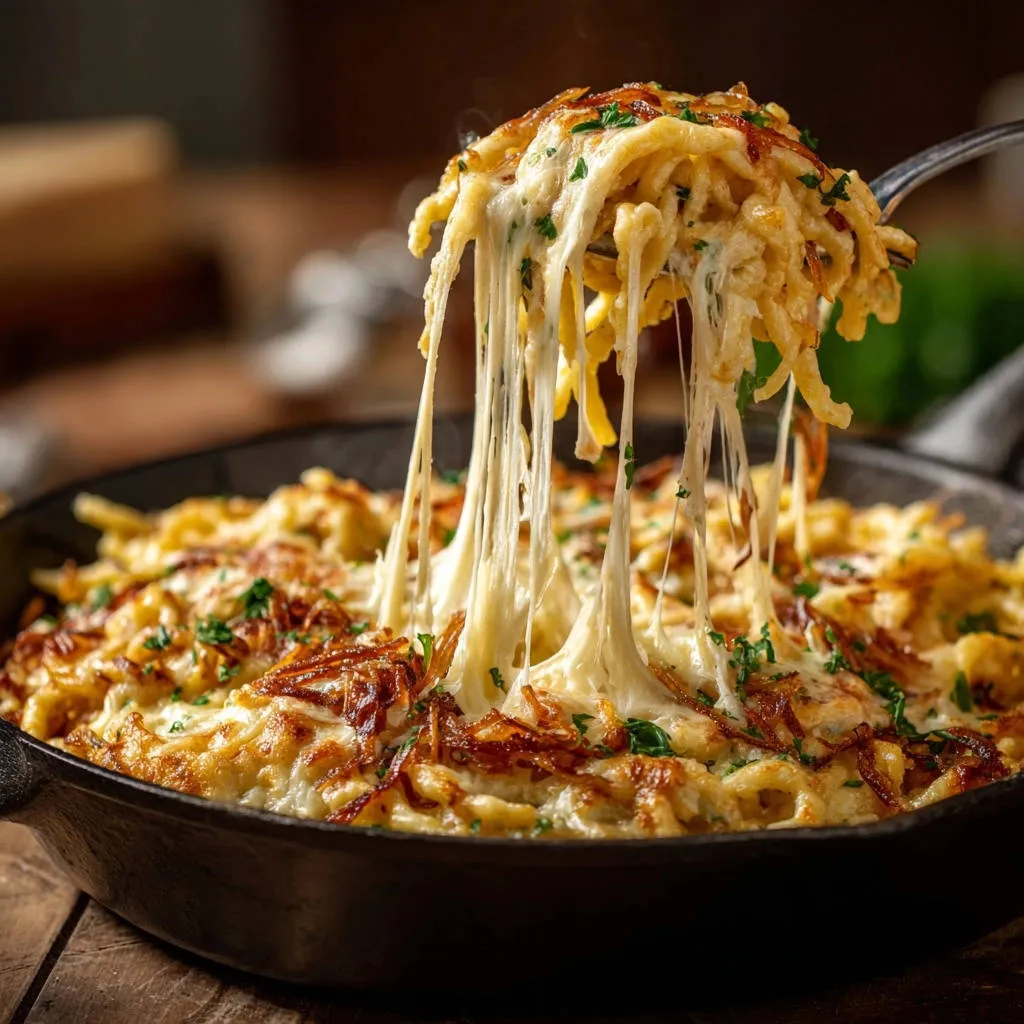
The frustration of a grainy, separated cheese sauce is universal, but mastering the temperature is the secret weapon to avoid it forever. After years of testing, I finally cracked the code to achieving truly perfect, non-greasy gooiness in this Ultimate Skillet Spaetzle and Cheese recipe.
This simple technique, relying on a controlled melt off the heat, guarantees a silky texture and the most satisfying cheese pull every single time.
The Ultimate Skillet Spaetzle and Cheese Recipe That Gets Rave Reviews (Here’s Why!)
The Controlled Melt Technique: Achieving Non-Greasy Gooeyness
Separated cheese often occurs when high heat forces the milk proteins and fats to break apart, leaving you with a greasy, grainy texture.
Our controlled melt technique completely removes the oven-safe skillet from the heat source just before adding the cheese blend. This residual warmth melts the cheese slowly and gently, resulting in a flawless, silky texture and a spectacular non-oily cheese pull.
Depth of Flavor: The Magic of Slow-Cooked Caramelized Onions
The deep, savory base of this dish comes from properly caramelized onions, not just hastily sautéed ones. This process takes patience-about 15 to 20 minutes-but it’s non-negotiable for achieving maximum depth of flavor.
Half of the caramelized onions are cooked directly into the sauce base to infuse flavor, while the other half are reserved for a sweet and savory topping that crisps beautifully under the broiler.
Speed and Simplicity: Why the Skillet Finish Wins
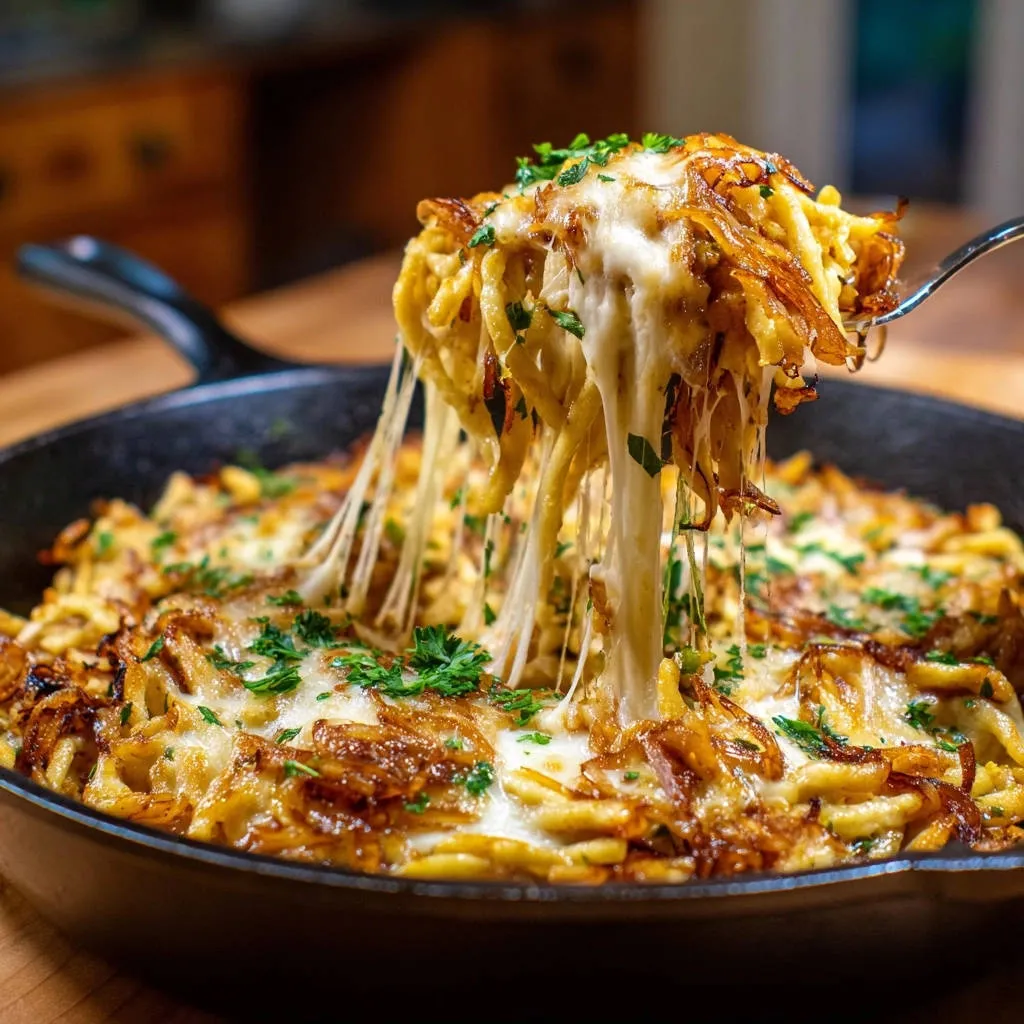
Instead of committing to a long, tedious oven bake, we finish this spaetzle quickly using the broiler.
This rapid method creates a gorgeous, bubbly, golden crust in just two to three minutes. Using a single oven-safe skillet also drastically reduces cleanup time, making this a perfect, luxurious weeknight comfort meal.
Mastering the Ingredients: Your Ultimate Skillet Spaetzle and Cheese Building Blocks
Choosing the Right Spaetzle (Dry vs. Homemade)
For quick weeknight preparation, good-quality dry spaetzle (or small egg noodles) works perfectly and provides a satisfying, chewy texture.
Traditional, scratch-made spaetzle is excellent if you have the time, as it offers a slightly denser, more irregular shape that hugs the sauce beautifully.
The Essential Cheese Blend: Gruyère vs. Fontina vs. Cheddar
We rely on a combination where each cheese serves a specific structural purpose. Gruyère or Fontina provides incredible meltability and stretch without getting oily.
Sharp Cheddar is added solely for its necessary, deep, pungent flavor profile. The balance creates maximum creamy richness.
The Role of Flour and Whole Milk in a Non-Separating Sauce
The small tablespoon of flour creates a quick, stabilizing agent (a fast roux) when mixed with the hot butter and onions.
This binder helps emulsify the whole milk and fat, preventing them from separating when they encounter the heat and fat of the melting cheese. Whole milk is preferred for its richness.
Prep Like a Pro: Essential Tools for Skillet Mac and Cheese Success
Equipment Checklist: The Right Skillet and Broiler Safety
You must use a 10-inch, oven-safe skillet for this recipe, preferably cast iron or a heavy stainless steel model.
Cast iron holds residual heat extremely well, which is instrumental in the critical controlled melting process.
Broiler Safety Tip: Always position the skillet on a rack near the center of the oven, not the very top, and never walk away while the broiler is running-it goes from golden to burned in seconds.
Preparation Hacks: Shredding Cheese and Slicing Onions
For the best, most even caramelization, ensure your onions are sliced uniformly thin; thick slices will steam instead of brown evenly.
Pre-shredded cheese contains anti-caking agents like cellulose, which prevent the smooth melting necessary for cheesy perfection.
Taking the extra time to freshly shred your cheese guarantees success and a perfectly creamy finish.
For a similar creamy experience, explore the secrets of Southern baked mac and cheese.
From Scratch to Skillet: A Step-by-Step Guide to Perfection
- Perfectly Cooked Spaetzle: Cook the spaetzle according to package directions until firm but chewy (al dente). Drain immediately.
Remember to reserve about 1/2 cup of the cooking liquid. This starchy liquid is a secret weapon for adjusting sauce consistency later if the cheese mixture becomes too tight.
- The Flavor Base: Melt the butter in the skillet and slowly cook the thinly sliced onions over medium-low heat.
Patience is key here. Cooking for 15-20 minutes until they are deeply golden brown and soft, not just transparent, maximizes the savory depth. Remove half of the onions immediately and set aside for the topping.
- Creating the Stabilizer: Sprinkle the tablespoon of flour over the remaining onions and whisk vigorously for one minute.
This quick cook time ensures the raw, pasty flavor of the flour is cooked out before you incorporate the wet ingredients.
- Adding the Liquid: Gradually whisk in the whole milk until the mixture is completely smooth and lump-free. Bring the mixture to a low simmer.
Immediately remove the skillet completely from the heat source once the simmer begins. This precise temperature control is essential for the next step: the controlled melt technique.
- Tossing the Spaetzle: Add the drained spaetzle into the warm milk mixture and toss well using tongs or a spoon.
Ensure every piece is evenly coated before the cheese goes in; this base coating helps protect the noodles and ensures uniform sauce distribution.
- Adding the Cheese Blend (Off-Heat): Work quickly, adding the freshly shredded cheese blend in small batches (about 1/2 cup at a time), stirring continuously.
The residual heat of the warm milk mixture will slowly and gently melt the cheese without breaking the emulsion. If the mixture seems too dry or tight, add a small splash of reserved pasta water or extra milk.
- Seasoning: Taste the final mixture and season generously with salt and pepper.
Cheese sauces absorb seasoning, so adjust carefully until the flavor truly pops and balances the richness of the dairy and caramelized onions.
- Broiling for a Golden Crust: Top the surface with the remaining caramelized onions and place the skillet under a hot broiler for 2 to 3 minutes.
Watch constantly! The goal is a bubbly top with slightly crisp onion edges and golden cheese patches, not a burned crust. This finish elevates the presentation and texture.
- Rest and Serve: Remove from the broiler, let the dish rest for 5 minutes, garnish with fresh parsley, and serve immediately straight from the skillet.
Resting allows the sauce to fully set around the noodles and cool slightly, ensuring that satisfying, luxurious cheese pull when you scoop it out.
Phase 1: Cooking and Reserving Liquid
Phase 2: Developing Deep Flavor with Caramelized Onions
Phase 3: The Crucial Roux and Milk Infusion (The Smooth Cheese Fix)
Phase 4: Incorporating the Noodles
Phase 5: Executing the Controlled Melt Technique
Phase 6: The Finishing Touch
Troubleshooting the Ultimate Skillet Spaetzle and Cheese: Chef’s Secrets
How to Prevent or Fix a Grainy or Separated Sauce
A grainy texture indicates the cheese was introduced to heat that was too high, causing the proteins to seize and release their fat.
To fix a separated sauce, immediately remove the skillet from all heat. Vigorously whisk in a tablespoon of cold milk or heavy cream until the mixture re-emulsifies and returns to a smooth, velvety texture.
Achieving the Perfect Sauce Consistency (When to Use Pasta Water)
If your sauce is tightening up too quickly, or if your cheese is making the mixture stiff, use the reserved starchy pasta water, not plain tap water.
The starch content acts as a thickening emulsifier, allowing you to loosen the sauce just enough without diluting the overall flavor profile.
Flavor Variations: Adding Herbs or Spice
To deepen the savory complexity, stir in a tiny pinch (about 1/8 teaspoon) of freshly grated nutmeg along with the milk; this is a classic pairing with Gruyère cheese.
For a subtle smokiness, add 1/2 teaspoon of smoked paprika alongside the flour in Phase 3.
Making Spaetzle from Scratch: Tips for Texture
If you choose to make homemade spaetzle, the batter consistency is key: it should be thick enough to hold its shape slightly but runny enough to squeeze through the press or grate easily.
Do not overmix the dough once the flour is incorporated, as this develops too much gluten and yields tough, rubbery noodles instead of soft, chewy ones.
What to Serve with Ultimate Skillet Spaetzle and Cheese and How to Store It
Ideal Side Dishes and Drink Pairings
Because this dish is intensely rich and satisfying, the ideal side dishes should be light and acidic to provide a necessary counterpoint.
Serve with a large simple green salad dressed generously with a sharp lemon vinaigrette or a side of crisp, quickly pickled vegetables.
Complementary Dishes
Round out your meal with these complementary dishes that pair well with spaetzle and cheese.
- For a bright, zesty counterpoint, try these spicy jalapeño marinated carrots, which offer a tangy kick to cut through the richness.
- Add a fresh element with an arugula and seared pear salad, bringing a touch of sweetness and peppery greens.
For drinks, opt for something clean and cutting, such as a dry German sparkling grape juice, or a clean, cold Pilsner or sparkling water.
Make-Ahead Strategy and Reheating the Leftovers (Without Losing Creaminess)
The most time-consuming component, the caramelized onions, can be made up to three days in advance and stored in the refrigerator, saving substantial prep time.
For reheating leftovers, avoid the microwave, which often makes cheese sauces rubbery. Reheat low and slow on the stovetop, adding a splash of milk or half-and-half while stirring constantly until the creamy texture returns.
Ultimate Skillet Spaetzle and Cheese FAQs
Can I substitute other types of pasta for spaetzle?
Absolutely. While spaetzle is traditional, any small, dense, or tubular pasta works excellently for this mac and cheese recipe.
Look for elbow macaroni, rotini, or orecchiette, as their shapes are ideal for capturing and holding the thick, luxurious cheese sauce.
For more pasta ideas that are just as satisfying, explore cheesy baked spaghetti casserole.
Why do I need to shred my own cheese?
Pre-shredded varieties contain anti-caking agents like cellulose or potato starch, which are dusted onto the cheese to prevent clumping in the bag.
These agents prevent the cheese from melting smoothly and are the single most common cause of a grainy or lumpy sauce, making fresh shredding necessary for success.
Is this recipe freezer friendly?
Generally, no. Dishes featuring high-milk and cheese sauces, like this Ultimate Skillet Spaetzle and Cheese, tend to separate dramatically upon thawing.
The sauce will often weep, become grainy, and lose its beautiful silky texture, so this dish is best made fresh or stored for only 2-3 days in the refrigerator.
This recipe proves that exceptional comfort food doesn’t have to be complicated or yield disappointing results. Armed with the temperature trick and the secret of deeply caramelized onions, you are now ready to create true cheesy perfection.
Now that you’ve mastered the art of the controlled melt, grab your skillet tonight and give this ultimate recipe a try. Don’t forget to share your photos and leave a rating-I love hearing about your kitchen successes!
Skillet Spaetzle and Cheese
Course: Main CourseCuisine: InternationalDifficulty: medium4
servings15
minutes30
minutes750
kcal45
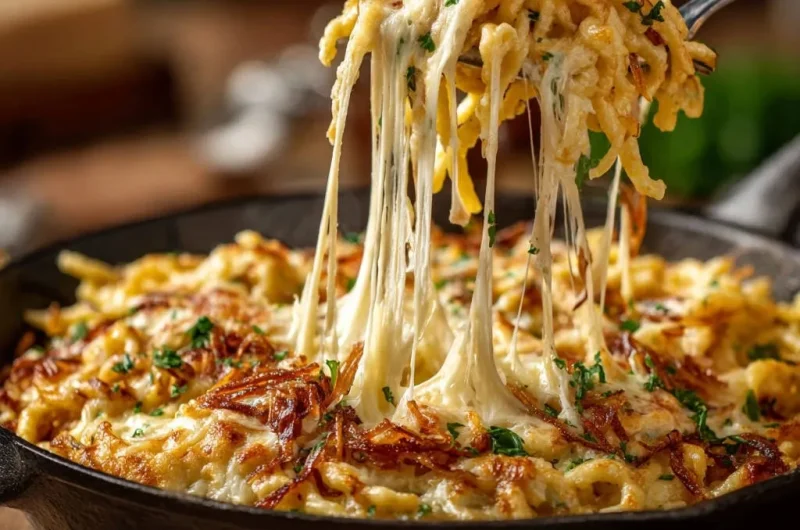
minutesSay goodbye to sad, greasy cheese! This ultimate baked spaetzle dish features a simple temperature technique that guarantees a silky, perfectly smooth cheese pull every time. Combined with deeply caramelized onions, this is the definition of comfort food perfection, straight from the skillet.
Ingredients
1 pound dry Spaetzle (or small egg noodle pasta)
2 tablespoons butter
2 large yellow onions, thinly sliced
1 1/2 cups whole milk
1 tablespoon all-purpose flour
3 cups freshly shredded Gruyère cheese (or Swiss/Fontina blend)
1 cup freshly shredded sharp Cheddar cheese
Salt and black pepper to taste
1 tablespoon fresh parsley, chopped (for garnish)
Directions
- Prepare the Noodles and Onions: Cook the spaetzle according to package directions until al dente. Drain immediately, reserving about 1/2 cup of the cooking liquid (if using traditional pasta) or setting aside.
- While the noodles cook, prepare the crispy onions. Melt the butter in a 10-inch oven-safe skillet over medium heat. Add the sliced onions and cook slowly, stirring occasionally, for 15 to 20 minutes until deeply golden brown and caramelized. Remove half the onions and set aside for topping. Leave the remaining half in the skillet.
- THE SMOOTH CHEESE FIX: Sprinkle the tablespoon of flour over the remaining onions and butter in the skillet. Cook for 1 minute, stirring constantly. Gradually whisk in the whole milk until smooth. Bring the mixture to a low simmer. Immediately remove the skillet completely from the heat source.
- Working quickly, toss the drained spaetzle into the milk mixture in the skillet. Toss until everything is evenly coated.
- The Controlled Melt Technique: Begin adding the shredded cheese blend, mixing in 1/2 cup at a time. The key here is to add the cheese off the heat so the milk mixture is hot enough to melt the cheese slowly and evenly, but not so hot that it forces the fat to separate. Add a small splash of the reserved pasta water or a tablespoon of milk if the mixture seems too dry to incorporate the cheese smoothly. Continue mixing the cheese blend until fully incorporated and wonderfully gooey. Taste and season generously with salt and pepper.
- Finishing the Bake: Once the cheese is silky smooth and the noodles are coated, top the skillet with the remaining caramelized onions. Place the skillet under the broiler for 2 to 3 minutes, watching carefully, until the top is golden brown and bubbly.
- Remove from broiler, let rest for 5 minutes, garnish with fresh parsley, and serve immediately straight from the skillet. Enjoy the perfect, non-oily cheese pull!
Notes
- The key to the silky smooth sauce is adding the cheese off-heat to prevent the fat from separating, ensuring a perfect, non-greasy pull.