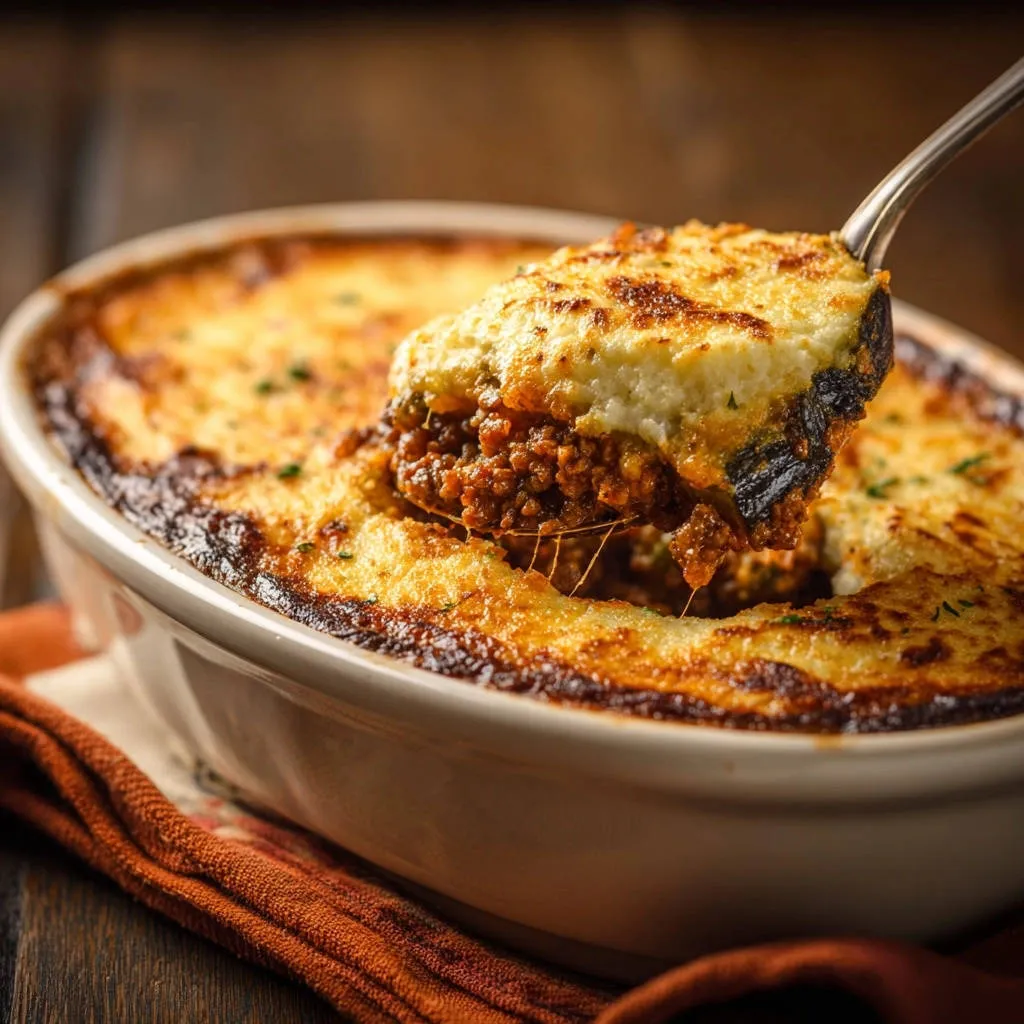
I spent years perfecting layered casseroles only to be frustrated by a watery filling that collapsed the moment I served it. This specific recipe for Ultra Rich Beef & Potato Casserole solves that problem completely, using two non-negotiable techniques that guarantee a firm, deeply savory beef base and an impossibly fluffy potato crown.
You can trust this method because I’ve cracked the code on moisture control: we build a stable roux and aggressively dry the potatoes. The result is pure, hearty comfort food that holds its stunning structure right up to the last spoonful.
For a similar approach to achieving a firm filling, check out making cheesy baked spaghetti casserole.
For a similar comforting side, check out these cheesy baked potatoes.
The Secret Weapon Against Soggy Casseroles (The Fluff Factor)
The foundation of a great casserole is structure. We focus on two specific areas-the base and the topping-to eliminate excess moisture and ensure the dish retains its rich, luxurious texture when baked and served.
For a similarly firm filling, consider a recipe for Shepherd’s Pie with no-sinking mash.
The Essential Flour Roux: Building a Stable, Non-Weeping Base
Cooking flour directly into the pan fat creates a light roux which is essential for binding the liquids in the beef filling.
This emulsification prevents the fats and beef broth from separating during the long baking time, eliminating that undesirable watery layer beneath the mash.
A crucial 5 to 7 minute reduction period is required after adding the broth; this step concentrates the sauce, ensuring the filling is thick enough to withstand heat without weeping liquid.
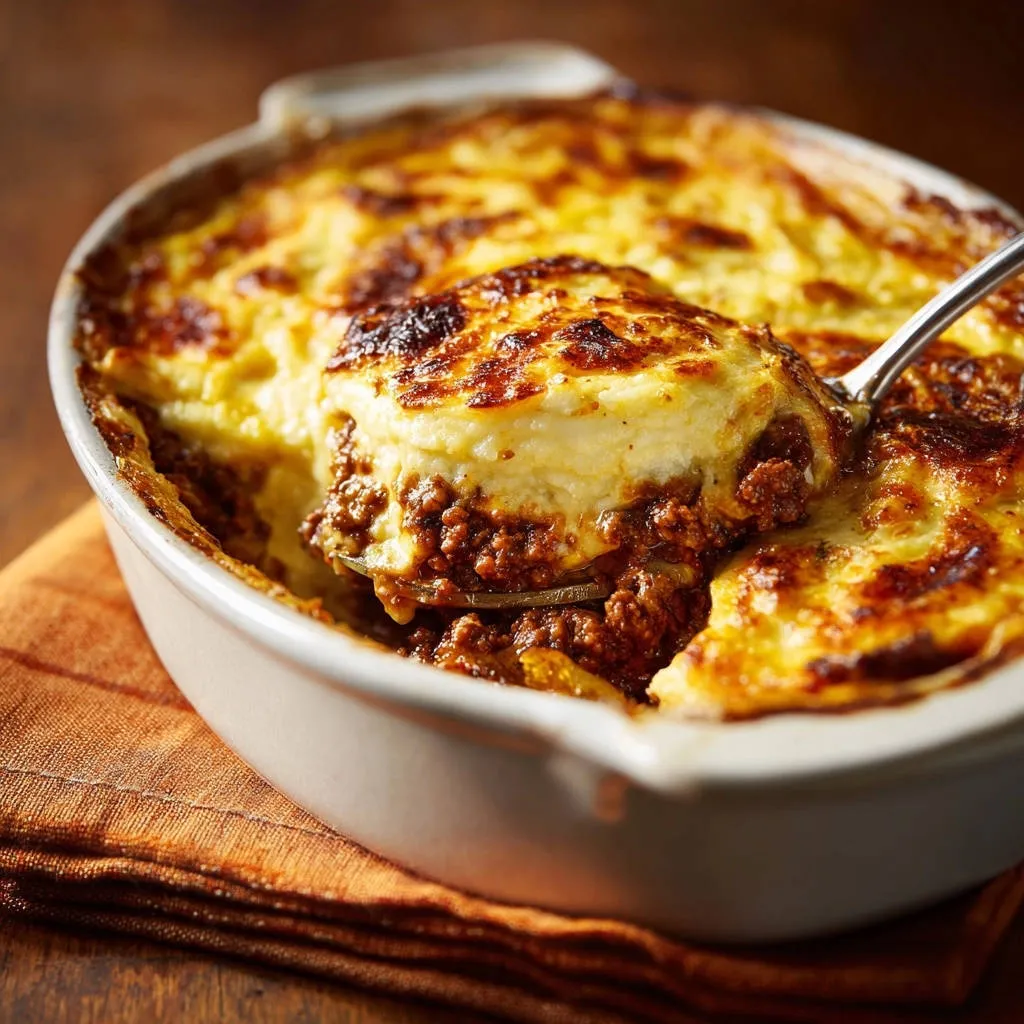
Drying the Potatoes: The Key to an Airy Topping
The simple technique of returning drained, hot potatoes to the empty pot for 60 seconds removes surface moisture via evaporation.
High moisture content in potatoes leads to a dense, gluey texture once the starches are overworked during mashing.
This drying process allows the starches to separate properly, ensuring your topping is light, airy, and structurally sound-not a heavy, dense cap.
Why the Parmesan and Egg Yolk Are Non-Negotiable
Grated Parmesan cheese melts throughout the mash, imparting a savory, umami depth that elevates the potato from a simple topping to a flavor powerhouse.
The egg yolk acts as a critical binding agent, helping the mashed potatoes set firmly during baking and providing the necessary structure for a perfect golden crust.
When you finish the casserole under the broiler, the yolk helps the peaks brown beautifully, providing a much-needed textural contrast to the soft interior.
Selecting Your Flavor Base: Ingredients for Ultra Rich Beef & Potato Casserole Success
Choosing the right quality and texture for your core ingredients makes a significant difference in the final taste and mouthfeel of this comforting casserole.
Choosing the Right Ground Beef and Aromatics
Using a leaner ground beef (90/10) is recommended to minimize the amount of fat needing to be drained, which keeps the filling process streamlined.
If you opt for standard ground beef (80/20), ensure you drain the excess rendered fat thoroughly before starting the roux, or your sauce may become greasy.
Finely dicing the yellow onion and carrots allows them to virtually disappear into the sauce once softened, contributing flavor without interrupting the smooth texture of the filling.
The Thyme Factor: Dried vs. Fresh Herb Usage
Dried thyme is highly concentrated and provides the essential herbaceous, earthy note needed to complement the richness of the beef and tomato.
If substituting with fresh thyme, you will need to use approximately three times the quantity listed (3 teaspoons fresh leaves) for a comparable depth of flavor.
Always add the thyme early in the sauce reduction stage to allow its aromatic oils time to bloom and infuse the gravy completely.
Selecting the Right Potato: Russet for Maximum Fluff
Russet potatoes are prized for their high starch content and low moisture, making them the optimal choice for creating the fluffiest, driest mashed topping.
When properly dried using our technique, Russets result in an incredibly light texture that is perfect for piping or spreading.
Avoid waxy potatoes, such as red or Yukon Gold, as they have lower starch and higher moisture, which makes them prone to becoming dense or gluey when mashed aggressively.
Precision Cooking: Mastering the Ultra Rich Beef & Potato Casserole Method
Follow these specific instructions closely, focusing on the thickening and drying stages, to guarantee professional-level results every time you make this favorite comfort casserole.
-
Preparing the Fluffy Topping Base (Steps 1 & 2):
Ensure your water is generously salted before boiling the potatoes; this is the only chance the potatoes have to absorb flavor deep into the starches.
Do not skip the 60-second drying step over low heat; this simple, crucial process ensures residual surface moisture evaporates completely, guaranteeing light and airy mashed potatoes.
Mix the rich ingredients-butter, milk, cheese, and yolk-quickly while the potatoes are still hot; this allows them to integrate fully and prevents the mash from cooling and becoming sticky.
-
Building Deep Flavor in the Filling (Steps 3 & 4):
Sauté the aromatic vegetables until genuinely soft (about 6-8 minutes); translucent onions and tender carrots provide a sweeter, more complex flavor foundation than half-cooked ones.
Always drain excess rendered fat after browning the ground beef; neglecting this step will lead to a greasy filling that will eventually seep through your thick sauce.
-
The Critical Thickening Phase (Steps 5 & 6):
The two tablespoons of flour must be cooked for 1 minute with the residual fat and vegetables to eliminate the raw, chalky taste before any liquid is added.
Cook the tomato paste briefly with the flour mixture (called blooming); this process deepens its color and concentrates its sweetness, adding complexity to the savory beef filling.
Simmer the final sauce until it truly coats the back of a spoon and resembles thick chili; impatience here is the primary cause of a watery Ultra Rich Beef & Potato Casserole.
-
Assembly and Broiler Finish (Steps 7 & 8):
When assembling, spoon the mash carefully over the filling, starting from the edges inward, to avoid displacing or disturbing the dense meat layer underneath.
Use a fork or the back of a spoon to create peaks and grooves on top; these rough textures will brown beautifully under the broiler, providing a crucial crunchy contrast to the soft filling.
Use the broiler sparingly for 3-5 minutes and absolutely do not walk away; broilers are extremely powerful and can take a casserole from perfect golden brown to completely scorched in seconds.
Chef’s Guidance: Troubleshooting & Elevating Your Casserole
These expert tips ensure you can manage timing, adjust for dietary preferences, and fix common structural issues efficiently.
Make-Ahead Mastery: Prep, Store, and Bake Later
You can fully assemble this Ultra Rich Beef & Potato Casserole up to 24 hours in advance; cover it tightly with plastic wrap or foil and store it immediately in the refrigerator.
Crucial instructions for baking from cold: increase the baking time by 10 to 15 minutes, ensuring the filling is piping hot and bubbling fiercely in the center before broiling the top.
Always remove the casserole from the fridge about 30 minutes before baking to take the chill off, promoting more even oven cooking.
Customizing the Filling: Spice, Heat, and Add-ins
For those who prefer a little warmth, incorporate a generous pinch of cayenne pepper or chili flakes when you add the dried thyme.
Small amounts of frozen peas or corn can be stirred into the filling right before assembly, which adds color and a pleasant burst of fresh flavor.
For deeply complex flavor, substitute up to half of the beef broth with a dry, medium-bodied red grape juice-allow the grape juice to reduce fully before adding the remaining broth.
Fixing a Mushy Topping: Density Solutions
If your mash tastes dense or gluey, it usually means the potatoes were overworked during mixing or were not dried sufficiently in the hot pot.
To avoid this next time, handle the potatoes gently and stop mashing the moment they are smooth; use a hand masher instead of an electric mixer.
If the mash is simply too thin or soft, avoid adding more liquid ingredients; instead, mix in an extra spoonful of grated Parmesan cheese or a small amount of potato starch to quickly absorb excess moisture.
Perfect Pairings: What to Serve Alongside Your Ultra Rich Beef & Potato Casserole
Because the savory beef filling is so intensely rich, the best side dishes provide a sharp, fresh contrast to cleanse the palate.
Complementary Dishes
To round out your meal, consider these other satisfying dishes.
- For a fresh counterpoint to your casserole, try this grilled chicken kale and cabbage power salad, offering a vibrant mix of greens.
- If you enjoyed the potato element in the casserole, you might like this creamy herb and pea potato salad for another take on potatoes with fresh herbs.
The Essential Green Contrast
Suggest light, bright sides to cut through the richness of the beef: a simple vinaigrette-dressed green salad using peppery arugula is ideal.
Steamed or roasted asparagus, lightly seasoned with lemon juice, provides a beautiful textural and acidic counterpoint to this heavy comfort food.
Slightly bitter greens, such as quick-sautéed kale or rapini, work exceptionally well to balance the savory flavor profile.
Grape juice and Drink Recommendations
Pairing the robust beef flavor with a medium-bodied, fruit-forward red grape juice like a classic sparkling grape juice enhances the dish’s complexity.
Avoid overly tannic reds, which can clash with the creamy potato topping.
For non-alcoholic options, dark sodas or sparkling cranberry juice provide a good acidic bite that cuts through the richness effectively.
Frequently Asked Questions About Ultra Rich Beef & Potato Casserole
Can I Use Ground Lamb or Turkey Instead of Beef?
Yes, you can substitute ground lamb for beef without changing the recipe proportions; the resulting flavor will be richer and more gamey.
If using lean ground turkey, you must ensure you add 1-2 tablespoons of olive oil during the roux stage, as turkey typically lacks the necessary fat content to properly cook the flour.
How Long Does Leftover Casserole Last in the Refrigerator?
Leftover Ultra Rich Beef & Potato Casserole should be stored promptly in an airtight container.
When properly refrigerated, the casserole will maintain peak freshness and quality for 3 to 4 days.
Freezing the Ultra Rich Beef & Potato Casserole: Best Practices
This casserole freezes exceptionally well when baked, cooled completely, and tightly wrapped in both plastic wrap and foil; it will last for up to 3 months.
To reheat from frozen, remove the coverings, place the casserole in a 350°F oven, and bake for 60-75 minutes, or until the center is steaming hot, before applying the broiler finish.
Your New Weeknight Hero: Ready to Cook?
You now have the precise techniques necessary to conquer the common enemy of all layered dinners: the dreaded watery filling.
By mastering the roux and the potato drying steps, you are guaranteed an Ultra Rich Beef & Potato Casserole that is firm, luscious, and utterly satisfying, proving that expert technique doesn’t have to be complicated.
Ready to try your hand at this perfect comfort dish? Whip out your skillet tonight, follow the guidance above, and share your delicious, structurally sound results!
Beef Potato Casserole
Course: Main CourseCuisine: AmericanDifficulty: medium6
servings20
minutes55
minutes650
kcal75
minutesStop serving wet, sad casseroles! This recipe reveals the key flour technique needed to create an intensely flavorful, perfectly structured beef filling. Topped with creamy Parmesan mashed potatoes, this is the ultimate comfort food dinner.
Ingredients
For the Filling:
1 tablespoon olive oil
1 large yellow onion, finely diced
1 cup finely diced carrots
1 pound lean ground beef
2 tablespoons all purpose flour
2 tablespoons tomato paste
1 cup beef broth
1 teaspoon dried thyme
1 teaspoon salt
1/2 teaspoon black pepper
For the Topping:
2 1/2 pounds russet potatoes, peeled and quartered
4 tablespoons unsalted butter
1/4 cup whole milk or heavy cream
1/2 cup grated Parmesan cheese
1 egg yolk
Salt and pepper to taste
Directions
- Prepare the Topping: Place potatoes in a large pot, cover with cold, salted water, and bring to a boil. Cook until fork-tender (about 15 to 20 minutes). Drain well, then return the potatoes to the hot, empty pot over low heat for 1 minute, shaking gently. This crucial step removes surface moisture.
- Mash the Potatoes: Remove the pot from heat. Mash the potatoes, then mix in the butter, milk, Parmesan cheese, and egg yolk until completely smooth and thick. Season with salt and pepper. Set aside.
- Start the Filling: Preheat oven to 375 degrees F. Heat the olive oil in a large skillet over medium heat. Add the diced onion and carrots and cook until soft, about 6 to 8 minutes.
- Brown the Meat: Increase heat slightly and add the ground beef. Cook, breaking it up with a spoon, until fully browned. Drain off any excess fat from the pan. Cook until no pink remains and it reaches 160°F (71°C).
- Solve the Soggy Bottom (The Key Step): Push the meat mixture to one side of the pan. Sprinkle the 2 tablespoons of flour directly into the remaining hot fat and vegetables (or add 1 tablespoon of olive oil if the pan is too dry). Cook the flour for 1 minute, stirring constantly, to create a light roux. Stir in the tomato paste and cook for 1 minute more.
- Thicken the Sauce: Gradually stir in the beef broth, scraping up any browned bits from the bottom of the pan. Stir in the thyme, salt, and pepper. Bring the sauce to a simmer and let it cook, uncovered, stirring occasionally, for 5 to 7 minutes until the sauce has visibly thickened to the consistency of thick chili. This reduction guarantees a filling that will not weep liquid during baking.
- Assemble the Casserole: Spoon the thickened meat mixture into a 9-inch casserole dish and spread evenly. Carefully spoon the mashed potato mixture over the meat filling. Use a fork or the back of a spoon to create peaks and grooves in the potato top.
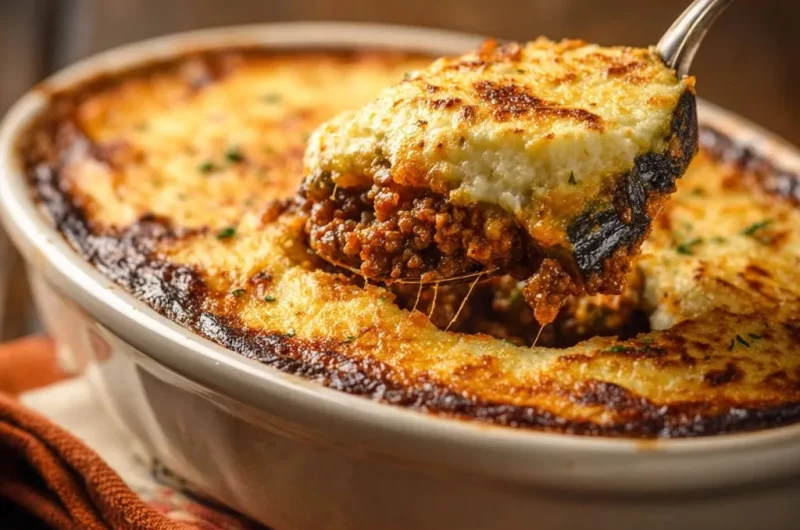
- Bake and Finish: Bake for 25 minutes, or until the filling is bubbling hot and the topping is set. To achieve the deep golden crust shown in the photo, turn the broiler on low for the final 3 to 5 minutes, watching carefully to prevent burning. Let rest 10 minutes before serving.
Notes
- Ensure the potatoes are dried thoroughly after boiling to guarantee a smooth, thick topping consistency.