If you have ever spent hours slow-cooking beef stew only to end up with a delicious flavor trapped in a thin, disappointing liquid, you understand the frustration.
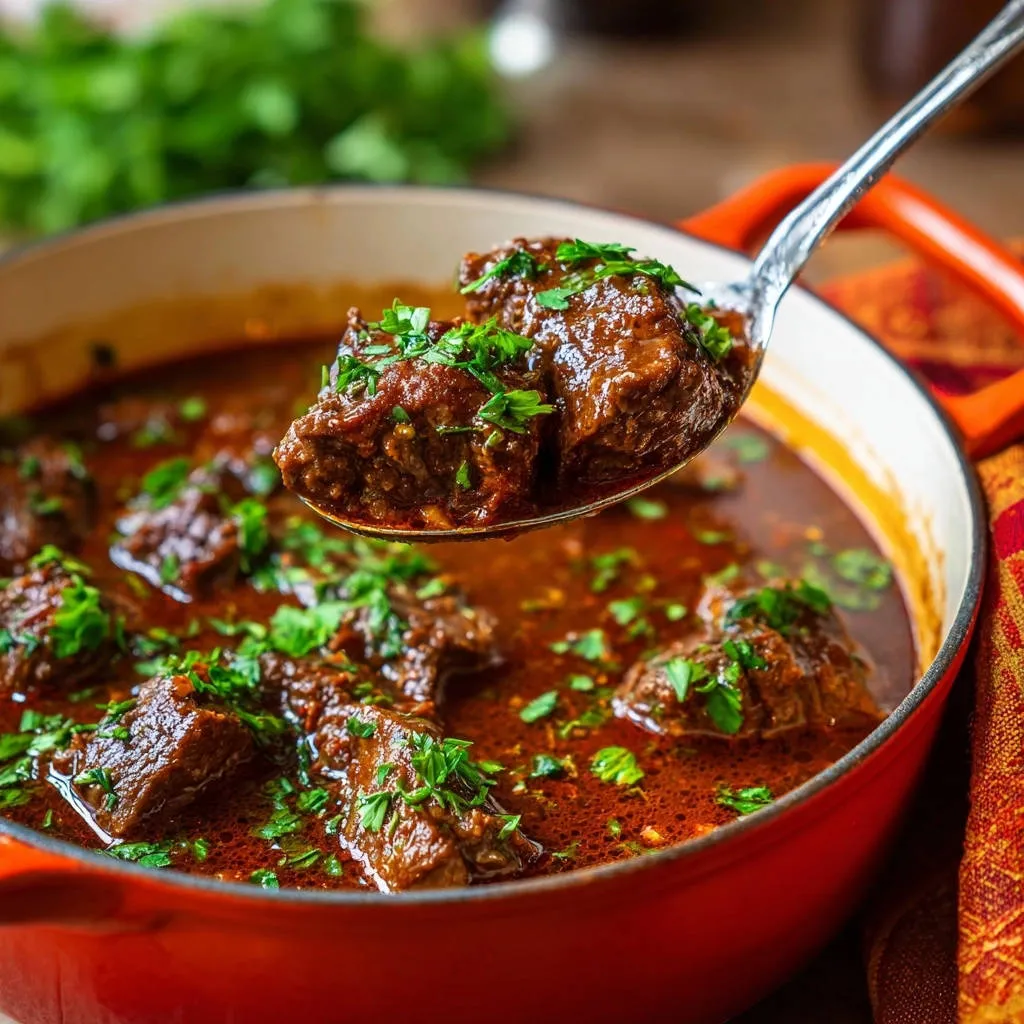
I finally cracked the code to achieving a deeply satisfying, velvety thick sauce that coats the back of a spoon and clings perfectly to the meat, making this the ultimate Velvety Beef Stew recipe.
The Flawless Stew Formula: Say Goodbye to Watery Gravy
The single biggest mistake home cooks make is failing to build the thickening agent into the stew from the very beginning.
For a deeper dive into slow-braised beef, check out this slow-braised beef and white bean stew.
Our method focuses on flour-coating the meat before searing, which is non-negotiable for achieving a sauce that is rich, opaque, and never thin.
Why Our Method Guarantees a Spoon-Coating Texture
When you dredge the beef in flour and then sear it, the flour immediately bonds to the crust of the meat.
As the stew braises over hours, this flour slowly gelatinizes and releases into the cooking liquid, creating an incredibly stable and smooth gravy foundation right where the flavor is.
Beyond Flavor: The Comfort and Consistency Factor
A stew’s texture is just as important as its flavor; that luxurious, velvety mouthfeel is what elevates a simple comfort food into a restaurant-quality meal.
This technique prevents that unappealing separation you sometimes see, guaranteeing a consistent, hearty, and deeply comforting texture with every spoonful of this rich beef stew.
The Essential Building Blocks of Your Deeply Flavored Velvety Beef Stew
- 2 pounds stew meat (beef chuck), cut into 1 1/2 inch cubes
- 1/4 cup all-purpose flour
- 1 tablespoon kosher salt
- 1 teaspoon black pepper
- 2 tablespoons olive oil
- 1 large yellow onion, diced
- 4 cloves garlic, minced
- 2 tablespoons tomato paste
- 4 cups beef broth or stock
- 1 teaspoon dried thyme
- 1 tablespoon dried paprika (sweet or smoked)
- Fresh parsley, chopped (for garnish)
Choosing the Perfect Cut: Why Chuck is King for Slow Cooking
Beef chuck (also known as shoulder or pot roast) is the ideal cut for slow-cooked dishes because it contains a high amount of connective tissue and collagen.
During the long, low braise, this collagen breaks down into rich, mouth-coating gelatin, which keeps the beef moist and adds natural body to the sauce, preventing the beef from drying out like leaner cuts would.
The Flavor Catalysts: Unlocking Umami with Tomato Paste and Spices
Tomato paste is crucial here; searing and cooking (or “blooming”) the paste concentrates its natural sugars and acids, deepening the color and providing a necessary acidic counterpoint to the rich beef fat.
For a deeper understanding of slow-cooked beef, explore slow-cooked savory pot roast techniques.
Dried thyme adds a classic, earthy, savory note, while paprika offers depth-sweet paprika is mild, or you can opt for smoked paprika for a smoky complexity that enhances the slow-cooked flavor profile of the Velvety Beef Stew.
Preparing for Perfection: Essential Tools and Pre-Cook Checklist
The Importance of a Heavy-Bottomed Dutch Oven
A heavy-bottomed Dutch oven is the best tool for stew because its thick walls and base ensure incredibly even heat distribution, which is vital for long braising times.
This stability prevents scorching on the bottom and maintains a consistent, gentle simmer, allowing the beef to tenderize slowly and evenly.
Mise en Place: Setting the Stage for Stress-Free Braising
Mise en place-having everything measured, diced, and ready-is essential, especially for a recipe involving high-heat searing.
You need to be able to move quickly from searing the meat to building the base without pausing to chop onions or measure spices, which could lead to burning the fond in your pot.
Creating the Velvety Beef Stew: A Detailed Cooking Guide
- Prepare the Meat for Thickness:
In a large bowl, toss the beef cubes with the flour, salt, and pepper until completely and evenly coated.
This initial coating is the “secret sauce” for the velvety texture; do not skip or substitute this step!
- Sear the Floured Meat:
Heat the olive oil in your Dutch oven over medium-high heat. Sear the meat in batches, ensuring not to crowd the pan, until a deep, dark brown crust forms (2-3 minutes per side).
The brown crust, or “fond,” is essential for flavor depth and provides surface area for the sauce to cling to.
- Build the Aromatic Base:
Reduce the heat to medium. Add the diced onion and cook for about 5 minutes, making sure to scrape up any brown bits left from the meat (the fond).
Add the garlic, tomato paste, thyme, and paprika. Cook for 2 minutes, stirring constantly, until the tomato paste darkens slightly, releasing its full flavor.
- Deglaze and Bring to a Simmer:
Return the seared meat to the pot. Pour in the beef broth. Bring the mixture just to a boil, then immediately reduce the heat to a gentle simmer.
You will notice the sauce beginning to thicken immediately due to the hydrated flour dredge.
- Slow Cook for Texture Lock-In:
Cover the pot tightly and transfer it to a 325°F oven, or maintain a very gentle stovetop simmer. Cook for 2 1/2 to 3 hours, or until the meat is completely fork-tender.
The long, low heat breaks down the tough meat fibers and fully incorporates the flour coating, creating the signature velvety consistency.
- Finish and Garnish:
Taste the stew and adjust seasonings, adding salt and pepper as needed. If you desire a slightly thicker sauce, remove the lid for the final 30 minutes of cooking.
Ladle into bowls and garnish generously with fresh chopped parsley before serving for a vibrant finish.
Chef’s Secrets to Mastering Texture and Depth of Flavor
The Critical Searing Step: Why Crowding Ruins Texture and Flavor
Searing must be done in batches; if you crowd the pan, the temperature drops rapidly.
Instead of achieving a deep, flavorful brown crust, the meat will steam, releasing moisture and preventing the formation of that crucial brown fond necessary for a deep savory flavor.
Temperature Control: Preventing the Stew from Boiling Aggressively
Once you add the liquid, aim for the gentlest possible simmer, whether on the stovetop or in the oven.
Aggressive boiling causes the meat fibers to contract and seize up, resulting in tough meat, and it also evaporates the liquid too quickly, potentially leaving you with less sauce than desired.
The Final Finish: A Hint of Acidity at the End
Although the tomato paste adds some acidity, a rich, slow-cooked dish often benefits from a final, bright note right before serving.
Try adding half a teaspoon of red wine vinegar or a tiny squeeze of lemon juice to the finished pot to “brighten” the deep, savory profile without making the stew taste sour.
Troubleshooting Your Velvety Beef Stew
Problem: The Meat is Delicious, But Still Chewy and Tough
The solution is simple: your stew needs more time on the heat.
Toughness is an indicator that the collagen in the beef chuck has not yet fully broken down into gelatin, and time-sometimes another 30 to 60 minutes-is the only thing that can cure it.
Problem: The Sauce Became Too Thick During Cooling
Any stew based on starch and gelatin will naturally thicken significantly as it cools due to the starches setting up.
When reheating, simply add a splash (about 1/4 cup) of beef broth or water, stirring until the mixture loosens and returns to your desired velvety beef stew consistency.
Problem: My Stew Tastes Flat or Undersalted
Often, a flat flavor means you need finishing salt, not cooking salt-Kosher salt added at the end enhances the overall profile without making the dish overly salty.
If salt alone isn’t enough, try incorporating a touch more acidity, such as a drop of high-quality balsamic vinegar or Worcestershire sauce, to make the underlying flavors pop.
Make-Ahead Tips and Perfect Pairings
Optimal Side Dishes for Rich Velvety Beef Stew
Creamy Mashed Potatoes: The perfect absorbent vehicle for soaking up that luxurious, thick gravy.
Wide Egg Noodles: A classic pairing that adds softness and traditional comfort to the dish.
Crusty Sourdough Bread: Ideal for mopping up any remaining sauce directly from the bowl, ensuring no drop of the thick, savory gravy is wasted.
Complementary Dishes
Round out your beef stew meal with these comforting additions.
- For warm, fluffy bread to soak up that rich gravy, try these Garlic Cheddar Chive Drop Biscuits, featuring fresh herbs and sharp cheese.
- If you’re craving another creamy element, pair your stew with these Creamy Garlic Mashed Potatoes and Gravy for a satisfying combination.
Storage and Reheating: Does Stew Really Taste Better the Next Day?
Yes, stew truly improves overnight! As the stew rests and cools, all the starches and collagen fully settle, allowing the flavor compounds from the herbs and spices to redistribute and deepen.
Store leftovers tightly covered in the refrigerator for 3-4 days, or freeze the cooled stew in airtight containers for up to 3 months for future easy meals.
Frequently Asked Questions About Velvety Beef Stew
Can I make this stew in a standard slow cooker instead of the oven?
Absolutely. After completing the essential high-heat steps (searing the meat, sautéing the aromatics, and blooming the tomato paste) on the stovetop, transfer everything to the slow cooker.
Cook the stew on the low setting for 6-8 hours or on high for 3-4 hours until the beef is impeccably tender and the sauce has reached its full, thick potential.
How can I make this Velvety Beef Stew recipe gluten-free?
To make a gluten-free version, simply omit the flour dredge in step one and sear the beef plain.
Instead, create a cornstarch or tapioca starch slurry (mixing 2 tablespoons of starch with 2 tablespoons of cold water) and stir it into the stew during the final 30 minutes of cooking; note that this will yield a slightly glossier sauce than the traditional flour method.
What is the benefit of adding paprika to the stew?
Paprika is included to contribute a crucial layer of flavor complexity, either a subtle, earthy sweetness or a distinctive smokiness, depending on the variety you choose.
This spice balances the intense savoriness of the beef and beef broth, adding warmth and depth without introducing any unwanted heat.
Ready to Cozy Up? Share Your Velvety Masterpiece!
You now have the exact professional technique required to transition from making thin, watery stews to achieving that rich, coat-the-spoon consistency every single time.
This Velvety Beef Stew is more than just a recipe; it’s an invitation to savor true comfort food-gather your ingredients, enjoy the process, and share the stunning results!
Beef Stew
Course: Soups-StewsCuisine: AmericanDifficulty: medium4
servings20
minutes3
hours550
kcal200
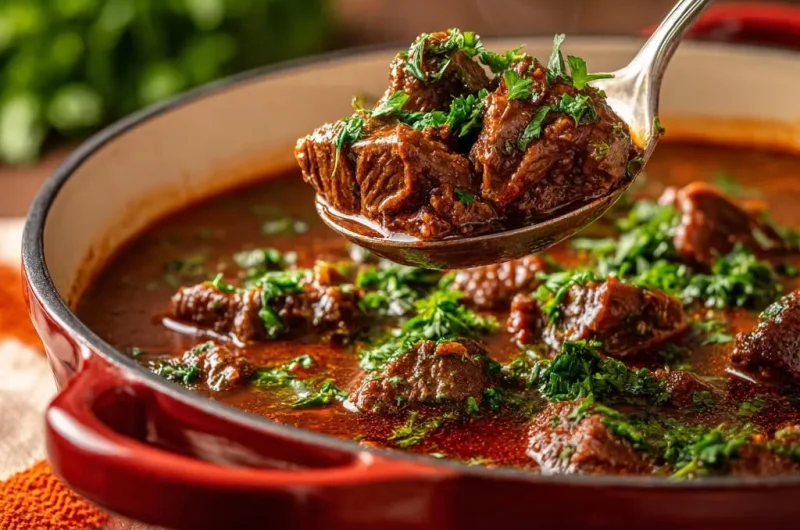
minutesThis recipe guarantees a rich, velvety beef stew every time, thanks to a simple technique change: dredging the beef in flour before searing. The slow cooking process transforms the flour into a deeply satisfying, thick gravy that perfectly coats the meat.
Ingredients
2 pounds stew meat (beef chuck), cut into 1 1/2 inch cubes
1/4 cup all-purpose flour
1 tablespoon kosher salt
1 teaspoon black pepper
2 tablespoons olive oil
1 large yellow onion, diced
4 cloves garlic, minced
2 tablespoons tomato paste
4 cups beef broth or stock
1 teaspoon dried thyme
1 tablespoon dried paprika (sweet or smoked)
Fresh parsley, chopped (for garnish)
Directions
- Prepare the Meat for Thickness: In a large bowl, toss the beef cubes with the 1/4 cup of flour, 1 tablespoon of salt, and 1 teaspoon of black pepper until the meat is completely and evenly coated. This step is non-negotiable for achieving a thick, non-watery sauce, as the flour will hydrate and gelatinize during the slow cook.
- Sear the Floured Meat: Heat the olive oil in a heavy-bottomed Dutch oven or large pot over medium-high heat. Sear the floured meat in batches, ensuring not to crowd the pan. Sear for 2 to 3 minutes per side until a deep, dark brown crust forms. Remove the browned meat to a clean plate and set aside, leaving the oil and brown bits (the fond) in the pot.
- Build the Base: Reduce the heat to medium. Add the diced onion to the pot and cook, scraping up any brown bits left from the meat, for about 5 minutes until softened. Add the minced garlic, tomato paste, dried thyme, and paprika. Cook for 2 minutes, stirring constantly, until the tomato paste darkens slightly. This step deepens the color and flavor of the final sauce.
- Deglaze and Simmer: Return the seared meat to the pot. Pour in the beef broth. Bring the mixture just to a boil, then immediately reduce the heat to a gentle simmer. The sauce will begin to thicken slightly immediately due to the flour dredge on the meat.
- Slow Cook for Texture Lock-In: Cover the pot tightly with a lid and transfer to a 325 degree F oven, or maintain a very gentle simmer on the stovetop. Cook for 2 1/2 to 3 hours, or until the meat is fork-tender. The long, low heat allows the flour coating to fully break down and incorporate into the liquid, guaranteeing a rich, velvety consistency that is never thin.
- Finish and Serve: Taste the stew and adjust seasonings if necessary. If you prefer the sauce even thicker, remove the lid for the last 30 minutes of cooking. Ladle the stew into bowls and garnish generously with fresh chopped parsley before serving.
Notes
- The flour dredge (Step 1) is non-negotiable for achieving the rich, velvety consistency and preventing a thin, watery sauce.