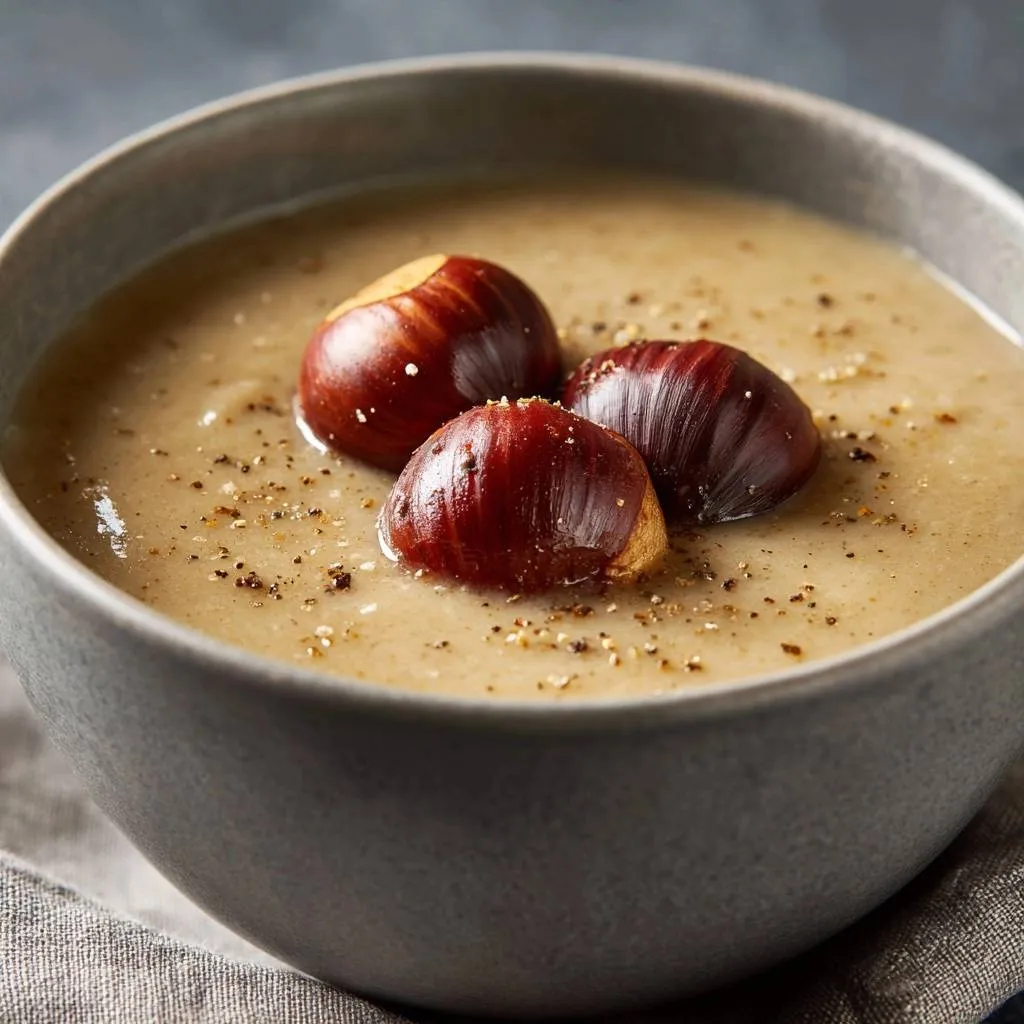
Picture this: holiday season hits, and you’re wrestling with chestnuts that stick like glue, shells refusing to budge no matter how hard you pry. Frustration builds fast, right? But here’s the game-changer: my roast-then-towel-rub trick steams those shells loose in seconds, turning nightmare prep into pure joy.
That’s why this velvety chestnut soup shines. You get silky smoothness from the chestnuts’ own starch, no dairy needed, in just 40 minutes for 4 servings. Fresh roasted nuts deliver that unbeatable nutty depth and cozy warmth, perfect for chilly fall evenings.
The secret lies in scoring an X on the flat side before roasting at 425F. It lets steam escape safely, so shells curl back perfectly for peeling. One whiff of those roasting chestnuts, and you’ll know you’re on track for soup that coats your spoon like velvet.
Chestnut Selection for Velvety Texture
Fresh vs Roasted Chestnut Differences
Grab fresh chestnuts that feel heavy for their size, with shiny, taut shells and no rattles when shaken. These beauties yield about 2 cups peeled from 1.5 lbs, packing the pure, sweet flavor that blends into velvety bliss. Jarred or vacuum-packed ones work in a pinch, but they lack that fresh roast intensity.
Fresh roasted chestnuts create superior mouthfeel because roasting caramelizes natural sugars. Therefore, your soup turns rich and creamy without additives. Skip light or dry ones; they’ll dry out during cooking.
For a rich flavor parallel, explore how golden potatoes and mushroom gravy achieve a similar depth.
Portioning Chestnuts for Soup Base
Divide your 1.5 lbs into most for the soup base and reserve 12 whole ones post-roast for garnish. Pick the prettiest with nicely curled shells; they add stunning visual pop. If prepping ahead, store unpeeled roasts in a paper bag at room temp for up to a day.
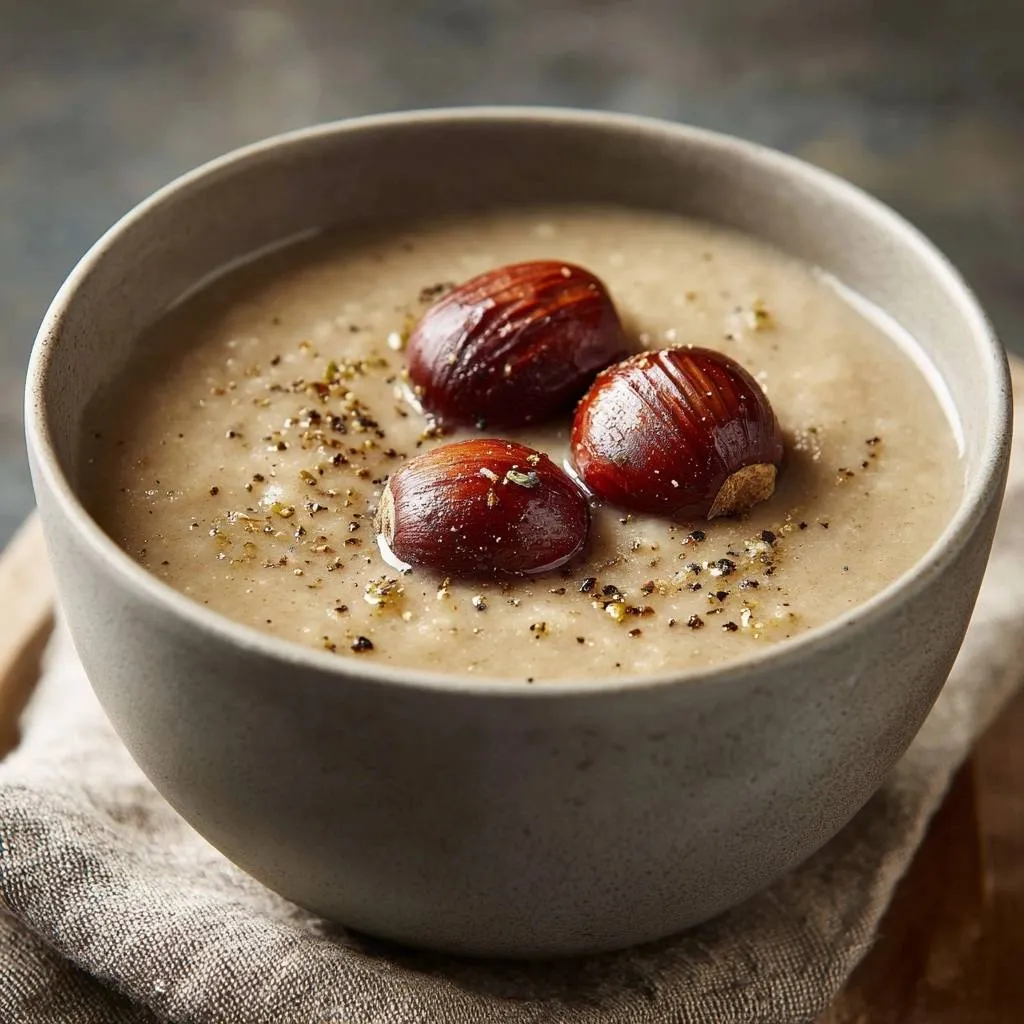
This split ensures every bowl gets that elegant touch. In addition, it maximizes efficiency since you peel only what you need right away.
Roasting Chestnuts Without Shell Struggles
Precise X-Scoring Technique
Hold each chestnut steady and use a sharp paring knife to score a deep X on the rounded flat side. This prevents dangerous steam bursts at 425F by venting pressure. Shallow cuts fail, so press firmly but safely, away from your fingers.
Visual cues? The X should gape open after roasting. However, practice on a cutting board first if you’re new to it.
Optimal Oven Timing at 425F
Spread scored chestnuts in a single layer on a rimmed baking sheet; crowding steams instead of roasts. Bake 20 to 25 minutes until shells curl back at the X, releasing a toasty, sweet aroma. Remove immediately to avoid drying out the nuts.
For larger batches, rotate the sheet halfway. Therefore, you get even results every time.
Towel-Rub Peeling: Chestnut Shells Slip Free
Hot Steam Power in Action
Right from the oven, dump hot chestnuts in batches into a thick kitchen towel. Gather into a pouch and rub vigorously for 1 to 2 minutes; the trapped steam loosens the thin pellicle skin from the nutmeat effortlessly. Cold nuts won’t work, as the steam’s the hero here.
Handle with tongs to stay burn-free. Oh man, that first shell slipping off feels like victory! Pro tip: wear gloves if your towel’s thin.
Garnish Selection Post-Peeling
Select 12 intact roasted chestnuts with curled, pretty shells for garnish; set them aside unpeeled. Roughly chop the rest for the soup. Peeled nuts last 3 days in the fridge, while whole ones keep a week.
This keeps garnishes crisp and flavorful. In addition, chopping releases their aroma early.
Simmering Velvety Chestnut Soup Base
Vegetable Broth Boiling Essentials
Choose low-sodium vegetable broth for 4 cups so you control seasoning. Bring it to a rolling boil in a large pot, add chopped chestnuts, then cover and simmer 20 minutes. They tenderize fully, soaking up broth for deep flavor infusion.
You’ll smell nutty sweetness building. Therefore, don’t rush this step; undercooked chunks ruin the puree.
Immersion Blending for Lump-Free Velvet
Achieving Ultra-Smooth Puree
Off heat, plunge an immersion blender into the pot and puree until silky; chestnut starch thickens it naturally, no cream required. For a standard blender, work in batches with a towel over the lid for steam safety. Test texture by dragging a spoon; it should coat thickly.
Minimum 200W power handles hot purees best. However, blend from the bottom up to catch lumps.
Seasoning Balance with Pepper
Taste post-blend; add salt sparingly if broth needs it, then grind in generous black pepper. Flavors meld beautifully after a 5-minute rest. Pepper’s bite cuts the richness perfectly.
This balance elevates the soup’s cozy vibe. Pro tip: freshly cracked pepper makes all the difference.
Science of Chestnut Creaminess
Starch Gels Creating Velvet Mouthfeel
Chestnuts boast high amylopectin starch, unlike potatoes’ straight chains, so roasting and simmering gelatinize it into a gel that mimics heavy cream. No dairy means richer, nuttier results than many soups. Other nuts like almonds stay gritty; chestnuts alone deliver this velvet.
Heat breaks starch granules, trapping liquid for that spoon-coating texture. Therefore, full tenderness is key.
Shell Separation Molecular Breakdown
Roasting heat and steam weaken the astringent pellicle’s bonds to the nutmeat. Towel friction then shears it off cleanly, unlike soaking which mushes everything. Historically, cooks boiled them with losses; this method wins.
Science backs the speed. In addition, it preserves nut integrity.
Equipment Choices for Chestnut Soup Success
Immersion Blender Power Ratings
Pick a 200W+ immersion blender with a long arm to reach pot depths safely. Vitamix works but requires careful hot-liquid batches. Clean by blending soapy water right after.
Power ensures no fibrous bits linger. Therefore, cheap ones frustrate.
Baking Sheet and Towel Specs
Use a rimmed half-sheet to contain curling shells. A thick cotton kitchen towel withstands vigorous rubbing. Test your paring knife on paper; it should slice cleanly.
These basics prevent messes. Pro tip: dedicate a towel for this job.
Velvety Chestnut Soup Variations
Herb and Spice Infusions
Swap pepper for thyme sprigs simmered in, or add nutmeg for warmth. Mushroom broth amps umami without overpowering. Stir in roasted garlic at the end for smoky depth.
These tweaks keep it fresh. However, start subtle; chestnuts shine solo.
Texture Twists Beyond Smooth
For rustic style, blend partially to leave chunks. Stir in coconut milk for extra creaminess. Dice an apple into the simmer for subtle sweetness that balances pepper.
Variations suit moods. In addition, they extend leftovers creatively.
Pairing Sides with Velvety Chestnut Soup
Crusty Breads and Greens
Serve with warm sourdough crostini to sop up every drop; its crunch contrasts the velvet. Peppery arugula salad cuts richness with bright acidity. Crisp whites like sparkling grape juice refresh the palate.
These sides complete the bowl. Therefore, prep them quick.
Protein Complements
Grilled tofu slices add chew without heaviness. Seared mushrooms echo chestnut earthiness. They nod to holiday turkey vibes meat-free.
Pairings keep it light. Pro tip: season proteins simply.
Make-Ahead Freezing for Chestnut Soup
Portioning and Cooling Protocol
Cool soup fully, then portion into flat quart freezer bags for quick thaw. Fridge lasts 3 days airtight; freezer up to 3 months with no separation on reheat. Add fresh garnishes post-thaw.
Simmer gently to revive. Therefore, it’s party-ready anytime.
Batch Scaling Guidelines
Double to 3 lbs chestnuts and 8 cups broth; roast time stays the same but use two sheets. Freezer life holds at 3 months. Watch pot size to avoid overflow.
Scaling feeds crowds easily. In addition, prep stays simple.
Troubleshooting Velvety Chestnut Soup Issues
Shells Still Sticking Fixes
Over-roasting dries them out, or cooling too long kills steam. Re-steam stuck ones in a microwave bag for 30 seconds, then towel-rub. Deeper X scores prevent this next time.
Hot handling is crucial. However, this hack saves batches.
Lumpy Puree Prevention
Undercooked chestnuts cause lumps; simmer fully until fork-tender. Check blender power too. Strain as last resort, but proper cooking avoids it.
Texture transforms with patience. Therefore, test doneness early.
Chestnut Soup Common Questions
Can I Use Pre-Peeled Chestnut?
Yes, but roast them first at 425F for 15 minutes to build flavor depth. They blend fine, though fresh yield silkier starch. Skip if time’s short; taste holds up.
How Long Does It Keep?
Fridge in airtight container for 4 days; reheat on stovetop with a splash of broth. Freezes 3 months flat-packed; thaw overnight and simmer gently. Garnishes fresh each time.
Dairy-Free Confirmation?
Fully vegan and dairy-free. Chestnut starch creates natural creaminess richer than cream soups. No subs needed.
Scaling for Crowds?
Figure 1.5 lbs chestnuts per 4 servings; use a Dutch oven for 8+. Roast in batches for evenness. Broth scales 1:1.
Nut Allergies Alternatives?
Puree roasted sweet potatoes or pumpkin for similar velvety starch. Simmer same way; add nutmeg for nutty echo. Texture mimics closely.
Chestnut Soup
Course: SoupCuisine: AmericanDifficulty: medium4
servings20
minutes45
minutes250
kcal65
MinutesTired of chestnut shells that cling like glue? This foolproof roast-then-towel-rub method steams them loose for effortless peeling, delivering silky-smooth soup and perfect whole garnishes every time.
Ingredients
1.5 lbs fresh chestnuts, divided
4 cups vegetable broth
Freshly ground black pepper, to taste
Salt, to taste (optional)
Directions
- Preheat oven to 425F. Divide chestnuts: reserve 12 whole ones for garnish after roasting, use the rest for soup base. With a sharp knife, carefully score an X on the rounded flat side of all chestnuts to prevent bursting.
- Spread scored chestnuts on a baking sheet in a single layer. Roast for 20 to 25 minutes, until shells start to open and curl back at the X cuts.
- Remove from oven immediately. Select and set aside the 12 prettiest whole roasted chestnuts (unpeeled, with shells nicely curled back) for garnish. The game-changing peel hack: Working in batches while hot, dump remaining chestnuts into a clean kitchen towel. Gather edges to form a pouch and rub vigorously for 1 to 2 minutes. Steam from the roasting loosens shells completely – they slip right off, leaving intact nuts with zero struggle or burns! Roughly chop the peeled chestnuts.
- In a large pot, bring vegetable broth to a boil. Add chopped peeled chestnuts, reduce heat, and simmer covered for 20 minutes until very tender.
- Remove from heat. Use an immersion blender (or regular blender in batches) to puree until ultra-velvety smooth – no lumps, pure creaminess from the chestnuts’ natural starch. Season with salt if needed and a generous grind of black pepper.
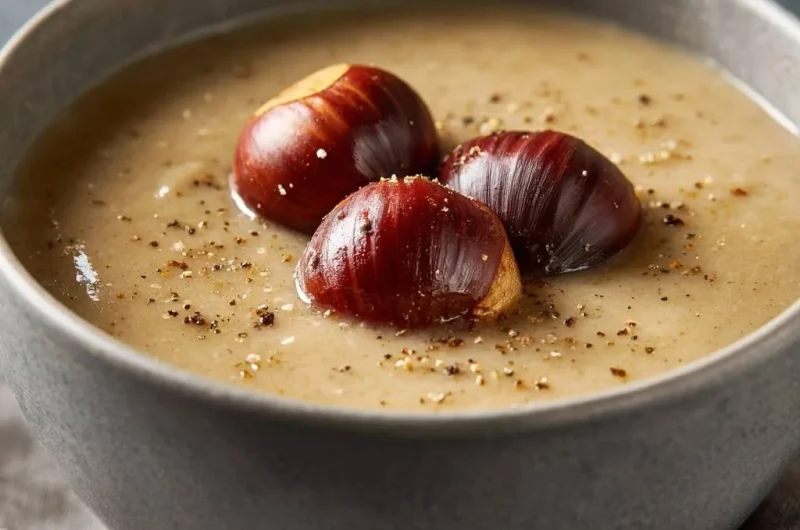
- Ladle into bowls. Top each with 3 whole roasted chestnuts and extra black pepper. Serve warm for cozy perfection.
Notes
- Reserve the 12 prettiest whole roasted chestnuts for garnish. The towel-rub method works best while chestnuts are hot for easy peeling.