
Why Roasting Transforms Butternut Squash Soup
Why settle for watery butternut squash soup when roasting fixes everything? Most home cooks boil the squash and end up with a thin, bland mess. However, roasting caramelizes those natural sugars first, so you get thick, velvety results that coat your spoon.
For another vegetable that roasts beautifully, try this roasted cauliflower curry.
That’s the magic here. Roasting evaporates excess moisture upfront, concentrating flavors through the Maillard reaction. In addition, it builds depth that boiling just can’t match. You’ll taste sweet, nutty notes in every bite.
Here’s the pro tip that seals it: preheat your oven to a full 400F. That high heat creates caramelized edges on the cubes in just 30-35 minutes. Total time? About 40 minutes for a soup packed with vitamin A and pure comfort.
Roasting vs. Boiling: Flavor and Texture Differences
Boiling keeps all the water in the squash, leading to soupy slop. Roasting, however, drives off about 30% of that moisture. Therefore, your soup thickens naturally without extra thickeners.
Picture boiled squash: pale, watery, and forgettable. Roasted? Golden-brown edges release concentrated sugars for richness. Plus, the oven’s dry heat intensifies savory umami you won’t get on the stovetop.
Key Ingredients for Velvety Roasted Butternut Squash Soup
Start with one large butternut squash, about 3 pounds. Its natural starches give body and creaminess once roasted. Fresh ones yield the best caramelization, so skip the pre-cut if you can.
Onion and garlic build the savory base. Chop one onion roughly; it softens into sweetness. Mince two garlic cloves finely to avoid bitterness, adding aromatic punch without overpowering.
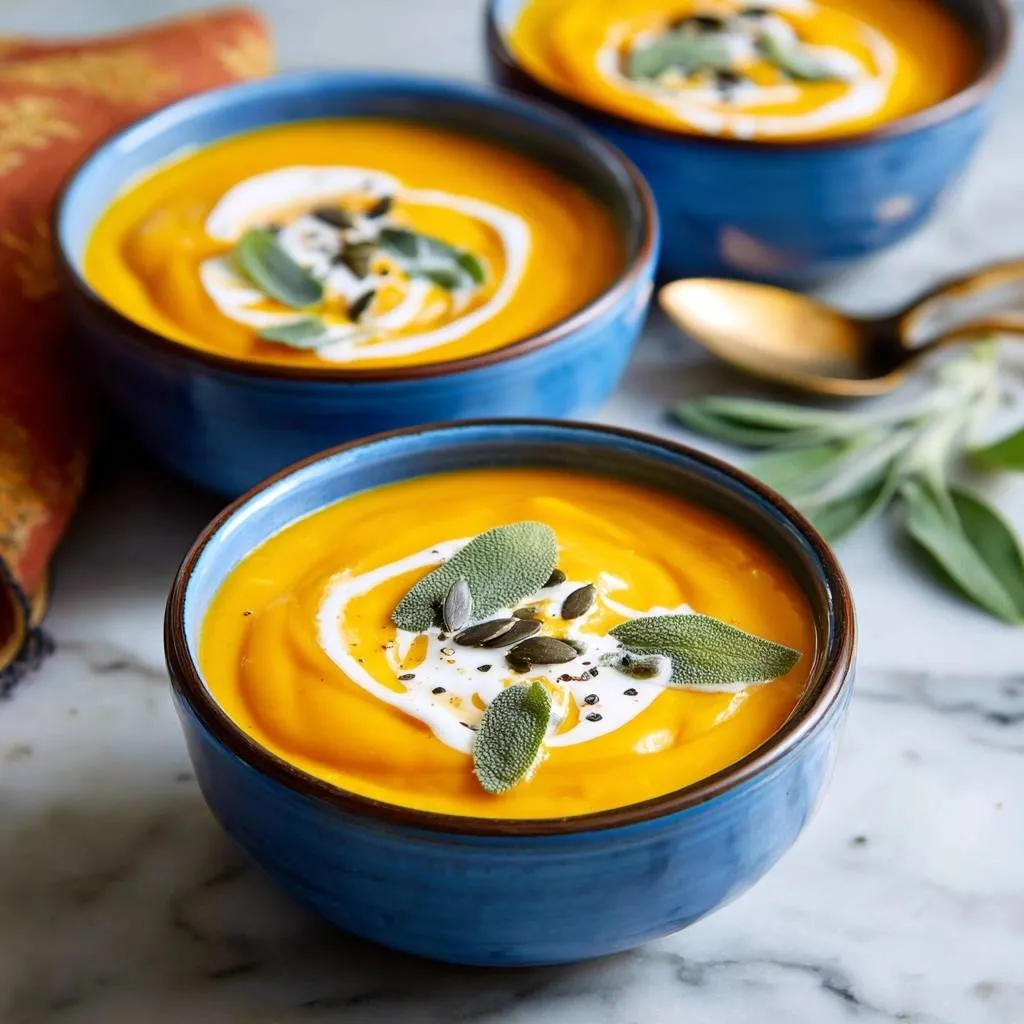
Vegetable broth keeps it pure and light, 4 cups total. Heavy cream, half a cup stirred in, creates silkiness. For dairy-free, coconut milk works great. Top with toasted pepitas for crunch and fresh sage for earthy contrast. This serves six generously.
Selecting Perfect Butternut Squash
Pick a heavy squash with smooth, unblemished skin. It means more flesh and less waste. A 3-pound one cubes perfectly for even roasting; smaller bits burn, larger stay raw.
Peeled and seeded, it yields about 6 cups of cubes. Store whole squash in a cool spot for weeks. Pro tip: cut in half lengthwise first for easier seeding.
Supporting Aromatics and Garnishes
Use a yellow onion; it’s milder and sweeter than white. Sauté until translucent for depth. Garlic goes in last, just one minute, so it perfumes without scorching.
Toast pepitas in a dry pan until they pop with nuttiness. Fresh sage leaves fried crisp add herbal pop. These contrasts make every spoonful exciting.
Step-by-Step Roasting for Velvety Butternut Squash Soup
Preheat to 400F sharp. Toss 3 pounds cubed squash with one tablespoon olive oil, salt, and pepper. Spread in a single layer on a rimmed baking sheet for airflow.
Phase 1: Caramelizing the Squash Cubes
Roast 30-35 minutes, flipping halfway. Look for fork-tender pieces with browned spots; that’s your caramelization cue. This step evaporates water, preventing thin soup every time.
Don’t overcrowd, or it steams instead. Single layer ensures crispy edges and deep flavor.
Phase 2: Sautéing Onion and Garlic Base
Heat remaining olive oil in a 4-6 quart pot over medium. Add chopped onion; cook 5 minutes until soft and fragrant, no browning needed. Stir in garlic for one minute; smell that sweet shift.
Phase 3: Simmering and Blending to Perfection
Add roasted squash and 4 cups broth. Simmer 10 minutes to meld. Puree with an immersion blender, tilting away from your hand for safety, until silky.
Stir in half cup cream; it emulsifies smoothly. Season, simmer 2-3 minutes. Taste and tweak salt.
Phase 4: Plating with Cream Swirls and Crunch
Ladle into bowls. Swirl extra cream in loops for elegance. Sprinkle pepitas and sage right before serving hot.
Science of Roasting in Butternut Squash Soup
Roasting breaks down pectin at 320F and up, creating smoothness. Sugars caramelize, boosting sweetness. Evaporation cuts water by 25-40%, so soup thickens without flour.
Maillard reaction in the oven browns edges for umami. Stovetop boiling skips this; it dilutes flavors. Studies show roasted veggies retain more nutrients too, like beta-carotene for eye health.
Lower pH from roasting stabilizes cream, preventing curdling. That’s why this method delivers pro-level velvetiness.
Avoiding Watery Velvety Roasted Butternut Squash Soup
Pitfall one: skipping the roast. Boiled squash stays watery. Fix: always oven-first.
Overcrowding the sheet traps steam. Use two sheets if needed. Low-salt pre-roast? Flavors stay dull; season generously upfront.
Over-blending whips in air for froth. Pulse briefly. Cheap broth dilutes taste; choose low-sodium, quality stuff. Checklist: single layer, full preheat, fresh ingredients.
Overcrowding and Steam Traps
For 3 pounds, one half-sheet pan max. Overlap blocks dry heat, creating steam. Space cubes an inch apart; roast flips promote even browning.
Blender Overkill and Froth Fixes
Continuous blending incorporates air bubbles. Pulse 30 seconds max, then rest. Froth settles in 5 minutes for calm, velvety texture.
Flavor Variations for Roasted Butternut Squash Soup
Coconut cream swaps heavy cream for tropical silkiness; use full-fat canned. Apple cider instead of half the broth adds tang; simmer reduces it sweet.
Ginger, one grated inch, kicks spice. Chipotle in adobo brings smoke; start with one pepper. Curry powder, a teaspoon, warms it up.
Nut butters like almond add earthiness; stir in a tablespoon post-blend. Balance with extra salt. All stay vegan-friendly minus cream.
Pairing Sides with Velvety Roasted Butternut Squash Soup
Sourdough croutons soak up richness perfectly. Cheesy toasts with gruyere melt in. Kale apple salad adds crisp freshness.
Lentil patties provide protein punch. Pair with ginger tea or chardonnay for seasonal vibes. Fall menus love this combo.
Make-Ahead Guide for Butternut Squash Soup
Roast squash up to two days ahead; store cooled in fridge. Full soup lasts four days chilled or freezes three months in portions.
Thaw overnight, reheat gently on stovetop. Avoid microwave to prevent separation. Scale batches by doubling broth and squash ratios.
Use quart containers; label dates. Pro tip: blend after reheating for fresh smoothness.
Equipment Essentials for Smooth Butternut Squash Soup
Rimmed half-sheet pan, parchment-lined, fits 3 pounds perfectly. Foil works but parchment prevents sticking better.
Immersion blender at 500W minimum powers through chunks safely. Enamel pot, 5-quart, heats evenly without scorching.
Measure broth accurately; too much thins it. Budget option: thrift a stick blender. All yield pro results.
Frequently Asked Questions on Roasted Butternut Squash Soup
Can I Use Pre-Cubed Squash?
Yes, but fresh is best for flavor. Pre-cubed often dries out; roast 5 minutes less to avoid mush. Toss with oil same way; it saves time but check caramelization closely.
Instant Pot Adaptation Possible?
Sort of; sauté onions first, add raw cubed squash and broth, pressure high 8 minutes. It skips roast caramel but quickens to 30 minutes total. Release natural, blend; flavor’s good, not oven-deep.
Dairy-Free Velvety Texture Achievable?
Absolutely; full-fat coconut milk or cashew cream (blend soaked cashews) mimics silkiness one-to-one. Oat milk works thinner, so use less broth. Stir post-blend for emulsion.
How to Intensify Caramel Notes?
Drizzle one tablespoon honey pre-roast; sugars boost Maillard. Or extend to 40 minutes, watching for burn. Broil last 2 minutes for extra char without drying.
Scaling for Crowd Sizes?
Double for 12: 6 pounds squash, 8 cups broth. Roast in batches to avoid steaming. Blend in pot shifts; taste salt as volume changes ratios slightly.
How Do I Store Leftovers?
Cool completely, then fridge in airtight containers up to 4 days. Freezes well up to 3 months; portion in bags flat for space. Thaw in fridge, reheat on stove over low with stir to restore creaminess.
Why Is My Soup Still Watery?
Usually overcrowding the roast sheet or skipping preheat. Steam builds without space or heat shock. Fix next time: single layer, 400F hot pan. Blend less too; excess air mimics thinness.
What Can I Substitute for Heavy Cream?
Coconut milk or blended cashews for dairy-free velvet. Half-and-half lightens it up. Yogurt adds tang but thin slightly; compensate with less broth upfront.

Roasted Butternut Squash Soup
Course: SoupCuisine: AmericanDifficulty: easy4
servings20
minutes45
minutes280
kcal65
MinutesTired of butternut squash soup that turns out thin and flavorless from boiling? This recipe solves it by roasting the squash first to caramelize natural sugars and evaporate excess moisture for thick, creamy results every time. No more watery disasters.
Ingredients
1 large butternut squash (about 3 lbs), peeled, seeded, and cubed
1 onion, chopped
2 garlic cloves, minced
4 cups vegetable broth
1/2 cup heavy cream (plus extra for swirling)
2 tablespoons olive oil
Salt and pepper to taste
1/4 cup pepitas (pumpkin seeds), toasted
Fresh sage leaves for garnish
Directions
- Preheat oven to 400F. Toss cubed butternut squash with 1 tablespoon olive oil, salt, and pepper on a baking sheet. Roast for 30-35 minutes until caramelized and tender. This key step evaporates water content and builds deep flavor, guaranteeing no watery soup.
- While squash roasts, heat remaining olive oil in a large pot over medium heat. Add chopped onion and cook 5 minutes until softened. Add garlic and cook 1 minute more.
- Add roasted squash and vegetable broth to the pot. Bring to a simmer and cook 10 minutes to meld flavors.
- Puree soup with an immersion blender until silky smooth. Stir in 1/2 cup heavy cream. Season with salt and pepper. Simmer 2-3 minutes to heat through.
- Ladle into bowls. Swirl with extra cream, sprinkle toasted pepitas, and top with fresh sage leaves. Serve hot for perfect, thick texture.
Notes
- Roasting the squash is the key step to evaporate water content and build deep flavor, guaranteeing no watery soup. Use an immersion blender for silky smooth texture.