Why Blanching Transforms Pesto Color
Picture this: you blend up fresh basil pesto, it looks stunning on your plate, but ten minutes later it’s turned that dull army green. Frustrating, right? Most home cooks face this because basil’s polyphenol oxidase enzyme reacts with oxygen, causing rapid browning just like a cut avocado.
However, this recipe fixes it with a simple blanch-and-shock trick. You boil the leaves for exactly five seconds, then plunge them into ice water. Italian chefs use this to keep pesto neon bright for hours, unlike classic Genovese methods that rely on immediate use and still fade fast.
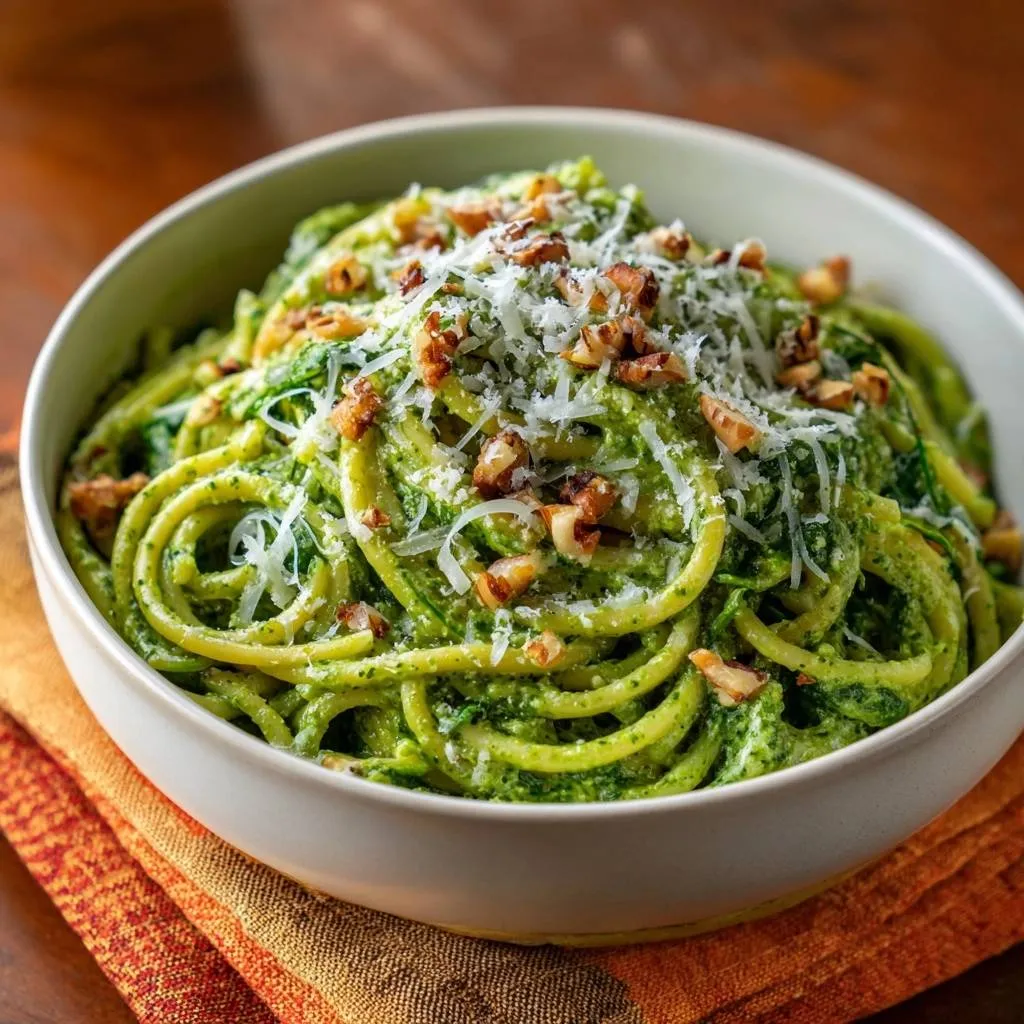
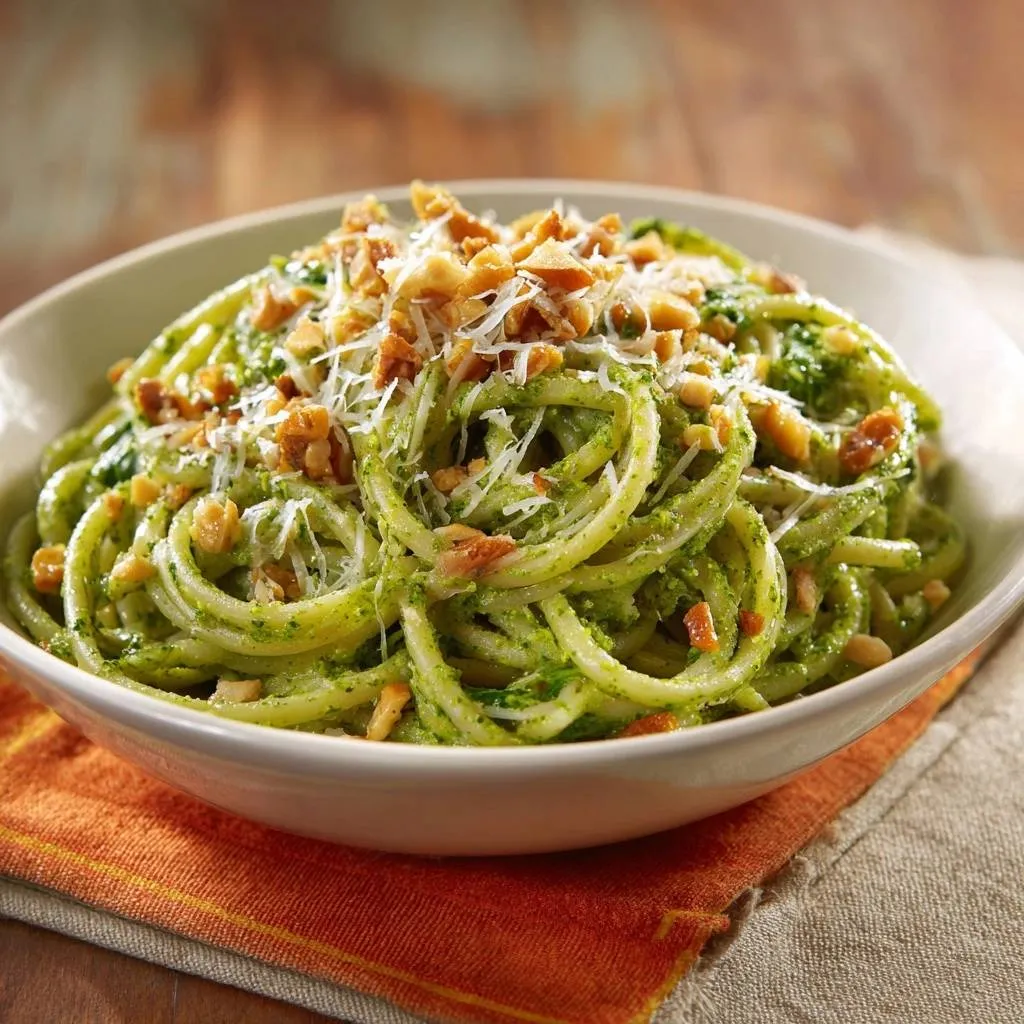
Therefore, your spaghetti gets that vibrant green coating that pops against twirly noodles. The secret lies in the precise timing; it neutralizes the enzyme without cooking the flavor out of the basil. You’ll see the difference immediately, and it holds up through serving.
For a different take on noodles, check out crispy zucchini spaghetti.
Enzyme Science of Basil Browning
Basil leaves contain polyphenol oxidase, an enzyme that triggers when exposed to air. It oxidizes compounds into brown pigments, turning pesto murky fast. In addition, heat from blending speeds this up.
Blanching denatures that enzyme in seconds. Italian pros swear by it for restaurant-quality color. Molecularly, the brief hot water breaks the enzyme’s structure, while the ice shock halts any cooking, preserving chlorophyll for that fresh green hue.
Blanch-Shock Timing Precision
Boil water, add basil for exactly five seconds until it brightens. Overdo it to ten seconds, and you’ll get limp leaves with bitter notes. Therefore, use a timer.
Next, shock in ice water for 30 seconds; the leaves crisp up and turn vivid. Pat dry thoroughly afterward. This precision keeps your pesto glowing without watery texture.
Key Ingredients for Vibrant Basil Pesto Spaghetti
Fresh basil packs the punch here; grab young, vibrant leaves for the best color and aroma. Two cups tightly packed yield enough for eight ounces of spaghetti. Dried basil won’t work; it lacks the oils that emulsify into creamy pesto.
Extra-virgin olive oil drizzles in slowly for smooth emulsion. Choose a fruity one; it carries garlic and lemon without overpowering. In addition, fresh lemon juice adds acidity to brighten flavors and stabilize the green.
Pine nuts bring crunch; divide them so half blends smooth, half toasts golden. Freshly grated Parmesan melts better than pre-shredded, avoiding graininess. Salt and pepper tie it all together, but taste as you go.
Fresh Basil’s Role in Vibrancy
Pack two cups of young basil leaves; they hold more chlorophyll for intense green. Older leaves brown faster and taste woody. Therefore, hit the farmers market if you can.
Fresh beats store-bought pesto every time in texture and yield. It blends silky without stems, which can make it stringy.
Pine Nuts and Parmesan Balance
Toast half the pine nuts post-cook for nutty crunch that contrasts creamy pasta. Blend the rest raw for subtle richness. In addition, grate Parmesan fresh; it incorporates smoothly.
A pinch of salt early helps release basil oils. Pepper adds a gentle kick at the end.
Blanching Basil for Lasting Green Pesto
Start with a small pot of boiling water. Drop in basil leaves for five seconds; they’ll wilt slightly and glow brighter. Immediately grab tongs and transfer to ice water.
Swish for 30 seconds until cold; this stops the cooking instantly. Drain, then pat super dry with paper towels. Squeeze gently to remove every drop of moisture, or your pesto turns soupy.
Pro tip: this step kills the browning enzyme dead. You’ll notice the basil stays electric green even after blending and tossing. Safety first; keep the pot small to control the boil.
Preparing Ice Bath Setup
Fill a bowl with ice and cold water, equal parts. Use tongs for quick basil transfer; they prevent burns and bruising. Skip this, and warm water fails to shock properly.
Avoid colanders if leaves slip through. This setup ensures crisp, color-locked basil every time.
Blending Vibrant Basil Pesto Spaghetti Sauce
Add blanched basil, half the pine nuts, garlic, lemon juice, and salt to your food processor. Pulse until finely chopped, not pureed; this keeps texture lively. Then, with the motor running, drizzle in olive oil slowly.
Watch it emulsify into a smooth, vibrant green sauce. Stir in Parmesan last to prevent clumping. Taste; a splash of pasta water later thins it perfectly for coating noodles.
Therefore, set it aside; it holds color without air exposure. The low heat from hot pasta activates flavors without fading the green.
Food Processor Pulse Technique
Pulse first to chop evenly; continuous blending overheats and dulls color. Mince garlic ahead if your processor struggles. Medium speed avoids mush while integrating everything.
This builds the base before oil creates silkiness.
Cooking Spaghetti to Al Dente Perfection
Boil salted water; use a palmful of salt per gallon for flavor. Cook eight ounces spaghetti nine minutes until al dente, firm to the bite. Reserve half a cup pasta water before draining.
Return pasta to the pot on low heat. Add pesto and a splash of reserved water; toss vigorously. The starch turns it creamy, coating every strand without darkening.
For those who enjoy a hearty sauce, consider mastering classic spaghetti bolognese.
In addition, the gentle warmth melds flavors. High heat would brown your hard-won green sauce.
Round Out Your Meal
To complement your Vibrant Basil Pesto Spaghetti, consider these other vegetable-focused dishes.
- For a similar savory crunch, try this crispy parmesan roasted zucchini, which shares a love for simple, fresh ingredients.
- Another fresh pasta idea is the Caprese fusilli salad, featuring classic tomato and mozzarella flavors that pair well with basil.
Reserving Pasta Water Strategically
Half a cup is key; too much dilutes pesto, too little leaves it dry. It activates starch for natural creaminess. Toss with tongs in a circular motion for even coverage.
This pro move makes restaurant-style silkiness at home.
Flavor Variations for Basil Pesto Spaghetti
Go vegan with nutritional yeast instead of Parmesan; it melts similarly and keeps color intact. Swap pine nuts for walnuts; they add earthiness without fading green.
However, add a handful of arugula or spinach for peppery depth; blanch them too. Lemon zest amps brightness. For heat, stir in chili flakes post-blend; they don’t affect vibrancy.
Each tweak holds the neon hue if you blanch properly. Test small batches first.
Nut-Free and Vegan Adaptations
Hemp or sunflower seeds mimic pine nut texture; hemp adds omega richness. They blend smooth and toast crunchy. Nutritional yeast gives cheesy umami without dairy.
These keep the pesto authentic and vibrant.
Avoiding Common Mistakes in Vibrant Basil Pesto Spaghetti
Over-blanching makes basil bitter; stick to five seconds. Processor overheating from overrunning fades color, so pulse smartly. Skipping the dry step leads to oily, separated sauce.
In addition, high-heat tossing darkens pesto fast. Fixes: start over on blanch if bitter, chill processor bowl if hot, add oil slowly to recover emulsion.
Prevention beats fixes every time.
Preventing Pesto Emulsion Failure
Use room-temp oil and cheese; cold breaks it. Sharp blades chop clean for stability. If it splits, add ice water drop by drop while pulsing.
This ensures creamy results.
Pairing Sides with Vibrant Basil Pesto Spaghetti
Balance the rich pesto with a Caprese salad; fresh tomatoes and mozzarella cut through green intensity. Grilled zucchini or cherry tomatoes add smoky char and acidity.
Crusty bread sopps up every bit. Sparkling cranberry juice refreshes the palate alongside. Roasted asparagus brings earthiness in under 10 minutes.
These quick sides match pasta’s speed and enhance the crunch from pine nuts.
Quick Veggie Complements
Blister tomatoes in a hot skillet for two minutes; their juice pops with pesto. Roast asparagus spears at 425°F for eight minutes. Both add crunch without overpowering.
Prep while pasta boils.
Equipment Essentials for Basil Pesto Spaghetti
A food processor beats a blender; it pulses precisely without overheating basil. Small pot for blanching handles the batch perfectly. Dry skillet toasts nuts evenly.
Sharp blades preserve color by chopping clean. Budget processors under $50 work if they pulse well. Tongs are non-negotiable for safe transfers.
Blanching Pot and Tongs Choice
Two-quart pot suffices; larger dilutes boil. Silicone-tipped tongs grip without bruising. Strainers work but slow you down.
Speed preserves vibrancy.
Common Questions on Vibrant Basil Pesto Spaghetti
Can I Make Pesto Ahead?
Yes, store in an airtight jar with a thin olive oil layer on top to block air. It lasts three days in the fridge, staying bright green. Freeze in ice cube trays for three months; thaw and stir with pasta water. Reheat gently over low heat or toss straight into hot pasta to avoid browning. Don’t microwave; it dulls color fast.
Why Does My Pesto Still Brown?
Usually blanch timing’s off; too long cooks the enzyme partially, or ice shock skipped lets residual heat oxidize. Air exposure post-blend or hot processor also culprits. Fix by re-blanching fresh basil exactly five seconds, dry thoroughly, and blend cold. Store covered immediately. Heat from pasta tossing darkens if not low; use residual warmth only.
Best Pasta Shape Alternatives?
Twirly fusilli or gemelli grip pesto best, holding green sauce in ridges like spaghetti. Farfalle works for bite-sized bowls. Gluten-free spaghetti or fusilli holds up; cook one minute less and reserve extra water for starch. Avoid long flat shapes like fettuccine; sauce slides off. Test linguine for slimmer twirls.
Scaling for Larger Batches?
Double ingredients but blanch basil in two stages; overcrowding drops water temp and fades color. Processors max at double; do two batches if needed. Multiply pasta water reserve proportionally. Toast extra nuts separately to avoid burning. Keeps vibrancy consistent for crowds.
Nut Substitutes for Allergies?
Sunflower or pumpkin seeds blend smooth with mild nuttiness; toast for crunch. Hemp seeds add creaminess without strong flavor. Walnuts work but chop finely to avoid bitterness. All retain green if blanched basil leads. Adjust salt up slightly for balance; taste before tossing.
Spaghetti
Course: Main CourseCuisine: ItalianDifficulty: easy4
servings15
minutes15
minutes550
kcal30
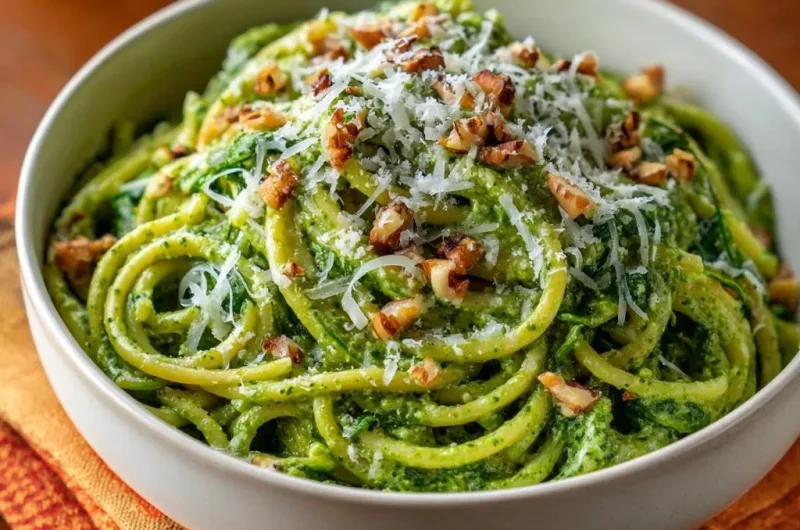
MinutesTired of pesto turning dull and brown? This recipe uses a quick blanch-and-shock method on basil leaves to lock in stunning bright green color for hours. Tossed with spaghetti, topped with toasted pine nuts and Parmesan.
Ingredients
8 ounces spaghetti
2 cups fresh basil leaves, packed
1/4 cup pine nuts, divided
1/2 cup grated Parmesan cheese, plus more for topping
1/3 cup extra-virgin olive oil
2 garlic cloves
1 tablespoon fresh lemon juice
Salt and black pepper to taste
Ice water for shocking
Directions
- Bring a small pot of water to a boil. Add basil leaves and blanch for exactly 5 seconds until vibrant. Immediately transfer to a bowl of ice water for 30 seconds to stop cooking and preserve color. Drain well, pat dry with paper towels, and squeeze out excess moisture. This blanch-and-shock method kills the enzyme causing browning, keeping pesto neon green.
- In a food processor, pulse blanched basil, half the pine nuts (2 tablespoons), garlic, lemon juice, and a pinch of salt until finely chopped.
- With processor running, slowly drizzle in olive oil until smooth and emulsified. Stir in grated Parmesan. Taste and adjust salt and pepper. Set pesto aside; it stays bright green for serving.
- Cook spaghetti in salted boiling water until al dente, about 9 minutes. Reserve 1/2 cup pasta water, then drain.
- Return spaghetti to pot over low heat. Add pesto and a splash of reserved pasta water; toss until creamy and evenly coated. The residual heat activates flavors without darkening the sauce.
- Toast remaining pine nuts in a dry skillet over medium heat for 1-2 minutes until golden.
- Divide pasta into bowls, top with extra Parmesan and toasted pine nuts. Serve immediately for maximum green glow and crunch.
Notes
- Blanch-and-shock basil for exactly 5 seconds to preserve vibrant green color without altering taste. Use high-quality extra-virgin olive oil for best flavor. Pesto stays bright green for hours.