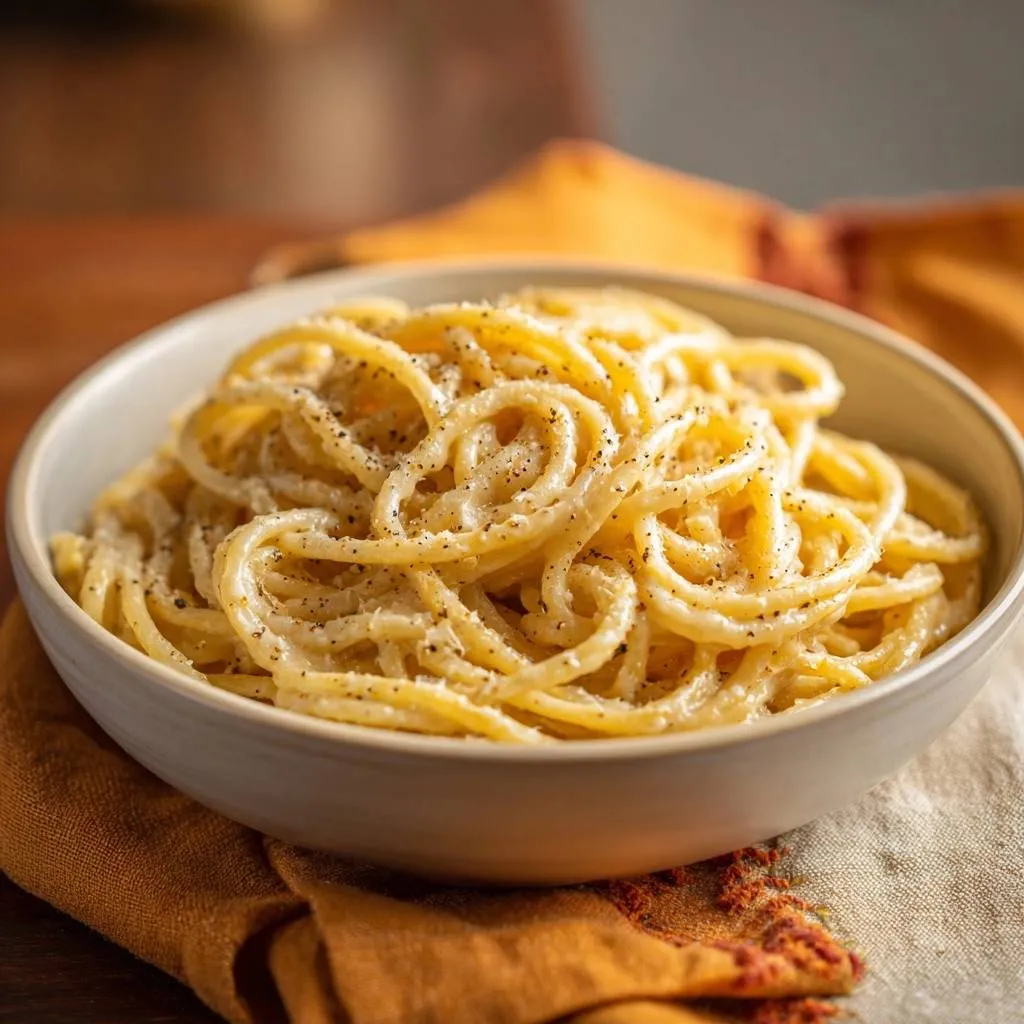
Ever ended up with a gritty, clumpy mess when trying cacio e pepe? You’re not alone. That grainy cheese ruins the whole Roman dream. But this method fixes it every time with hot pasta water and off-heat mixing.
Here’s why it works so well. The starch in the pasta water creates a perfect emulsion. No more fighting seized Pecorino. Instead, you get that glossy, silky sauce that clings just right.
The real secret? Toast the pepper first, then cool the pasta off heat before adding cheese gradually. That hits the exact melt zone. You’ll nail cacio e pepe like a pro in under 20 minutes.
For a truly silky creamy spaghetti, focus on that emulsification.
Core Elements for Perfect Cacio e Pepe
Great cacio e pepe starts with the right picks. Finely grated Pecorino Romano melts smoothly into the starchy pasta water. Freshly cracked black pepper adds punch. Spaghetti holds it all together.
These keep the sauce silky. However, quality matters a ton. Pre-grated cheese won’t emulsify right. Therefore, grate your own for powder-fine texture.
Pecorino Romano: Grating and Freshness Keys
Use a microplane for Pecorino Romano. It creates a fluffy, powder-like grate that melts without grittiness. Room-temp cheese clumps less too.
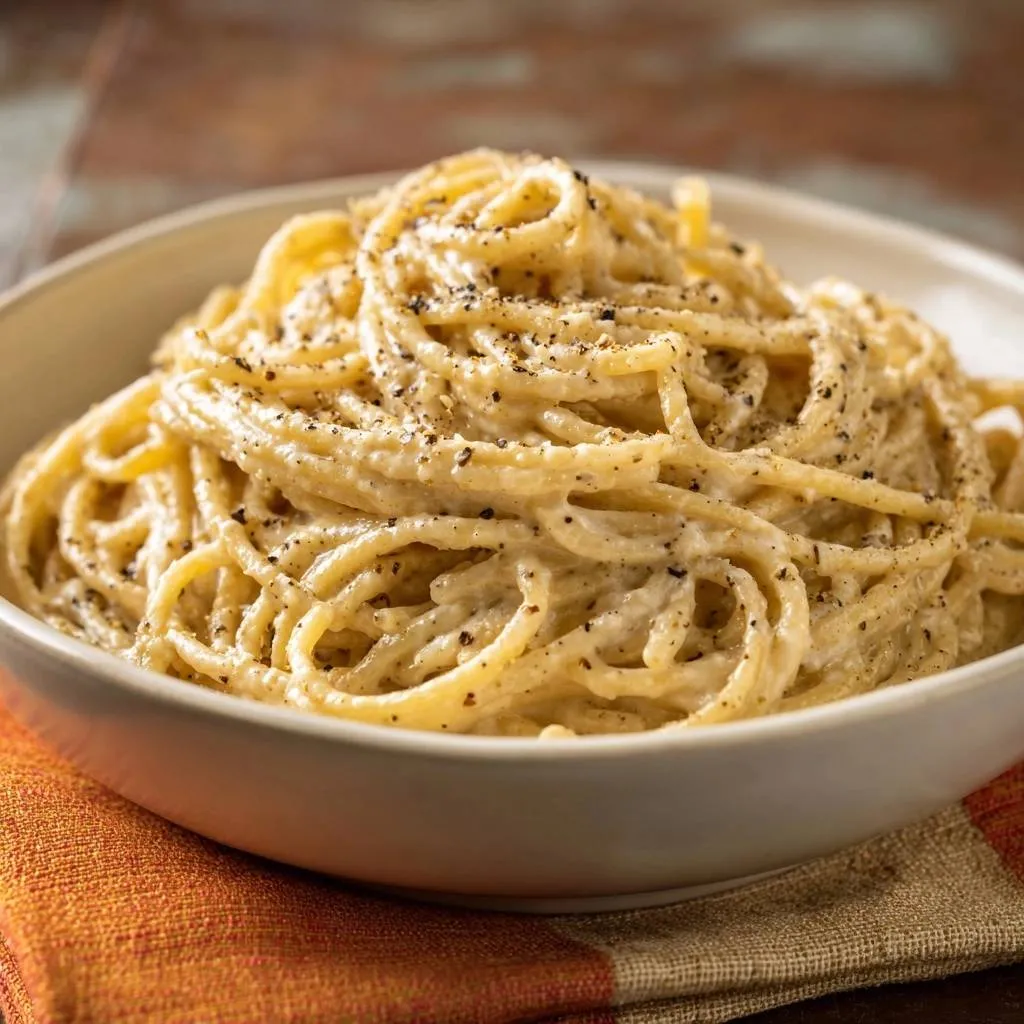
Pecorino beats Parmesan here. It’s sharper and saltier, perfect for authentic cacio e pepe. Parmesan works in a pinch but needs more water for creaminess.
Black Pepper: Toasting for Bold Flavor
Toast black pepper dry over medium heat. This releases volatile oils for deep aroma. Crack it coarse for bite, but don’t overdo the quantity.
One teaspoon hits the spot. Too much overpowers the cheese. Freshly cracked always tastes brighter than pre-ground.
Spaghetti and Pasta Water Ratios
Spaghetti’s thickness traps sauce best. Tonnarelli’s ideal, but spaghetti shines. Reserve 1.5 cups pasta water exactly.
Heavy salting mimics the sea. Use 1/4 cup salt per gallon. That flavors every strand from the inside.
Ancient Roots of Cacio e Pepe
Cacio e pepe came from Roman shepherds. They carried Pecorino and pepper on long treks. Simple, portable, and sustaining.
It evolved from street food to Lazio’s pride. Fine dining keeps the purity now. Mastering the technique honors that tradition.
In addition, modern cooks stick close to roots. No cream or extras. Just cheese, pepper, and pasta mastery.
For more cheesy, garlic-infused pasta goodness, check out our foolproof garlic parmesan spaghetti.
Essential Tools for Flawless Cacio e Pepe
You need a large skillet, heavy pot, microplane, and tongs for cacio e pepe. These make emulsion easy. Skip non-stick; it can’t handle the toss.
Carbon steel or stainless works best. They deglaze pepper water smoothly. A 12-inch size gives tossing room.
Skillet Size and Material Choices
Go 12-inch minimum. It fits the pasta for even coating. Cast iron toasts pepper well, but stainless excels for sauce.
Tongs vs Fork for Emulsion Control
Tongs grip without piercing strands. They let you toss fast for even melt. Forks tear pasta and slow you down.
Step-by-Step: Mastering Cacio e Pepe Emulsion
Boil heavily salted water first. Add 8 ounces spaghetti. Cook 2 minutes shy of al dente, about 8 minutes total.
Reserve 1.5 cups starchy water. Drain the rest. That starch is your sauce’s backbone.
Boil Spaghetti to Exact Undercook
Undercooking keeps pasta firm. It finishes in the sauce. Smell the salty steam rising; that’s your cue.
Toast Pepper and Deglaze Skillet
While pasta boils, toast 1 teaspoon pepper in a dry skillet over medium heat for 1 minute. It gets fragrant fast.
Add 1/2 cup reserved water. Simmer 1 minute to pull flavors. Remove from heat right after.
Off-Heat Cooling for Cheese Prep
Add drained spaghetti to the pepper water. Toss to coat. Let it cool 1 minute off heat.
This drops the temp to prevent seizing. Pasta steams lightly, releasing more starch.
Gradual Pecorino Addition Technique
Sprinkle 1 cup finely grated Pecorino while tossing hard with tongs. Add 1/4 cup pasta water first.
Then dribble in more, 1 tablespoon at a time. Toss 30-60 seconds per batch. Watch it turn creamy.
Add the last cup cheese. Keep tossing till silky. Pro tip: If it’s thick, splash more water.
Final Toss and Texture Check
Sauce should ribbon off tongs smoothly. Adjust with water or pepper. Serve right away before it sets.
Science of Silky Cacio e Pepe Sauce
Starch from pasta water emulsifies the cheese. Proteins bind with amylose for stability. Heat control keeps it smooth.
Over 180°F, casein denatures and curdles. Pepper and salt tweak pH for better melt. Italian pasta labs confirm this.
Starchy Water as Natural Emulsifier
Amylose and amylopectin trap fats and proteins. They build viscosity without dairy. That’s pure creaminess.
Off-Heat Melt Temperature Window
Aim for 150-170°F. Cooling hits this zone perfectly. No separation, just gloss.
Avoiding Grainy Cacio e Pepe Pitfalls
Top mistake: direct heat on cheese. It balls up fast. Fix with off-heat toss.
Coarse grating causes grit. Low-starch water fails emulsion. Slow tossing leaves clumps.
Don’t pre-melt cheese. Checklist: fine grate, reserve water, vigorous action. You’ll avoid every issue.
Why Cheese Clumps and Fixes
Heat and big dumps shock proteins. Grate fine, add gradual, toss nonstop.
Overcooked Pasta Water Issues
Drain too soon, starch vanishes. Boil off volume. Time it to 1.5 cups reserved.
Cacio e Pepe Variations and Swaps
Stick purist, but try tonnarelli for ridges. Add beef bacon bits for umami. Balance with extra toss.
Vegan? Nut-based cheese emulsifies similarly. Gluten-free spaghetti needs more water. Keep ratios tight.
These tweaks honor the core. Flavor stays bold and simple.
What to try next
For more simple yet satisfying pasta dishes, consider these options.
- To complement your Cacio e Pepe, enjoy a fresh Caprese Fusilli Salad bright with tomatoes and basil.
- Another great choice to pair with classic pasta is a vibrant Pesto Farfalle Pasta Salad featuring fresh green beans.
Pairing Sides with Cacio e Pepe
Balance pepper heat with arugula salad. Drizzle olive oil and lemon. Crisp and fresh.
Roasted artichokes add earthiness. Sopping bread catches every drop. Sparkling water cuts the richness.
Cacio e Pepe Troubleshooting Guide
Sauce too thick? Whisk in hot pasta water off heat. Toss till smooth.
Not creamy? Add more fine cheese and water. Increase vigor for 30 seconds extra.
Sauce Broke: Quick Recovery Steps
Off heat, whisk in 2 tablespoons hot water. Toss pasta back in. If needed, start fresh with new water.
Not Creamy Enough After Tossing
Grate finer next time. Use 1/4 cup more water. Toss longer for full emulsion.
Frequently Asked Cacio e Pepe Questions
Can I Use Parmesan in Cacio e Pepe?
Yes, Parmesan works but it’s milder and less sharp than Pecorino Romano. Increase pasta water by 2 tablespoons since it melts softer. Toss vigorously to emulsify. Authenticity dips, but you’ll still get silky cacio e pepe texture. Freshly grated only, no pre-shredded.
How to Reheat Leftover Cacio e Pepe?
Add a splash of water to a skillet over low heat. Toss pasta gently for 1-2 minutes till creamy again. Microwave clumps it, so avoid that. Best eaten fresh, but this revives day-old cacio e pepe nicely without graininess.
Best Pasta Shape for Cacio e Pepe?
Spaghetti’s top for holding peppery sauce in strands. Tonnarelli’s ridges amplify cling. Bucatini works too, but avoid thin shapes like angel hair. They slip through the emulsion. Stick thick for authentic Roman cacio e pepe.
Why Is My Cacio e Pepe Grainy?
Coarse cheese or high heat causes it. Grate Pecorino to powder with a microplane. Mix off heat with starchy water added gradually. Toast pepper first for base. Follow this, and your cacio e pepe stays silky smooth every time.
Scaling Cacio e Pepe for Crowds?
Double ingredients for four servings. Use two wide skillets to avoid crowding. Cook pasta in batches, reserving water per pot. Toss in shifts off heat. Keeps emulsion perfect without clumping in big cacio e pepe batches.
Cacio e Pepe
Course: Main CourseCuisine: ItalianDifficulty: easy2
servings10
minutes10
minutes450
kcal20
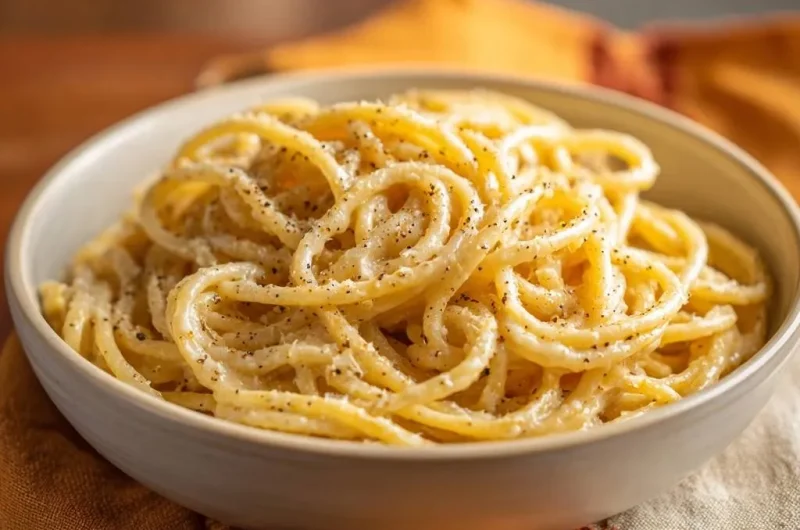
MinutesStruggling with cacio e pepe where the cheese turns gritty or clumps? This recipe nails the silky emulsion every time using hot pasta water and off-heat mixing to melt Pecorino perfectly without seizing.
Ingredients
8 ounces spaghetti
2 cups finely grated Pecorino Romano cheese
1 teaspoon freshly cracked black pepper
Salt for pasta water
Directions
- Bring a large pot of heavily salted water to a boil. Add spaghetti and cook until 2 minutes shy of al dente, about 8 minutes. Reserve 1.5 cups pasta water, then drain.
- While pasta cooks, toast pepper in a dry large skillet over medium heat for 1 minute until fragrant. Add 1/2 cup reserved pasta water to deglaze and simmer 1 minute. Remove from heat.
- Add drained spaghetti to the skillet with pepper water. Toss to coat, then let cool 1 minute off heat.
- Sprinkle in 1 cup Pecorino gradually while tossing vigorously with tongs. Add pasta water 1 tablespoon at a time (start with 1/4 cup) until cheese melts into a creamy, emulsified sauce with no grittiness. Add remaining cheese and toss until silky smooth. Adjust with extra water or pepper if needed.
- Divide into bowls and serve immediately for perfect texture.
Notes
- Use finely grated Pecorino Romano for best melting. Toss vigorously off heat to prevent clumping. Freshly cracked black pepper is essential for aroma.