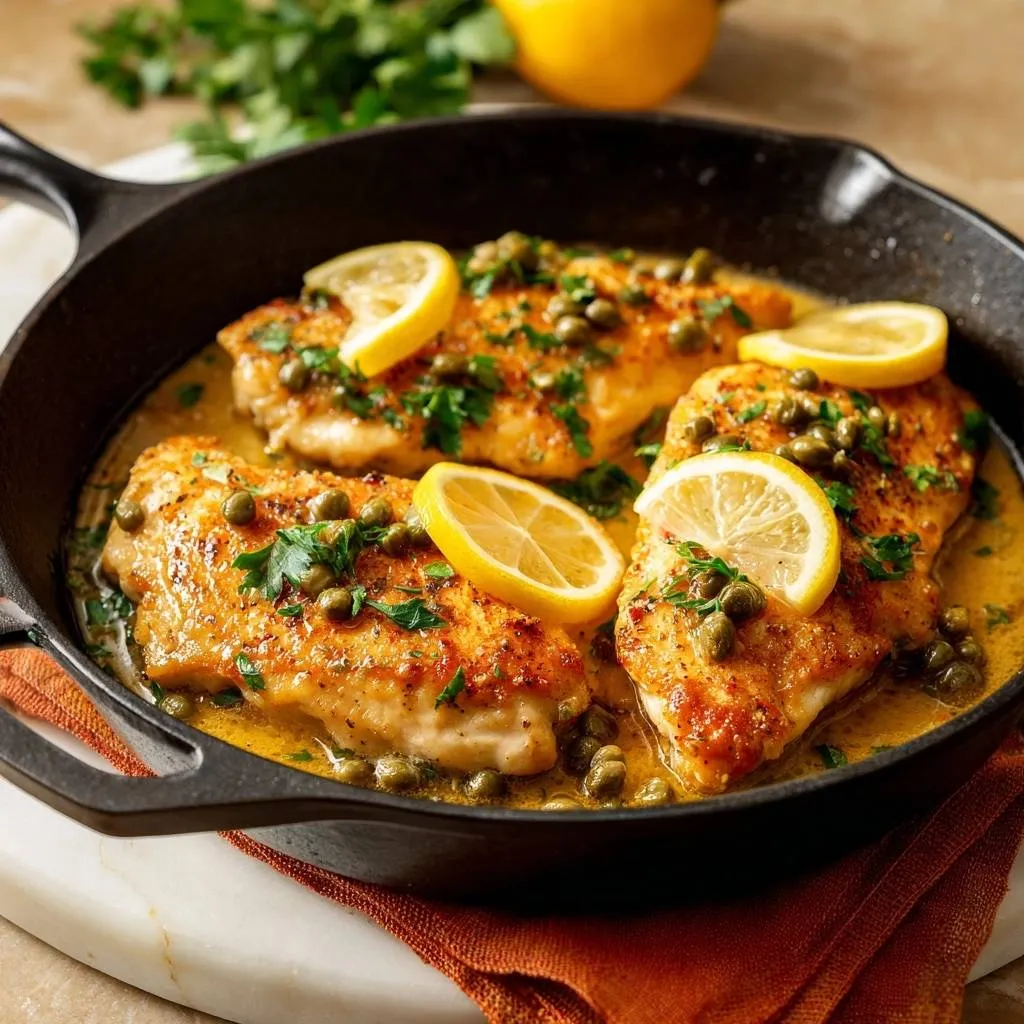
Ever bitten into chicken piccata that’s tough and rubbery? Most recipes skip the pounding step, so the thick parts overcook while thin spots dry out. This easy chicken piccata fixes that with a quick pound to even thickness, a high-heat sear for crust, and a sauce finish that locks in juices. You’ll have dinner ready in under 30 minutes, better than any restaurant version.
Therefore, the real why behind juicy results comes from even cooking. Pounding breaks down fibers for tenderness, and that fast sear creates a barrier against moisture loss. In addition, the lemon-caper sauce infuses flavor without steaming the meat.
Here’s the expertise pro tip: always check for a shimmering oil ripple before adding chicken. That high heat triggers the Maillard reaction fast, giving golden edges while the inside stays at perfect 165F. No more dry chicken piccata disasters.
Why Chicken Piccata Demands Even Thickness
Pounding Technique for Uniform Breasts
You start by placing chicken breasts between plastic wrap. Grab a meat mallet and pound to 1/4-inch thickness. This ensures every bite cooks evenly to 165F without dryness.
A mallet works better than a rolling pin because its weight flattens quickly and breaks muscle fibers for tenderness. However, use the flat side to avoid tearing. Safety first: hold the wrap steady to prevent slips.
Therefore, uniform thickness prevents the rubbery texture from overcooked edges. You’ll notice the chicken plumps slightly after pounding, ready for seasoning.
Seasoning and Light Flour Dredge Essentials
Season both sides generously with salt and black pepper. Then dredge lightly in 1/2 cup all-purpose flour, shaking off excess. This creates a delicate crust without heaviness.
Heavy breading soaks up oil and steams the chicken. In addition, a light dredge browns fast and thickens the sauce naturally. Pat dry first for better adhesion.
Pro tip: taste your seasoning on a pinch of flour before dredging. It amps up the chicken piccata recipe dredging without overpowering the lemon.
Key Ingredients Shaping Chicken Piccata Sauce
Lemon Zest Juice and Capers Balance
Zest and juice from 3 fresh lemons pair with 1/2 cup drained capers. The zest adds bright oils, juice brings tartness, and capers deliver briny pop. Together, they cut through the richness perfectly.
Fresh lemons beat bottled every time; their oils emulsify better in sauce. Rinse capers lightly if too salty. This authentic chicken piccata ingredients balance makes the dish sing.
Therefore, don’t skip the zest; it clings to the chicken for lasting citrus punch. Squeeze lemons over a strainer to catch seeds.
Butter Emulsification for Glossy Finish
Use 4 tablespoons cold unsalted butter, whisked in one tablespoon at a time. Unsalted lets you control salt from capers and broth. Cold bits create that silky emulsion.
Melted butter separates; cold mounts into a glossy coating. Ghee works if dairy-free, but it lacks butter’s flavor depth. Watch for a spoon-coating shine.
In addition, off-heat whisking prevents breaking. This step turns simple sauce into restaurant magic.
Olive Oil and Broth Foundation
Heat 3 tablespoons olive oil until shimmering. It withstands high heat for searing without smoking. Follow with 1 cup low-sodium chicken broth for deglazing.
Shimmering oil means 400F+, perfect for crust. Low-sodium broth avoids a salty sauce base. Scrape those browned bits; they’re pure flavor.
This chicken piccata sauce base builds umami fast. Pro tip: extra virgin olive oil adds fruity notes.
High-Heat Sear Science in Chicken Piccata
Cast Iron Skillet for Perfect Crust
Preheat a cast iron skillet with oil for 2 minutes until shimmering. It retains heat evenly for Maillard browning without hot spots. Sear chicken 2-3 minutes per side.
Stainless steel cools on contact; cast iron doesn’t. Monitor internal temp at 165F with a thermometer. The chicken piccata sear technique guarantees gold without overcooking.
Therefore, that crust seals juices in. You’ll smell sweet caramelization filling the kitchen.
Batch Cooking to Lock in Juices
Cook in batches to avoid crowding. Overlap steams instead of sears, trapping moisture wrong. 2-3 minutes per side hits 165F perfectly.
Rest chicken on a plate; juices redistribute. Proteins coagulate at 165F, staying tender. No steam means crisp exterior.
In addition, batches keep oil hot. This preserves that juicy core every time.
Building the Signature Lemon-Caper Sauce
Deglazing with Broth and Aromatics
Reduce to medium heat. Add capers, lemon juice, zest, and broth. Scrape fond from the pan; those bits are umami gold.
Simmer 3 minutes to concentrate flavors. The sauce bubbles gently, turning tangy and rich. This chicken piccata sauce recipe step builds depth fast.
Therefore, fond deglazing elevates everything. Taste and adjust lemon if needed.
Whisking Butter for Emulsion Perfection
Whisk in butter one tablespoon at a time, off heat if sauce boils. It emulsifies into glossy perfection. Look for a velvety sheen.
Temp control prevents separation. Swirl constantly for even binding. Pro tip: a splash of cold water rescues broken sauce.
Infusing Chicken in Sauce Final Step
Nestle chicken back in sauce. Simmer 2 minutes low to infuse moisture without boiling. Juices swap for ultimate tenderness.
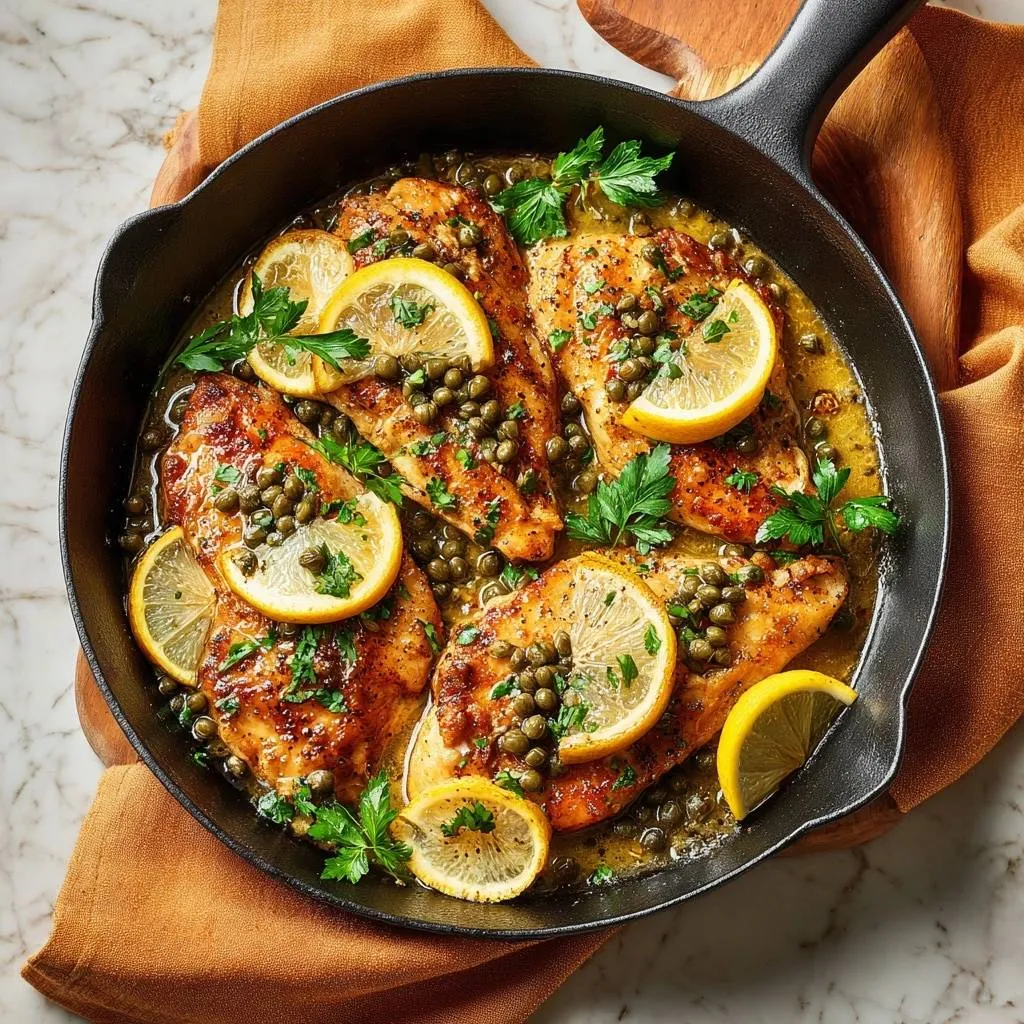
Avoid high heat; it toughens proteins. Garnish with chopped parsley and lemon slices for freshness. The chicken absorbs bright flavors.
In addition, this finish keeps everything ultra-moist. Serve hot for peak joy.
For perfectly tender chicken cutlets, explore the lemon caper chicken piccata recipe.
Equipment Choices for Flawless Chicken Piccata
Meat Mallet Impact on Tenderness
Choose a mallet with flat and textured sides. Flat pounds evenly; textured tenderizes. Plastic wrap contains mess and prevents sticking.
Slicing works but doesn’t break fibers like pounding. Affordable ones under $20 last forever. This ties right into juicy results.
Therefore, it beats knife work for evenness. Pound confidently; the change is instant.
Skillet Types and Heat Retention
12-inch cast iron excels for one-pan searing and saucing. It holds steady heat. Skip non-stick; it can’t take high temps.
Use an instant-read thermometer for 165F precision. Size matters to fit batches. Pro tip: season cast iron well for easy cleanup.
Avoiding Dry Chicken in Piccata Pitfalls
Overcooking Triggers and Fixes
Dryness shows as stringy texture. Fix with thermometer; pull at 165F. High-heat speed prevents it.
Low-slow cooking dries out lean breasts. These juicy chicken piccata tips keep meat succulent. Resting helps too.
Therefore, trust your tools over time guesses. You’ll nail it every time.
Sauce Separation and Crust Failures
Cold butter fixes broken sauce; whisk vigorously. Avoid overcrowding for crust. Shake flour excess prevents clumping.
Thicken naturally; no cornstarch needed. Light dredge avoids heaviness. Pan must be dry before oil.
Flavor Twists on Classic Chicken Piccata
Herb and Citrus Swaps
Swap parsley for basil or dill. Blood orange zest adds sweet tang. Artichokes sub for capers’ brine.
These chicken piccata variations keep lemon core. Fresh herbs brighten at the end. Experiment confidently.
In addition, orange tempers tartness nicely. Taste as you go.
Protein and Grain Adaptations
Chicken thighs work; more forgiving fat. Veal nods to origins. Gluten-free flour dredges fine.
Vegan? Pressed tofu sears well. All stay true to piccata spirit. Pound thighs thinner.
Pairing Sides with Chicken Piccata
Starchy Complements for Balance
Angel hair pasta catches sauce best; thin strands cling. Mashed potatoes soak up lemon. Rice pilaf adds neutral bite.
Cook pasta al dente; toss in sauce. Potatoes need buttery creaminess. These balance the tang.
What to serve with chicken piccata? Starches shine here.
Vegetable and Salad Matches
Steamed asparagus echoes lemon. Sautéed spinach wilts fast. Arugula salad cuts richness with peppery bite.
Acidity matches piccata’s vibe. Quick blanch keeps greens vibrant. Simple and perfect.
Chicken Piccata Make-Ahead Strategies
Prep and Freezing Best Practices
Pound and dredge ahead; store in fridge 24 hours. Freeze pounded chicken up to 2 months. Sauce base freezes well; thaw overnight.
Reheat low simmer to avoid drying. Portion for easy meals. Keeps quality high.
Batch Cooking for Weeknights
Double the recipe; portion after cooling. Thaw in fridge for juicy sear. Reheats in minutes.
Perfect for busy nights. Freeze in sauce for max moisture.
Origins and Evolution of Chicken Piccata
Italian Roots in Veal Piccata
Piccata hails from Sicily; ‘laced’ means sauced thinly. Lemon-capers veered from veal scaloppine. Chicken version boomed in America post-WWII.
Capers trace to ancient preserves. US adaptations made it homey. History of chicken piccata shows simple genius.
Therefore, it’s evolved into weeknight staple. Timeless appeal.
Modern Twists Worldwide
US restaurants feature it creamy. Global fusions add soy or curry hints. Still, classic rules weeknights.
Quick and bright wins everywhere. You’ll crave it often.
Troubleshooting Chicken Piccata Issues
Sauce Too Thin or Broken
Reduce longer or whisk in cold butter. Cornstarch slurry as last resort. Lower heat prevents breaking.
Emulsion rescues with ice bath swirl. Gloss returns fast.
Chicken Sticking or Pale
Pan wasn’t hot enough; preheat fully. More oil if dry. Dry dredge absorbs better.
Shimmer test oil next time. Crust forms easy.
Lackluster Flavor Boosts
Add extra zest; use quality broth. Season early. Fresh parsley pops.
Time-Saving Hacks
Pre-pound chicken. One-pan keeps it under 30 minutes. Batch sear ahead.
FAQ
How do I store leftovers and does chicken piccata freeze well?
Store in an airtight container in the fridge for up to 3 days. Reheat gently in a skillet with a splash of broth to revive sauce and moisture. It freezes decently for 2 months; wrap chicken in sauce tightly to prevent drying, but thaw fully in fridge before low-simmer reheating, as breasts can toughen otherwise. Avoid freezing if possible for best texture.
Why is my chicken piccata dry and how do I fix it?
Dryness usually hits from uneven thickness or low-heat cooking that overdoes the inside before crust forms. Pound to 1/4-inch, sear on high shimmering oil 2-3 minutes per side to 165F exactly, then finish in sauce for juiciness. Next time, use a thermometer religiously and avoid flipping too early; resting locks in juices.
Can I substitute ingredients in chicken piccata, like no capers or lemons?
Swap capers with chopped green olives or artichoke hearts for brine; rinse to control salt. Bottled lemon juice works in pinch but fresh zest is key for oils, so use 3 tablespoons juice plus grated peel from 1 orange if lemons scarce. Gluten-free flour dredges fine 1:1; chicken thighs sub breasts for more forgiveness.
Why did my sauce separate and how to prevent it?
High heat or all butter at once breaks emulsion; sauce looks oily and split. Whisk cold unsalted butter in gradually off-heat, maintaining gentle simmer. If broken, whisk furiously with ice water splash or start over with new butter blobs. Low-sodium broth helps stability too.
What’s the best pan for chicken piccata and why?
12-inch cast iron wins for even heat retention during sear and sauce; it handles high temps without warping. Preheat 2 minutes for shimmer, promoting crust via Maillard without overcooking. Stainless works but watch hot spots; avoid non-stick as high heat ruins coating.
How long does chicken piccata take and can I make it faster?
Total under 30 minutes: 10 prep, 10 sear, 10 sauce. Speed up by pre-pounding chicken or using thin-cut breasts. One-pan efficiency shines; batch sear while sauce simmers. Perfect weeknight fare.
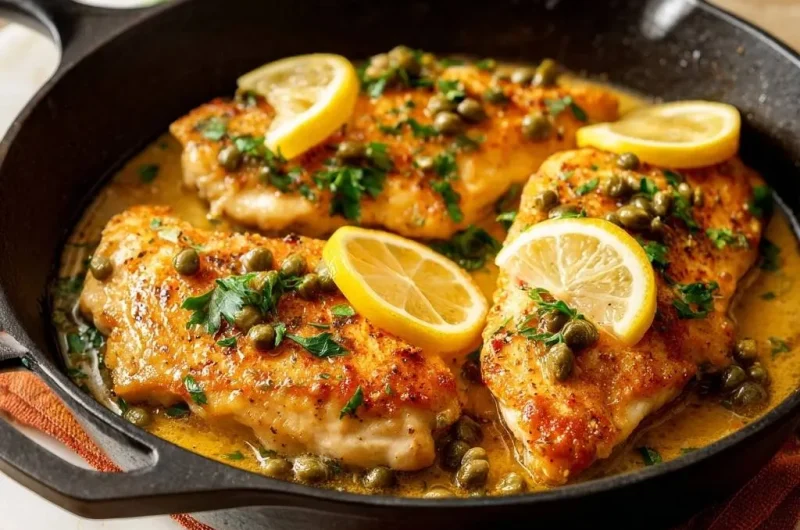
Chicken Piccata
Course: Main CourseCuisine: Italian-AmericanDifficulty: easy4
servings15
minutes15
minutes450
kcal30
MinutesTired of rubbery chicken breasts ruining your piccata? This recipe nails juicy, tender results every time with a simple pounding, high-heat sear, and sauce finish that locks in moisture.
Ingredients
4 boneless skinless chicken breasts
1/2 cup all-purpose flour
Salt and black pepper to taste
3 tablespoons olive oil
1/2 cup capers drained
Juice and zest of 3 lemons plus lemon slices for garnish
1 cup chicken broth
4 tablespoons unsalted butter
1/4 cup fresh parsley chopped
Directions
- Place chicken breasts between plastic wrap and pound to 1/4-inch thickness using a meat mallet. This ensures even cooking and prevents dryness. Season both sides with salt and pepper then dredge lightly in flour shaking off excess.
- Heat olive oil in a large cast iron skillet over medium-high heat until shimmering hot about 2 minutes. The secret to no more dry chicken: sear quickly on high heat for golden crust without overcooking inside. Add chicken in batches and cook 2-3 minutes per side until golden and internal temp hits 165F. Remove to a plate.
- In same skillet reduce heat to medium. Add capers lemon juice and zest and chicken broth. Scrape up browned bits and simmer 3 minutes to build flavor.
- Whisk in butter one tablespoon at a time until sauce emulsifies into a glossy coating. Return chicken to skillet nestling in sauce. Simmer 2 minutes to infuse juices keeping meat ultra-moist.
- Garnish with parsley and lemon slices. Serve hot for restaurant-worthy piccata thats foolproof juicy.
Notes
- Pound chicken to 1/4-inch thickness for even cooking. Use cast iron skillet for best sear. Internal temp must reach 165°F.