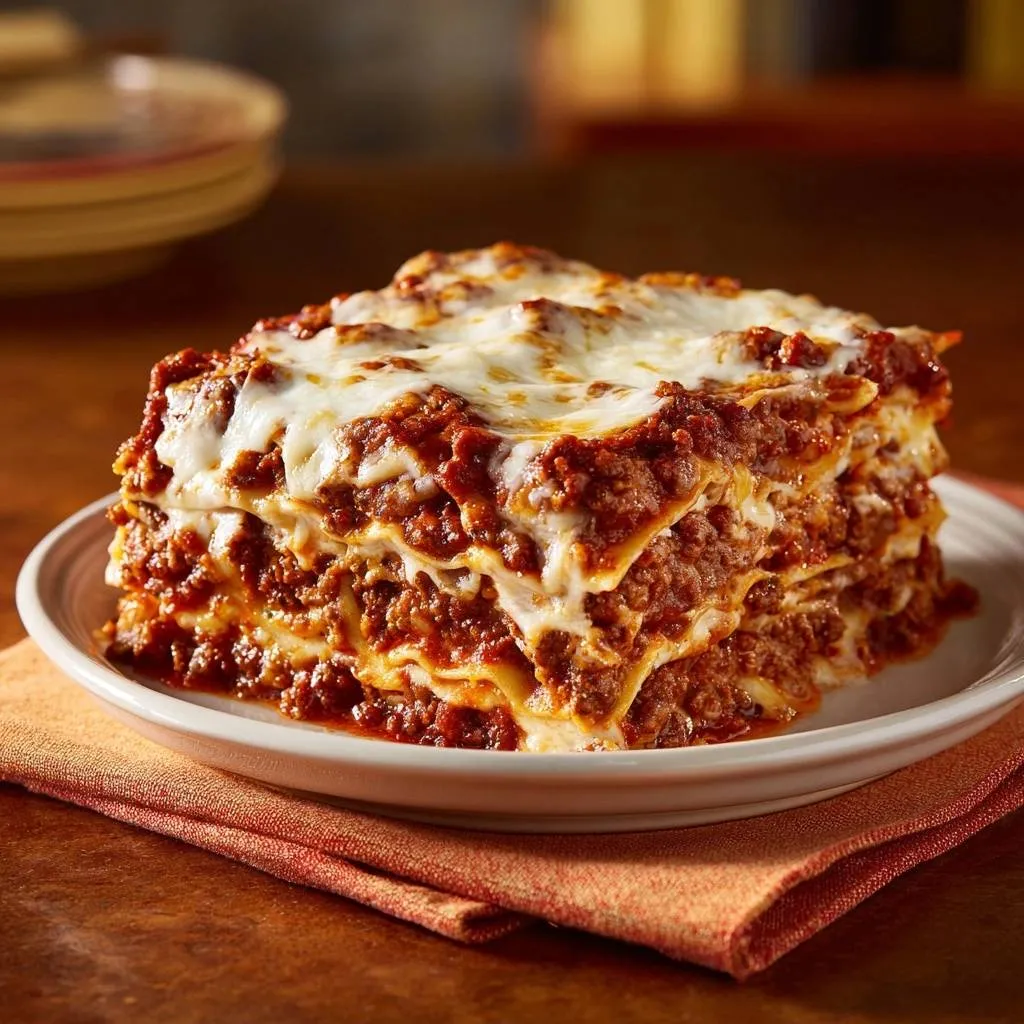
Ever sliced into a classic beef lasagna only to watch it slump into a watery mess? You know the drill: layers that slide apart, sauce pooling everywhere. This recipe fixes that frustration with a ricotta-draining trick and a thickened meat sauce method. You’ll get sturdy slices that hold their shape, perfect for family dinners.
Why does precision matter here? Lasagna’s Italian roots demand balance between moisture and structure. Too much liquid from undrained cheese or thin sauce ruins the cheesy pull and meaty depth. However, this beef lasagna recipe nails it every time.
The secret lies in salting and squeezing the ricotta. That simple step draws out whey through osmosis, locking in creaminess. In addition, simmering the beef sauce reduces excess water by about 30 percent. Get ready for golden, bubbly edges and clean cuts.
For another easy pasta idea featuring a rich sauce, check out this cheesy skillet ravioli.
Why Classic Beef Lasagna Demands Precision
Lasagna towers over simple pastas like spaghetti because of its layered complexity. Noodles absorb sauce, cheeses melt into binders, and meat provides heft. However, without moisture control, it all collapses.
Beef lasagna excels for hearty meals. The ground beef brings rich flavor that bolognese-style sauces amplify during baking. Therefore, this classic beef lasagna recipe ensures every bite delivers depth without sogginess.
Layered Structure Science
Noodles hydrate from sauce starch, but excess whey from ricotta dilutes everything. Cheese melts at different points: mozzarella around 130 degrees F for stretch, parmesan higher for crust. In addition, thick sauce creates viscosity to prevent pooling.
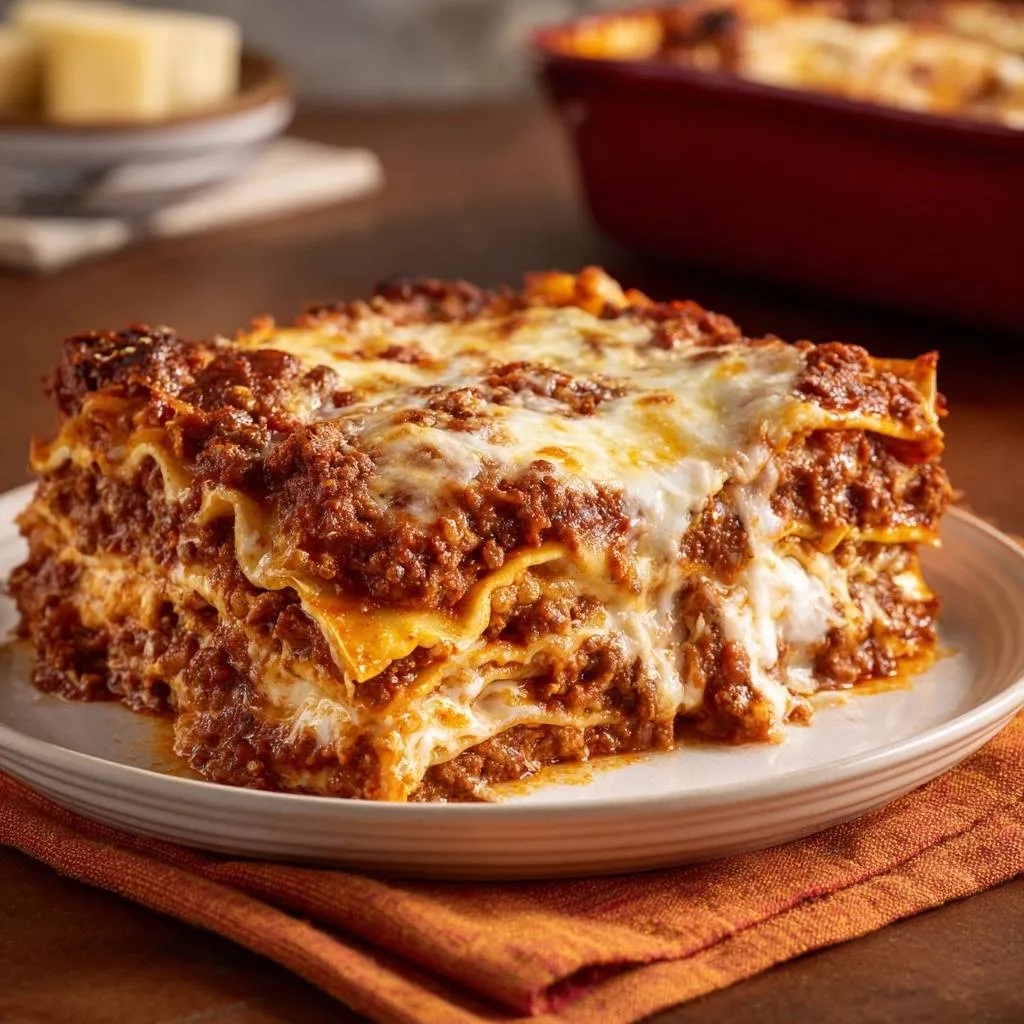
Food science shows starch needs controlled hydration. Drain ricotta first, or noodles turn gummy. This beef lasagna recipe balances it perfectly.
Beef Lasagna vs Other Pastas
Unlike spaghetti bolognese, which stays saucy on a plate, classic beef lasagna transforms in the oven. Baking melds flavors into a cohesive whole. You’ll taste caramelized edges and infused meatiness that stovetop pasta can’t match.
Key Ingredients for Sturdy Beef Lasagna
Start with 1 pound ground beef, 4 cups marinara sauce, 15 lasagna noodles (no-boil work best), 3 cups ricotta, 4 cups shredded mozzarella, 1/2 cup grated parmesan, 1 teaspoon Italian seasoning, salt, and pepper. Each plays a role in structure.
No-boil noodles save time and absorb just enough moisture. Full-fat ricotta drains best for creaminess. Freshly shredded mozzarella melts smoother than pre-shredded, which has anti-caking agents.
Jarred marinara beats homemade for consistency here. However, reduce it to avoid wateriness in your beef lasagna ingredients lineup.
Ground Beef and Sauce Base
Choose 80/20 ground beef for flavor from rendered fat without greasiness. Brown it fully, drain, then simmer with marinara and Italian seasoning. Season late so flavors concentrate.
Cheese Blend Breakdown
Mozzarella’s high melt index creates pull. Ricotta’s whey issue causes sogginess, so drain it. Parmesan adds umami sharpness. Shred fresh for even melt.
Noodles and Seasonings Role
No-boil noodles hydrate in the oven without pre-cooking. Italian seasoning’s oregano and basil ratios boost sauce without overpowering. Salt draws out ricotta moisture first.
Science of Thickened Meat Sauce
Browning beef triggers Maillard reaction for deep flavor. Simmering evaporates water, thickening sauce by 30 percent. You’ll see it cling to the spoon instead of sloshing.
This classic beef lasagna sauce holds layers together. Stir occasionally over medium heat. The result? Meaty richness without pools of liquid.
For another rich beef dish, consider this cheesy tortellini with beef ragu.
Browning Beef Properly
Medium heat renders fat without boiling texture. Break up chunks for even cooking, about 8 minutes. Drain fat well, or sauce turns greasy.
Simmer Reduction Technique
Simmer 10 minutes at gentle bubble. Sauce darkens and thickens; it should mound on a spoon. Low temp prevents splatter.
Ricotta Draining: Eliminate Watery Lasagna
Spread 3 cups ricotta thin on a kitchen towel, sprinkle with 1 teaspoon salt, wait 10 minutes. Salt creates hypertonic pull, drawing out whey. Squeeze firmly over the sink for no-watery beef lasagna.
This physics of pressure and osmosis expels 20-30 percent moisture. Undrained ricotta turns layers soupy. Mix drained ricotta with 1 cup mozzarella and parmesan for binding power.
Salt Sprinkling Mechanism
Salt forms a hypertonic solution, osmosis pulls whey out in 10 minutes. Don’t skip; it’s precise timing for max drainage.
Squeezing for Creaminess
Gather towel edges, twist, and squeeze hard. Towel beats cheesecloth for grip. Result: thick, spreadable ricotta.
Layering Classic Beef Lasagna Perfectly
Grease a 9×13-inch dish. Spread 1 cup meat sauce first for noodle grip. Layer 5 noodles, half ricotta mix, 1 cup mozzarella, 1 cup sauce. Repeat, top with noodles, sauce, mozzarella.
Even distribution math: three noodle layers fit perfectly. Dollop ricotta for air pockets that melt evenly.
First Layer Foundation
1 cup sauce coats bottom fully. Noodles adhere, preventing slide. Smooth with a spoon back.
Middle Ricotta and Cheese Build
Dollop ricotta, spread gently. Sprinkle mozzarella evenly for melt coverage. Avoid clumps.
Baking Beef Lasagna to Golden Perfection
Preheat to 375 degrees F. Foil cover traps steam for noodle hydration. Uncover for browning; rest 20 minutes sets structure via gelatinization.
This bake classic beef lasagna method yields bubbly cheese and crisp edges. Pro tip: tent foil loosely to avoid sticking.
Covered Bake Phase
30 minutes locks in moisture. Edges bubble slightly. No boil-over if sauce is thick.
Uncovered Browning Finish
20 minutes turns top golden. Watch for bubble edges, not broil burn. Cheese pulls satisfyingly.
20-Minute Rest Critical
Rest firms collagen in meat and cheese. Slice test: clean edges mean ready.
Avoiding Common Beef Lasagna Mistakes
Top pitfalls include runny ricotta, thin sauce, rushed rest, overcooked noodles, skimpy cheese. This beef lasagna troubleshooting guide fixes them. Drain ricotta always; simmer sauce longer if needed.
Resting prevents collapse. Use enough cheese for binding.
Runny Ricotta Fixes
Drain as directed, or press between paper towels. Retro-fix watery layers by baking uncovered longer next time.
Soggy Noodle Prevention
Thick sauce and no-boil noodles balance hydration. Don’t overload liquid; measure precisely.
Make-Ahead Beef Lasagna Guide
Assemble fully, cover tight, fridge up to 3 days. For make ahead classic beef lasagna, freeze wrapped in foil. Thaw overnight, bake as directed.
Oven reheat at 350 degrees F beats microwave mush. Check internal temp 165 degrees F.
Freezing Full Assembly
Double-wrap foil, label date. Freeze up to 3 months; portion for singles if needed.
Thawing and Reheating
Fridge thaw safest overnight. Reheat covered, then uncover for crisp top. Internal 165 degrees F.
Beef Lasagna Pairing Suggestions
Crisp green salads cut richness. Garlic bread soaks up sauce. Roasted veggies add balance to serve classic beef lasagna.
What to Try Next
To complement your Classic Beef Lasagna, consider these complementary dishes that offer fresh flavors and textures.
- For a crisp, vegetable-forward addition, consider crispy Parmesan roasted zucchini, bringing a delightful crunch that contrasts beautifully with the lasagna’s richness.
- If you’re in the mood for a vibrant salad, this Caprese fusilli salad offers bright, fresh ingredients that cut through the hearty lasagna for a balanced meal.
Sparkling water refreshes the palate.
Crisp Side Salad Ideas
Arugula with vinegar dressing slices through cheese. Romaine holds crunch better.
Bread and Veggie Complements
Focaccia absorbs sauce perfectly. Roasted broccoli matches cheesy texture.
Classic Beef Lasagna FAQ
Can I Use Regular Lasagna Noodles?
Yes, parboil regular lasagna noodles 5-7 minutes until pliable, then drain and cool. They absorb more sauce than no-boil, so use slightly less marinara to avoid sogginess. No-boil saves steps and hydrates evenly in the oven, but regulars give chewier bite if you prefer. Adjust bake time by 5 minutes if needed.
How to Fix Watery Beef Lasagna?
Drain ricotta religiously with the salt-towel method to remove whey. Thicken sauce by simmering longer until it mounds on a spoon. If already baked and watery, uncover and bake 10-15 more minutes to evaporate liquid, or drain excess before serving. Prevention beats fixes every time.
Freezer Life for Beef Lasagna?
Fully assembled classic beef lasagna freezes up to 3 months without major quality loss. Wrap tightly in foil to prevent freezer burn. Thaw in fridge 24 hours, bake from chilled adding 10-15 minutes. Beyond 3 months, noodles soften and sauce separates slightly.
Vegetarian Swap for Beef Lasagna?
Replace 1 pound beef with lentils or finely chopped mushrooms. Cook until browned, then simmer with extra marinara for umami. Lentils mimic texture; mushrooms add meatiness. Keep cheese and draining steps same for structure. Boost with spinach for volume.
Best Pan for Classic Beef Lasagna?
9×13-inch glass or metal works best. Glass heats evenly for bubble edges but retains heat longer, so cool slightly before slicing. Metal conducts faster for crispier bottoms. Avoid dark nonstick; it over-browns. Grease lightly regardless.
Beef Lasagna
Course: Main CourseCuisine: ItalianDifficulty: medium12
servings20
minutes1
hour450
kcal80
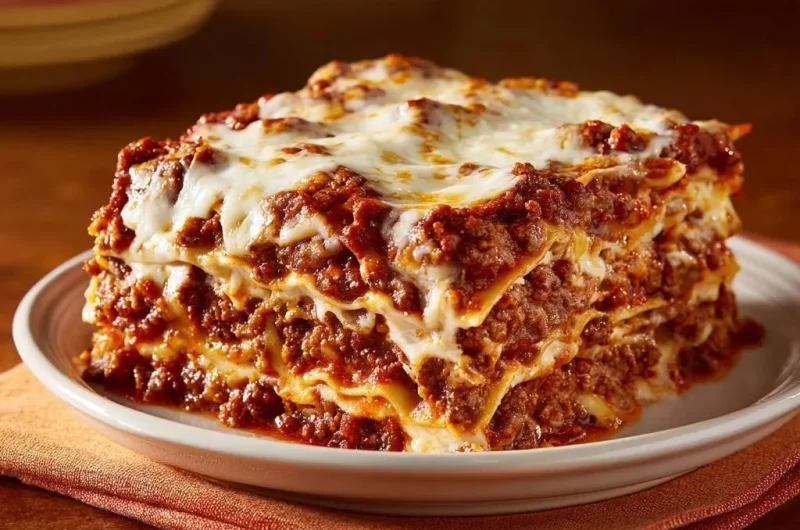
MinutesSick of lasagna that collapses into a soggy puddle? This foolproof recipe eliminates watery layers forever with a simple ricotta-draining trick that squeezes out excess moisture, plus a thickened meat sauce method for perfect structure every time.
Ingredients
1 pound ground beef
4 cups marinara sauce
15 lasagna noodles (no-boil or regular)
3 cups ricotta cheese
4 cups shredded mozzarella cheese
1/2 cup grated Parmesan cheese
1 teaspoon Italian seasoning
Salt and pepper to taste
Directions
- Preheat oven to 375 degrees F. Brown ground beef in a large skillet over medium heat until fully cooked, about 8 minutes. Drain fat, stir in marinara sauce and Italian seasoning. Simmer 10 minutes to thicken, stirring occasionally, until sauce reduces and holds together without excess liquid. Season with salt and pepper. Set aside.
- For the no-more-watery ricotta trick: Spread ricotta in a thin layer on a clean kitchen towel or paper towels. Sprinkle evenly with 1 teaspoon salt. Let sit 10 minutes, then gather towel edges and squeeze firmly over the sink to wring out all whey and moisture. This locks in creamy texture without sogginess. Mix drained ricotta with 1 cup mozzarella and Parmesan.
- Spread 1 cup meat sauce in a 9×13-inch baking dish. Layer 5 noodles, half the ricotta mixture, 1 cup mozzarella, and 1 cup sauce. Repeat layers once. Top with remaining noodles, sauce, and mozzarella.
- Cover tightly with foil and bake 30 minutes. Uncover and bake 20 more minutes until cheese bubbles and edges are golden. Let rest 20 minutes before slicing, this sets the layers for clean, sturdy cuts. Serve hot.
Notes
- Let the lasagna rest 20 minutes before slicing for clean, sturdy cuts. Use no-boil or regular lasagna noodles.