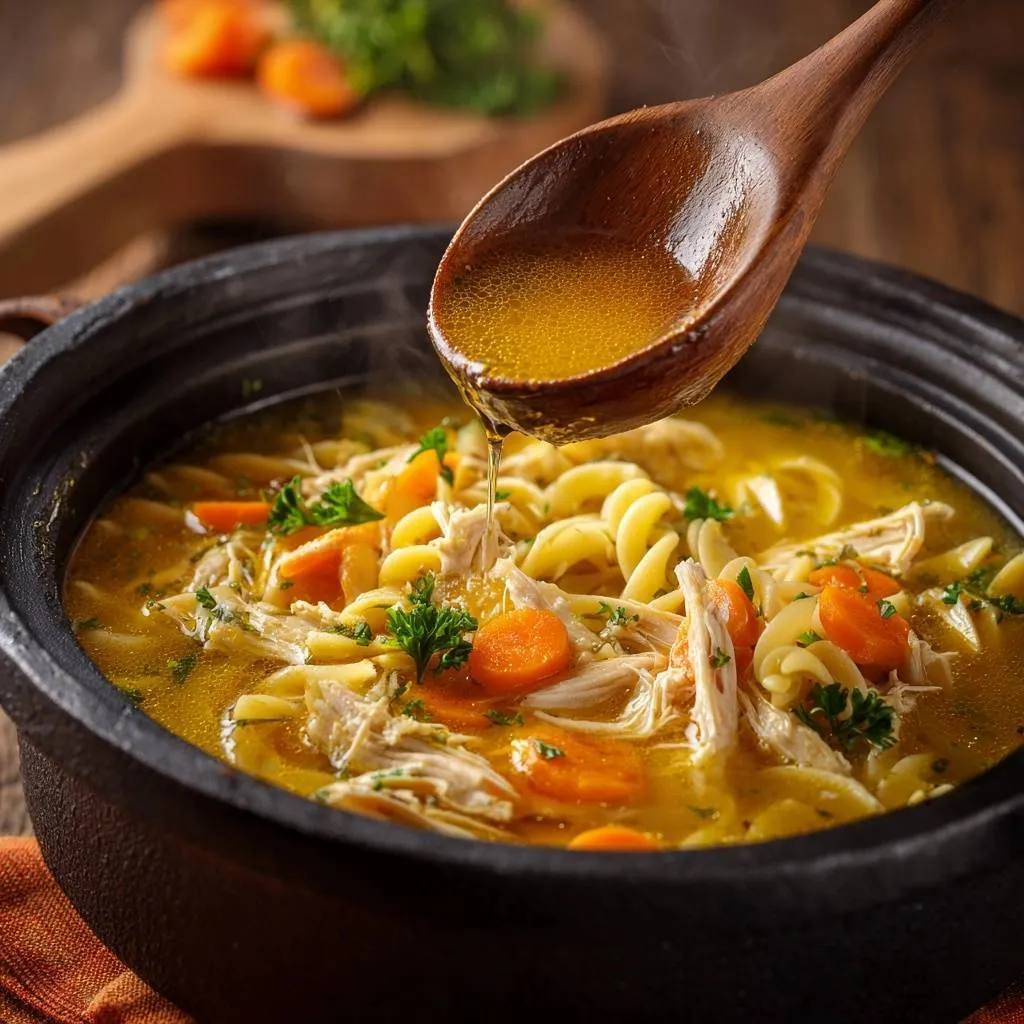
Nothing ruins chicken noodle soup faster than gummy noodles soaking up all the broth overnight. You’ve heated up leftovers only to find a mushy mess, right? This classic chicken noodle soup fixes that with one dead-simple trick: cook the rotini separately, shock it cold, and stir it in at the end.
That’s why this recipe delivers brothy perfection that stays fresh for days. You get that comforting warmth from tender veggies and shredded chicken in a golden broth, all without the usual letdown. It’s the timeless soup you crave on chilly days, simple to make yet restaurant-quality.
The secret lies in undercooking the pasta 1-2 minutes shy of al dente, then rinsing it under cold water. This stops the starch from gelatinizing further, so your noodles stay springy even after reheating. You’ll taste the difference in every slurpy bite.
Core Ingredients for Brothy Chicken Noodle Soup
Vegetable Base: Onions, Carrots, Celery Breakdown
The mirepoix of one diced onion, three sliced carrots, and three celery stalks builds the savory backbone. Dice the onion fine for even cooking, slice carrots and celery into half-moons so they soften uniformly. Fresh veggies release sweeter juices than bagged pre-cut, but if you’re short on time, pre-cut works fine, just add a minute to the sauté.
These aromatics create layered depth without overpowering the chicken. Therefore, chop them ahead to streamline your cook. You’ll smell the cozy transformation as they soften.
Garlic and Thyme: Aromatics Driving Depth
Mince three garlic cloves small to spread their punch evenly and dodge bitterness from big chunks. One teaspoon dried thyme adds earthy warmth that infuses the broth perfectly. If you have fresh thyme, use three times the amount since it’s milder.
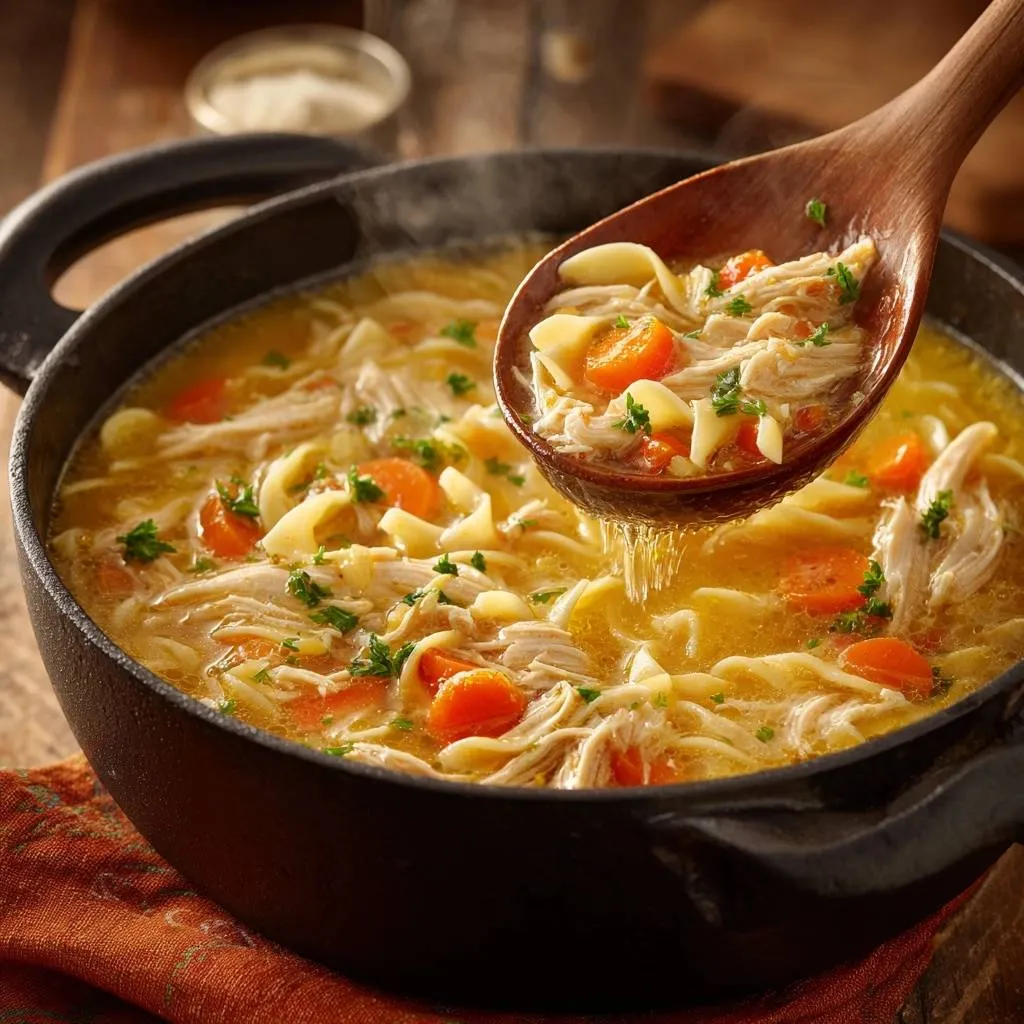
Two tablespoons olive oil conducts heat gently for the sauté. In addition, it prevents sticking. These aromatics elevate your soup from basic to soul-warming.
Chicken Broth and Shredded Chicken Essentials
Grab eight cups low-sodium chicken broth so you control the salt. Boxed holds up better than canned for clarity, but homemade shines brightest with pure chicken flavor. For two cups shredded chicken, pull from a rotisserie bird for ease or poach breasts yourself.
Shred finely with two forks for even distribution in every spoonful. However, avoid over-shredding or it turns pasty. This keeps the protein tender and juicy.
Rotini Pasta: Choosing Shapes for Texture
Eight ounces rotini grips the broth with its spirals, holding up better than flat spaghetti that goes limp. Short shapes like fusilli or elbows work too. Boil in salted water, one tablespoon per four quarts, to season from the inside.
Undercook to al dente, about six to seven minutes, checking the package. The cold shock preview: rinsing halts cooking for firm texture. Therefore, no more mush.
Building Flavor: Sauté Mirepoix Foundation
Heat two tablespoons olive oil in a six to eight-quart pot over medium. Add onion, carrots, celery, and garlic. Sauté five to seven minutes until onions turn translucent and you catch that sweet, fragrant release, not browned bits.
Medium heat layers flavors without scorching, unlike high heat that burns sugars bitter. Gas stoves respond quicker, so electric might need an extra minute. Watch for the soften-and-shine cue; that’s your flavor base locked in.
Common pitfall: crowding the pot steams instead of sautés. Therefore, use a wide pot. You’ll build a rich foundation that makes the broth sing.
Simmering Broth: Melding Chicken Noodle Soup Flavors
Adding Broth and Thyme Timing
Pour in eight cups broth and one teaspoon thyme after sautéing. Bring to a boil, then drop to simmer for 15 minutes. The broth turns golden as flavors meld, skimming any foam for clarity.
A big pot prevents overflow. In addition, this timing extracts maximum veggie essence. Taste the cozy depth building.
Separate Rotini Cooking for Al Dente Results
While broth simmers, boil rotini in a separate pot of salted water. Cook six to seven minutes, under by one to two from package, until just firm. Drain fast, then rinse under cold tap water for 30 seconds.
This shocks the starch, halting gelatinization and locking spirals tight. Rotini holds shape best since spirals trap less excess moisture. Therefore, your noodles stay al dente through storage and reheats.
Pro tip: shake off excess water well. Otherwise, it dilutes the broth slightly. Parallel cooking saves time too.
Finishing Touches: Chicken and Pasta Integration
Warming Shredded Chicken Precisely
Stir in two cups shredded chicken. Simmer two to three minutes until warmed, seasoning with salt and pepper starting light. Check broth thickness; it should coat lightly.
For even deeper flavor, explore the shredded chicken root vegetable soup.
Don’t overdo the heat or chicken toughens. However, this quick warm infuses chicken flavor fully. Taste and tweak now.
Final Pasta Stir and Parsley Garnish
Turn off heat, then fold in cold-shocked rotini. It warms gently without sucking up broth. Ladle into bowls with even noodle spread, topping with chopped parsley for fresh pop.
Serve piping hot around 160°F. Parsley adds brightness. Store preview: keep pasta separate for days of brothy bliss.
Science of No-Mush Noodles in Chicken Noodle Soup
Pasta starch gelatinizes above 140 to 160°F, swelling and absorbing liquid if cooked in broth. One-pot methods doom noodles to mush by reheating. Cold shocking drops temp fast, rinsing away surface starch for firm hold.
Reheat tests prove it: microwave zaps one bowl at a time on medium, stirring midway, or stovetop gently to avoid boiling. Leftovers last four to five days fridge-fresh. Visually, shocked rotini stays spiraled; mush flattens sad.
Therefore, this trick extends enjoyment. Your soup reheats brothy every time. Oh man, that first leftover bowl hits just as good.
Avoiding Pitfalls in Classic Chicken Noodle Soup
Overcooking Noodles in Broth Disaster
One-pot cooking lets noodles drink half the broth, diluting to starch sludge. Fix by separating always. Symptoms scream mush; prevention wins.
Soggy Veggies and Bland Broth Fixes
High-heat sautés scorch edges bitter; low heat steams mushy. Medium builds sweet layers. Season in stages: salt veggies early, broth late. Quality broth amps everything.
Chicken Drying or Broth Over-Reduction
Cap simmer at 15 minutes total; longer evaporates broth thin. Add hot water if needed. Shredded chicken retains moisture best when warmed briefly.
Flavor Variations for Chicken Noodle Soup Twists
Herb Swaps: Rosemary or Bay Leaves
Swap thyme for one teaspoon chopped rosemary or one bay leaf, removed before serving. Fresh herbs need triple volume. Add lemon zest at end for citrus lift that brightens without souring.
These bring woodsy or subtle notes. Test small batches first. Your soup gains new personality.
Spice Boosts: Ginger or Turmeric Addition
Grate a one-inch ginger knob with the garlic for zing, or stir in half teaspoon turmeric post-sauté for golden warmth and anti-inflammatory perks. Add early to mellow bitterness.
These boost health and cozy factor. However, don’t overpower the classic vibe. Stir and taste.
Pasta Shape and Protein Substitutions
Try orzo or ditalini for bite-sized chew. Gluten-free rotini swaps seamlessly. For protein, tofu cubes or shrimp warm quick; keep two cups volume.
These keep texture and heart intact. Experiment confidently. You’ll love the twists.
Make-Ahead and Freezing Chicken Noodle Soup
Prep the broth, veggies, and chicken base up to three days ahead in the fridge, or freeze flat in bags for three months. Cook pasta fresh or freeze shocked separately. Thaw overnight in fridge for safety.
Reheat base stovetop low, adding pasta last minute. Portion singles in mason jars for grab-and-go. This method preserves brothy quality perfectly.
Pro tip: label freeze dates. Therefore, no guesswork. Weeknight soup sorted.
Pairing Sides with Classic Chicken Noodle Soup
Tear crusty bread for broth dipping. A crisp green salad contrasts the warmth. Grilled cheese adds gooey comfort on the side.
Herbal tea or apple cider pairs soothingly. Toss spinach into bowls for nutrition boost. These round out the meal joyfully.
Troubleshooting Classic Chicken Noodle Soup Issues
Broth Too Thin or Too Thick?
Simmer uncovered longer to reduce thin broth. Add water or more broth to thicken over-reduced. Skip cornstarch; natural reduction tastes best.
Noodles Still Softening on Reheat?
Shock extra cold with ice water. Minimize broth contact during storage. Reheat pasta separate, toss in hot.
Vegetables Not Tender Enough?
Slice thinner or simmer veggies five minutes longer. Pre-steam tough ones if rushed.
Soup Lacks Salt or Brightness?
Squeeze lemon juice for zip. Dash soy sauce builds umami. Taste iteratively.
Batch Size Scaling Problems?
Half scales direct; double broth to 16 cups, same ratios. Use bigger pot to avoid overflow.
Classic Chicken Noodle Soup FAQ
Can I Use Raw Chicken Instead?
Yes, cube two boneless breasts and poach in the broth after adding it, simmering 20 minutes until 165°F internal. Shred after cooling slightly in the liquid for max juiciness. This builds even richer flavor while ensuring safety. Strain if needed for clarity.
Best Pasta for Long-Lasting Texture?
Short, sturdy shapes like rotini, fusilli, or ditalini resist softening best due to compact structure. Avoid long spaghetti or linguine; they tangle and absorb more. Always undercook, shock cold, and store separate for peak firmness days later.
How Long Does It Keep in Fridge?
Store brothy base and shocked pasta separately airtight for four to five days. Reheat base stovetop, add pasta last 1 minute. Microwave works too; cover loosely to steam gently without boiling mush.
Gluten-Free Chicken Noodle Soup Adaptation?
Swap for gluten-free rotini or rice noodles, same eight ounces. Check broth label for gluten-free certification. Cook and shock identically; texture holds beautifully with no flavor loss.
Vegetarian Version of This Recipe?
Use vegetable broth and swap chicken for two cups chickpeas or firm tofu cubes. Boost umami with extra thyme or a dash mushroom powder. Sauté proceeds same; it’ll comfort just as deeply with plant power.
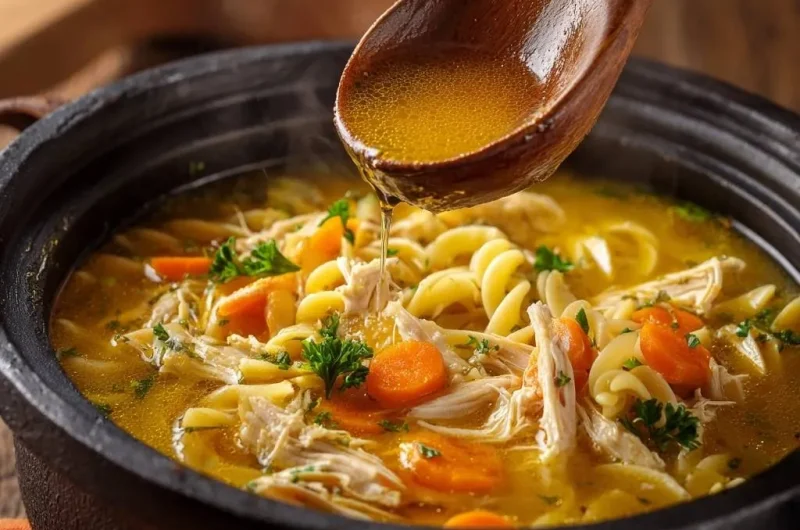
Chicken Noodle Soup
Course: Main CourseCuisine: AmericanDifficulty: easy6
servings15
minutes30
minutes320
kcal45
MinutesSick of chicken noodle soup where the noodles turn to mush after one day in the fridge? This recipe fixes that forever with one simple trick: cook the rotini separately to perfect al dente texture, then shock it in cold water and add at the very end. Your soup stays brothy, noodles stay firm, and leftovers taste fresh for days.
Ingredients
2 tablespoons olive oil
1 medium onion, diced
3 large carrots, sliced
3 celery stalks, sliced
3 garlic cloves, minced
8 cups chicken broth
2 cups cooked shredded chicken
8 ounces rotini pasta
1 teaspoon dried thyme
Salt and pepper to taste
Fresh parsley, chopped for garnish
Directions
- Heat olive oil in a large pot over medium heat. Add diced onion, sliced carrots, sliced celery, and minced garlic. Saute 5-7 minutes until softened and fragrant, building flavor base without scorching.
- Pour in chicken broth and dried thyme. Bring to a boil, then reduce to simmer for 15 minutes to meld flavors into rich golden broth.
- Meanwhile, in a separate pot, cook rotini pasta in boiling salted water just until al dente, about 6-7 minutes (check package, undercook by 1-2 minutes). Drain immediately, rinse under cold water to stop cooking and lock in firm spiral texture. Set aside. This is the key step: separate cooking prevents gummy noodles from absorbing broth and turning mushy, even on reheat.
- Stir shredded chicken into simmering broth. Season with salt and pepper. Simmer 2-3 more minutes until chicken is warmed through.
- Turn off heat. Stir in cold-shock rotini pasta right before serving. This keeps noodles springy and soup perfectly brothy. Ladle into bowls, garnish with chopped parsley. Enjoy hot!
Notes
- Key trick: Cook pasta separately, rinse in cold water to stop cooking, and add at the end to prevent mushy noodles even in leftovers.