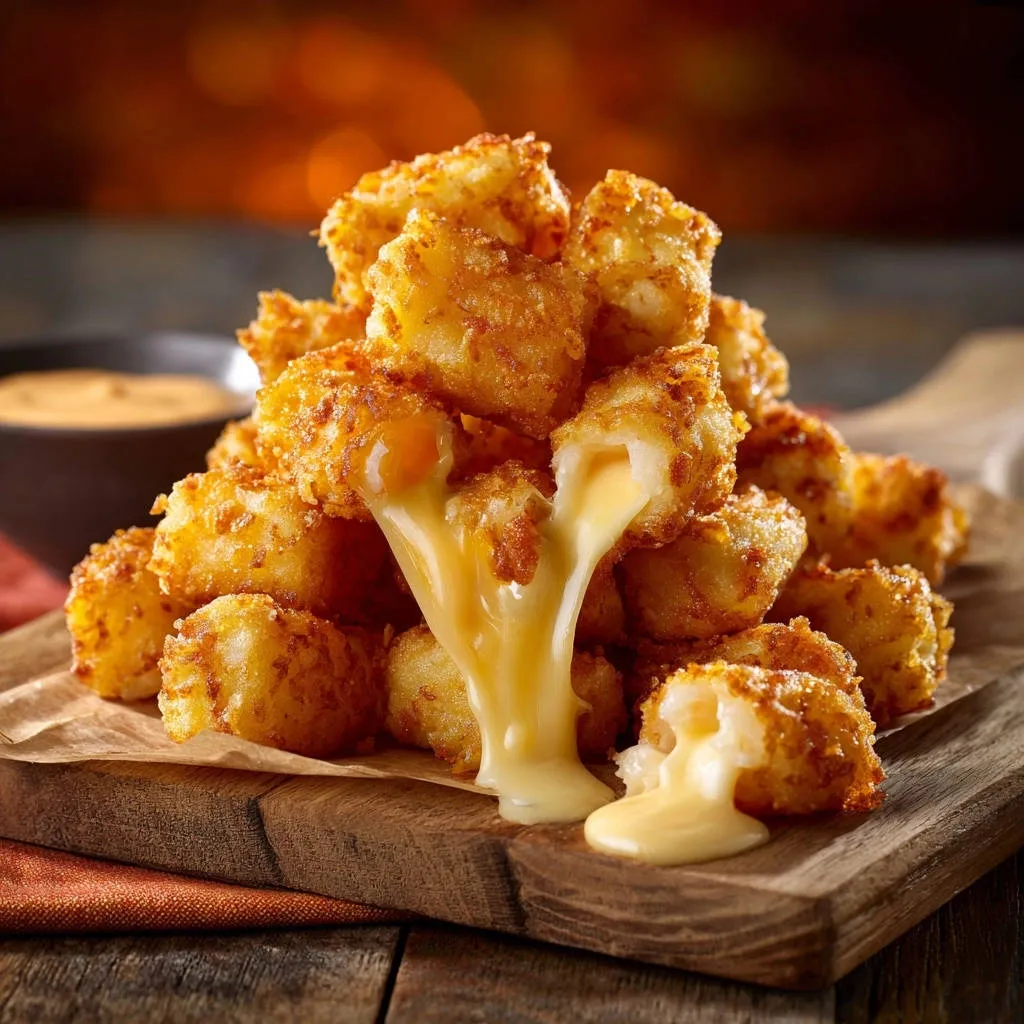
I spent years battling the tragedy of exploded cheese curds-those hollow, oily shells were the norm, not the exception, whenever I attempted this classic snack at home.
The moment I introduced one simple, non-negotiable technique-the deep freeze-achieving truly perfect, Crispy Golden Fried Cheese Curds became a reliable reality.
This method guarantees the thick, durable crust and gooey center you crave, offering a solution that puts an end to messy frying oil and disappointing blowouts forever.
Why This Crispy Golden Fried Cheese Curds Recipe Is Your New Favorite Snack Staple
This technique elevates homemade frying by addressing the two major pain points: structural integrity and coating crispness.
We leverage low temperatures and superior breading to control the exact moment the cheese melts, ensuring a perfect result every time.
The Guarantee of No Blowouts: Say Goodbye to Leaking Cheese
The primary function of pre-freezing is to buy you time in the hot oil. By lowering the internal temperature of the cheese dramatically, the curds can withstand the heat longer.

This crucial time buffer ensures that the crust sets completely and forms a structural barrier before the cheese inside begins to fully melt and push outward.
Achieving a Golden, Durable Crust Every Time
We use a double-coating method combined with Panko breadcrumbs to create a shell that is thicker and far more protective than a standard single layer.
This robust crust not only prevents leaks but also achieves a highly satisfying, aggressive crunch that standard methods cannot match.
Better Than Bar Food: Why Homemade Beats Store-Bought
When you make Crispy Golden Fried Cheese Curds at home, you control the quality of the oil, the freshness of the curds, and the seasoning balance.
The result is a snack that is never heavy, greasy, or stale, delivering a superior texture and taste far beyond typical freezer-section or restaurant appetizers.
The Non-Negotiable Step: Achieving the Leak-Proof Cheese Curd Barrier
This section is the key differentiator of this recipe, focusing on the mandatory freezing step that guarantees success.
The Science of Preventing Blowouts: Why Freezing is Essential
Fresh cheese melts rapidly when exposed to high heat. Frying room-temperature cheese guarantees failure because the interior melts and bursts through the wet crust before it can solidify.
Freezing the curds ensures the center remains solid and buys approximately 60 to 90 seconds before the core temperature reaches its melting point.
This window is precisely what is needed for the Panko coating to crisp, brown, and create a completely sealed, leak-proof shell.
For another take on achieving perfectly crispy fried cheese bites, consider a similar freezing method.
How to Freeze Correctly: Avoiding Ice Crystals and Clumping
Start by laying your fresh cheese curds in a single layer on a parchment-lined sheet pan; do not stack them.
Place the tray uncovered in the freezer for a minimum of 2 hours, or until the curds are frozen solid all the way through.
If you plan to store them longer, transfer the solid curds to a freezer bag after the initial freeze, but handle them quickly when coating to prevent thawing.
Ingredients Deep Dive: Selecting the Best Components for Flavor and Texture
Selecting the right core components is essential for both flavor and structural integrity during frying.
Selecting the Perfect Cheese Curd: Freshness Matters
Ideally, use fresh, squeaky cheese curds-these have the highest moisture content and best flavor when melted.
If fresh curds are unavailable, high-quality, low-moisture whole milk mozzarella cut into uniform ½-inch cubes is an excellent alternative that holds its shape well.
The Ultimate Breading Combo: Leveraging Panko for Maximum Crunch
Panko breadcrumbs are non-negotiable for achieving a truly light and crispy texture in these Crispy Golden Fried Cheese Curds.
Unlike standard breadcrumbs, Panko is made from crustless white bread and dries into larger, flakier shards that absorb less oil and create a far superior, airier crunch.
The Wet and Dry Stations: Essential Ratios for Adherence
The dry station requires seasoned flour; ensuring the flour itself is salty and peppery prevents a bland, naked crust layer.
The wet station-eggs whisked lightly with milk-is designed to be thick enough to fully adhere the Panko without being so watery that it drips excessively, which can cause blowouts.
Flavor Boosters: Utilizing Garlic Powder and Smoked Paprika
These seasonings are mixed directly into the Panko to imbue the crust with a complex savory flavor profile, rather than relying solely on the dipping sauce.
Garlic powder adds an essential baseline savory note, while smoked paprika provides a subtle depth and a rich, appealing color to the finished product.
For perfectly formed cheese curds, consider trying out these crispy fried cheese rings as well.
Mastering the Method: Step-by-Step to Frying Perfection
Executing the dredging and chilling steps with precision is vital for the structural success of the fried curds.
Setting Up the Assembly Line: Achieving Dredging Efficiency
Because the curds must remain frozen, speed is essential when building the coating barrier.
Set up your stations in a linear fashion to maximize efficiency and minimize handling time for the cold curds:
- Station 1 (Dry): Seasoned all-purpose flour.
- Station 2 (Wet): Egg and milk wash.
- Station 3 (Crunch): Seasoned Panko breadcrumbs.
Work quickly with just a few curds at a time, keeping the rest in the freezer until needed.
Building the Ultimate Barrier: The Critical Double-Coating Technique
The first pass through the flour, egg, and Panko creates a foundational layer.
To create the robust, leak-proof seal, immediately repeat the process: dip the Panko-coated curd back into the egg wash, then press it firmly into the Panko mixture a second time.
You must press down firmly on the curds in the final Panko layer to ensure the flakes are fully embedded and tightly packed, sealing any potential weak spots.
The Second Chill: Why 30 Minutes Is Non-Negotiable
Once coated, the curds must return to the freezer for a final 30 minutes before frying.
This final chilling step allows the wet egg mixture to completely set and bind the Panko to the cheese.
Skipping this can lead to the coating sloughing off the cheese as soon as it hits the hot oil, defeating the purpose of the double layer.
The Art of the Fry: Oil Temperature and Timing Control
Precise temperature management is the final technical hurdle to achieving restaurant-quality results.
Perfect Oil Temperature: Maintaining 350°F Safely and Consistently
The ideal frying temperature for Crispy Golden Fried Cheese Curds is exactly 350°F (175°C).
You must use a reliable thermometer; oil that is too cool results in greasy, oil-logged curds, while oil that is too hot will burn the crust before the interior warms properly.
Working in Small Batches: Preventing Temperature Drop
Never overcrowd the pot. Adding too many cold, frozen curds at once will cause a drastic drop in the oil temperature.
A drop below 325°F is a fast path to failure, as the crust won’t set quickly enough, causing the cheese to leak.
Fry only 6 to 8 curds at a time, ensuring the oil recovers to 350°F before adding the next batch.
The Critical 60-Second Fry Time: Achieving Golden Brown Without Melting
Due to the frozen core and the perfect oil temperature, the cook time is incredibly fast: 60 to 90 seconds, maximum.
The goal is to achieve a deep, rich golden-brown color on the crust; immediately remove the curds once this color is achieved.
Serve immediately after draining excess oil for the ideal gooey texture.
Troubleshooting Fried Curds: Common Problems and Quick Fixes
Even expert cooks encounter issues; here are solutions to common fried cheese curd problems.
Problem: My Coating Is Soggy or Falls Off Easily
This nearly always indicates the curds were not frozen long enough, or the oil temperature was too low.
Ensure your oil is stable at 350°F and always allow the coated curds to complete the second, mandatory 30-minute chill before frying.
Problem: The Curds Taste Too Oily
If the oil is too cool, the breading acts like a sponge and absorbs excessive fat before it can crisp.
Maintain the temperature at 350°F, and use fresh, high-quality vegetable or canola oil for the best neutral flavor and crispest results.
Problem: Frying Oil Temperature Fluctuates Too Much
This usually happens in thin-walled pots that don’t retain heat well.
Use a heavy-bottomed pot, such as a Dutch oven or cast iron, which holds temperature more consistently, even when cold food is added.
Frying Without a Deep Fryer: Stove Top Pot Best Practices
A high-sided, sturdy pot (like a Dutch oven) works perfectly for stovetop frying.
Never fill the pot more than halfway with oil to prevent dangerous boil-overs; use a large slotted spoon or spider strainer for safe retrieval.
Place the pot on a back burner and use a splatter screen to keep cleanup manageable.
More To Try
Round out your meal with these complementary recipes.
- For more satisfying crunch, try this crispy breaded white fish, featuring a similar technique for golden results.
- If you enjoy cheesy flavors, this creamy cheesy chicken and rice bake offers another comforting option.
Beyond the Fryer: Serving Suggestions and Homemade Sauce Pairings
The perfect dipper can enhance the richness and textural crunch of the curds.
The Recipe’s Recommendation: Homemade Spicy Aioli
A spicy aioli provides the necessary coolness, tang, and heat to cut through the richness of the fried cheese.
Simply combine mayonnaise, a dash of sriracha or hot sauce, a squeeze of fresh lime juice, and a finely minced garlic clove.
Alternative Dippers: Sweet, Tangy, and Unexpected Flavors
Consider sauces that offer a sharp contrast to the savory cheese curds.
- Sweet and Sour: A homemade cranberry ketchup offers acidity and sweetness.
- Tangy and Bold: Classic honey mustard provides a sharp, balanced bite.
- Italian Classic: A simple, warmed marinara sauce is always a comforting match.
Side Dish Sensations: What to Serve with Crispy Golden Fried Cheese Curds
Because the curds are rich, serving them alongside fresh, bright sides creates a balanced meal.
A light, vinegar-based coleslaw or a simple green salad dressed with a bright vinaigrette works beautifully to refresh the palate.
Storage, Reheating, and Make-Ahead Planning
Planning ahead ensures you are always ready to fry up a batch of these golden snacks quickly.
Can I Prepare and Freeze the Coated Curds Ahead of Time?
Absolutely. Prepare the curds through the entire double-coating process and place them back on the parchment-lined sheet pan.
Once fully frozen (after the 30-minute second chill), transfer them to a heavy-duty, airtight freezer bag or container.
They can be stored for up to 3 months and must be fried directly from the frozen state-do not thaw them before frying.
Achieving Day-Two Crispness: Reheating Methods
Never reheat fried curds in the microwave, which will result in a rubbery texture and a soggy crust.
The best method is the air fryer: reheat at 375°F for 3 to 5 minutes, shaking the basket halfway through, until piping hot and fully crisp.
Alternatively, the oven works well at 400°F for 5 to 7 minutes, spread out on a wire rack over a baking sheet.
Crispy Golden Fried Cheese Curds: Ready to Impress Your Guests (and Yourself!)
By respecting the power of freezing and implementing the double-coat barrier, you have unlocked the secret to genuinely perfect, leak-proof frying.
There is no longer any reason to settle for disappointing results; this technical approach ensures every batch of Crispy Golden Fried Cheese Curds is golden, crunchy, and gooey.
Embrace the chill, master the oil temperature, and get ready to enjoy the ultimate comfort snack that truly rivals the best gastropub appetizer.
Happy frying!

Fried Cheese Curds
Course: SnacksCuisine: AmericanDifficulty: easy4
servings15
minutes10
minutes650
kcal120
minutesSay goodbye to exploded cheese bites! This recipe ensures a perfect, golden, leak-proof crust by utilizing a crucial double-freezing and double-coating technique. Serve these irresistible snacks piping hot with spicy ranch or aioli.
Ingredients
1 pound fresh cheese curds (or mozzarella cubes)
1 1/2 cups all-purpose flour
2 large eggs, lightly beaten with 2 tablespoons milk
2 cups Panko breadcrumbs
1 teaspoon garlic powder
1/2 teaspoon smoked paprika
Salt and pepper to taste
4 cups vegetable oil, for frying
For Serving: Spicy ranch or aioli (optional)
Directions
- Prepare the Curds for Leak-Proof Frying: This step is the key to preventing blowouts. Lay the cheese curds in a single layer on a parchment-lined sheet pan. Place the tray in the freezer for a minimum of 2 hours, or until the curds are completely frozen solid. Do not skip this step.
- Set Up the Dredging Station: While the curds freeze, prepare your breading station. In a shallow dish, combine the flour, salt, and pepper. In a second shallow dish, whisk together the eggs and milk. In a third shallow dish, combine the Panko breadcrumbs, garlic powder, and paprika.
- Double-Coat for Protection: Working quickly with the frozen curds, first dredge them thoroughly in the seasoned flour, shaking off excess. Next, dip them fully into the egg wash. Finally, press them firmly into the Panko mixture, ensuring every surface is completely covered. Immediately repeat the entire process: dip the Panko-coated curd back into the egg wash, and then back into the Panko mixture for a thick, double-layer crust. This double layer is crucial for sealing the cheese.
- Chill Again: Return the double-coated curds to the freezer for a final 30 minutes. This ensures the coating adheres perfectly and the internal temperature remains low, maximizing the time before the cheese melts during frying.
- Frying the Cheese: Heat the vegetable oil in a deep pot or fryer to 350 degrees F. Use a thermometer to maintain this temperature. Working in small batches (do not overcrowd the pot), carefully drop the frozen curds into the hot oil.
- Finish and Serve: Fry for 60 to 90 seconds, turning occasionally, until the coating is a deep golden brown. Because the curds are frozen, they will cook quickly and the crust will set before the cheese melts through. Remove the curds with a slotted spoon and immediately place them on a paper towel-lined plate to drain excess oil. Serve immediately while the cheese is at its stretchiest, ideally with a side of spicy aioli.
Notes
- The double-freezing step (2 hours initially, 30 minutes post-coating) is essential for a leak-proof result.