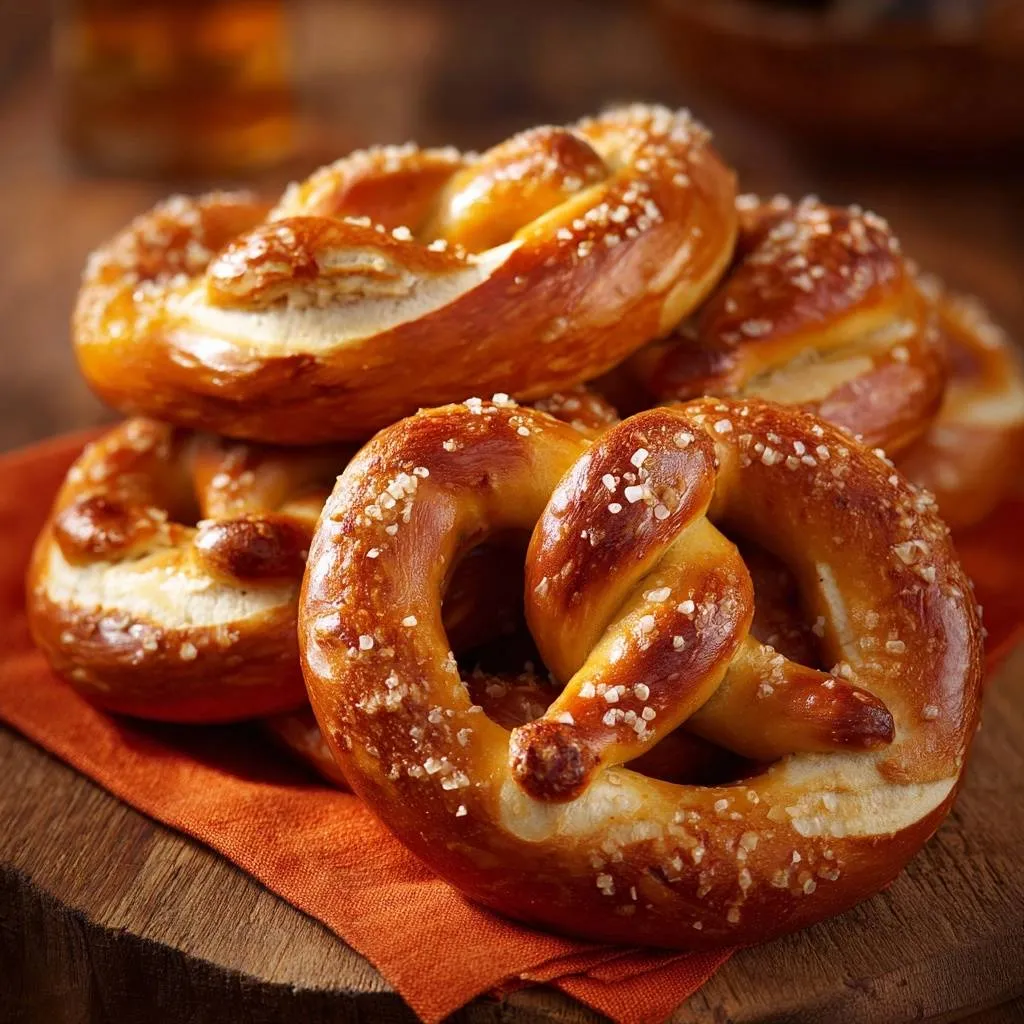
Ever bitten into a homemade pretzel that turned out pale and bready, more like soft dinner roll than that mall-stand glory? You’re not alone. Most home attempts flop without the pro trick. This recipe nails the glossy, chewy crust every time using a simple baking soda boil. No dangerous lye needed.
Therefore, you get fresh-from-the-stand results in about 2 hours total, with just 20 minutes active hands-on. It yields 8 big pretzels that vanish fast. Imagine the first bite: that shiny exterior cracks open to reveal a soft, pillowy inside with just the right chew.
Here’s the expertise kicker. The secret lies in a high-concentration baking soda bath, 1/2 cup in 9 cups water. It gelatinizes the starches on the surface for unbeatable golden browning and texture. Skip it, and you get bland bread. Do it right, and these beat any store-bought hands down.
Essential Ingredients for Chewy Homemade Soft Pretzels
All-purpose flour forms the backbone here. It hits that 10-12% protein sweet spot for pretzel chew without turning gummy. You’ll need 4 cups (480g). Bread flour works too, but it can toughen up, so stick to all-purpose for tenderness.
Warm water at 110°F activates the yeast perfectly. Grab 1 1/3 cups. Too hot kills the yeast; too cold stalls it. Active dry yeast, 2 1/4 tsp or one packet, blooms foamy to prove it’s alive.
Sugar, just 1 tbsp, feeds the yeast without overpowering. Melted unsalted butter, 2 tbsp, adds richness and keeps things tender. Salt, 2 tsp, balances flavors. Don’t use salted butter, or you’ll oversalt the dough.
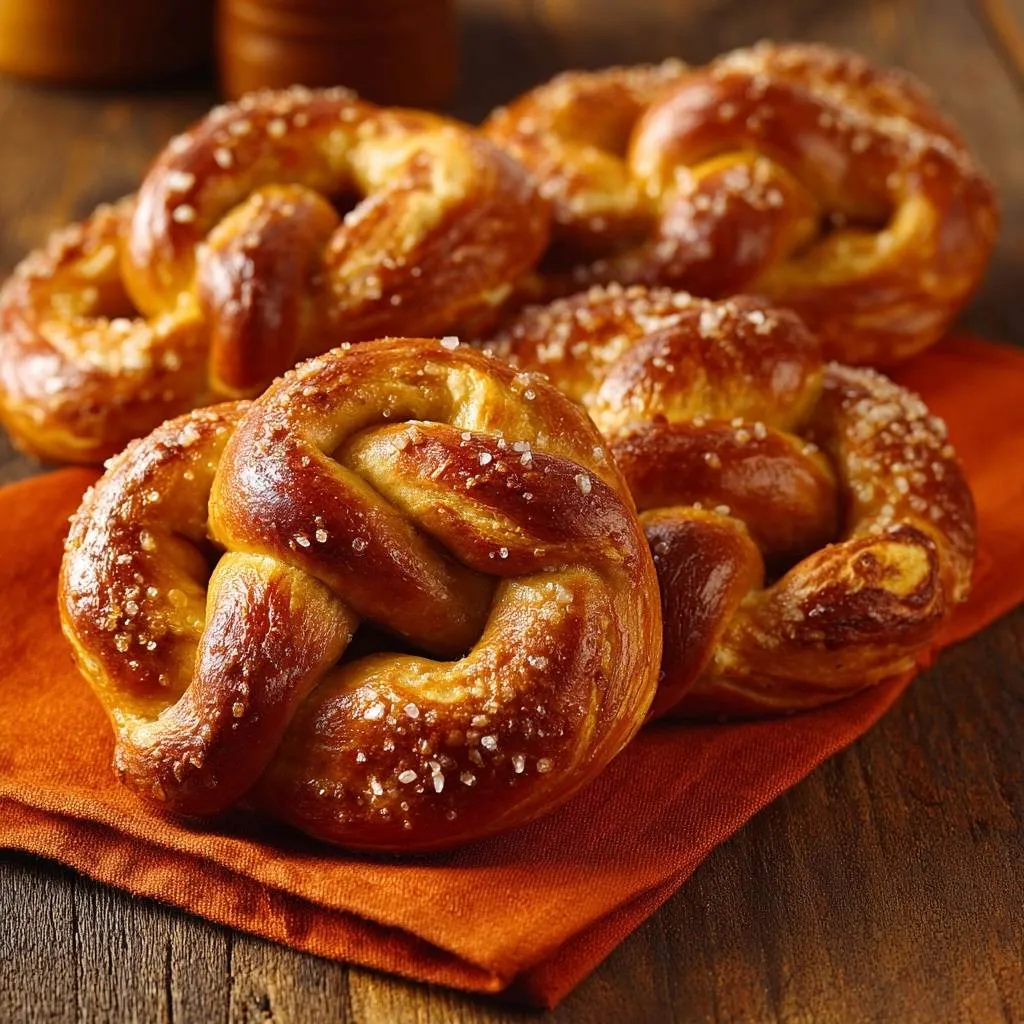
Flour and Yeast: Building the Dough Base
All-purpose flour gives structure through gluten development. Knead it right, and you get smooth dough that holds the pretzel shape. Instant yeast skips proofing, but active dry’s foam test confirms viability every time.
In addition, proof the yeast in that warm water with sugar. Bubbles mean it’s ready to rock. Dead yeast? Toss it and start fresh to avoid dense failures.
Baking Soda Bath: The Crust-Transforming Essential
Here’s the game-changer: 1/2 cup baking soda in 9 cups water creates a 5% alkaline solution. It shifts the pH to gelatinize starches fast. That locks in the chewy, mahogany crust safely at home.
Coarse sea salt sprinkles on post-boil for crunch. Final melted butter brush adds gloss and flavor. Scale up the bath for bigger batches, but keep the ratio tight.
Science of Baking Soda Boil for Pretzel Crust
The baking soda boil accelerates the Maillard reaction for deep browning. Alkalinity restructures proteins and gelatinizes starches on the surface. Your pretzels emerge shiny and chewy, not pale.
For more on achieving that perfect chew and shine, check out our guide to homemade soft pretzels.
Traditional lye dips use a risky 1-2% solution from German bakers. This baking soda hack mimics it safely. Boil 30 seconds per side, and enzymes kick in for that authentic snap.
Studies from baking science show alkaline baths boost browning 3x over plain baking. Before boil, dough looks plain. After, it’s transformed: taut, glossy, ready to bake golden.
Why Boiling Gelatinizes for Authentic Texture
Boiling sets the exterior starches firm while the inside stays soft. Microscopically, starches swell and lock. Perfect 30-second timing prevents sogginess.
Therefore, you get contrast: crisp bite into pillowy center. Overboil, and it softens too much. Precision rules.
Safe Alkaline Bath vs. Traditional Lye Risks
Home bakers ditched lye after safety scares. Baking soda offers similar pH without burns. Use gloves anyway for the boil.
Concentration math: 1/2 cup per 9 cups hits safe alkaline levels. German pros still use lye, but this works perfectly for kitchens.
Step-by-Step: Proofing Dough for Homemade Soft Pretzels
Dissolve yeast and sugar in warm water. Wait 5 minutes for foam. That creamy top signals active yeast ready to rise.
Stir in melted butter, salt, and 3 cups flour. Add the rest gradually. Dough pulls together soft, not sticky.
Knead 5 minutes on floured surface till smooth. Windowpane test: stretch thin without tearing. Grease a bowl, cover, and rise 1 hour in a warm 75-85°F spot till doubled. Poke test: slow bounce-back means ready.
Activating Yeast with Warm Water Precision
110°F water wakes yeast without killing it. Sugar kickstarts fermentation. No foam after 5 minutes? Yeast’s dead; replace it.
Kneading to Smooth Pretzel Dough
Fold and push dough 5 minutes. Gluten builds elasticity. Overknead toughens it, so stop at smooth and springy.
Shaping and Boiling Homemade Soft Pretzels
Preheat oven to 450°F. Line sheets with parchment. Divide dough into 8 equal pieces, about 100g each for uniformity.
Roll each into 24-inch rope, thicker in middle. Form U, cross ends twice, press onto bottom. Shape holds with practice.
Boil 9 cups water with 1/2 cup baking soda. Rolling boil’s key. Dip 2-3 pretzels, 30 seconds per side. They puff and shine. Drain, salt heavy.
Mastering the Classic Pretzel Rope Twist
Roll rope even, tapers slight at ends. U-shape, twist ends over, press down. Wet fingers help seal if it unravels.
Practice on one first. Even loops mean uniform baking. Dense centers? Roll thinner next time.
Boil Bath Timing for Perfect Crust Lock
Maintain rolling boil; add pretzels slow to avoid temp drop. Slotted spoon flip gentle. Post-boil, surface tightens glossy.
Batch 2-3 max. Excess water? Wide 4qt pot prevents overflow.
Baking and Finishing Touch for Golden Pretzels
Bake at 450°F, 12-14 minutes till deep gold. Rotate sheets midway for even color. Hot oven gives oven spring.
Brush hot pretzels with melted butter right away. It soaks in for shine and taste. Cool on rack to stay crisp-bottomed.
Serve warm for max chew. Each pretzel clocks 300 calories, mostly carbs from flour. Pro tip: reheat at 350°F to revive.
For a similar treat, explore tropical coconut rolls known for their cottony softness.
History and Origins of Soft Pretzels
Soft pretzels trace to 7th-century Italian monks. They shaped “pretiola,” little rewards for kids learning prayers. Twisted arms mimicked praying hands.
German bakers in 1800s Bavaria refined it with lye dips for shine. Immigrants brought it to Pennsylvania Dutch country. Philly stands and malls made it American icon.
Today, Oktoberfest celebrates them. Baking soda swapped lye for safe home baking. Auntie Anne’s popularized the cinnamon twist nationwide.
Avoiding Mistakes in Homemade Soft Pretzels
Underproofed dough stays dense. Always double rise. Skipped boil means pale bread; don’t cheat it.
Weak soda bath fails chew. Use full 1/2 cup. Low oven temp gives weak color; blast 450°F.
Overboil sops them. Timer on 30 seconds. Sticky dough? Dust more flour sparingly.
Fixing Pale Crust from Weak Boils
Low soda or cool water drops pH. Test one pretzel first. Full strength and rolling boil fixes it golden.
Preventing Dense or Soggy Pretzel Texture
Proof fully, knead smooth, bake hot. Drain boil well. These cues keep chew perfect.
Flavor Variations for Homemade Soft Pretzels
Post-butter, roll in cinnamon-sugar for sweet. Garlic-herb butter amps savory. Everything bagel seasoning swaps salt fine.
Pair with cheese dip or mustard. Mini bites: divide into 16, boil same. Gluten-free flour needs xanthan gum or it crumbles.
More to Enjoy
After these soft pretzels, explore more satisfying dishes.
- For a crisp seafood option, consider this crispy breaded white fish, offering a delightful contrast in texture.
- To continue with comforting flavors, try the creamy garlic skillet chicken, featuring a rich sauce that complements the chewiness of the pretzels.
Equipment Choices for Pretzel Success
Wide 4qt stockpot fits boil without spill. Slotted spoon drains fast. Digital scale weighs flour exact, 480g total.
Stand mixer with dough hook saves arms. Parchment or Silpat prevents stick. Oven thermometer confirms 450°F true.
Make-Ahead and Storage for Soft Pretzels
Fridge dough 24 hours for deeper flavor. Freeze shaped, post-boil pretzels; thaw and bake fresh. Boosts party prep.
Baked keep airtight 2 days. Freeze 3 months; reheat 350°F 10 minutes. Steam revives chew.
What Pairs Best with Homemade Soft Pretzels
Spicy brown mustard cuts richness. Queso or spinach-artichoke dips cling perfect. Turkey swiss melts inside make hearty sandwiches.
Potato salad or pickles balance. Sparkling cranberry juice refreshes alongside. Hollow one for ice cream dessert fun.
Troubleshooting Homemade Soft Pretzels FAQ
Why Are My Pretzels Pale After Baking?
Weak soda bath or oven under 450°F causes it. Use full 1/2 cup baking soda in rolling boil, preheat fully, and rotate sheets. Deep gold comes every time with these fixes.
Dough Not Rising—What Now?
Yeast died from water over 115°F or expired packet. Test new yeast in sugared warm water; foam in 5 minutes means good. Warm spot at 80°F helps too.
Can I Skip the Boiling Step?
No, it transforms dough to chewy shiny pretzels. Without, you get soft bread rolls, pale and bland. Egg wash fakes shine but misses gelatinized chew.
How to Get Even Golden Browning?
Middle rack, rotate halfway, parchment only. Uneven oven? Convection helps. Space pretzels 2 inches apart for air flow.
Freezing Pretzels: Best Method?
Freeze baked in bags up to 3 months or raw post-boil on sheet then bag. Thaw baked at room temp, reheat 350°F 8-10 minutes. Raw: boil again, bake fresh.
Can I Substitute Bread Flour?
Yes, but use 10-11% protein max to avoid toughness. All-purpose nails chew best. Add 1 tsp vital wheat gluten if dough feels weak.
How Long Do Leftovers Stay Fresh?
Store airtight at room temp 2 days max for chew. Fridge shortens it; freeze instead. Reheat wrapped in foil at 350°F to steam back softness without drying.
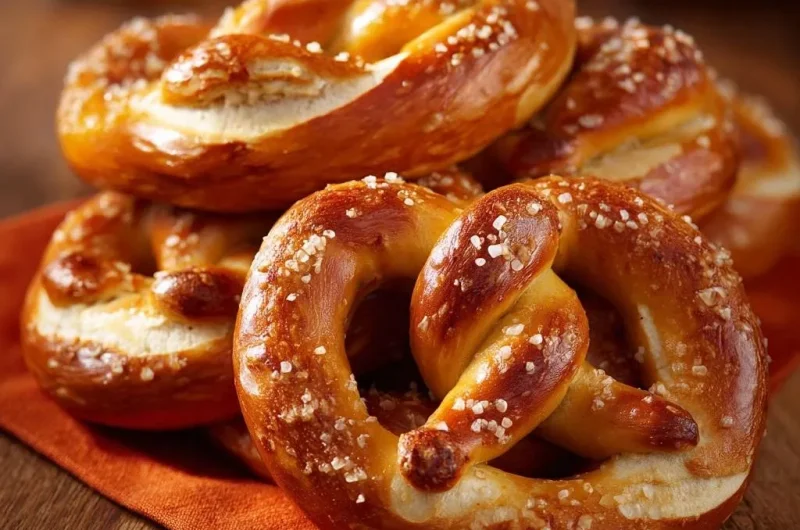
Soft Pretzels
Course: SnackCuisine: AmericanDifficulty: medium8
pretzels30
minutes20
minutes250
kcal60
MinutesHomemade pretzels often turn out pale and bready instead of chewy and shiny. This recipe fixes that with a simple baking soda boil that mimics the pro lye bath, locking in the perfect glossy, chewy exterior without any danger or fuss.
Ingredients
4 cups all-purpose flour
1 1/3 cups warm water (110 degrees F)
2 1/4 tsp active dry yeast
1 tbsp sugar
2 tbsp unsalted butter, melted
2 tsp salt
1/2 cup baking soda (for boiling bath)
9 cups water (for boiling bath)
Coarse sea salt, for topping
Melted butter, for brushing after baking
Directions
- Dissolve yeast and sugar in warm water in a large bowl. Let sit 5 minutes until foamy.
- Stir in melted butter, salt, and 3 cups flour. Gradually add remaining flour until a soft dough forms. Knead on a floured surface 5 minutes until smooth.
- Place dough in a greased bowl, cover, and let rise in a warm spot 1 hour until doubled.
- Preheat oven to 450 degrees F. Line two baking sheets with parchment paper.
- Divide dough into 8 pieces. Roll each into a 24-inch rope. Form into classic pretzel shape: make a U, cross ends twice, press onto bottom curve.
- Bring 9 cups water and baking soda to a rolling boil in a large pot. This high-concentration boil is the key fix, it gelatinizes the dough surface for that unbeatable chewy, golden crust, no lye needed, works perfectly every time.
- Boil pretzels 30 seconds per side using a slotted spoon. This step transforms bland dough into authentic pretzels, preventing the common pale, soft failure. Place on baking sheets. Sprinkle generously with coarse salt.
- Bake 12 to 14 minutes until deep golden brown. Brush with melted butter. Serve warm.
Notes
- The high-concentration baking soda boil is the key to gelatinizing the dough surface for that unbeatable chewy, golden crust. Boil 30 seconds per side for best results.