Few things satisfy a craving for savory, portable comfort like a perfectly formed rice ball. However, most home cooks face the same frustrating hurdle: the rice ball that shatters into a pile of grains the moment you take a bite. It’s a common struggle that turns a convenient snack into a messy plate of loose rice.
The secret to a professional-grade result isn’t just in the shaping; it’s in the science of the starch. By using a specific starch-locking technique, you can create a dense, resilient structure that holds its shape from the first bite to the last. This method ensures your rice balls are as sturdy as they are beautiful.
The real trick lies in the thermal window of the rice. You must shape the grains while they are still warm to the touch, around 100°F. At this temperature, the starches are still pliable and “sticky,” allowing them to fuse together into a solid unit before they cool and set into their final, firm shape.
The Science of Structural Integrity in Rice
Rice isn’t just a side dish; it’s a structural building block. Short-grain rice contains a high concentration of amylopectin, a branched starch molecule that becomes incredibly sticky when cooked. This stickiness acts as the “glue” that keeps your rice ball from crumbling under pressure.
Long-grain varieties like Jasmine or Basmati contain more amylose, which results in fluffy, individual grains that separate easily. While great for pilaf, they lack the bonding power needed for shaping. Short-grain rice provides the necessary surface area for grains to interlock and create a stable, dense core.
Rinsing the rice is the first step in managing this starch. You want to remove the loose, powdery surface starch that causes a “gummy” or slimy exterior. By washing the rice until the water runs clear, you ensure that the internal stickiness provides the bond, rather than a messy coating on the outside.
Why Short-Grain Rice is Non-Negotiable
If you try to use standard long-grain rice, your rice balls will fail. The length of the grain dictates how much surface area is available for bonding. Short-grain rice, specifically varieties like Koshihikari, is bred for its ability to hold together while remaining tender.
These grains are plump and round, allowing them to be compressed into a tight sphere without air pockets. When you press them together, the grains nestle against each other perfectly. This creates a structural integrity that long-grain rice simply cannot replicate, no matter how much you compress it.
Essential Components for Spicy Nori-Wrapped Rice Balls
Every ingredient in this recipe serves a functional purpose beyond just flavor. Rice vinegar provides the necessary acidity to cut through the heavy starch, while sugar helps with moisture retention. Without that touch of sugar, the rice can dry out and become brittle as it cools.
Salt is vital for seasoning, but it also helps the rice grains hold onto moisture. When you mix these into the hot rice, the heat allows the grains to absorb the seasoning deeply. This ensures every bite is flavorful, rather than just having a seasoned exterior and a bland interior.
Toasted sesame seeds add a much-needed lipid-based flavor. The oils in the seeds provide a rich, nutty contrast to the bright vinegar and spicy chili flakes. They also add a subtle crunch that breaks up the soft texture of the rice and seaweed.
Selecting and Handling Roasted Nori
Nori comes in different grades, often labeled as Gold, Silver, or Blue. For this recipe, Gold grade is ideal because it is thick and durable. A thicker sheet of nori provides more structural support, acting like a protective skin that keeps the rice ball contained.
Humidity is the enemy of crisp nori, but in this specific “shrink-wrap” method, we actually use the rice’s moisture to our advantage. A full-wrap method is superior to a simple strip because it covers more surface area. This creates a unified exterior that prevents the rice from bulging or cracking.
The Heat Profile: Gochugaru vs. Aleppo Pepper
The choice of spice determines the character of your rice ball. Gochugaru offers a smoky, sweet heat that is iconic in Korean cuisine. Aleppo pepper is slightly milder with a fruity undertone. Both are “coarse” grinds, which is essential for the visual appeal and texture of the topping.
A fine powder would simply disappear into the rice or become a muddy paste. The coarse flakes sit on top of the grains, creating a beautiful, textured “window” of color. Adding a tiny drop of neutral oil to the spices is a pro move; it “blooms” the color, making it a vibrant, glistening red.
Phase One: Preparing the Starch-Locked Base
Start by rinsing your rice in a fine-mesh sieve. Use your fingers to gently swish the grains under cold running water. You’ll notice the water starts out milky white; keep going until it is almost perfectly clear. This is the “clear water” benchmark that prevents a gummy texture.
Once rinsed, combine the rice and water in a pot. Bring it to a boil, then immediately drop the heat to the lowest setting. Cover it tightly to trap the steam. After 15 minutes of simmering, the most important step happens: the rest. Let the pot sit, covered and off the heat, for 10 minutes.
This rest period allows for “carry-over” cooking. The steam finishes hydrating the very center of each grain. If you skip this, you’ll end up with rice that is mushy on the outside but has a hard, chalky center. Patience here ensures a uniform, tender texture throughout the entire batch.
Phase Two: Seasoning and Thermal Shaping
While the rice is still steaming hot, transfer it to a bowl and add your vinegar, sugar, and salt. Use a “slicing” motion with a rice paddle rather than stirring. This technique, known as Shari-kiri, prevents you from mashing the grains into a paste while ensuring every grain is coated.
Now comes the technical part: shaping. You must do this while the rice is warm, roughly between 100°F and 110°F. If the rice gets too cold, the starches lock up and won’t bond to each other. Wet your hands with salted water to keep the rice from sticking to your skin.
Scoop a handful of rice and compress it firmly between your palms. Don’t be afraid to use some muscle here. You are trying to eliminate air pockets that cause the ball to shatter. Rotate the ball as you squeeze, creating a tight, dense sphere that feels solid in your hand.
Phase Three: The Shrink-Wrap Nori Technique
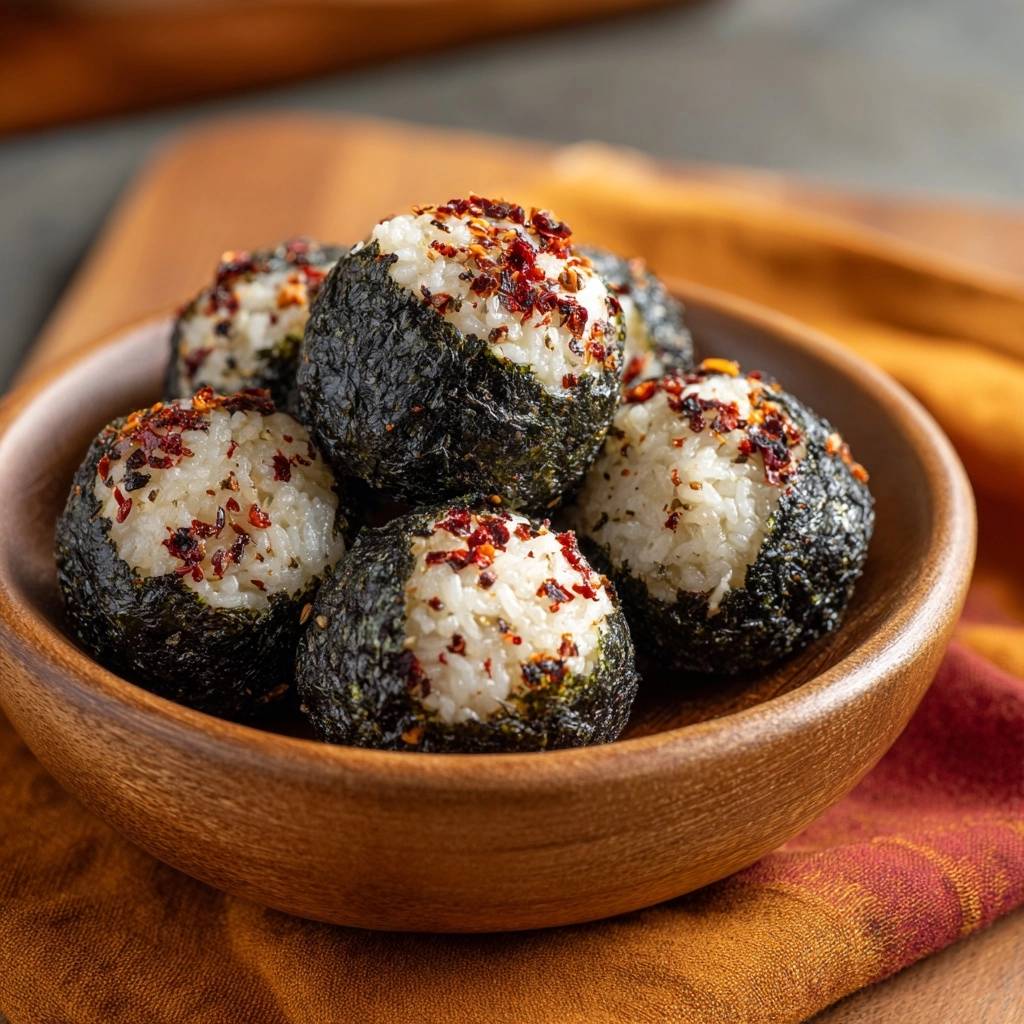
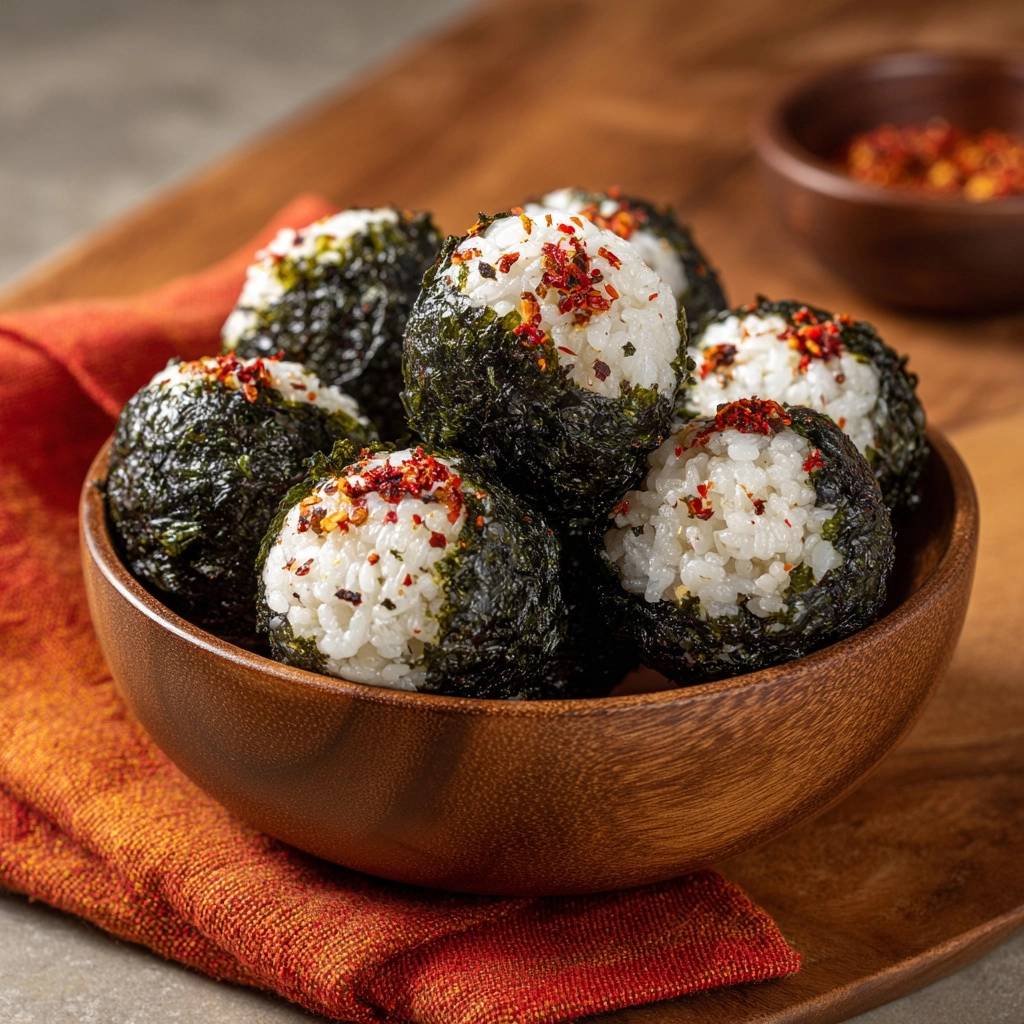
Take a full sheet or a large square of nori and place your rice ball in the center. Wrap the seaweed up and around the sides, folding it as needed to follow the curve of the ball. Leave a small circular “window” of white rice exposed at the very top.
The residual steam from the warm rice is the secret ingredient here. As the nori comes into contact with the warm, moist rice, it naturally softens and begins to shrink. This creates a vacuum-like seal, effectively “shrink-wrapping” the rice ball into a solid, durable unit.
This method is far more effective than just sticking a piece of seaweed on the side. By wrapping the base and sides, you create a structural “cup” that holds the rice together. The nori and rice fuse into one, making the snack much easier to handle and eat on the go.
For a different way to wrap ingredients, learn the sesame beef spring rolls tear-free technique.
Phase Four: Applying the Spicy Glistening Topping
Mix your chili flakes, sesame seeds, and garlic powder in a small bowl with that tiny drop of oil. The oil acts as a binder, ensuring the spices stick to the rice rather than falling off. It also gives the topping a professional, high-gloss finish that looks incredible.
For a similar sticky-free outcome, consider glazed beef fresh spring rolls.
To apply the topping, use the “Press and Twist” method. Take your wrapped rice ball and press the exposed rice window firmly into the spice mixture. Give it a slight twist to ensure the spices embed themselves into the surface of the rice grains.
This mechanical bond is much stronger than just sprinkling the spices on top. By pressing them in, you ensure the heat and flavor stay exactly where you want them. The result is a striking contrast between the dark nori, the white rice, and the brilliant red spice.
Troubleshooting Common Rice Ball Failures
If your rice is falling apart despite your best efforts, check your water ratio. Rice that is too dry won’t have enough moisture to activate the starches. Also, ensure you aren’t letting the rice cool too much before shaping; once it hits room temperature, the “glue” is gone.
If your nori feels too chewy or rubbery, it might be due to the moisture from the rice. While the “fused” texture is traditional for portable snacks, you can lightly toast the wrapped ball in a dry pan for 30 seconds to crisp the seaweed back up. This adds a nice toasted aroma as well.
Are the spices falling off? This usually means the rice surface has dried out too much. You can lightly dab the exposed rice window with a damp finger before pressing it into the spice mix. Increasing the oil binder in the spice mix slightly can also help the flakes adhere better.
Optimal Equipment for Consistent Results
A heavy-bottomed pot is your best friend for cooking rice. It distributes heat evenly, preventing the bottom layer from scorching while the top stays raw. If you make rice balls often, a dedicated rice cooker is a worthy investment for its precision and consistency.
When it comes to seasoning, a wooden bowl or a traditional Hangiri is superior to metal. Wood absorbs excess moisture from the vinegar mixture, preventing the rice from becoming soggy. It also helps the rice cool at a steady rate, giving you a longer window for shaping.
A fine-mesh sieve is also non-negotiable. You cannot properly rinse rice in a standard colander; the grains will either fall through the holes or the water won’t circulate enough to remove the surface starch. A tight mesh ensures every grain is cleaned thoroughly.
Flavor Variations and Texture Swaps
You can easily adjust the heat level by swapping the Gochugaru for a mix of smoked paprika and a pinch of cayenne. If you want more umami, try incorporating furikake—a Japanese seasoning blend—directly into the rice before you shape it into balls.
For a surprise, you can add a hidden center. A small piece of salted salmon or a pitted pickled plum (Umeboshi) works beautifully. Just make sure the filling is dry; excess moisture in the center will weaken the structural integrity and cause the ball to split open.
If you want a different texture, try mixing in some toasted chopped nuts or finely diced pickled vegetables. These add a “crunch” factor that contrasts with the soft rice. Just keep the additions small so they don’t interfere with the bonding of the rice grains.
What to Try Next
Round out your meal with these complementary dishes.
- For a fresh and zesty addition, consider the Sesame Ginger Chicken Salad, which uses a similar technique to keep ingredients crisp.
- If you’re in the mood for something with a satisfying crunch, the Crispy Wonton Chicken Tacos offer a delightful texture contrast.
What to Serve with Spicy Nori-Wrapped Rice Balls
These rice balls are quite filling on their own, so keep the sides light and refreshing. Japanese pickles, or Tsukemono, provide a crunchy, acidic contrast that cleanses the palate between spicy bites. A simple cucumber salad with a light rice vinegar dressing is also a great choice.
A clear dashi-based soup, like miso or a simple broth with scallions, helps wash down the dense rice. The warmth of the soup complements the spice of the topping. Avoid serving these with heavy, greasy foods like fried chicken, as the clean flavors of the rice will get lost.
Steamed greens, such as bok choy or spinach with a light sesame dressing, add a nutritional boost without being too heavy. The goal is to provide a balance of textures—crunchy pickles, soft rice, and a warm liquid—to create a complete and satisfying meal.
Storage and Portability Guidelines
Refrigeration is generally the enemy of rice. Cold temperatures cause a process called retrogradation, where the starches crystallize and become hard and grainy. If you must store them, wrap each rice ball tightly in plastic wrap to keep the moisture in and eat them within 24 hours.
For the best portability, these rice balls are designed to be eaten at room temperature. If you are packing them for lunch, the “shrink-wrap” nori method is perfect because it keeps the rice contained. The seaweed will be soft and fused to the rice, which is the traditional way to enjoy them.
If you prefer your nori to stay crispy for a later meal, wrap the rice balls in plastic wrap first, then wrap them in the nori just before eating. This prevents the seaweed from absorbing moisture from the rice. However, you will lose that “fused” structural benefit of the shrink-wrap method.
Expert Tips for Professional Presentation
To get that perfect “window” look, consistency is key. Try to keep your rice balls the same size by using a measuring cup to portion the rice. A 1/2 cup measure usually yields a perfect, palm-sized ball that is easy to wrap with a standard nori sheet.
Keep a damp cloth nearby while you work. Starchy rice will build up on your hands and the counter, making things sticky and messy. Wiping your hands and the work surface between every two or three balls will keep your “windows” clean and your nori looking sharp.
Finally, give the rice balls a 10-minute “set” time before you serve or pack them. This allows the nori to fully fuse and the starches to stabilize. This short rest is the final insurance policy that guarantees your spicy rice balls will hold their shape perfectly until the very last bite.
Frequently Asked Questions
How do I store leftovers without the rice getting hard?
The best way to store rice balls is at room temperature in a cool, dry place if you plan to eat them within a few hours. If you must keep them longer, wrap them tightly in plastic wrap and place them in an airtight container in the fridge. To revive them, microwave for 15-20 seconds with a damp paper towel to re-hydrate the starch, but note the nori will become very soft.
Why do my rice balls keep falling apart when I try to shape them?
This usually happens for two reasons: the rice is too cold or it wasn’t compressed enough. You must shape the rice while it is still warm so the starches can bond. Additionally, you need to apply firm, steady pressure with your palms. If you are too gentle, air pockets will remain, and the ball will crumble as soon as the moisture begins to evaporate.
Can I use a different type of rice if I can’t find sushi rice?
In a pinch, you can use short-grain Italian Arborio rice (used for risotto), as it also has a high starch content. However, avoid long-grain rice like Jasmine or Basmati at all costs. They do not have the “sticky” starch profile required to hold a shape, and your rice balls will inevitably fall apart.
Is there a way to make these less spicy?
Absolutely. You can replace the Gochugaru with toasted sesame seeds or a mild furikake blend. If you still want the vibrant red color without the heat, use a high-quality sweet smoked paprika. This gives you the visual “pop” and a lovely smoky flavor without the spicy kick.
Can I freeze these for later?
Freezing is not recommended for fully assembled rice balls. The nori becomes slimy and the rice texture changes significantly upon thawing, often becoming mushy or grainy. If you want to prep ahead, you can freeze the seasoned rice in portions, then thaw, reheat, and shape with fresh nori when you are ready to eat.
What if my nori won’t stick to the rice?
The nori should naturally stick due to the moisture and warmth of the rice. If it’s struggling, you can lightly dampen the edges of the nori with a tiny bit of water or rice vinegar to act as a “glue.” Ensure you are wrapping the rice while it is still emitting a bit of steam, as that steam is what softens the seaweed and creates the seal.
Nori-Wrapped Rice Balls
Course: AppetizerCuisine: Asian FusionDifficulty: easy4
servings15
minutes20
minutes195
kcal35
MinutesA foolproof recipe for spicy rice balls that stay intact. By using warm short-grain rice and a specific compression technique, these nori-wrapped treats are both visually stunning and structurally sound, topped with a vibrant chili and sesame spice blend.
Ingredients
2 cups short-grain sushi rice
2.25 cups water
2 tablespoons rice vinegar
1 tablespoon sugar
1 teaspoon salt
8-10 sheets roasted nori seaweed (full sheets or large squares)
3 tablespoons Gochugaru (Korean red chili flakes) or coarse Aleppo pepper
1 tablespoon toasted sesame seeds
1 teaspoon garlic powder
1 teaspoon neutral oil (for the spice topping)
Directions
- Rinse the rice under cold water in a fine-mesh sieve until the water runs clear. This removes excess surface starch that causes gummy rice, allowing the internal stickiness of the short-grain rice to provide the structural “glue.”
- Combine rice and water in a pot. Bring to a boil, then reduce to the lowest heat setting, cover, and simmer for 15 minutes. Remove from heat and let sit, covered, for 10 minutes to finish steaming.
- While the rice is hot, gently fold in the rice vinegar, sugar, and salt using a rice paddle or wooden spoon. The heat is essential here as it allows the grains to absorb the seasoning and activates the starches needed for structural integrity.
- To solve the falling-apart problem, shape the rice while it is still warm to the touch. Wet your hands with lightly salted water to prevent sticking. Scoop a generous handful of rice and compress it firmly between your palms, rotating to form a tight, dense sphere. If you do not compress firmly while warm, air pockets will cause the ball to shatter.
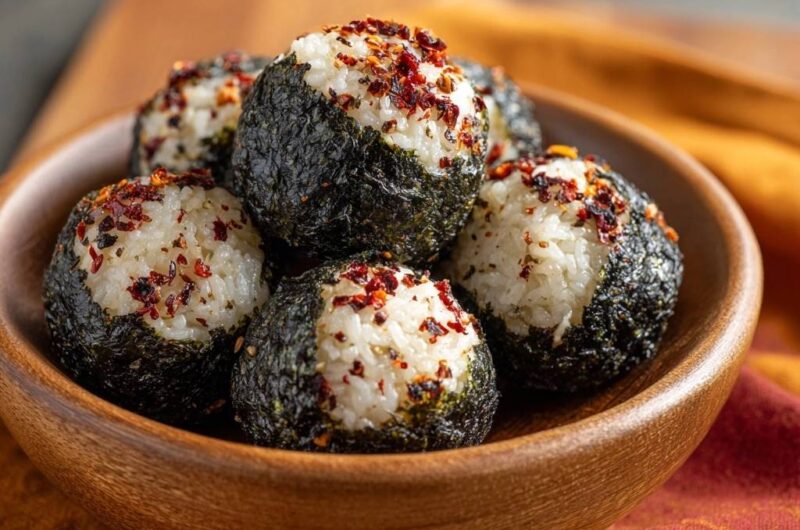
- To achieve the visual look in the image, take a large piece of nori and wrap it entirely around the base and sides of the rice ball, leaving only a small circular “window” of white rice exposed at the very top. The moisture from the warm rice will naturally soften the nori, causing it to shrink-wrap and mold perfectly to the curve of the ball.
- In a small bowl, mix the chili flakes, sesame seeds, and garlic powder with a tiny drop of oil. This ensures the spices adhere to the rice and gives them the vibrant, glistening red color seen in the image.
- Press the exposed top of the rice ball firmly into the spice mixture.
- Let the rice balls rest for 5 to 10 minutes before serving. This allows the starches to fully set and the nori to fuse to the rice, guaranteeing a perfect bite that holds its shape.
Notes
- The secret to structural integrity is shaping the rice while it is still warm and compressing firmly to remove air pockets. Using a full nori wrap creates a shrink-wrap effect that holds the ball together.