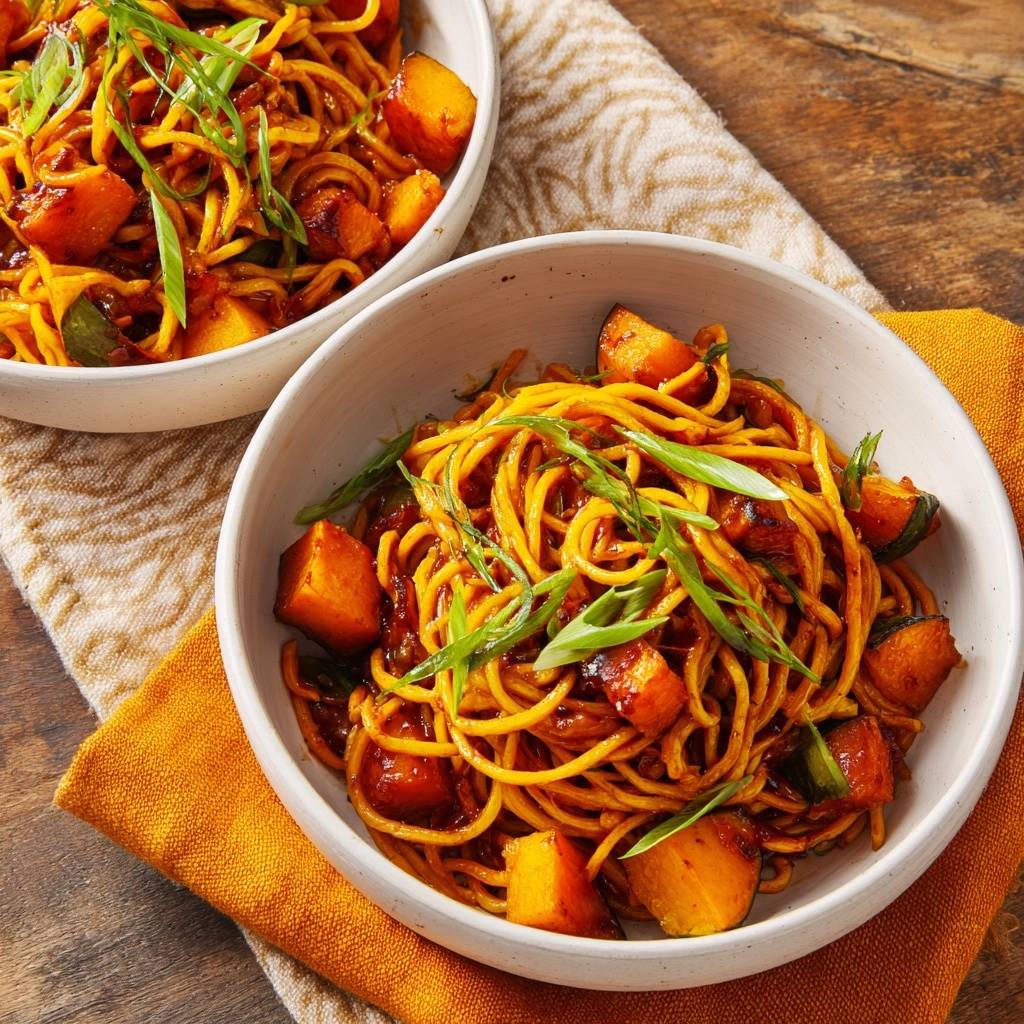
Most home cooks face the same frustrating hurdle when making stir-fry: the dreaded mushy vegetable pile. You start with vibrant produce, but by the time the noodles are coated, the squash has turned into a soft, watery mess that blends into the sauce. It’s a common struggle that ruins the structural integrity of a great noodle dish.
The secret to restaurant-quality Spicy Roasted Squash Lo Mein lies in a simple culinary pivot. Instead of crowding everything into a wok where the squash steams in its own moisture, we use high-heat roasting to create a caramelized exterior and a creamy center. This texture contrast is what makes every bite distinct and satisfying.
I’ve found that the real trick is all about the timing of the “marriage” between the squash and the noodles. If you toss them together too early, the residual moisture from the sauce softens that roasted crust you worked so hard to build. By waiting until the very last thirty seconds, you ensure the squash stays firm and flavorful.
The Science of Roasting vs. Steaming Squash
When you toss raw squash into a hot pan with other ingredients, it immediately begins to release its internal water. In a crowded skillet, that water has nowhere to go, so it creates a steam bath that breaks down the vegetable’s cell walls. This is why your stir-fry often ends up soggy rather than seared.
By roasting the squash at 425°F, you trigger the Maillard reaction. This chemical process browns the natural sugars in the squash, creating a complex, nutty flavor profile that sautéing simply can’t match. The high heat evaporates surface moisture quickly, locking in a dense, velvety texture inside while the outside gets those beautiful charred edges.
Kabocha and Butternut squash are ideal for this because they have a lower water content than summer squashes. They hold their shape beautifully under high heat. Kabocha is particularly impressive because its skin is edible and adds a lovely earthy note, while Butternut offers a classic sweetness that balances the spicy chili garlic sauce.
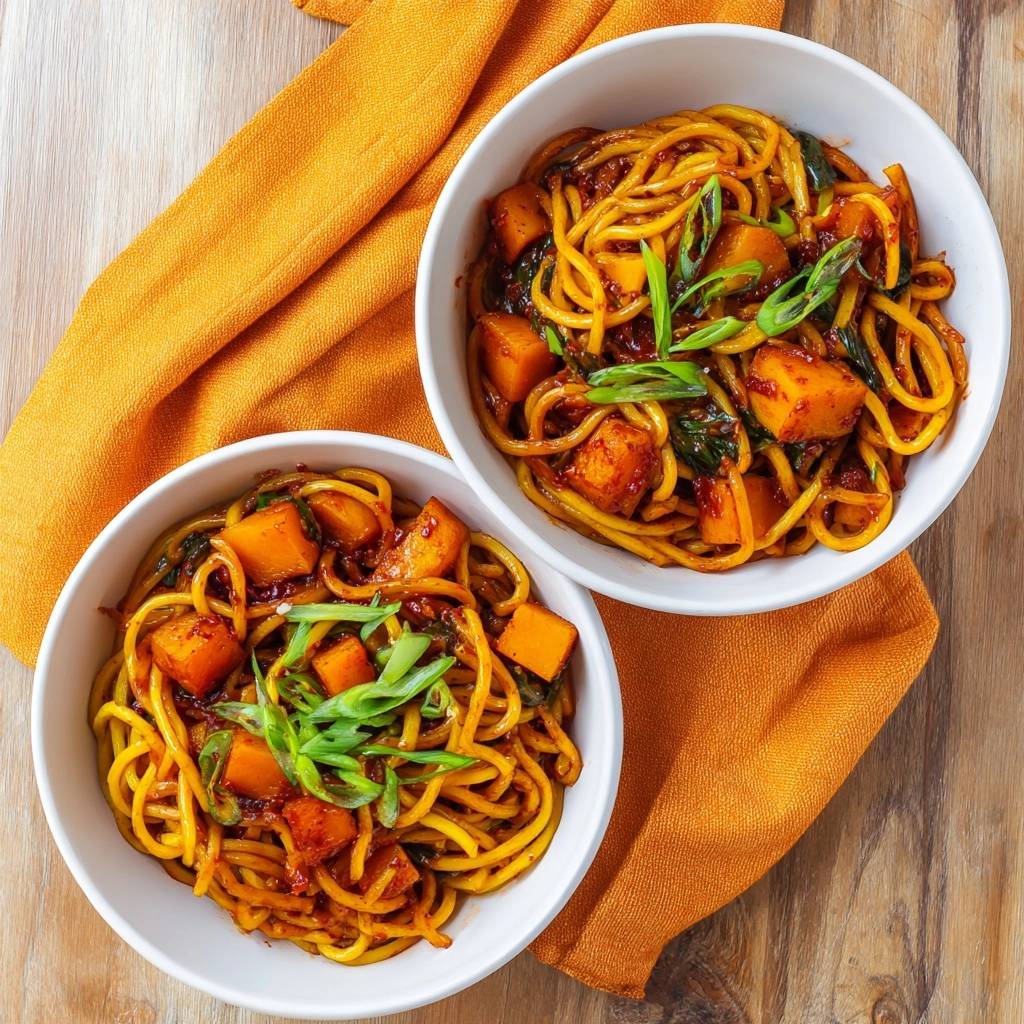
Essential Components for Spicy Roasted Squash Lo Mein
Quality ingredients are the backbone of this dish, and it starts with the noodles. Fresh lo mein noodles are superior because they have a chewy, elastic bite that stands up to the heavy sauce. If you can’t find fresh, look for thick dried egg noodles, but be careful not to overcook them during the boiling stage.
The sauce relies on a specific duo: light soy sauce and dark soy sauce. Light soy sauce provides the essential salt and umami punch. Dark soy sauce, however, is thicker and less salty; its primary job is to provide that deep, mahogany color that makes the dish look professional. Without it, your noodles will look pale and unappetizing.
Never underestimate the power of fresh aromatics. While powdered garlic or ginger might be convenient, they lack the volatile oils that create that mouth-watering aroma when they hit hot oil. Freshly grated ginger adds a sharp, peppery heat that cuts through the sweetness of the honey, creating a perfectly balanced flavor profile.
Selecting the Right Squash Variety
Kabocha is the gold standard for this recipe. It has a remarkably low moisture content and a texture that reminds many people of a roasted chestnut. Because the skin is thin and edible, you save time on peeling and add a beautiful green contrast to the orange flesh. If you use Butternut, ensure you peel it deeply to remove the fibrous outer layer.
Noodle Selection: Fresh Lo Mein vs. Substitutes
Lo mein noodles are treated with alkaline salts, which gives them their signature yellow hue and bouncy texture. This alkalinity prevents them from becoming mushy when tossed in the sauce. If you must use spaghetti, add a teaspoon of baking soda to the boiling water to mimic that alkaline environment, though the flavor won’t be quite as authentic.
Preparing the Spicy Umami Sauce Base
A great lo mein sauce is a four-way tug-of-war between heat, sweet, acid, and fat. The chili garlic sauce provides a fermented heat that lingers, while the honey rounds out the sharp edges. Rice vinegar is the “secret” ingredient here; its acidity brightens the entire dish and prevents the soy sauce from feeling too heavy.
For a similar creamy sauce that avoids a sticky texture, check out these creamy spicy peanut noodles.
The honey serves a dual purpose beyond just flavor. As the sauce hits the hot skillet, the sugars in the honey begin to reduce and thicken. This creates a glossy glaze that clings to every strand of the noodle rather than pooling at the bottom of the bowl. It ensures that every bite is seasoned perfectly from the first to the last.
Step-by-Step: Achieving the Perfect Roast
Preparation is everything when it comes to the oven. When you place your cubed squash on the sheet pan, you must give them space. If the cubes are touching, they will trap steam between them, leading to soft spots. Spread them out so the hot air can circulate around all four sides of every cube.
You are looking for specific visual cues. The edges should be dark brown—almost blackened in some spots—and the flesh should look slightly shrunken. This indicates that the water has evaporated and the flavors have concentrated. Don’t be afraid of a little char; that bitterness is a fantastic foil for the sweet and spicy sauce.
Wok Technique: Searing the Noodles
Even without a commercial-grade burner, you can achieve a hint of “Wok Hei” or the breath of the wok. The key is to get your oil shimmering hot before adding your aromatics. You only have about 30 seconds once the garlic and ginger hit the pan; if they turn dark brown, they will become bitter and ruin the sauce.
Once the noodles and sauce are in, use tongs to toss them vigorously. You want the noodles to fry slightly in the oil and sauce mixture. This high-heat tossing dyes the noodles evenly with the dark soy sauce and helps the flavors penetrate the starch. You’ll see the sauce transform from a liquid into a sticky, fragrant glaze.
Integrating the Roasted Squash Without Breakage
This is the most delicate part of the process. Once your noodles are perfectly coated and steaming, turn off the heat or drop it to low. Add your roasted squash cubes and use a wide spatula to gently fold them in. You aren’t trying to cook them further; you are simply warming them through and coating them in the residual sauce.
If you toss the squash too aggressively, the tender centers will break, and you’ll end up with orange streaks throughout your noodles. By using a gentle hand, you preserve those crisp, roasted edges. This ensures that when you take a bite, you get the distinct chew of the noodle followed by the creamy, roasted pop of the squash.
Troubleshooting Common Lo Mein Issues
If your noodles are sticking together in a giant clump, it’s likely because they weren’t rinsed properly. After boiling, a quick rinse under cool water removes the excess surface starch that acts like glue. If they still feel sticky, toss them with a teaspoon of vegetable oil before adding them to the wok.
For perfectly separated noodles in recipes like creamy peanut udon, rinsing is essential.
If your sauce feels too thin and watery, let it bubble in the pan for an extra minute before adding the squash. The heat will evaporate the excess liquid and thicken the honey and soy mixture. Conversely, if the squash is falling apart, you likely roasted it too long or cut the cubes too small. Aim for uniform one-inch pieces for the best results.
Flavor Variations and Protein Additions
While this dish is a powerhouse on its own, you can easily customize it. Adding charred bok choy or snap peas during the last minute of noodle tossing adds a fresh, snappy crunch. These greens provide a nice color contrast to the deep amber noodles and orange squash without adding too much moisture.
Complementary Dishes to Try
Round out your meal with these delicious potato recipes.
- For a sticky, savory addition, consider the Sesame Glazed Baby Potatoes, offering a similar sweet and savory profile.
- Another excellent option is the Sticky Soy Glazed Baby Potatoes, which complements the Asian-inspired flavors of the Lo Mein.
For extra protein, seared tofu cubes work beautifully. Press the tofu well to remove moisture, then sear it in the wok before you start the noodles. You could also top the finished bowl with a soft-boiled egg. The creamy yolk acts as an extra layer of sauce that complements the spicy chili garlic notes perfectly.
Optimal Serving and Presentation Tactics
Presentation is the final step in a restaurant-quality meal. When slicing your green onions, cut them on a “long bias.” This means holding your knife at a sharp angle to create long, elegant ovals rather than tiny circles. It’s a small detail, but it immediately elevates the look of the dish.
Garnish heavily right before serving. The fresh green onions provide a sharp, cool bite that cuts through the richness of the roasted squash. A sprinkle of toasted sesame seeds or a few extra red pepper flakes can add texture and a final hit of heat for those who like it extra spicy.
Storage and Reheating for Best Texture
Lo mein is undoubtedly best served fresh from the wok, but leftovers can still be delicious. Store them in an airtight container in the refrigerator for up to three days. Avoid freezing this dish, as the squash will lose its structural integrity and become grainy once thawed and reheated.
When you’re ready to eat, skip the microwave. Microwaving makes the noodles gummy and the squash soggy. Instead, heat a splash of oil in a skillet over medium-high heat. Add the leftovers with a tablespoon of water to loosen the sauce. Toss quickly until heated through to revive the texture of the noodles and the edges of the squash.
Frequently Asked Questions
How should I store leftovers and how long do they last?
Store your Spicy Roasted Squash Lo Mein in an airtight container in the refrigerator. It will stay fresh and flavorful for up to 3 days. I don’t recommend freezing this dish because the squash contains enough moisture that it becomes quite mushy and grainy upon thawing, which ruins the texture contrast we worked so hard to achieve.
Why did my squash turn out mushy instead of roasted?
This usually happens for two reasons: oven temperature or crowding. Ensure your oven is fully preheated to 425°F before the pan goes in. If the temperature is too low, the squash will bake slowly and steam. Also, make sure the squash cubes aren’t touching on the sheet pan. If they are too close, they trap steam, which softens the exterior rather than crisping it.
Can I use a different type of noodle if I can’t find lo mein?
Yes, you can substitute with thick wheat noodles or even linguine in a pinch. If using dried pasta, cook it for one minute less than the package directions so it stays “al dente.” This prevents it from falling apart when you toss it in the wok with the heavy sauce. Avoid thin noodles like vermicelli, as they won’t hold up to the weight of the roasted squash.
Is there a substitute for dark soy sauce?
If you can’t find dark soy sauce, you can use extra regular soy sauce mixed with a teaspoon of molasses or brown sugar. This will provide a similar depth of color and a hint of sweetness. However, keep in mind that dark soy sauce has a unique, less-salty profile, so you may need to adjust the overall salt levels in the dish if you make this swap.
How do I keep the noodles from sticking to the pan?
The key is a combination of a well-oiled pan and properly prepped noodles. Make sure your oil is shimmering hot before the noodles hit the surface. Additionally, rinsing the cooked noodles in cold water right after boiling removes the excess starch that causes sticking. If you aren’t using them immediately, toss them with a tiny bit of oil to keep them separated.
Can I make this dish less spicy?
Absolutely. The heat comes primarily from the chili garlic sauce. You can reduce the amount to a teaspoon for a very mild warmth or omit it entirely. If you remove it, I suggest adding an extra teaspoon of rice vinegar or a squeeze of lime juice to ensure the sauce still has enough “zip” to balance the sweetness of the squash.
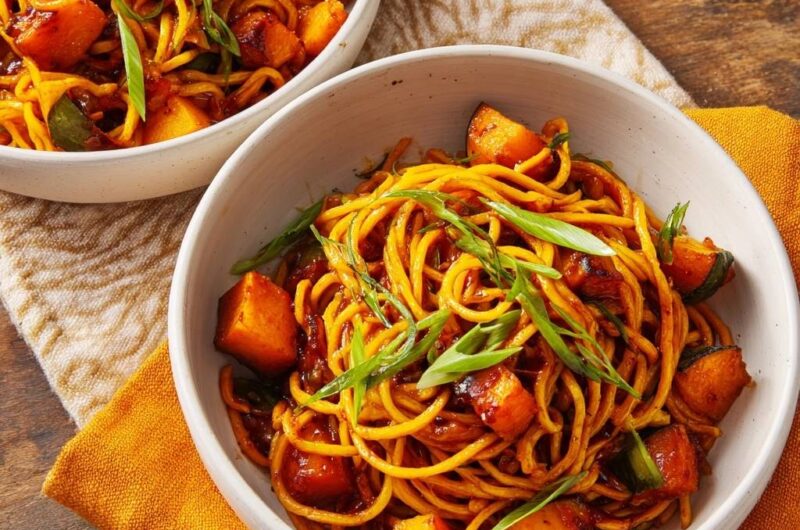
Spicy Roasted Squash Lo Mein
Course: Main CourseCuisine: Asian FusionDifficulty: easy4
servings15
minutes25
minutes385
kcal40
MinutesA restaurant-quality noodle dish that solves the problem of soggy vegetables. By roasting kabocha or butternut squash at high heat before tossing with lo mein noodles in a spicy soy-ginger sauce, you achieve a perfect contrast of textures.
Ingredients
1 medium kabocha squash (preferred for the skin-on visual) or butternut squash, cubed into 1-inch pieces (leave skin on if using kabocha)
12 ounces fresh lo mein noodles or thick egg noodles
3 tablespoons vegetable oil, divided
1/4 cup soy sauce
1 tablespoon dark soy sauce (for the deep golden color shown)
1 tablespoon chili garlic sauce or sriracha
1 tablespoon honey or brown sugar
1 teaspoon toasted sesame oil
1 tablespoon rice vinegar
2 cloves garlic, minced
1 inch fresh ginger, grated
4 green onions, sliced long on a sharp bias
1/2 teaspoon black pepper
Directions
- Preheat your oven to 425°F (220°C). This high temperature is the key to the (No More Mushy Veggies!) promise. Toss the cubed squash with 1 tablespoon of vegetable oil and a pinch of pepper on a large sheet pan. Spread them out so they are not touching to ensure roasting rather than steaming.
- Roast the squash for 18 to 22 minutes, flipping halfway through, until the edges are deeply browned and caramelized. Set aside.
- While the squash roasts, cook the lo mein noodles in boiling water according to package directions (usually 3-5 minutes). Drain and rinse briefly with cool water to remove excess starch and stop the cooking process.
- In a small bowl, whisk together the soy sauce, dark soy sauce, chili garlic sauce, honey, sesame oil, and rice vinegar.
- Heat the remaining 2 tablespoons of oil in a large skillet or wok over medium-high heat. Add the minced garlic and grated ginger, stirring constantly for 30 seconds until fragrant.
- Add the cooked noodles to the skillet and pour the sauce over them. Toss vigorously for 2-3 minutes using tongs. The high heat will cause the noodles to absorb the sauce, turning them the deep amber color seen in the image.
- Gently fold in the roasted squash cubes and half of the green onions. Toss for only 30 seconds to heat through. By adding the squash last, you maintain the crisp roasted edges.
- Transfer to bowls and garnish heavily with the remaining long-biased green onions. Serve immediately.
Notes
- Using kabocha squash is recommended because the skin is edible and adds great visual contrast. Rinsing the noodles after boiling is essential to remove excess starch and prevent them from sticking together in the wok.