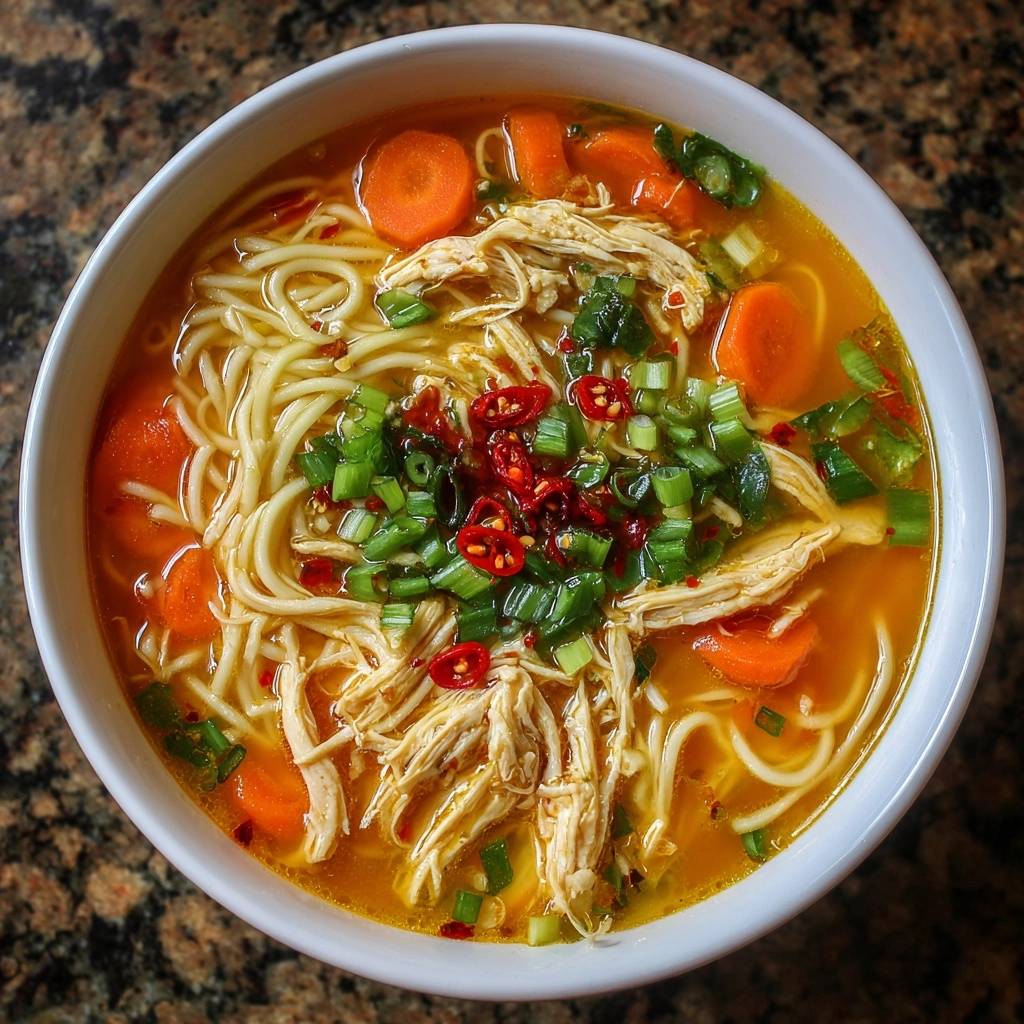
We have all been there. You spend an hour crafting a beautiful pot of soup, only to have the noodles soak up every drop of broth by the time you sit down for dinner. Instead of a vibrant soup, you end up with a gummy, bloated mess that lacks any textural contrast. It is the ultimate kitchen heartbreak, but it is also entirely avoidable with a few professional tweaks.
This Spicy Shredded Chicken Noodle Soup is designed to wake up your palate with the bold heat of chili oil and the earthy, golden glow of turmeric. The broth is light yet deeply savory, providing the perfect backdrop for tender, hand-shredded chicken. By changing how you handle the starch, you can ensure every spoonful offers a clean, restaurant-quality experience with noodles that stay perfectly al dente.
If you enjoy the heat in this soup, you’ll also appreciate the bold flavors in spicy shredded chicken ramen.
The secret to this recipe’s success lies in the separation of components. Most home cooks treat soup like a one-pot wonder, but starch is a thirsty sponge that never stops drinking. I’m going to show you how to manage that absorption so your last bowl of leftovers tastes just as fresh and vibrant as the first one you ladled out of the pot.
For a different take on noodles, explore creamy peanut noodles with a silky sauce.
The Science of Starch and Broth Absorption
When you cook noodles directly in a soup base, a process called osmosis takes over. The liquid moves into the starch molecules, causing the noodles to swell until they lose their structural integrity. This doesn’t just ruin the noodle; it actually robs your broth of its flavor and volume, leaving you with a thick, starchy sludge.
By using the “Separation Method,” you maintain total control over the texture. Cooking the noodles in plain salted water allows them to reach the perfect bite without leaching starch into your precious chicken stock. This keeps the broth clear and ensures the flavors of ginger, garlic, and chili remain concentrated rather than diluted by wheat proteins.
Why Traditional One-Pot Methods Fail
Standard “dump and simmer” recipes are the primary culprit behind cloudy, unappealing soup. As wheat noodles boil in the broth, they release surface starches that act as a thickener. While thickening is great for a stew, it kills the vibrancy of a spicy clear soup. Furthermore, if you have leftovers, those noodles will continue to expand in the fridge until they’ve absorbed every ounce of liquid in the container.
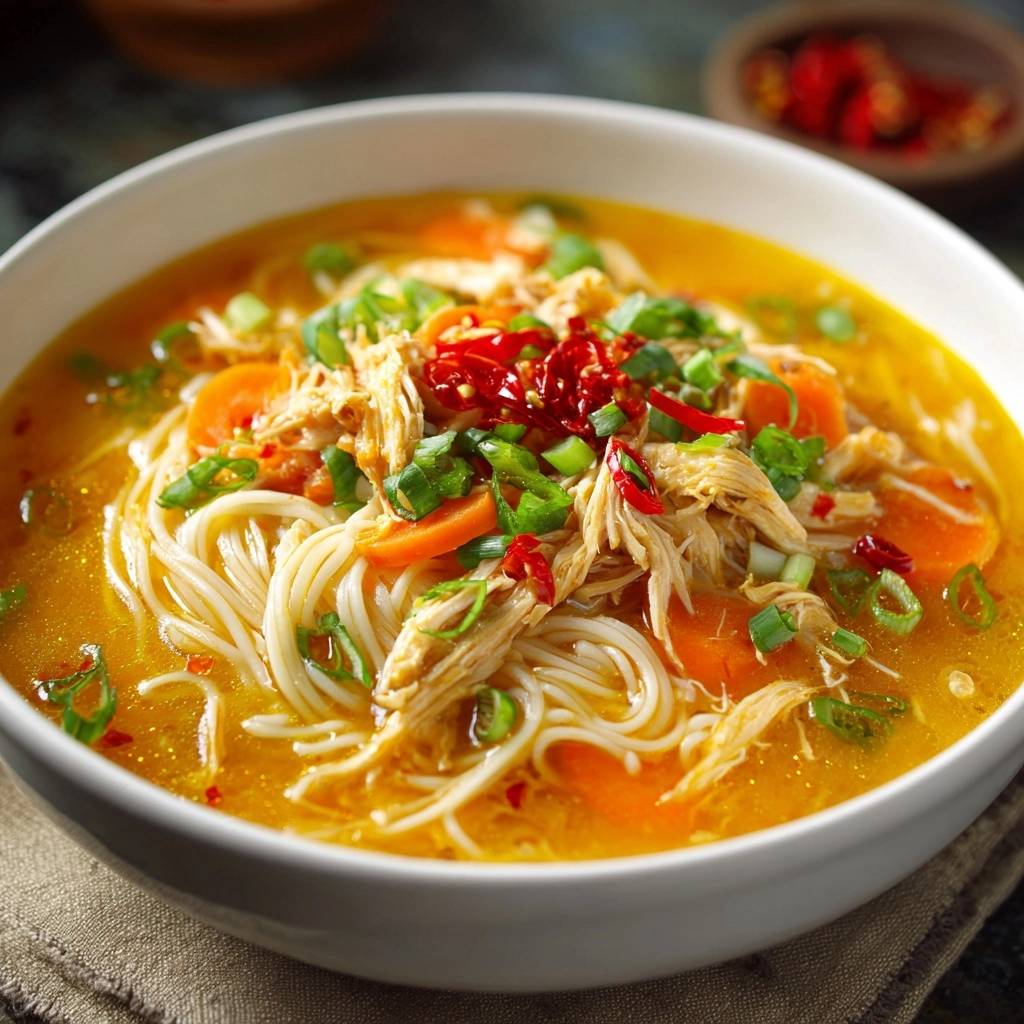
Essential Components for Spicy Shredded Chicken Noodle Soup
Success starts with the quality of your aromatics and the specific type of heat you choose. Since this soup has a relatively short ingredient list, each item needs to pull its weight. I always recommend using a high-quality chicken stock as your base, preferably one with low sodium so you can control the final seasoning yourself.
Freshness is non-negotiable here. Use fresh ginger and garlic rather than the jarred versions. The volatile oils in fresh ginger provide a sharp, peppery bite that cuts through the richness of the chili oil. When you grate the ginger directly into the pot, you capture all those juices that would otherwise be lost on a cutting board.
Selecting the Right Noodle Variety
For this spicy profile, long wheat noodles or ramen-style noodles are the gold standard. They have a higher protein content than rice noodles, which gives them a satisfying “snap” and a better ability to hold onto the spicy oil. If you want a heartier bowl, look for “lo mein” style wheat noodles, which offer a thicker, chewier texture that stands up well to the shredded chicken.
The Role of Turmeric and Aromatics
Turmeric is the unsung hero of this dish, providing that stunning “golden hour” aesthetic. Beyond the color, it adds a subtle earthy depth that anchors the sharper notes of the ginger and chilies. When paired with the foundational trinity of garlic, ginger, and green onions, it creates a broth that feels medicinal and comforting yet excitingly spicy.
Chili Oil: Heat Levels and Flavor Profiles
Not all heat is created equal. Instead of a vinegar-based hot sauce, this recipe relies on chili oil with flakes, often found in Asian markets as “Chili Crunch” or Szechuan chili oil. The oil carries the capsaicin across your tongue more evenly, while the toasted pepper flakes add a smoky, nutty dimension that a liquid sauce simply cannot provide.
Step-by-Step: Preparing the Perfect Spicy Broth
Building a great broth is all about layers. You aren’t just boiling water; you are extracting flavor at every stage. Start by heating your vegetable oil over medium heat. You want the pot warm enough to sizzle, but not so hot that it scorches your delicate aromatics.
Sautéing the Base for Maximum Extraction
Add your carrots first to give them a head start on softening. Once they’ve had a few minutes, stir in the garlic, ginger, and turmeric. This is called “blooming” the spices. Because the pigments in turmeric and the flavors in garlic are fat-soluble, cooking them in oil for sixty seconds unlocks a level of intensity you would never get by just dropping them into cold liquid.
The Gentle Poaching Technique for Chicken
Forget about boiling your chicken. High heat turns poultry into rubber. Instead, pour in your stock and bring it to a very gentle simmer. Submerge the whole chicken breasts into the liquid and cover the pot. This poaching method surrounds the meat with flavor while cooking it slowly and evenly.
Use a meat thermometer to check for an internal temperature of 165°F. Once it hits that mark, pull the chicken out immediately. Let it rest for a few minutes before shredding. You will find the meat pulls apart into beautiful, moist ribbons that are perfectly seasoned from their time in the turmeric-infused broth.
The Secret to Al Dente Noodles Every Time
While your broth simmers, handle your noodles in a separate pot of boiling salted water. The trick is to cook them for exactly one minute less than the package directions suggest. They should still have a firm “white core” in the center when you drain them.
Immediately hit them with a “Cold Shock” by rinsing them under cold tap water. This stops the residual heat from cooking them further and washes away the excess surface starch that causes clumping. Toss them with a tiny bit of neutral oil, and they will sit happily in a bowl until you are ready to serve, never losing their perfect texture.
Assembling the Bowl for Professional Presentation
Never add the noodles back into the big pot of soup. Instead, use the “Ladle-Over” technique. Place a nest of the cold, prepared noodles into the bottom of each serving bowl. Ladle the boiling hot broth and shredded chicken directly over the top. The heat from the liquid will warm the noodles to the perfect eating temperature in seconds without making them mushy.
Finish the bowl with your fresh garnishes. The bright green onions and sliced red Thai chilies provide a raw, crunchy contrast to the soft noodles and tender chicken. A final drizzle of chili oil over the top creates those beautiful red pearls on the surface of the golden broth that make the dish look like it came from a high-end noodle bar.
Troubleshooting Common Spicy Soup Hurdles
If you find your broth has become too salty, don’t panic. Simply add a splash of water or a little more low-sodium stock to dilute it. If the heat from the chili oil is overwhelming, a tiny pinch of sugar or a squeeze of fresh lime juice can help neutralize the burn. Acidity is a powerful tool for balancing spice and brightening the overall flavor profile.
Flavor Variations and Ingredient Swaps
This recipe is a fantastic canvas for whatever you have in your crisper drawer. While the chicken and wheat noodles are classic, you can easily pivot based on your dietary needs or what is available at your local grocery store.
More Chicken Ideas
To round out your meal with more chicken dishes, consider these options.
- For a refreshing contrast to your soup, try this sesame ginger chicken salad, which uses a special method to keep it crisp.
- If you’re in the mood for something hearty and plant-based, this creamy red lentil soup offers a different kind of comforting bowl.
Adjusting the Scoville Scale
For those who love a “burn,” use Thai bird’s eye chilies with the seeds left in. They pack a significant punch. If you prefer a milder experience, swap the Thai chilies for sliced red serranos or even red bell peppers for the color without the fire. You can also reduce the amount of chili oil flakes and just use the infused oil for a gentler glow.
Vegetable Additions for Extra Bulk
If you want to pack in more nutrients, try adding bok choy or baby spinach. The key is timing. Drop these leafy greens into the hot broth just thirty seconds before serving. They will wilt perfectly in the residual heat, maintaining their vibrant green color and a slight snap that complements the noodles.
Storage and Reheating for Optimal Freshness
If you are meal prepping, this is where the separation method really pays off. Store the broth and the noodles in two separate airtight containers in the fridge. The broth will actually taste better the next day as the ginger and garlic continue to meld. When you are ready for lunch, heat the broth until it is boiling, then pour it over the cold noodles. This ensures your leftovers are never soggy.
Expert Tips for the Best Spicy Shredded Chicken Noodle Soup
To take this soup to the next level, try hand-shredding your chicken rather than dicing it with a knife. The irregular, craggy surfaces of hand-shredded meat catch more of the spicy oil and broth, making every bite more flavorful. Also, use a microplane for your ginger to create a fine paste; this ensures the flavor is distributed evenly without any woody chunks.
Always garnish at the very last second. Fresh herbs and raw chilies contain volatile oils that dissipate quickly in heat. By adding them at the table, you get the full aromatic impact as you lean over the bowl. If you want an even richer broth, you can add a teaspoon of soy sauce or liquid aminos for an extra hit of umami depth.
How can I make the broth even richer?
The easiest way to boost the richness is to use a bone-in chicken stock or add a small piece of kombu (dried seaweed) while the broth simmers. You can also stir in a teaspoon of miso paste at the very end for a creamy, savory body. Just be sure to whisk the miso with a little warm broth first so it doesn’t clump.
Can I use pre-cooked rotisserie chicken?
Yes, you can use rotisserie chicken to save time. However, you will miss out on the flavor infusion that happens when you poach the chicken directly in the spiced stock. If you go this route, add the shredded rotisserie chicken at the very end just to warm it through, and consider simmering the broth for an extra 10 minutes with the aromatics to compensate for the lost flavor.
What are the best noodles for gluten-free diets?
High-quality brown rice noodles or 100% buckwheat soba noodles are excellent gluten-free alternatives. Be very careful not to overcook them, as rice noodles can become brittle or mushy much faster than wheat. Rinse them thoroughly in cold water immediately after boiling to remove the excess starch that causes them to stick together.
How long does the spicy broth stay fresh in the fridge?
The spicy broth will stay fresh in an airtight container for 3 to 4 days. In fact, the flavors often deepen and become more cohesive after 24 hours. If you plan to keep it longer, the broth freezes beautifully for up to 3 months. Just remember to freeze the broth and noodles separately, as noodles do not survive the freezing and thawing process well.
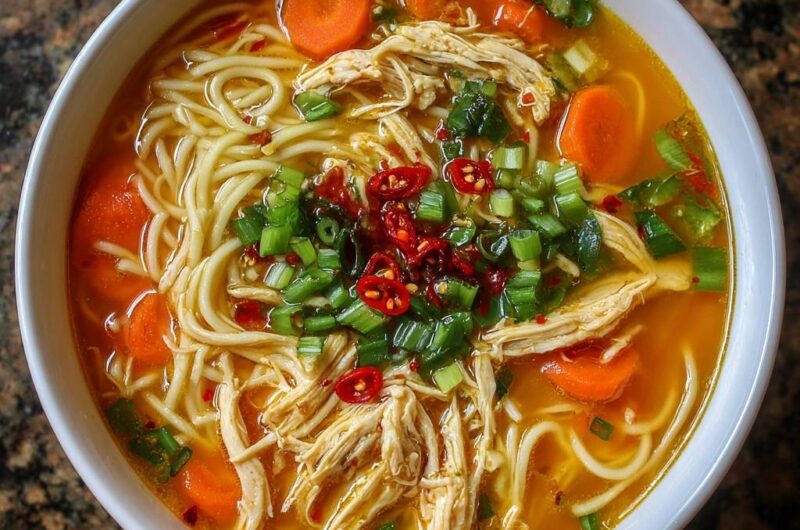
Spicy Shredded Chicken Noodle Soup
Course: Main CourseCuisine: Asian FusionDifficulty: easy4
servings15
minutes25
minutes380
kcal40
MinutesThis recipe solves the problem of bloated noodles by cooking them separately. It features a flavorful broth infused with ginger, garlic, and chili oil, paired with tender shredded chicken and fresh garnishes.
Ingredients
1 pound boneless skinless chicken breasts
8 ounces long wheat noodles or ramen-style noodles
6 cups high-quality chicken stock
3 large carrots, sliced into rounds
2 tablespoons chili oil with flakes (plus extra for garnish)
3 cloves garlic, minced
1 inch fresh ginger, grated
3 green onions, thinly sliced
2 fresh red Thai chilies, sliced into rings
1 tablespoon vegetable oil
1 teaspoon turmeric (for the vibrant golden broth color)
Salt and pepper to taste
Directions
- The secret to avoiding mushy noodles is to never cook them in the soup base. Start by boiling a separate pot of salted water. Cook your noodles according to the package directions until they are just underdone (al dente). Drain them and immediately rinse with cold water to stop the cooking process. Toss with a teaspoon of oil to prevent sticking and set aside.
- In a large pot, heat the vegetable oil over medium heat. Add the sliced carrots and cook for 3 to 4 minutes until they begin to soften. Stir in the minced garlic, grated ginger, and turmeric, cooking for 1 minute until fragrant and the oil turns bright orange.
- Pour in the chicken stock and bring to a gentle simmer. Add the whole chicken breasts directly into the simmering broth. Cover and poach for 12 to 15 minutes, or until the internal temperature reaches 165°F. This poaching method ensures the chicken stays incredibly moist and easy to shred.
- Once the chicken is cooked through, remove it to a plate and shred it into long, thin strips using two forks. Return the shredded chicken to the pot.
- Stir in the chili oil to give the broth its signature spicy kick. Season with salt and pepper to taste. Keep the broth at a low simmer until ready to serve.
- To serve, place a portion of the pre-cooked noodles into each bowl. Ladle the hot broth, carrots, and shredded chicken over the noodles. The heat from the broth will warm the noodles perfectly without overcooking them.
- Top each bowl with a generous handful of fresh green onions and the sliced red chilies. Drizzle an extra teaspoon of chili oil over the center for the visual finish shown in the image.
Notes
- To keep leftovers fresh, store the noodles and the broth in separate containers in the refrigerator. Combine and heat only when ready to eat to maintain the noodle texture.