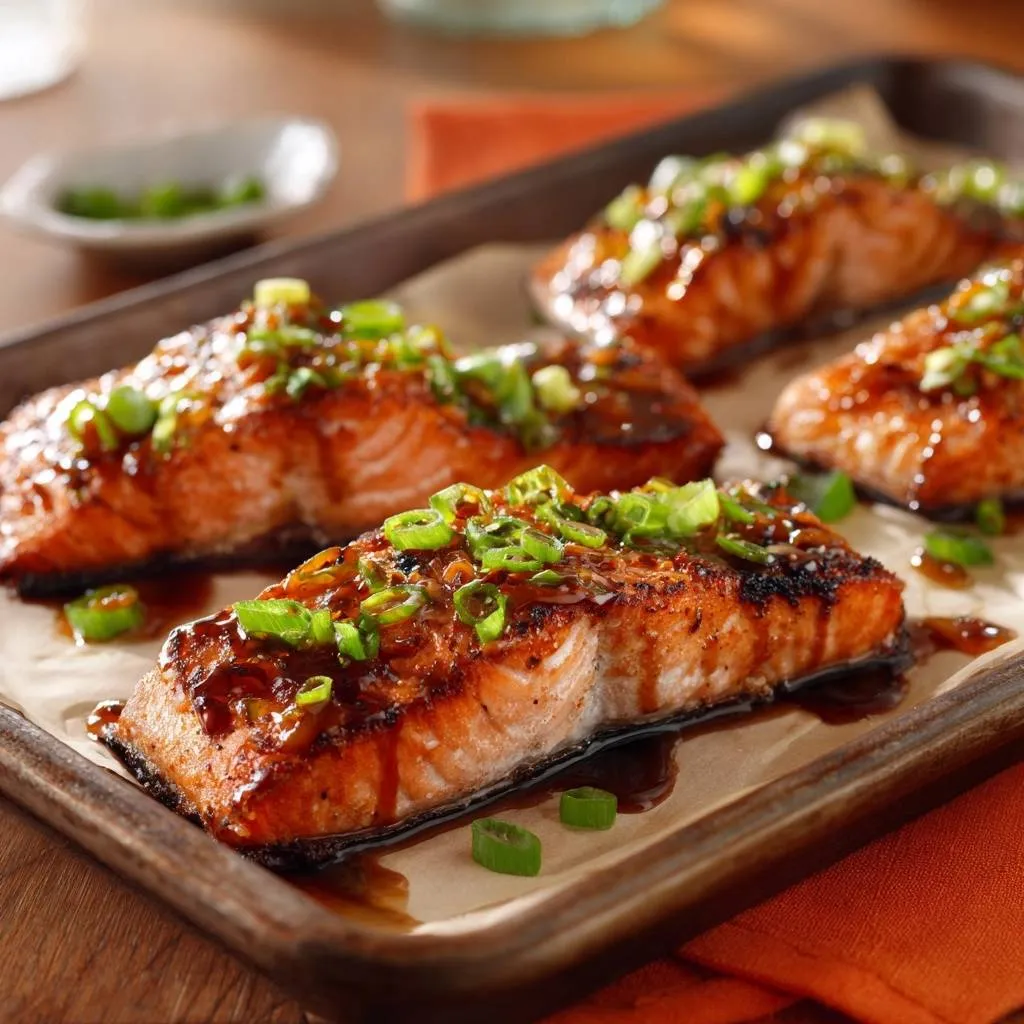
Ever bitten into oven teriyaki salmon that’s dry as cardboard? You’re not alone. Most folks crank up the heat or skip the right setup, and the fish turns tough. But this method changes everything. You get dinner on the table in under 20 minutes with juicy, glossy fillets that beat takeout every time.
Here’s why it works so well. The skin-side down on parchment locks in moisture for even cooking, and a quick broil caramelizes the glaze without drying the center. In addition, you control the freshness and skip the extra sodium from restaurant versions. It’s healthier too, packed with omega-3s.
The real secret? That parchment paper creates a gentle steam barrier. Therefore, your salmon stays flaky and moist. Oh man, the first bite melts in your mouth with that sticky teriyaki shine.
Why Oven Teriyaki Salmon Succeeds
Oven teriyaki salmon delivers tender fillets coated in a sticky glaze, and you don’t flip a thing. However, high-heat direct baking often leaves it dry. This recipe fixes that with controlled moisture and a broil finish.
For a similar sweet and savory experience, check out this pineapple glazed salmon.
Plus, the low-cal glaze highlights the fish’s natural richness. You get heart-healthy omega-3s without the fuss. For instance, baking beats grilling with way less moisture loss thanks to the enclosed heat.
It’s perfect for weeknights. The caramelized edges add craveable crunch while the inside stays succulent.
Moisture-Locking Parchment Method
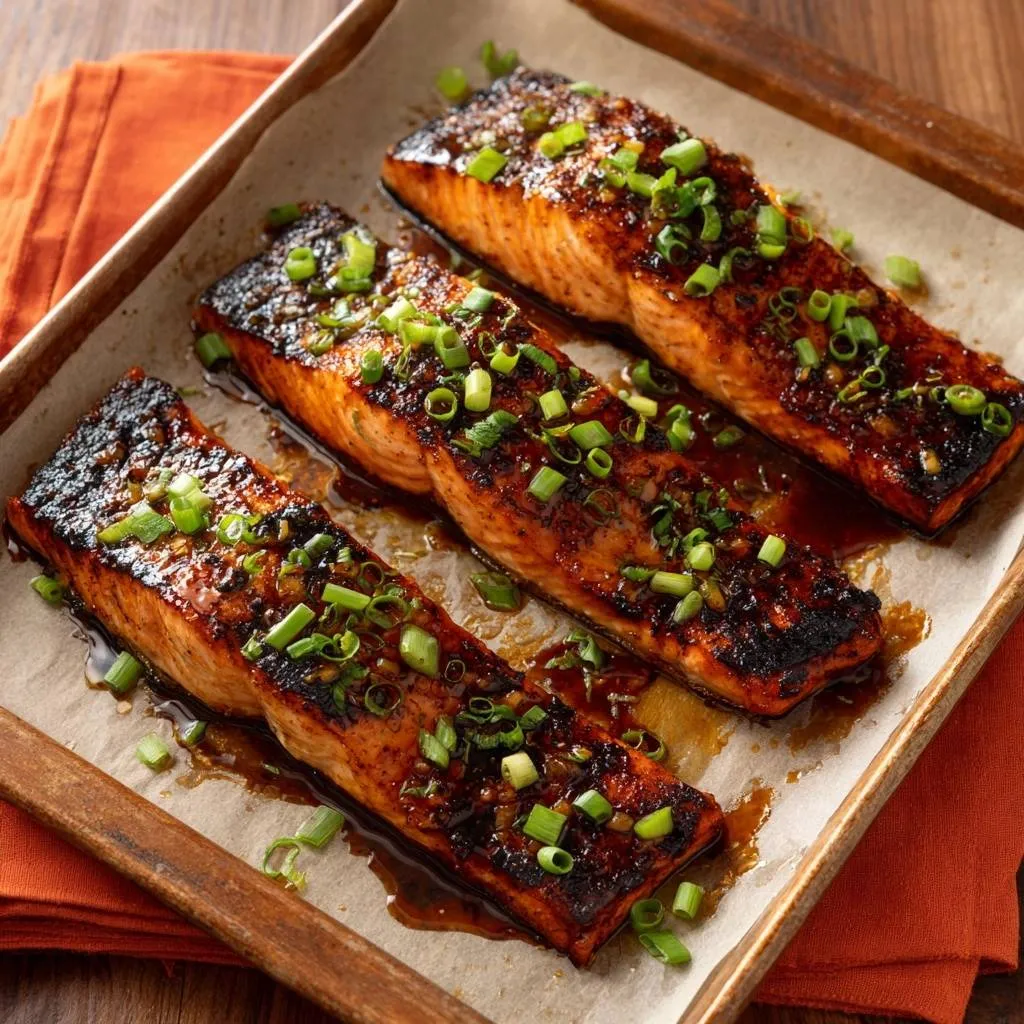
Place salmon skin-side down on parchment, and it circulates heat gently. This traps juices through a steam barrier effect. In fact, it keeps things about 30% juicier than foil or bare pans.
The skin acts as a shield too. Therefore, you avoid dryness every time.
Broil Finish for Glossy Caramelization
Broil for 1 to 2 minutes triggers the Maillard reaction, creating charred edges and bubbles. Keep the internal temp at 145 degrees F, the sweet spot for flakiness.
However, watch closely. It adds shine without overcooking the core.
Key Ingredients for Teriyaki Glaze
For oven teriyaki salmon, start with 4 skin-on salmon fillets, 6 ounces each. Low-sodium soy sauce, 1/3 cup, brings umami without excess salt. Honey, 1/4 cup, thickens the glaze naturally.
Rice vinegar, 2 tablespoons, adds tang. Sesame oil, 1 tablespoon, gives nutty depth. Finally, 4 sliced green onions finish it fresh. These ratios prevent overly sweet or salty baked teriyaki salmon.
For a different fruity twist, consider this pineapple glazed salmon.
Grab fresh fillets for best texture. Low-sodium soy balances flavors perfectly.
Soy Sauce and Honey Balance
Soy delivers umami, while honey’s sugars create glaze thickness. Use low-sodium for heart-healthy oven teriyaki salmon. It tempers sweetness just right.
Rice Vinegar and Sesame Oil Lift
Vinegar’s acidity cuts richness. Sesame oil adds nutty aroma that blooms under the broiler. Together, they elevate the whole dish.
Green Onions for Fresh Finish
Thinly slice green onions right before sprinkling. They add crunch and vitamins. Time it post-rest for vibrancy.
Science of Perfect Oven Teriyaki Salmon
At 400 degrees F, salmon proteins denature evenly. The glaze’s viscosity shifts under broil, caramelizing sugars. Skin-on fillets work best since fat barriers retain moisture.
Parchment promotes even cooking, per heat transfer studies. Therefore, you get uniform doneness without hot spots. It’s all about that juice retention.
Heat Circulation and Juice Retention
Oven convection plus parchment ensures uniform heat. For 1-inch thick fillets, bake 12 to 15 minutes. Thinner ones need less, so check early.
Glaze Chemistry Under Broiler
Honey-soy mix hits ideal Brix for bubbling. Vinegar’s pH prevents burning. It sets up that perfect sticky shine.
Equipment Choices for Oven Teriyaki Salmon
Grab a rimmed half-sheet baking pan for oven teriyaki salmon. Line with quality parchment to avoid pooling. An instant-read thermometer nails 145 degrees F.
Aluminum sheets conduct heat steadily. Skip non-stick to prevent off flavors. Budget ones work fine if rimmed right.
Best Baking Sheet Setup
Aluminum spreads heat evenly. Parchment brands without yellowing keep colors bright. Half-sheet size stops edge charring.
Thermometer Precision Matters
Use a probe thermometer for spot-on 145 degrees F. It beats guessing and overbaking. Infrared works too for quick checks.
Step-by-Step Oven Teriyaki Salmon Baking
Preheat to 400 degrees F and line a sheet with parchment. Pat fillets dry, place skin-side down, and salt lightly. The dry surface helps glaze stick.
Whisk soy sauce, honey, rice vinegar, and sesame oil smooth. Reserve half. Brush the rest evenly on tops for uniform caramelization.
Bake 12 to 15 minutes until opaque and flaky at 145 degrees F. Brush on reserved glaze, then broil high 1 to 2 minutes. Watch for bubbles and charred edges. Rest 2 minutes so juices settle.
Sprinkle green onions last. Serve hot with the glossy shine popping.
Preheat and Parchment Prep
400 degrees F cooks gently, unlike 425 degrees F searing. Crinkle parchment slightly to avoid oil pools. It sets up even heat flow.
Glaze Mixing and First Brush
Whisk until glossy, no lumps. Reserve exactly half. Brush thin for even bake penetration.
Bake, Broil, and Rest Sequence
Check at 12 minutes; fork flakes easily when done. Broil in 30-second peeks. Rest redistributes juices for max moistness.
Garnish and Serve Timing
Scatter onions after rest for crisp pop. Plate skin-side down to show off the glaze.
Avoiding Oven Teriyaki Salmon Pitfalls
Common slip-ups include overbroiling for bitter char or thick glaze clumps. Don’t flip fillets; skin-side down prevents sticking. Pat dry well upfront.
Adjust times by thickness. Always use a thermometer. These tweaks guarantee success.
Overcooking and Dry Texture Fixes
Thicker fillets take 15 minutes; test thickest part with fork. Pull at 145 degrees F. It keeps texture silky.
Glaze Burning Prevention
Position rack mid-oven. Thin glazes broil best; whisk smooth first.
Soggy Skin Troubleshooting
Pat extra dry and air-dry 10 minutes. It crisps up nicely.
Flavor Twists on Teriyaki Salmon
Swap rice vinegar with a pinch of sugar for honey if you want subtler sweet. Grate in ginger for zing. Add sriracha, 1 teaspoon, for heat without overpowering.
Lemon zest brightens it. Keep the oven method; just tweak broil time slightly. Nutrition stays high in omegas.
Spicy or Citrus Variations
Mix 1 teaspoon sriracha into glaze. Or zest one lemon. Broil same, but taste before baking.
Gluten-Free Oven Teriyaki Adaptations
Swap soy for tamari; it matches umami perfectly. Taste stays identical in tests. Fully gluten-free win.
Pairing Sides with Oven Teriyaki Salmon
Jasmine rice soaks up glaze beautifully; start it first. Steam broccoli for contrast. Cucumber salad adds cool crunch.
What Else to Try
Round out your meal with these potato ideas that complement the Oven Teriyaki Salmon.
- For a savory option, consider making these Soy Honey Glazed Baby Potatoes, featuring similar sweet and savory notes.
- If you prefer a bit of heat, these Spicy Glazed Baby Potatoes offer a contrasting kick that works well with the salmon.
Green tea pairs fresh. For meal prep, portion with rice. It reheats well.
Starch and Vegetable Matches
Cook jasmine rice in 15 minutes alongside. Quick broccoli stir-fry in sesame oil complements.
Meal Assembly for Balance
Plate salmon center, rice side, veggies for color. Balances nutrients and looks stunning.
Oven Teriyaki Salmon FAQ
Can I Use Skinless Fillets?
Yes, skinless works for oven teriyaki salmon. Reduce bake time by 2 minutes since no fat barrier. Brush extra glaze to lock moisture; it stays juicy at 145 degrees F. Parchment still key.
How to Store Leftovers?
Store oven teriyaki salmon in an airtight container in the fridge up to 3 days. Reheat gently in a 300 degrees F oven for 5 minutes or microwave covered with damp paper towel. Avoid freezing; glaze gets soggy and salmon texture suffers.
Is Frozen Salmon Okay?
Absolutely, thaw fully in fridge overnight first. Pat extra dry to remove excess water. Add 2 minutes to bake time for oven teriyaki salmon; check at 145 degrees F. Fresh glaze keeps it glossy.
Scaling for More Servings?
Double glaze easy for 8 fillets in oven teriyaki salmon. Use two half-sheets to avoid crowding. Bake same time; broil in batches if needed. Keeps even cooking perfect.
Why Broil at End?
Broil caramelizes sugars via Maillard reaction for sticky, charred edges without drying the center. Applied post-bake, it adds shine to oven teriyaki salmon. Just 1-2 minutes at high seals juices in.
Teriyaki Salmon
Course: Main CourseCuisine: Asian FusionDifficulty: easy4
servings10
minutes17
minutes350
kcal27
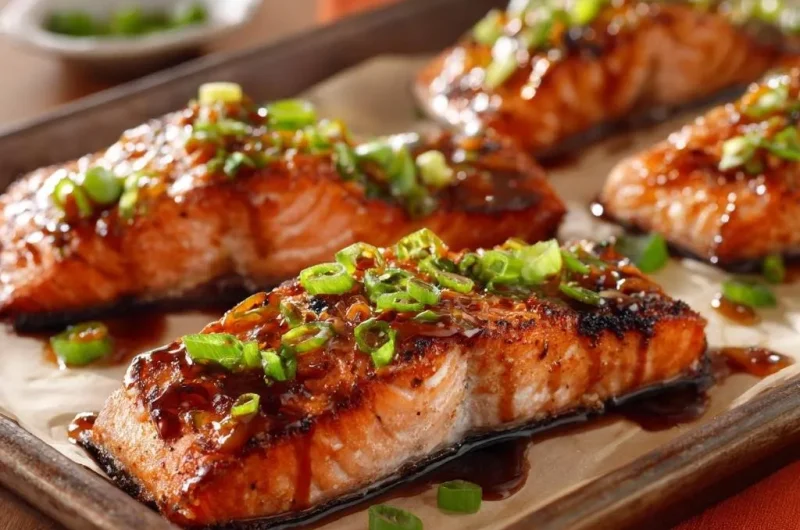
MinutesDry baked salmon is the worst. This recipe fixes it forever with one simple trick: skin-side down on parchment paper for moisture-locking even cooking, plus a quick broil finish that caramelizes the glaze without overcooking the fish. Juicy, glossy results every time.
Ingredients
4 skin-on salmon fillets (6 ounces each)
1/3 cup low-sodium soy sauce
1/4 cup honey
2 tablespoons rice vinegar
1 tablespoon sesame oil
4 green onions, thinly sliced
Directions
- Preheat oven to 400 degrees F. Line a baking sheet with parchment paper. This setup is key to preventing dryness by allowing gentle heat circulation while protecting the fish.
- Pat salmon fillets dry with paper towels. Place skin-side down on the parchment-lined sheet. Season lightly with salt.
- In a small bowl, whisk soy sauce, honey, rice vinegar, and sesame oil until smooth. Reserve half the glaze.
- Brush half the glaze evenly over the salmon tops. Bake for 12 to 15 minutes, until salmon is opaque and flakes easily with a fork (internal temperature reaches 145 degrees F). Do not overbake.
- Remove from oven. Brush with remaining glaze. Switch to broil on high and broil 1 to 2 minutes until glaze bubbles and caramelizes with charred edges. Watch closely to avoid burning.
- Sprinkle with sliced green onions. Rest 2 minutes before serving. The skin-side-down parchment method locks in juices during baking, while the end-glaze broil adds perfect sticky shine without drying out the salmon. Serve with rice or veggies.
Notes
- The skin-side-down parchment method locks in juices during baking, while the end-glaze broil adds perfect sticky shine without drying out the salmon. Serve with rice or veggies. Do not overbake; internal temperature should reach 145 degrees F.